Tel/WhatsAapp:+86 18011919834
E-mail: chloe.x@fybagcustom.com

Tel/WhatsAapp:+86 18011919834
E-mail: chloe.x@fybagcustom.com
Send Your Inquiry Today

Who this guide is for: brand owners, sourcing managers, wholesale buyers, Amazon FBA sellers, DTC founders, premium fashion labels, and private label developers who are exploring slouchy hobo bags and unstructured soft-body silhouettes for their collections. If you want to understand how to achieve the coveted “perfectly imperfect” drape of an unstructured bag — using soft leather, suede, or premium PU without shaping interlining — and how to specify this technically demanding silhouette for OEM production with a custom handbag manufacturer, this guide covers the material science, the drape engineering, the construction techniques, and the quality standards that separate a “cheap and floppy” bag from a “luxuriously relaxed” one.
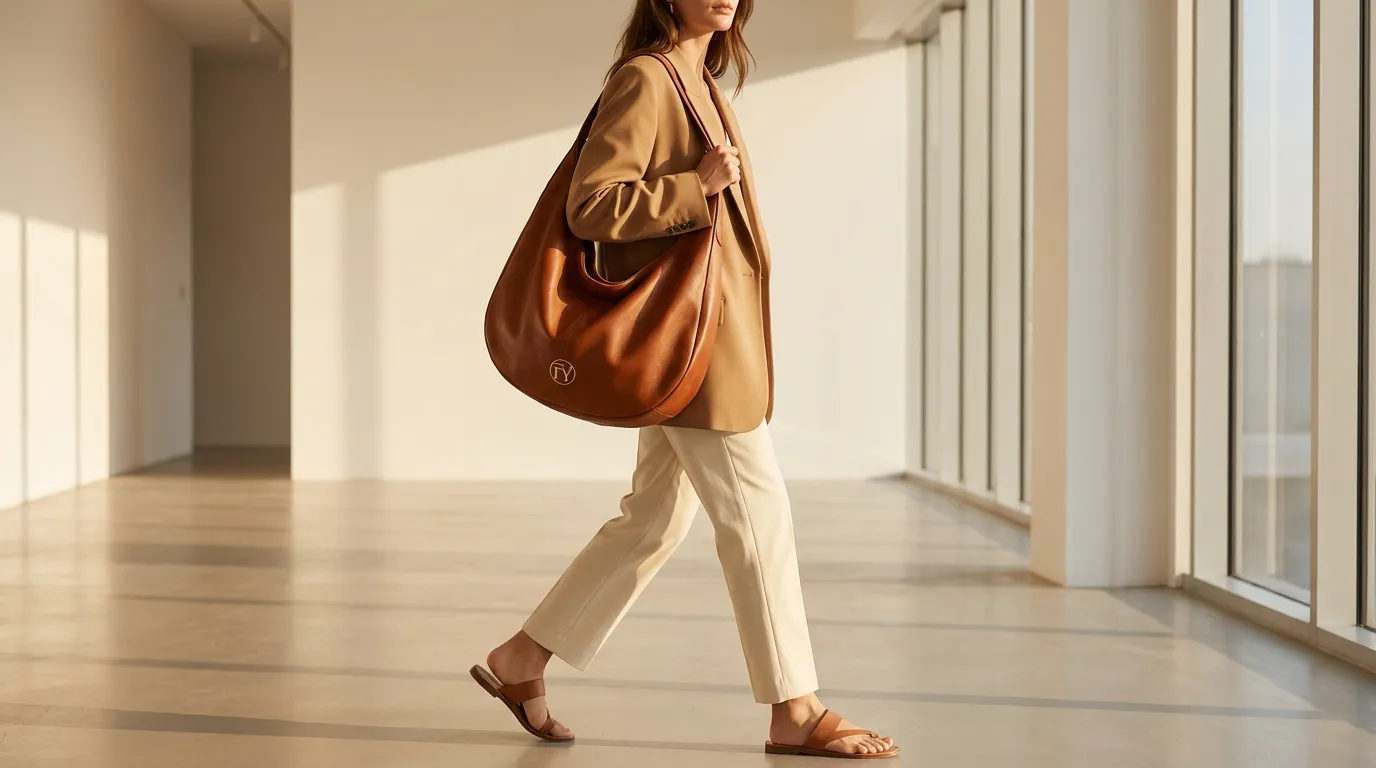
There is a paradox at the center of the slouchy hobo bag: the silhouette that looks the most effortless is the hardest to manufacture. A structured bag holds its shape through engineering — interlining, base boards, frame wires. If the engineering is good, the bag looks good. If the engineering is mediocre, the bag still holds a recognizable shape. The structured bag is forgiving of imperfection.
The slouchy hobo forgives nothing. There is no interlining to hide a too-stiff panel. There is no base board to mask a poorly balanced weight distribution. There is no frame to impose symmetry. The material IS the structure — and if the material is wrong, the drape is wrong, and the bag looks like a sack rather than a silhouette. The difference between a slouchy hobo that costs a premium at retail and one that ends up in the clearance bin is not the design. It is the material selection, the pattern geometry, and the construction technique — the invisible decisions that determine whether the bag “falls” with grace or “collapses” without it.
This is why the slouchy hobo is one of the most technically demanding silhouettes to produce at the manufacturing level — and why brands that get it right command loyalty and premium positioning that structured bags rarely achieve. The woman who finds “her” slouchy hobo carries it daily for years, buys it again in other colors, and recommends it with evangelical conviction. The silhouette earns that loyalty because it conforms to her body, moves with her, and develops a patina that becomes uniquely hers.
For B2B buyers, the slouchy hobo and its relatives (the soft tote, the unstructured shoulder bag, the draped clutch) represent the “quiet luxury” segment at its purest: no logos, no hardware statements, no trend-dependent details. Just material quality and silhouette perfection. This guide explains how to achieve both.
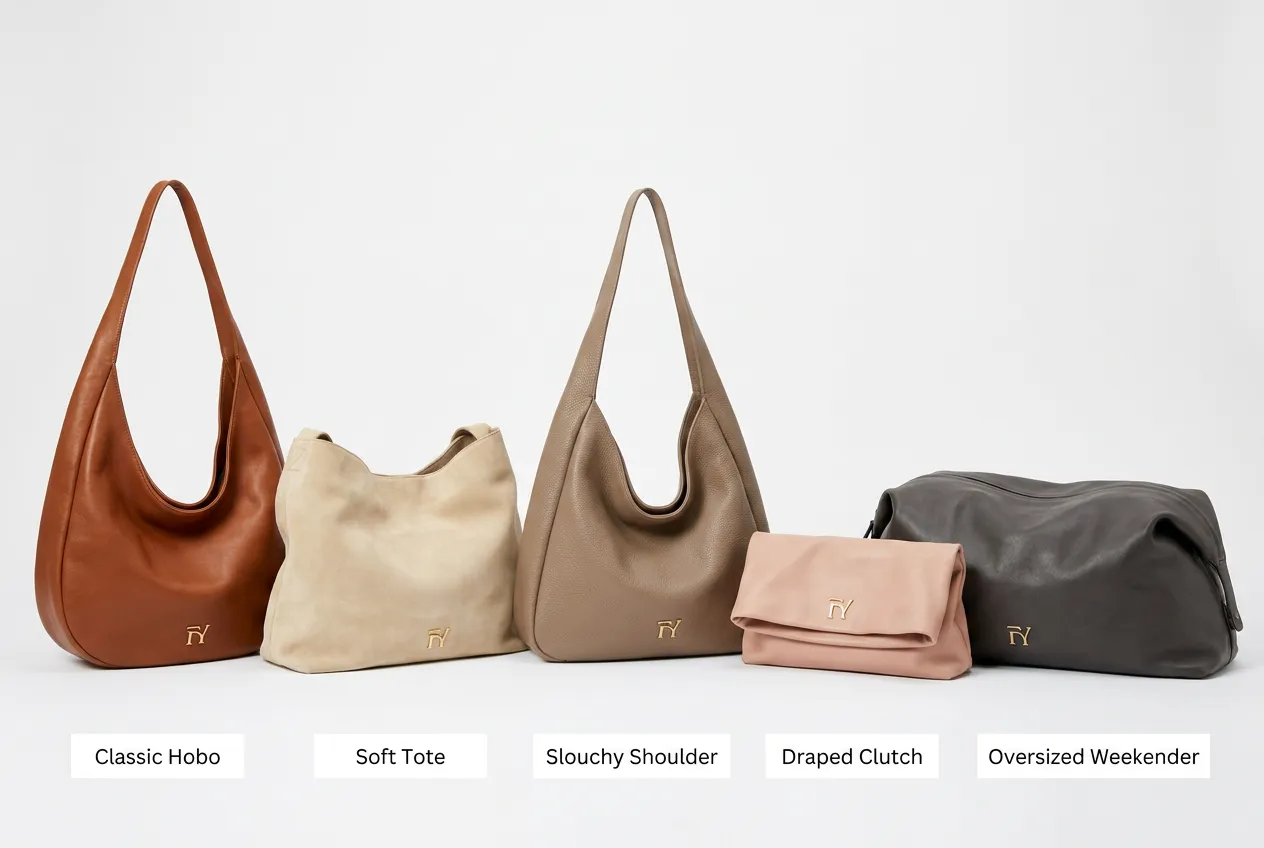
“Slouchy” is not a single bag — it is a family of unstructured silhouettes that share a design philosophy: the material, not the engineering, defines the shape. Understanding the family helps buyers select the right starting format for their brand.
| Format | Silhouette | Defining Feature | Typical Dimensions | Carry Mode | 2026 Demand |
|---|---|---|---|---|---|
| Classic hobo | Crescent or half-moon curve; deepest slouch at the center bottom | The bag’s top edge curves upward at the sides while the body sags in the center, creating the crescent | 35–45 × 25–35 cm (when lying flat — shape changes when carried) | Single shoulder strap | Very high — the hero of the slouchy category |
| Soft tote | Rectangular when empty; organic trapezoid when loaded | Soft body with no base board; the bottom rounds and the sides bow outward under contents | 35–45 × 30–38 × 12–18 cm | Twin shoulder handles | High — the everyday workhorse |
| Slouchy shoulder | Varies — rounded, triangular, or amorphous | Soft body that conforms to the hip when carried; no defined geometric shape | 28–38 × 20–30 cm | Adjustable shoulder strap | Growing — the mid-size option |
| Draped clutch / pouch | Envelope or rectangular when flat; folds organically in the hand | Soft material that folds, creases, and wraps around the hand | 25–32 × 15–20 cm | Hand-held or tucked under arm | Moderate — evening and editorial |
| Oversized slouchy weekender | Large soft body; collapses flat when empty, expands dramatically when packed | No rigid structure; the contents define the shape | 50–60 × 30–40 × 20–25 cm | Shoulder + crossbody strap | Growing — the “anti-suitcase” |
The classic hobo is the format with the strongest search volume (“slouchy hobo bag” is the highest-traffic keyword in the unstructured bag category) and the most technically demanding drape requirements. It is the format this guide focuses on most deeply, though the principles apply to all five formats.
In a structured bag, the material is a surface — a visual and tactile layer applied over an internal architecture. In a slouchy bag, the material IS the architecture. Its weight, thickness, flexibility, grain structure, and recovery behavior determine every aspect of the silhouette: how deeply it drapes, how it falls against the body, how the crescent curve forms, and how the bag ages over months and years of use.
Every material’s suitability for a slouchy bag can be evaluated on three properties:
| Property | What It Means | How to Test | Ideal Range for Slouchy Bags |
|---|---|---|---|
| Weight (g/m²) | The material’s mass per unit area — heavier materials drape more dramatically | Weigh a 10 × 10 cm swatch on a precision scale; multiply by 100 | 300–600 g/m² — heavy enough to drape under gravity; light enough to not fatigue the shoulder |
| Flexibility (drape coefficient) | How easily the material bends and conforms to curves without resisting | Hold a 20 × 20 cm swatch at one edge; measure how far the free edge drops below the held edge | The free edge should drop at least 60% of the swatch width — material “falls” rather than “projects” |
| Recovery (crease memory) | Whether the material bounces back from folds and compressions, or retains crease marks permanently | Fold the swatch in half, press for 10 seconds, release; observe how quickly the fold mark disappears | Fold mark should be invisible within 30–60 seconds — the bag must “forget” every crease from daily use |
A material that is heavy + flexible + recovers well produces a slouch that is deep, graceful, and self-renewing. A material that is heavy + flexible but does NOT recover produces a slouch that is deep initially but develops permanent crease lines within weeks. A material that is light + stiff produces no slouch at all — it projects outward rather than draping downward.
| Material | Weight Range | Flexibility | Recovery | Drape Quality | Aging Character | Relative Cost | Best Format |
|---|---|---|---|---|---|---|---|
| Full-grain calfskin (0.8–1.0 mm) | 400–550 g/m² | Very high — butter-soft drape | Very good — leather’s natural elasticity restores shape | Exceptional — the gold standard | Develops rich patina; softens further with use | Highest | Classic hobo, draped clutch |
| Lambskin / sheepskin (0.6–0.8 mm) | 300–400 g/m² | Extremely high — the softest leather | Moderate — thinner leather has less structural memory | Excellent — the lightest, most fluid drape | Very soft but can stretch over time; requires more care | Very high | Draped clutch, small hobo |
| Suede (split leather, 0.8–1.2 mm) | 350–500 g/m² | High — soft with a matte, velvety texture | Moderate — suede holds fold impressions slightly longer | Very good — different character: matte, textured, organic | Nap direction changes with use; develops wear marks that add character | High | Classic hobo, soft tote, shoulder bag |
| Nubuck (top-grain, buffed) | 400–550 g/m² | High — similar drape to suede but finer | Good — slightly better recovery than suede | Very good — a refined version of suede’s drape | Similar to suede; slightly more resilient | High | Premium hobo, editorial |
| Soft PU leather (0.8–1.0 mm, garment-grade) | 280–400 g/m² | High — specifically formulated for drape | Good — PU backing provides recovery that the surface layer lacks | Good — approaches calfskin’s drape at a fraction of the cost | Does not develop patina; may peel after 2–4 years at the lower end | Low–Moderate | All formats — the accessible option |
| Microfiber suede (0.6–1.0 mm) | 250–350 g/m² | Very high — engineered for softness | Very good — synthetic fiber has excellent shape memory | Good — lighter drape than leather; more “flowing” than “falling” | Does not age or develop patina; maintains original appearance | Moderate | Soft tote, shoulder bag, vegan positioning |
| Washed / tumbled canvas (10–14 oz) | 300–450 g/m² | Moderate–High — softer than raw canvas | Moderate — canvas retains some crease memory | Moderate — a more structured slouch; less fluid than leather | Develops a lived-in patina; softens with washing | Lowest | Soft tote, oversized weekender |
Full-grain calfskin at 0.8–1.0 mm thickness hits the optimal intersection of all three drape properties:
Thicker calfskin (1.2–1.5 mm) produces a stiffer drape — the bag slouches less and holds a more defined shape, which is appropriate for semi-structured designs but wrong for a true hobo. Thinner calfskin (0.5–0.7 mm) produces an excessively fluid drape — the bag collapses rather than falls, losing the volume that makes the crescent shape readable.
For brands that want the leather hobo look at an accessible tier, garment-grade soft PU at 0.8–1.0 mm is the closest synthetic equivalent. It is specifically formulated with a soft, flexible backing that mimics calfskin’s drape — unlike standard bag-grade PU, which is stiffer and more structured. Specify “garment-grade PU” or “soft drape PU” in your tech pack; standard PU will not produce the correct silhouette.
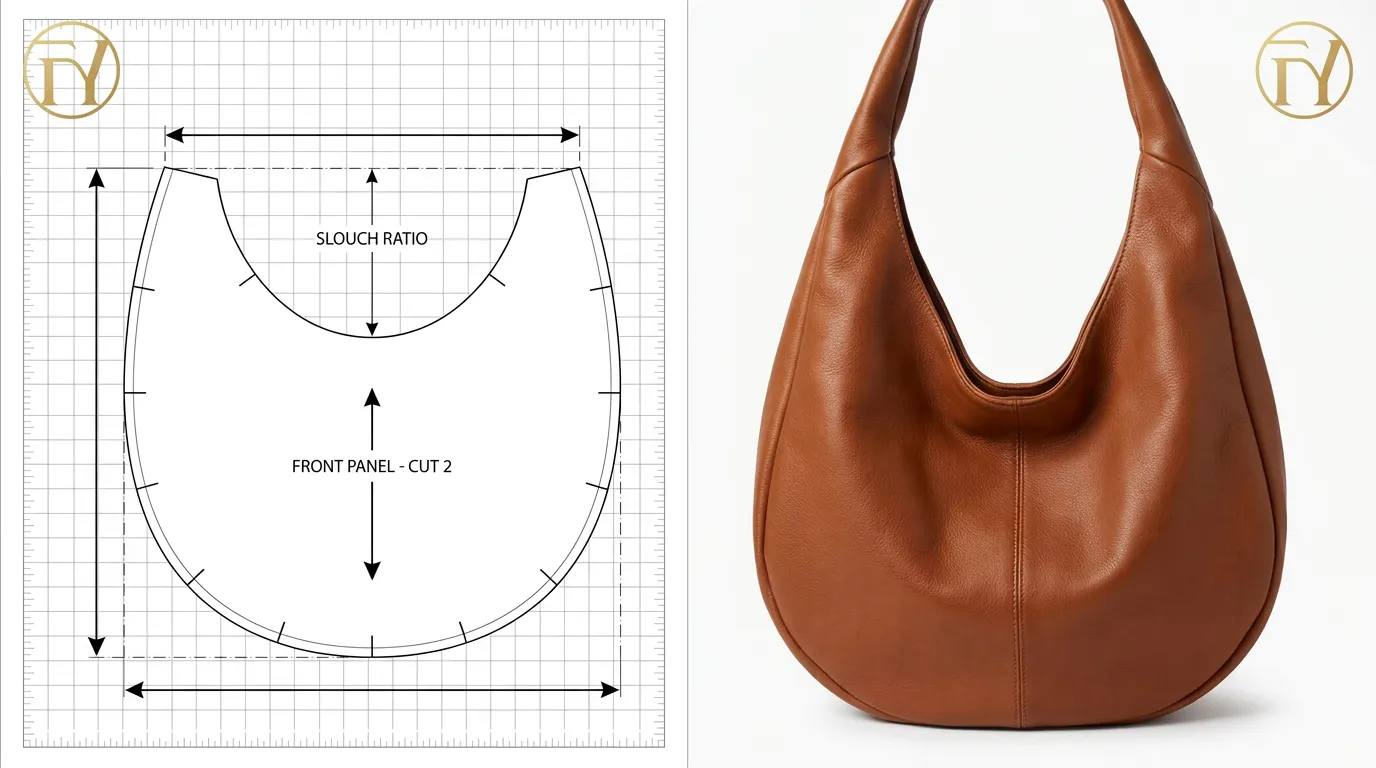
The hobo bag’s iconic crescent shape does not come from bending a flat panel — it comes from curved pattern geometry that is engineered to produce the crescent when the pieces are sewn together and gravity acts on the soft material.
| Pattern Piece | Shape | Function | Critical Dimension |
|---|---|---|---|
| Front panel | Curved — wider at the center, narrower at the sides (like a wide crescent or kidney shape) | Creates the front face of the bag; the curve defines how deeply the center sags | The ratio of center width to side width determines the slouch depth |
| Back panel | Identical to front panel (for symmetrical hobos) or slightly different curve (for asymmetric designs) | Creates the back face; must match the front’s curve precisely at the seam line | Seam-edge length must match front panel exactly — even 2 mm difference creates puckering |
| Gusset (optional) | Narrow strip connecting front to back at the base | Adds depth/volume to the bag; widens the base so the bag holds more | Width of the gusset determines the bag’s capacity; too wide = boxy; too narrow = flat |
| Strap attachment tabs | Small reinforced pieces at the top edges where the strap connects | Transfer the bag’s entire loaded weight to the strap through two small areas | Must be heavily reinforced — all bag weight concentrates here |
The slouch ratio is the relationship between the pattern’s center width (the widest point of the crescent) and the pattern’s side width (the narrow points where the strap attaches). This ratio determines the depth and character of the drape.
| Slouch Ratio (Center : Side) | Drape Character | Visual Effect | Best For |
|---|---|---|---|
| 1.5:1 | Subtle slouch — the bag sags gently, retaining a relatively defined shape | Elegant, understated, “barely there” drape | Premium minimalist brands; first-time hobo buyers who want subtlety |
| 2:1 | Classic slouch — the standard hobo drape; center sags deeply while sides rise | The recognizable hobo silhouette; balanced between structure and fluidity | The commercial sweet spot — most hobo buyers expect this drape level |
| 2.5:1 or higher | Deep slouch — the center drops dramatically, creating a very pronounced crescent | Editorial, dramatic, statement silhouette | Fashion-forward brands; editorial collections; trend pieces |
The recommended default: 2:1 slouch ratio. This produces the crescent shape that consumers recognize as “a hobo bag” without the extremity of a very deep slouch (which some consumers find too unstructured). Offer the 1.5:1 as a “subtle” variation and the 2.5:1 as a “statement” variation for brands that want to differentiate.
Curved pattern pieces create specific manufacturing challenges that straight-edged pieces do not:
| Challenge | Why It Happens | How to Manage It |
|---|---|---|
| Material waste | Curved pieces nest less efficiently than rectangular pieces on a cutting table, increasing waste | Accept a higher waste percentage (15–22% for hobos vs. 8–12% for rectangular bags); factor this into material planning |
| Seam alignment | Two curved edges must match perfectly when sewn together — any misalignment creates puckering or asymmetry | Use notch marks every 5 cm along curved seams; pin or clip before sewing; sew slowly with continuous checking |
| Edge finishing | Curved edges are harder to paint, fold, or bind than straight edges | Use flexible edge-finishing techniques (paint or raw/tucked); avoid rigid binding on tight curves |
| Strap attachment stress | The strap attachment points bear the entire bag weight through soft, unstructured material | Reinforce with webbing backing (hidden inside the material) at attachment points; bartack stitching in a box-X pattern |
Traditional bag construction relies on fusible interlining — a stiffening layer ironed onto the back of every panel — to give the bag its shape. For slouchy bags, interlining is the enemy. Any stiffening layer, however thin, resists the drape that defines the silhouette. The construction must be “naked” — no interlining on the body panels.
| Structural Element | Role in Structured Bags | Role in Slouchy Bags | Adjustment |
|---|---|---|---|
| Fusible interlining (body panels) | Stiffens panels to hold shape | Eliminated entirely on body panels | The material’s inherent weight and flexibility provide all structure |
| Fusible interlining (pockets) | Stiffens pocket openings to keep them from collapsing | Reduced — use only on zip pocket openings (2 cm strip above the zipper) | Pocket bodies are unlined; only the zip area needs a thin stiffener to prevent zipper puckering |
| Base board | Rigid insert at the bottom to create a flat base | Eliminated — the base should sag with the rest of the bag | A flat base contradicts the slouchy silhouette; the rounded bottom IS the design |
| Edge wire / piping cord | Wire or cord inside the top edge to maintain opening shape | Eliminated — the top edge should drape open, not hold a rigid oval | The opening shape is defined by the strap pull points, not by internal wire |
| Seam reinforcement | Bartack + webbing at stress points | Retained and increased — without interlining, seams bear more stress | Bartack in a box-X pattern at strap attachments; webbing backing at all load-bearing seams |
While body panels should be entirely free of interlining, certain micro-zones benefit from minimal stiffening:
| Micro-Zone | Why It Needs Stiffening | What to Use | Width of Stiffened Area |
|---|---|---|---|
| Zipper tape area | Without stiffening, the zipper puckers and waves when the bag drapes | 2 cm strip of lightweight fusible, applied to the panel behind the zipper tape only | 2 cm above and below the zipper, extending the full zip length |
| Strap attachment point | The strap pulls the material upward under load; unstiffened material distorts at the attachment | 5 × 5 cm patch of cotton webbing, sandwiched between the outer material and the lining | 5 × 5 cm centered on each attachment point |
| Magnetic snap location | The snap’s metal disc needs a stable backing to engage cleanly | 3 × 3 cm patch of lightweight fusible behind each snap component | 3 × 3 cm, invisible from outside |
This “selective stiffening” approach preserves 95%+ of the bag’s body as fully soft and drape-capable, while reinforcing the three micro-zones where pure softness creates functional problems. Specify these zones explicitly in your tech pack — an inexperienced factory may interlining the entire panel by default because that is their standard practice for all bags.
On a structured bag, the handles and straps are supported by the bag’s rigid body — the structure distributes the load across the entire frame. On a slouchy bag, the strap attachment points bear the full concentrated load of the bag’s contents because the soft body cannot distribute force. This makes strap engineering critically important for both comfort and durability.
| Method | How It Works | Load Distribution | Durability | Visual | Best For |
|---|---|---|---|---|---|
| Direct seam integration | Strap is sewn directly into the top seam of the bag as part of the seam allowance | Poor — load concentrates on two small seam points | Moderate — seam can fail under heavy load | Cleanest — strap appears to emerge from the bag naturally | Light-load bags (under 2 kg loaded); draped clutches |
| Webbing-backed tab | A reinforced tab (hidden webbing + outer material) extends from the bag’s interior, with the strap attached via a D-ring or rivet | Good — webbing distributes load over a larger area | Very good — the hidden webbing is the structural element | Clean — the tab is the only visible hardware | The recommended default for most hobos |
| Through-body strap | The strap runs continuously from one side, across the bottom of the bag, and up the other side — the body is sewn AROUND the strap | Excellent — load is distributed along the strap’s entire length | Excellent — the strap cannot detach because it is not attached to the bag; the bag is attached to the strap | Visible — the strap creates a visual line across the bag | Premium hobos where the strap is a design element; heavy-load bags |
| Grommet + ring | Metal grommets in the bag material with D-rings or O-rings for strap attachment | Moderate — grommets distribute some load, but the material around them bears stress | Good — if grommets are properly set with backing reinforcement | Hardware-forward — grommets are visible design elements | Industrial or hardware-accented slouchy designs |
For premium hobo bags — particularly those in soft leather that will carry 3–5 kg of daily contents — the through-body strap is the strongest engineering choice. Because the strap runs unbroken from one side of the bag across the bottom to the other side, there are no attachment points that can fail. The bag literally hangs from the strap like fabric draped over a clothesline.
Specification:
| Element | Specification |
|---|---|
| Strap material | Same leather as the body (for visual continuity) or matching-tone webbing covered in leather |
| Strap width | 20–30 mm for shoulder carry; wider distributes weight but adds visual bulk |
| Strap length | Adjustable 50–70 cm drop (measured from the bag’s top edge to the strap’s apex on the shoulder) |
| Strap-to-body integration | The strap is the first element positioned in the construction sequence; body panels are sewn to the strap, not the other way around |
| Bottom section | Where the strap crosses the bag’s bottom, it must be hidden by (or integrated into) the base seam — not visible externally |
| Load test | 10 kg static load for 60 seconds; no deformation, no seam separation, no material tearing |
The strap drop (the distance from the bag’s top edge to the strap’s shoulder point) determines how the bag hangs on the body. Hobo bags require a longer drop than structured bags because the bag’s body drapes downward — a short drop pulls the bag’s body too high, compressing the drape.
| Strap Drop | Bag Position on Body | Drape Effect | Best For |
|---|---|---|---|
| 18–22 cm (short) | Bag sits at armpit level | Minimal drape — bag body is compressed against the torso | Not recommended for hobos — destroys the silhouette |
| 24–28 cm (standard) | Bag sits at hip level | Classic hobo drape — the body falls naturally below the arm | The sweet spot for most hobo designs |
| 30–35 cm (long) | Bag sits at upper thigh | Deep, dramatic drape — the bag swings freely | Editorial; oversized hobos; tall consumers |
Recommended default: 26 cm adjustable drop (adjustable to 22–30 cm via a buckle or slider). This accommodates different body heights and wearing preferences while centering on the hip-level position that produces the best hobo drape.
The lining decision in a slouchy bag is more consequential than in a structured bag because the lining directly affects the drape. A heavy or stiff lining fights the material’s natural fall; a lightweight, fluid lining allows the material to drape as if it were unlined.
| Option | Weight Impact | Drape Impact | Functionality | Relative Cost | Best For |
|---|---|---|---|---|---|
| Fully lined (lightweight fabric) | Moderate — adds 80–120 g to empty weight | Moderate impact — if the lining is appropriately lightweight (under 80 g/m²), drape is preserved | Full protection of the interior; pockets can be integrated; clean interior finish | Moderate | The recommended default — best balance |
| Partially lined (top half only) | Low — lining covers only the top section where pockets are | Minimal impact — the unlined bottom half drapes freely | Pockets at top; lower section is unfinished (acceptable for some aesthetic positions) | Low | Budget-to-mid tier; bags where raw interior is intentional |
| Unlined | Zero — no lining weight | Zero impact — maximum drape | No interior protection; seam allowances visible; no pockets unless externally attached | Lowest | Ultra-premium where the raw interior is the design statement (suede, calfskin showing the flesh side) |
| Cotton jersey lining | Low — jersey is lightweight and stretchy | Minimal — jersey moves with the outer material | Good protection; the stretch accommodates the bag’s changing shape | Low–Moderate | Soft totes; casual hobos; neoprene bags |
The critical specification: if you choose a fully lined construction, the lining fabric must weigh under 80 g/m² and have high flexibility (similar to the outer material’s drape). A stiff 120 g/m² polyester twill lining will stiffen a calfskin hobo’s drape by 20–30%, undermining the entire silhouette. Specify “lightweight polyester habotai lining, under 70 g/m², high drape” or “cotton voile lining, under 80 g/m².”
Structured bags organize contents with rigid pockets, padded sleeves, and divider panels. Slouchy bags cannot use rigid interior elements without destroying the drape. Organization must be achieved through soft, flexible systems that move with the bag.
| Element | Construction | Contents | Drape Impact |
|---|---|---|---|
| Lining slip pockets (flat) | Flat fabric pockets sewn to the lining wall — no stiffening, no frame | Phone, cards, small flat items | Negligible — flat pockets add no rigidity |
| Interior zip pocket (flat, on lining) | Flat zip pocket on the lining’s back wall, with 2 cm stiffening strip at the zip only | Valuables, cash, passport | Negligible — the 2 cm zip stiffener is invisible in the overall drape |
| Detachable organizer pouch | A small zip pouch with a clip that attaches to an interior D-ring; removable | Keys, lipstick, earbuds, small items that would otherwise sink to the bottom | Zero — the pouch is an independent object inside the bag |
| Snap-in divider (removable) | A soft fabric panel that snaps into the lining, dividing the interior into two zones | Left/right separation; can be removed when not needed | Very low — the divider is flexible and conforms to the bag’s shape |
| Key leash (retractable cord) | 15–20 cm retractable cord with snap hook, stitched to the lining | Keys — the most-lost item in an unstructured bag | Zero |
The detachable organizer pouch is the most commercially effective organizational element for slouchy bags. It solves the “everything sinks to the bottom” problem (the #1 consumer complaint about unstructured bags) without adding internal rigidity. The consumer clips the pouch to the interior D-ring; small items stay at the top of the bag, accessible without rummaging. The pouch can also be removed and carried independently as a wristlet — making it a bundle product that adds perceived value.
The visual perception of a slouchy bag is heavily influenced by color and finish — more so than for structured bags, because the unstructured body creates shadows, folds, and depth variations that interact with light differently depending on the surface quality.
| Finish | Light Interaction | Shadow Quality (in folds) | “Luxury” Read | Relative Cost | Best Material |
|---|---|---|---|---|---|
| Matte / natural grain | Absorbs light evenly; warm, quiet | Deep, soft shadows in folds — reads as “rich, expensive” | Very high — the default luxury finish for slouchy bags | Moderate–High | Calfskin, suede, nubuck, matte PU |
| Satin / semi-gloss | Catches light along fold ridges; creates highlights | Moderate shadows with bright highlights on raised areas | High — adds visual drama to the drape | Moderate | Soft PU, treated calfskin |
| High gloss / patent | Reflects light aggressively; bright, hard highlights | Sharp, dramatic shadows | Medium — reads as “fashion” rather than “luxury” | Low–Moderate | Patent PU (not for leather hobos) |
| Washed / distressed | Absorbs light unevenly; muted, lived-in | Very soft, almost invisible shadows — reads as “vintage” | High — if intentional; low if it looks accidental | Moderate | Washed calfskin, tumbled leather, washed canvas |
| Suede / napped | Absorbs almost all light; velvety, matte | No distinct shadows — the bag reads as a soft, continuous surface | Very high — the most tactile luxury finish | High | Split suede, nubuck |
The rule: matte and napped finishes produce the most “luxurious” slouch perception. Glossy finishes reflect light in a way that makes the bag’s shape look unpredictable — highlights jump around as the bag moves, which can read as “cheap plastic” rather than “soft luxury.” Matte and suede finishes absorb light, creating deep, consistent shadows in the folds that read as intentional depth and material richness.
| Color | Slouch Perception | Shadow Visibility | Commercial Strength | Recommendation |
|---|---|---|---|---|
| Cognac / tan | Very high — the archetypal “soft leather” color | Excellent — warm shadows in folds | Very strong — the hero color | Launch staple |
| Black | High — universal, but shadows are less visible | Moderate — folds create subtle tonal shifts rather than visible shadows | Strong — the safe choice | Launch staple |
| Cream / off-white | Very high — shadows are highly visible, creating dramatic fold definition | Very high — the most visually dramatic slouch | Growing — the editorial choice | Trend color — second or third SKU |
| Chocolate brown | High — rich, deep, classic | Good — warm shadows, slightly less dramatic than cognac | Stable | Heritage staple |
| Sage green | Moderate–High — unusual for the category; distinctive | Good | Growing — the 2026 trend entry | Trend color |
| Dusty rose | Moderate — softer visual energy | Good — warm, feminine shadows | Moderate — niche but loyal audience | Consider for feminine positioning |
Recommended launch palette for a slouchy hobo collection: cognac (hero) + black (staple) + cream or chocolate (third option). This three-color launch covers the warm/neutral, the universal, and the editorial/heritage segments.
The minimalist philosophy of the slouchy hobo extends to hardware. Structured bags can carry 10–20 hardware pieces (zippers, feet, D-rings, rivets, turn-locks, buckles) because the rigid body provides a stable platform. On a soft body, every piece of hardware creates a pressure point, a visual interruption, and a weight concentration. Hardware on a slouchy bag should be reduced to the absolute functional minimum — and what remains should be the highest quality available.
| Hardware Piece | Needed? | If Yes, Specification | If No, Alternative |
|---|---|---|---|
| Main closure (zipper) | Yes — contents security | YKK-grade nylon coil, #3 or #5, same-color tape (invisible when closed) | Alternative: magnetic snap (lower security, cleaner look) or open-top (the most minimal, but no security) |
| Strap adjustment hardware | Depends on design | If adjustable: single sliding buckle, zinc alloy, brushed or matte finish; if fixed: no hardware needed | Fixed-length strap — the most minimal option; stitched to desired length |
| D-ring (interior, for detachable pouch) | Optional but recommended | Single welded D-ring, 15 mm, sewn inside the bag near the opening | Clip loop (fabric) — even less hardware |
| Base feet | No — eliminates them entirely | N/A | The bag rests on the material itself; feet on a slouchy bag look incongruous and create rigid pressure points |
| Decorative hardware | No — the “quiet luxury” principle | N/A | The material and silhouette ARE the design; hardware competes with the slouch |
| Brand hardware (logo plate, engraved pull) | Optional — one piece maximum | If used: a single small logo plate (15–20 mm) or an engraved zipper pull | Tonal debossed logo on the material — the most “quiet” branding option |
Every gram of hardware is a gram the consumer carries on her shoulder. In a structured bag where the average loaded weight is 4–6 kg, 100 g of hardware is negligible. In a lightweight slouchy hobo where the bag itself weighs 300–500 g empty, 100 g of hardware represents 20–33% of the bag’s empty weight — a proportion the consumer can feel.
Set a hardware weight budget of under 50 g total for a slouchy hobo. This allows one zipper with slider, one strap adjustment buckle, one D-ring, and one small brand plate. Anything beyond this budget adds weight that the consumer carries on every outing and creates rigid points that interrupt the drape.
Quality control for slouchy bags requires different checkpoints than structured bags. The absence of interlining and base boards means the QC inspector cannot evaluate “does the bag hold its shape?” — because the bag is designed to NOT hold a shape. Instead, the inspector evaluates drape consistency, material uniformity, and seam stress performance.
| Check | What to Evaluate | Pass Criteria | Why This Matters for Slouchy Bags |
|---|---|---|---|
| Drape test | Hang the bag by its strap from a hook; observe the crescent curve | The crescent curve should be symmetrical (left and right sides match within ±1 cm); the center should sag to the intended depth | Asymmetric drape means the panels are mismatched in material weight, cut angle, or construction tension |
| Material consistency | Compare left and right sides of the bag under directional light | Color, grain, and thickness should be indistinguishable left-to-right | On structured bags, interlining masks slight material differences; on slouchy bags, every difference is visible |
| Seam flatness | Run a finger along every seam; check for puckering, pulling, or waviness | All seams should lie flat against the body with no distortion | Curved seams on soft material are prone to puckering; any puckering is immediately visible on an unstructured surface |
| Strap attachment load test | Hang 8 kg from the strap; hold for 30 seconds | No deformation at attachment points; no seam separation; no material stretching | Attachment points bear the full concentrated load — the #1 structural failure point on soft bags |
| Recovery test | Fold the bag in half, press for 10 seconds, release; observe | Fold mark should fade to invisible within 60 seconds | If the material does not recover, the bag will develop permanent crease lines from daily storage |
| Interior check | Open the bag; verify pocket placement, zip function, lining smoothness | Pockets correctly positioned; zipper operates smoothly; lining sits without bunching | On soft bags, lining bunching is more visible because there are no rigid walls to hide it behind |
| Size | Dimensions (flat, before drape) | Loaded Capacity | Daily Contents | Target Consumer |
|---|---|---|---|---|
| Mini hobo | 25 × 18 cm | 2–3 L | Phone, cards, keys, lipstick | Going-out; minimal carry; trend-focused |
| Small hobo | 30 × 22 cm | 4–6 L | Phone, wallet, keys, sunglasses, small cosmetics | Everyday light carry; the “essentials only” consumer |
| Medium hobo (sweet spot) | 38 × 28 cm | 8–12 L | Phone, wallet, keys, sunglasses, cosmetics pouch, water bottle, small notebook | Everyday full carry; the commercial hero |
| Oversized hobo | 45 × 35 cm | 14–20 L | All of the above + tablet, light jacket, scarf | Statement; travel-to-daily; the “everything bag” |
The medium hobo (38 × 28 cm) is the recommended hero SKU — it serves the everyday carry loadout of the core demographic (professional women 25–45) and produces the most recognizable hobo crescent at the standard 2:1 slouch ratio. Launch with the medium; add mini and small as collection extensions.
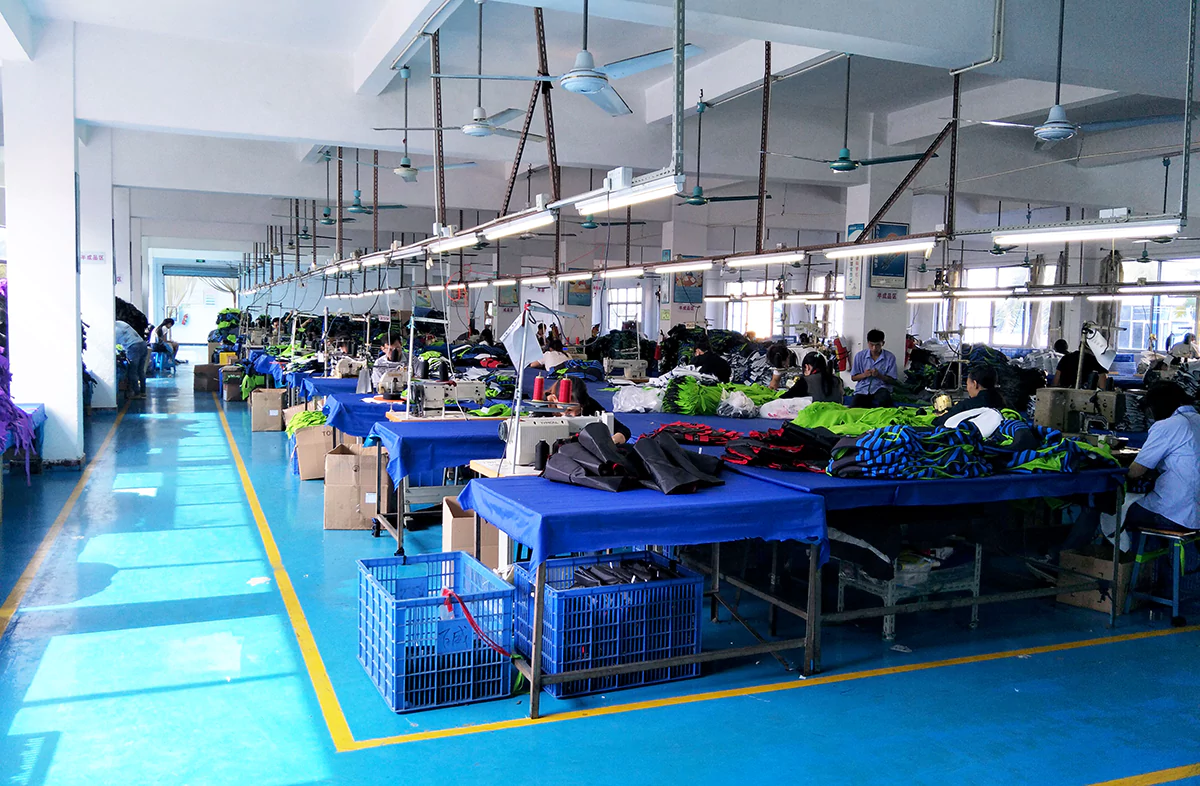
FYBagCustom is Your Trusted Custom Handbag Manufacturer in China, with 15+ years of manufacturing experience producing soft-body, unstructured, and drape-dependent silhouettes for brands worldwide. For buyers developing slouchy hobo bags and relaxed-fit shoulder bags, our capabilities include:
Explore our full range of custom bag types or contact our team to discuss your slouchy hobo project.
The slouchy hobo bag is a masterclass in restraint — fewer panels, no interlining, minimal hardware, and a silhouette defined entirely by the material’s natural behavior under gravity. This simplicity is what makes it difficult: there is nothing to hide behind. For B2B buyers developing slouchy bags, three core takeaways:
If your 2026 collection includes slouchy hobos, soft totes, or unstructured shoulder bags, now is the time to source soft materials, develop curved patterns, and approve drape-tested samples. Contact FYBagCustom to discuss material options, slouch ratios, and naked-build construction — and receive physical samples with drape verification, typically within 5–12 days.
FYBagCustom’s OEM and ODM team develops unstructured, drape-dependent handbags with soft calfskin, garment-grade PU, and suede — with curved pattern engineering, naked-build construction, through-body strap systems, and drape-specific QC. Samples with hanging drape verification in 5–12 days.
Start Your Custom Bag Project →