Tel/WhatsAapp:+86 18011919834
E-mail: chloe.x@fybagcustom.com

Tel/WhatsAapp:+86 18011919834
E-mail: chloe.x@fybagcustom.com
Send Your Inquiry Today

Years Manufacturing
Factory Area
Professional Staff
Inspection Rate
Our large and oversized bag production serves travel brands, outdoor/adventure companies, sports and fitness brands, Amazon FBA sellers, commercial/industrial buyers, and moving/storage companies — any buyer sourcing bags where capacity and durability are the primary purchase drivers.



Mini bags sell on fashion. Medium bags sell on features. Large bags sell on one thing: can it carry what I need, where I need it, without failing? Five engineering realities separate large-bag production from everything smaller.

A 60cm duffle loaded with 12kg of gear collapses, sags, and loses shape without internal structure. Base boards, reinforced bottom panels, and internal dividers are mandatory — not optional — at large scale. Structure IS the hidden cost of large bags. A medium bag holds shape by default; a large bag must be engineered to.

A loaded large duffle or travel backpack weighs 10–15 kg. Straps, handles, and attachment points must survive that load across thousands of lift-carry-drop cycles. Reinforced bartack stitching, heavy-gauge D-rings, padded contoured straps, and riveted handle bases — hardware that’s optional on medium bags is mandatory on large.

Large bags carry more weight over longer distances. They get thrown onto luggage carousels, dragged across parking lots, and stacked under bus cargo holds. Denier requirements increase — 600D minimum, 900D–1680D for heavy use. Bottom panels need abrasion-resistant reinforcement. Zippers upgrade to #8 or #10 heavy-gauge.

A 15kg load on a single shoulder strap causes fatigue in 10 minutes. Large bags need load-distribution systems: padded contoured shoulder straps, chest straps (sternum), hip belts (for travel packs), and grab handles at multiple points. Weight distribution is a comfort and ergonomic requirement unique to large bags.

Large bags sit right at the airline carry-on boundary — approximately 56 × 36 × 23 cm. One centimeter over gets gate-checked. A gate-checked bag must survive the luggage system — a PU leather weekender built for overhead bins may not. Carry-on compliance constrains dimensions; luggage-system survival constrains material choice.
Large bags segment by application — travel, sports, commercial, and storage each have different dimensional standards, material requirements, and feature sets. Here are the eight most-ordered formats in the 40 cm+ range.
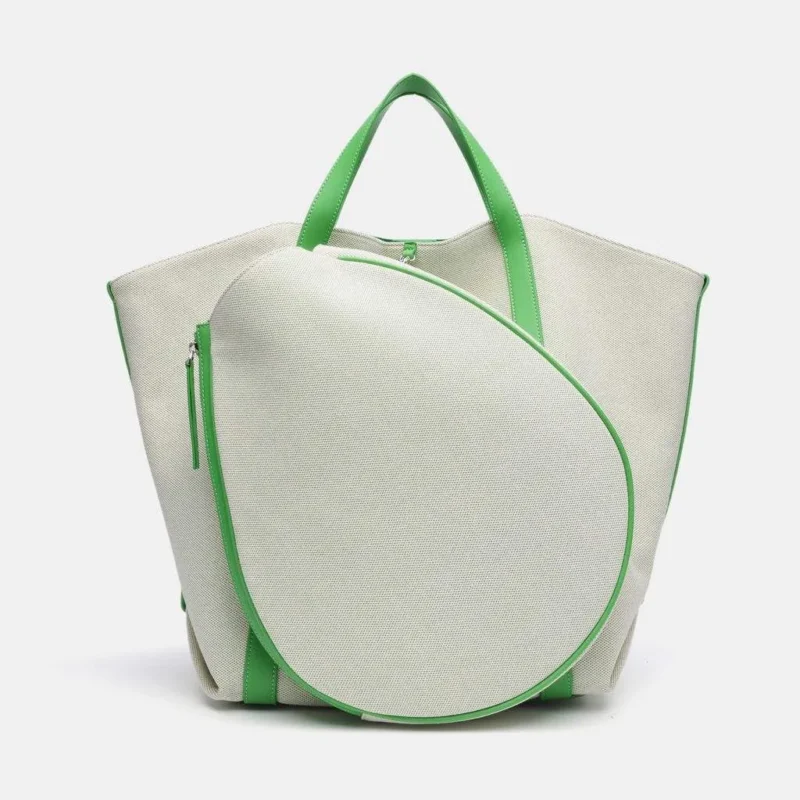
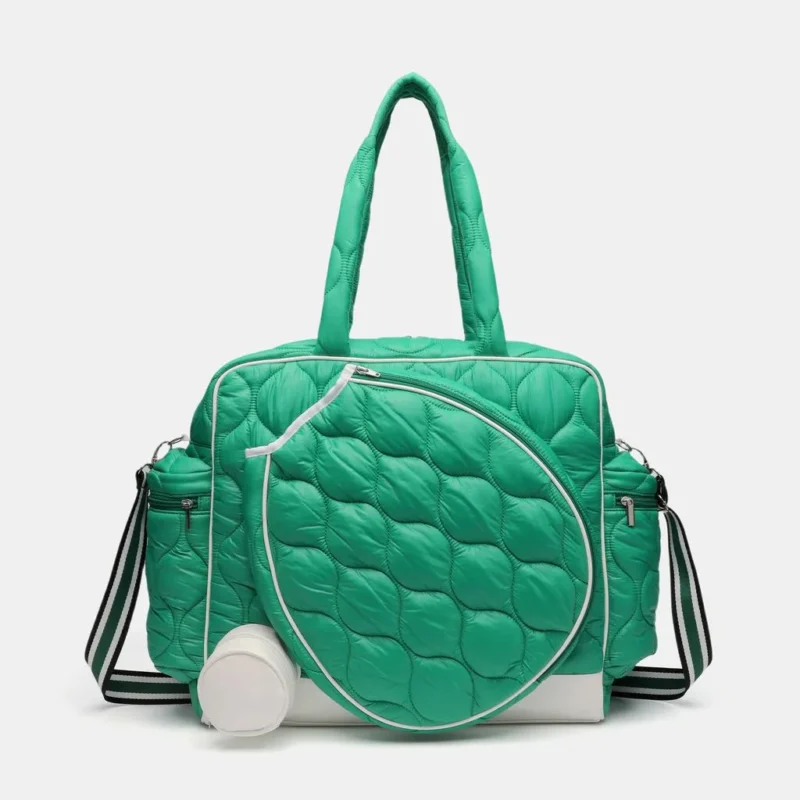
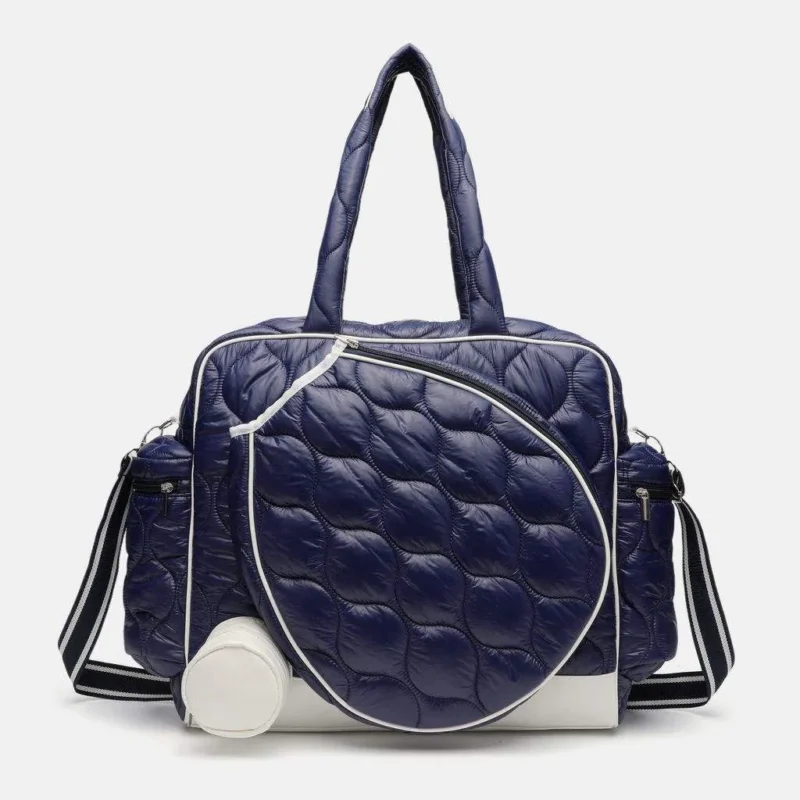
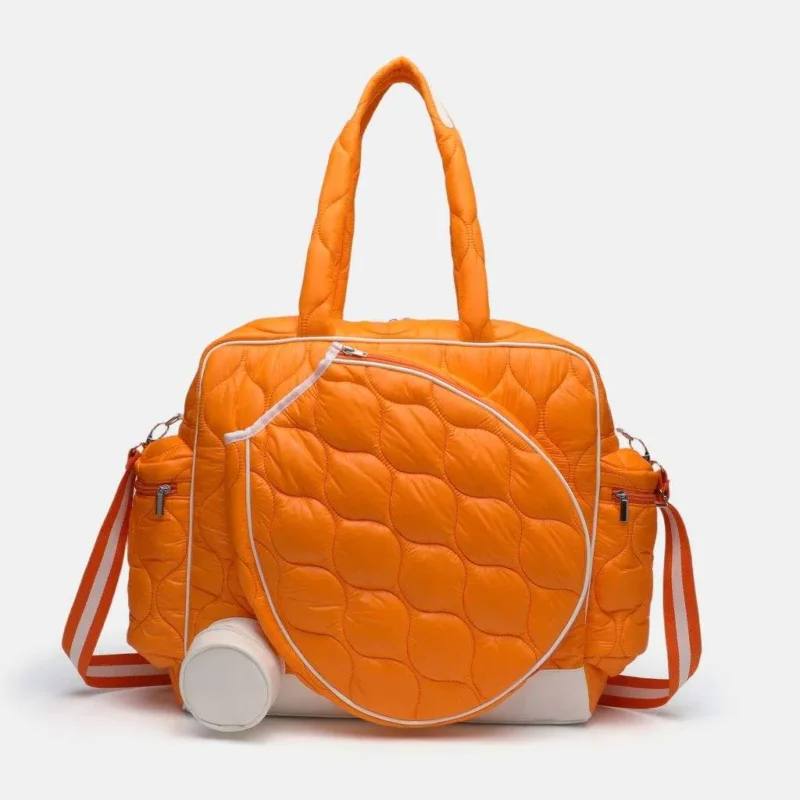

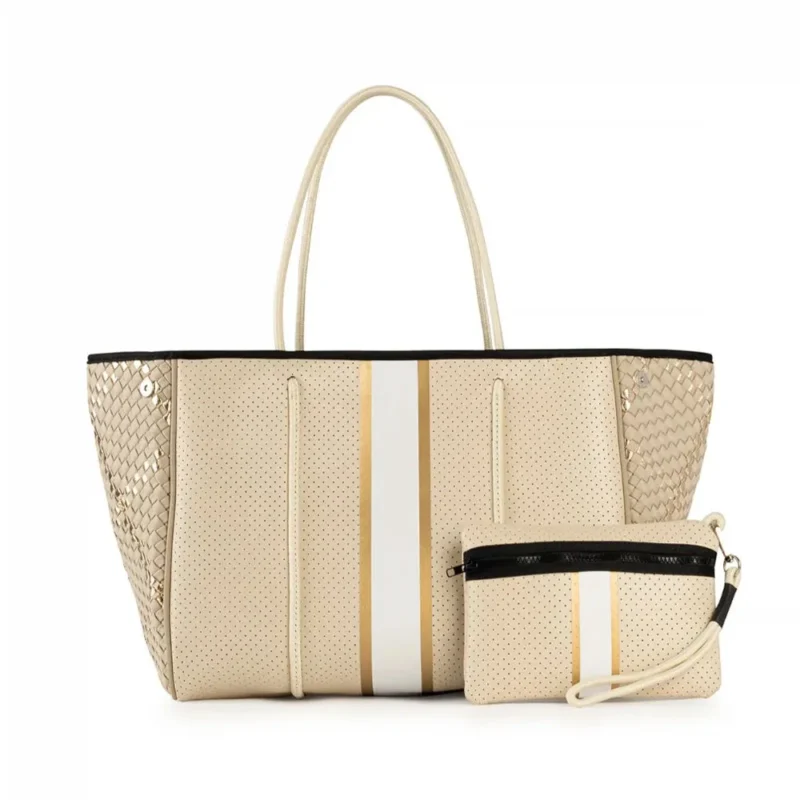
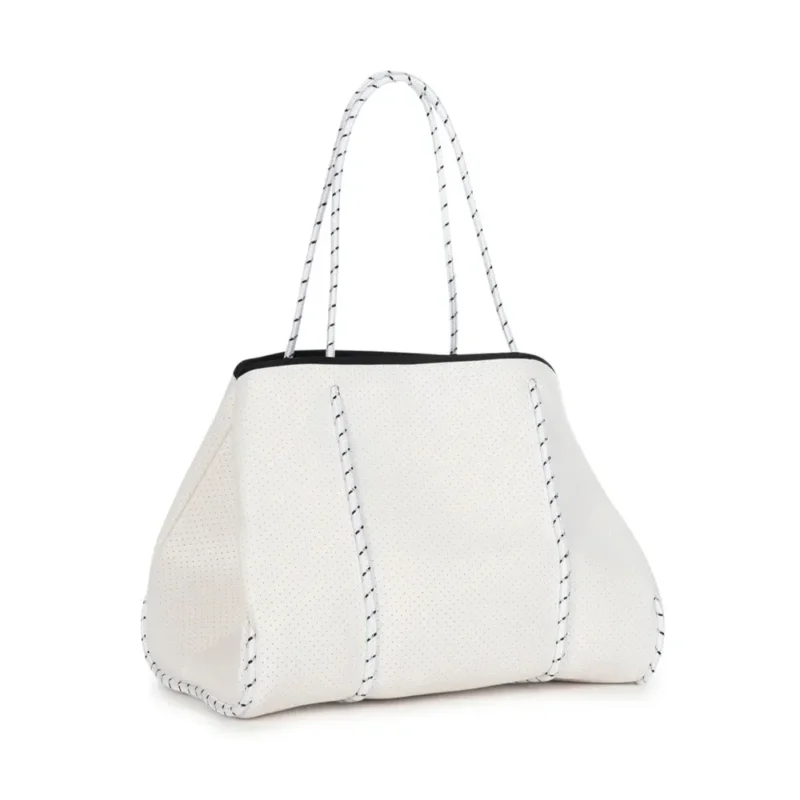
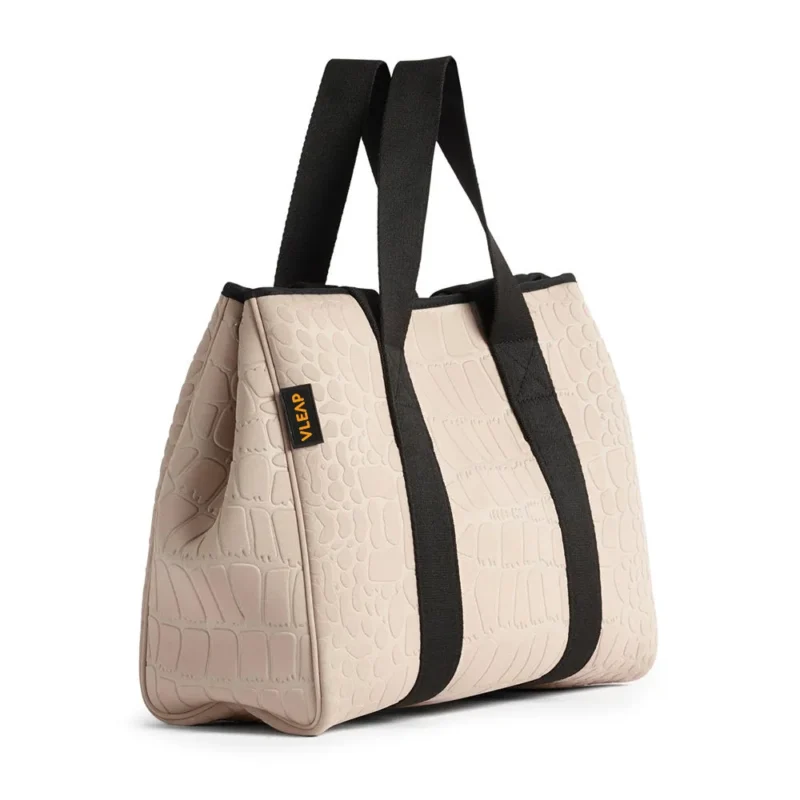
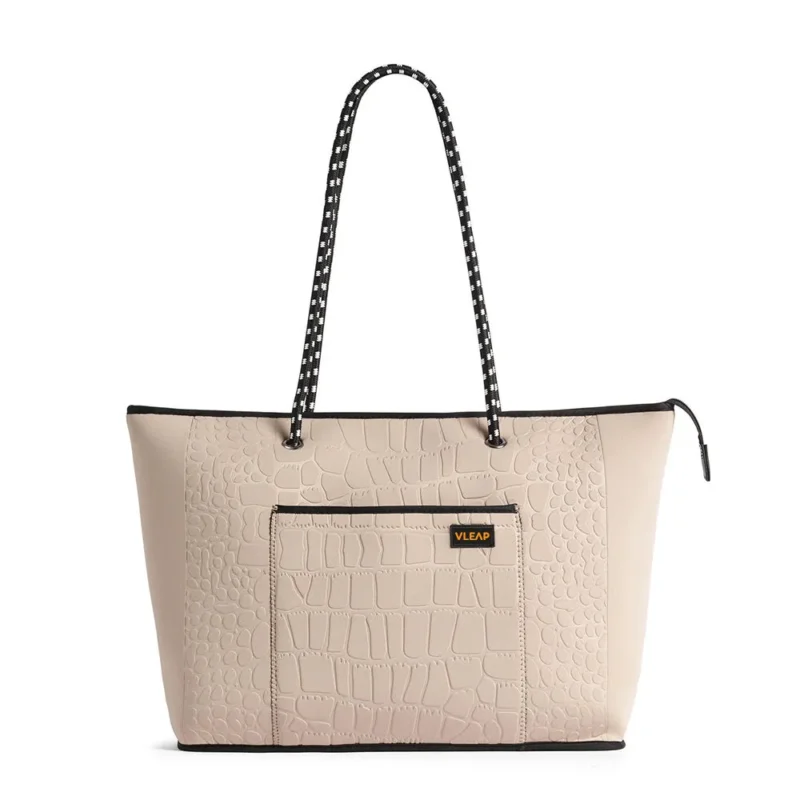
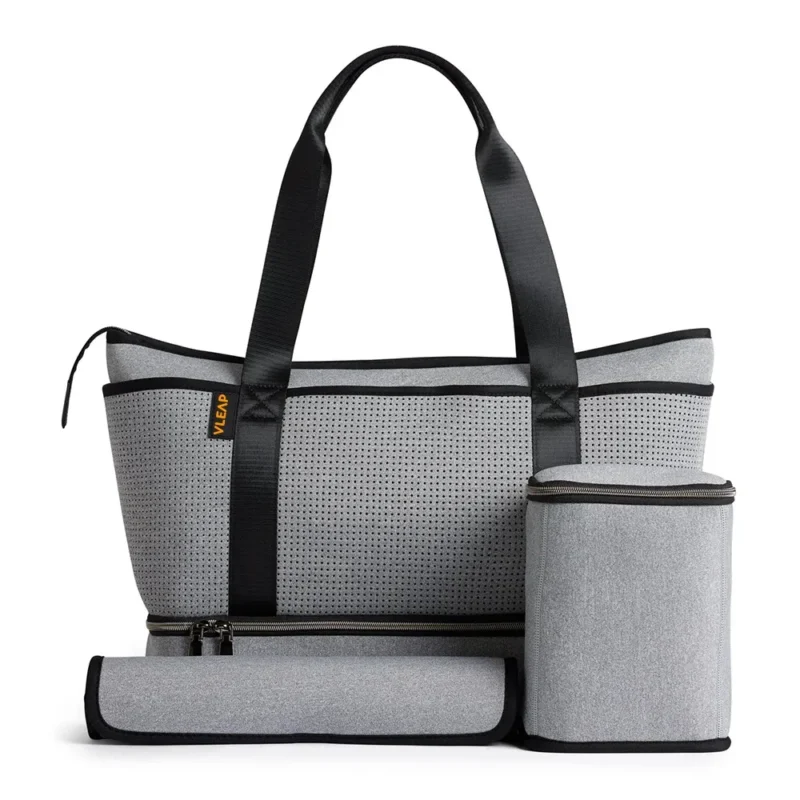
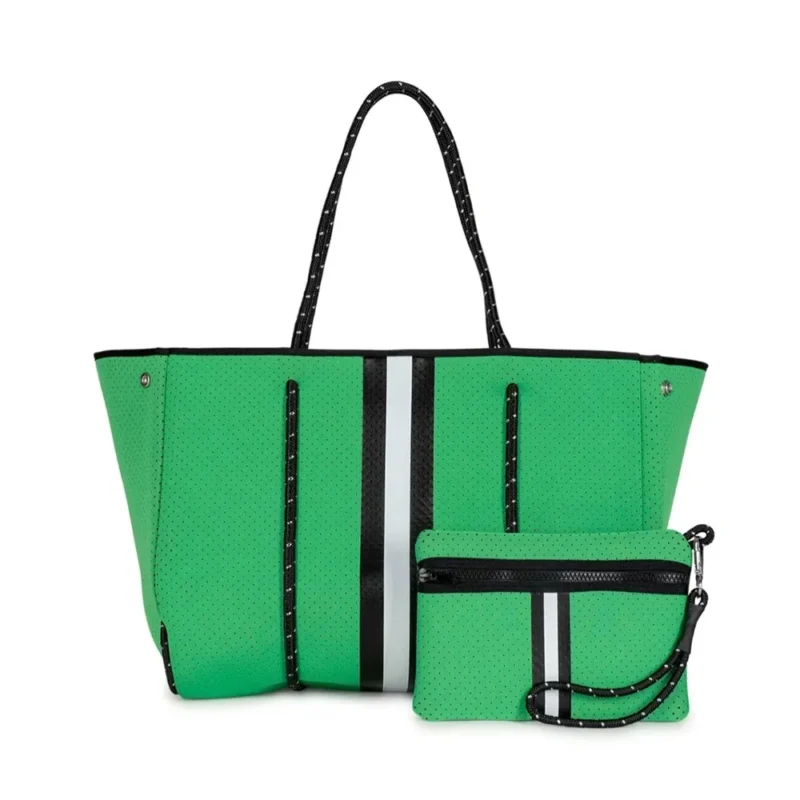
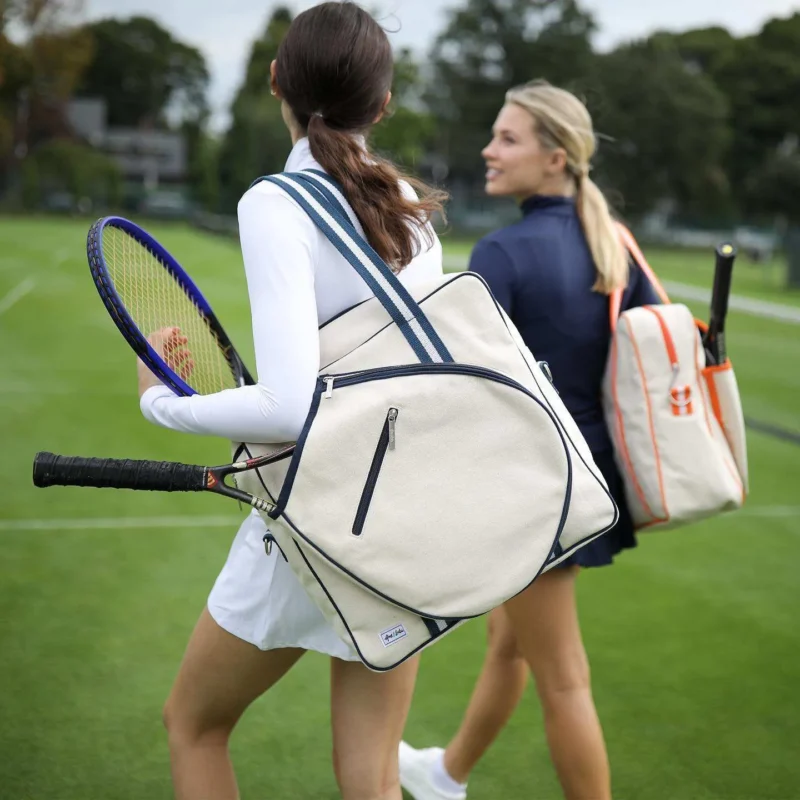
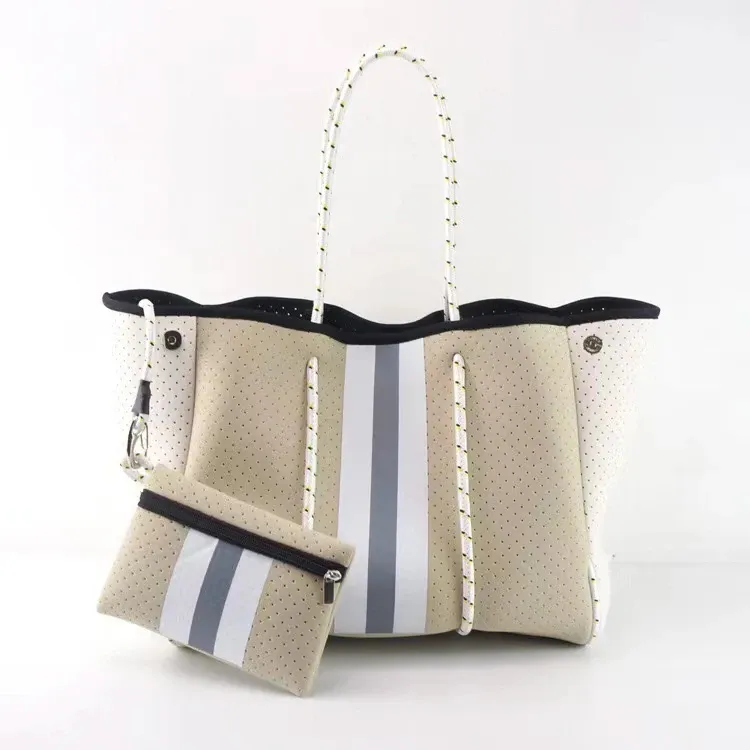
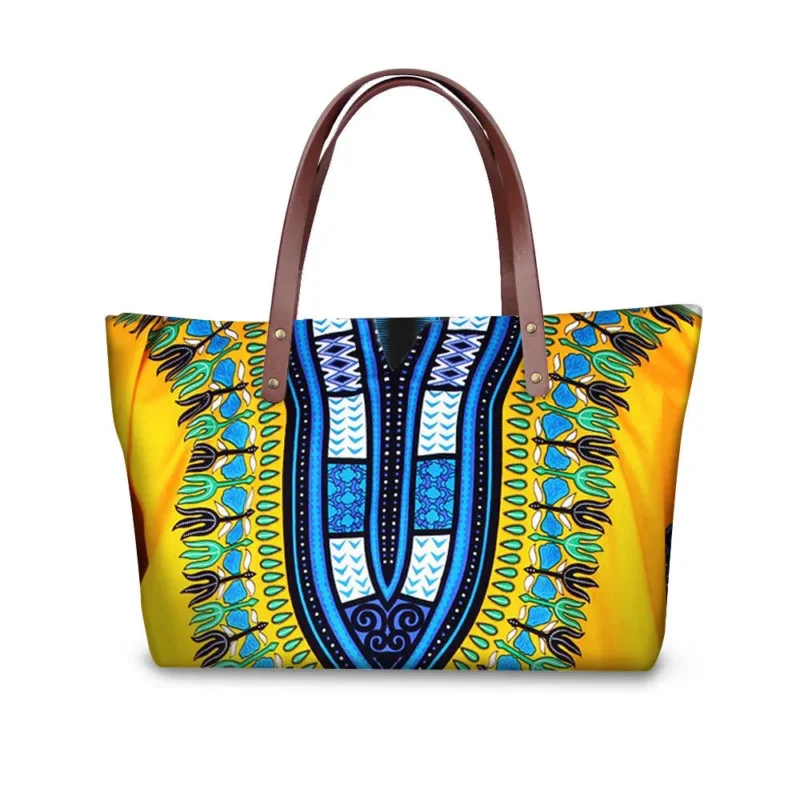
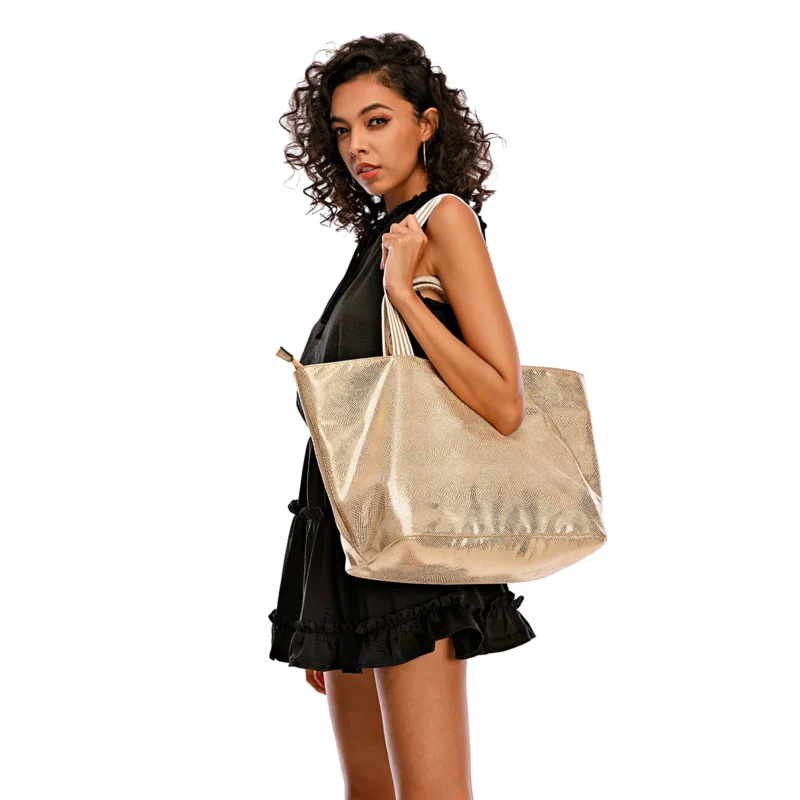
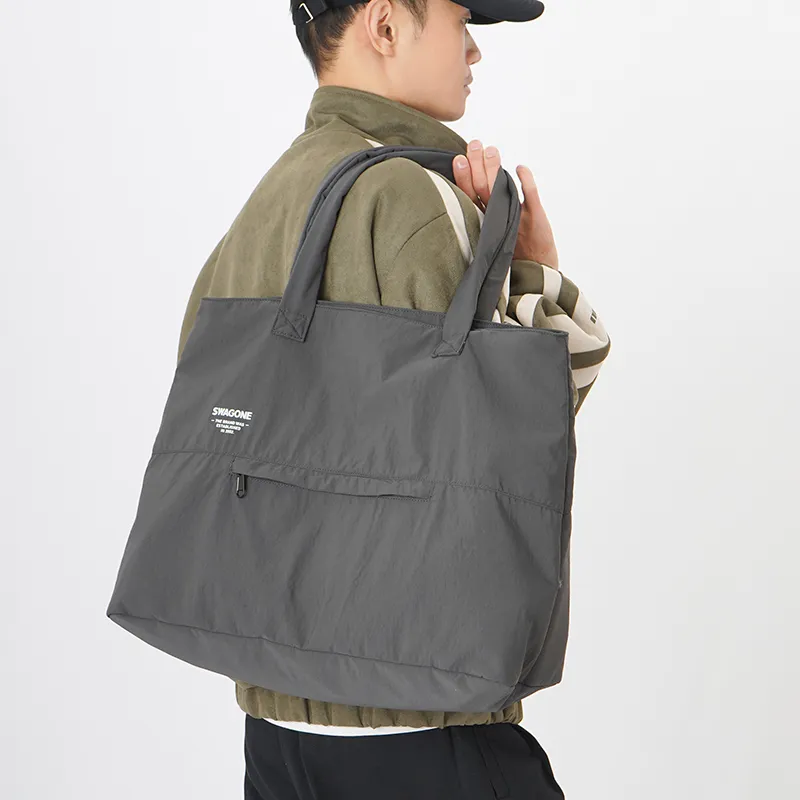
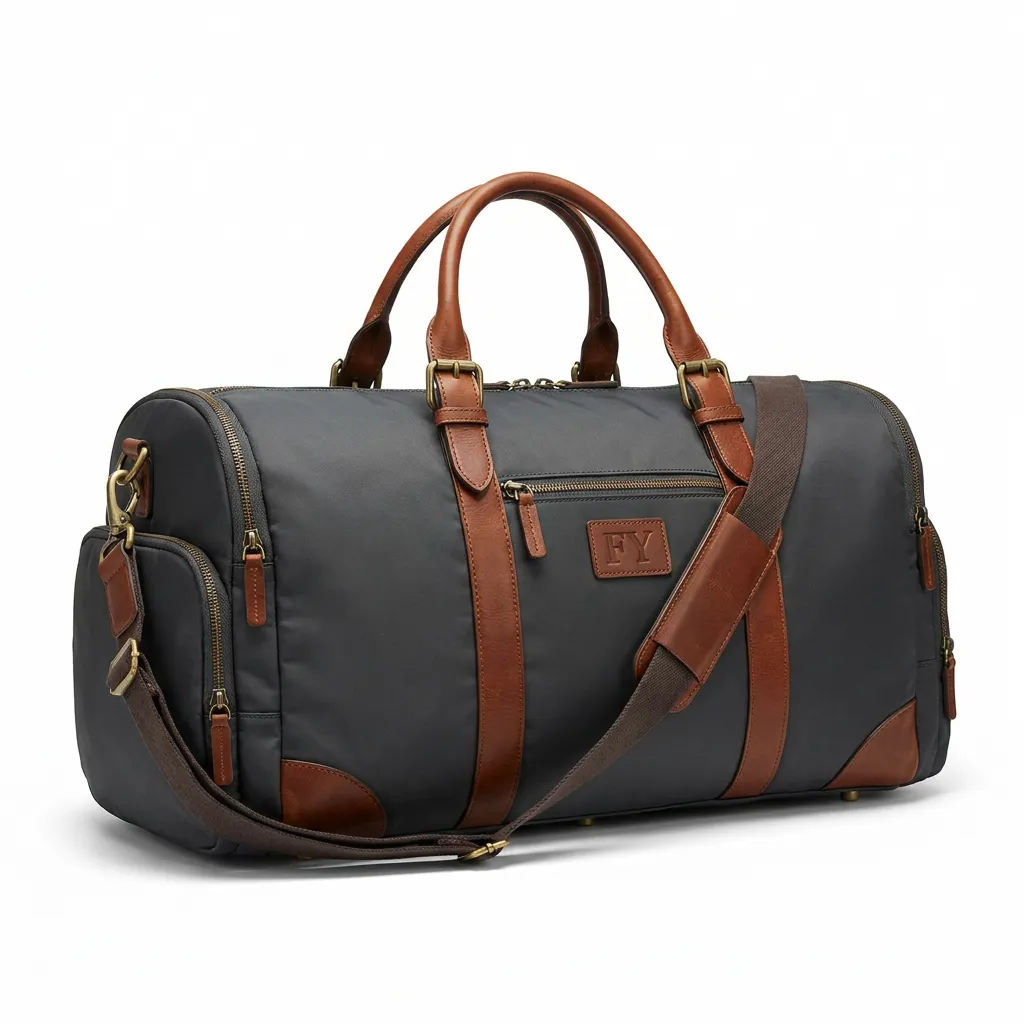
Large duffle for 5–10 day trips. 60–90L. Carry-on compliant at 55cm; check-in at 65–70cm. Shoe compartment, organizer pockets, trolley sleeve. Convertible duffle-backpack option. Nylon or Oxford.
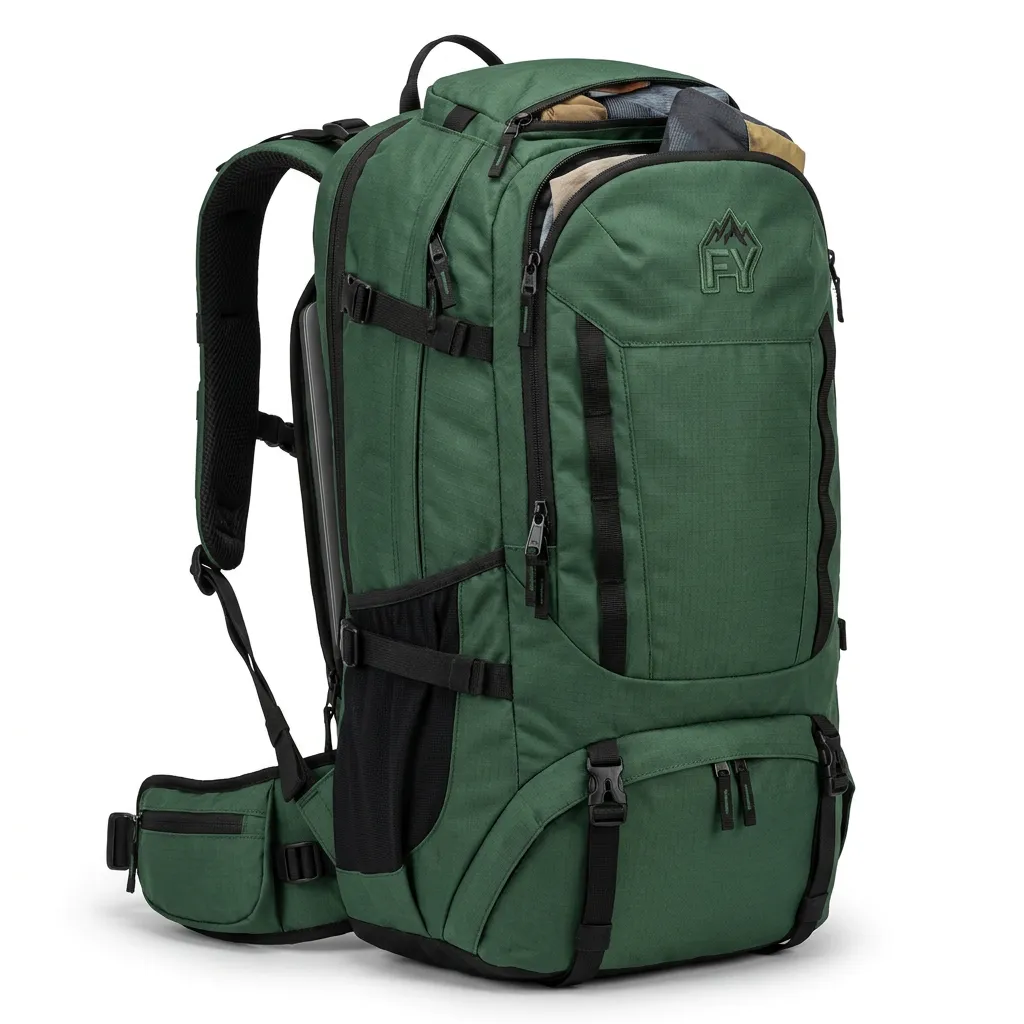
Top-loading or clamshell backpack for extended travel and outdoor use. Padded hip belt, load-lifter straps, hydration sleeve. 50–70L capacity. For adventure-travel brands, outdoor companies, and gap-year travelers.
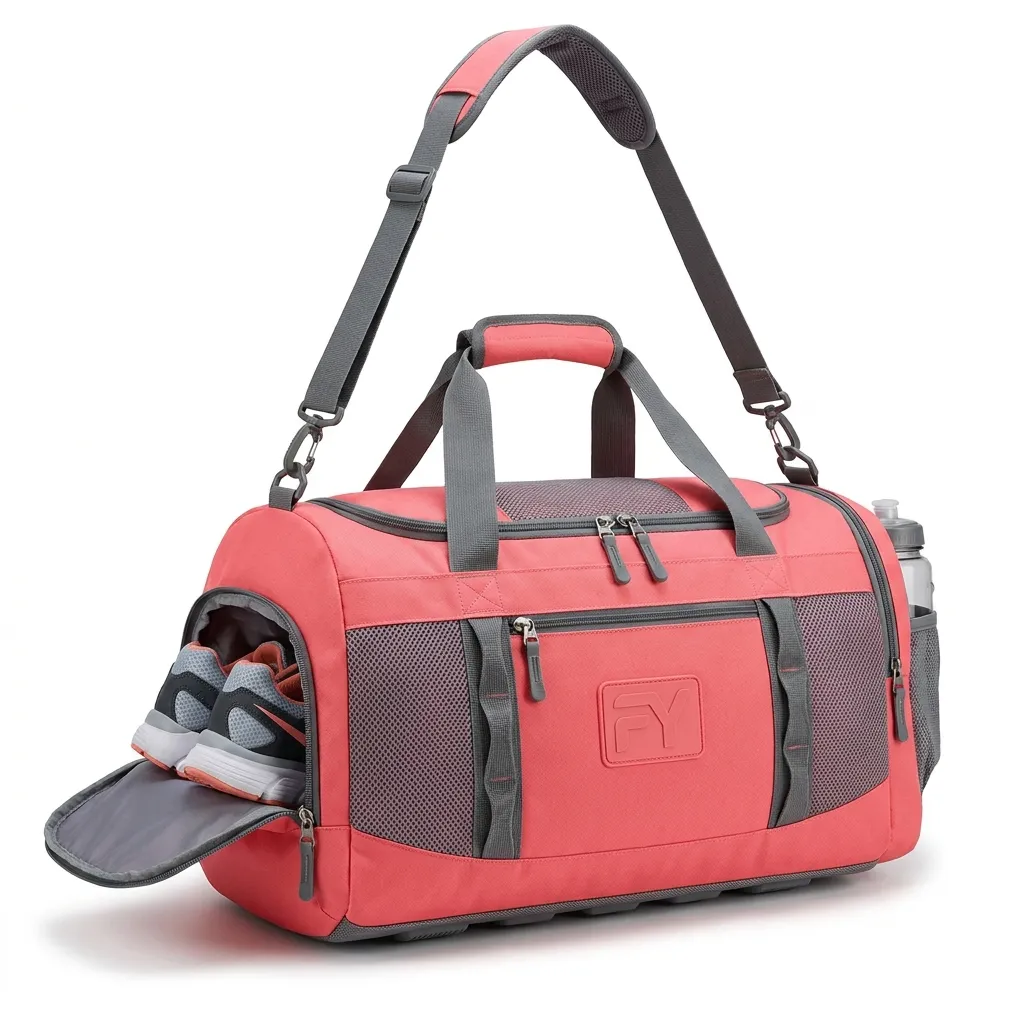
Full-size gym duffle with shoe compartment, wet pocket, ventilated zones, and water-bottle holder. 40–60L. For fitness brands, sports teams, and tournament use. Polyester or nylon with reinforced bottom.
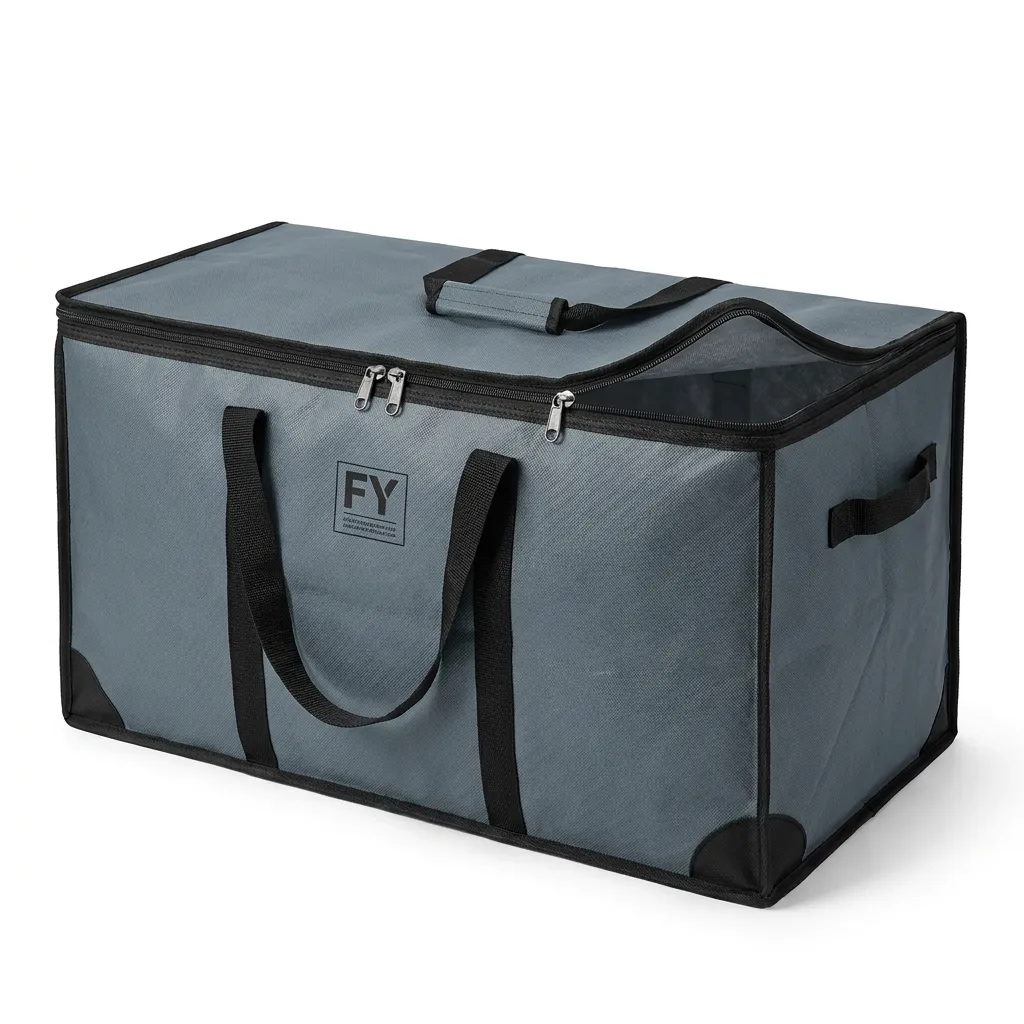
Heavy-duty zipper bag for clothing, bedding, seasonal storage, and moving. Non-woven or woven PP. Dual-handle carry. Clear window optional. The highest-volume oversized format — function-only, lowest cost per unit. 10,000+ pc orders.
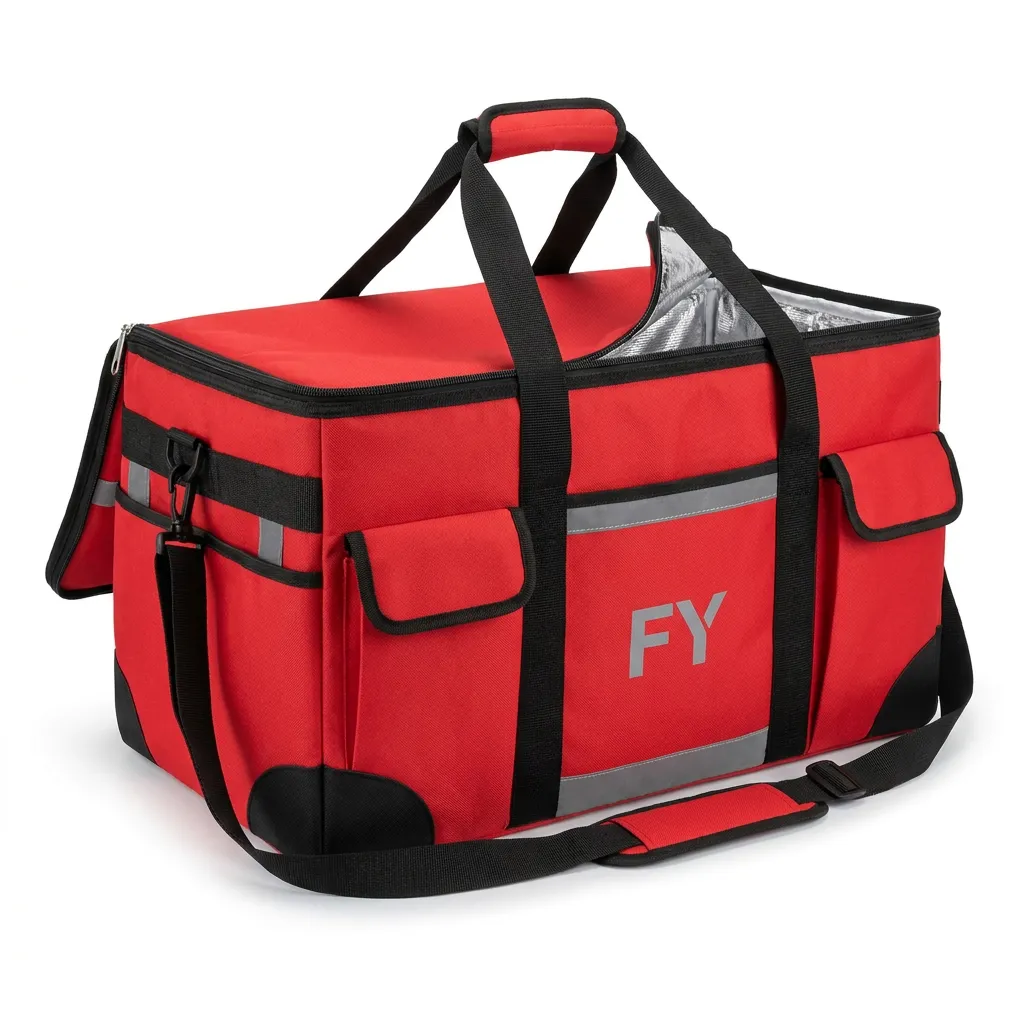
Large-format insulated bag for food delivery, catering, and cold-chain logistics. 40–80L. 8–10mm XPE/EVA foam. Velcro or zip-flap closure. Rigid base board. For meal-delivery services and commercial catering. Branded with company logo.
Large and oversized spans a wide range — from carry-on-compliant travel bags to industrial-scale storage. Each size tier has different material requirements, structural needs, and target buyers.
40–55 cm
Large / Carry-On
Carry-on-compliant duffles (55cm max), weekender bags, large gym bags, and travel backpacks (40–55L). The commercial sweet spot for large bags — enough capacity for 3–5 day trips while meeting airline carry-on limits. Nylon, Oxford, or polyester with standard hardware. The highest-revenue large-bag tier.
55–65 cm
XL / Check-In
Check-in duffles, garment bags, large sports bags, and extended-travel packs (55–80L). Exceeds airline carry-on limits — must survive the luggage handling system. Material escalation: 900D+ fabric, reinforced bottom, heavy-gauge zippers (#8+), padded contoured straps. Higher material and construction cost than carry-on tier.
65–80 cm
Oversized / Storage
Moving bags, storage bags, commercial laundry bags, and bulk-transport bags (80–120L). Function over fashion — durability and capacity are the only specs. Non-woven, woven PP, or heavy-duty polyester. Dual handles, heavy-gauge zipper or drawstring. Lowest cost per liter of capacity. Highest order volumes.
80 cm+
Industrial / Jumbo
XL insulated delivery bags, industrial laundry bags, bulk commodity bags, and specialty transport bags (120L+). Custom-engineered for specific commercial applications. Reinforced seams, double-stitched stress points, industrial-grade hardware. Buyers in this tier spec by load capacity (kg) and cycle life, not by dimensions or aesthetics.
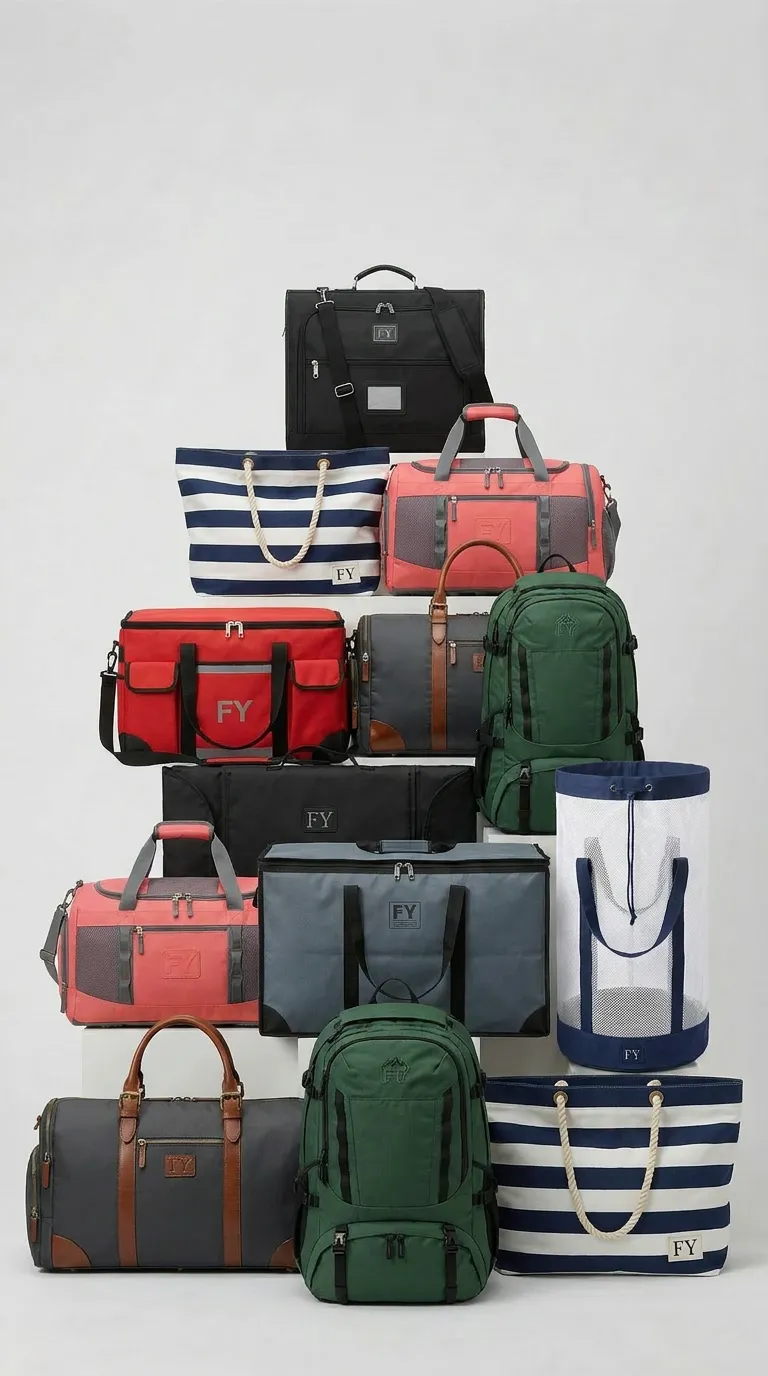
A medium bag holds shape by default — the fabric panels are small enough that material stiffness alone provides structure. A large bag at 60 cm+ cannot rely on fabric stiffness. Without engineered internal structure, large bags collapse under their own panel weight before you even load them. Here’s what changes at large scale.
We engineer structural reinforcement into every large bag at the sampling stage — base boards, panel stiffeners, and load-bearing attachment points are designed for the specific dimensions and target load of your product.
Base Reinforcement
PE board (2–3mm), EVA foam board, or corrugated cardboard base insert. Large bags must stand upright without support. The base panel bears the full weight of the contents plus ground friction and abrasion. A reinforced base is the single most important structural component — without it, the bag collapses into an amorphous lump. We recommend PE board for travel bags and EVA for soft-structured duffles.
Bottom Panel
Abrasion-resistant bottom panel — double-layer fabric, PVC/TPU-coated, or separate reinforced material. Large bags get set on concrete, gravel, airport floors, and vehicle cargo areas. The bottom panel must resist abrasion, moisture, and puncture. Common: 1000D Cordura-type nylon bottom on 600D body, or PVC-coated Oxford bottom panel. The bottom fails first on every large bag.
Handle Attachment
Grab handles on large bags carry 10–15 kg repeatedly. Attachment must be load-rated: bartack stitching (minimum 42-stitch bartack), reinforced anchor patch through outer shell + interfacing + lining, and ideally handle webbing that extends through the bag body to the opposite side (wrap-around reinforcement). A handle that tears under load is the #1 large-bag warranty claim.
Strap Engineering
Padded contoured shoulder straps (travel backpacks), load-lifter adjusters, sternum straps, and hip belts. Weight distribution systems that don’t exist on medium or small bags. Strap width: 50–70mm padded (vs. 25–38mm on medium). Mesh-backed for breathability. Adjustable 80–150cm. Hip belt required on 50L+ backpacks for load transfer to hips.
Zipper Gauge
#8 or #10 heavy-gauge zippers on main compartments. Standard #5 zippers fail under the tension of a fully packed large duffle — the teeth separate under lateral stress. Heavy-gauge zippers resist this separation. Double-slider recommended for bags over 55cm (access from either end). YKK-equivalent quality mandatory — cheap large-gauge zippers jam and bind.
Fabric Denier
600D minimum for travel. 900D for heavy use. 1000D–1680D for industrial/commercial. Medium bags work fine in 300D–600D. Large bags in 300D polyester tear at stress points within weeks of heavy use. Denier must scale with bag size and target load. We recommend 600D Oxford or nylon as the baseline for all large bags, with 900D+ for check-in, sports, and commercial formats.
Every large bag leaves our Guangzhou factory with engineered structure, load-rated hardware, and reinforced construction. In-house design, pattern-making, heavy-gauge sewing, and QC. 10+ production lines. Sample turnaround in 5–7 days.
Free Add-on: Professional Product Photography Included
Free white-background product photos for your online shop, Amazon listings, and wholesale catalogs — no additional charge on production orders.
Large bags use heavier fabrics, stronger hardware, and more internal reinforcement than any other size tier. Material and hardware specifications must be matched to the target load — under-specifying causes field failures; over-specifying wastes cost.
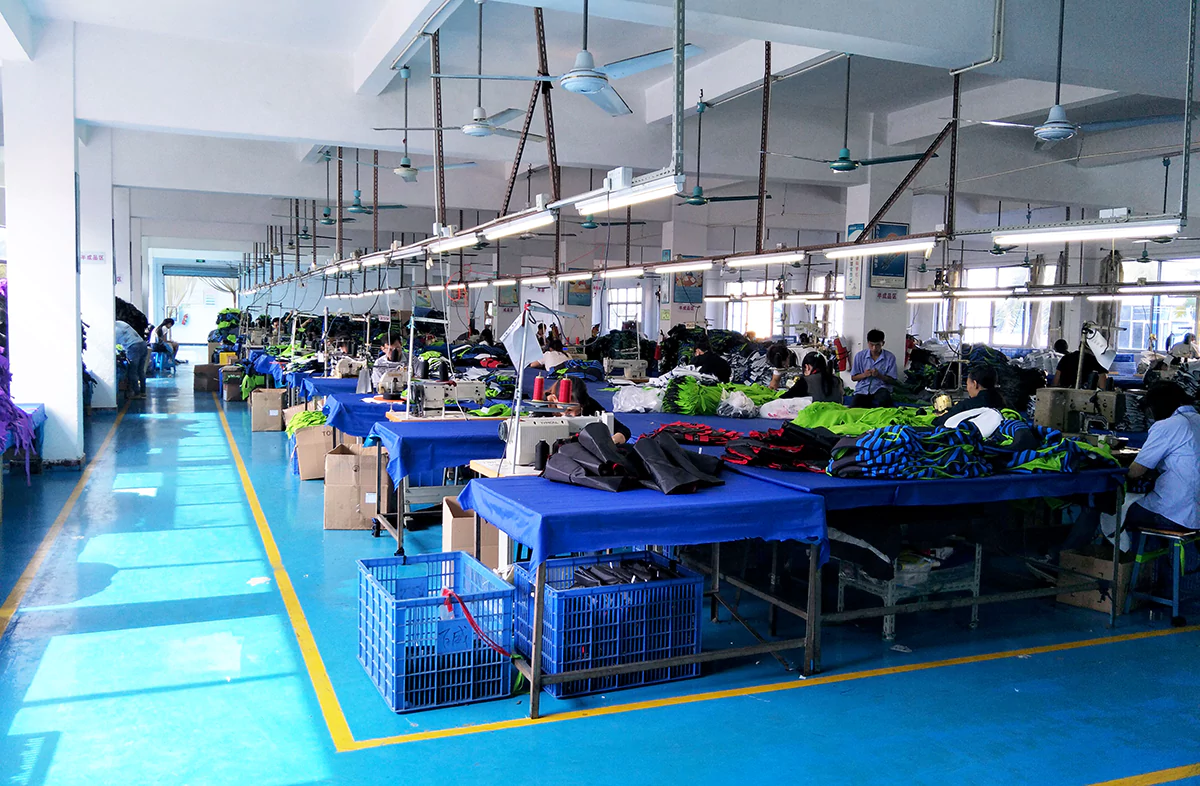
FY Bag Custom operates its own vertically integrated factory in Guangzhou, Guangdong — design, pattern-making, cutting, heavy-gauge sewing, structural assembly, and QC all under one roof. Large bag production requires industrial-grade sewing machines (walking-foot and cylinder-arm) that handle #8–#10 zippers, multi-layer reinforced panels, and heavy webbing that standard flatbed machines cannot process.
Our large-bag production shares structural-engineering expertise with our duffle bag, backpack, and gym bag lines — the same reinforcement techniques, load-rated hardware, and heavy-gauge sewing apply across all large-format products.
Years in Manufacturing
Factory Floor Area
Professional Staff
Production Lines
Monthly Capacity
Pre-Shipment Inspection
Large bags face size-specific QC risks — structural collapse under load, handle tear-out, zipper separation under tension, bottom-panel abrasion failure, and strap-attachment fatigue. Our 6-stage QC includes load testing and stress-point verification. Third-party inspections (SGS, BV, TUV) welcome.
Fabric denier and weight verified. Heavy-gauge zippers slide-tested and tension-tested. Handle webbing pull-tested at incoming (25kg minimum). Base-board thickness measured. All structural components verified before assembly begins.
PPS delivered in 5–7 days, load-tested with weighted fill to target capacity. Handle pull-tested to 20kg+. Zipper tested under lateral tension. Carry-on dimensions measured (if applicable). Production starts only after your written sign-off.
Base-board insertion verified. Bottom-panel reinforcement checked. Handle wrap-around construction inspected for continuous webbing path. Bartack stitch count verified at every stress point (42+ stitches minimum). Panel alignment checked for symmetry.
Sample units from every production batch filled to rated capacity with weighted fill. Carried by handles for 30 seconds — no handle deformation, no stitch failure, no zipper separation. Shoulder straps loaded with 10kg and adjusted through full range. Bottom panel inspected after drag test on rough surface.
Every finished large bag inspected one by one — structural integrity, zipper function across full arc under load, handle attachment, strap adjustment, bottom panel, fabric surface, lining, branding, and overall dimensions. Not sampled, not skipped.

Large bags packed flat-folded or semi-stuffed depending on format. Structural elements (base boards) positioned to prevent transit damage. Carton sizing matched to bag dimensions — no over-compression. Container loading photos and videos sent within 24 hours.
Large bags have moderate-to-longer production cycles than medium bags — structural assembly, heavy-gauge sewing, and reinforced construction add time. Sample in 5–7 days, bulk in 25–40 days depending on structural complexity.
Day 1–2
Send tech pack + target capacity; FOB quote in 24 hours.
Day 3–10
Load-tested prototype in 5–7 days via DHL.
Day 11–13
30% T/T deposit; balance before shipment.
Day 14–40
Daily WIP photos including structural-assembly stages.
Day 41–45
100% inspection + load testing + stress verification.
Day 46–55
Sea, air, express, or direct-to-FBA.
Sample Lead Time
5–7 Days
Mass Production
25–35 Days
Payment Terms
30% T/T · 70% Before Shipment
Shipping Terms
FOB · CIF · DDP · Amazon FBA
Over the past 15+ years, FY has manufactured large and oversized bags for travel brands, sports companies, Amazon FBA sellers, and commercial buyers worldwide.
OEM production of a carry-on-compliant convertible duffle-backpack (55 × 35 × 22cm, 45L). 900D Oxford with PVC-coated bottom panel. Concealed backpack straps, shoe compartment, trolley sleeve, #8 double-slider zipper. Carry-on compliance verified at sampling. 4 colorways. FOB to US and EU. Retail $65–90.
ODM partnership on a 60cm weekender duffle with shoe compartment, wet/dry pocket, and trolley sleeve. 600D polyester with reinforced bottom. 3 colorways. FNSKU labeling, Amazon packaging, lifestyle photography. Air-shipped to FBA. Ranked top 25 in “large duffle bag” within 60 days.
Heavy-duty non-woven storage bag (70 × 50 × 30cm) with reinforced dual handles and heavy-gauge zipper. 140 GSM laminated non-woven. Screen-printed brand logo. For retail distribution through furniture and home-improvement chains. Sea freight CIF. Under $1.80/pc at volume. Annual reorder program.
Global Shipping Options
•Sea Freight
•Air Freight
•Express (DHL, FedEx, UPS)
•Rail Freight
•Door-to-Door
•Direct-to-Amazon FBA
Straight answers to the questions bulk-order buyers ask most often about custom large bag production.
600D minimum for travel and gym bags. 900D for check-in luggage, sports equipment bags, and outdoor use. 1000D–1680D for commercial, industrial, and military-grade applications. Using 300D polyester on a large duffle is the most common material mistake — it tears at stress points within weeks. We recommend fabric denier at the quoting stage based on your target load, use case, and price tier.
If designed within approximately 56 × 36 × 23 cm (varies by carrier), yes. We recommend targeting 55 × 35 × 22 cm as a safe universal-compliance dimension. We measure and verify dimensions at the sampling stage. Soft-structured bags can compress slightly to fit — rigid bags cannot. For budget-airline compliance, target 50 × 35 × 20 cm.
Large bags typically have comparable MOQs per SKU to medium bags, but the per-unit material and construction cost is higher. Large bags use more fabric, heavier hardware, and more structural components — all of which increase unit cost. Simpler formats (storage bags, laundry bags) can start at competitive minimums. Complex travel duffles and backpacks have moderate minimums. Contact us with your specs for a specific confirmation.
More fabric per bag (2–3× the material of a medium bag). Heavier-gauge zippers (#8/#10 vs. #5). Structural components (base board, reinforced bottom, wrap-around handles). Heavy-duty sewing (walking-foot and cylinder-arm machines are slower than flatbed). Load-bearing hardware. Each of these adds cost that doesn’t exist in medium or small bags.
Yes. Water-resistant (PU-coated fabric + taped seams, IPX3–4) works well on large travel duffles and backpacks. Full waterproof (welded seams, roll-top) works on large dry bags and outdoor formats. Large bags have more seams than medium bags — each seam is a potential leak point, so seam treatment is even more important at large scale.
Yes. We produce bags up to 100 cm+ for commercial and industrial applications — large laundry bags, bulk storage bags, commercial delivery bags, and specialty transport bags. At this scale, production is engineering-driven: we spec by load capacity (kg), cycle life (number of uses), and dimensional tolerance. Send us your application and we’ll engineer to your requirements.
Yes. FNSKU labeling, Amazon-compliant packaging, and carton labeling handled at our Guangzhou factory. Note: large bags have higher per-unit FBA fees due to dimensional weight — consider this in your margin calculations. Free product photography included.
Yes. European Industrial Park, Shiling Town, Huadu District, Guangzhou. Monday–Saturday. Video tours available for remote buyers.
Send us your dimensions, target capacity (liters or kg), fabric requirements, and structural needs — we’ll come back within 24 hours with a detailed FOB quotation covering material denier, hardware gauge, structural reinforcement, and packaging. Load-test documentation included free on every prototype. No templates, no copy-paste pricing.


