Tel/WhatsAapp:+86 18011919834
E-mail: chloe.x@fybagcustom.com

Tel/WhatsAapp:+86 18011919834
E-mail: chloe.x@fybagcustom.com
Send Your Inquiry Today

Size Groups
Custom Dimension
Production Tolerance
Fit Testing at Prototype
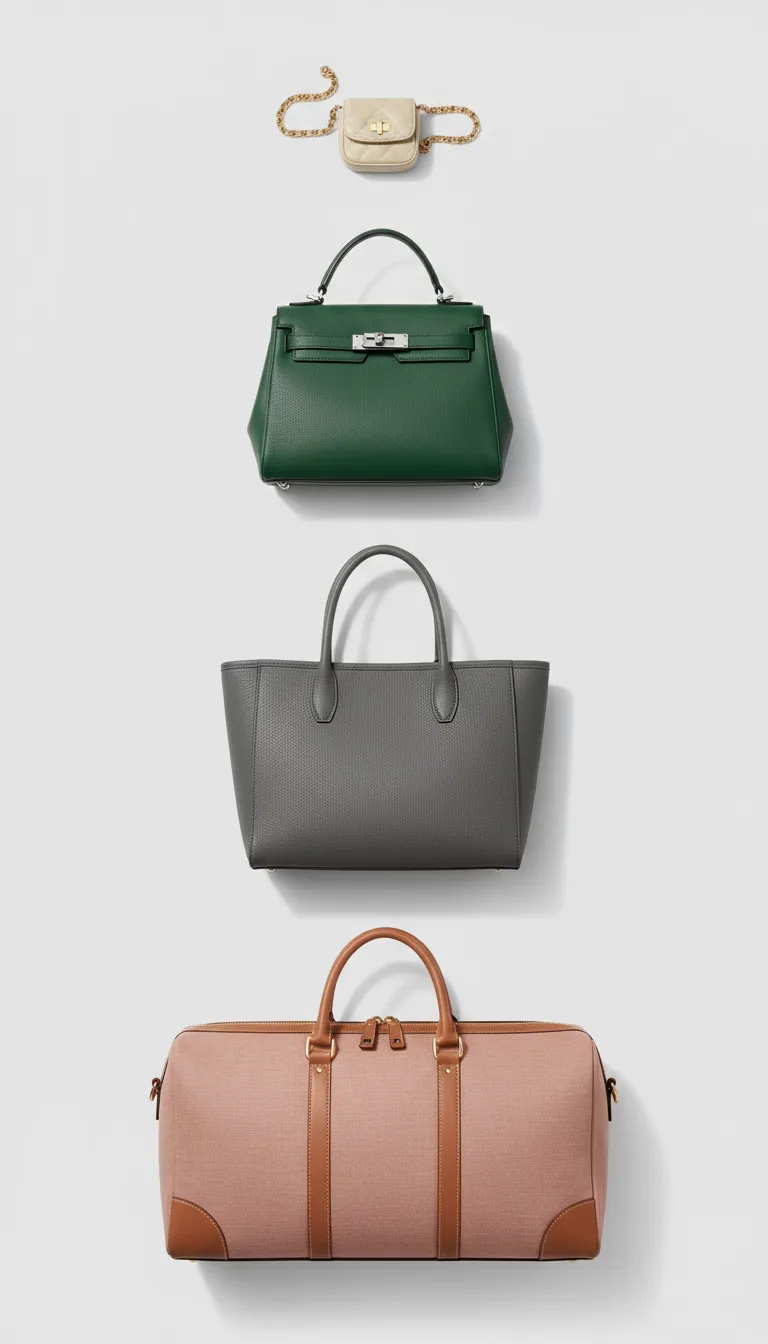
For Brands, “small”, “medium” and “large” are not enough.We also should to know: exact dimensions, capacity, and use scenario.
FY Bag Factory solid bag size strategy gives you:
FY Bag Factory is to translate your commercial goals into clear custom bag sizes and dimensions that work from design to production.
We organize bags into three size groups — each with different target markets, use cases, and production economics. Click into any group for detailed dimensional specs and bag-type recommendations.
Clutches, card holders, cosmetic pouches, bum bags, mini crossbodies, favor pouches, phone bags. Accessories and add-ons — the entry tier of any bag collection. Highest volume per container. Lowest FOB per unit.
Totes, handbags, standard crossbodies, lunch bags, school/commuter backpacks, diaper bags. The core tier — daily-carry bags that hold a laptop, a lunch, or a day’s essentials. Highest demand across all categories.
Weekender duffles, gym bags, travel backpacks, large shopping totes, laundry bags. High-capacity carry — for overnight trips, gym sessions, and bulk shopping. Higher fabric usage = higher FOB; fewer units per container.
Standard dimension ranges for each bag type. These are starting points — we produce ANY custom dimension specified in your tech pack. All dimensions in cm (L × W × H) unless noted.
| Bag Type | Small | Standard | Large | Volume (L) | Key Constraint |
|---|---|---|---|---|---|
| Tote | 30×10×25 | 38×12×35 | 50×15×40 | 8–30L | Handle drop (shoulder vs hand carry) |
| Backpack | 28×12×38 | 32×15×45 | 35×20×52 | 13–36L | Laptop sleeve size (13″/15″/16″) |
| Crossbody | 14×5×18 | 22×8×16 | 30×10×22 | 1–7L | Strap drop (crossbody vs shoulder) |
| Duffle | 40×22×25 | 52×28×30 | 65×35×35 | 22–80L | Airline carry-on (55×40×20 max) |
| Handbag | 18×8×14 | 28×12×20 | 38×15×28 | 2–16L | Proportion (L:H ratio defines silhouette) |
| Makeup Bag | 15×5×10 | 22×8×14 | 28×12×18 | 0.5–6L | Flat-lay opening width |
| Lunch Bag | 18×12×14 | 24×15×20 | 30×20×25 | 3–15L | Insulation thickness (reduces internal volume) |
| Bum Bag | 18×5×10 | 25×8×14 | 32×10×18 | 1–6L | Waist belt max circumference |
Getting the dimensions right isn’t just measuring with a ruler. It’s engineering the pattern, testing with real items, verifying under load, and maintaining tolerance across thousands of units.
±3mm
Production Dimension Tolerance
Real-Item
Fit Testing
at Prototype
CAD
Pattern Grading
Across Sizes
Yield
Fabric Utilization
Optimization
Share your target categories (mini / small, medium, large / oversized), usage scenarios and budget.
Share your target categories (Our team will recommend custom bag sizes, dimensions and constructions tailored to your brand and market. / small, medium, large / oversized), usage scenarios and budget.
Offering one size per bag type is the simplest approach. But if your market spans multiple use cases, a tiered size range — S/M/L or specific-dimension variants — can capture a wider audience without redesigning the bag.
Phone + wallet + keys → Mini/small 14–22 cm
Laptop (13″–16″) + files + lunch → Medium 32–45 cm
Airline carry-on → max 55×40×20 cm (IATA)
Venue clear-bag policy → often max 30×30×15 cm
Amazon “standard size” → longest side ≤ 45.72 cm (lower FBA fees)
Laptop sleeve → internal width must fit device + case (add 15–20mm clearance)
One Size — simpler, lower MOQ
Best when the bag serves one clear use case (e.g., a 15″ laptop sleeve doesn’t need S/M/L). Lower inventory complexity, lower sampling cost.
S/M/L — wider market, more SKUs
Best when user needs vary (e.g., totes for quick errands vs full grocery runs). Requires pattern grading + per-size prototype. MOQ applies per size/color.
First, clarify who will use the bag and how it will be used:
We convert these needs into clear dimensions and capacity specifications:
We create samples and test:
Upon confirming dimensions, we will:
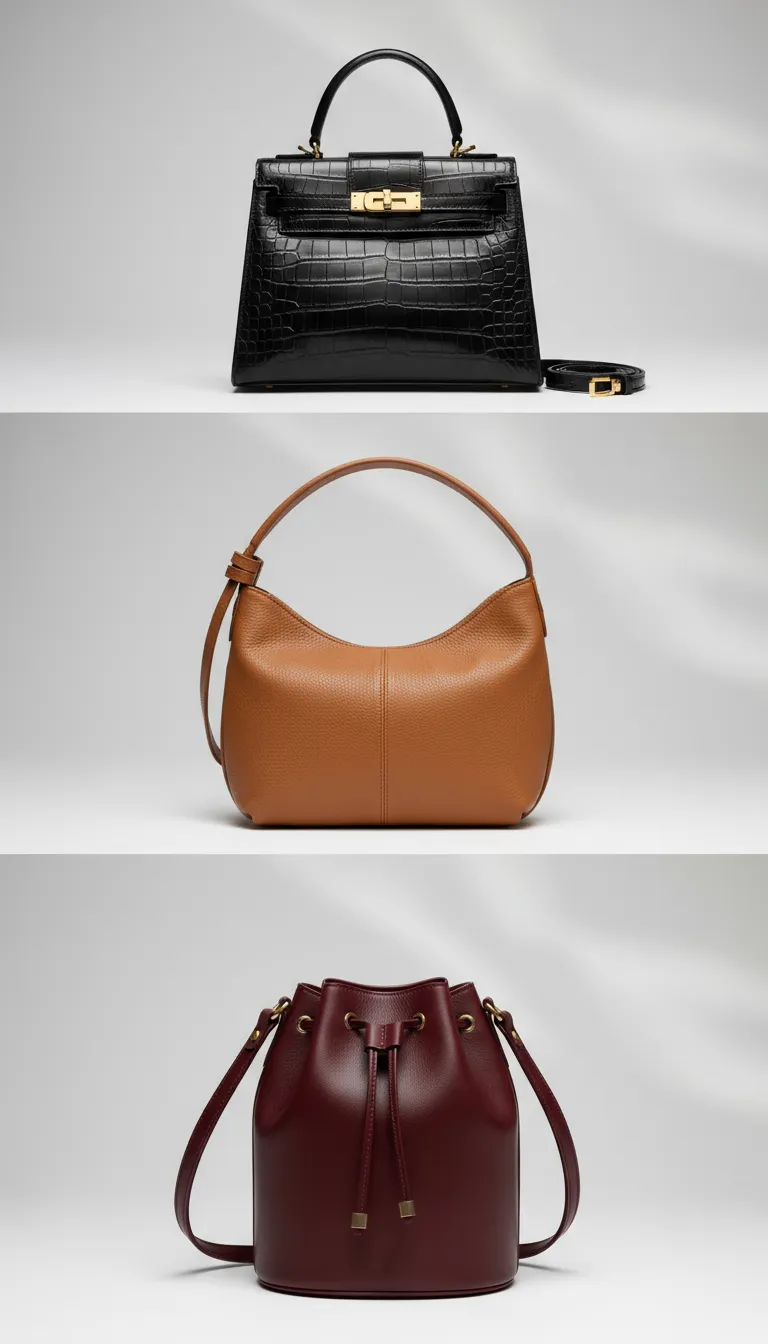
Yes. We produce to any dimension specified in your tech pack. There’s no fixed size menu. The prototype is measured against your spec within ±3mm tolerance on critical dimensions. If you’re unsure about optimal dimensions, tell us what the bag needs to carry — we’ll recommend sizes based on real-item fit testing.
Directly — via fabric consumption. A 10% size increase can add 15–20% more fabric per unit (seam allowances and cutting waste scale disproportionately). Larger bags also use more hardware (longer zippers, wider straps) and take longer on the sewing line. We calculate size-adjusted FOB at the quoting stage.
Rough ranges for a 20′ container: Mini/small bags (pouches, wallets): 15,000–30,000 pcs. Medium bags (totes, backpacks): 4,000–10,000 pcs. Large bags (duffles, weekenders): 2,000–5,000 pcs. Actual count depends on bag shape, packaging tier, and whether bags are flat-packed or filled. We provide the CBM estimate and container load plan at quoting.
We regularly produce bags up to 70 cm in the longest dimension (weekender duffles, large storage bags). Larger formats (garment bags, ski bags, surfboard covers) are possible but should be discussed — they may require specialized sewing equipment or wider-than-standard fabric rolls.
Amazon FBA classifies products by package dimensions — “standard size” (longest side ≤ 45.72 cm) has lower fulfillment fees than “oversize.” We design and package bags to fit within standard-size thresholds where possible — for example, flat-packing a tote to reduce the longest dimension. If the bag inherently exceeds standard size, we flag the oversize classification and its fee impact at the design stage.
Yes. We can create EU / US / Asia versions with slight size adjustments while sharing the same design.
Yes. Give us your target category (handbag, tote, backpack, travel bag, storage bag) and budget. We’ll propose custom bag sizes, materials and structures.
Tell us the bag type, what it needs to carry (laptop size, gym shoes, grocery volume), and any external constraints (airline limits, Amazon standard-size thresholds). We’ll recommend optimal dimensions, test with real items at prototype, and verify ±3mm tolerance across production.