Send Your Inquiry Today

You Trust Custom Bag Design Features — Waterproof, Insulated, Convertible, Clear & More

Design features are what transform a basic bag into a PURPOSE-BUILT product. A waterproof coating protects a travel backpack‘s contents in rain. An insulated lining keeps a lunch bag‘s temperature for 4 hours. A convertible strap system lets a tote double as a backpack. Each feature requires specific materials, construction techniques, and testing — adding functional value (and FOB cost) to the base bag.

Browse features below, or explore: by bag typeby fabricby colorby styleby patternby printing method, or by size.

9+

Engineered Features

Tested

at Prototype Stage

Stackable

Multiple Features / Bag

Transparent

Per-Feature FOB Impact

Why Design Features Matter for Your Brands

At FYBagCustom, we treat custom bag design features as core engineering parameters—not afterthoughts.

 - Custom Bag Design Features-FY Custom Bag Manufacturer

Value & Differentiation

  • Clear bags for stadium events and security-check lanes
  • Insulated and waterproof bags for food delivery, outdoor and family segments
  • Convertible and multi function bags that justify higher price points
 - Custom Bag Design Features-FY Custom Bag Manufacturer

Compliance & Function

  • Transparent materials and sizes tuned for stadium or workplace rules
  • Antistatic fabrics for tech, lab or industrial environments
  • Waterproof structures for rainy climates, marine use or outdoor sports
 - Custom Bag Design Features-FY Custom Bag Manufacturer

Line Architecture & Storytelling

  • Multi function and convertible bags as “hero” problem-solving SKUs
  • Embellished, textured and woven bags as visual anchors for marketing campaigns

Our Custom Bag Design Feature Map

Each feature adds a specific engineering layer to the bag — materials, construction, and testing. Features can be STACKED: a single bag can be waterproof + convertible + multi-function. We quote the FOB impact of each feature transparently.

Performance Features

 - Custom Bag Design Features-FY Custom Bag Manufacturer

Waterproof / Water-Resistant

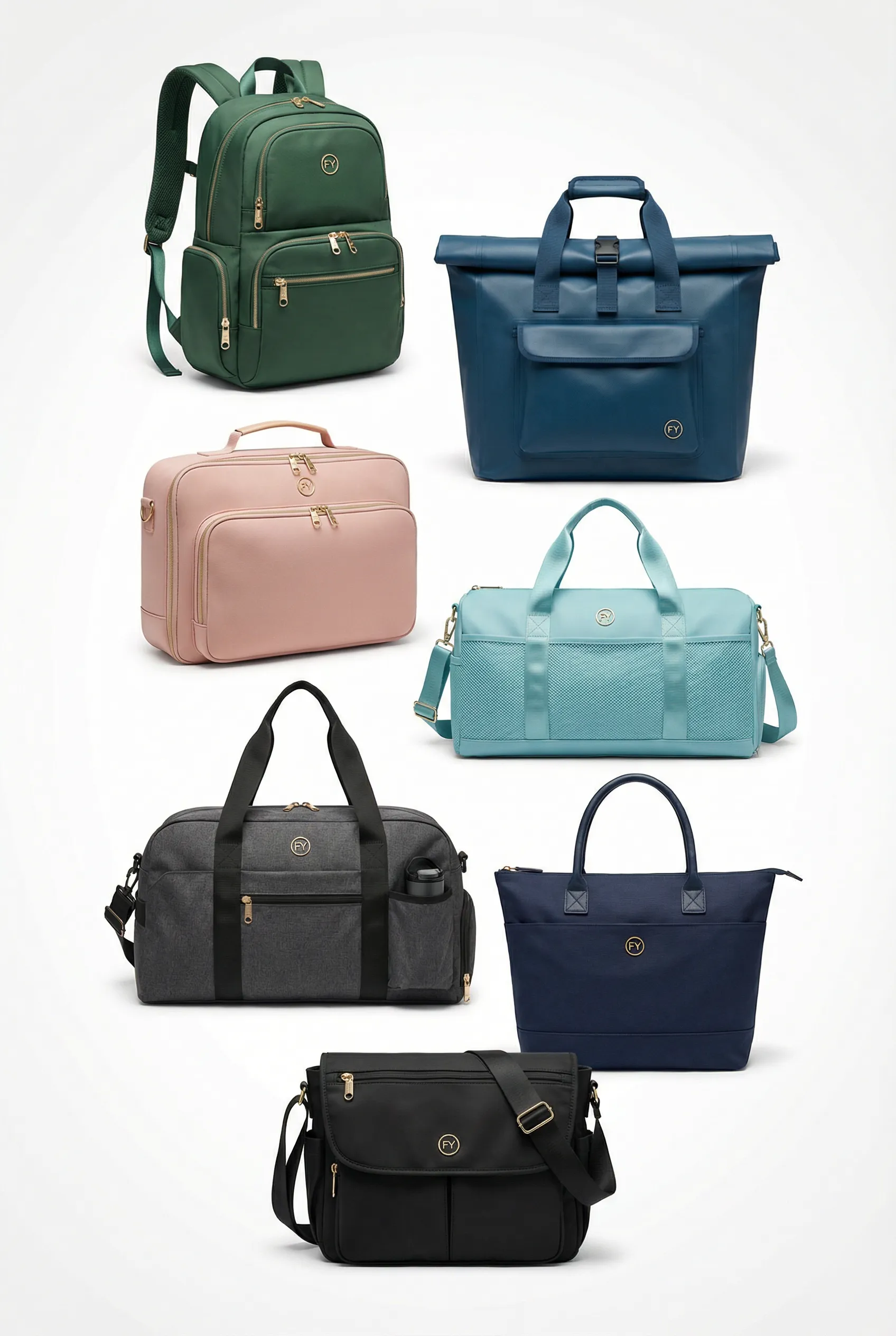
DWR-coated nylon, PU-coated polyester, sealed seams, water-resistant zippers. From splash-proof commuter bags to fully waterproof outdoor roll-tops. Tested: water-column pressure + spray test.
 - Custom Bag Design Features-FY Custom Bag Manufacturer

Insulated / Thermal

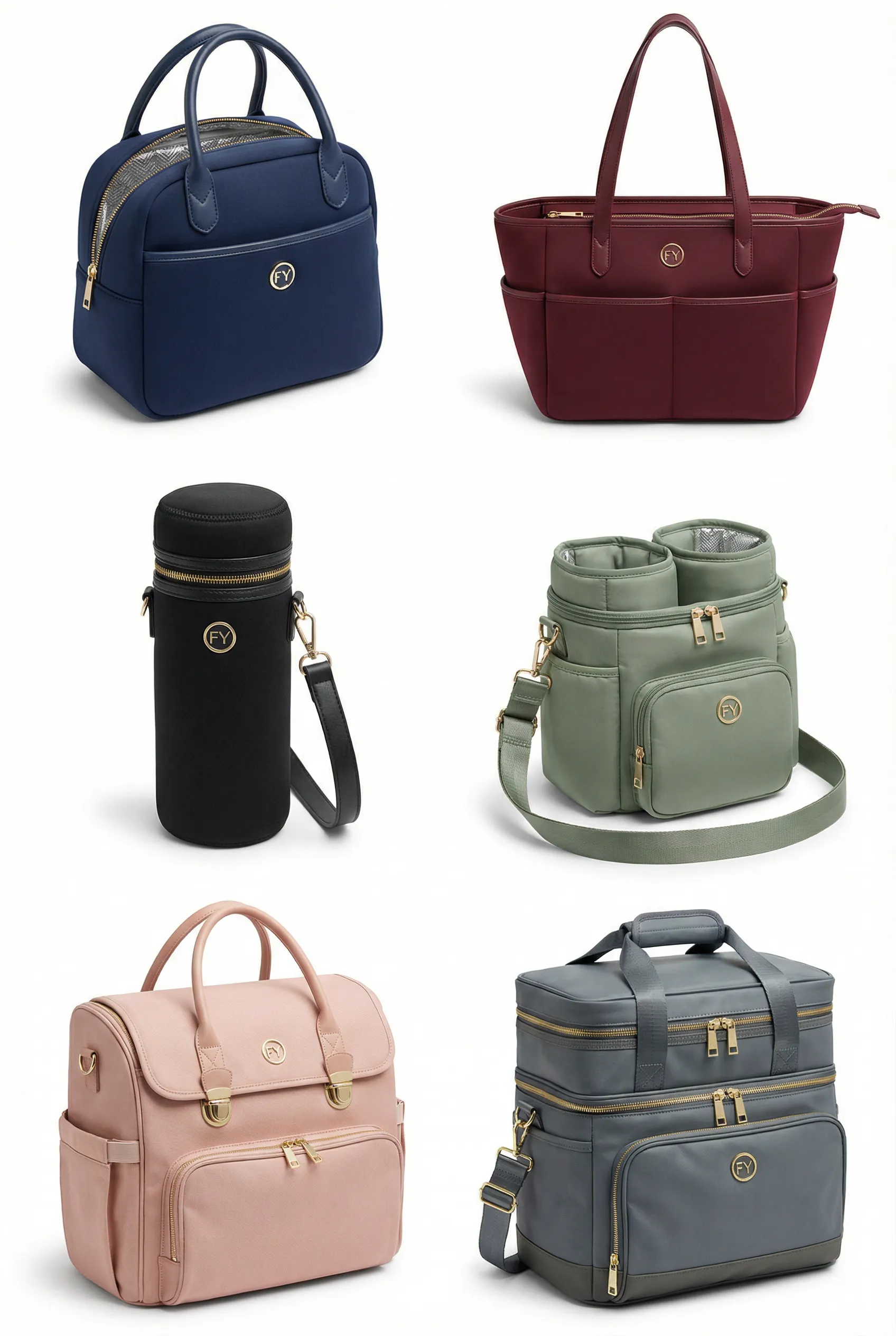
Aluminum foil lining, EPE/PE foam insulation, PEVA wipeable interior. Keeps cold 4+ hours, hot 2+ hours. For lunch bagsbaby bottle pockets, grocery cooler bags, wine carriers. Tested: temperature retention over time.

 - Custom Bag Design Features-FY Custom Bag Manufacturer

Anti-Static / ESD

Anti-static fabrics and linings for electronics transport and cleanroom bags. For tech-industry OEMs shipping sensitive components. Tested: surface resistivity measurement.

FY Bag Factory Processing & Quality Standards:

  • Hydrostatic and spray tests on fabrics (as requested)
  • Documentation of waterproof level (e.g. “rain-resistant commuter level” vs “outdoor level” vs “waterproof compartment only”)
  • Thermal performance tests over defined intervals (e.g. 2h, 4h) with standard loads
  • Leak and condensation checks for linings and seams
  • Odor-control checks and cleaning tests
  • Strength and comfort tests for handles and straps when fully loaded

Structural & Functional Features


 - Custom Bag Design Features-FY Custom Bag Manufacturer

Convertible / Transformable

Bags that switch between carry modes: totebackpackcrossbodyshoulderduffle→garment bag. Requires dual strap systems, hidden pockets, and secure conversion hardware. For travel and commuter versatility.

 - Custom Bag Design Features-FY Custom Bag Manufacturer

Multi-Function

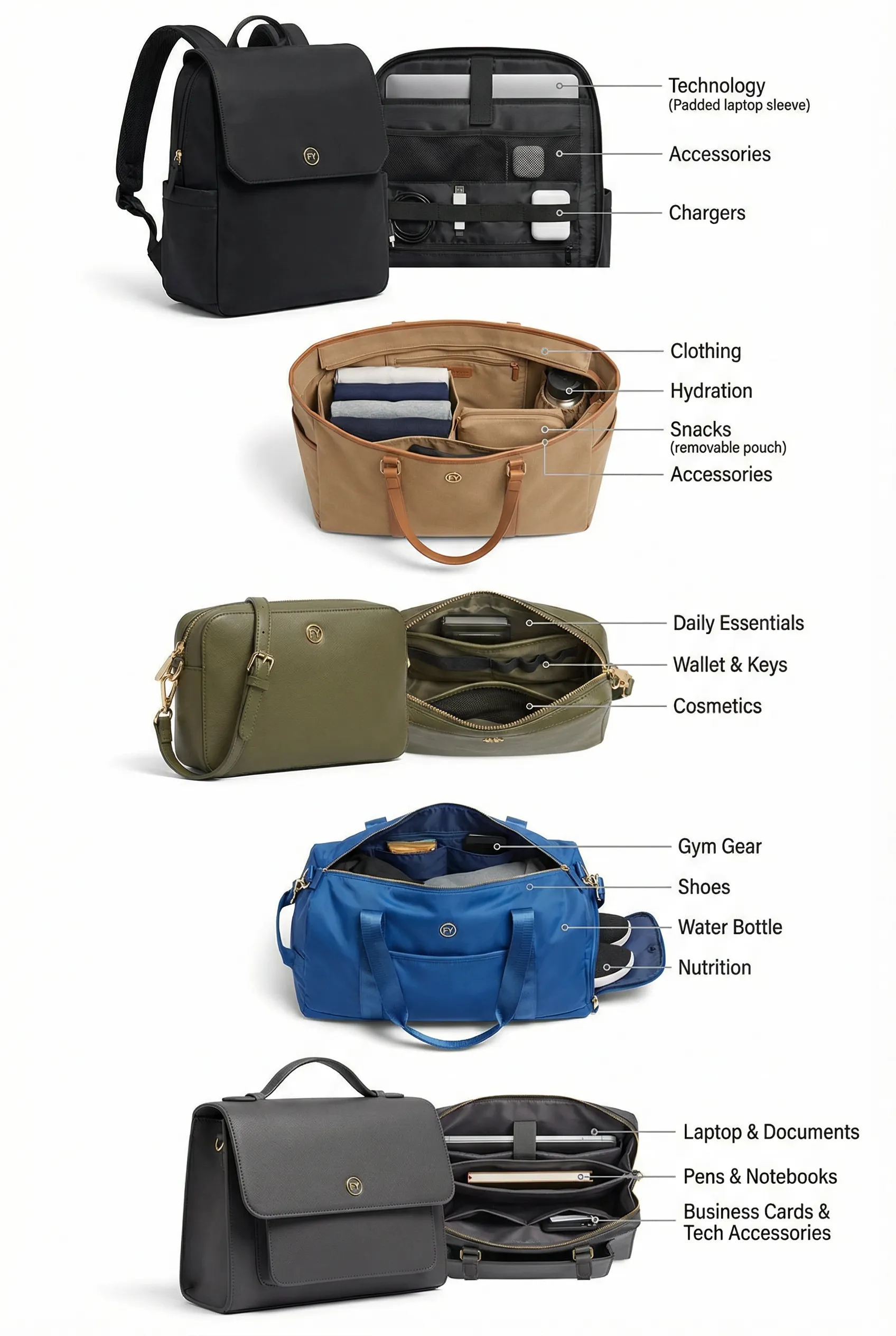
Feature-dense bags with specialized compartments: laptop sleeve + shoe zone + wet pocket + USB pass-through + trolley sleeve + hidden anti-theft pocket. For functional commuter and travel bags. Engineering-heavy: each function adds sewing stations + hardware.
 - Custom Bag Design Features-FY Custom Bag Manufacturer

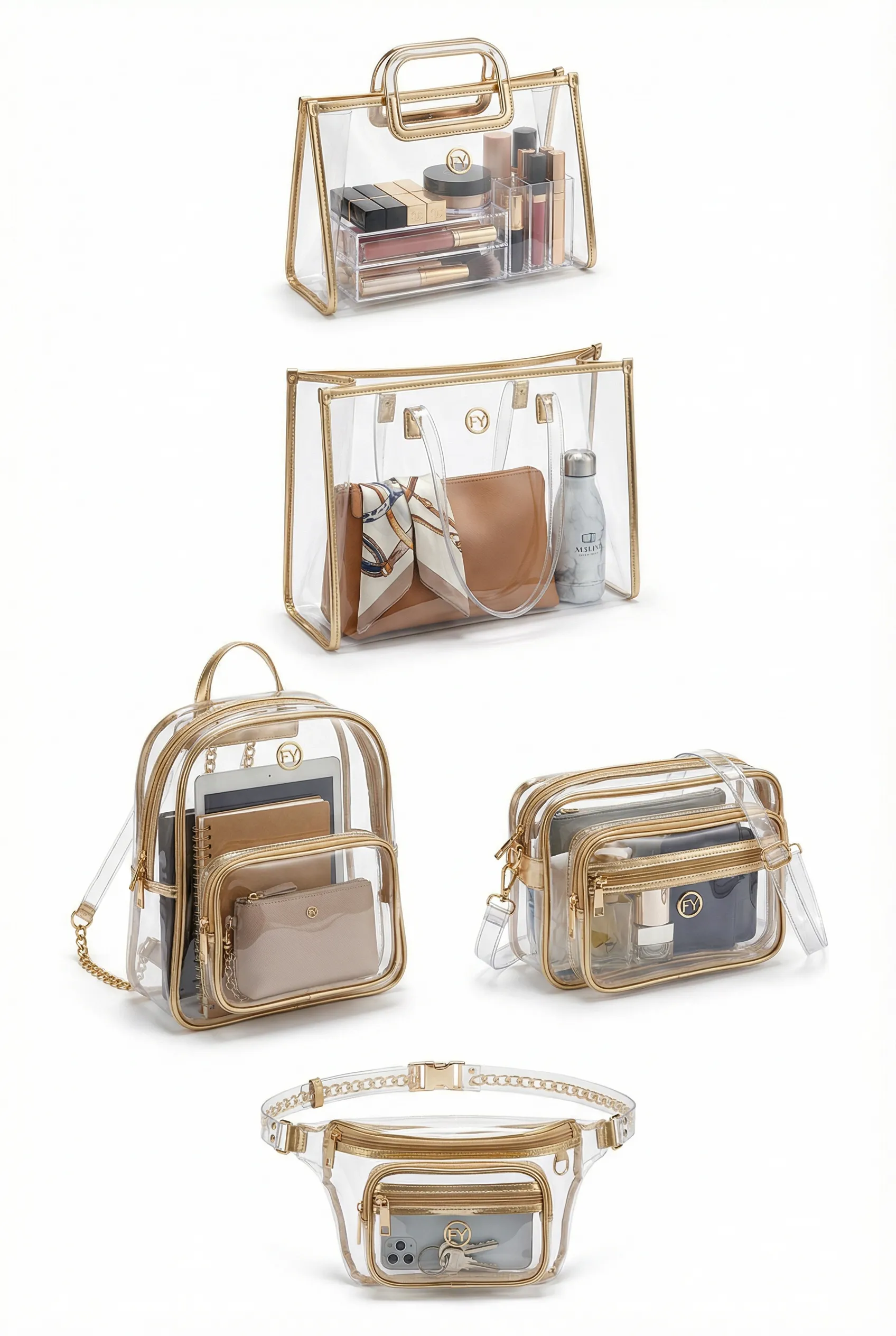
Clear / Transparent / Stadium

PVC/TPU transparent panels or full-body clear construction. Stadium-approved (≤30×30×15 cm), concert, security-compliant. For eventssports venues, and regulatory-mandated transparency. Combined with colored trim for brand identity.

FY Bag Factory Processing & Quality Standards:

  • Internal seam finishing (binding, overlock, bar-tacks) for long-term use
  • Real-world packing tests: fill bags with representative loads, check access and ergonomics
  • Hardware fatigue tests for hooks, sliders and adjusters
  • Conversion workflow tests: time to switch modes, intuitiveness, risk of mis-use
  • Heat welding + stitching combinations optimized for clarity and durability.
  • Visual QC: clarity, bubble-free welds, minimal visual distortion

Aesthetic Features


 - Custom Bag Design Features-FY Custom Bag Manufacturer

Embellished / Decorated

Sequins, beading, crystal appliqué, stud trim, tassel, fringe, chain detail, ribbon. For fashion clutchesoccasion bags, and seasonal capsules. Each embellishment type requires specific application technique and cosmetic QC.

 - Custom Bag Design Features-FY Custom Bag Manufacturer

Textured Surface

Quilted, padded, pebbled, croc-embossed, ribbed, pleated, ruched. Texture is VISUAL + TACTILE — it changes how the bag looks AND how it feels. Applied via fabric selection (pre-textured materials) or construction (quilting, stitching patterns). For fashion and premium positioning.

 - Custom Bag Design Features-FY Custom Bag Manufacturer

Woven / Braided

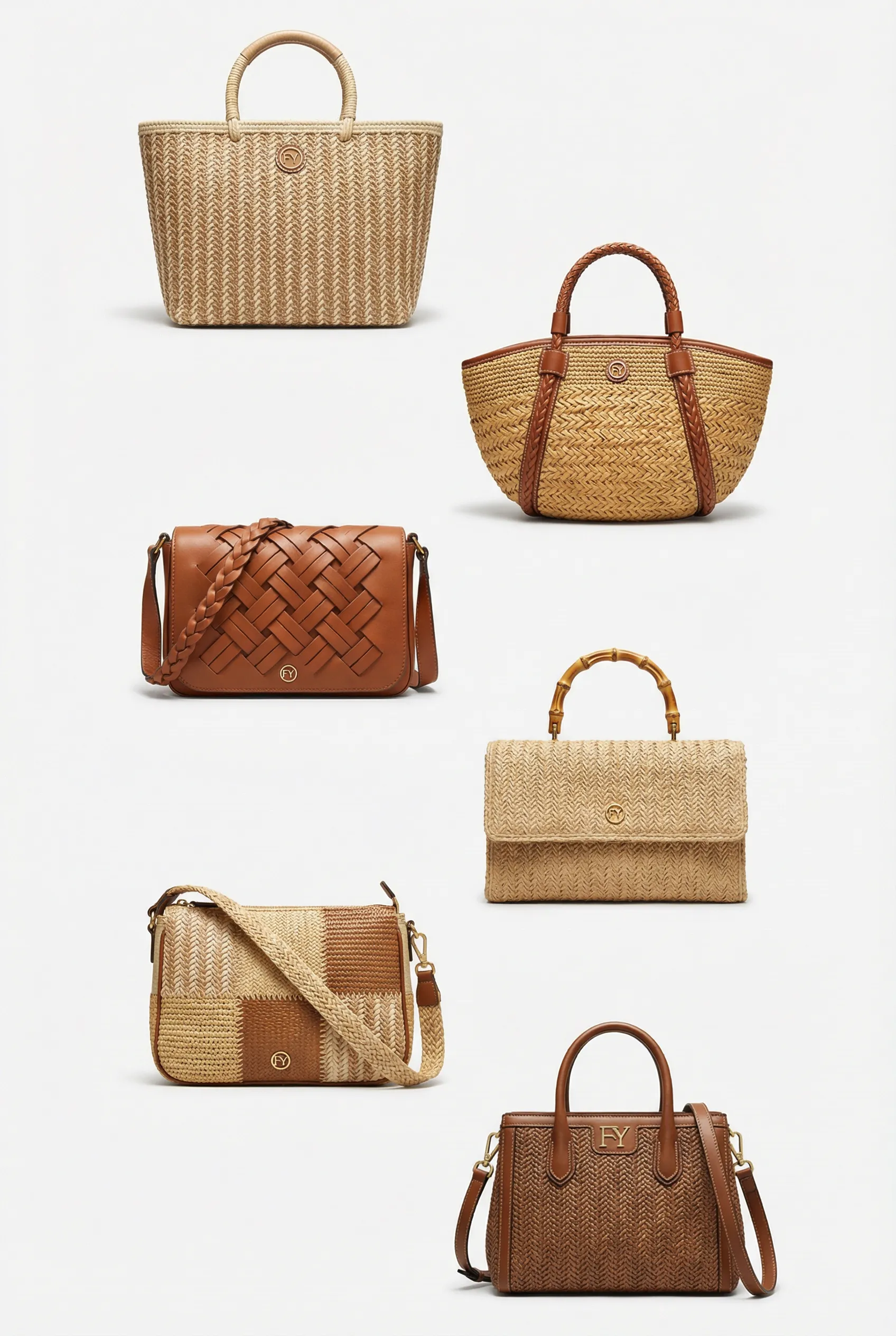
Interlaced strip construction — PU leather weave, straw/jute braiding, fabric-strip plaiting. Artisanal perception at scale. For boho, resort, and premium handbag positioning. Higher labor content = higher FOB.

FY Bag Factory Processing & Quality Standards:

  • Attachment methods: stitching, riveting, heat-bonding or combination
  • Pull tests on embellishment zones to reduce risk of loss or injury
  • Texture depth and pattern crispness checks per batch
  • Recovery tests for quilted or padded zones after compression
  • Edge finishing: binding, trimming, skiving to prevent fraying or sharp edges
  • Moisture and temperature checks for natural fibres (straw, raffia) where applicable

Feature Comparison — Engineering & Cost at a Glance

Each feature adds specific materials, construction steps, and testing — and each has a different FOB impact. This table helps you decide which features justify the investment for your product.

Feature What It Adds Key Material Best Bag Types Testing
Waterproof DWR coating, sealed seams, WR zippers PU-coated nylon/poly Backpackdufflecrossbody Water-column + spray
Insulation Foam + aluminum foil lining, PEVA interior EPE foam, aluminum foil Lunch bag, cooler, baby bottle pocket Temp retention (4 hrs)
Convertible Dual strap systems, hidden conversion mechanism Extra hardware + straps Totebackpackduffle↔garment Conversion cycle test
Multi-Function Specialized compartments, USB, trolley sleeve More hardware, more panels Commuter backpacktravel bag Per-function test
Clear / Stadium PVC/TPU transparent panels or full body PVC or TPU film Event bags, stadium bags Dimension compliance
Embellished Sequins, beading, crystal, studs, fringe Decorative materials Clutchhandbagoccasion Cosmetic QC + adhesion
Textured Quilting, pebble, croc-emboss, pleat Textured fabrics or quilting Handbagtoteclutch Pattern consistency
Woven Strip interlacing / braiding construction PU leather strips, straw Handbagtotebucket Weave tension + pattern
Anti-Static ESD-safe fabric + lining Conductive fiber fabric Tech/electronics carriers Surface resistivity

Build Your Feature-Coherent Line

Whether your next collection needs the clarity of clear builds, the agility of convertibles, or the assurance of waterproof/ESD systems, FYBagCustom engineers features as brand language—beautiful, testable, repeatable.

How We Engineer Design Features

Every feature is engineered at the design stage, sourced through our material and hardware network, and tested at prototype BEFORE production begins. Features don’t just “happen” — they’re planned, verified, and QC’d.

Feature Engineering Process

  • Design specification — every feature is defined in the tech pack with exact materials, construction method, and performance target BEFORE sampling
  • Specialized material sourcing — DWR-coated nylon, EPE foam, PEVA lining, TPU film, conductive fabrics — from our 200+ supplier network
  • Prototype function test — every feature tested with REAL scenarios: water poured on waterproof bags, ice packs in insulated bags, real devices in laptop sleeves, 50+ conversion cycles on convertible straps
  • FOB impact quoted per feature — you see the cost of each feature separately so you can decide which to include and which to defer

Feature-Specific QC

  • Waterproof: water-column pressure test + seam-seal verification + zipper water-tightness at incoming QC and final inspection
  • Insulation: temperature retention test (ice pack inside, ambient temp, measure at 1h/2h/4h intervals)
  • Convertible: conversion mechanism cycle-tested 50+ times for smooth operation and strap-lock security
  • Embellished: adhesion test (for glued elements), alignment check (for sewn elements), and cosmetic QC under standard lighting
  • Clear: dimension verification for stadium/venue compliance + PVC/TPU clarity and scratch inspection

Which Features Does Your Bag Need?

Start from the application — the USE CASE tells you which features add value vs which just add cost.

2

Stack Features Strategically

Most bags combine 2–3 features. The key is stacking features that serve the SAME user scenario — not adding features for feature-count marketing.

Smart stack: waterproof + multi-function + convertible (commuter backpack)

Smart stack: textured + embellished (fashion clutch)

3

Check the FOB Impact

Every feature adds to the FOB. A 3-feature backpack (waterproof + multi-function + convertible) can add $3–$10 to the base FOB. We quote each feature’s cost SEPARATELY so you can decide which to include, which to defer to V2, and which don’t justify the price increase for your market. See the comparison table above for per-feature ranges.

Our B2B Development Process for Your Projects

 - Custom Bag Design Features-FY Custom Bag Manufacturer

Step 1 – Feature & Scenario Brief

You share:

  • Target markets and use scenarios (stadium, travel, outdoor, mom & baby, food, industrial, tech…)
  • Which custom bag design features you are interested in (clear, convertible, multi function, insulation, waterproof, etc.)
  • Any standards or benchmarks you need to meet (internal guidelines, market norms, retailer requirements)

We will develop different solutions based on your requirements.

 - Custom Bag Design Features-FY Custom Bag Manufacturer

Step 2 – Feature Mix & Engineering Proposal

We respond with:

  • Recommended feature combinations per bag type and size
  • Material and structural options for each feature
  • Cost, weight and complexity implications

You get a clear trade-off picture for each path.

 - Custom Bag Design Features-FY Custom Bag Manufacturer

Step 3 – Sampling, Testing & Iteration

We then:

  • Build engineering samples with the selected features
  • Perform internal feature tests (leak, load, thermal, wear, static)
  • Adjust patterns, materials or construction until performance is acceptable

You can use these samples for internal approval, buyer presentations or lab testing if needed.

 - Custom Bag Design Features-FY Custom Bag Manufacturer

Step 4 – Mass Production & Feature-Specific QC

Once locked:

  • We formalize feature specs in tech packs
  • Integrate feature checks into inline and final QC
  • Maintain documentation for future reorders and derivative styles

Your feature-driven designs become industrialized products you can reorder and scale.

Design Features — FAQ

Can I add multiple features to one bag?

Yes — features are stackable. A single backpack can be waterproof + multi-function + convertible. Each feature adds to FOB independently. We quote per-feature so you can stack strategically based on your budget and target price.

How do you test features at prototype?

Each feature has its own test: waterproof = water-column + seam-spray test. Insulation = 4-hour temperature retention. Convertible = 50+ conversion cycles. Multi-function = per-compartment real-item fit. Clear = dimension compliance for venue policies. We document test results with photos and send them with the prototype.

What’s the difference between “water-resistant” and “waterproof”?

Water-resistant: DWR-coated fabric repels surface splashes; seams are NOT sealed; handles rain spray but not sustained downpour. Waterproof: DWR coating + PU seam-seal tape + water-resistant zippers; handles sustained rain. We specify which level on the tech pack and hang tag — never over-claim.

Can features be added to an existing design?

Yes — this is one of our most common OEM requests. “My duffle sells well but customers want a shoe compartment and water resistance.” We retrofit features to your existing bag design, produce a revised prototype, and quote the per-feature FOB impact. Minor feature additions (shoe pocket, insulated pocket) are fast; major additions (full waterproofing, convertible system) require re-engineering.

Which features are most requested on Amazon?

For Amazon listings: multi-function compartments (photograph well, list as bullet points), water-resistant (searchable keyword), and insulation (for lunch bags). Clear bags are a high-demand niche (stadium policy). Features that can be SHOWN in photos and LISTED as bullet points perform best on Amazon.

How do these design features affect cost and MOQ?

Features add materials, processes and testing steps, so cost and MOQ usually increase with complexity:

  • Clear, insulated, antistatic and waterproof features typically have higher material cost and more process steps.
  • Convertible and multi function structures add pattern and hardware complexity.
  • Embellished and woven bags add labor time and sometimes more scrap loss.

We’ll break down the cost impact per feature so you can decide where to invest in hero SKUs and where to keep designs simpler for volume.

What information do you need to start a feature-focused project?

At minimum:

  • Who will use the bag, in what environment, carrying what weight?
  • Which performance expectations you have (e.g. “should stay cold for 2 hours”, “must not leak in rain”, “needs to pass stadium rules”, “should reduce static risk”).
  • Any reference samples or competitor products you like.

You do not need complete technical drawings—our team can translate business and user requirements into engineering specs.

Ready to Engineer Your Bag’s Features?

Tell us the bag typeapplication, and which features you need (or describe the USE CASE and we’ll recommend). We’ll design the feature into the bag, source the specialized materials, test at prototype, and quote the per-feature FOB impact — all before production.