Send Your Inquiry Today

You Trust Custom Bag Printing Method Manufacturer in China — Reliable OEM/ODM Partner for Global Brands

60%+ of our production orders involve printed or branded bags. The printing method determines the visual quality, fabric compatibility, durability, and cost of every logographic, and pattern on your bag. We operate 7 methods in-house — choosing the right one is the difference between a bag that impresses and one that disappoints.

For logo strategy and placement, see Custom Brand Logo. For full-surface artwork, see Custom Graphic. Browse other dimensions: by bag typeby fabricby colorby styleby patternby design features, or by size.

15+

Years Manufacturing

7+

Printing Methods In-House

Pantone

Color Matching · ΔE ≤ 1.5

100%

Print QC Inspection

Why Custom Bag Printing Method Matters for B2B Brands

The printing method you choose is one of the most consequential — and least understood — sourcing decisions. It determines how your brand looks on day one, how it ages, what it costs, and how flexible your future orders can be.
 - Custom Bag Printing Method-FY Custom Bag Manufacturer

1. Brand Image & Color Fidelity

Your printing method determines:

  • How clean and crisp your logo appears
  • Whether gradients and small text survive
  • If your brand Pantone looks right on fabric, PU or nylon

For example, screen printing is excellent for bold, limited-color graphics with intense color; digital methods handle multi-color, detailed images better.
 - Custom Bag Printing Method-FY Custom Bag Manufacturer

2. Durability & Customer Experience

Different methods age differently:

  • Screen prints and high-quality heat transfers are known for good durability on tote bags and textiles when properly cured.
  • Sublimation bonds dye into polyester/nylon fibers for very long-lasting prints.
  • Embossing/debossing creates permanent impressions on leather/PU surfaces.

Your choice impacts how the bag looks after 3 months, 12 months and beyond.
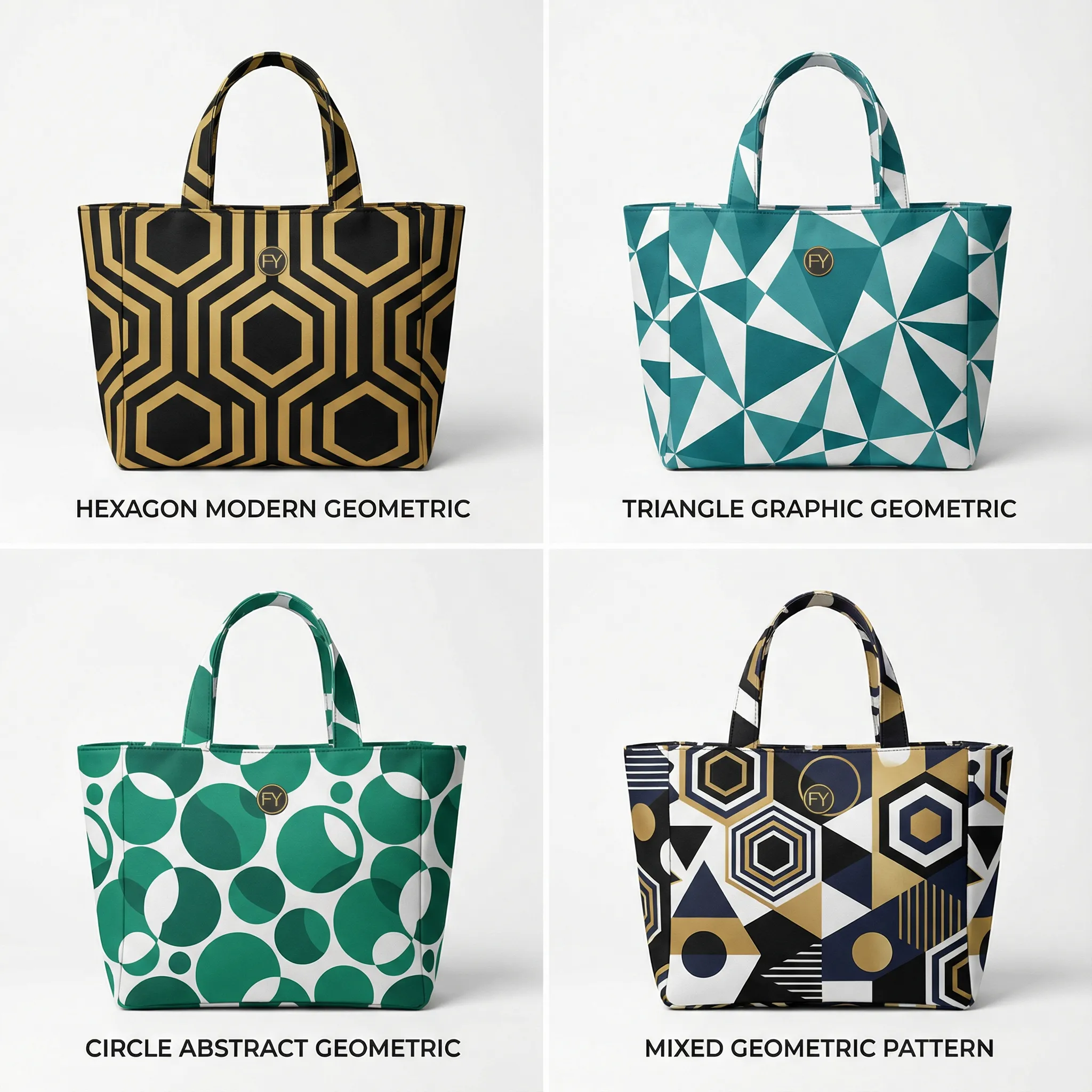
 - Custom Bag Printing Method-FY Custom Bag Manufacturer

3. Cost, MOQ & Assortment Flexibility

Your printing method determines:

  • Traditional methods (screen, pad, some transfers) have setup costs, so they are best for higher quantities per design.
  • Digital printing and some transfers are more flexible for small batches and frequent design changes.

Choosing the wrong printing method can lock you into high MOQs or unnecessary costs.
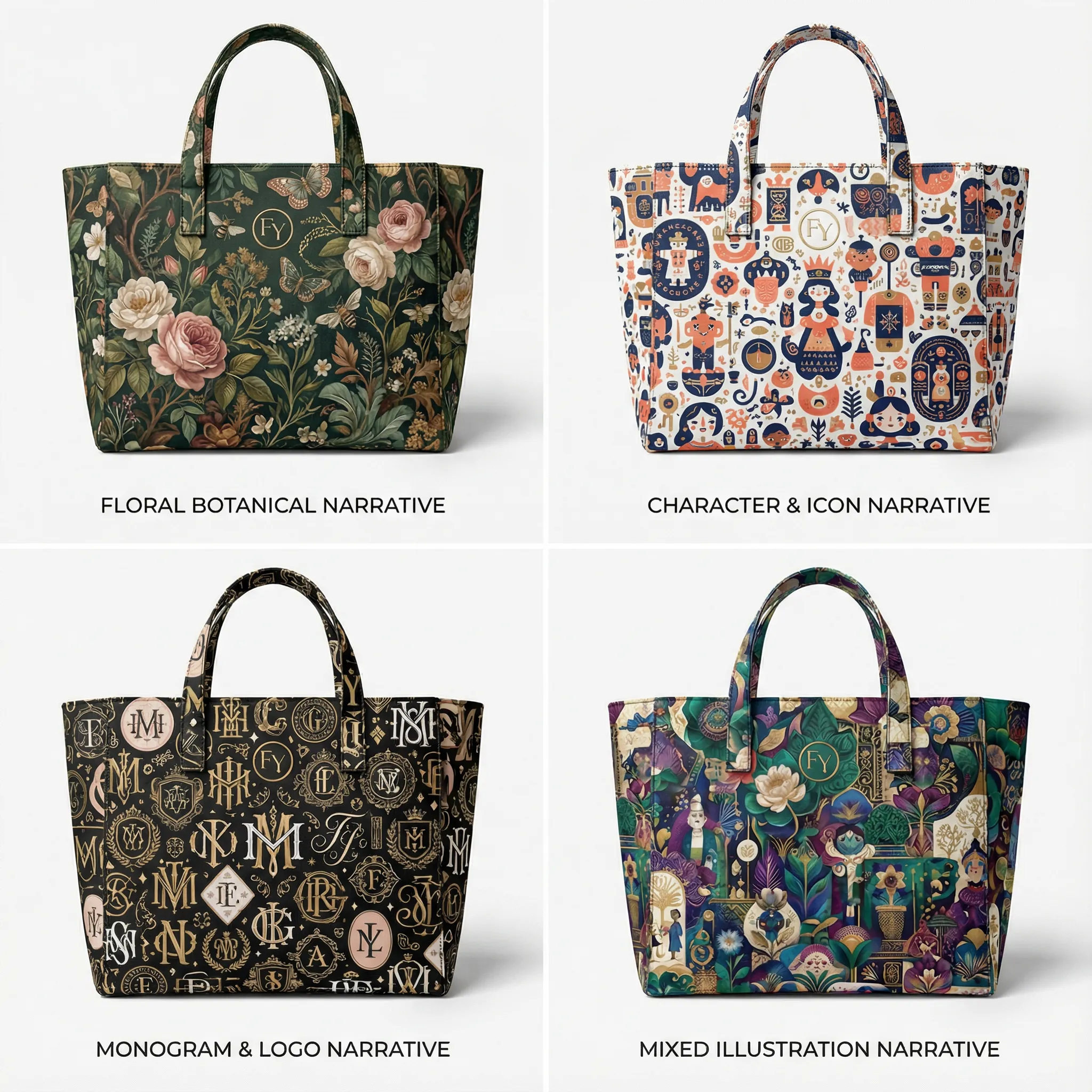
 - Custom Bag Printing Method-FY Custom Bag Manufacturer

4. Tactile Feel & Perceived Value

The method affects how the bag feels:

  • Thin, soft prints vs. thick, rubbery prints
  • Flat prints vs. raised, textured, tone-on-tone embossing
  • Glossy vs. matte or “natural” look

For premium brands, handfeel is part of the value proposition. The printing method is one of your hidden levers.

Our Custom Bag Printing Method Capability Map — All 7 Methods

Each method produces a different visual result, works on different fabrics, and operates at different cost/volume breakpoints. Click any method for full specs.
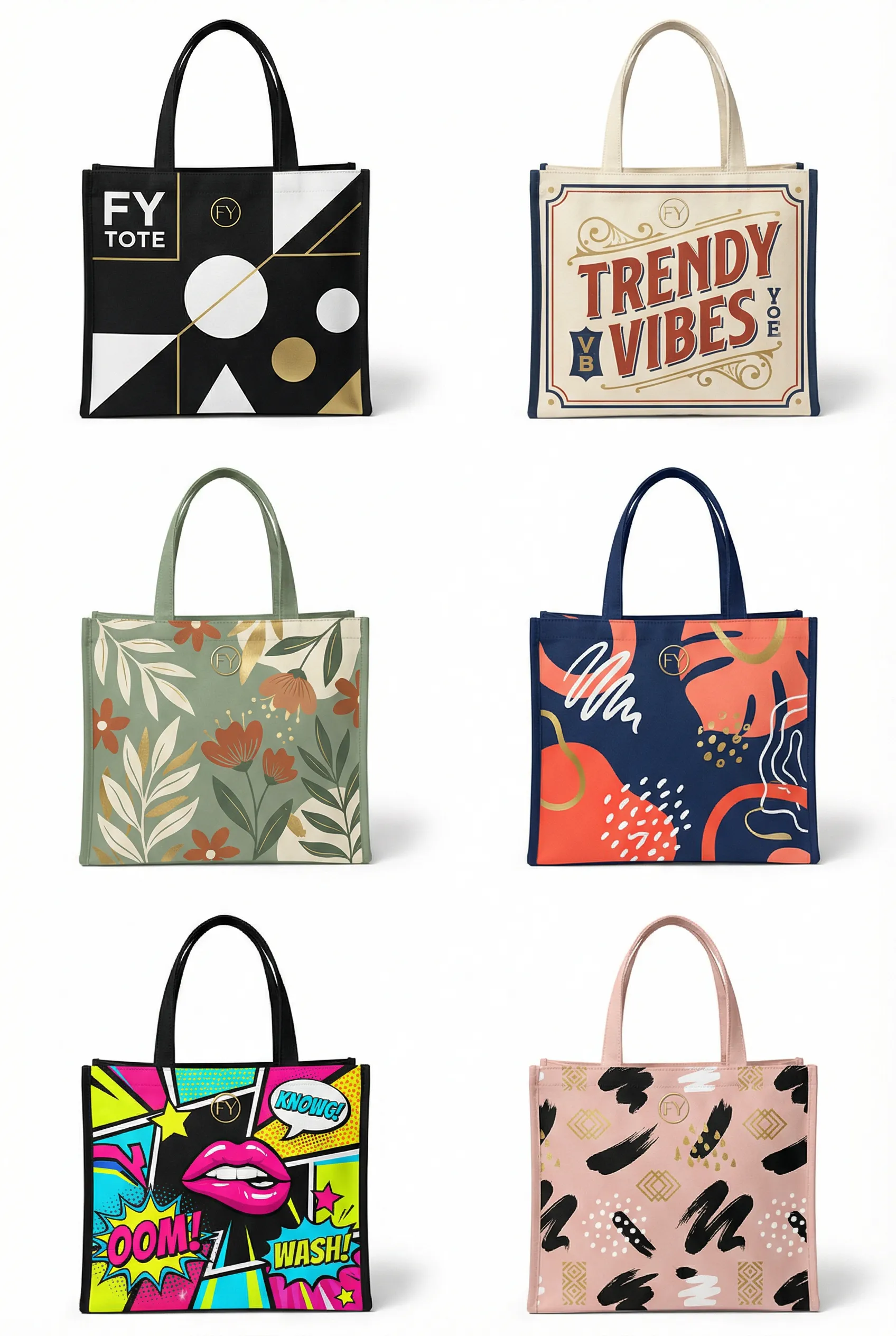
Custom Silk Screen Printing-fybagcustom.com - Custom Bag Printing Method-FY Custom Bag Manufacturer

1.Custom Silk Screen Printing – Bold, Durable Classics

Screen printing remains the foundation of industrial graphics: a mechanical dance of ink, mesh, and pressure that builds dense, durable color layers. Ideal for tote bagspromotional lines, or minimalist logos requiring sharp edges and consistent branding at volume.

Process Principle:

  • Mesh frame coated with light-sensitive emulsion → UV exposure forms stencil.
  • Viscous pigment pushed through mesh onto substrate with calibrated squeegee angle (75–80°).
  • Sequential color layers cured at 160 °C for adhesion and gloss control.

Why use screen printing on bags?

Screen printing (silk screen) pushes ink through a mesh stencil onto the material. It produces vibrant, opaque colors and is highly cost-effective for larger runs of the same design.

FY bag Factory capabilities:

  • Multi-color registration on flat panels (totes, pockets, front panels)
  • Pantone color matching for brand logos
  • Control of ink deposit thickness to balance durability and handfeel
  • Superb opacity on dark fabrics.
  • Excellent UV and rub resistance (≥ 20 000 cycles).
  • Economical for large batches; uniform tone density.

Material Compatibility:

👉 See Custom Silk Screen Printing to explore mesh counts, ink types and best bag applications.

2.Custom Heat Transfer Printing – Flexible, Full-Color Branding

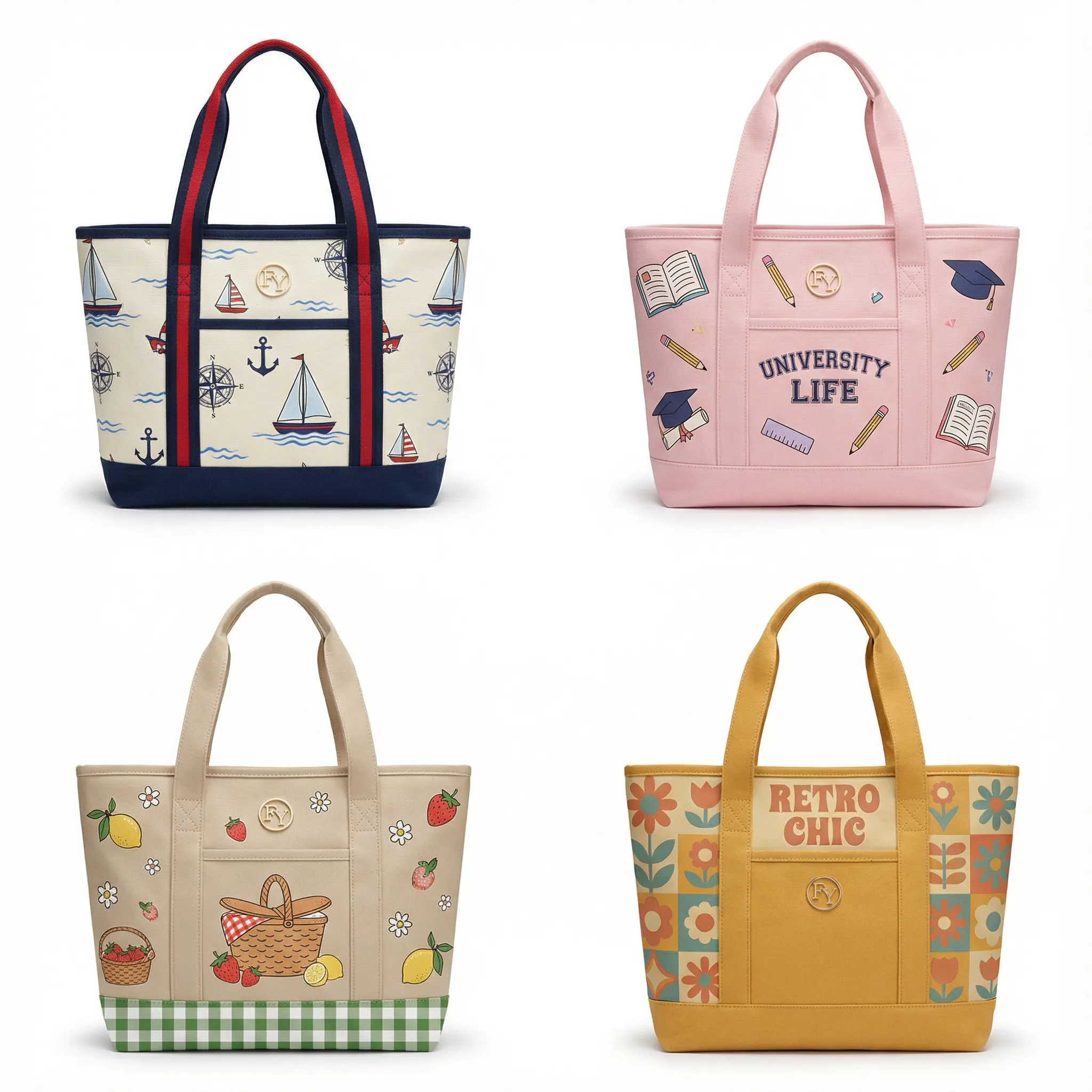
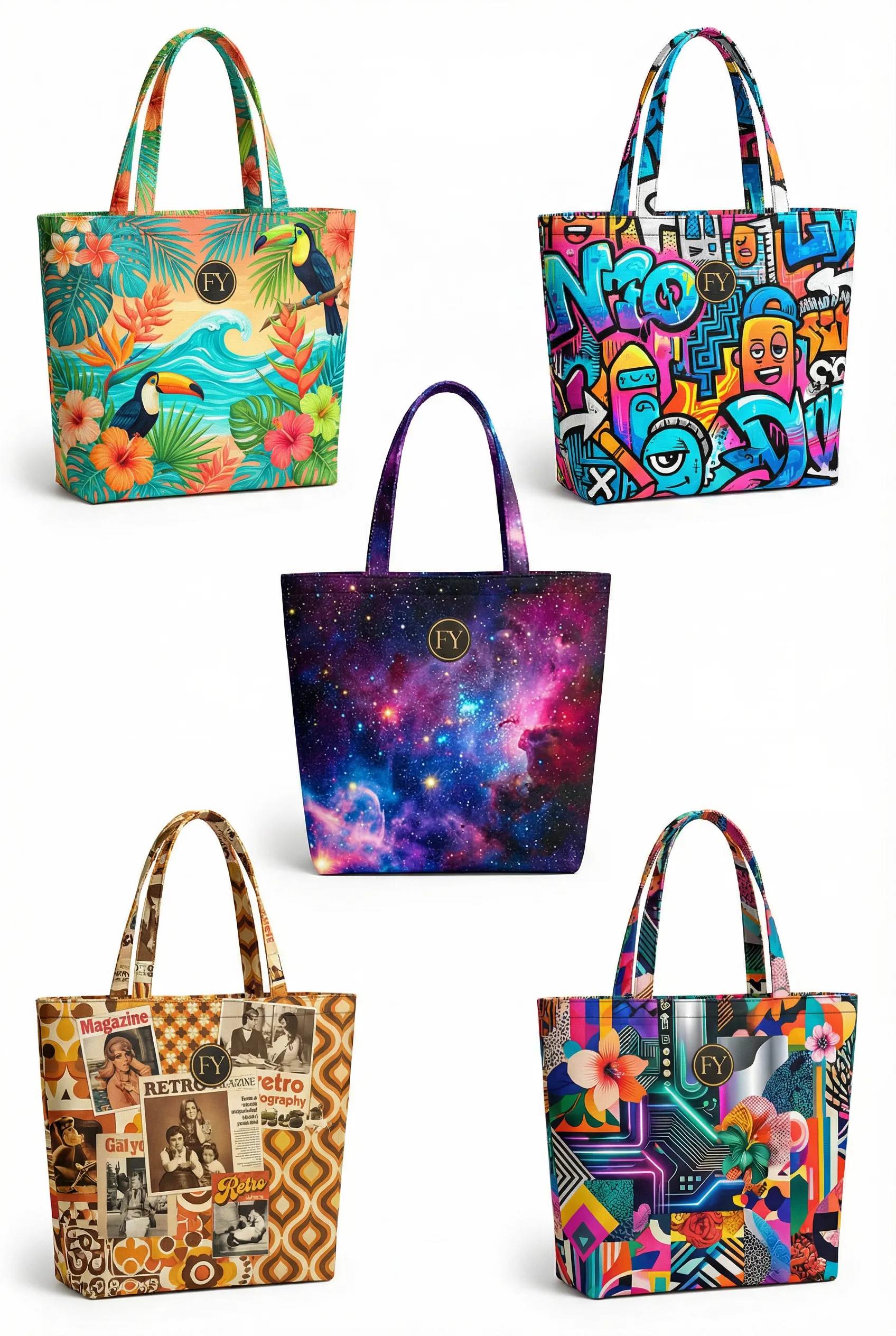
Heat transfer (including iron-on / heat press) prints your graphic on transfer film or paper, then uses heat and pressure to bond the print to the bag material. Heat transfer reproduces complex gradients, photographic detail, and multi-color artworks unattainable by screen printing. Ideal for lifestyle, sport, or youth collections requiring vivid imagery, gradients, or photographic elements.

Technical Principle:

  • Design printed on transfer film using sublimation or pigment ink.
  • Film heat-pressed (160–200 °C, 5–10 s, 5 bar).
  • Ink vaporizes or melts into fabric coating, forming permanent fusion.

Performance Data:

  • Color resolution ≥ 600 dpi.
  • Wash durability > 40 cycles @ 40 °C.
  • Stretch recovery without cracking on elastic substrates.

FY bag Factory capabilities:

  • Full-color logos and illustrations without complex screen setups
  • Flexible for multi-design orders (e.g. same bag structure, different graphics)
  • Controlled temperature and pressure for different substrates (canvas vs. PU vs. nylon)

Material Compatibility:

👉 See Custom Heat Transfer Printing for pros/cons, durability expectations and fabric compatibility.
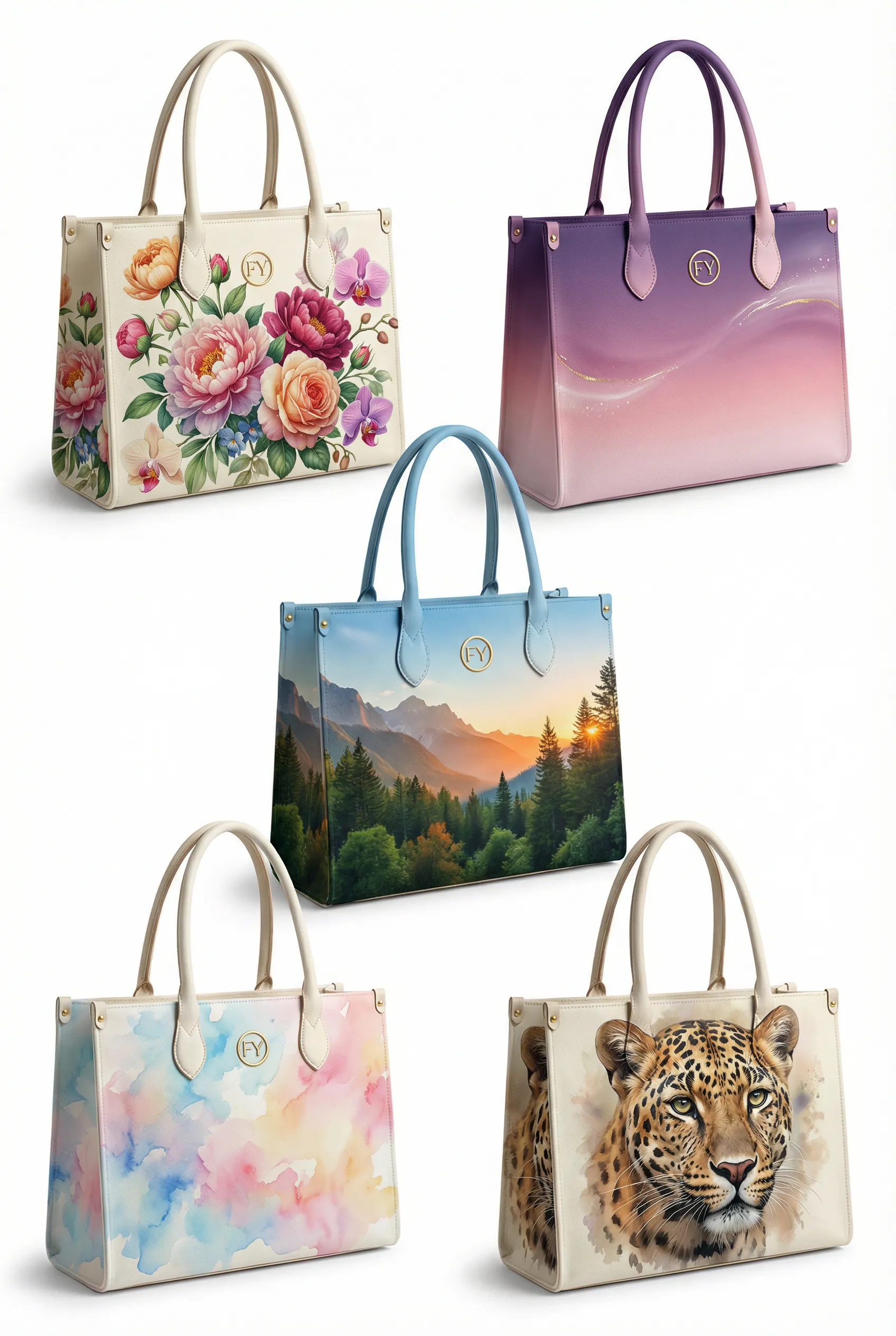
Custom Heat Transfer Printing - fybagcustom.com - Custom Bag Printing Method-FY Custom Bag Manufacturer
Custom Digital Printing-fybagcustom.com - Custom Bag Printing Method-FY Custom Bag Manufacturer

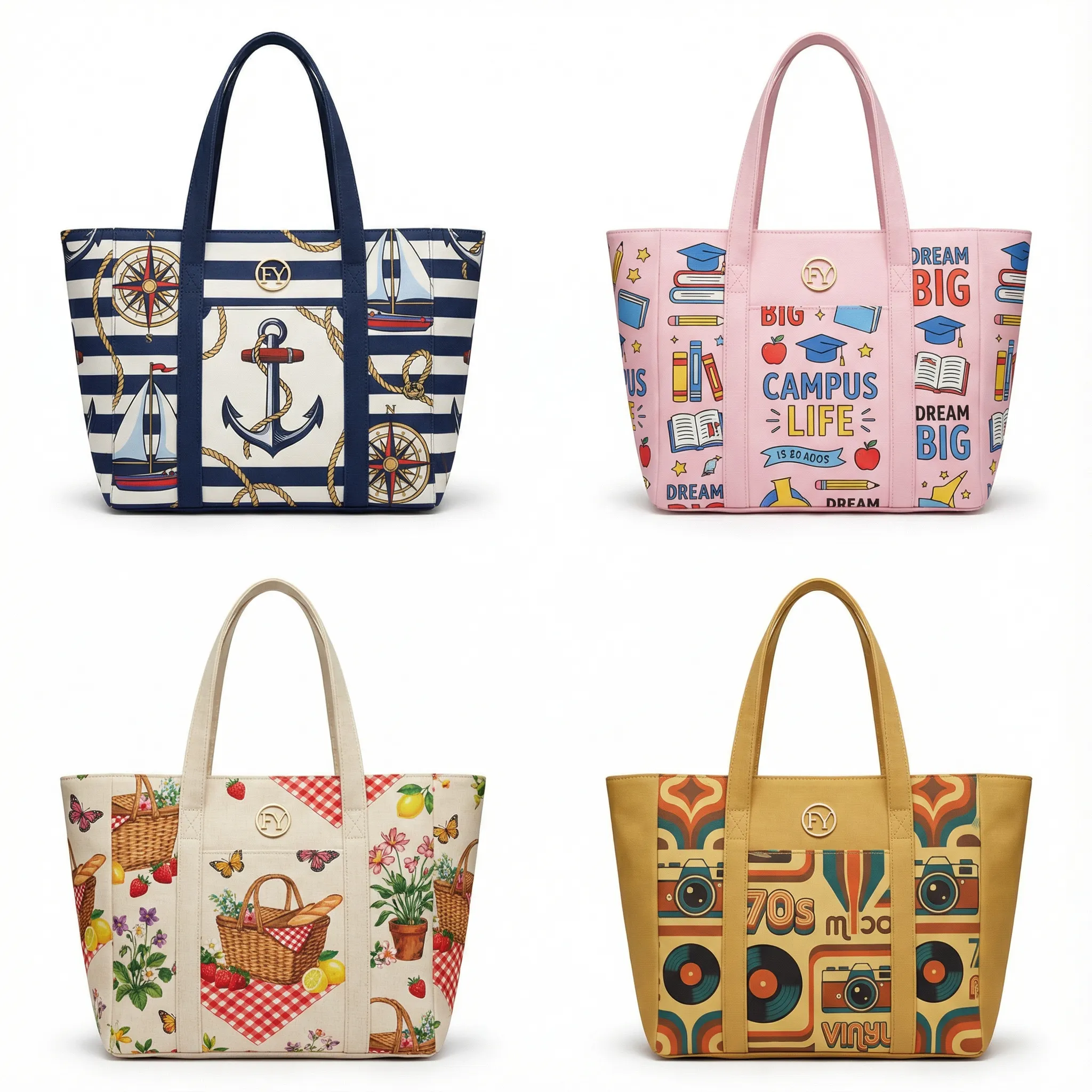
3.Custom Digital Printing — Unlimited Creativity for Modern Brands

Digital printing on fabric (DTG, DTF, direct-to-fabric/film) uses inkjet-style technology to print graphics with many colors and fine detail, then fix them with heat or curing.
Digital printing transforms design pipelines—eliminating screens, reducing waste, and enabling on-demand customization.
Perfect for limited editions, artwork collaborations, and e-commerce models emphasizing visual storytelling.

Industrial Mechanism:

  • Inkjet heads deposit micro-droplets (2–10 pl) directly onto treated fabrics.
  • CMYK + spot colors; color managed through ICC profiling.
  • Heat fixation or UV curing ensures pigment cross-linking with fiber coating.

Technical Advantages:

  • Photographic resolution (up to 1200 dpi).
  • Seamless gradient transitions, no registration limits.
  • Low MOQ, rapid prototyping for seasonal launches.

FY bag Factory capabilities:

  • High-resolution prints on suitable textiles (canvas, polyester blends, some nylons)
  • Integration with your Custom Bag Pattern system for all-over or panel-based prints
  • Lower artwork setup effort compared to traditional methods, ideal for experimentation
  • Sustainability:Water-based pigment inks, 80 % less wastewater vs. traditional methods.

Material Compatibility:

👉 See Custom Digital Printing for artwork requirements, file specs and color expectations.

4.Custom UV Printing — Direct, Sharp & Dimensional

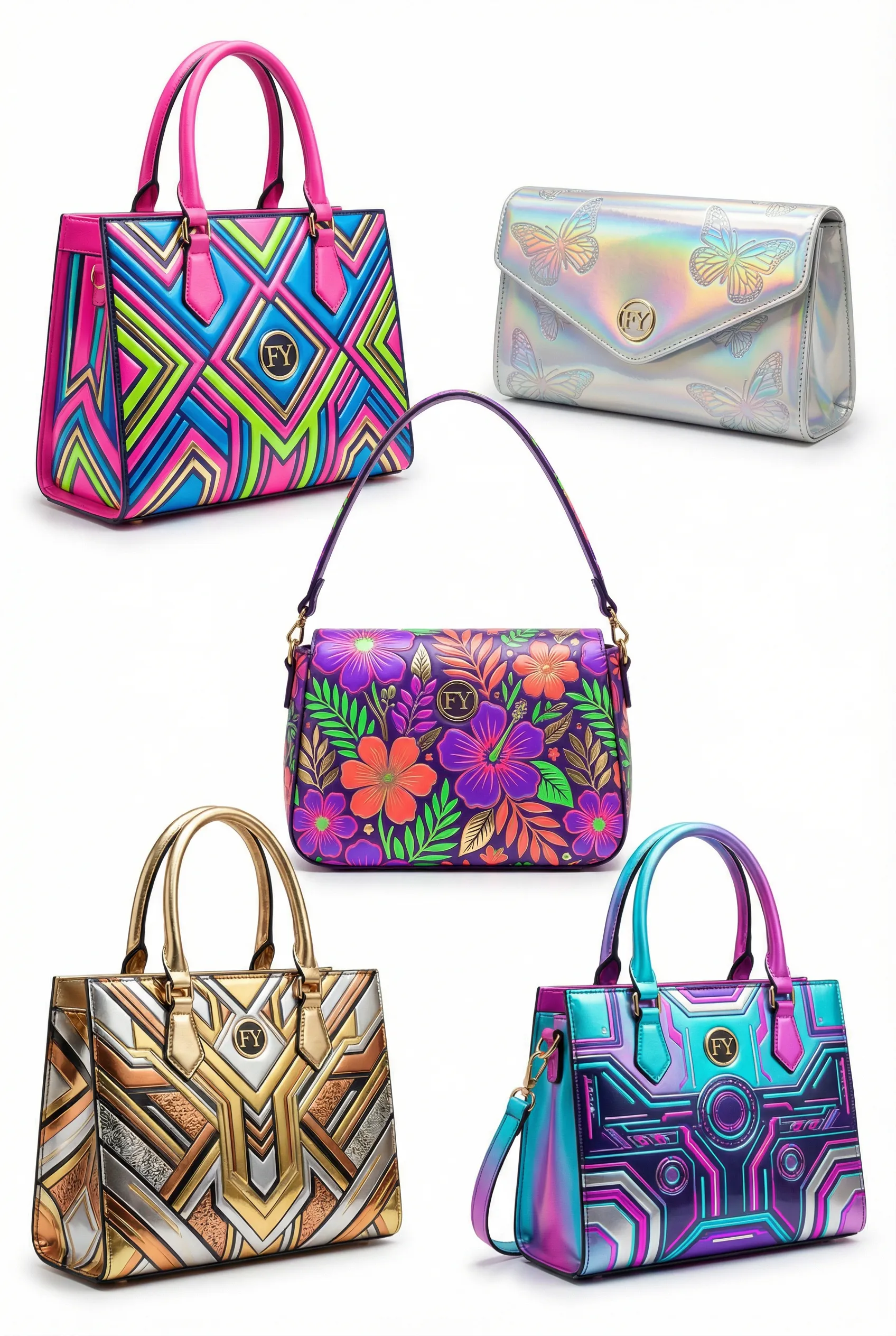
UV printing uses UV-curable inks and light to cure the ink instantly on the surface, making it ideal for non-porous substrates such as coated synthetics and rigid parts. For premium lines where logos, monograms, or textures demand depth — luxury handbags, tech accessories, or corporate gifts.

Technical Principle:

  • Piezoelectric heads jet UV-curable ink directly on surface.
  • Mercury or LED lamp cures pigment within 0.5 s.
  • Optional 3D layer build-up for embossed feel.

Performance Data:

  • Instant curing; no dry time.
  • Adhesion to leather, acrylic, PVC, metal.
  • Raised texture height up to 1.2 mm; abrasion resistance > 10 000 rubs.

FY bag Factory capabilities:

  • Flatbed UV printing for panels and hard accessories (tags, logo platespackaging elements)
  • Controlled print thickness for either flat or slightly raised effects
  • Precise registration for detailed logos and small text

Material Compatibility:

  • PU · PVC · coated leather alternatives and some hard parts
  • Small batch logos and complex graphics on non-porous surfaces

👉 See Custom UV Printing for use cases on bag panels, tags and small components.
Custom UV Printing - fybagcustom.com - Custom Bag Printing Method-FY Custom Bag Manufacturer
Custom Embroidery-fybagcustom.com - Custom Bag Printing Method-FY Custom Bag Manufacturer

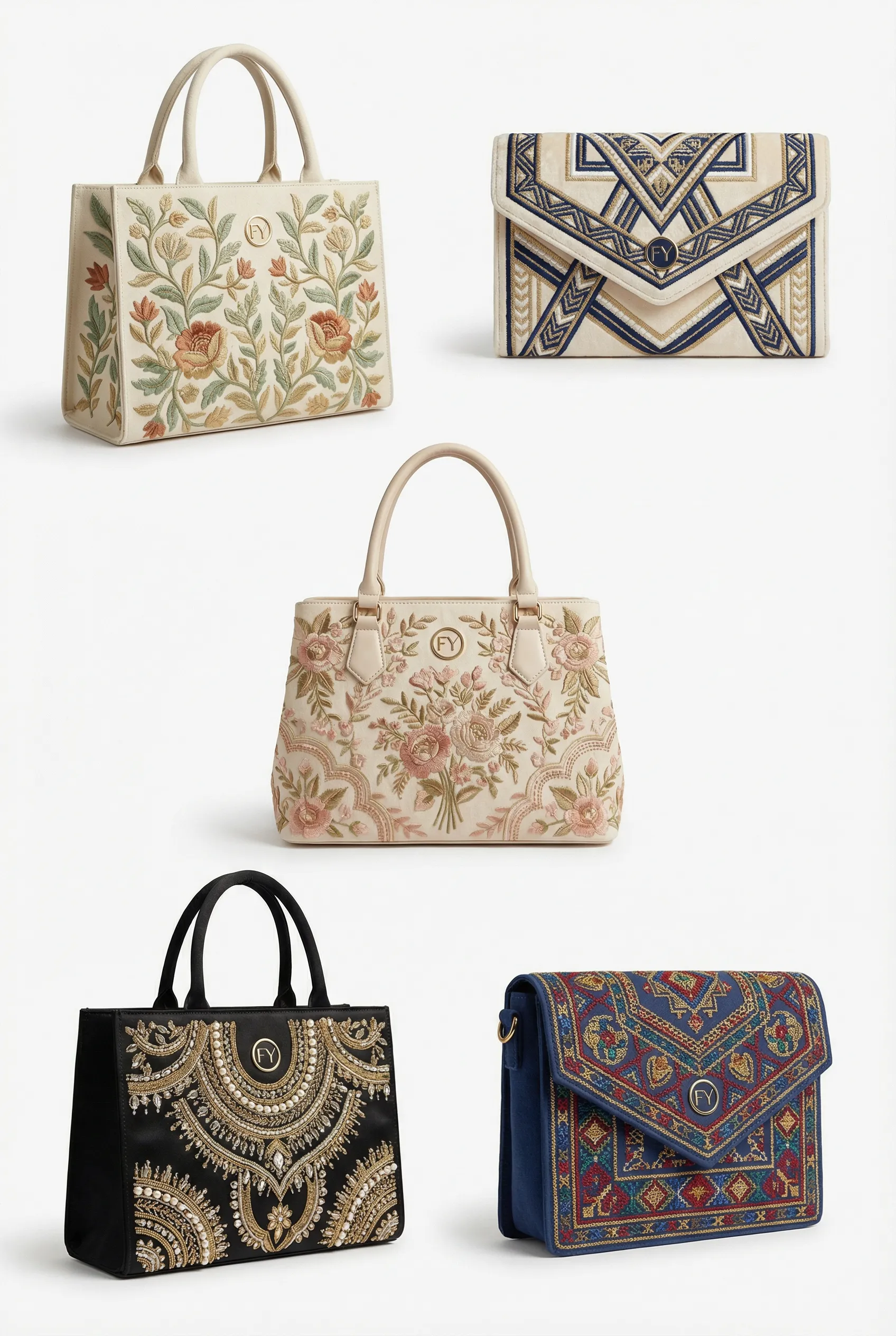
5.Custom Embroidery – Texture as Luxury

Embroidery introduces dimension through thread and motion; it transforms a graphic into relief — merging craftsmanship and industrial precision. Brand application: for boutique, artisan, and lifestyle brands emphasizing authenticity and craft — an elevated alternative to print.

Industrial Mechanism:

  • Digitized stitch mapping via Tajima / Barudan software.
  • Multi-needle embroidery machines (6–12 colors).
  • Thread types: polyester, rayon, metallic; density 5–7 stitches/mm.
  • Backing stabilizers ensure consistent tension.

Technical Advantages:

  • Unaffected by water or UV; long-term color stability.
  • Premium tactile identity; adds perceived value.
  • Compatible with canvas, nylon, felt, and leather panels.

Brand Application:

  • For boutique, artisan, and lifestyle brands emphasizing authenticity and craft—an elevated alternative to print.

FY bag Factory capabilities:

  • Polyester, rayon and metallic threads · 3D puff embroidery for raised logos
  • Direct embroidery on panels or appliqué patches
  • Stitch-density engineering to prevent puckering on light fabrics

Material Compatibility:

👉 See Custom Embroidery for artwork requirements, file specs and color expectations.

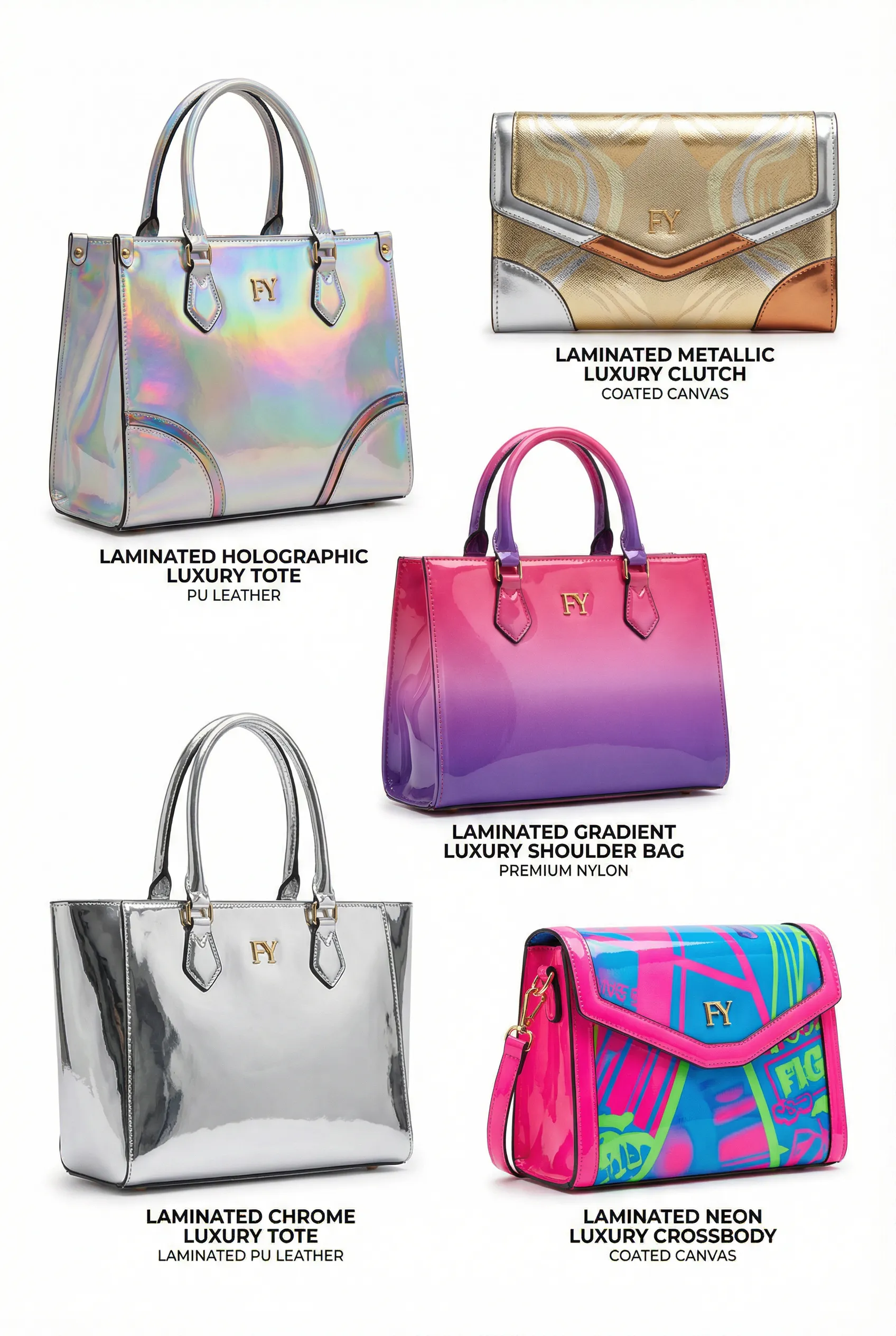
6.Custom Laminated Printing — Gloss, Protection & Depth

Lamination fuses color and protection — creating a sealed surface that amplifies saturation and guards against moisture. Perfect for retail shopping bags, high-color promotional totes, or gift packaging demanding visual impact and durability.

Technical Principle:

  • Reverse printing on BOPP/PET film.
  • Film laminated onto substrate with EVA adhesive under 110–130 °C and 1.5 bar pressure.
  • Finishing in matte, gloss, or holographic texture.

Performance Data:

  • Waterproof and scratch-resistant.
  • Color intensity retained > 95 % after UV aging test.
  • Smooth, high-reflection finish for premium packaging.

FY bag Factory capabilities:

  • Full-coverage photo-quality graphics on non-woven shoppers with matte, gloss or holographic film
  • Emboss/deboss on leather, microfiber, PU patches or panels
  • Foil stamping in gold, silver, gunmetal, colored foils — coherent premium branding with Custom Bag Style and Custom Bag Color

Material Compatibility:

👉 See Custom Laminated Printing for use cases on bag panels, tags and small components.
Custom Laminated Printing - fybagcustom.com - Custom Bag Printing Method-FY Custom Bag Manufacturer

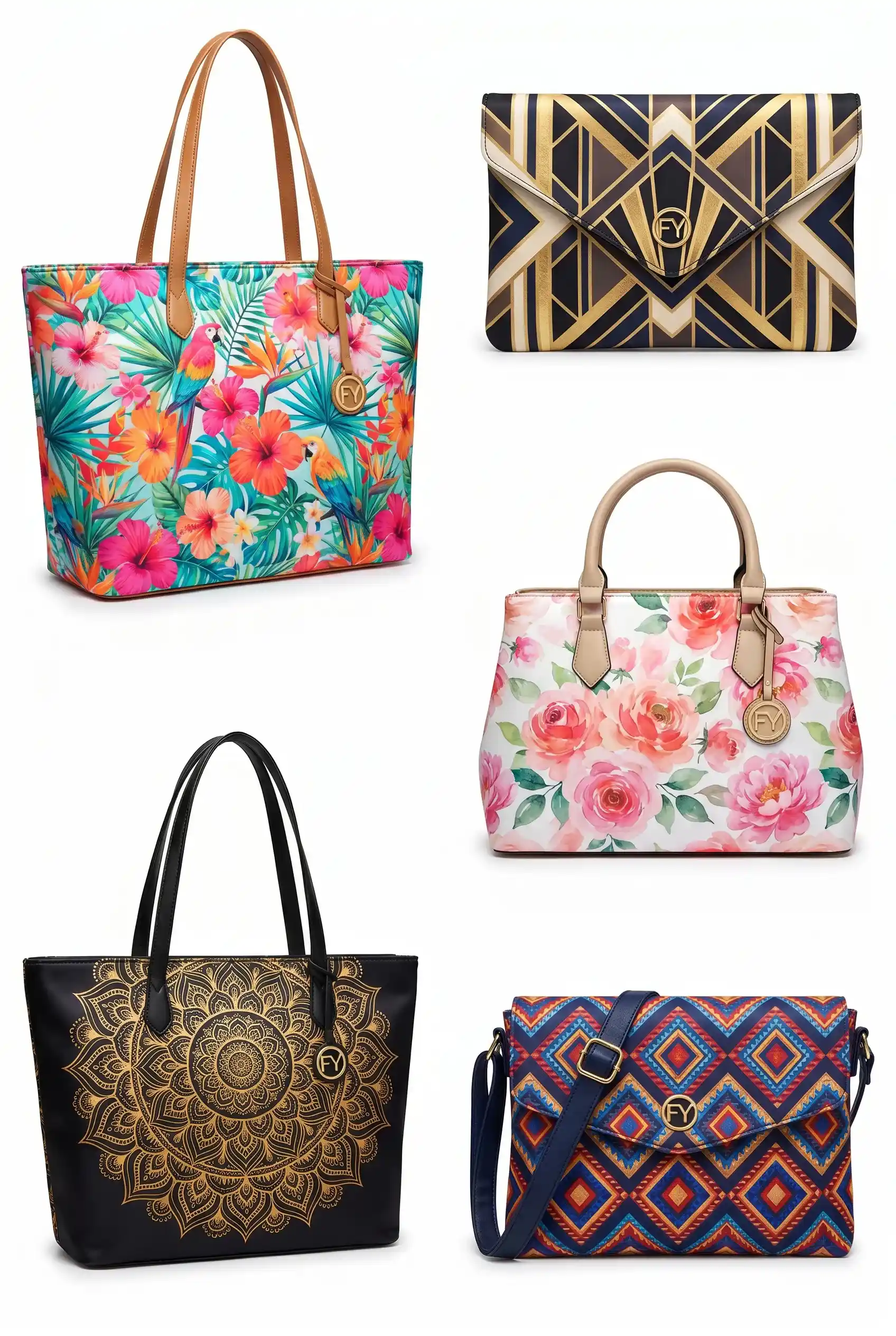
7. Custom Sublimation Printing — All-Over Prints That Never Crack or Peel NEW

Dye-sublimation vaporizes disperse dyes directly INTO synthetic fibers under heat — the print doesn’t sit ON the fabric, it becomes part of it. Zero handfeel, zero cracking, zero peeling — ever. Ideal for gym bags, beach totescosmetic bags, and any design where the pattern IS the product.

Why use sublimation on bags? It’s the only method that delivers true edge-to-edge all-over prints with photographic quality AND permanent durability. Because the dye lives inside the fiber, the print survives unlimited wash cycles and never changes the fabric’s handfeel — the bag feels unprinted.

Technical Principle:

  • Design printed on transfer paper with disperse dyes → heat-pressed at 180–210°C → dye converts to gas and bonds inside polyester/nylon fibers → print becomes part of the textile

Performance Data:

  • Photographic quality · zero handfeel · unlimited wash cycles — dye cannot crack, peel, or fade off the surface · colorfast under UV

FY bag Factory capabilities:

  • Edge-to-edge all-over patterns with cut-and-sew pattern matching across panels and seams
  • Integration with your Custom Bag Pattern system for repeat patterns, placements and panel prints
  • Low MOQ and fast turnaround — ideal for seasonal pattern refreshes and limited editions

Material Compatibility:

  • Polyester · rPET · polyester-coated nylon · light base colors only

👉 See Custom Sublimation Printing for artwork requirements, fabric rules and all-over print planning.

Method-by-Method Comparison

Every critical dimension in one table — use this to compare methods for your fabric, artwork, volume, and budget.

MethodVisual EffectBest For MaterialsDurabilityMOQ RangeKey Advantage
Silk ScreenSolid, opaque colorsCanvas / Cotton / Nylon★★★★☆Medium–HighClassic quality, batch efficiency
LaminationGlossy / Matte finishNon-woven / PP / Paper★★★★★HighWaterproof + vivid color
Heat TransferFull-color, gradientPolyester / PU / Neoprene★★★★☆Low–MediumDetailed images on complex surfaces
Digital PrintPhotographic, customCotton / RPET / Canvas★★★★☆LowFast sampling, eco-friendly
UV PrintRaised, metallic, directLeather / PVC / Acrylic★★★★★Low–Medium3D texture + high definition
EmbroideryThreaded, texturedCanvas / Nylon / Leather★★★★★MediumCraft depth and premium perception
SublimationAll-over, photographic, zero handfeelPolyester / rPET / poly-nylon★★★★★LowDye bonds INTO fiber — can never crack or peel

If this is your first time working with custom printed bags, a simple way to think is:

  • Screen Printing → bold logos on fabric bags, bigger runs, high opacity
  • Heat Transfer → flexible, full-color graphics, good for varied designs & medium runs
  • Digital Printing → complex artwork & small runs, more design freedom
  • Sublimation → all-over prints on polyester/nylon, very durable
  • UV Printing → vivid prints on PU/PVC and hard parts
  • Emboss/Deboss & Foil → premium, tone-on-tone or metallic logos on leather/PU

We can look at your existing catalog, moodboard or competitors, and map out which methods you should adopt for each bag line.

Which Printing Method Should You Use?

Three filters — fabric, artwork complexity, and volume — narrow the field to 1–2 methods.

1

What Fabric

2

How Complex Is the Artwork?

1–2 solid colors → Screen (cheapest)

Multi-color / gradient → Transferdigital

Photo / fine detail → DigitalUV

3

What’s Your Volume?

50–500 pcs → DigitalUV (no setup)

300–2,000 → Transfer, sublimation

500+ → Screen; 1,000+ → lamination

Start Your Custom Bag Printing Method Project with FYBAGCUSTOM

Whether you need ​bold logo totes​, ​subtle embossed handbags​, all-over printed backpacks or ​UV-printed PU panels​, FYBAGCUSTOM combines:

  • Full-range custom bag printing methods
  • B2B-focused consulting to choose the right method per product line
  • OEM/ODM production with documented processes and QC

FY Bag Factory Printing Development Process

 - Custom Bag Printing Method-FY Custom Bag Manufacturer

Step 1 – Brief & Artwork Intake

You share:

  • Target bag types and materials (canvas tote, nylon backpack, PU handbag, etc.)
  • Artwork: logo files, patterns, inspiration images
  • Target markets, price points and durability expectations

We diagnose which custom bag printing methods make sense, and if needed, simplify the printing plan.

 - Custom Bag Printing Method-FY Custom Bag Manufacturer

Step 2 – Printing Method Proposal

We propose:

  • Recommended printing method(s) per bag style and material
  • Any alternative options (e.g. screen vs digital vs transfer) with pros/cons
  • Rough cost and MOQ implications per method

This helps you decide where to spend (hero SKUs) and where to optimize (core SKUs).

 - Custom Bag Printing Method-FY Custom Bag Manufacturer

Step 3 – Test Prints, Strike-Offs & Samples

Before bulk production, we:

  • Produce strike-offs for screen/transfer/digital/sublimation/UV where needed
  • Create sample bags with real printed panels
  • Evaluate together: color accuracy, sharpness, handfeel, alignment on 3D shapes

We adjust ink deposit, curing, pattern scale or placement until it meets your standard.

 - Custom Bag Printing Method-FY Custom Bag Manufacturer

Step 4 – Bulk Production & Printing QC

In mass production we:

  • Lock printing parameters (screens, plates, ICC profiles, curing times)
  • Inspect incoming printed panels for color, clarity and positioning
  • Perform random rub/peel/wash tests as needed, based on your category and region

Your custom bag printing becomes part of a stable, documented production system—not a one-time experiment.

Custom Bag Pattern — FAQ

Which method is cheapest?

Screen print at 500+ pcs — lowest per-unit cost once the screen fee is amortized. For under 200 pcs: digital (no setup). For full-color non-woven at 1,000+: lamination.

Can I use different methods on the same bag?

Yes — and it’s common. Embroidered logo on front + heat-transferred graphic on side + woven label inside. Each method runs at its own station. We coordinate methods in the tech pack.

Do setup fees apply on every reorder?

No. Screen fees, digitizing fees, plate fees, and mold fees are one-time. If artwork doesn’t change, you pay only per-unit cost on reorders. We store all screens, stitch files, plates, and molds at our factory.

Can I print the same design on different fabrics?

Yes — but the method may change per fabric. A design using screen on canvas may need transfer on nylon and UV on PU leather. We recommend per-fabric and produce separate strike-offs. The visual result should match — even if methods differ.

Which method is best for eco-friendly bags?

Water-based screen ink (low VOC, OEKO-TEX certifiable). Sublimation (water-based dyes). Embroidery with cotton/recycled thread (no ink). Avoid PVC-based transfer films on eco projects.

How long from artwork to production-ready?

Artwork review: 1 day. Digital mock-up: 1–2 days. Strike-off on fabric: 1–2 days. Your approval: 1 day. Total: 4–6 days from artwork file to production-ready. Bulk throughput: 500–3,000/day depending on method.

What artwork file format do you need?

For screen: vector (AI, PDF) with separate color layers. For transfer/digital/UV/sublimation/lamination: 300 DPI CMYK (TIFF, PSD, AI). For embroidery: vector for digitizing conversion. We review all files for free and flag issues before proofing. See Custom Graphic service page for the full artwork spec table.

Not Sure Which Method? Send Your Artwork.

Tell us the bag type, fabric, artwork (or describe what you want), and volume. We’ll recommend the best method (Route A: cost-efficient, Route B: premium finish), produce a physical strike-off on actual fabric, and quote both options.