Tel/WhatsAapp:+86 18011919834
E-mail: chloe.x@fybagcustom.com

Tel/WhatsAapp:+86 18011919834
E-mail: chloe.x@fybagcustom.com
Send Your Inquiry Today

Years Manufacturing
Factory Area
Professional Staff
Inspection Rate
Our jute and burlap bag production serves four distinct buyer segments — each drawn to jute for its instant eco credibility, rustic aesthetic, and competitive pricing.



No cotton, canvas, or nylon bag communicates “natural and sustainable” as instantly as jute. The rough texture, earthy color, and visible weave ARE the eco message — no labels or certifications needed. Five features define jute’s unique position.

Jute’s rough texture, natural brown color, and visible weave communicate “earth-friendly” faster than any other material. Buyers and consumers recognize jute as eco on sight — no explanation, no green labels, no certification logos needed.

Jute is one of the cheapest natural fibers globally. This makes jute bags the most cost-effective way to achieve a “natural material” positioning — cheaper than organic cotton, hemp, or linen at any volume.

Jute biodegrades naturally in 1–2 years — faster than cotton. Combined with its low water footprint (jute needs significantly less water to grow than cotton), jute has the strongest environmental profile of any bag fabric.

Jute dominates three specific product categories that no other fabric owns: wine bottle carriers (the rustic wine-bag look), grocery shopping totes (the eco-shopper standard), and gift/favor bags (weddings, artisan, farm-to-table).

Raw jute is rough and porous; laminated jute (PP or PE film interior) adds water resistance, structure, and smoother feel. Lamination turns a $1 raw jute pouch into a $5–10 structured tote. Two tiers from one base material.
Jute dominates three product categories — wine, grocery, and gift — and extends into promotional totes, beach bags, and cosmetic pouches. Here are the eight most ordered jute bag products.
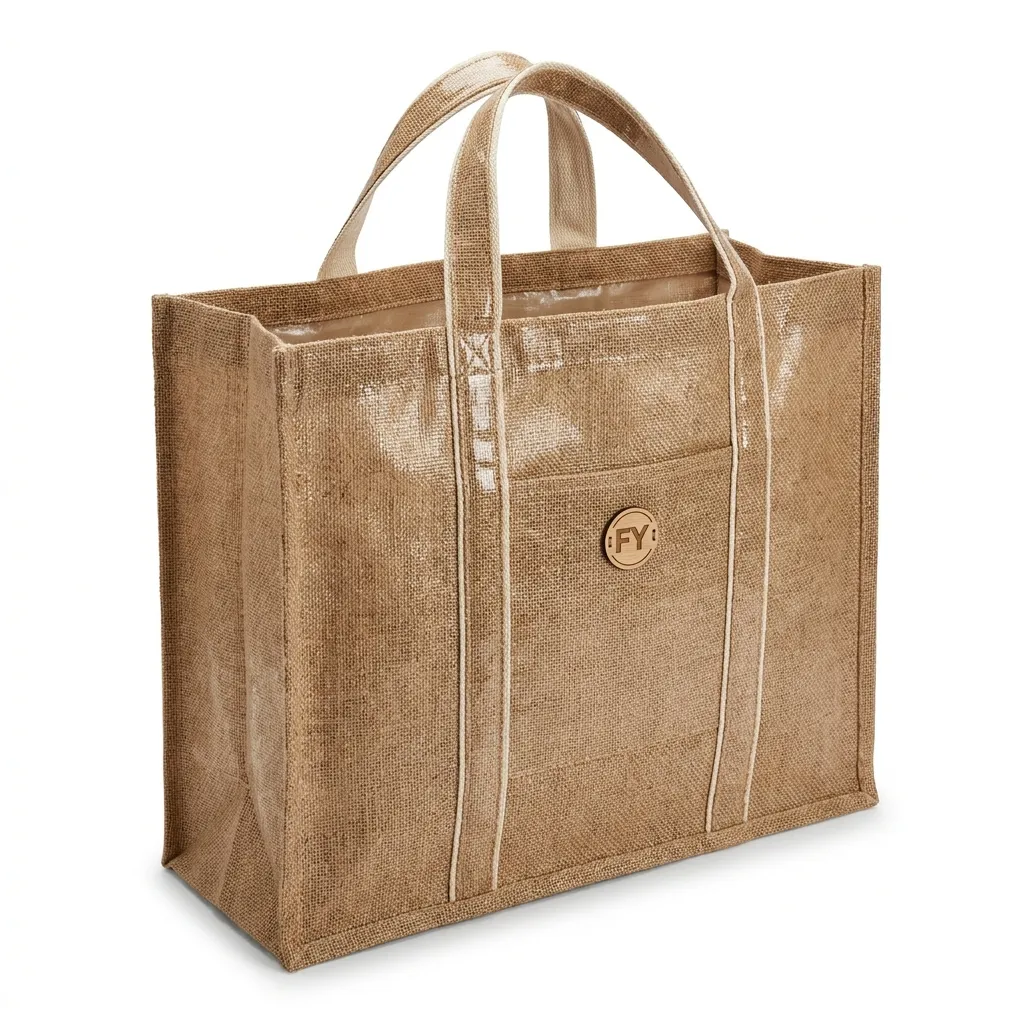
The #1 jute bag. Laminated jute with cotton webbing handles, reinforced base, and box gusset. Screen-printed logos. The eco-shopper standard for grocery chains, retail stores, and promotional programs.
See: all tote bags.
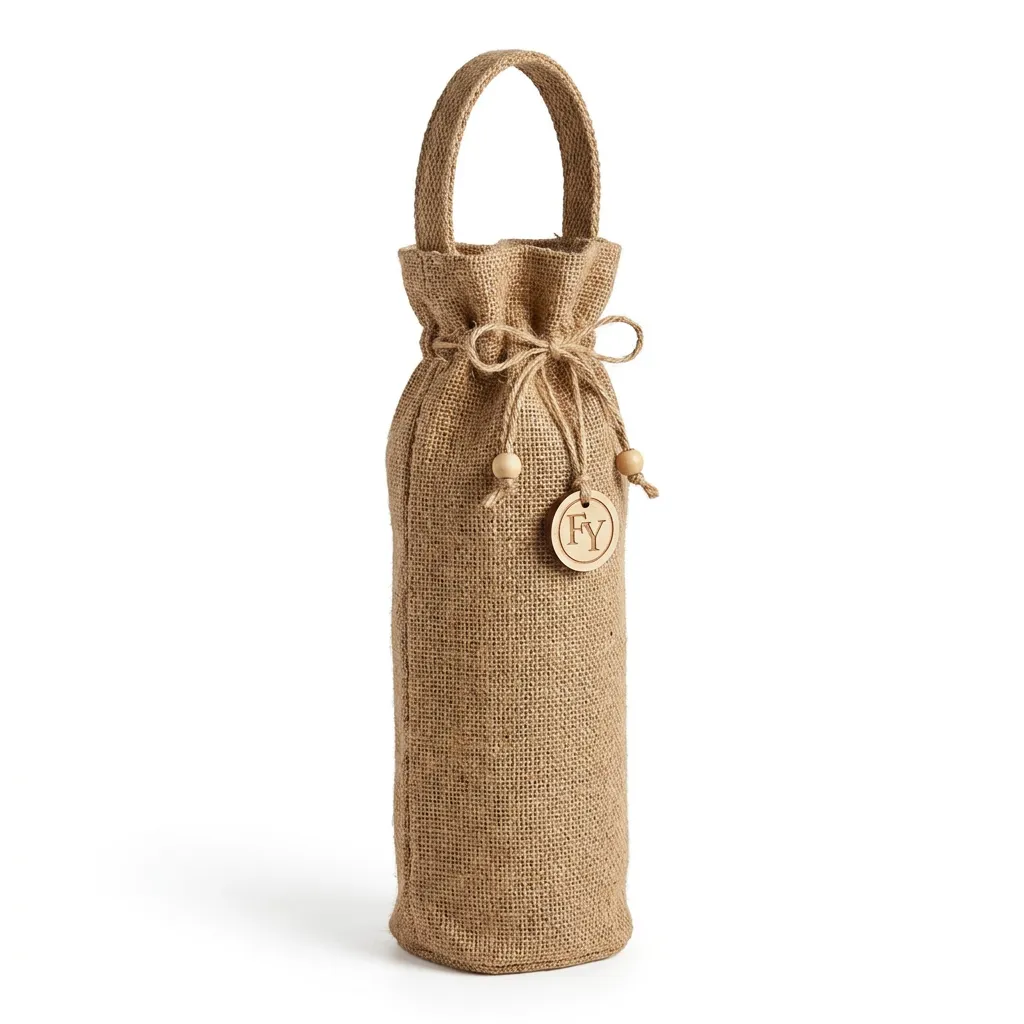
Single, double, or multi-bottle jute wine bag with rope, cotton, or leather handles. PVC window option for label display. Padded dividers for multi-bottle. The rustic wine-gift standard for wineries and gourmet retailers.
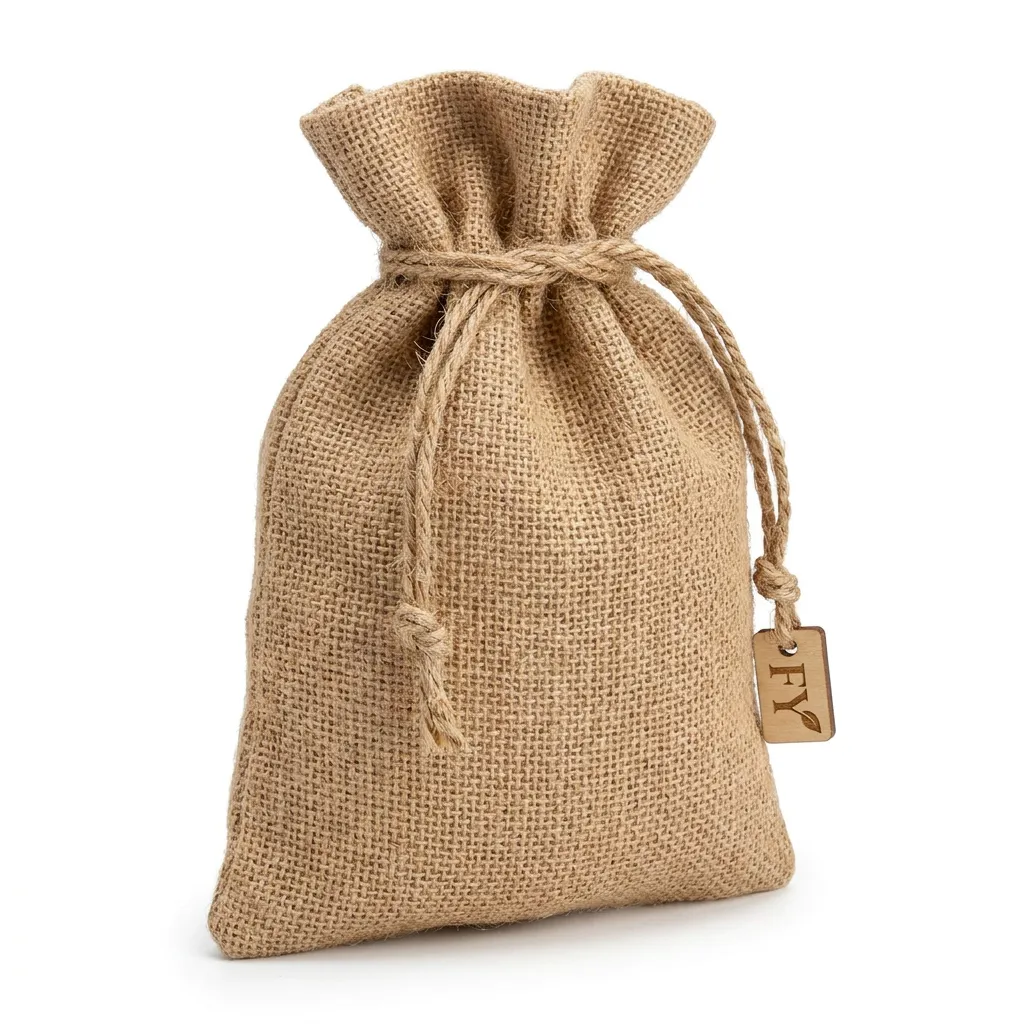
Raw burlap drawstring pouch with jute cord, cotton cord, or satin ribbon. For wedding favors, party bags, artisan product packaging, and farm-to-table gifts. Stamped, tagged, or lace-trimmed. Sizes from 8×10cm to 30×40cm.
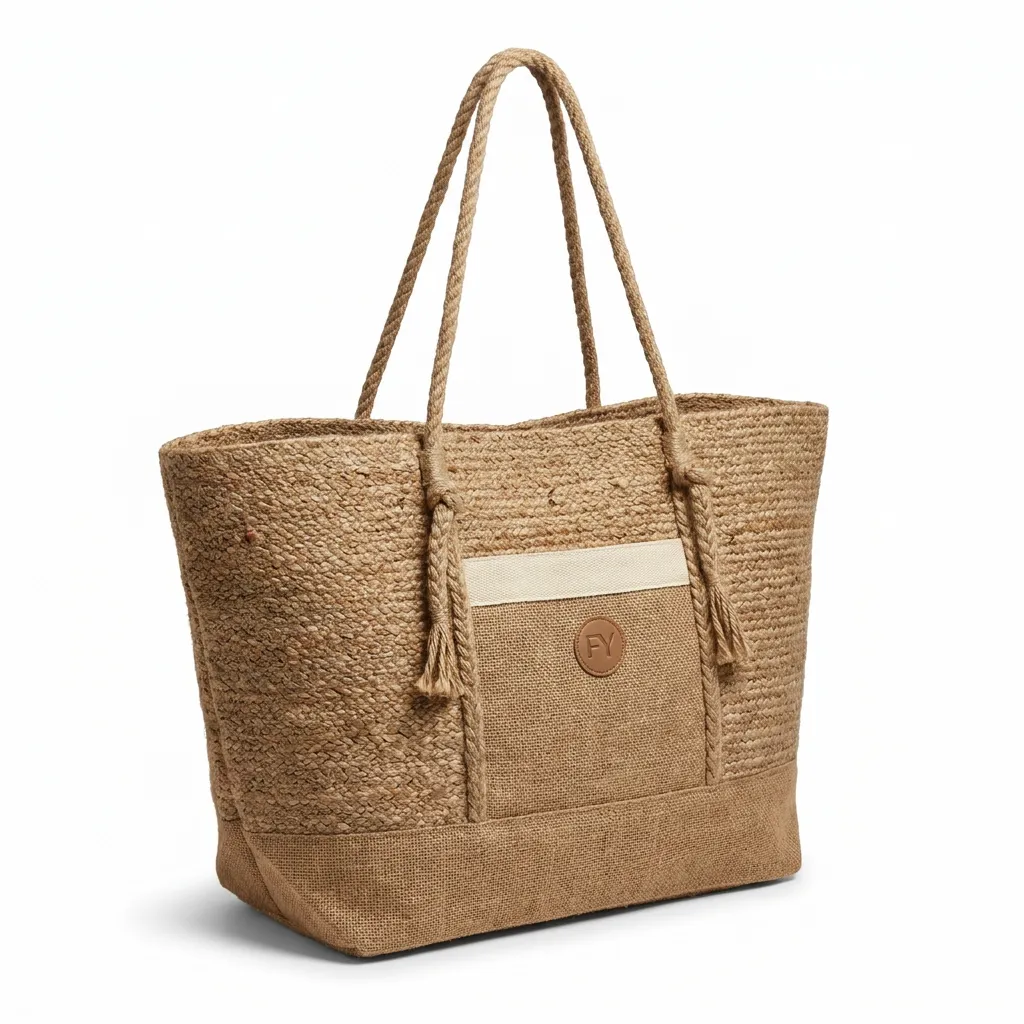
Oversized jute or jute-cotton blend beach tote with cotton lining, zip-top or open-top, rope or bamboo handles. For resort brands, boutique retail, and Amazon seasonal sellers. Strong spring/summer demand.
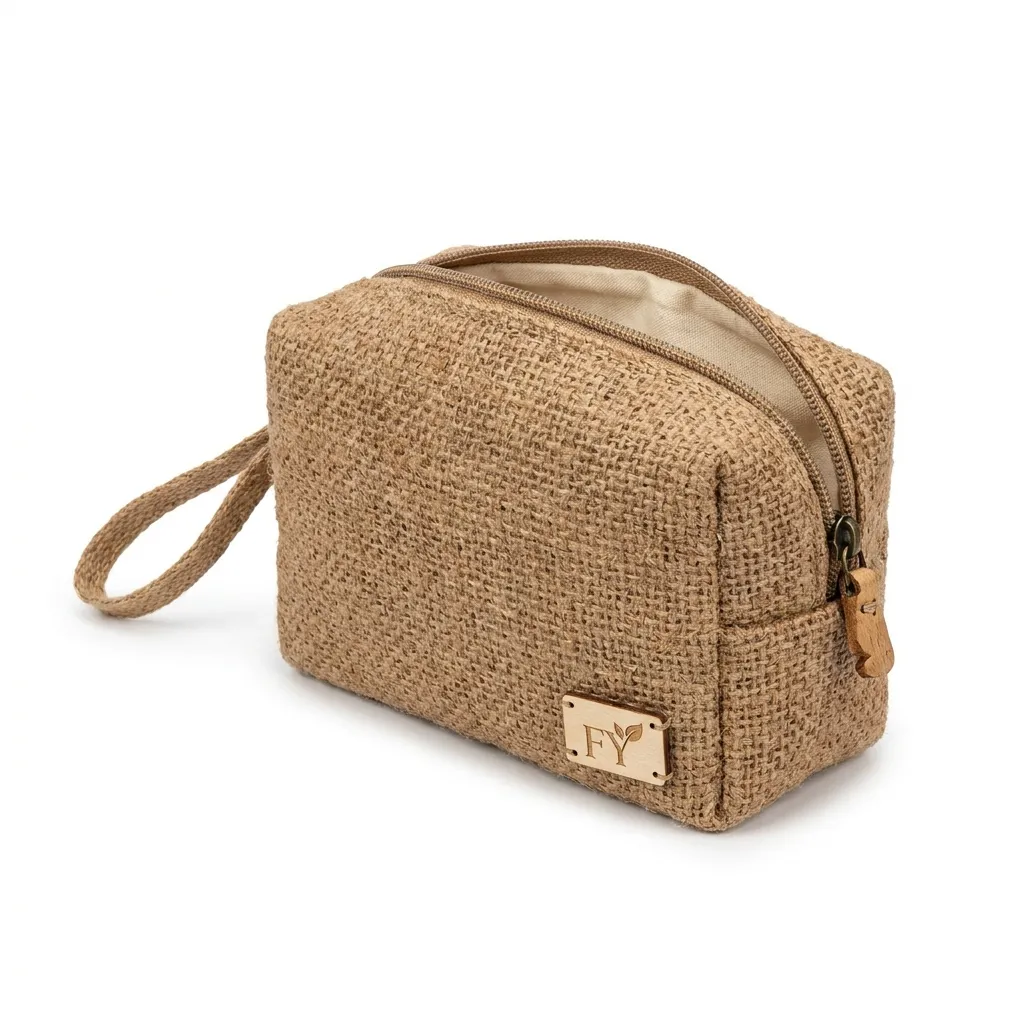
Jute zip pouch with cotton or PVC lining for cosmetics and toiletries. The eco alternative to synthetic cosmetic bags. Gift-set staple and Amazon eco-beauty category seller.
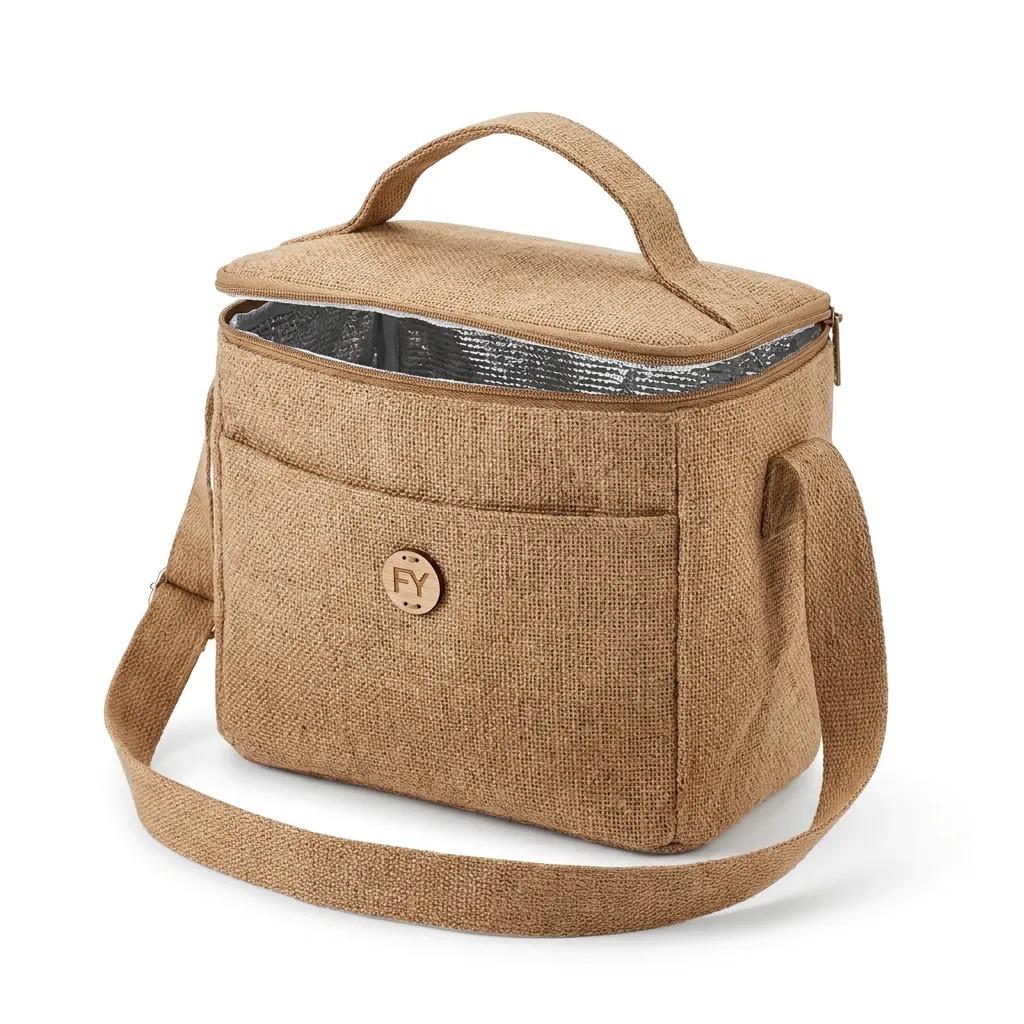
Laminated jute outer with PEVA/EPE insulation lining. The eco-friendly lunch bag alternative to polyester. For eco-kitchenware brands, corporate wellness, and Amazon eco-shopper categories.
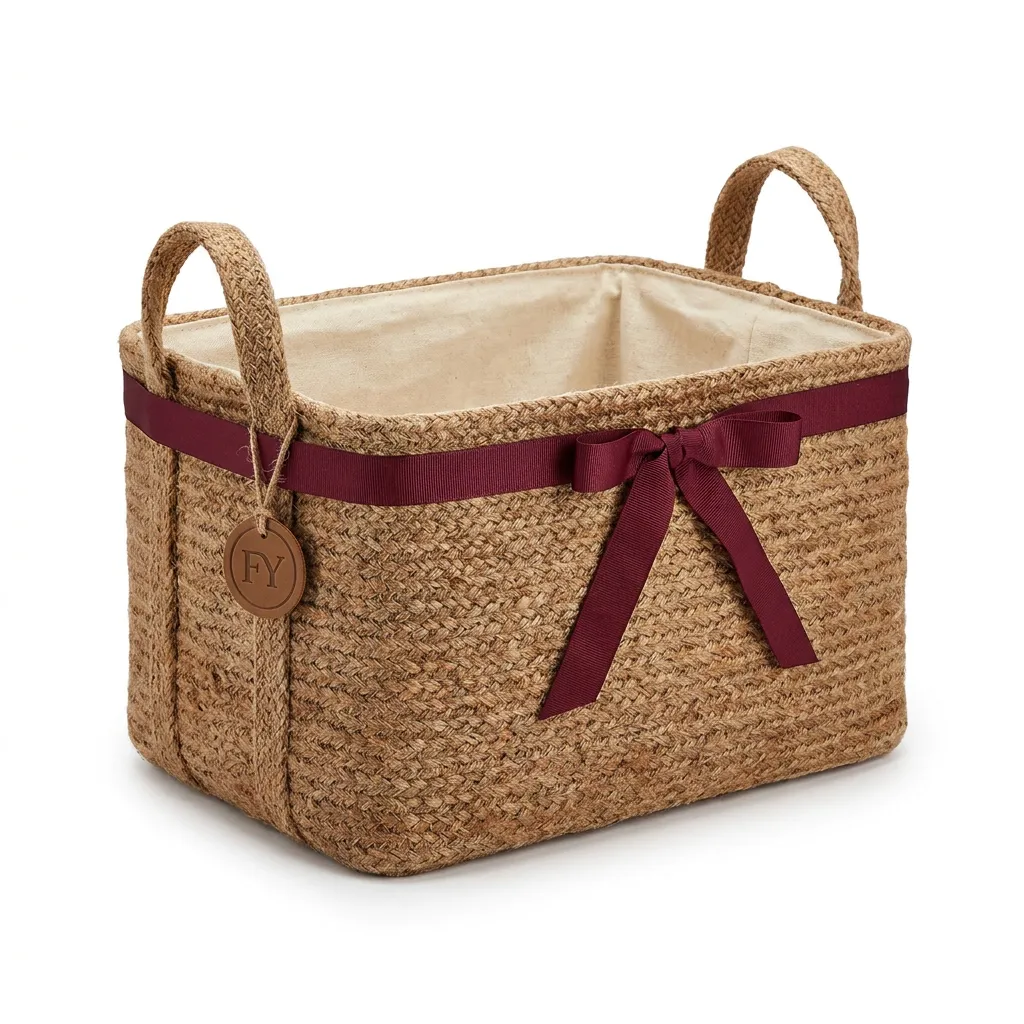
Structured jute hamper bag or storage basket with reinforced walls and cut-out handles. For gourmet gift hampers, home storage, retail display. The rustic packaging that doubles as a reusable home product.
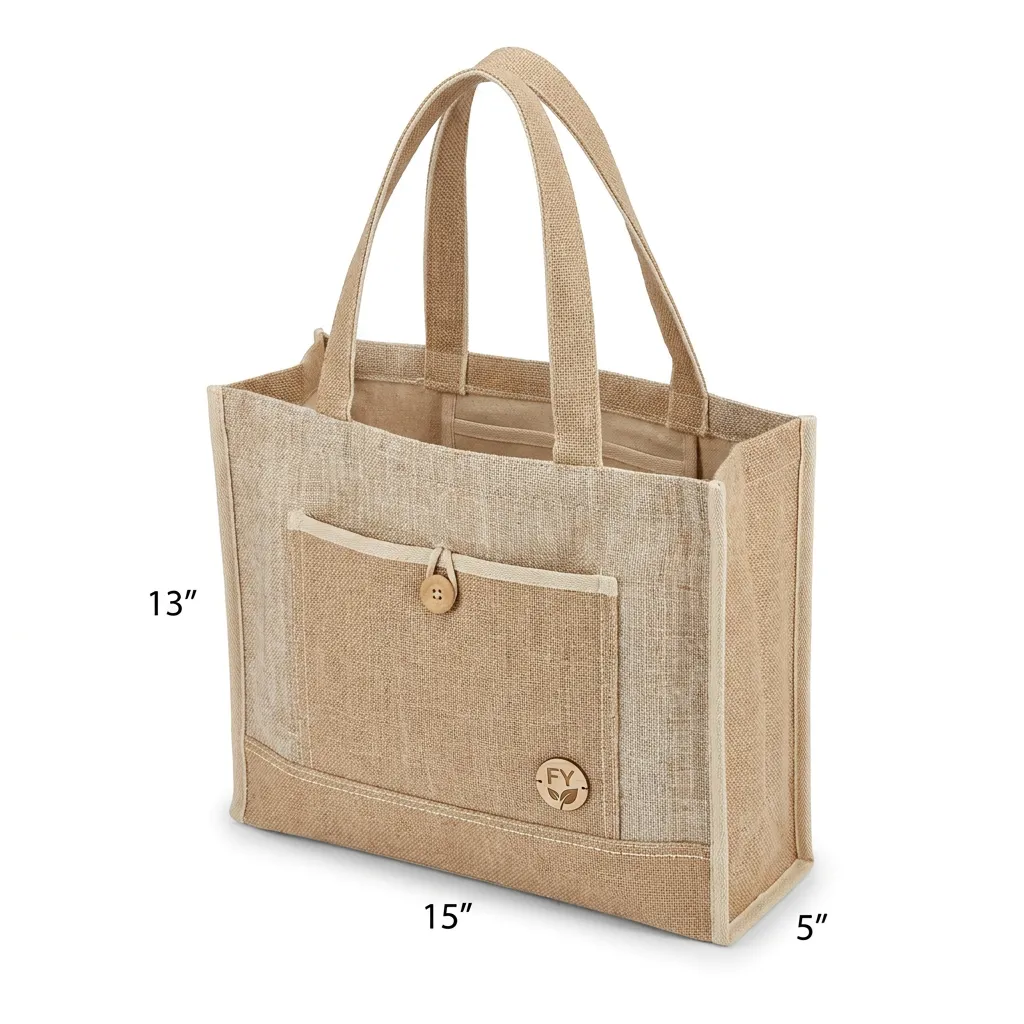
Jute body with cotton panels, gussets, or accent stripes. Combines jute’s rustic texture with cotton’s smooth printability. For fashion-eco brands, boutique retail, and Amazon. The most printable jute format.
The lamination decision is the single most important jute bag sourcing spec. It determines the bag’s structure, water resistance, interior feel, durability, and cost. Raw jute and laminated jute serve completely different markets at different price tiers.
Raw Jute
Unlined
Rough texture, porous, no water resistance. For drawstring pouches, wedding favors, gift bags, and artisan packaging where the rustic texture IS the appeal. Lowest cost per unit. Not suitable for heavy-load carry bags. Retail: $0.50–3.
PP Laminated
Standard
Polypropylene film laminated to the interior — adds water resistance, structure, and smooth inner surface. The standard for reusable grocery totes and branded shopping bags. The most popular jute bag construction. Retail: $3–8.
Cotton Lined
Premium
Cotton fabric lining with fully finished interior. For premium jute totes, wine carriers, and fashion-eco bags. The cotton lining enables interior pockets and branded prints. Highest jute bag tier. Retail: $6–15.
Jute-Cotton
Blend
Jute body with cotton accent panels, gussets, or stripes. Combines jute’s rustic look with cotton’s smooth printability. For brands that want eco aesthetic plus quality printing. The most versatile jute construction.
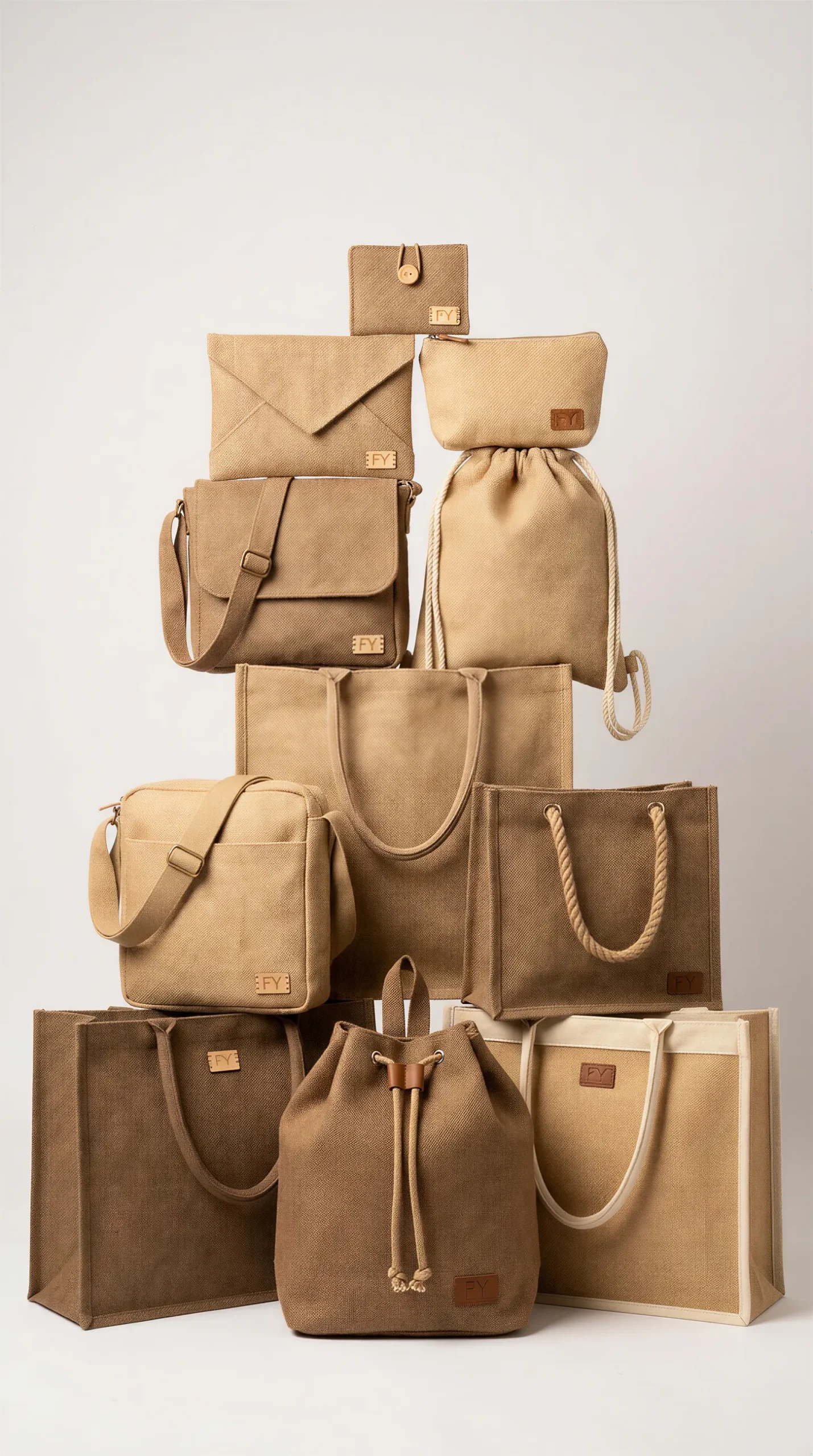
Jute is almost always combined with another material — handles, trim, lining, or accent panels. Pure jute-only bags are limited to simple drawstring pouches. The combination material you choose determines the bag’s price tier, target market, and brand positioning.
We spec the jute grade, lamination type, combination material, and trim at sampling — because jute’s rustic appeal depends on getting the right balance between “natural” and “finished.”
Wine Carriers
Single, double, or 4–6 bottle jute carriers. Rope or cotton handles. PVC window for label display. Padded cotton or cardboard dividers. Jute cord or ribbon closure. The #1 jute application by perceived value.
Grocery Totes
Laminated jute with reinforced base, box gusset (10–15cm), cotton webbing handles. Screen-printed logos. Fits standard grocery checkout. Reusable 100+ times. The plastic-bag replacement standard for supermarkets.
Gift Pouches
Raw burlap with drawstring closure — jute cord, cotton cord, satin ribbon, or lace trim. Sizes from 8×10cm (jewelry) to 30×40cm (wine). Stamped, tagged, or custom-printed. For weddings, farm-to-table, and artisan products.
Handle Options
Cotton webbing (most popular), rope (nautical look), leather handles (premium), bamboo (resort), self-jute (raw). Handle material is the strongest price-tier signal on a jute bag — cotton = standard, leather = premium.
Print Methods
Screen print (1–3 colors on laminated or cotton panels), jute-compatible ink, heat transfer (on cotton panels), embroidery (premium), rubber stamp (artisan look). Printing directly on raw jute is possible but less sharp than on cotton-paneled or laminated surfaces.
Every jute bag leaves our Guangzhou factory fully customized. In-house design, jute cutting, sewing, lamination, printing, and QC. Sample turnaround in 5–7 days.
Free Add-on: Professional Product Photography Included
Free white-background product photos for your online shop, Amazon listings, and wholesale catalogs — no additional charge on production orders.
Jute is sourced primarily from Bangladesh and India and processed into bag-grade fabric in several weave densities. We source from 200+ verified suppliers.
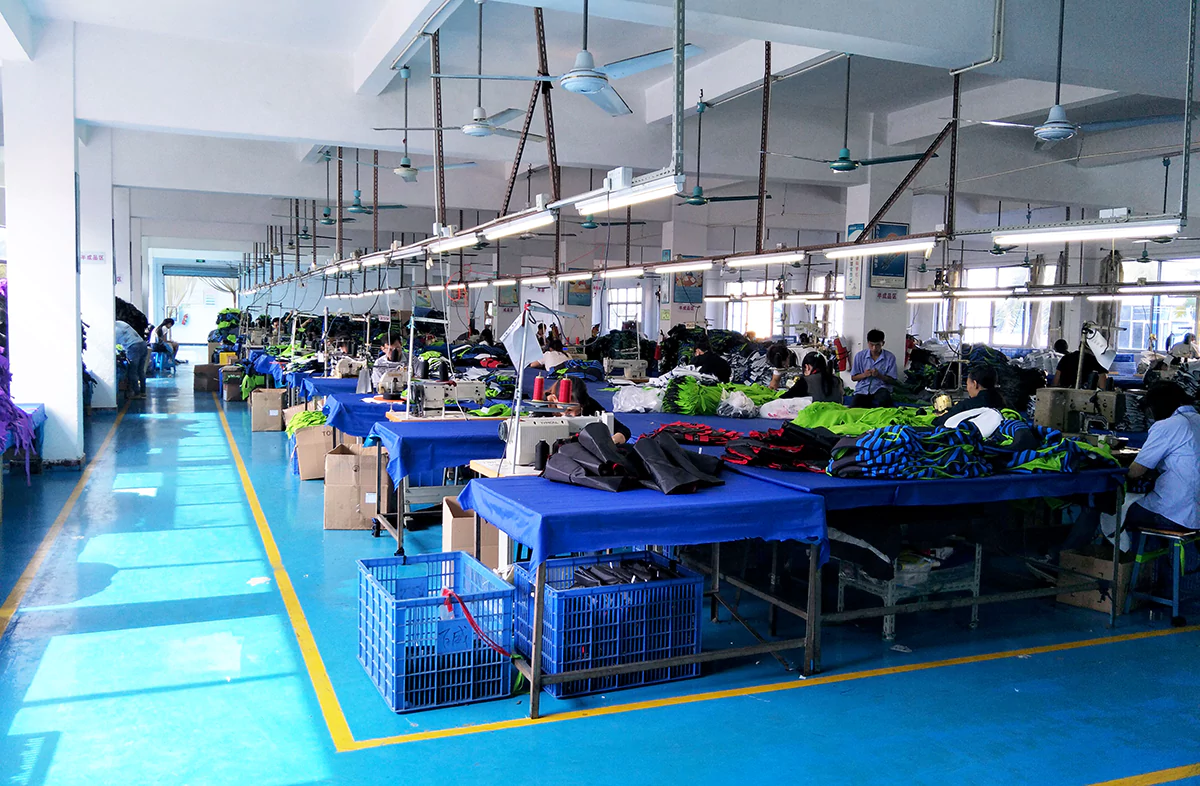
FY Bag Custom operates its own vertically integrated factory in Guangzhou — design, sampling, jute cutting, sewing, lamination, printing, and QC all under one roof. Jute requires specialized handling — the fiber is stiffer and more brittle than cotton or polyester, requiring adjusted sewing tension, needle gauge, and thread type — that our 500+ staff manage in-house.
Years in Manufacturing
Factory Floor Area
Professional Staff
Production Lines
Monthly Capacity
Pre-Shipment Inspection
Jute bags face fiber-specific QC risks — jute fiber shedding, weave density variance, lamination delamination, natural-color shade variation between rolls, and musty odor from improper storage. Our 6-stage QC targets each one. Third-party inspections (SGS, BV, TUV) welcome.
Jute weave density, fiber shedding level, color shade consistency, and odor checked against approved standards. Lamination adhesion tested. Cotton trim and handle color match verified.
PPS delivered in 5–7 days with final jute grade, lamination, handles, and printing. Mass production starts only after your written sign-off on jute texture, color, construction, and branding.
Screen print adhesion on laminated or cotton-paneled surface verified. Print position and color accuracy checked. Lace, ribbon, or embellishment placement confirmed against template.
Jute seam strength tested (jute requires higher sewing tension than cotton). Handle attachment pull-tested. Gusset alignment and lamination integrity at seam points verified. Wine dividers checked for fit.
Every finished jute bag inspected one by one — jute surface, weave consistency, lamination, handle, print, embellishment, odor check. Not sampled, not skipped.

Flat-packed, nested, or individually polybag-packed per spec. Container loading photos and videos sent within 24 hours. Carton counts and shipping marks documented.
Jute bags have competitive production cycles and among the lowest material costs of any natural-fiber bag. Sample in 5–7 days, bulk in 20–30 days for standard formats.
Day 1–2
Send artwork/tech pack; receive FOB quote in 24 hours.
Day 3–10
Printed jute prototype in 5–7 days via DHL.
Day 11–13
30% T/T deposit; balance before shipment.
Day 14–40
Daily WIP photos including lamination & print stages.
Day 41–45
100% inspection plus loading documentation.
Day 46–55
Sea, air, express, or direct-to-FBA.
Sample Lead Time
5–7 Days
Mass Production
25–35 Days
Payment Terms
30% T/T · 70% Before Shipment
Shipping Terms
FOB · CIF · DDP · Amazon FBA
Over the past 15+ years, FY has manufactured jute and burlap bags for wine brands, grocery chains, wedding companies, promotional distributors, and eco retailers worldwide.
Single-bottle and double-bottle jute wine bags with PVC window, cotton rope handles, and screen-printed winery branding. 5,000 pcs for tasting-room retail and wine-club gift shipments. CIF to California warehouse. Reordered 3× in first year.
PP-laminated jute grocery tote with cotton webbing handles and two-color screen-printed logo. Box gusset, reinforced base. Plastic-bag replacement program. Sea freight CIF. Reordered quarterly at consistent quality and pricing.
Raw burlap drawstring favor bags with lace trim and satin ribbon closure. Custom rubber-stamped “Thank You” tag. 5 sizes for a bridal e-commerce brand. FNSKU labeling, Amazon packaging. Perennial bestseller with Q2–Q3 peak demand.
Global Shipping Options
•Sea Freight
•Air Freight
•Express (DHL, FedEx, UPS)
•Rail Freight
•Door-to-Door
•Direct-to-Amazon FBA
Straight answers to the questions bulk-order buyers ask most often about custom jute bag production.
Jute is the plant fiber; burlap (or hessian) is a coarse fabric woven from jute. In the bag industry, the terms are used interchangeably. “Jute bag” and “burlap bag” refer to the same product family. Finer-weave jute creates a smoother, more refined surface; coarse burlap creates the traditional rustic look.
Raw jute is unlined — rough texture, porous, no water resistance. Suitable for gift pouches and favor bags. Laminated jute has a PP or PE film bonded to the interior — adding structure, water resistance, and a smoother inner surface. Laminated is the standard for grocery totes and branded shopping bags.
Yes. Screen printing works on laminated jute and on cotton panels in jute-cotton combination bags. Printing directly on raw jute is possible but produces less sharp results due to the coarse texture. For the sharpest prints on jute bags, we recommend jute-cotton blend with cotton print panels, or laminated jute.
Yes. Jute is one of the fastest-biodegrading bag fabrics — it decomposes naturally in 1–2 years. Jute also requires significantly less water to grow than cotton. Note that PP-laminated jute includes a non-biodegradable plastic film interior; raw jute and cotton-lined jute are fully biodegradable.
Jute bags have competitive MOQs due to low material costs. Simple burlap pouches have the lowest MOQs; laminated jute grocery totes with custom printing have moderate MOQs. Wine carriers with padded dividers have slightly higher MOQs. Contact us with your product and quantity for a specific confirmation.
Raw jute has a mild natural earthy smell that most buyers consider part of the rustic appeal. The odor dissipates with airing. Laminated jute has less odor because the film seals the interior. We check for excessive or musty odor (indicating improper storage) during incoming jute inspection — this is a specific QC checkpoint.
Yes. FNSKU labeling, Amazon-compliant polybag packaging, and carton labeling handled at our Guangzhou factory. Direct to FBA warehouses in the US, EU, UK, and other markets.
Yes. European Industrial Park, Shiling Town, Huadu District, Guangzhou. Monday–Saturday. Video tours available for remote buyers.
Send us your artwork, tech pack, or reference sample — we’ll come back within 24 hours with a detailed FOB quotation covering jute grade, lamination type, combination materials, printing, and packaging. No templates, no copy-paste pricing.