Tel/WhatsAapp:+86 18011919834
E-mail: chloe.x@fybagcustom.com

Tel/WhatsAapp:+86 18011919834
E-mail: chloe.x@fybagcustom.com
Send Your Inquiry Today

Years Manufacturing
Factory Area
Professional Staff
Inspection Rate
Non-woven bags serve the broadest buyer base of any single fabric — promotional distributors, grocery chains, retail brands, corporate procurement, Amazon sellers, and government agencies all source non-woven bags for high-volume programs.



Non-woven PP is not the most natural fabric, not the most durable, and not the most premium — but it is the most produced reusable bag material on earth. Five economic advantages make non-woven the default choice for high-volume orders.

BOPP lamination turns non-woven PP into a full-color CMYK print surface with glossy or matte finish. Photo-quality graphics, edge-to-edge coverage, and water-resistant exterior — all from a fabric that starts at $0.30/pc.

Non-woven bags have the simplest construction in the bag industry. Die-cut handles eliminate sewing steps. Ultrasonic welding replaces stitching. Bulk orders ship in 15–25 days — faster than any sewn-fabric bag.

Unique to non-woven: handles punched directly from the fabric body. No handle attachment, no sewing, no reinforcement. Cuts production time and cost by 20–30% vs. sewn-handle bags. No other bag fabric supports die-cut handles at this scale.

Non-woven bags fold completely flat — hundreds fit in a single carton. Lowest shipping cost per unit of any reusable bag. Container loads of 100,000+ pcs are routine. For promotional buyers, shipping cost often matters more than bag cost.
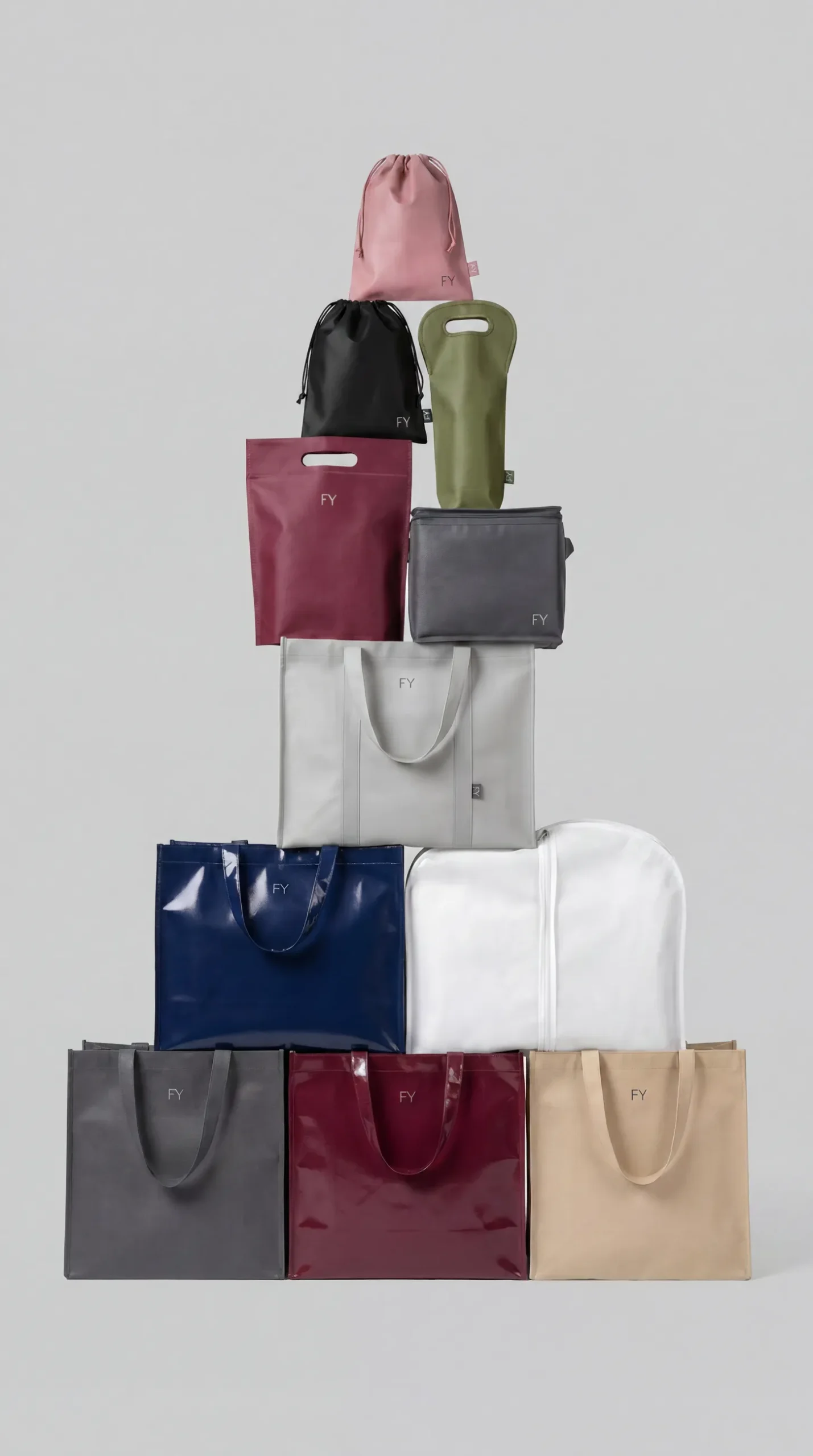
From die-cut grocery bags to laminated fashion totes, we manufacture across every major non-woven bag format — promotional, retail, grocery, wine, garment, and insulated segments all produced in-house.
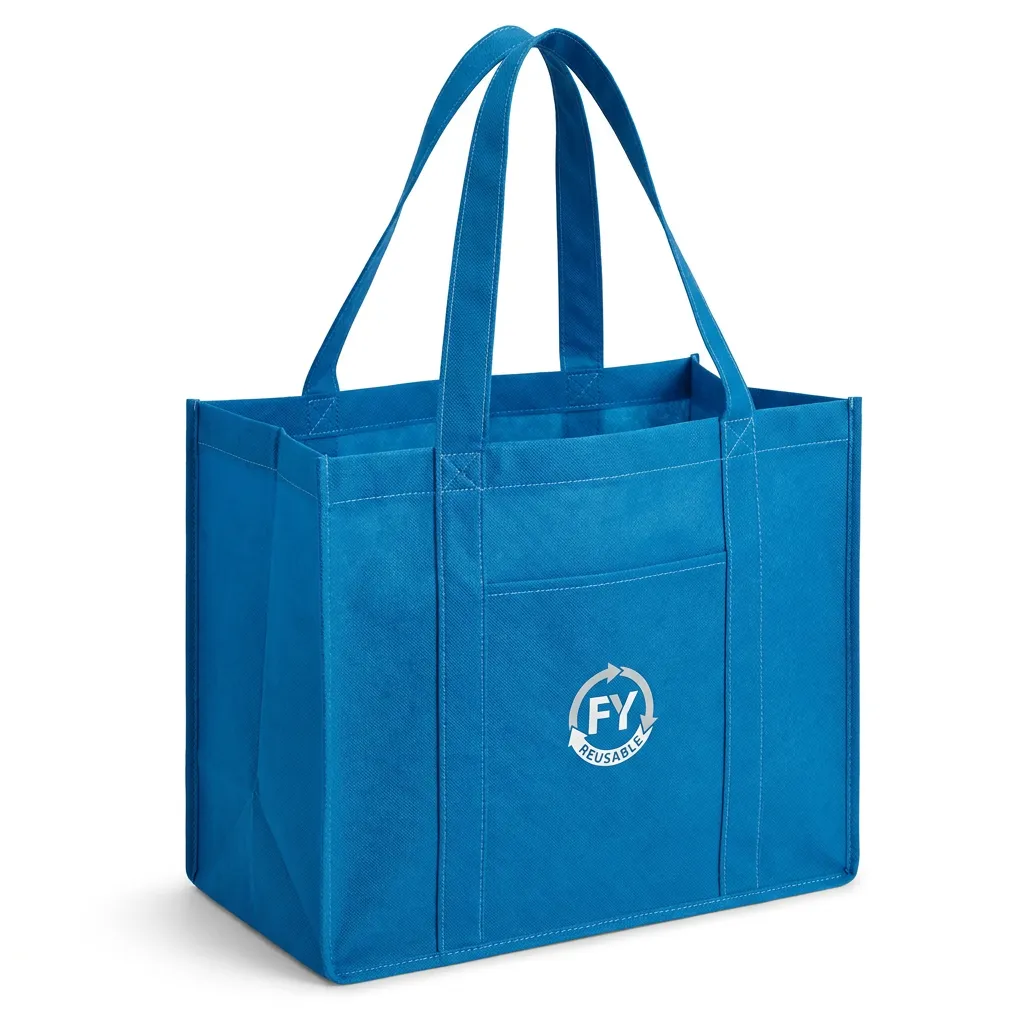
Standard-format non-woven tote bag with sewn handles and box gusset. 80–100 GSM. Open-top or snap closure. The #1 non-woven bag format worldwide — grocery, promotional, and retail applications. Silk-screen or laminated print.
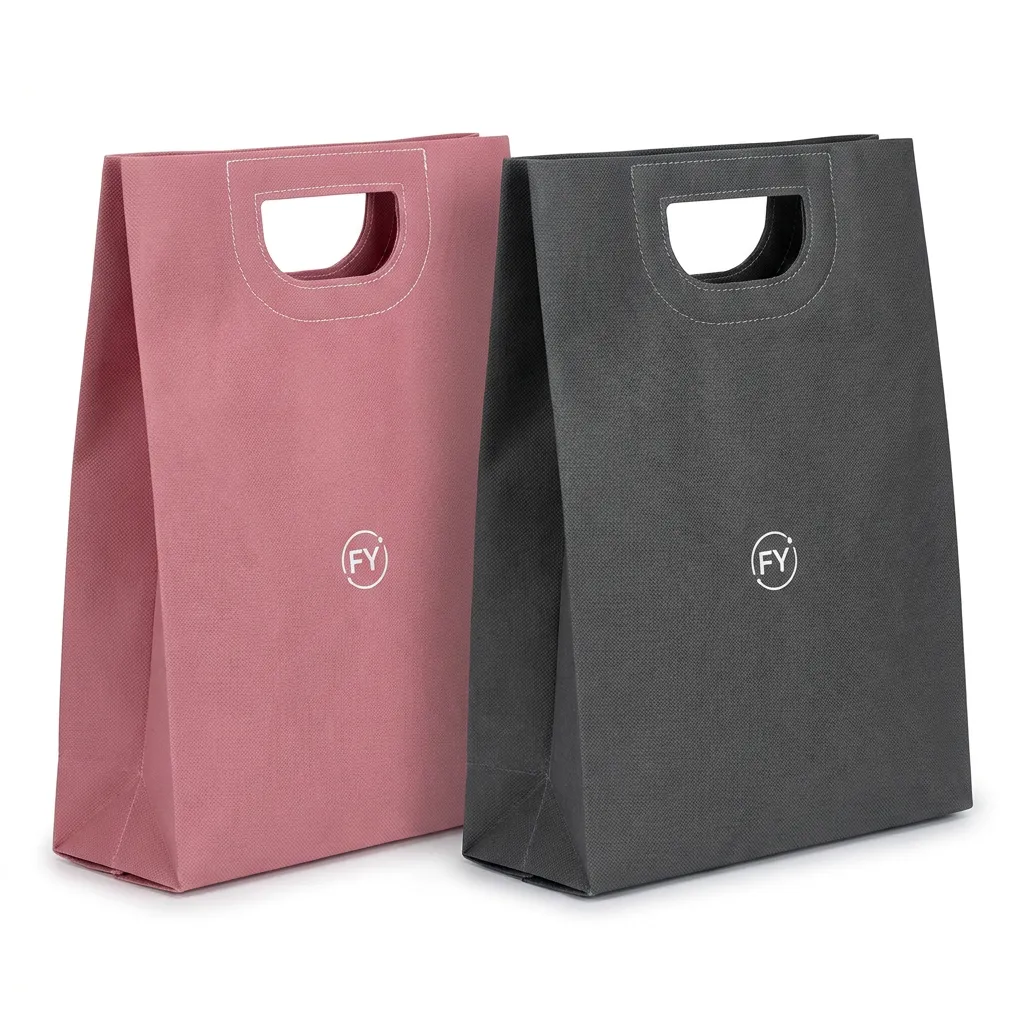
Handles punched directly from the fabric body — no sewing required. 70–90 GSM. The lowest-cost non-woven bag format. For grocery checkout, retail packaging, trade show handouts, and plastic bag replacement programs. 1–2 color silk screen.
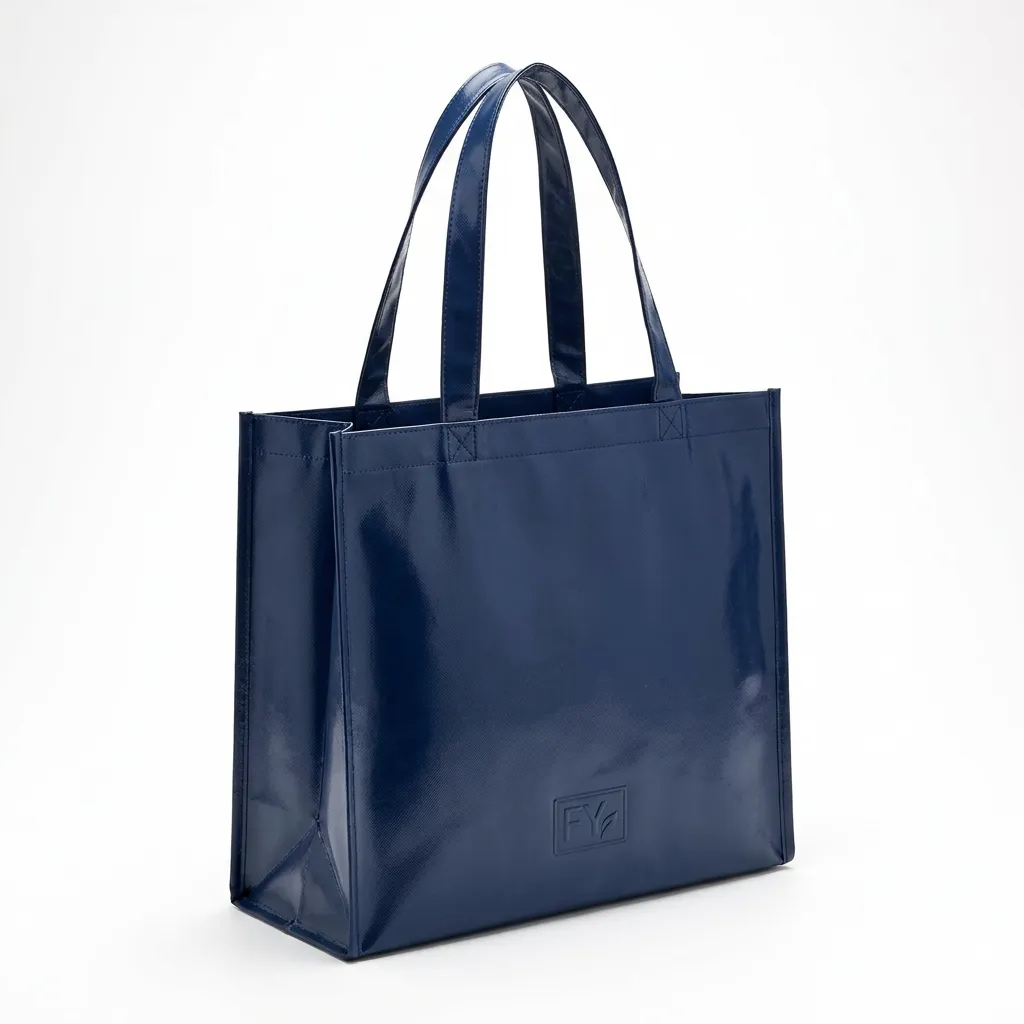
BOPP-laminated non-woven with full-color CMYK print, glossy or matte finish. 100–120 GSM. Water-resistant exterior. For retail brands, fashion promotions, and premium corporate giveaways. Looks and feels significantly more premium than raw non-woven.
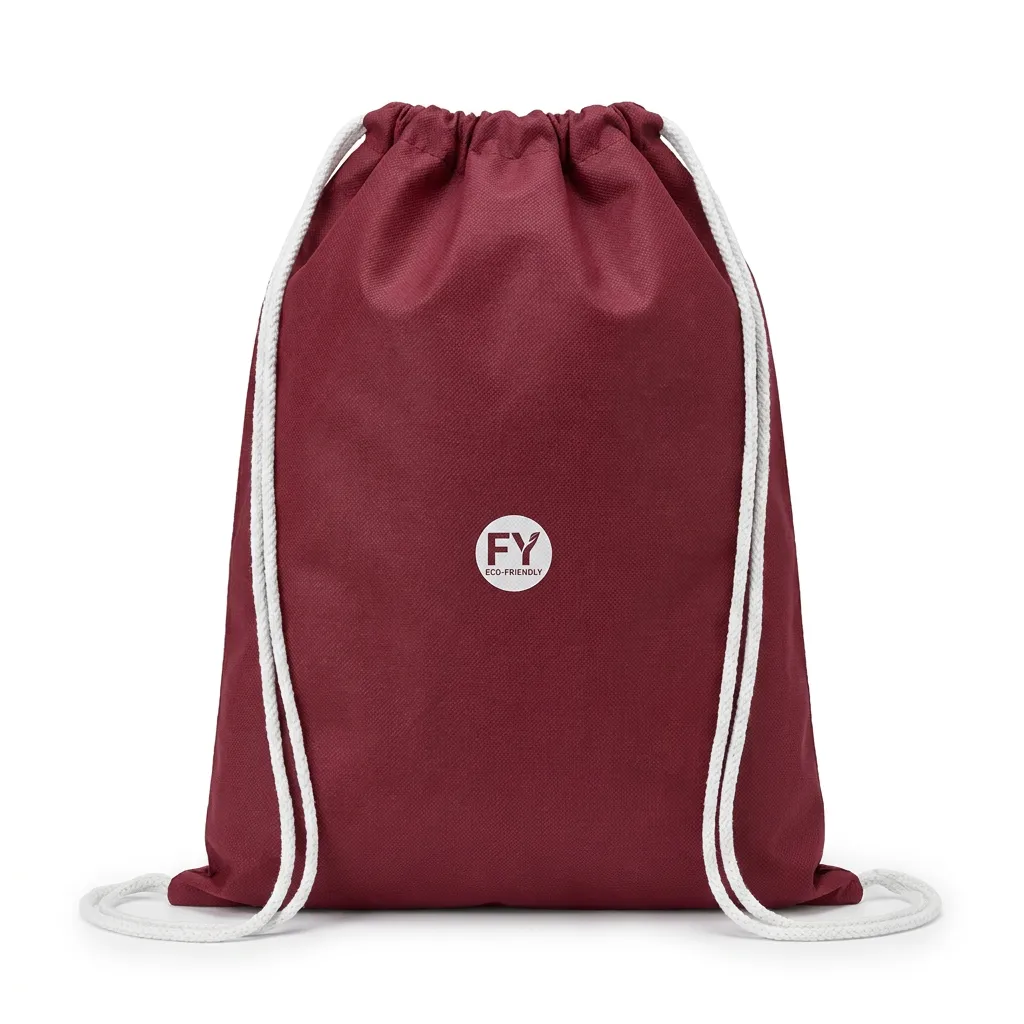
Drawstring closure non-woven bag for shoes, gym, laundry, or event giveaways. 80–100 GSM. Silk-screen logo. Overlaps with gym bag and drawstring backpack categories. Ultra-low cost per unit.
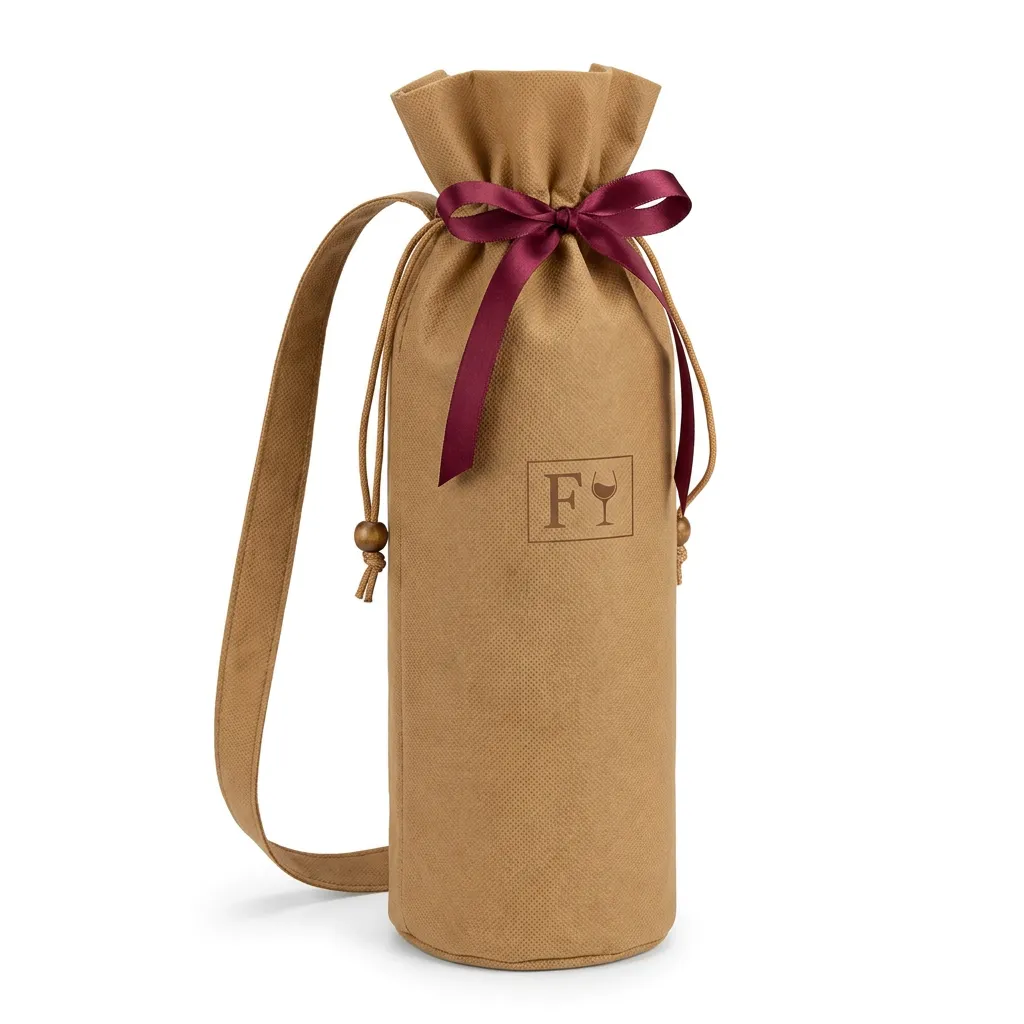
Single or multi-bottle carrier with dividers. 90–110 GSM. For wine shops, liquor stores, gift packaging, and holiday promotions. Full-color laminated or 1–2 color silk screen. A seasonal bestseller with strong Q4 demand.
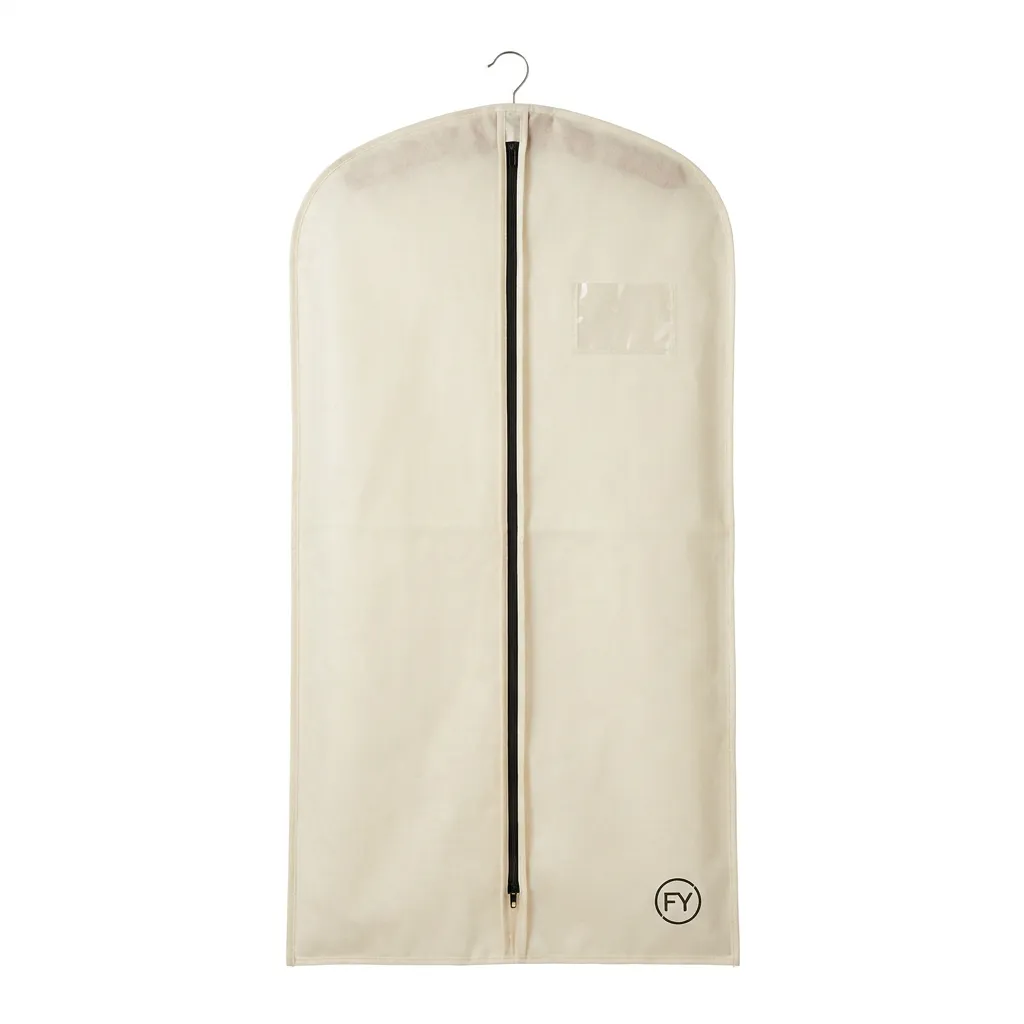
Suit or dress cover with zipper and hanger opening. 60–80 GSM. For fashion brands, dry cleaners, bridal shops, and retail packaging. Breathable non-woven protects without trapping moisture. Custom-printed with brand logo.
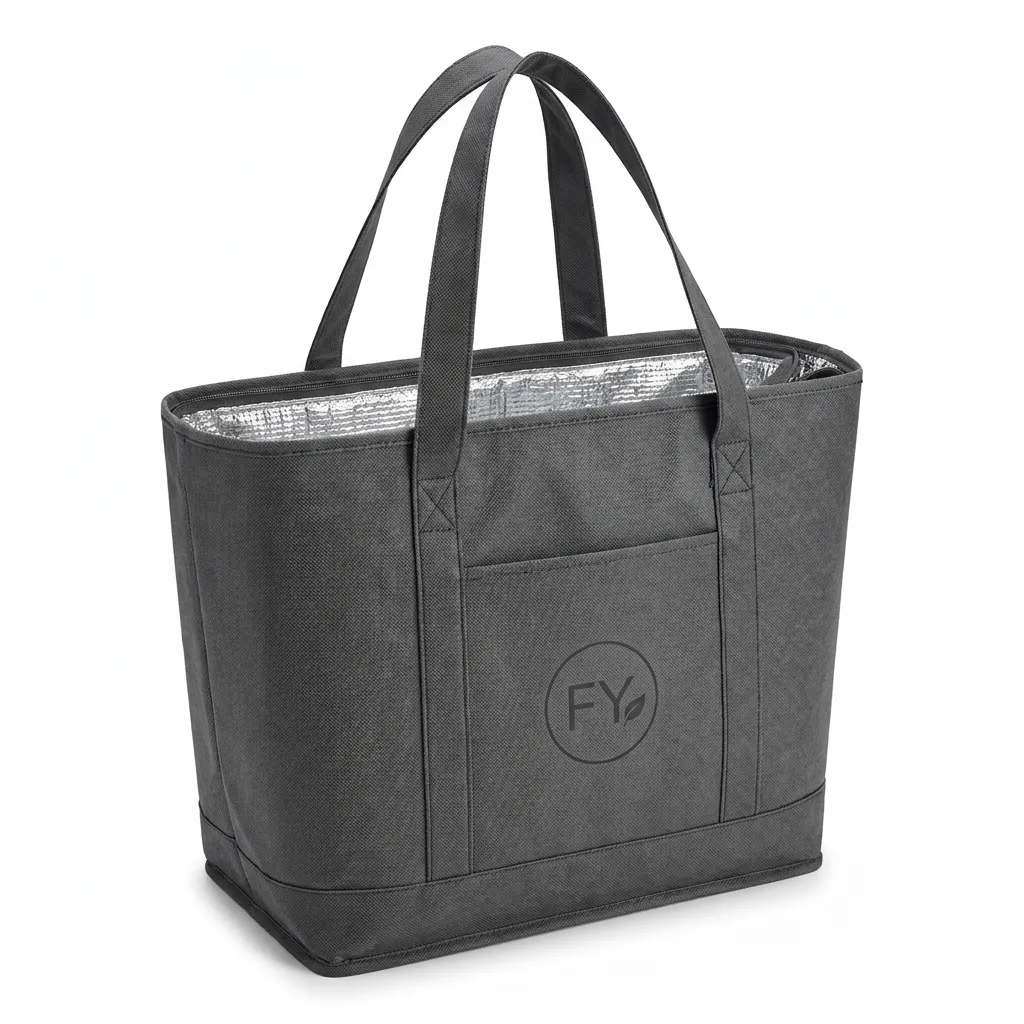
Non-woven outer with aluminum foil or EPE foam insulation lining. 90–120 GSM. For grocery cold-chain, promotional cooler bags, and lunch bag applications. The lowest-cost insulated bag option available.
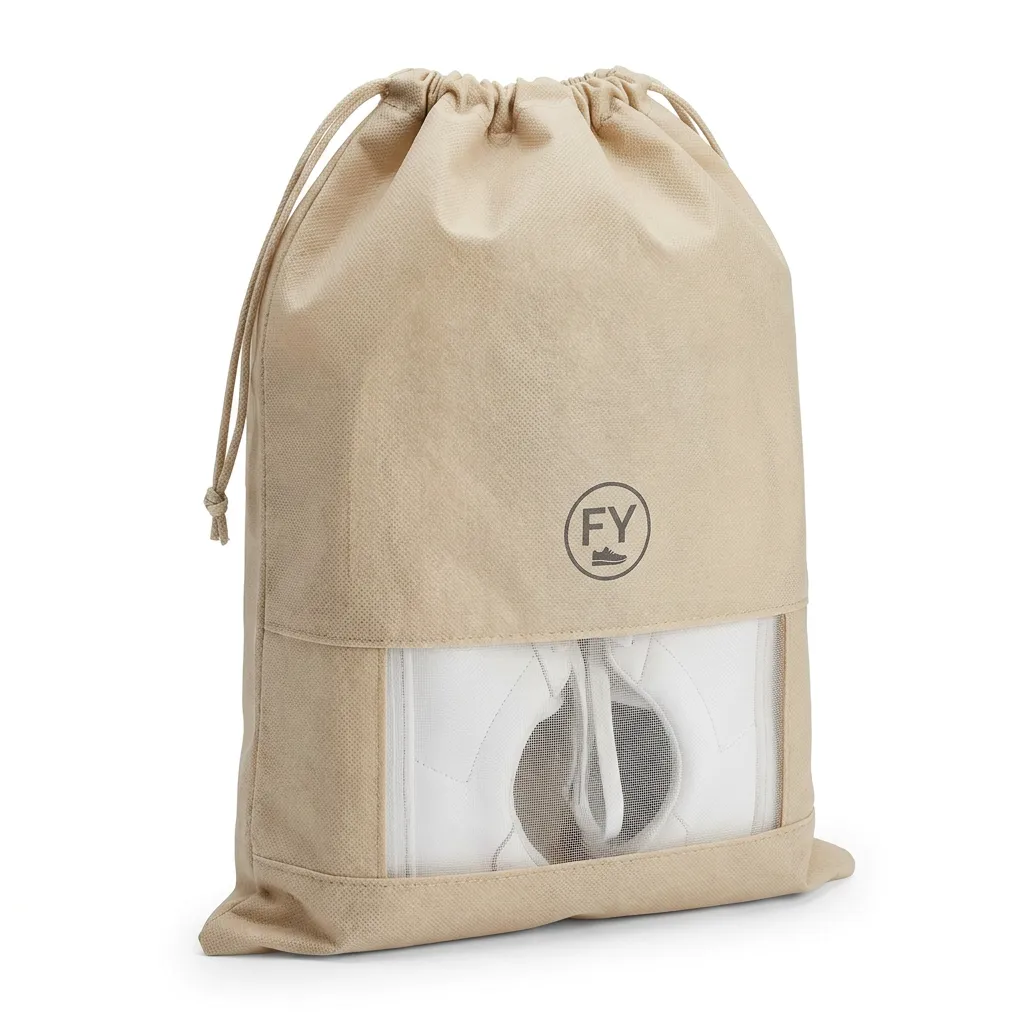
Drawstring or zip shoe bag for retail packaging, travel, and dust protection. 70–90 GSM. Non-woven is the default dust-bag fabric for mid-tier footwear and accessories — replacing cotton dust bags at a fraction of the cost.
Non-woven fabric is measured in GSM (grams per square meter), not ounces or denier. GSM determines durability, hand feel, print quality, and cost. Choosing the wrong GSM for your application is the most common non-woven sourcing mistake.
70 GSM
Ultra-Light
Thinnest non-woven. For die-cut handle bags, garment covers, shoe bags, and single-event giveaways. Not durable enough for repeated grocery use. 1–2 color silk screen only. Lowest cost — ideal for orders of 50,000+ pcs where unit cost is the primary driver.
80–90 GSM
Standard
The sweet spot for promotional totes and grocery bags. Durable enough for 20–50 reuses. Good print surface for silk screen. Comfortable hand feel. This is the GSM range most promotional distributors and grocery chains order. Volume: 5,000–100,000+ pcs.
100–120 GSM
Heavy
Stiff enough to hold shape. The standard weight for BOPP-laminated totes with full-color print. Durable for 50–100+ reuses. For retail brands, premium promotions, and laminated fashion totes. Significantly more premium feel than 80 GSM.
140+ GSM
Heavy-Duty
Maximum durability and structure. For insulated cooler bags, wine carriers with dividers, and reusable bags designed for 100+ uses. Higher material cost but longer product life. For buyers who need their non-woven bags to last as long as woven alternatives.
Every non-woven bag order starts with one decision: laminated or non-laminated? This choice determines your print options, water resistance, hand feel, unit cost, and product positioning. We produce both types in-house and can help you choose based on your application, budget, and target market.
Lamination adds a thin BOPP (biaxially oriented polypropylene) film to the non-woven surface. The film enables full-color offset or gravure printing, adds a glossy or matte finish, and makes the bag water-resistant. Non-laminated non-woven is raw PP fabric — simpler, cheaper, and better suited to silk-screen printing.
Print Method
Laminated: full-color CMYK offset/gravure, photo-quality, edge-to-edge. Non-laminated: silk screen (1–4 spot colors), heat transfer for small-area CMYK. Laminated is the only non-woven option for photographic or gradient artwork.
Finish
Laminated: glossy, matte, or soft-touch film. Non-laminated: raw fabric texture, no surface coating. Laminated looks and feels like a retail product. Non-laminated looks functional and utilitarian.
Water Resistance
Laminated: water-resistant exterior (BOPP film repels splashes and light rain). Non-laminated: porous fabric, not water-resistant. For grocery and outdoor use, laminated is strongly recommended.
Cost Impact
Lamination adds approximately 30–50% to per-unit cost depending on GSM, print complexity, and order volume. At high volumes (50,000+ pcs), the per-unit difference shrinks. Non-laminated is the lowest-cost reusable bag option available anywhere.
Eco Positioning
Non-laminated: recyclable as PP #5 (polypropylene). Laminated: multi-layer material is harder to recycle. If recyclability claims are important to your marketing, non-laminated is the safer choice. Both are reusable and far better than single-use plastic bags.
Best For
Laminated: retail brands, premium promotions, full-color designs, grocery chains with strong branding. Non-laminated: single-color logos, cost-driven promotions, plastic bag replacement programs, government distribution programs, garment covers, shoe bags.
Every non-woven bag leaves our Guangzhou factory fully customized to your specifications. In-house design, die-cutting, sewing, ultrasonic welding, lamination, printing, and QC. 10+ production lines. Sample turnaround in 5–7 days.
Free Add-on: Professional Product Photography Included
Free white-background product photos for your online shop, Amazon listings, and wholesale catalogs — no additional charge on production orders.
Non-woven PP is not one material — it spans a range of GSM weights, lamination finishes, and construction methods. We produce bags using all major non-woven configurations.

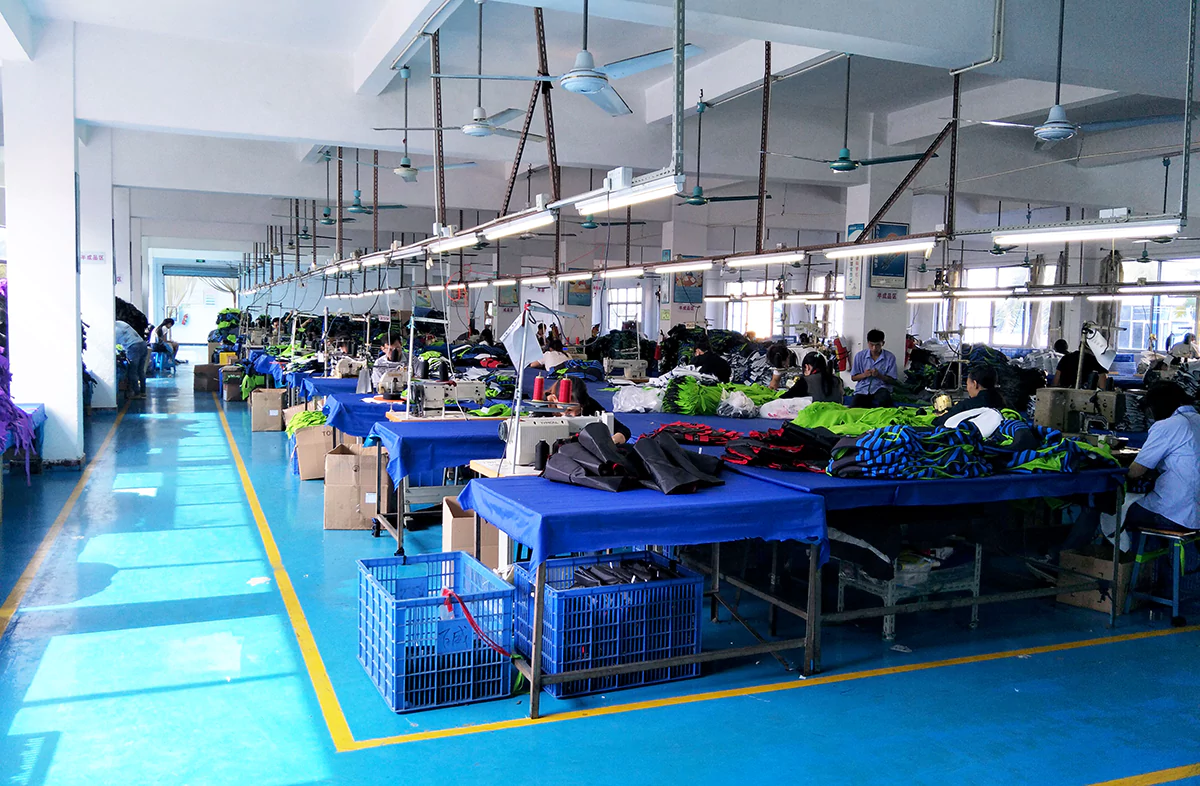
FY Bag Custom operates its own vertically integrated factory in Guangzhou, Guangdong — design, die-cutting, sewing, ultrasonic welding, lamination, printing, insulation assembly, and QC all under one roof. Non-woven bags are among our fastest-turnaround products due to simplified construction — die-cut and ultrasonic-welded formats can ship in as little as 15 days after sample approval.
Our non-woven production shares capabilities with our tote bag, lunch bag, and polyester bag lines — cross-category knowledge that lets us advise buyers on when non-woven is the right choice vs. when to upgrade to woven fabric.
Years in Manufacturing
Factory Floor Area
Professional Staff
Production Lines
Monthly Capacity
Pre-Shipment Inspection
Non-woven bags face fabric-specific QC risks — GSM variation between rolls, lamination delamination, die-cut handle tear-through, print misregistration on laminated surfaces, and ultrasonic weld failure. Our 6-stage QC targets each one. Third-party inspections (SGS, BV, TUV) welcome.
Non-woven PP roll weight (GSM) measured and verified per batch. Color consistency checked across rolls. Laminated rolls tested for film adhesion strength, surface finish (glossy/matte), and print color accuracy. Rejected rolls isolated before cutting.
PPS delivered in 5–7 days with final fabric, print, handle type, and construction. Mass production starts only after your written sign-off on GSM, print quality, lamination finish, and handle style.
Die-cut handle dimensions and position verified — handle tear-resistance spot-tested on every cutting batch. Ultrasonic weld strength tested for seal integrity. Sewn seams pull-tested on sewn-construction formats.
Silk-screen color accuracy, ink adhesion, and coverage verified per batch. Laminated print registration, color density, and edge alignment checked piece by piece on first 100 units. Print adhesion tape-tested on laminated surface.
Every finished non-woven bag inspected one by one — fabric surface, print quality, handle attachment/die-cut integrity, weld/seam strength, gusset alignment, label placement. Not sampled, not skipped.

Flat-packed in bundles or individually polybag-packed per spec. Container loading photos and videos sent within 24 hours. Carton counts, seal numbers, and shipping marks documented.
Non-woven bags have the shortest production cycles in the bag industry — simple construction, in-house die-cutting, and ultrasonic welding. Sample in 5–7 days, bulk in 15–25 days for standard formats.
Day 1–2
Send artwork/dieline; receive FOB quote in 24 hours.
Day 3–10
Printed non-woven prototype in 5–7 days via DHL.
Day 11–13
30% T/T deposit; balance before shipment.
Day 14–40
Daily WIP photos including print-run documentation.
Day 41–45
100% inspection plus loading documentation.
Day 46–55
Sea, air, express, or direct-to-FBA.
Sample Lead Time
5–7 Days
Mass Production
25–35 Days
Payment Terms
30% T/T · 70% Before Shipment
Shipping Terms
FOB · CIF · DDP · Amazon FBA
Over the past 15+ years, FY has manufactured non-woven bags for grocery chains, promotional companies, retail brands, government programs, and Amazon FBA sellers worldwide.
Laminated non-woven totes with full-color brand artwork, 100 GSM, BOPP glossy finish, sewn webbing handles. Distributed free at checkout as single-use plastic bag replacement. Sea freight CIF to distribution centers in 3 countries. Repeat orders placed quarterly.
80 GSM non-laminated non-woven tote with 2-color silk-screen logo. Die-cut handles. Flat-packed 500 per carton. Sea freight FOB. Delivered 4 weeks ahead of event date. Under $0.40/pc at volume. Reordered for 5 subsequent events across 2 years.
ODM partnership on 4-design laminated non-woven tote set — 110 GSM, matte finish, full-color prints, sewn handles. FNSKU labeling, Amazon polybag packaging, free photography. Air-shipped to FBA in US and UK. Strong seasonal sales Q4.
Global Shipping Options
•Sea Freight
•Air Freight
•Express (DHL, FedEx, UPS)
•Rail Freight
•Door-to-Door
•Direct-to-Amazon FBA
Straight answers to the questions bulk-order buyers ask most often about custom non-woven bag production.
Non-woven bags are made from polypropylene (PP) — a type of plastic. They are NOT biodegradable like cotton or jute. However, non-woven bags are reusable (80–100+ uses depending on GSM), recyclable (PP #5 where recycling infrastructure exists), and dramatically reduce single-use plastic bag consumption. Non-laminated non-woven is easier to recycle than laminated. For fully natural fiber alternatives, consider canvas, cotton, or jute.
Non-woven bags typically have among the lowest MOQs and fastest turnaround times in the bag industry — especially for die-cut formats and standard totes. Laminated bags with custom artwork may require higher minimums due to print plate setup. Contact us with your format and quantity for a specific confirmation.
70 GSM for single-event die-cut bags. 80–90 GSM for standard promotional totes and grocery bags. 100–120 GSM for laminated retail bags and premium promotions. 140+ GSM for insulated cooler bags and heavy-duty reusable bags. We’ll recommend the right GSM based on your product type, reuse target, and budget.
Laminated if you need full-color printing, water resistance, or a premium retail look. Non-laminated if you need lowest cost, simple 1–2 color logo, recyclability positioning, or very high volumes (50,000+ pcs). We produce both in-house and can show you samples of each before you commit.
Non-laminated: silk screen (1–6 spot colors, lowest cost), heat transfer (small-area CMYK). Laminated: full-color CMYK offset or gravure printing (photo-quality, edge-to-edge coverage). Print proofs are approved at sampling before mass production.
Depends on GSM and construction. 80 GSM bags last 20–50 uses with normal grocery loads. 100+ GSM laminated bags last 50–100+ uses. Die-cut handles are less durable than sewn webbing handles under heavy loads. For maximum durability, we recommend 100+ GSM with sewn reinforced handles.
Yes. FNSKU labeling, Amazon-compliant polybag packaging, and carton labeling handled at our Guangzhou factory. Direct to FBA warehouses in the US, EU, UK, and other markets.
Yes. European Industrial Park, Shiling Town, Huadu District, Guangzhou. Monday–Saturday. Video tours available for remote buyers.
Send us your artwork, dieline, or reference sample — we’ll come back within 24 hours with a detailed FOB quotation covering GSM, lamination type, print method, handle style, construction, and packaging. No templates, no copy-paste pricing.