Tel/WhatsAapp:+86 18011919834
E-mail: chloe.x@fybagcustom.com

Tel/WhatsAapp:+86 18011919834
E-mail: chloe.x@fybagcustom.com
Send Your Inquiry Today

Years Manufacturing
Factory Area
Professional Staff
Inspection Rate
Gingham bags serve fashion brands, lifestyle labels, gift companies, Amazon FBA sellers, and any buyer targeting the warmth-nostalgia-charm positioning that gingham uniquely delivers.



Stripes communicate direction. Plain communicates professionalism. Gingham communicates feeling — warmth, nostalgia, charm, and a specific kind of approachable femininity that no other pattern triggers as instantly. Five properties make gingham the most emotionally loaded pattern in the bag industry.

Picnic blankets. Country kitchens. Summer dresses. Café tablecloths. Gingham triggers childhood-memory associations faster than any other fabric pattern. For brands targeting warmth, comfort, heritage, and “simpler times” positioning, gingham is an emotional shortcut that no amount of copywriting can replicate. The pattern does the storytelling.

Gingham reads as soft, approachable, and charming without being overly decorative. It’s the pattern equivalent of a friendly smile — inviting without being loud. This positions gingham bags as gifts, self-purchases, and everyday carry for female demographics across 18–65. The broadest feminine appeal of any single pattern.

The cottagecore aesthetic trend (2020–2022) normalized gingham as a year-round, mainstream fashion pattern — not just a seasonal novelty. Gingham has graduated from “summer picnic” to permanent wardrobe staple. The cultural resonance has been permanently elevated. Gingham bags now sell in every season, not just spring/summer.

Pink gingham = romantic, sweet, youthful. Blue gingham = classic, fresh, wholesome. Red gingham = bold, country, nostalgic. Black gingham = modern, sophisticated, elevated. Green gingham = earthy, natural, garden. The same check pattern tells five completely different stories depending on the color chosen. One pattern, infinite moods.

Gingham’s regular geometric grid creates clean, visually satisfying product photography — the pattern reads clearly at thumbnail size in Amazon listings and Instagram feeds. The three-tone color variation adds visual depth that solid-color bags lack. Gingham bags consistently outperform plain equivalents on click-through rate in e-commerce imaging.
Gingham pairs best with casual, feminine, and lifestyle bag formats — totes, pouches, lunch bags, crossbodies, and bucket bags. Here are the eight most-ordered gingham bag formats.
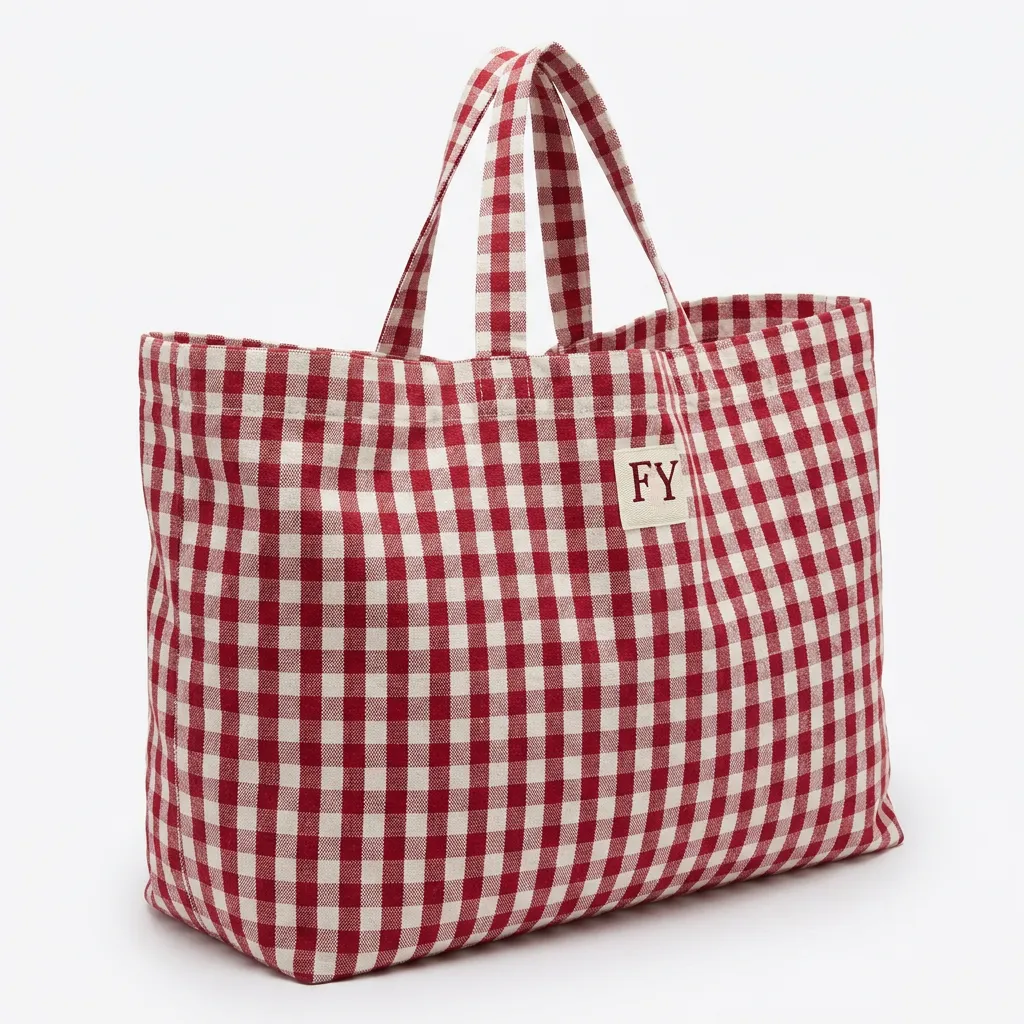
The #1 gingham bag format. Classic-scale woven gingham in cotton or cotton-blend. Blue/white, pink/white, red/white, or custom Pantone. Market tote, shopping tote, beach tote, everyday carry. The pattern that sells itself year-round.
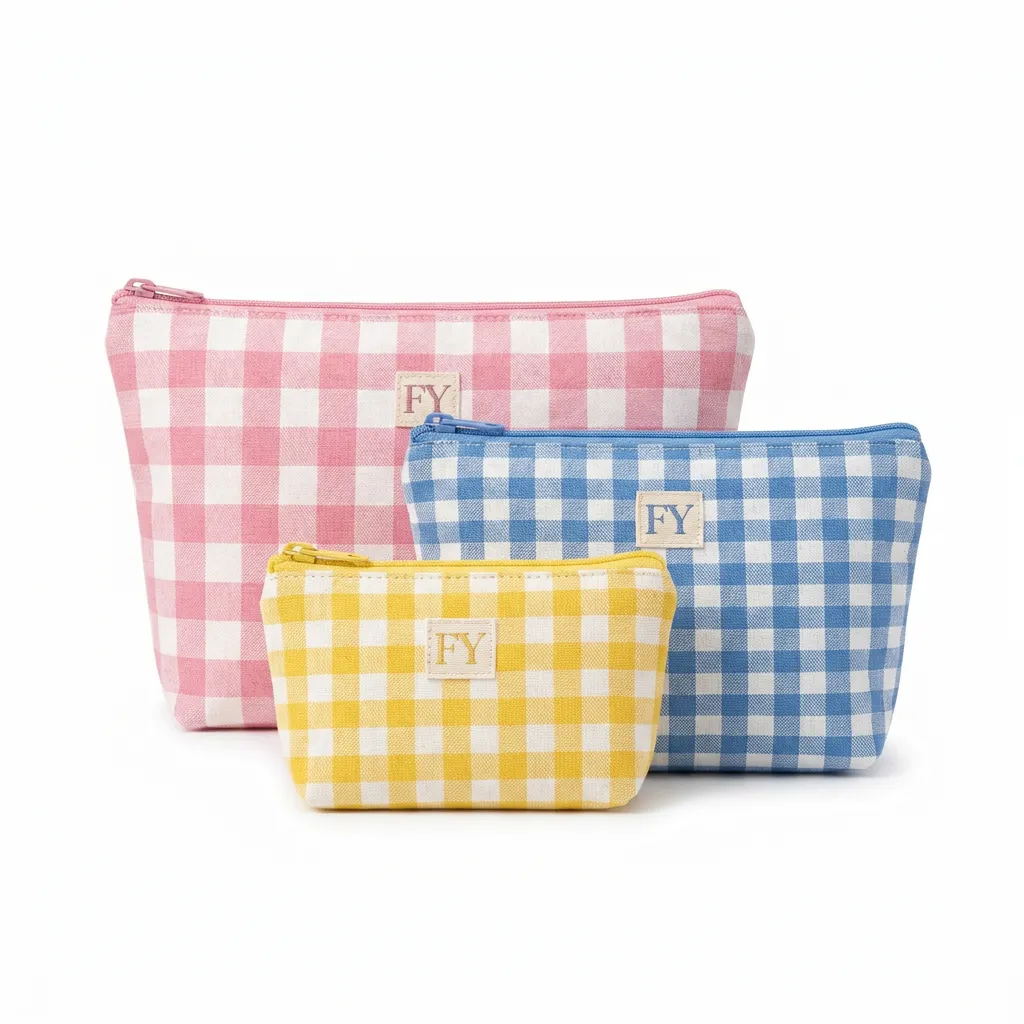
Woven gingham cosmetic pouches in S/M/L nested set. Pink gingham for romantic/beauty positioning; blue for classic. Gift boxes, bridal party favors, and boutique retail. The gingham-pouch set is a perennial gift-market bestseller.
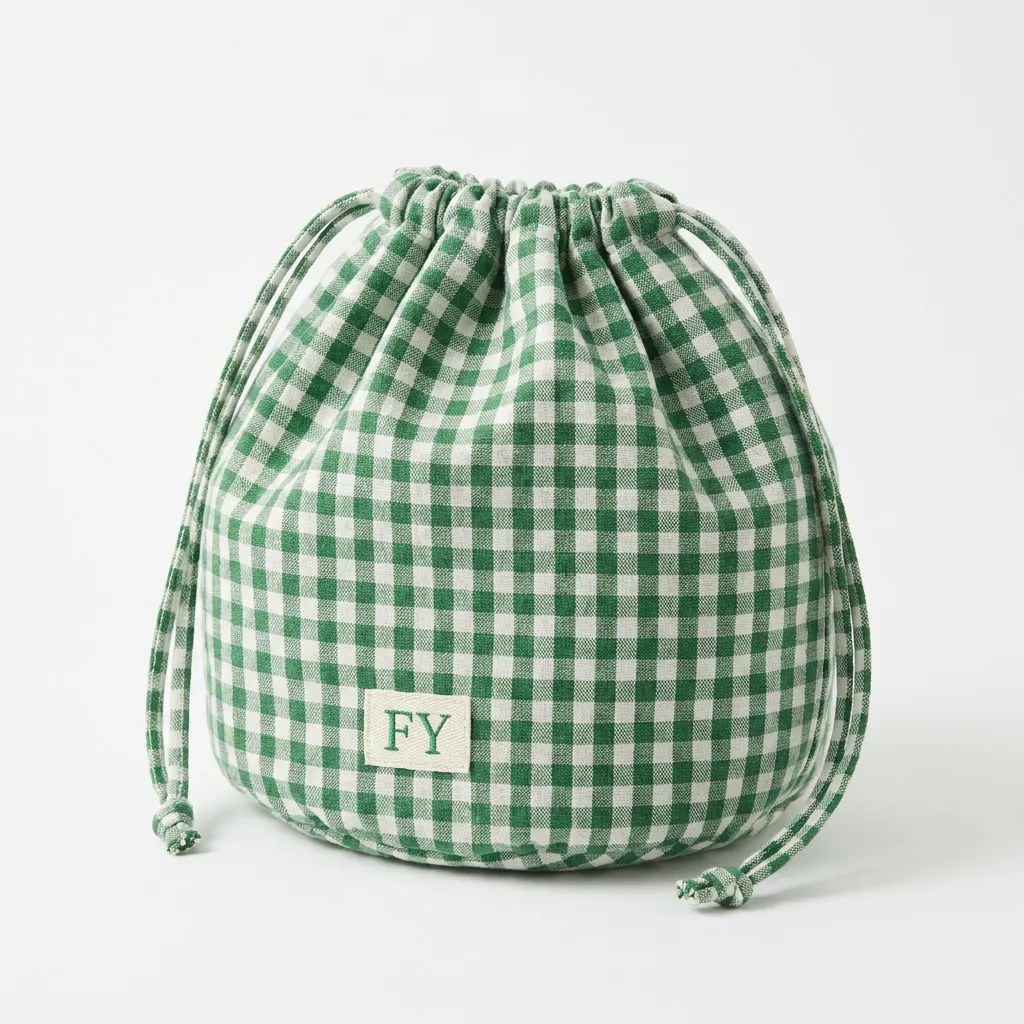
360° gingham on bucket bag body with solid drawstring closure and strap. Cotton or cotton-poly. Resort, festival, and summer positioning. The bucket silhouette + gingham = peak cottagecore aesthetic.
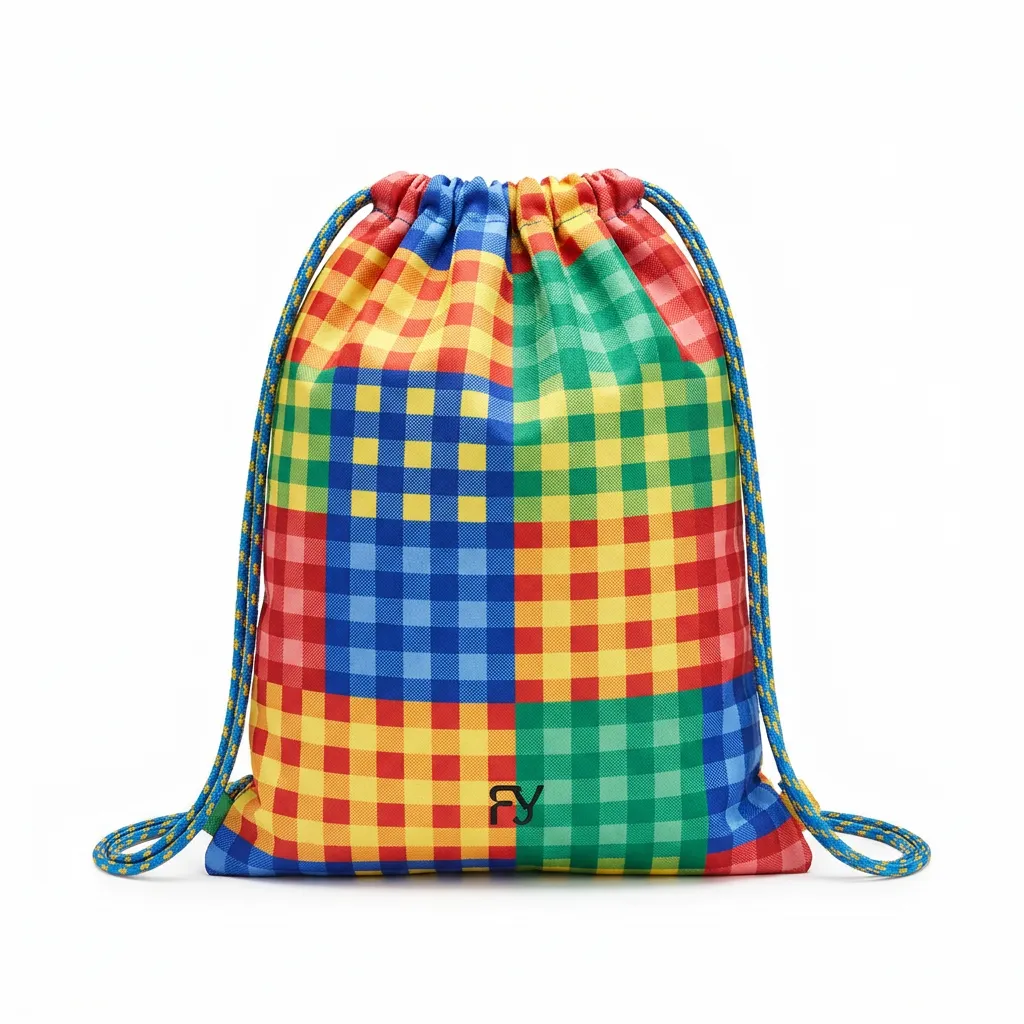
Gingham pattern sublimated or heat-transferred onto polyester drawstring bag. Budget-friendly gingham format for events, party favors, and branded giveaways. Printed gingham enables unlimited colorways at low cost.
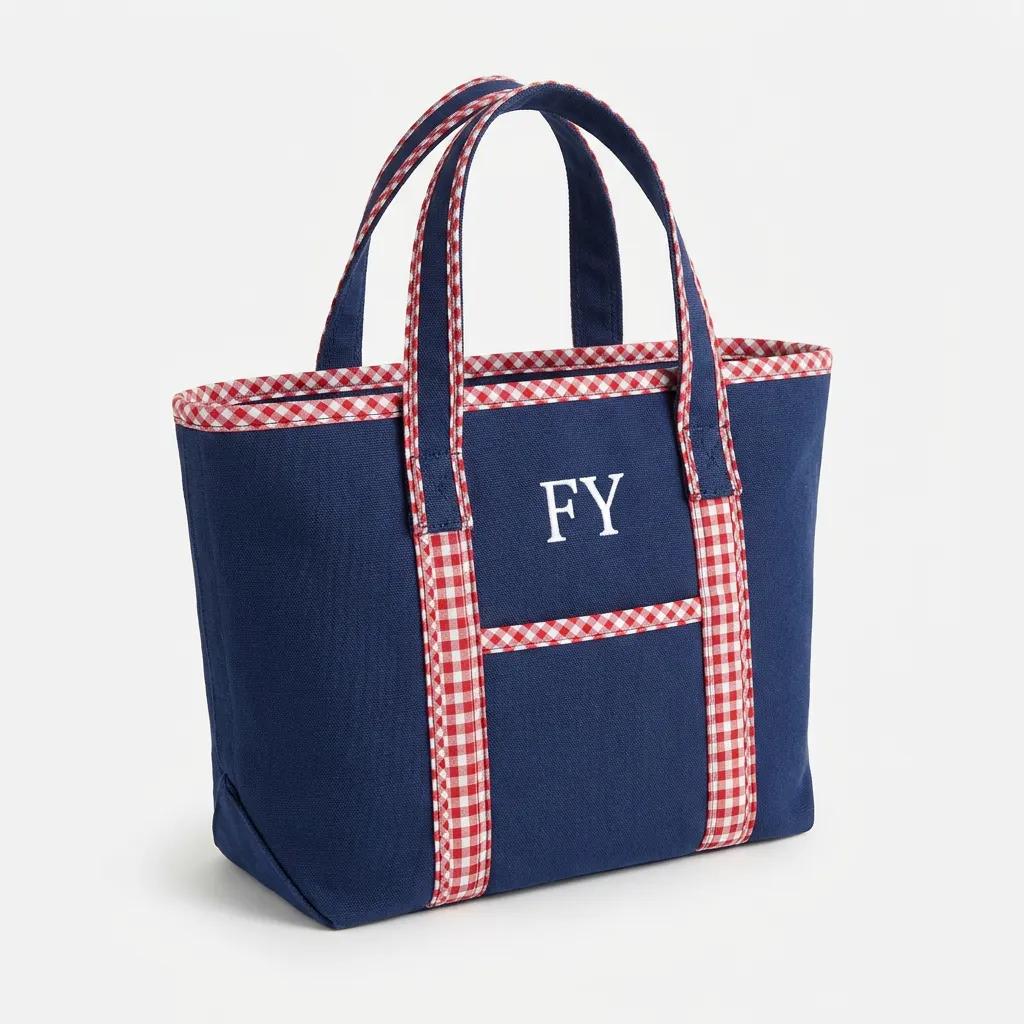
Gingham pocket, gingham lining, gingham trim, or gingham handles on a solid-color bag body. The accent approach — gingham charm without full-surface commitment. Works on any silhouette. The commercial sweet spot for gingham.
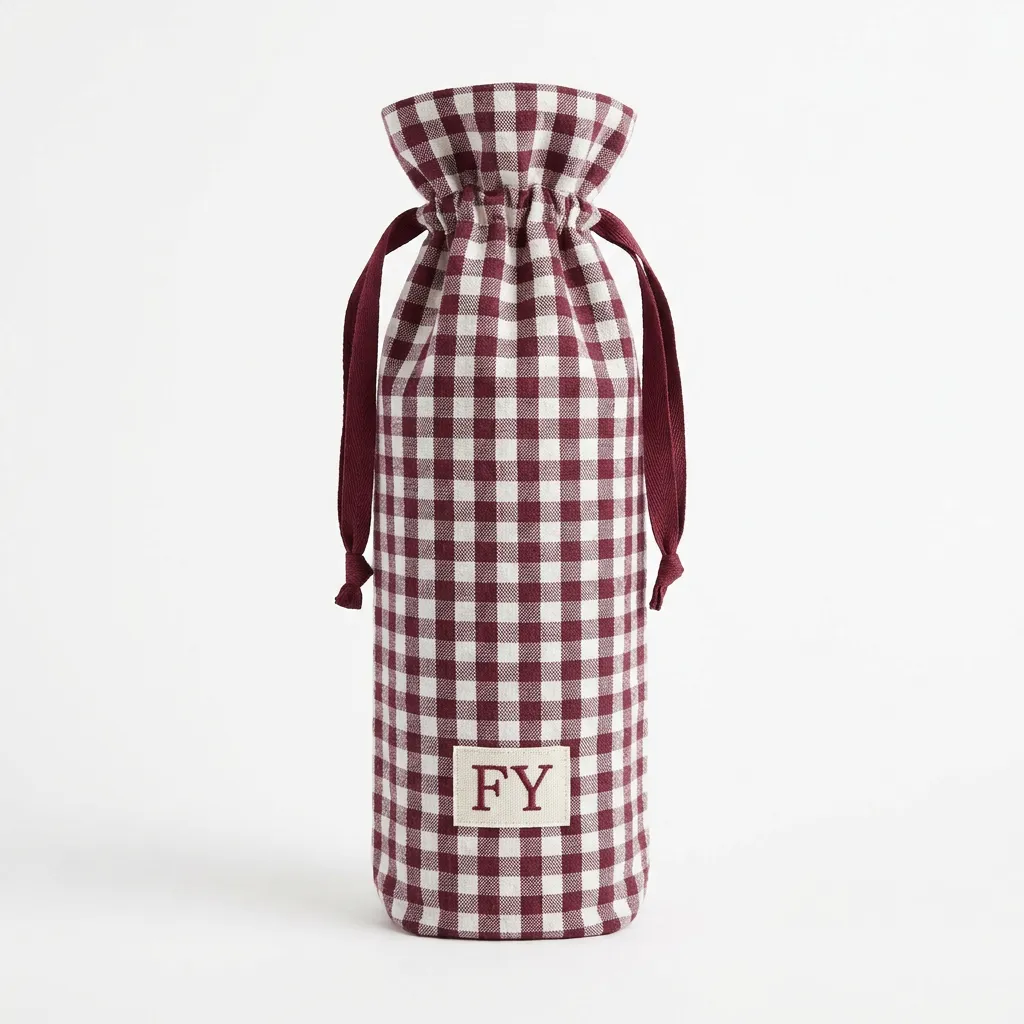
Gingham cotton gift bag or wine carrier with ribbon handles. Red gingham for holiday/food gifting; pink for romantic occasions. For wineries, specialty food shops, and gift retail. The pattern IS the gift wrapping.
The same two-color check pattern communicates entirely different messages depending on the size of the check. Scale is gingham’s most important design variable — it determines whether the bag reads as refined, classic, bold, or rustic.
Micro
2–5 mm Checks
Micro-gingham reads as a subtle texture rather than an obvious pattern — like a fine men’s dress shirt. Refined, preppy, and understated. At a distance, micro-gingham appears as a solid color with depth. Best for professional accessories, corporate-adjacent bags, and brands that want gingham charm without overt pattern. The most premium-reading gingham scale.
Classic
8–12 mm Checks
Classic-scale gingham is the visual standard — the “default” that consumers picture when they hear “gingham.” Visible check pattern, balanced proportions, neither too subtle nor too bold. Works across all bag types, all markets, all seasons. If you’re unsure which scale to choose, classic is always the safe answer. The highest-volume gingham scale in commercial bag production.
Large
20–30 mm Checks
Large-scale gingham reads as a bold design statement — the checks are prominent enough to function as a graphic element. Fashion-forward, contemporary, and confident. Stronger visual impact in photography and at retail distance. For fashion brands, trend-driven collections, and products where the pattern IS the selling point. Higher fashion risk, higher fashion reward.
Buffalo
30 mm+ Blocks
Buffalo check — equal-size large blocks in two colors, typically with a darker overlap tone. Technically gingham’s close relative, not true gingham (the overlap zone is darker, not lighter). Red/black buffalo = lumberjack, lodge, winter. Black/white buffalo = modern, farmhouse. A distinct aesthetic from traditional gingham — more rugged, less charming, more gender-neutral.
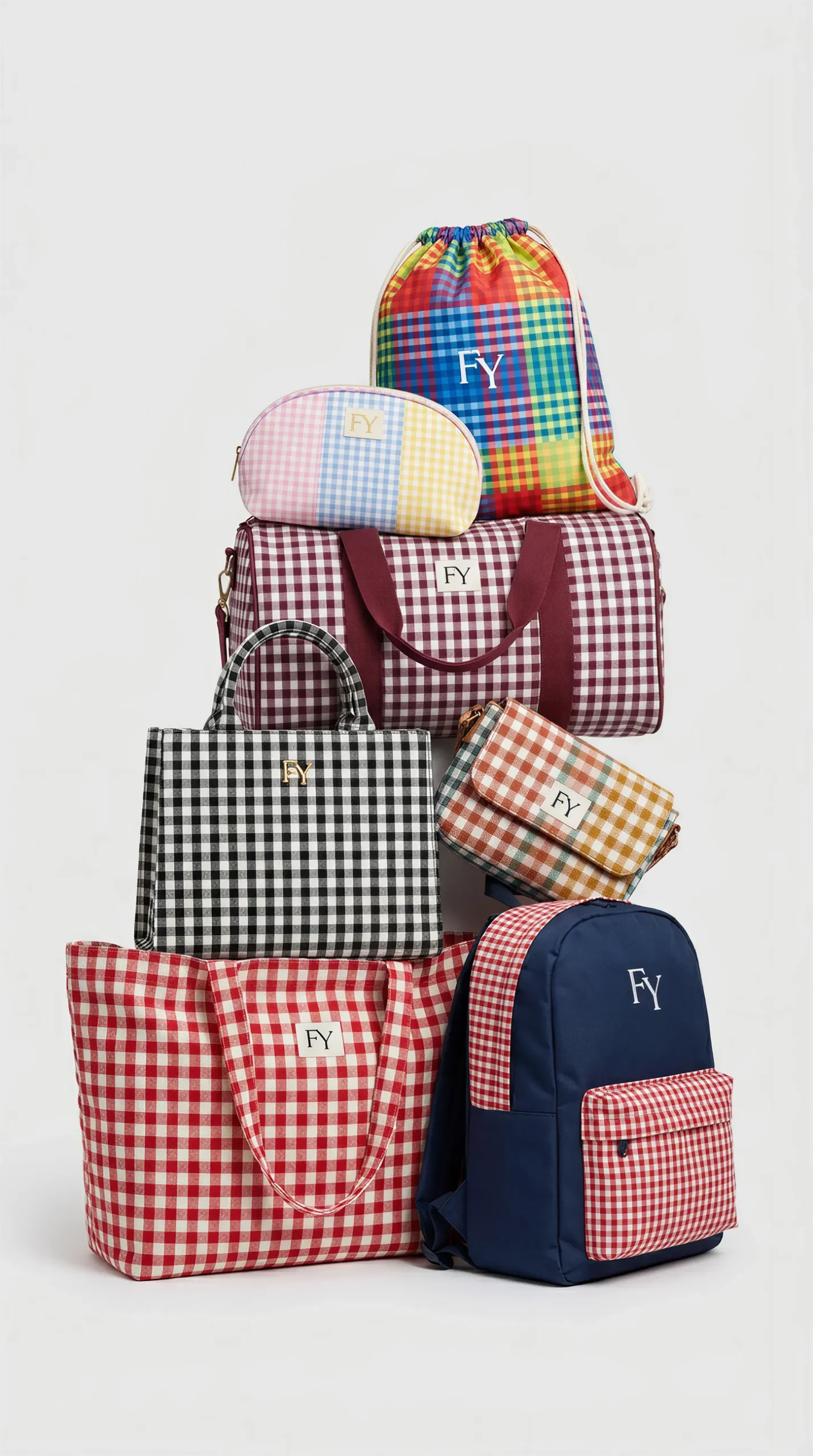
Gingham is often confused with buffalo check, plaid, and windowpane — but it’s a specific pattern with a specific construction. Understanding what makes gingham unique (and different from its check-pattern cousins) helps you specify the right pattern and communicate accurately with buyers, designers, and customers.
The Three-Tone Effect
True gingham uses two colors of yarn — one for warp (vertical) and one for weft (horizontal). Where same-color threads cross, you get solid color blocks (e.g., blue-on-blue = solid blue; white-on-white = solid white). Where different-color threads cross, the yarns interlace to create a blended third tone (blue-over-white = light blue). This three-tone effect from just two yarn colors is gingham’s defining characteristic.
Woven vs. Printed
Woven gingham has the authentic three-tone blend because the overlapping yarns physically create the intermediate color. Both sides of the fabric show the pattern. Printed gingham simulates the three-tone effect by printing three flat colors — it looks correct at a distance but lacks the woven texture and depth. For premium retail, woven gingham is the quality standard. For promotional and polyester applications, printed gingham is cost-effective and visually acceptable.
vs. Buffalo Check
Buffalo check uses the same two-color check grid, but the overlap zone is DARKER (both yarns are saturated colors — e.g., red + black = dark blackish-red overlap). Gingham’s overlap zone is LIGHTER (one yarn is white/light — e.g., blue + white = light blue). Buffalo reads as bold and rustic; gingham reads as soft and charming. Different mood, different buyer.
vs. Plaid / Tartan
Plaid uses 3+ colors in multiple stripe widths crossing at varying intervals — creating complex, multi-color intersections. Gingham uses exactly 2 colors at exactly 1 stripe width — the simplest possible check. Plaid is complex and heritage-laden (Scottish clan associations). Gingham is simple and universally friendly. Different complexity, different cultural weight.
vs. Windowpane
Windowpane is a grid of thin lines on a solid background — like the frame of a window. The “check” areas are solid-color with only the grid lines creating the pattern. Gingham fills the entire surface with checks. Windowpane reads as architectural and tailored; gingham reads as soft and domestic. Windowpane is stripe-adjacent; gingham is check-defined.
Best Fabrics
Woven gingham works best on cotton, cotton-blend, and linen. The plain-weave structure requires yarn-dyeable natural or semi-natural fibers. Cotton gingham is the industry standard. Canvas-weight cotton gingham (6oz–10oz) for totes and structured bags. Shirting-weight cotton gingham (3oz–5oz) for pouches and linings. Polyester gingham is always printed (sublimation or heat transfer), never woven.
Custom check scale, colorway, and fabric weight. Woven gingham sourced from verified cotton mills; printed gingham applied in-house via sublimation or heat transfer. Sample turnaround in 5–7 days.
Free Add-on: Professional Product Photography Included
Free white-background product photos for your online shop, Amazon listings, and wholesale catalogs — no additional charge on production orders.
Gingham bags share the same pattern-alignment QC requirements as striped bags — checks must align at seams, and cutting must follow the check grid precisely. Gingham adds an additional alignment axis (both horizontal AND vertical must match).
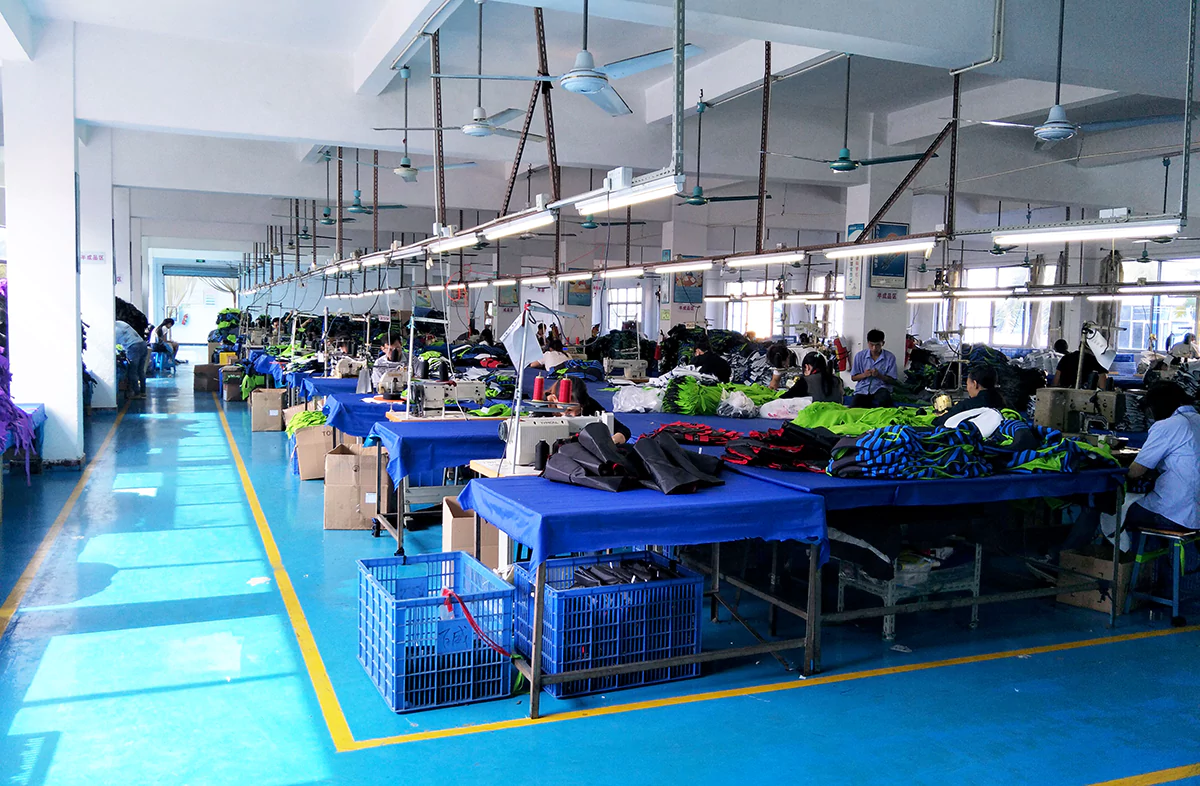
FY Bag Custom operates its own vertically integrated factory in Guangzhou, Guangdong — fabric sourcing, printing, cutting, sewing, and QC all under one roof. For woven gingham, our fabric-sourcing team works with verified cotton-weaving mills across Guangdong, Zhejiang, and Jiangsu to source yarn-dyed gingham at production scale.
Gingham bags require the most precise cutting alignment of any pattern — both horizontal and vertical checks must match at every seam. Our cutting team uses laser-guided alignment markers to ensure two-axis check matching, and our QC team verifies check continuity at every seam junction on every finished bag.
Years in Manufacturing
Factory Floor Area
Professional Staff
Production Lines
Monthly Capacity
Pre-Shipment Inspection
Gingham bags face the most demanding pattern-alignment QC in our catalog — checks must align on BOTH axes (horizontal and vertical) at every seam. This is more complex than striped bags (one-axis alignment only). Our 6-stage QC adds gingham-specific two-axis checkpoints.
Woven: incoming gingham fabric verified for check regularity, color accuracy, and three-tone clarity. Printed: strike-off verified against approved proof. Check scale measured. Color consistency checked across the full roll/batch.
Cutting templates aligned to BOTH horizontal and vertical check lines. Panels cut on-grain with the check grid. Alignment markers placed on both axes. Cutting is the most critical step — a 2mm offset on either axis becomes visible misalignment at the seam.
Checks verified for two-axis continuity at every sewn seam — horizontal lines must flow continuously AND vertical lines must flow continuously across the join. This is gingham’s signature QC challenge. Sewing operators match checks on both axes before stitching.
Three-tone effect verified across all panels — the intermediate/overlap color must be consistent (not darker or lighter on some panels). Woven gingham from different sections of the roll can have slight tone variation. Panels sorted by position in the roll to minimize visible variation within one bag.
Every finished gingham bag inspected one by one — two-axis check alignment at all seams, three-tone color consistency, construction quality, hardware, branding, and overall appearance. Gingham has the strictest pattern-QC standards of any check pattern due to its two-axis alignment requirement.

Gingham bags packed with consistent orientation within cartons. Container loading photos and videos sent within 24 hours.
Woven gingham adds 5–10 days for fabric sourcing (mill lead time for yarn-dyed fabric). Printed gingham follows standard production timelines. Sample in 5–7 days, bulk in 20–35 days.
Day 1–2
Send gingham concept (scale, colorway) + bag spec; FOB quote in 24 hrs.
Day 3–12
Gingham swatch + bag prototype in 5–7 days.
Day 13–15
30% T/T deposit; balance before shipment.
Day 16–42
Fabric → precision cut → seam-match sew → QC. Daily WIP.
Day 43–48
100% two-axis check alignment + final inspection.
Day 46–55
Sea, air, express, or direct-to-FBA.
Sample Lead Time
5–7 Days
Mass Production
25–35 Days
Payment Terms
30% T/T · 70% Before Shipment
Shipping Terms
FOB · CIF · DDP · Amazon FBA
Gingham bags serve the charm-and-warmth end of our pattern catalog — brands that want pattern-driven emotional connection.
Classic-scale woven cotton gingham totes in blue/white, pink/white, green/white, and red/white. 8oz yarn-dyed cotton. Leather handles. Interior zip pocket. Year-round product — spring/summer in pastels, autumn/winter in deeper tones. Retail $18–26. Reordered quarterly for 2+ years. The gingham tote IS the brand’s signature product.
Woven pink/white gingham cotton cosmetic pouches — S/M/L in rigid gift box with ribbon. Bridal shower, Valentine’s Day, and Mother’s Day positioning. The gingham pattern communicates “care” and “thoughtfulness” without a single word of copy. CIF delivery. Seasonal reorder for Q1 and Q2.
ODM partnership on red/white and blue/white gingham insulated lunch bags. Printed gingham on polyester exterior, foil-lined interior. FNSKU labeling, Amazon packaging. Ranked in “gingham lunch bag” and “picnic lunch bag.” The gingham pattern drives above-average click-through — strong visual differentiation from plain competitors.
Global Shipping Options
•Sea Freight
•Air Freight
•Express (DHL, FedEx, UPS)
•Rail Freight
•Door-to-Door
•Direct-to-Amazon FBA
Straight answers to the questions buyers ask about custom gingham bag production.
Gingham uses one color + white (or a very light color) — the overlap zone creates a lighter third tone (e.g., blue + white = light blue overlap). Buffalo check uses two saturated colors — the overlap zone creates a darker third tone (e.g., red + black = dark overlap). Gingham reads as soft and charming; buffalo reads as bold and rustic. They’re related patterns but serve different markets and evoke different emotions.
Woven for premium retail products — the true three-tone yarn-interlace effect, both-side pattern visibility, and natural cotton texture are worth the 20–40% fabric cost premium. Printed for promotional bags, polyester applications, and budget products — visually acceptable gingham at lower cost. If your retail price is $15+ and your target market notices fabric quality, go woven. Under $10, printed is the smarter choice.
Yes. Woven: yarn-dyed to your Pantone reference (mill lap-dip for approval). Printed: ink or dye matched to Pantone. The second color in traditional gingham is white — but we can produce two-custom-color gingham (e.g., pink + lavender) as well. Custom-color yarn-dyed gingham has longer lead time and higher fabric MOQ than stock colorways.
On properly produced bags, yes — on both axes. Gingham requires two-axis check alignment (horizontal AND vertical), which is more demanding than stripe alignment (one axis only). Our cutting uses alignment markers on both axes. Some complex curved seams make perfect two-axis matching geometrically impossible — we flag this at the sampling stage.
Classic (8–12mm) outsells all other scales combined — it’s the “default gingham” that consumers recognize and expect. Micro is growing for premium/preppy positioning. Large is niche but strong in fashion-forward collections. Buffalo check is a separate market (rustic/lodge) but produced using the same fabric-sourcing and cutting processes.
Gingham peaks in spring/summer but sells year-round since the cottagecore normalization of 2020–2022. Pink/blue/green gingham for spring/summer. Black/red/brown gingham for autumn/winter. The same bag construction works across seasons — only the gingham colorway rotates. Year-round programs are increasingly common.
Yes. FNSKU labeling, Amazon-compliant packaging, and carton labeling handled at our Guangzhou factory. Free product photography highlighting gingham check pattern and three-tone effect included.
Yes. European Industrial Park, Shiling Town, Huadu District, Guangzhou. Monday–Saturday. Video tours available for remote buyers.
Send us your gingham concept (scale, colorway, coverage), bag type, and quantity — we’ll come back within 24 hours with a detailed FOB quotation covering woven fabric sourcing or print application, bag construction, and packaging. Physical gingham swatch before bulk. No templates, no copy-paste pricing.