Tel/WhatsAapp:+86 18011919834
E-mail: chloe.x@fybagcustom.com

Tel/WhatsAapp:+86 18011919834
E-mail: chloe.x@fybagcustom.com
Send Your Inquiry Today

Years Manufacturing
Factory Area
Professional Staff
Inspection Rate
Large-area decorative embroidery serves fashion brands, artisan-positioned labels, boutique retailers, Amazon FBA sellers, and gift companies who use embroidery as the primary surface design — not just a branding element.


Every printing method — screen, heat transfer, DTG, UV, sublimation — produces a flat image on a flat surface. Embroidery builds a three-dimensional textile surface from thread. Five properties separate embroidery from every ink-based method.

Embroidery thread sits 1–3 mm ABOVE the fabric surface — creating genuine 3D depth you can see and feel. Satin stitches catch light. Fill stitches create texture fields. The design has physical presence that no flat-printed graphic can replicate. Even UV 3D raised print can’t match embroidery’s organic, textile dimensionality.

Thread reflects light differently depending on viewing angle — satin stitches shimmer, directional fills create moiré effects, and metallic threads flash. The design changes appearance as the bag moves. No printed surface does this. Light-play gives embroidered bags their “alive” quality — the reason people instinctively reach out to touch them.

Consumers associate visible stitching with craftsmanship, skill, and human touch — even when machine-produced. An embroidered floral tote reads as “handcrafted” and “artisan” in ways a printed floral tote never can. This perception justifies premium pricing: an embroidered canvas tote retails at 2–3× the price of a screen-printed equivalent with the same artwork.

Thread is sewn THROUGH the fabric — it cannot peel, crack, wash out, or fade the way printed inks can. The thread is as permanent as the fabric itself. 200+ washes with zero degradation. The most durable decoration method available — even more permanent than sublimation.

A single embroidered design can combine satin stitch (smooth, glossy), fill stitch (textured, matte), chain stitch (raised ridge), and metallic thread (flash) — creating multiple visual textures within one artwork. No print method produces multiple surface textures in a single application. Embroidery’s stitch vocabulary IS a design language printing doesn’t have.
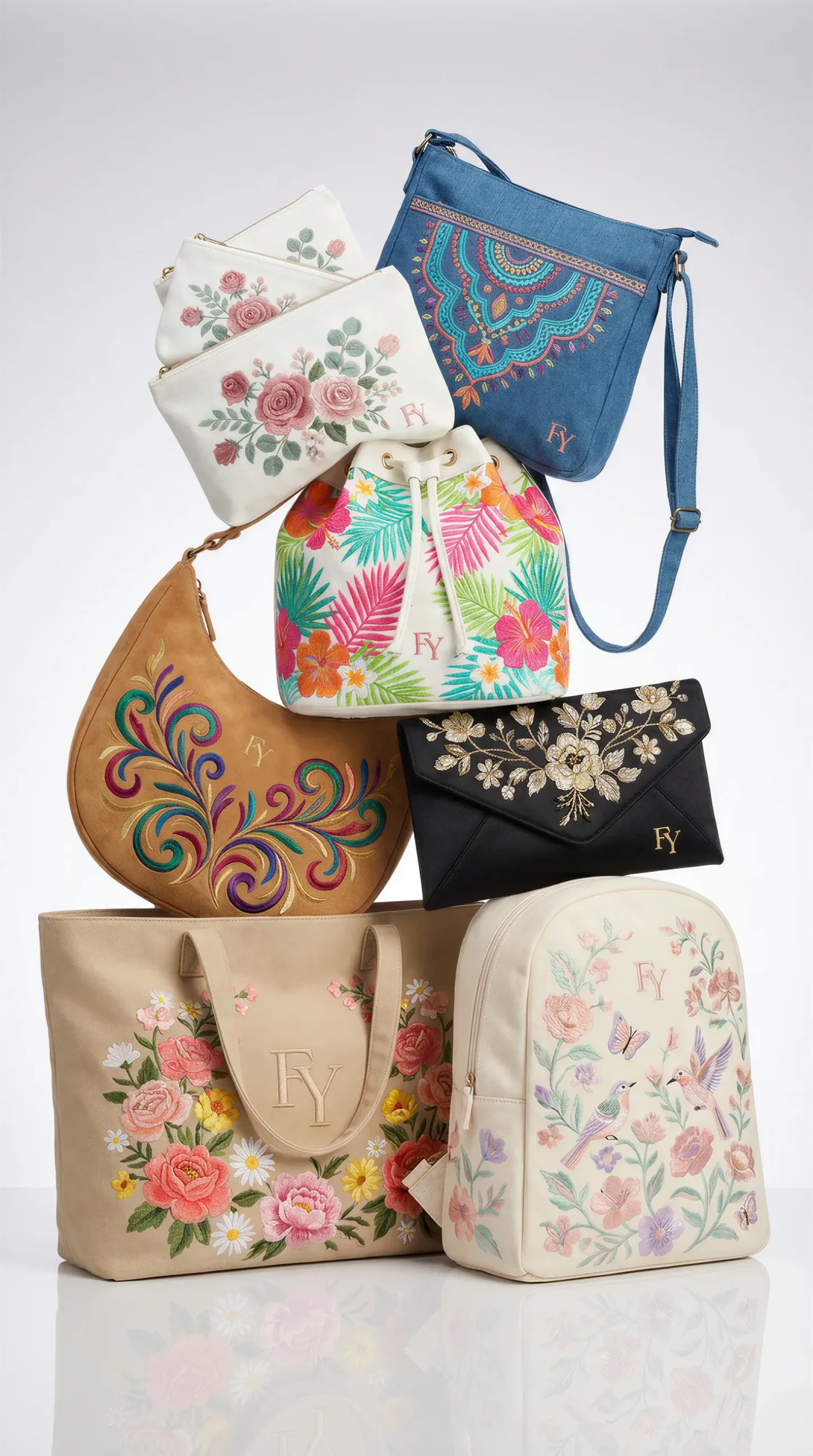
Large-area embroidery transforms any bag silhouette — from casual canvas totes to evening clutches. The embroidery motif, thread type, and base fabric combine to create the product’s identity and price tier.
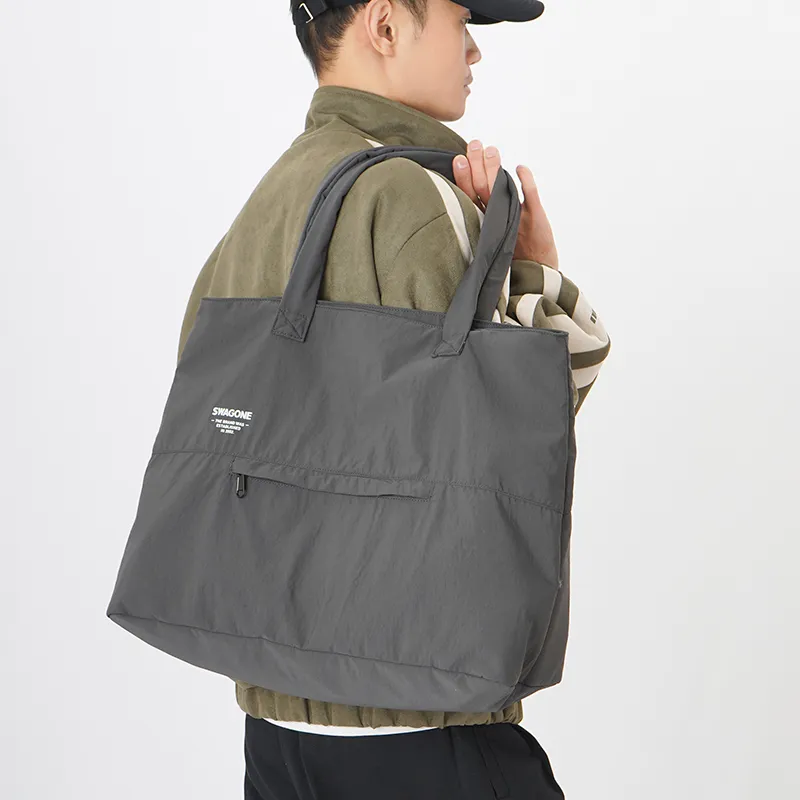
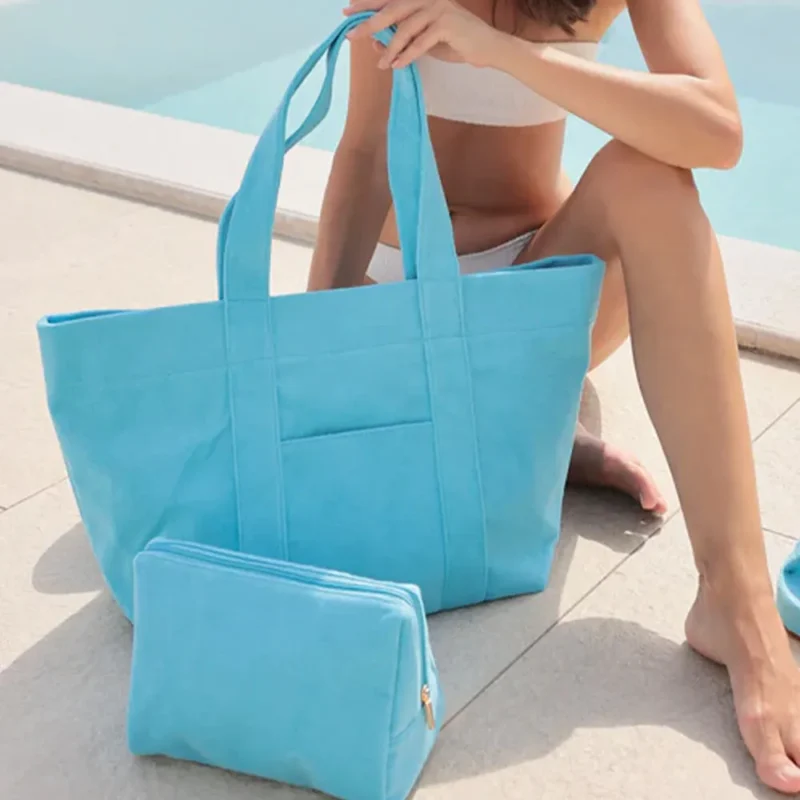
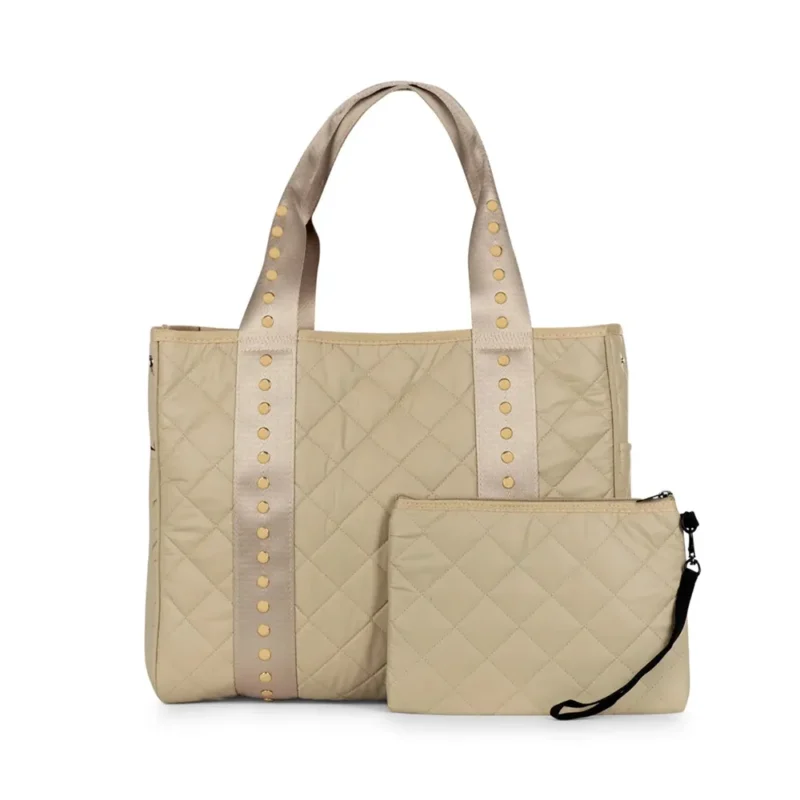
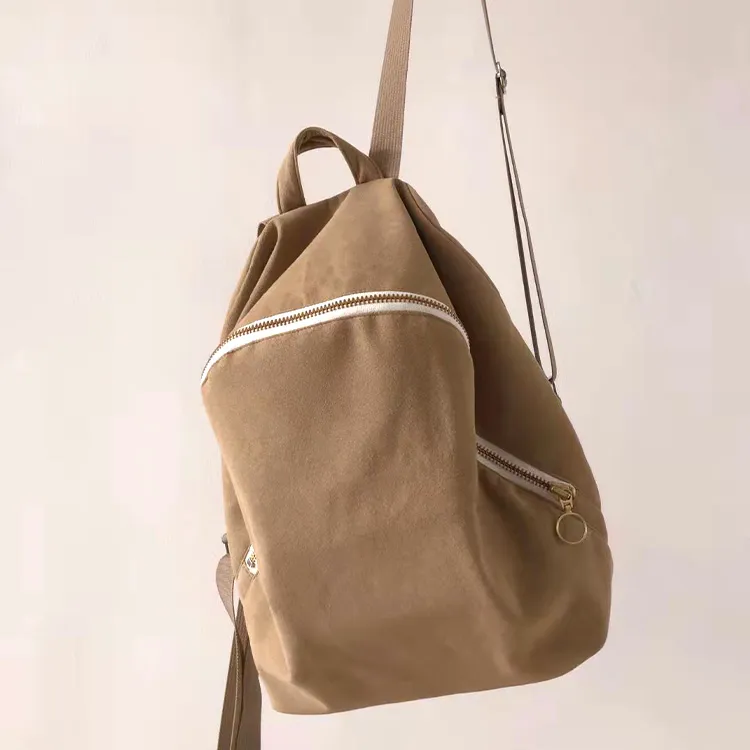
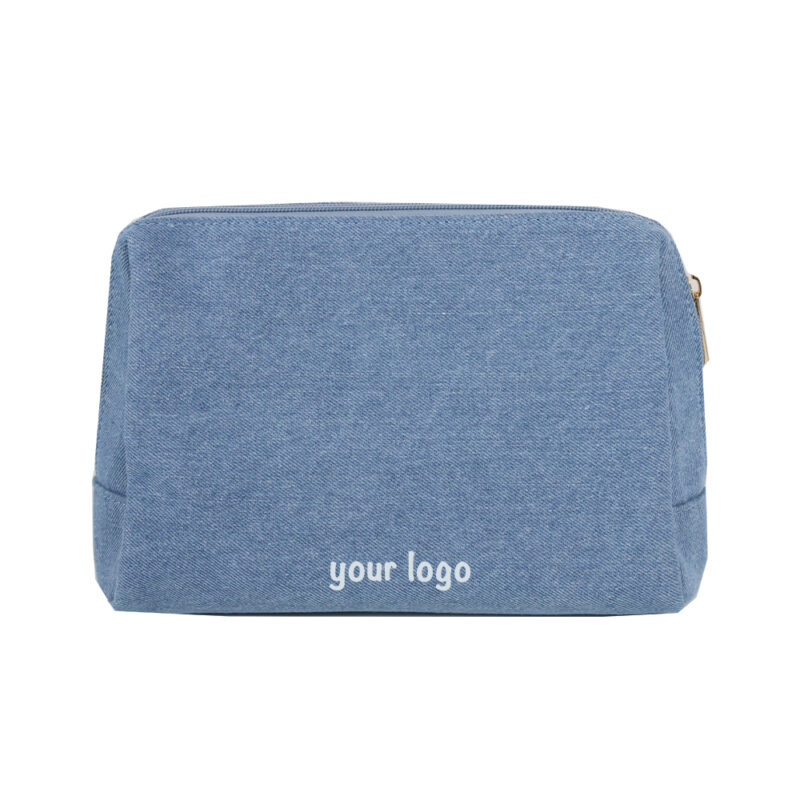
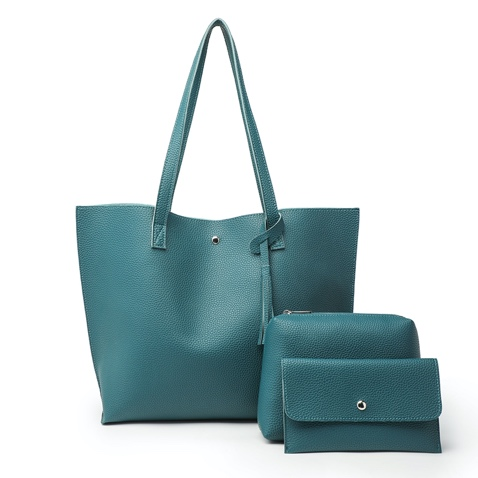
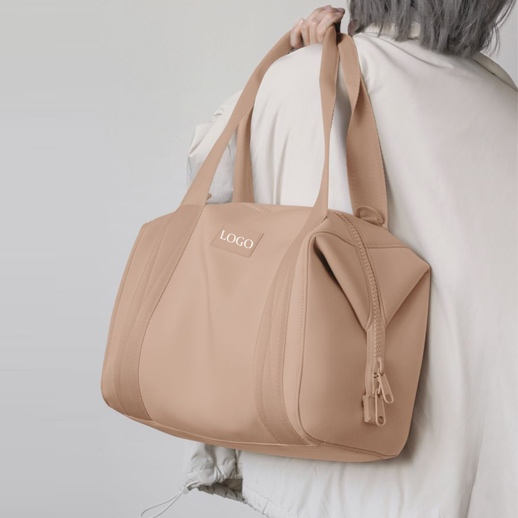
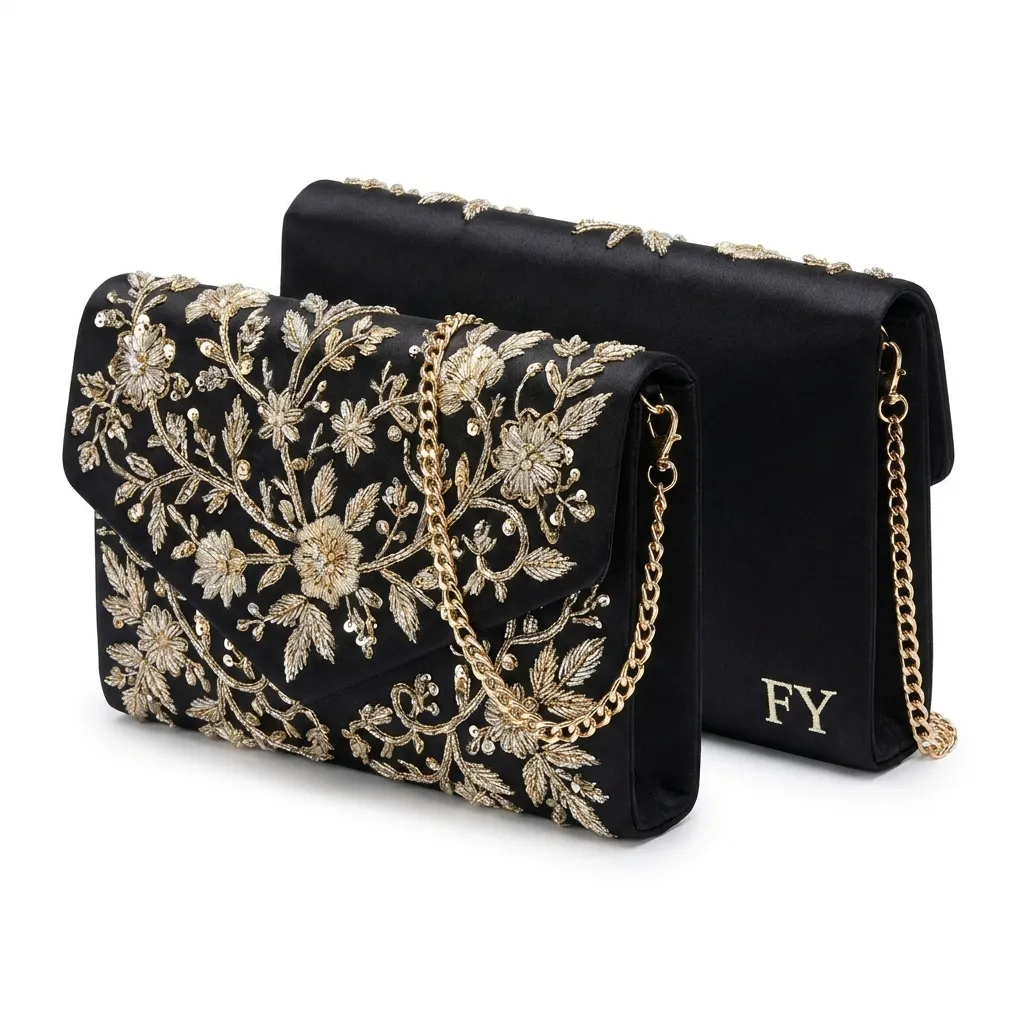
Dense decorative embroidery — metallic thread, beaded accents, silk-look thread on satin, velvet, or PU leather clutch. Bridal, evening, and gift-set markets. Overlaps with embellished bags when beading is combined.
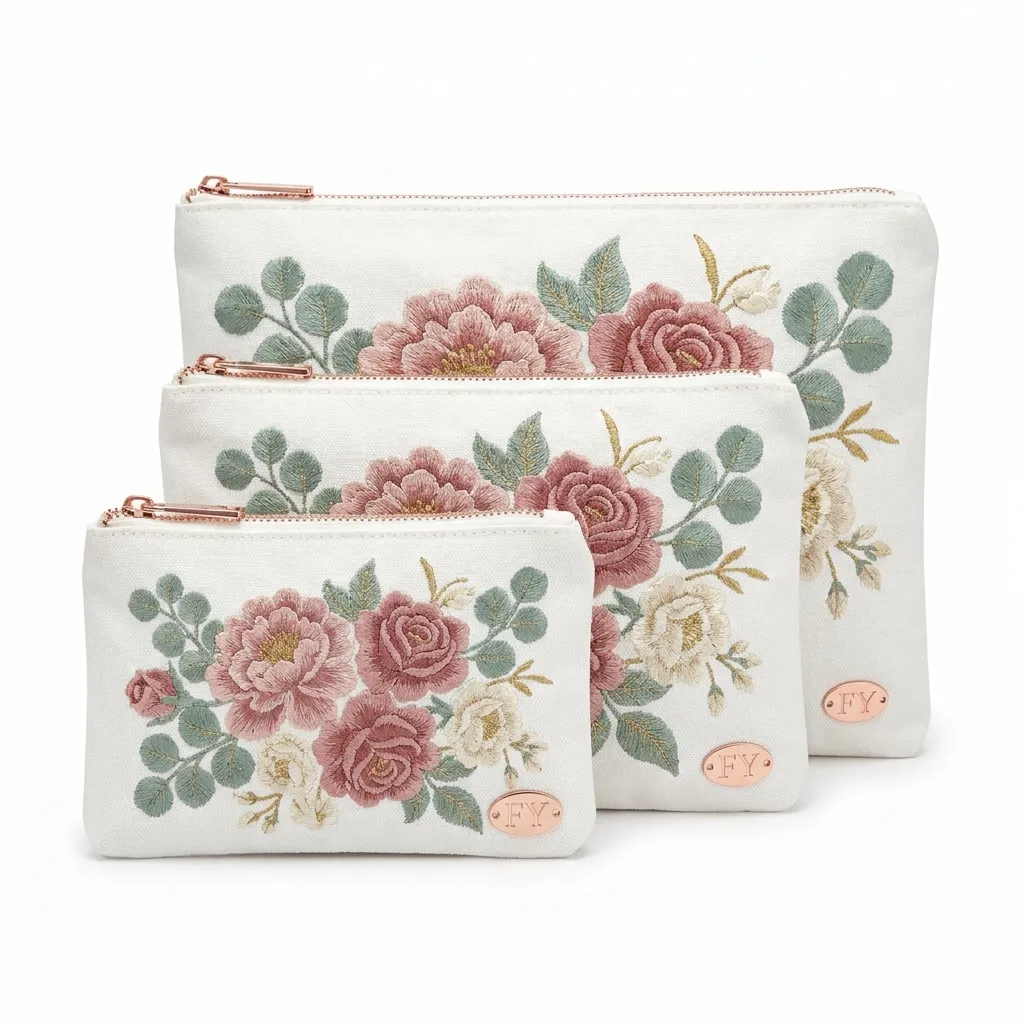
Decorative embroidery on cotton or canvas cosmetic pouches. S/M/L nested sets. Gift sets, bridal party favors, and boutique retail. Fine detail requires high-count mesh stabilizer.
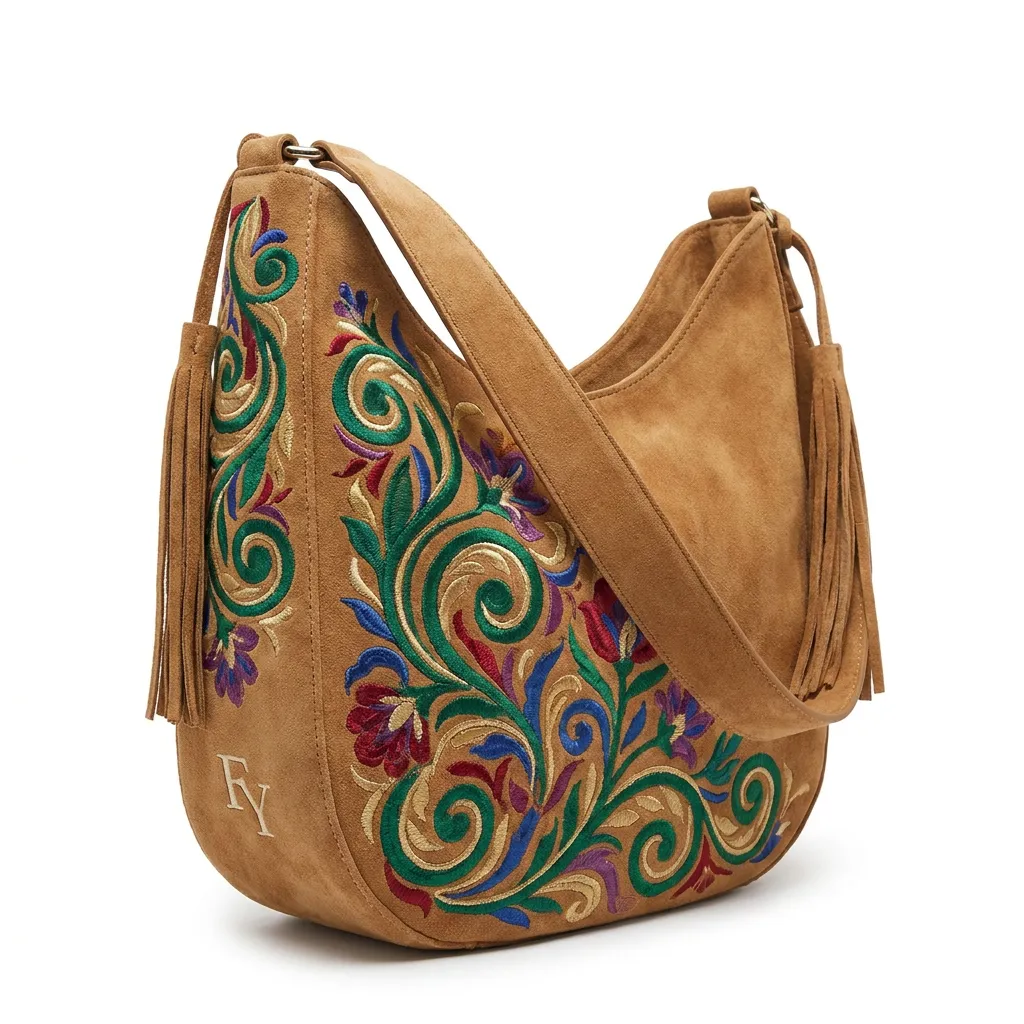
Scenic or abstract embroidery on shoulder bag body. Canvas, cotton, or leather. Bohemian, folk-art, and contemporary fashion. Large panel area allows expansive compositions.
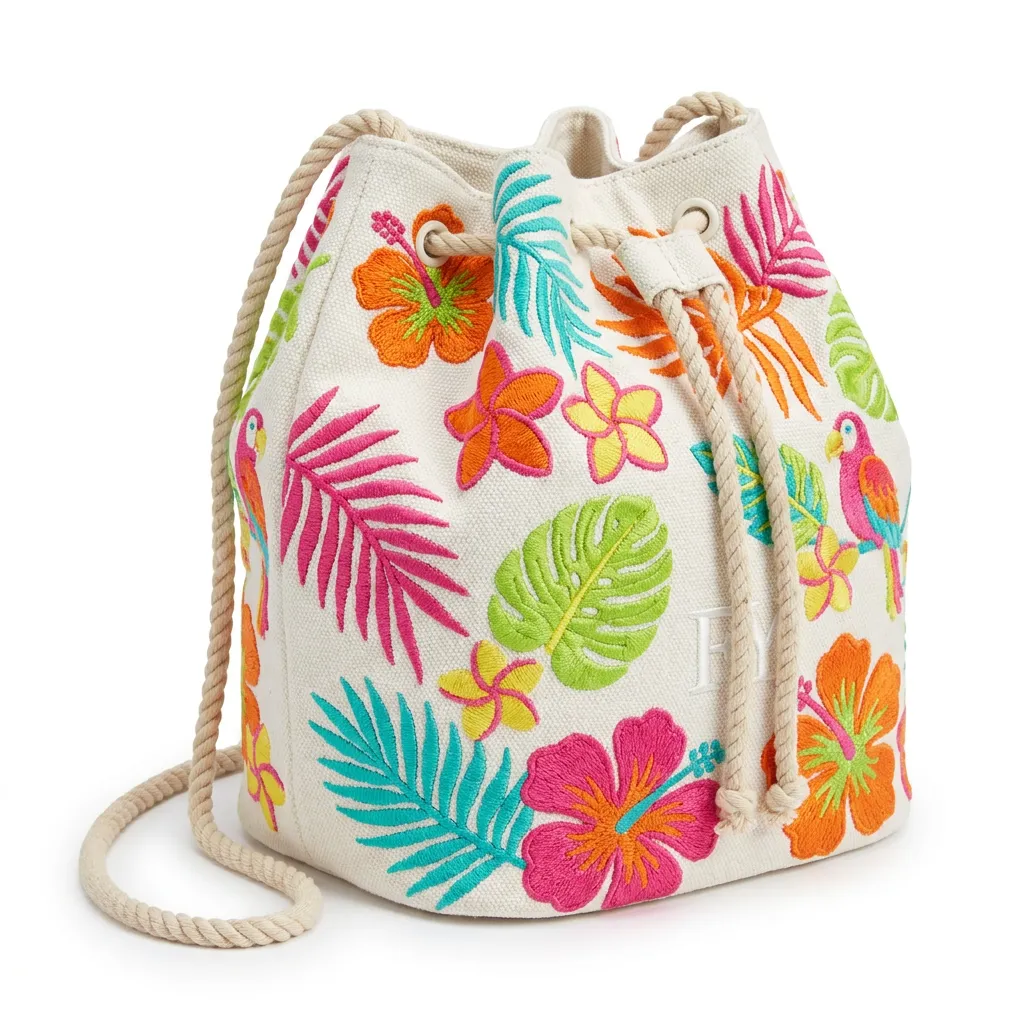
360° embroidery on bucket bag body — the cylindrical shape creates a continuous embroidery canvas. Canvas or straw base. Resort, festival, and bohemian positioning.
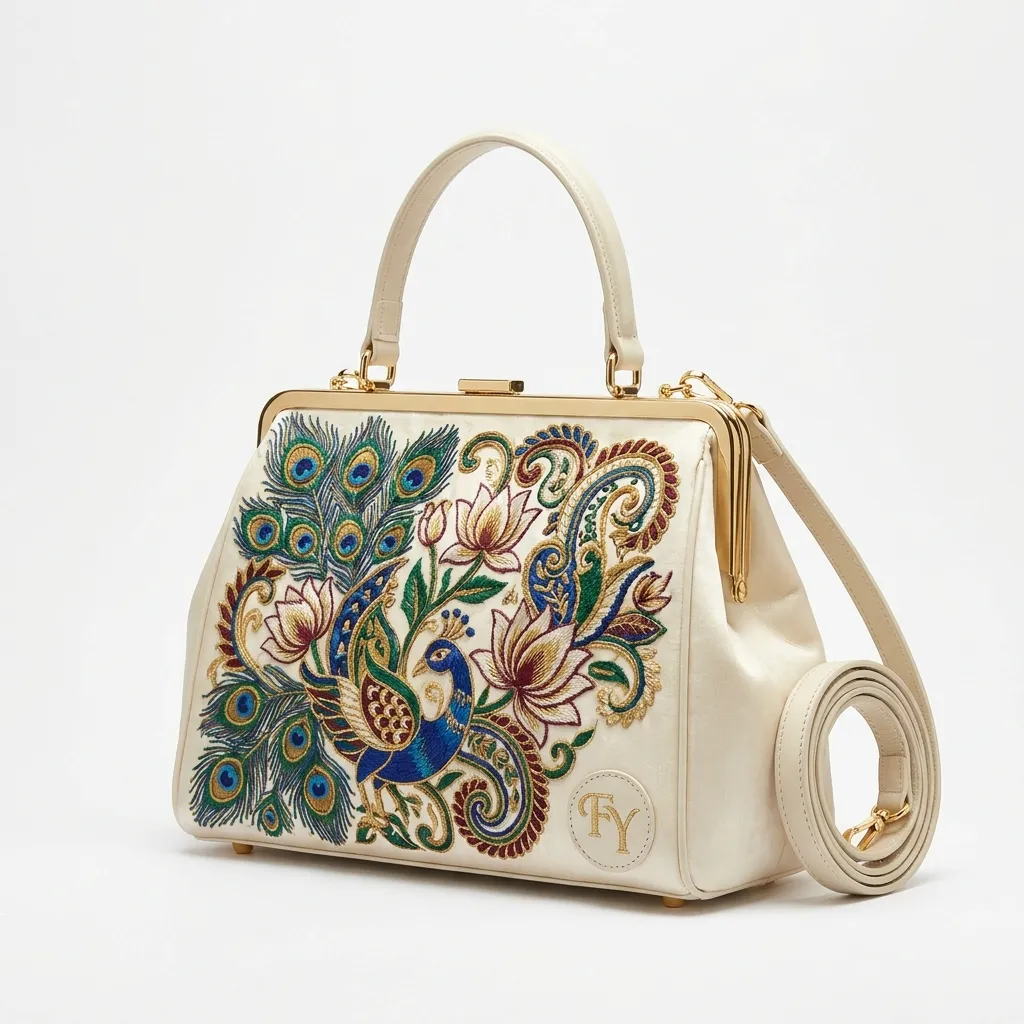
Hand-stitched decorative embroidery for limited editions. Any silhouette, any fabric. Highest per-unit cost but highest perceived value. Designer collaborations, museum shops, luxury gifting. Each piece unique.
Embroidery isn’t one technique — it’s a vocabulary of stitch types, each creating a different visual and tactile texture. Combining stitch types within a single design gives embroidered bags their richness and depth. The stitch selection IS the design decision.
Parallel threads laid side by side creating a smooth, glossy surface that reflects light like satin fabric. Best for lettering, borders, small fills, and any area where a polished, lustrous finish is desired. Embroidery’s signature “sheen.” Maximum width: 7–8 mm before tension becomes unstable.
Dense rows of short stitches filling large areas with a matte, textured surface. The workhorse of large-area embroidery — covers expansive panels quickly and consistently. Stitch angle varied within one design to create directional texture and visual movement. The default for backgrounds, large shapes, and all-over coverage.
Looped stitches creating a raised, rope-like texture line. More dimensional than running stitch, more textured than satin. Best for outlines, vines, lettering with organic texture, and decorative borders. Creates a handcraft aesthetic even when machine-produced. Often used in heritage and folk-art patterns.
Fabric cutout (contrasting color or material) secured to the base by a satin-stitch or zigzag border. Combines fabric layering with embroidery edging. For bold graphic shapes, patches, and mixed-material compositions. Faster than pure embroidery for large fills — the cutout covers area while stitching provides the finished edge.
X-shaped stitches creating a pixelated, heritage-craft texture. Strong folk-art and traditional associations. Best for geometric patterns, heritage motifs, and retro-craft positioning. Machine cross-stitch reproduces the hand-stitched aesthetic at scale. The most distinctive “handcraft” look of any machine-embroidery stitch.
Not a stitch type but a thread type — metallic (gold, silver, copper), variegated (color-shifting), or reflective threads used with any stitch technique. Metallic thread on evening clutches creates luxury sparkle. Variegated thread creates ombré effects in a single pass. Special threads elevate any stitch type to premium.
Large-area embroidery exists on a spectrum from fully automated machine production (scalable, consistent, cost-effective) to fully hand-stitched artisan work (unique, premium, slow). Most commercial embroidered bags use machine embroidery for production efficiency — but the hand-embroidery option exists for luxury and limited-edition positioning.
Machine
Computerized multi-head embroidery machines running digitized stitch files. Consistent stitch quality across 100% of units. Multi-head machines embroider 4–12 panels simultaneously. Speed: 800–1,200 stitches per minute per head. A 15,000-stitch design completes in approximately 15–20 minutes per panel. Scalable for 1,000–50,000+ pcs. The standard for commercial embroidered bag production.
Hand
Skilled artisans stitching by hand — each piece is unique. Speed: 50–200 stitches per minute (10–20× slower than machine). A 15,000-stitch design takes 2–5 hours per panel. Inconsistency between units is inherent — and is a feature, not a defect (proof of handcraft). For limited editions, luxury positioning, and art collaborations. Cost: 5–15× machine embroidery per unit.
Digitization
Machine embroidery requires artwork digitization — converting your design into a stitch file (.DST, .EMB) that tells the machine where to place every stitch. Digitization is a specialized skill: stitch angles, thread density, underlay, and pull compensation must be set correctly. One-time digitization fee per design. We handle digitization in-house from your artwork.
Stitch Count = Cost
Embroidery is priced by stitch count — more stitches = higher cost. A simple 5,000-stitch accent motif is inexpensive. A dense 50,000-stitch all-over floral panel is significantly more. Stitch count depends on coverage area and fill density. We optimize density during digitization to balance visual quality and production cost.
Stabilizer
Large-area embroidery requires stabilizer (backing) behind the fabric to prevent puckering, distortion, and thread pull. Tear-away (removed after stitching) for stable woven fabrics. Cut-away (permanent, stays in bag) for stretchy or thin fabrics. Water-soluble (dissolves) for delicate fabrics and as topping on pile fabrics like velvet.
Production Impact
Large-area embroidery adds 5–15 days to production vs. printing. Machine embroidery runs at 800–1,200 spm, but a 30,000-stitch panel still takes 30+ minutes per head — 10× slower than screen printing per unit. Multi-head machines (4–12 heads) multiply throughput. Plan for 25–45 day lead time on machine-embroidered orders. Hand embroidery: 40–60+ days.
In-house digitization, multi-head machine embroidery, hand-embroidery coordination, and QC. We convert your artwork to stitch files, produce embroidered prototypes, and manufacture at scale. Sample turnaround in 5–7 days.
Free Add-on: Professional Product Photography Included
Free white-background product photos for your online shop, Amazon listings, and wholesale catalogs — no additional charge on production orders.
Embroidery quality depends on thread type (visual impact), base fabric (structural support), and stabilizer (prevents distortion). All three must be matched correctly for large-area embroidery to look right and last.
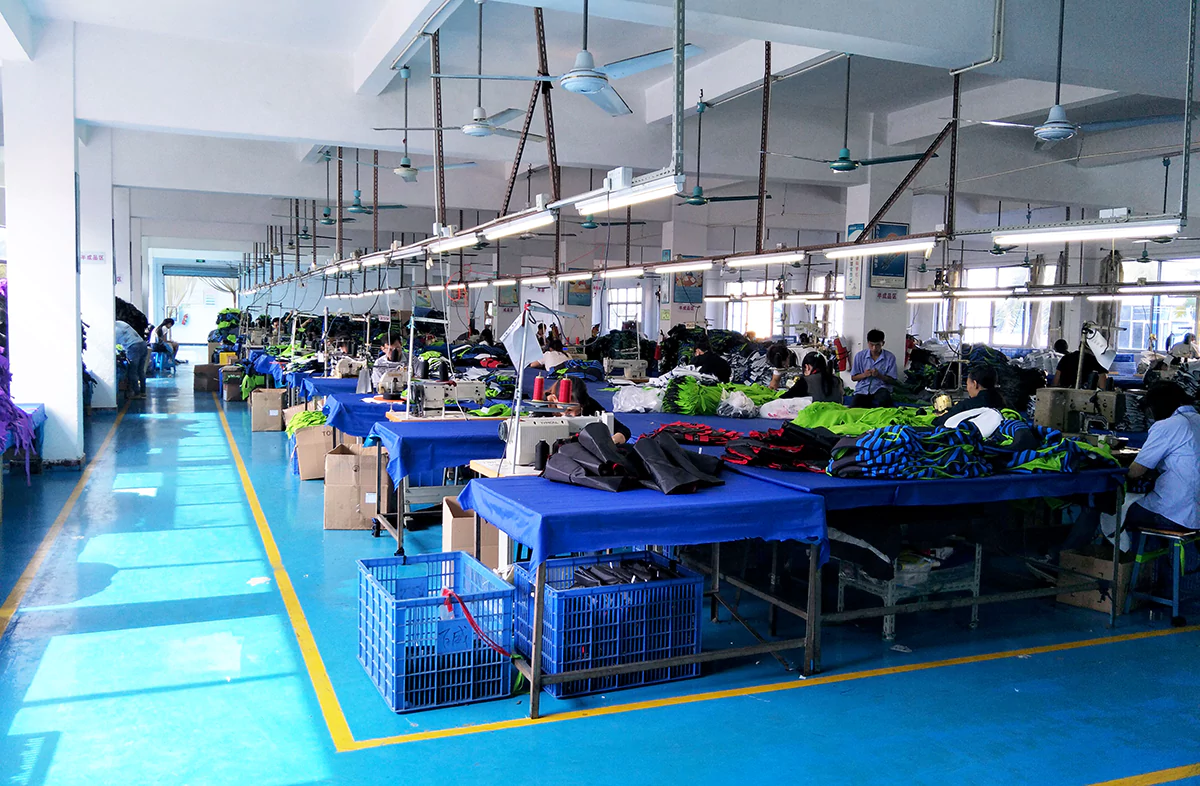
FY Bag Custom operates its own vertically integrated factory in Guangzhou, Guangdong — digitization, multi-head embroidery, cutting, sewing, and QC all under one roof. Our embroidery department operates multi-head machines (4–12 head configurations) producing 4–12 identical embroidered panels simultaneously — scaling artisan-quality embroidery to commercial volume.
In-house digitization means we convert your artwork to optimized stitch files on-site — adjusting density, underlay, and pull compensation for the specific fabric you’ve selected. The same team that digitizes the file also runs the machines and inspects the output — end-to-end quality control from artwork to finished embroidered panel.
Years in Manufacturing
Factory Floor Area
Professional Staff
Production Lines
Monthly Capacity
Pre-Shipment Inspection
Large-area embroidery faces stitch-specific QC risks — thread breaks (gaps in stitching), fabric puckering (distortion from tension), color drift between thread spools, registration misalignment, and bird-nesting (tangles on the reverse). Our 6-stage QC targets each one.
Stitch file digitized from your artwork. Test-sewn on actual production fabric. Stitch density, pull compensation, underlay, and stabilizer verified. Thread-break points identified and reinforced in the file. Test sew approved before prototype production.
Embroidered prototype on actual production fabric delivered in 5–7 days. Thread color, stitch quality, coverage density, and fabric behavior (puckering, distortion) assessed. Your written sign-off required before mass embroidery begins.
Thread spools verified for color match (spool-to-spool consistency). Stabilizer type and weight confirmed for fabric. Machine tension calibrated. Bobbin thread matched. First 4–12 panels (one full head cycle) inspected before continuous run.
Thread-break detection by machine sensors — any break triggers automatic stop. Operator inspects and restarts. Thread color checked every 50–100 panels for spool-change consistency. Registration verified against template. Puckering and distortion checked on freshly embroidered panels before stabilizer removal.
Every embroidered panel inspected one by one — thread coverage completeness, color accuracy, stitch density uniformity, registration against template, reverse-side quality (no bird-nesting, no loose threads), and fabric integrity (no puckering, no needle damage). Rejected panels are not assembled into bags.

Embroidered panels assembled into bags with care to avoid damaging raised stitchwork during sewing. Finished bags inspected — embroidery quality, sewing construction, hardware, lining. Embroidered surfaces protected with tissue interleaving during packing to prevent thread snag and compression.
Embroidered bags have longer production cycles than printed bags — machine embroidery is 10× slower per unit than screen printing. Plan for 25–45 day lead time on machine-embroidered orders. Sample in 5–7 days.
Day 1–2
Send artwork + bag spec; we digitize and quote by stitch count.
Day 3–12
Stitch file created; embroidered prototype on fabric in 5–7 days.
Day 13–15
30% T/T deposit; balance before shipment.
Day 16–42
Embroidery → assembly → QC. Daily WIP photos.
Day 43–48
100% stitch inspection + assembly QC.
Day 46–55
Sea, air, express, or direct-to-FBA.
Sample Lead Time
5–7 Days
Mass Production
25–35 Days
Payment Terms
30% T/T · 70% Before Shipment
Shipping Terms
FOB · CIF · DDP · Amazon FBA
Large-area embroidery serves the premium end of our decoration capabilities — brands that use thread as their primary design medium.
Large-area machine-embroidered botanical floral motifs on 12oz natural canvas totes — 6 floral designs across 3 colorway families. 25,000+ stitches per panel, rayon thread. Satin stitch for petals, fill stitch for leaves, chain stitch for stems. 4 thread colors per design. Retail-ready packaging. FOB to US and EU. Retail $28–42. Seasonal refresh with new botanicals.
ODM partnership on machine-embroidered denim crossbodies — floral embroidery on indigo denim. 8 design variants. Contrast-color thread (white, pink, gold) on dark denim for maximum visual impact. FNSKU labeling, Amazon packaging, photography highlighting stitch texture. Ranked top 20 in “embroidered crossbody bag.” Premium price point vs. printed competitors.
Machine-embroidered floral motif on cotton cosmetic pouches — S/M/L nested set in rigid gift box. Rayon thread on white cotton. Coordinated floral across all three sizes. For bridal-party gifting and boutique retail. Metallic gold thread accent on the monogram initial (see logo page). CIF delivery in 30 days.
Global Shipping Options
•Sea Freight
•Air Freight
•Express (DHL, FedEx, UPS)
•Rail Freight
•Door-to-Door
•Direct-to-Amazon FBA
Straight answers to the questions buyers ask about decorative embroidery at commercial scale.
This page covers large-area decorative embroidery — embroidery that covers significant portions of the bag panel as the primary surface design (florals, scenics, geometric patterns, illustrations). It competes with printing as a surface-decoration method. Our custom logo page covers branding marks — small-format logo embroidery, heat-pressed logos, woven labels, metal tags, and other brand-identity applications. Different scale, different function.
Embroidery is significantly more expensive per unit than printing — typically 3–10× the cost of screen printing or heat transfer for equivalent coverage area. Embroidery is priced by stitch count: a 5,000-stitch accent motif adds modest cost; a 50,000-stitch all-over panel adds substantial cost. However, embroidered bags retail at 2–3× the price of printed equivalents — the margin increase typically exceeds the cost increase. Embroidery is a premium-positioning investment, not a cost-saving choice.
Most woven fabrics work well: canvas (the #1 base), cotton, denim, linen, nylon, polyester. PU leather is possible with specialty needles (but needle holes are permanent — design must be right on the first pass). Velvet and satin require water-soluble topping to prevent stitches sinking into the pile. Thin or stretchy fabrics need cut-away stabilizer. We test-sew on your actual fabric before committing to production.
Machine for 99% of commercial orders — consistent, scalable, 10–20× faster, cost-effective at volume. Hand for luxury limited editions, art collaborations, and products where “hand-stitched” is part of the brand story and justifies 5–15× higher per-unit cost. Most buyers start with machine; some add a hand-embroidered “premium line” for their top-tier retail or gifting channel.
Longer than printed bags. Machine embroidery runs at 800–1,200 spm, but a 30,000-stitch panel still takes 30+ minutes per head (vs. seconds for screen printing). Multi-head machines (4–12 heads) multiply throughput. Typical lead time: 25–45 days for machine-embroidered orders. Hand embroidery: 40–60+ days. Sample/prototype: 5–7 days including digitization.
We accept any format — vector (AI, EPS, PDF) preferred for cleanest digitization, but raster images (PNG, JPG at 300 DPI+), photographs, sketches, and reference images all work. We digitize your artwork into a stitch file (.DST, .EMB) optimized for thread on your specific fabric. Digitization is a specialized process — we don’t just convert a file, we engineer how thread will build the design.
Yes. FNSKU labeling, Amazon-compliant packaging, and carton labeling handled at our Guangzhou factory. Free product photography highlighting embroidery texture and dimension included — critical for Amazon thumbnails where stitch texture must be visible.
Yes. European Industrial Park, Shiling Town, Huadu District, Guangzhou. Monday–Saturday. Video tours available for remote buyers.
Send us your artwork (any format), bag type, fabric, and coverage area — we’ll digitize your design, produce an embroidered proof on actual fabric in 5–7 days, and quote by stitch count. Free digitization included on first orders. No templates, no copy-paste pricing.


