Tel/WhatsAapp:+86 18011919834
E-mail: chloe.x@fybagcustom.com

Tel/WhatsAapp:+86 18011919834
E-mail: chloe.x@fybagcustom.com
Send Your Inquiry Today

Who this guide is for: brand owners, merchandisers, and product developers adding charms and detachable accessories as a line extension — the highest-margin, lowest-MOQ product a handbag brand can produce. The charm trend is not fading in 2026; it is maturing. The trend press is unanimous that the look is evolving away from plush toys and beaded trinkets toward something more sophisticated: functional, leather-crafted, chatelaine-style pieces — mini pouches, key bells, book charms, fur stoles, pen holders — clustered on chains and clips as if the owner’s busy life simply accumulated on her bag. That evolution moves charm production out of the toy factory and into the leather-goods workshop, which is precisely the opportunity: the brand that produces charms with handbag-grade construction owns the premium end of a category the plush manufacturers cannot follow. This guide covers charm typology, miniature-scale construction, the attachment engineering that protects the host bag, personalization systems, and the line economics that make charms the smartest add-on in the assortment.
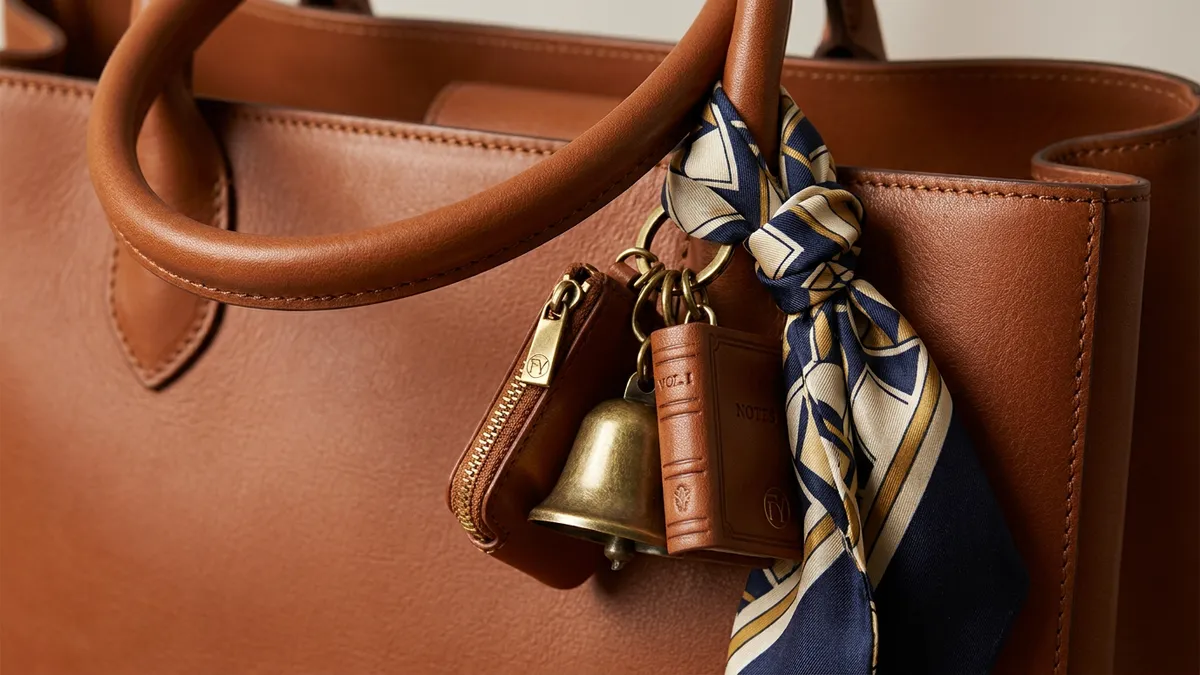
The bag charm survived its own bubble. After the plush-toy wave peaked, the trend press called the correction precisely: charms are not going anywhere in 2026, but the look is evolving from plush toys and beaded trinkets toward the sophisticated and the functional. One styling ideology captures the direction — the charm cluster should suggest a life in motion: keys, pens, travel pieces, a mini pouch, a scarf, a book charm. Runway and retail confirmed it: Chloé hung fur stole keychains from its Paddingtons, Coach ran book charms and turned kisslock mini-bags into necklaces, Miu Miu appended mini-bags onto bags, and editors summarized the shift in one line — less plush mascot, more refined object.
For a handbag brand, this evolution is a production opportunity disguised as a styling note. The plush charm belongs to toy manufacturing — a category with its own factories, its own materials, and a race to the bottom on price. The sophisticated charm belongs to leather-goods manufacturing: the same materials, edge finishing, hardware, and construction discipline as the bags themselves, executed at miniature scale. A brand already producing bags can add a charm program on the same materials, often from the same cutting waste, at MOQs a fraction of a bag order — and sell the result at the highest gross margin percentage in the assortment.
| Property | The Charm Advantage |
|---|---|
| Margin structure | A charm consumes a palm-sized piece of material and 10–30 minutes of labor, yet retails at a meaningful fraction of a bag’s price; the gross margin percentage on a well-positioned charm exceeds every bag in the line |
| MOQ and risk | Charm MOQs run at 100–300 units against 500–1,000 for bags; material minimums often vanish entirely because charms cut from the bag program’s existing articles — testing a charm SKU risks a fraction of a bag SKU’s capital |
| Material efficiency | Charm panels nest into the cutting waste of bag production; a program cut alongside its host bags can consume offcuts that would otherwise be scrap |
| Cross-sell mechanics | The charm attaches to the bag at checkout — literally: “complete the look” merchandising converts at the cart, in-store and online, because the charm is styled on the product photography’s hero bag |
| Repeat purchase | A customer buys one bag a season and can buy charms monthly; the charm program is the brand’s repeat-visit engine and its entry-price product for the customer not yet ready for a bag |
| Personalization | Initials, colors, and combinations turn one charm pattern into hundreds of variants — personalization drives full-price sell-through and resists discounting |
| Gift velocity | The charm is the giftable version of the brand: under the gifting price ceiling, self-explanatory, one-size |
The sophisticated-charm direction sorts into five production families, each with distinct construction demands.
| Type | Construction | Spec Notes |
|---|---|---|
| Flat die-cut charm (initials, animals, motifs, book shapes) | Two die-cut leather/PU layers bonded back-to-back, edge-painted around the full perimeter, topstitched or clean-bonded | The edge IS the product at this scale — a palm-sized object is 90% perimeter; specify 3–4 coat beveled edge paint exactly as on a handle; a rough edge on a charm is visible from arm’s length because the whole object fits in the eye at once |
| Padded (puffy) charm | Two layers with a thin foam or fiberfill core, perimeter-stitched | The FW26 texture register in miniature; the stitch line must run parallel to the edge within ± 0.5 mm — at charm scale there is nowhere for a wobble to hide |
| Book charm (the Coach-signal literary piece) | A miniature “cover” wrapping a padded or board core, with a debossed title area | The deboss is the personalization surface; specify the cover material grain small enough to read at 5–6 cm (large pebble grain looks wrong at miniature scale — use smooth or fine-grain) |
The “life-in-motion” cluster is built from charms that DO something — the direct heirs of the historical chatelaine, the belt-hung cluster of useful objects.
| Type | Construction | Spec Notes |
|---|---|---|
| Mini pouch / coin charm | A 7–10 cm zip or kisslock pouch, fully lined, on a clip chain | A real bag at 1:5 scale — it needs a real zip (#3 coil), a real lining, and real edge finishing; the mini pouch is the cluster’s anchor piece and the program’s price ceiling |
| Key bell | A leather cone or dome over a clip, in the Hermès clochette tradition | Skived, wrapped, and seam-bonded leather over a form; the bell is the quietest luxury signal in the category |
| Cardholder charm | A single-slot mini cardholder on a chain | The transit-card charm — the most-used functional piece in commuter markets |
| Pen loop / lip-balm holder / mirror charm | Elastic or leather loop systems; a covered mirror in a leather frame | The having-a-life-core register; each is a small leather-goods exercise with one functional element to test (the elastic’s recovery, the mirror’s mounting) |
| Type | Construction | Spec Notes |
|---|---|---|
| Fur stole charm (the Chloé signal) | A 15–25 cm strip of low-pile faux fur, backed and bound, on a clip | Apply the full shedding protocol from the fur program at miniature scale — a shedding charm sheds directly onto the host bag, the worst possible surface |
| Twilly / scarf tie | A printed or woven ribbon scarf, hemmed, sold rolled | Not leather-goods construction but a print-and-hem product; the twilly doubles as handle protection, which is a second selling story |
| Tassel | Fringed leather or PU cylinder on a clip | The classic; specify fringe strand width consistency (± 0.3 mm) — uneven fringe reads immediately |
| Type | Construction | Spec Notes |
|---|---|---|
| Initial hardware charms | Cast zinc-alloy letters, plated to the program’s hardware standard | The personalization entry point; the letter must match the bag hardware’s finish exactly — a gold-tone letter on a brushed-gold bag reads as off |
| Chain extenders / charm chains | A 10–20 cm chain with multiple jump rings for clustering | The chatelaine infrastructure — the piece that lets the customer build the cluster; sell it as the “charm bar” starter |
| Charm-as-necklace convertibles | A charm on a chain long enough to wear (the Coach SS26 signal) | One product, two uses; specify the chain at 60–70 cm with a clip at both ends so it converts between neck and bag |
The charm that miniaturizes the brand’s own icon — the hero bag reproduced at 6–8 cm, the signature hardware as a pendant, the logo animal in leather. This is the collector piece: produced in small runs, rotated seasonally, and priced at the top of the charm program. Its production demand is fidelity — the mini bag must reproduce the hero bag’s proportions, material, and hardware finish accurately enough to be recognizably “the bag,” which makes it the hardest charm to build and the most defensible against copying.
The charm’s clip is its handle, hinge, and safety system in one — and it touches the customer’s expensive bag every day. Attachment failures produce the category’s two defining complaints: the lost charm and the scratched bag.
| Element | Specification | The Failure It Prevents |
|---|---|---|
| Clip type | Swivel lobster clasp or swivel snap hook, cast (not stamped), gauge matched to charm weight | Stamped-metal clips fatigue and spring open — the lost-charm complaint; the swivel prevents the chain from twisting wound-up under the bag’s movement |
| Clip finish and host protection | Polished, burr-free clip surfaces; for premium programs, a leather-wrapped clasp collar or a leather tab between clip and host handle | The scratched-bag complaint — a charm that scratches its host is a product that damages the thing it was bought to decorate; the leather tab converts metal-on-leather contact to leather-on-leather |
| Jump rings | Soldered or double-wrapped rings only, never single open jump rings | The single open ring is the #1 loss point in the category — it works open under swing loads within weeks |
| Chain | Welded-link chain, gauge-matched; length 4–8 cm for single charms (long enough to swing, short enough not to tangle) | Unwelded decorative chain fails at random links |
| Load test | 3 kg sustained for 30 seconds on the full assembly (clip + rings + chain + charm body) | The charm gets grabbed, caught on doorframes, and yanked by children — 3 kg is the survival threshold |
| Swing-wear test | 5,000-cycle swing simulation against a leather swatch; inspect both charm hardware and swatch | Verifies the charm neither loses plating nor abrades the host surface under a season of daily swinging |
Personalization is the charm program’s margin multiplier — and at charm scale it is production-light.
| System | Application | Production Note |
|---|---|---|
| Hot-foil initials | Flat and book charms | A single brass letter set covers the alphabet; per-unit personalization at seconds of labor; gold, silver, or blind |
| Blind deboss | Leather charms and key bells | The quiet-luxury register; same press, no foil |
| Color-combination builds | Two-tone flat charms, contrast edge paint, mixed fringe tassels | One pattern → dozens of SKU-less variants; run as made-to-order at low volume or as curated colorways at scale |
| Mix-and-match cluster kits | A boxed set: chain bar + 3 charms from the families above | The gift-season hero; the customer assembles her own chatelaine — the personalization is the play pattern itself |
| Decision | Recommendation |
|---|---|
| Program size | Launch with 5–8 charm SKUs: one mini pouch (anchor), one functional piece (key bell or cardholder), one flat motif in 2–3 variants, one texture piece (tassel or fur stole), one initial system |
| Material strategy | Cut every leather/PU charm from the bag program’s existing articles — zero new material minimums, automatic color match to the host bags, and offcut utilization that improves the whole program’s material yield |
| Hardware strategy | One clip specification and one plating finish across the whole charm program, matched to the bag line’s hardware standard — the charm must look native on the bag it clips to |
| MOQ structure | 100–300 units per charm SKU, blended across the program; the charm program’s total unit count can ride alongside a bag order in the same production window |
| Pricing architecture | Ladder the program: initial charm (entry) → flat motif → tassel/texture → key bell → mini pouch (ceiling); the ladder gives every customer a first rung and the collector a path upward |
| Merchandising | Photograph every hero bag WITH its charm cluster; the styled photo is the cross-sell — the customer buys what the picture shows |
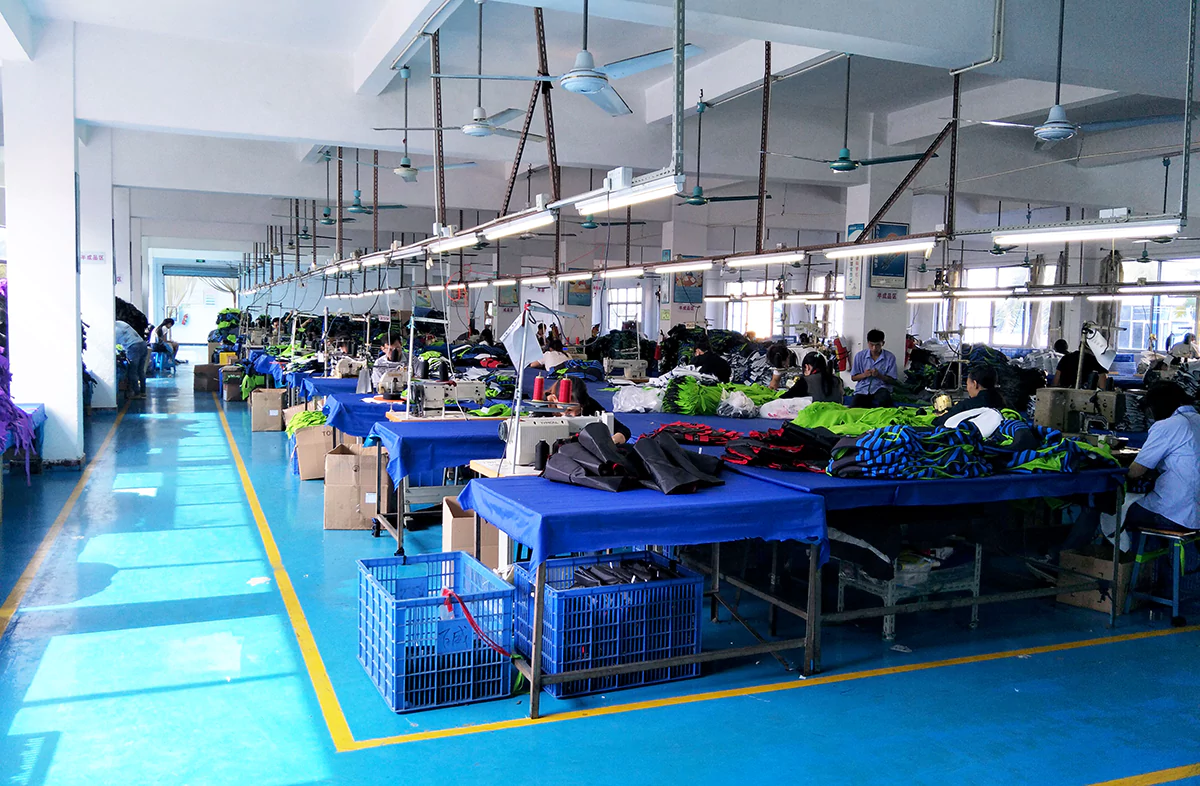
FYBagCustom is Your Trusted Custom Bag Manufacturer in China, with 15+ years of manufacturing experience — and a small-goods bench that builds charms with the same edge, stitch, and hardware discipline as the bags they hang from. For brands adding charm programs, our capabilities include:
Contact our development team to brief your charm program — the cluster, the personalization system, or the full accessory line.
The 2026 charm is a leather-goods product, not a toy — and the brands that produce it to leather-goods standards own the top of a category the plush factories cannot reach. For B2B buyers building charm programs, three core takeaways:
If you are adding charms, chatelaine clusters, or a full detachable-accessory program and need small goods built to handbag standards, contact FYBagCustom to brief your program — and receive a full charm sample set in 5–7 days.
FYBagCustom builds charm programs with handbag-grade construction — beveled edges at miniature scale, load-tested clasps that protect the host bag, personalization systems, and 100-unit MOQs cut from your bag program’s own materials. Full sample sets in 5–7 days.
Start Your Custom Bag Project →