Tel/WhatsAapp:+86 18011919834
E-mail: chloe.x@fybagcustom.com

Tel/WhatsAapp:+86 18011919834
E-mail: chloe.x@fybagcustom.com
Send Your Inquiry Today

QC Stages
Unit-Level Inspection
Dimension Tolerance
Color Verification
Quality problems are cheapest to fix at the stage where they occur. Our QC system is structured so that defects are caught BEFORE they propagate downstream — a fabric flaw is caught before cutting, a branding error before sewing, a stitch defect before packing.
Every roll of fabric and batch of hardware is inspected on arrival — BEFORE it enters the production floor.
Fabric checks:
Hardware checks:
QC inspectors work ON the production floor alongside sewers — not in a separate room. They monitor each step in real time.
NOT AQL sampling. EVERY bag is inspected individually — opened from polybag, visually examined, function-tested, re-packed.
Visual inspection:
Function testing:
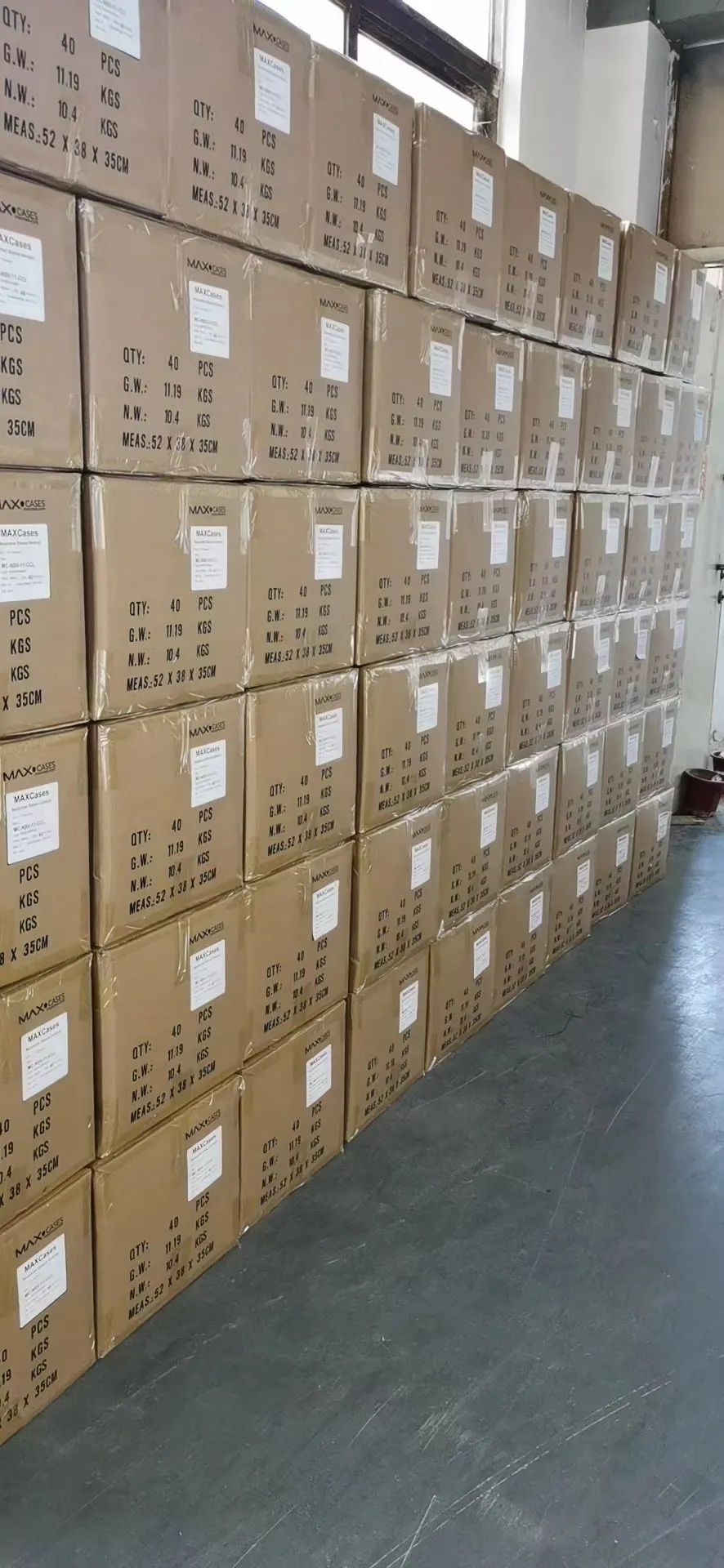
The final gate before the bag leaves the factory. Packing quality, labeling accuracy, and carton integrity — verified and photographed.
Pre-shipment:

Trusted by over 1,000+ global brands, retailers, and e-commerce sellers.
Stable production cycles and reliable shipping schedules.

Long-term partners highlight our quality and service as key strengths.

Support from small trial orders to bulk wholesale production.
Every measurable dimension has a defined tolerance. These numbers are written into the tech pack and verified at each QC stage.
| What We Check | Tolerance / Standard | Checked At | Method |
|---|---|---|---|
| Overall dimensions | ±3mm (critical), ±5mm (non-critical) | Stage 2 + Stage 3 | Tape measure vs tech pack |
| Color accuracy | ΔE ≤ 1.5 vs approved lab dip | Stage 1 + Stage 3 | D65 light box comparison |
| Fabric weight | ±5% of specified GSM | Stage 1 (incoming) | GSM scale per roll |
| Zipper function | Smooth open/close, 50+ cycles | Stage 1 + Stage 3 | Manual cycle test |
| Logo position | ±2mm from tech-pack coordinate | Stage 2 (post-branding) | Ruler + reference overlay |
| Stitch density | Per tech-pack SPI (stitches per inch) | Stage 3 | Stitch counter per 1-inch section |
| Carton weight | ≤ 23 kg (Amazon limit); ≤ 25 kg (general) | Stage 4 (pre-shipment) | Digital scale per carton |
Safety Standards
Products meet REACH (EU), RoHS (EU), and CPSIA (US) requirements for chemical safety, restricted substances, and children’s product compliance.
Test Reports
Material test reports (fabric composition, color fastness, tensile strength, azo-free certification) available on request. Reports issued by accredited third-party labs.
Third-Party Inspection
We welcome SGS, Bureau Veritas (BV), Intertek, and TÜV inspections. You can send your own inspector or hire a third-party to audit any stage of production.
D65 Light Box
Color verification under standardized daylight — eliminates the effect of warm/cool ambient lighting on color perception.
Tensile Strength Tester
Tests strap pull strength, seam burst strength, and hardware attachment points under controlled load.
Color Fastness Tester
Verifies fabric dye doesn’t bleed, transfer, or fade under rubbing, washing, and light exposure.
QC isn’t just about FINDING defects — it’s about RESOLVING them before the bag reaches your customer. Here’s what happens at each failure point.
“Fabric roll arrived with weave defects — will it delay my order?”
What happens: Stage 1 catches the defect. Defective sections are excluded from cutting (marked and bypassed). If the usable fabric is insufficient for the full order, the roll is rejected and replacement sourced from the same supplier within 3–5 days (standard) or 7–14 days (custom dye).
Impact on your order: Minor defects (small excluded sections) = no delay. Full roll rejection = 3–14 day delay depending on replacement sourcing. We notify you immediately with the issue, the recovery plan, and the revised timeline.
“5% of bags had a stitching defect at final inspection — what now?”
What happens: Stage 3 catches the defect during 100% inspection. Defective bags are pulled from the batch, tagged with the specific issue, and sent back to the sewing line for rework. After rework, each repaired bag is re-inspected individually. If a bag can’t be repaired to spec, it’s replaced from buffer stock (we produce 3–5% extra units for this purpose).
Impact on your order: Minor rework (re-stitch a seam, replace a zipper pull) = 1–2 day delay. Major rework (re-cut panel, re-brand) = 3–5 days. The defective bags NEVER ship. You receive only bags that pass re-inspection.
“My third-party inspector found issues — how do you respond?”
Our approach: We welcome SGS, BV, or your own inspector at any stage. If they find issues we missed, we treat it as a QC improvement opportunity — not a conflict. The defects are documented, the affected units are reworked or replaced, and we adjust our in-line QC protocol to catch that specific issue on future runs. Your inspector’s report becomes part of the production reference for all subsequent orders. We never argue with data.
Yes. Every finished bag is opened from its polybag, visually inspected, function-tested (zippers, buckles, straps), and re-packed. This is slower and more expensive than AQL sampling — but it eliminates the statistical risk of defective bags reaching your customer. For Amazon sellers, where one defective bag = one negative review, 100% inspection is non-negotiable.
Yes. You’re welcome to send your own QC inspector or hire a third-party (SGS, Bureau Veritas, Intertek) to audit any stage of production. We provide factory access, production records, and cooperation with the inspection process. Many clients send an inspector for the first order and switch to our internal QC + photo documentation once they’re confident in the system.
Defective units are pulled, tagged with the specific defect, and sent for rework (re-stitch, re-brand, replace hardware). After rework, each unit is re-inspected individually. If it can’t be repaired to spec, it’s replaced from buffer stock (we produce 3–5% extra units on every order). Defective units that can’t be repaired are scrapped — never shipped.
Yes. Pre-shipment photos are sent on every order: individual bag in packaging, open carton showing contents, carton labels, and the loaded shipment. For clients who request a formal QC report, we provide a document with measurements, defect counts, photos, and pass/fail summary.
AQL 2.5 for general defects and AQL 0.65 for critical defects as the baseline framework. However, our 100% unit-level inspection exceeds AQL requirements — we don’t rely on statistical sampling. Products comply with REACH (EU), RoHS (EU), CPSIA (US), and client-specific requirements.
Each bag type has additional QC checkpoints beyond the standard 4-stage process. Minimalist bags: highest cosmetic standard (flawless stitching, proportion accuracy). Functional bags: per-compartment real-item packing test. Waterproof bags: seam-seal and spray test. Insulated bags: temperature retention. See each design feature and style page for specific QC protocols.
Contact us with photos and descriptions of the issue. We investigate, compare against our pre-shipment documentation, and take responsibility for factory-caused defects. Resolution options: replacement units shipped, credit applied to next order, or rework coordination. Our goal is long-term partnership — not defending a single shipment.
Yes. European Industrial Park, Shiling Town, Huadu District, Guangzhou. Monday–Saturday. Video tours available for remote buyers.
Every bag we produce passes our 4-stage QC system with 100% unit-level inspection. Send us your design or product idea — we’ll deliver bags that protect your brand reputation.