Tel/WhatsAapp:+86 18011919834
E-mail: chloe.x@fybagcustom.com

Tel/WhatsAapp:+86 18011919834
E-mail: chloe.x@fybagcustom.com
Send Your Inquiry Today

Years Manufacturing
Factory Area
Professional Staff
Inspection Rate
Our woven bag production serves fashion brands, boutique retailers, Amazon FBA sellers, designer labels, and premium corporate buyers — any buyer sourcing bags where the weave texture drives perceived value and retail price.


A plain PU leather tote retails for $15–30. The same tote in woven PU leather retails for $40–80. Same material, same hardware, same lining — the weave pattern alone justifies the markup. Five characteristics make woven bags one of the highest-margin bag categories for B2B buyers.

Woven bags look handmade even when machine-produced at scale. Visible interlaced strips signal craftsmanship, skill, and artisan quality — perceptions that justify premium pricing regardless of actual production method. Consumers pay for the aesthetic of handcraft.

On plain bags, design requires printing, embossing, or hardware. On woven bags, the construction technique IS the visual design. No print, no embossing, no extra finishing — the interlace pattern alone creates the surface interest. Design complexity without design cost.

Changing the weave pattern — checkerboard, herringbone, diagonal, mixed-width — changes the product without changing the material or hardware. One strip material generates 4–6 visually distinct SKUs just by varying the interlace pattern. Fastest way to expand a collection.

Interlaced strips create a self-supporting mesh that holds shape without stiffeners, base boards, or internal structure. The weave itself provides body and form retention. Reduces construction complexity while delivering a more structured product than single-layer fabric.

Woven bags have appeared in fashion collections for decades — they are not a trend, they are a permanent category. Straw and raffia woven bags peak in summer. PU and leather woven bags sell year-round. Woven is the rare design feature that transcends seasonal cycles.
Woven construction works across every bag silhouette — from compact clutches to oversized totes. The interlace pattern transforms any standard bag type into a premium product. Here are the eight most ordered woven bag formats.
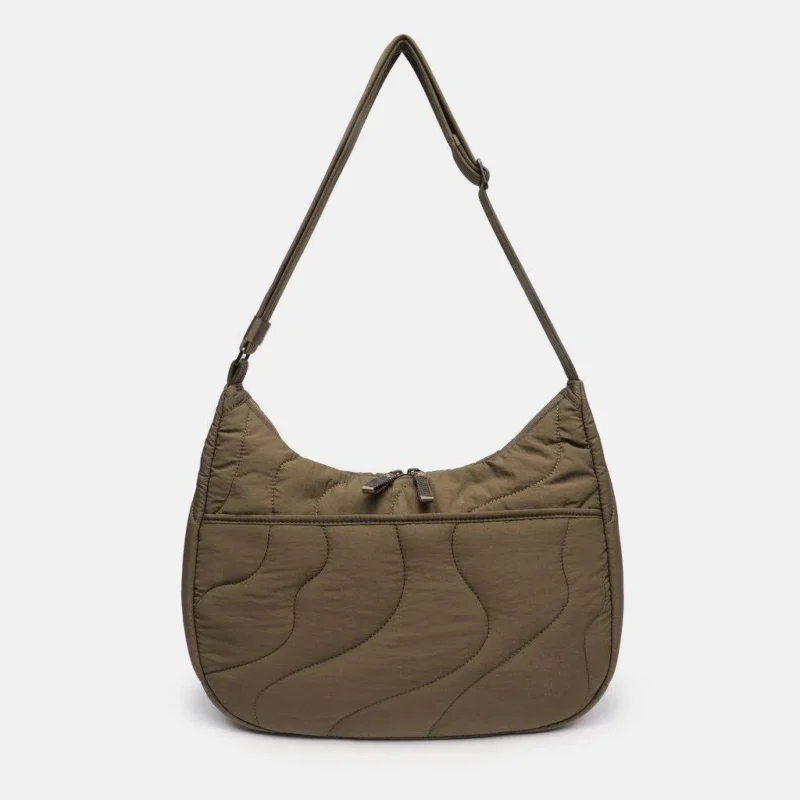
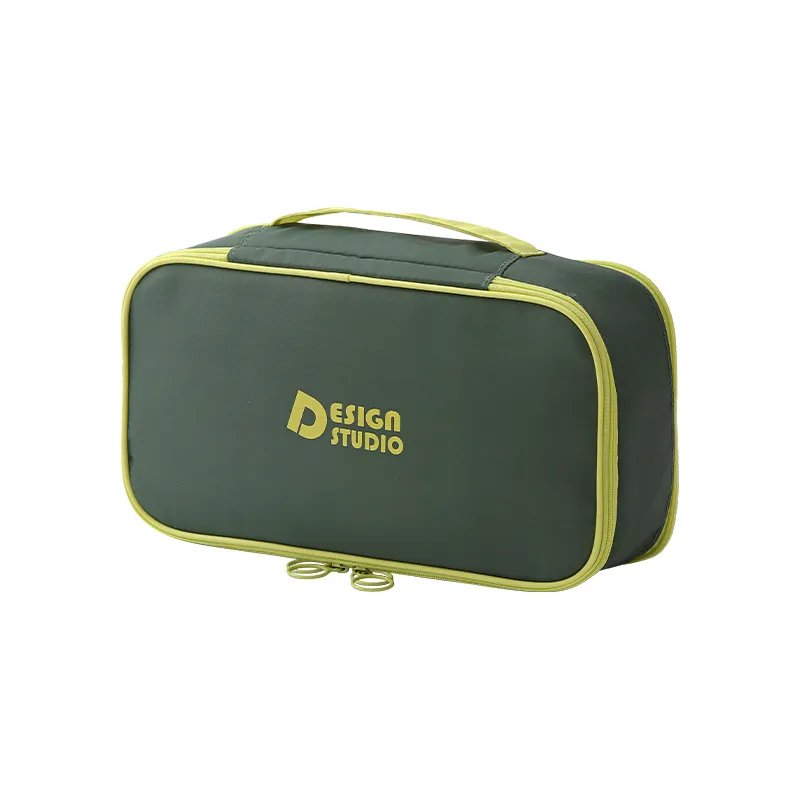
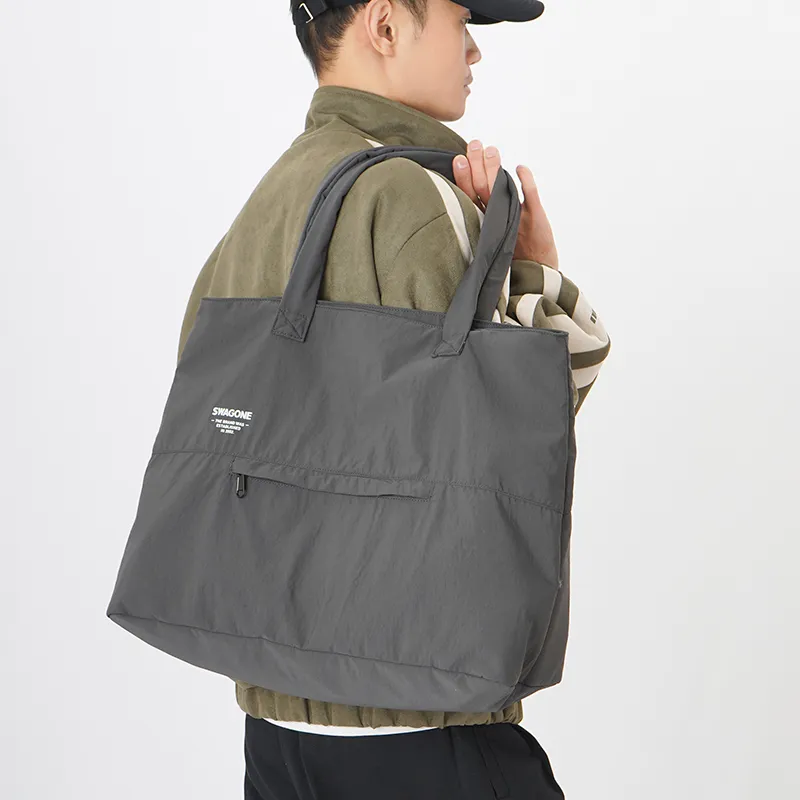
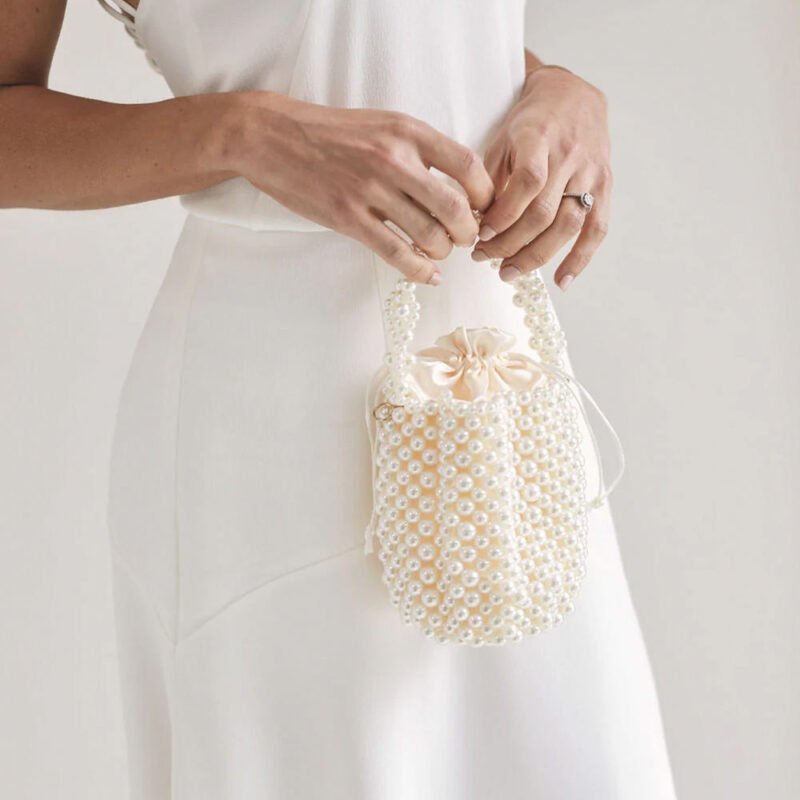
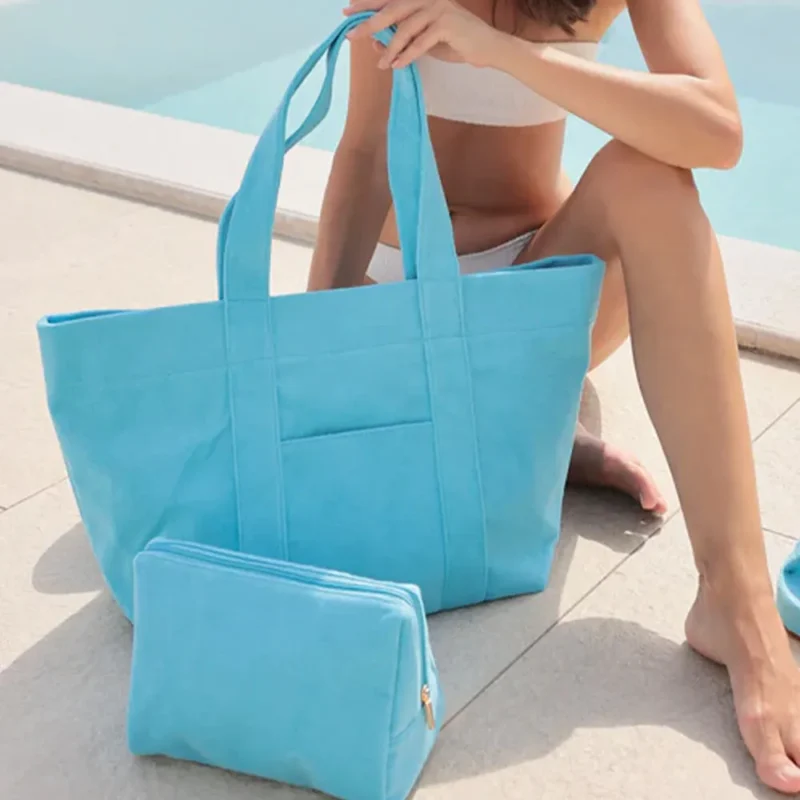
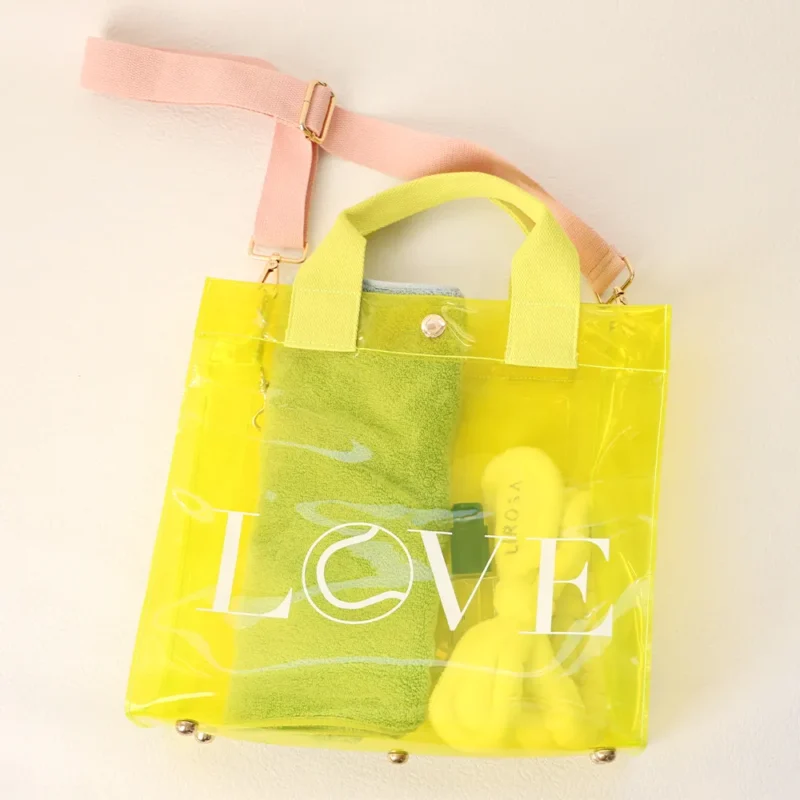
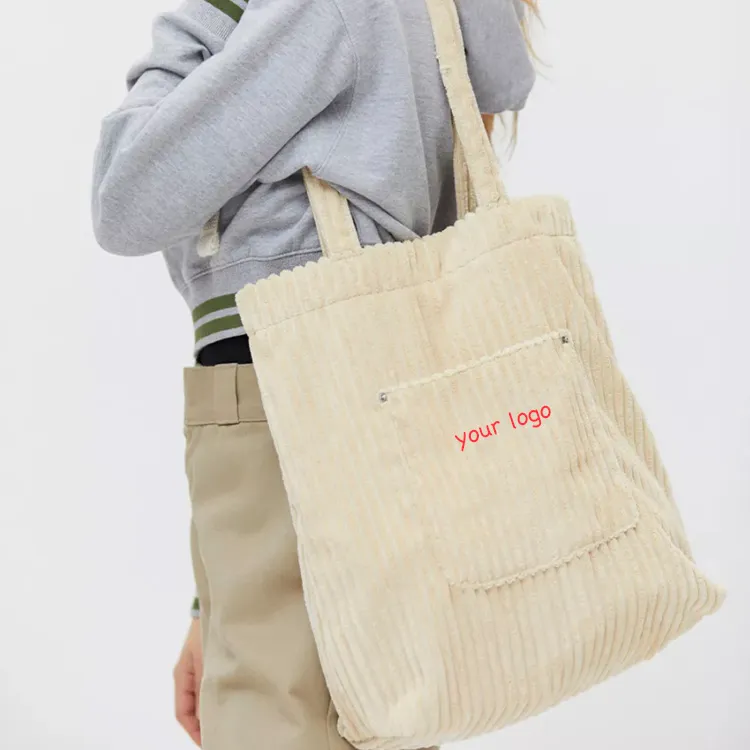
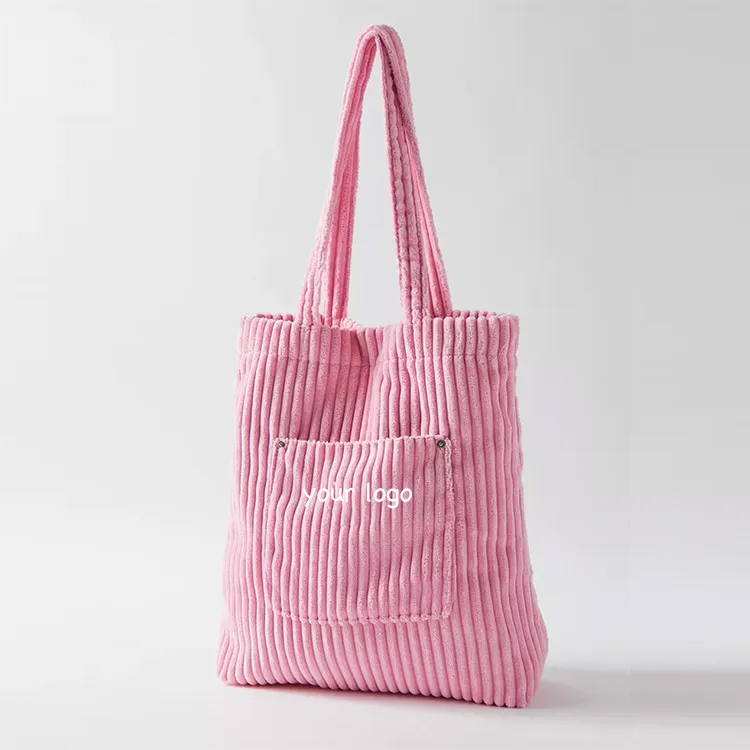
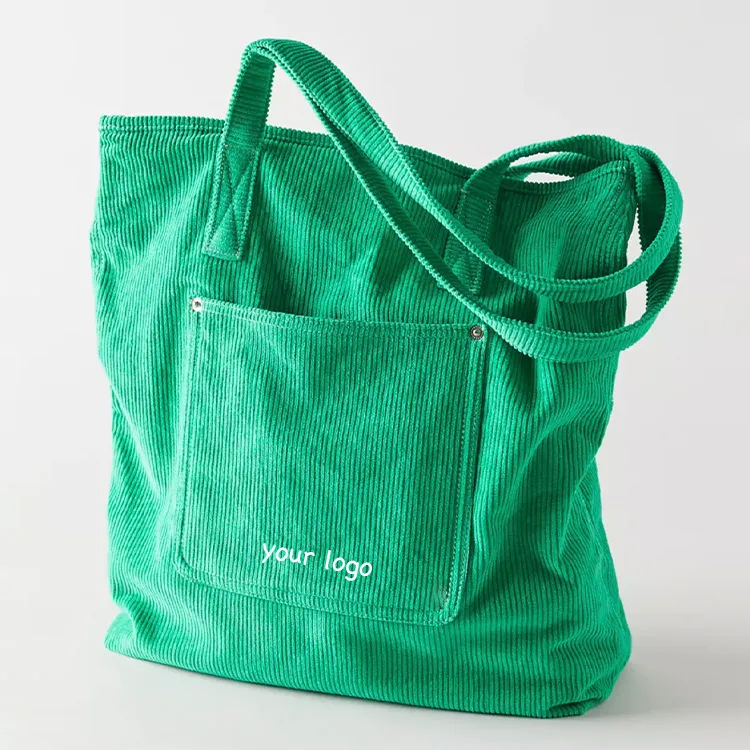

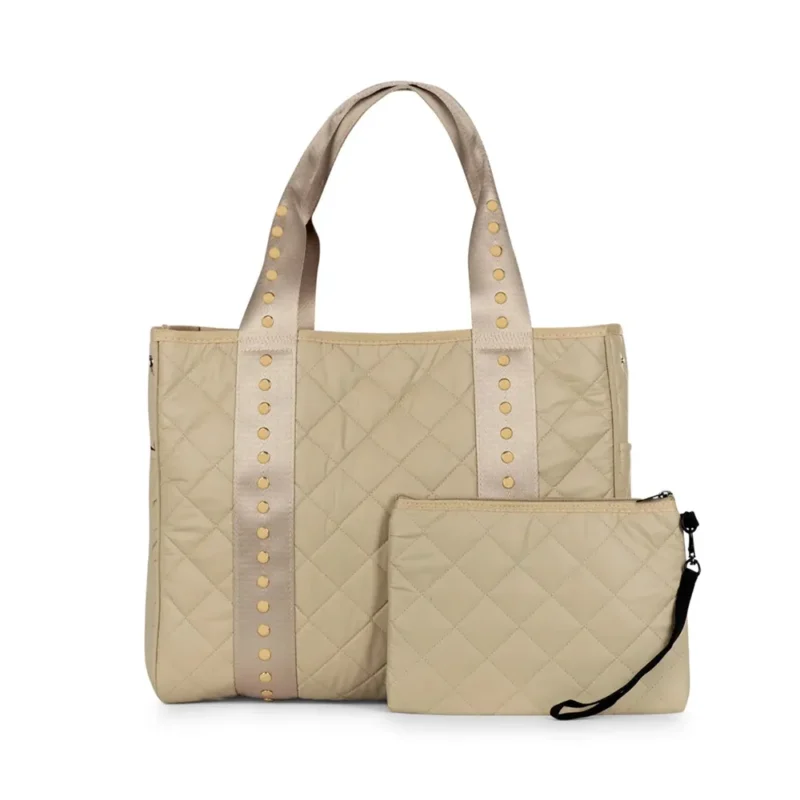
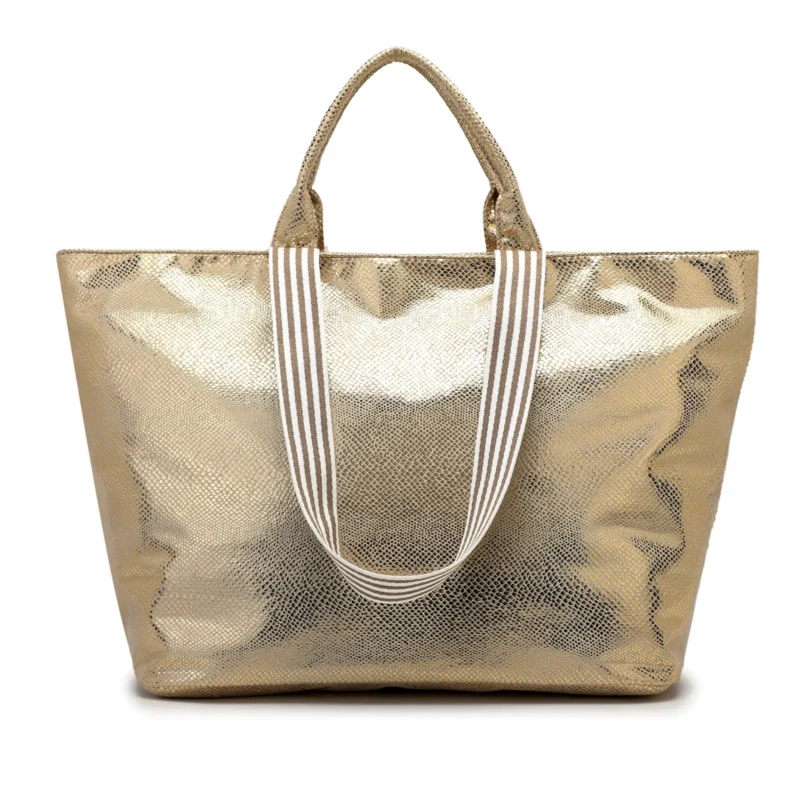
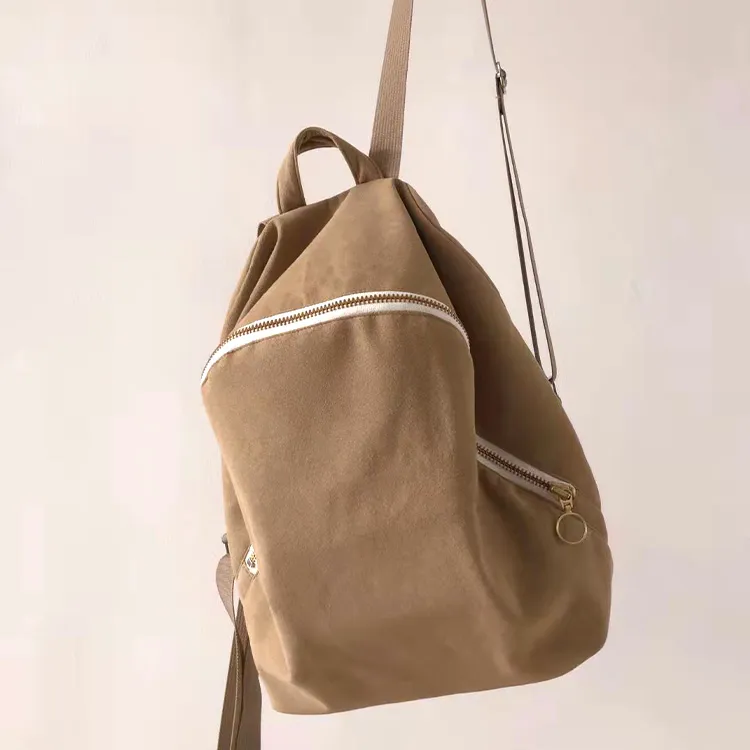
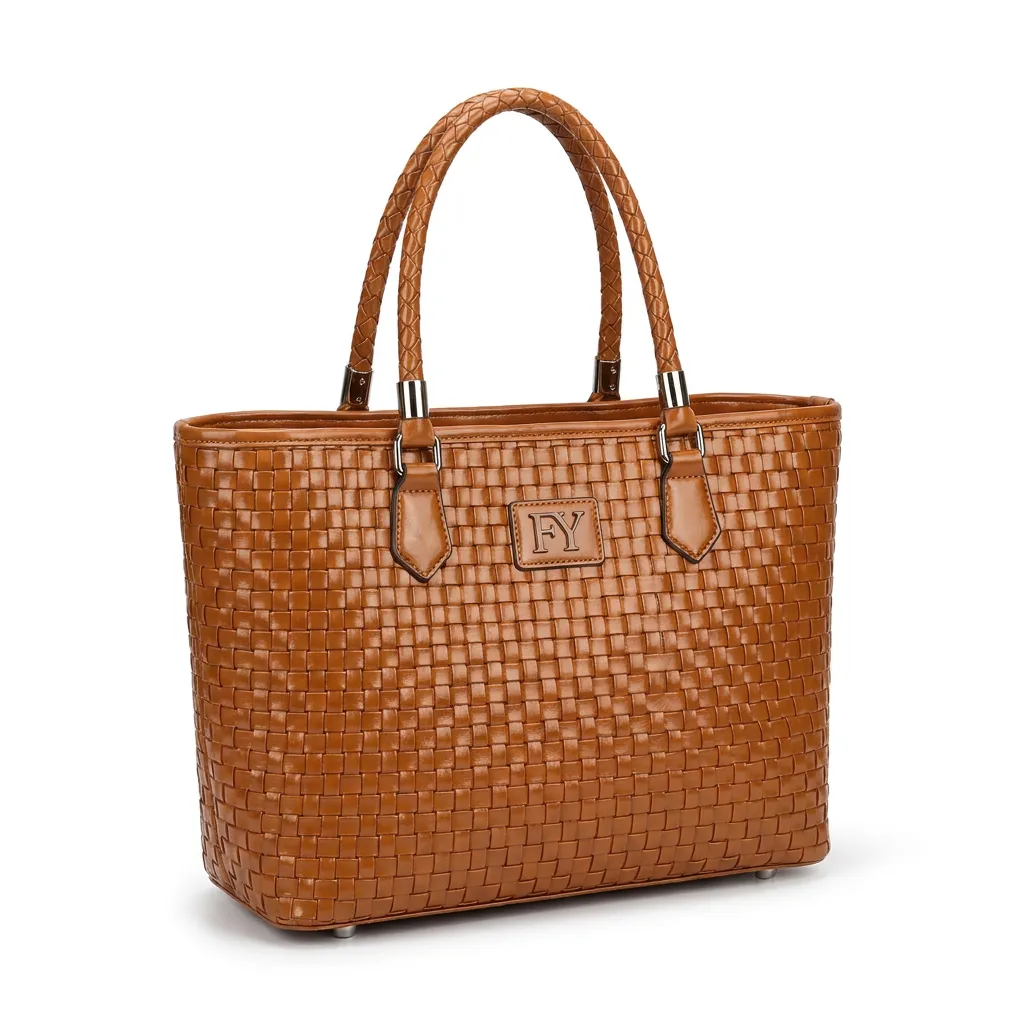
Full-body woven tote in PU leather or genuine leather strips. Open-top or zip-top. The highest-volume woven bag format — from beach totes to office carry. Checkerboard and herringbone patterns most popular. Retail $40–100.
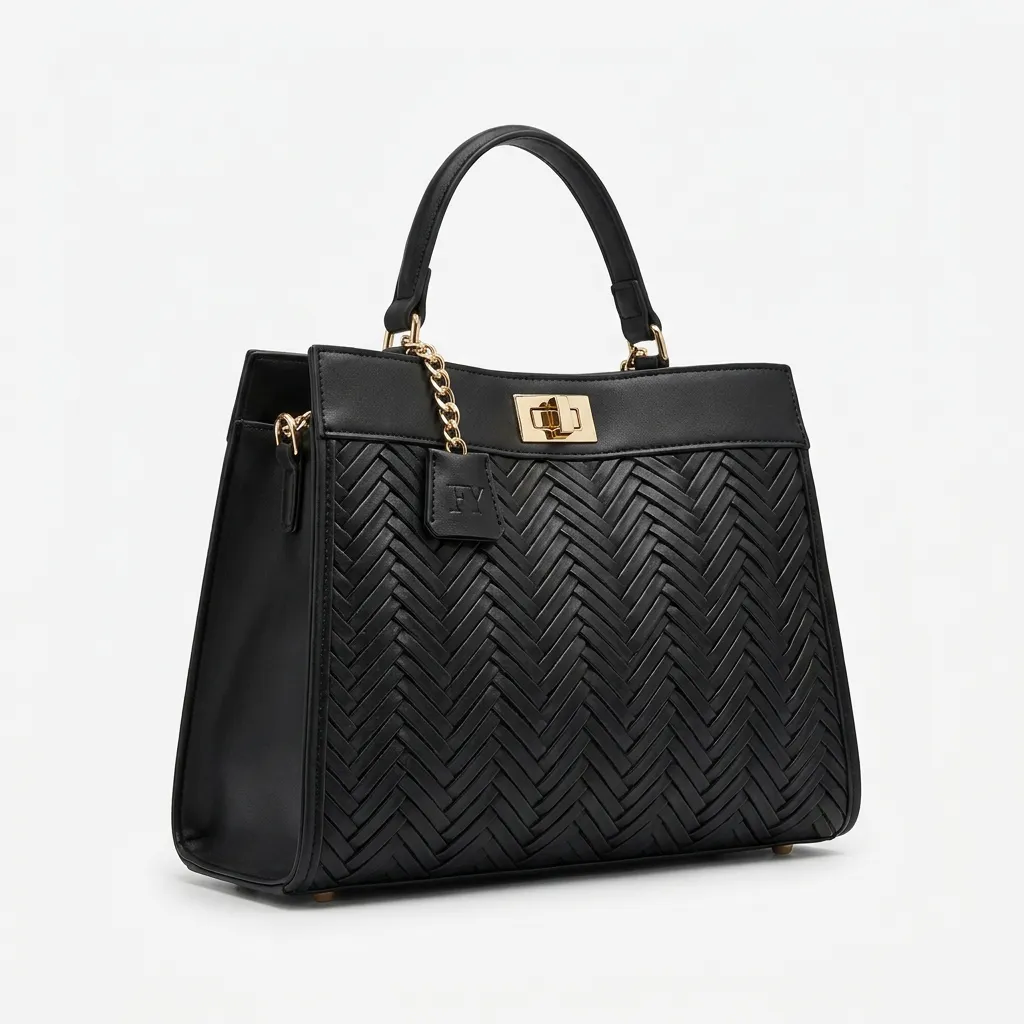
Structured woven handbag with top handle, optional shoulder strap. The premium-tier woven format — leather or PU leather strips, branded hardware, suede or fabric lining. For fashion brands selling at $60–200+ retail.
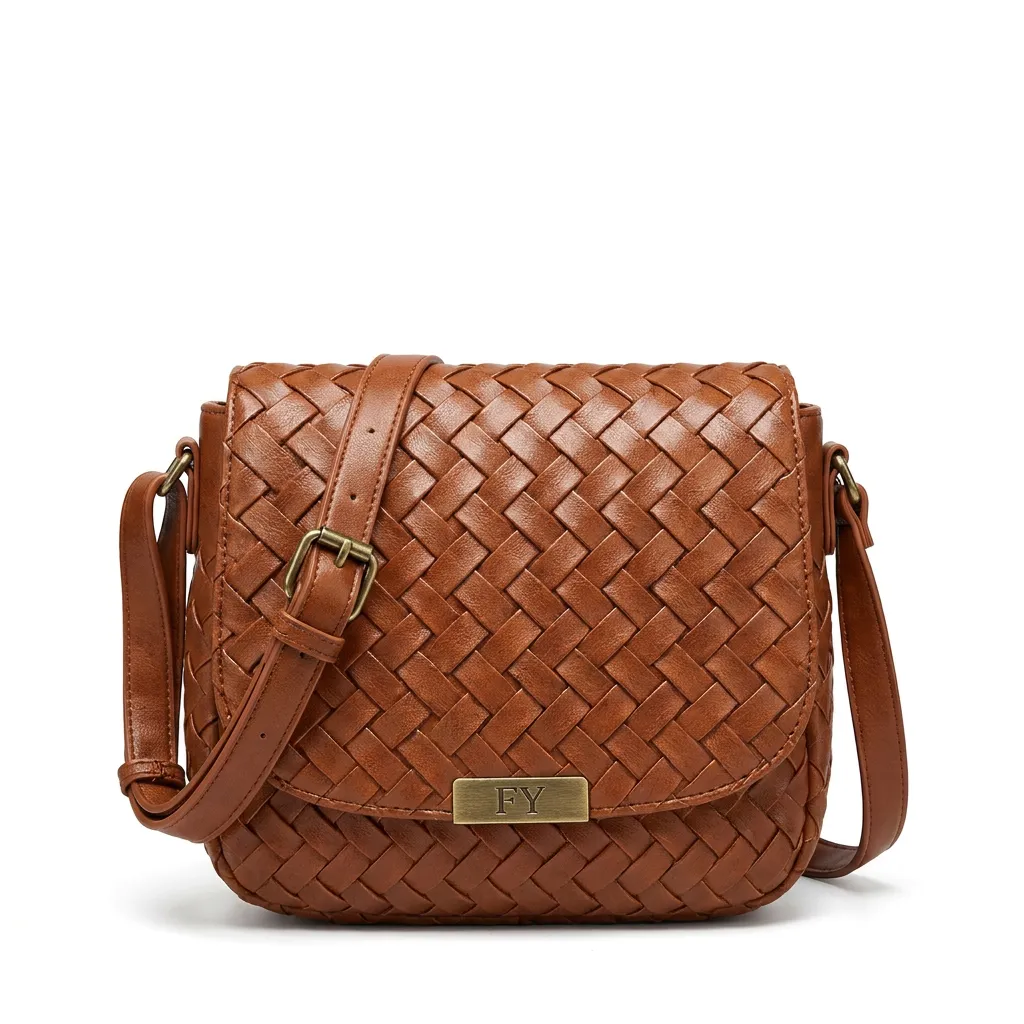
Compact woven crossbody with adjustable strap. Flap or zip closure. Strongest Amazon growth segment for woven bags. PU leather strips with gold or silver hardware. Day-to-evening versatility drives sell-through.
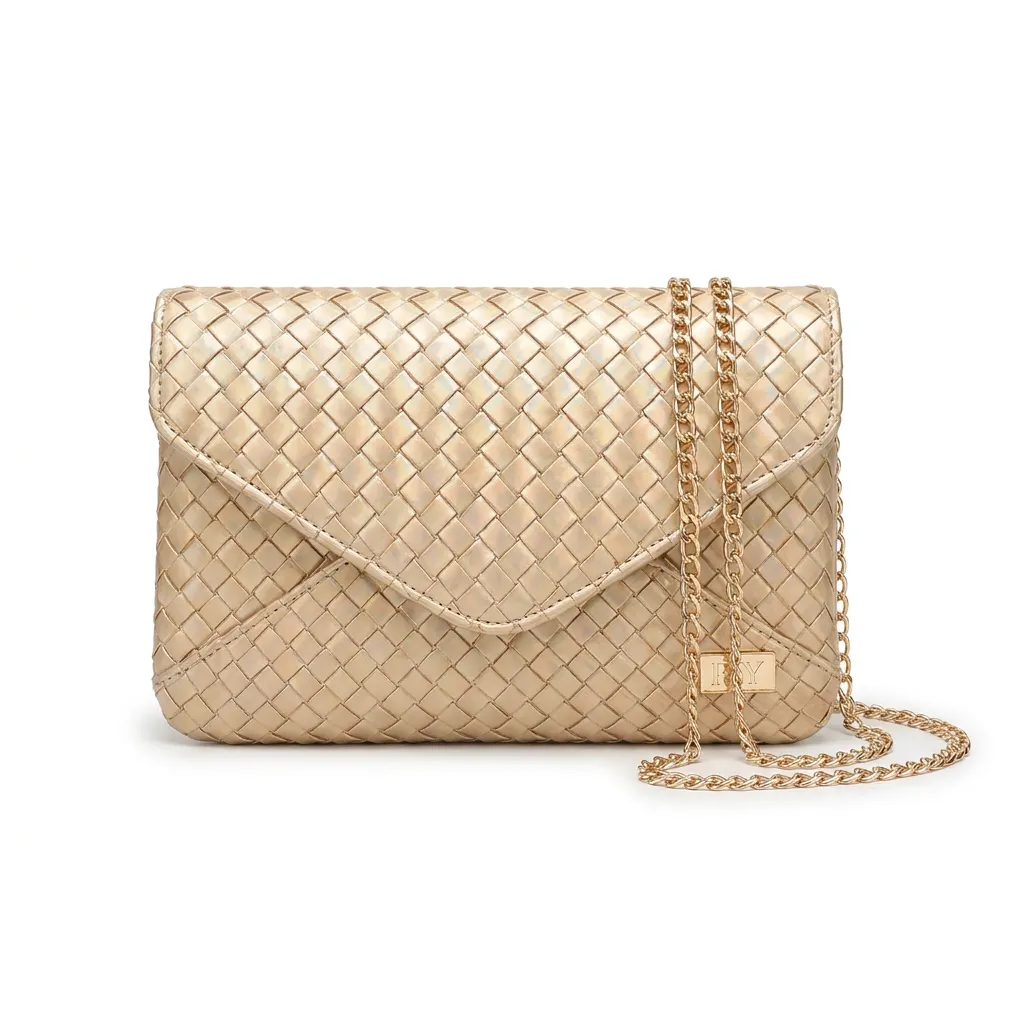
Woven clutch with zip or magnetic closure, optional wrist strap. Highest margin per unit of any woven format. PU leather or metallic strips. Evening, bridal, and resort applications. Often sold in multi-color sets.
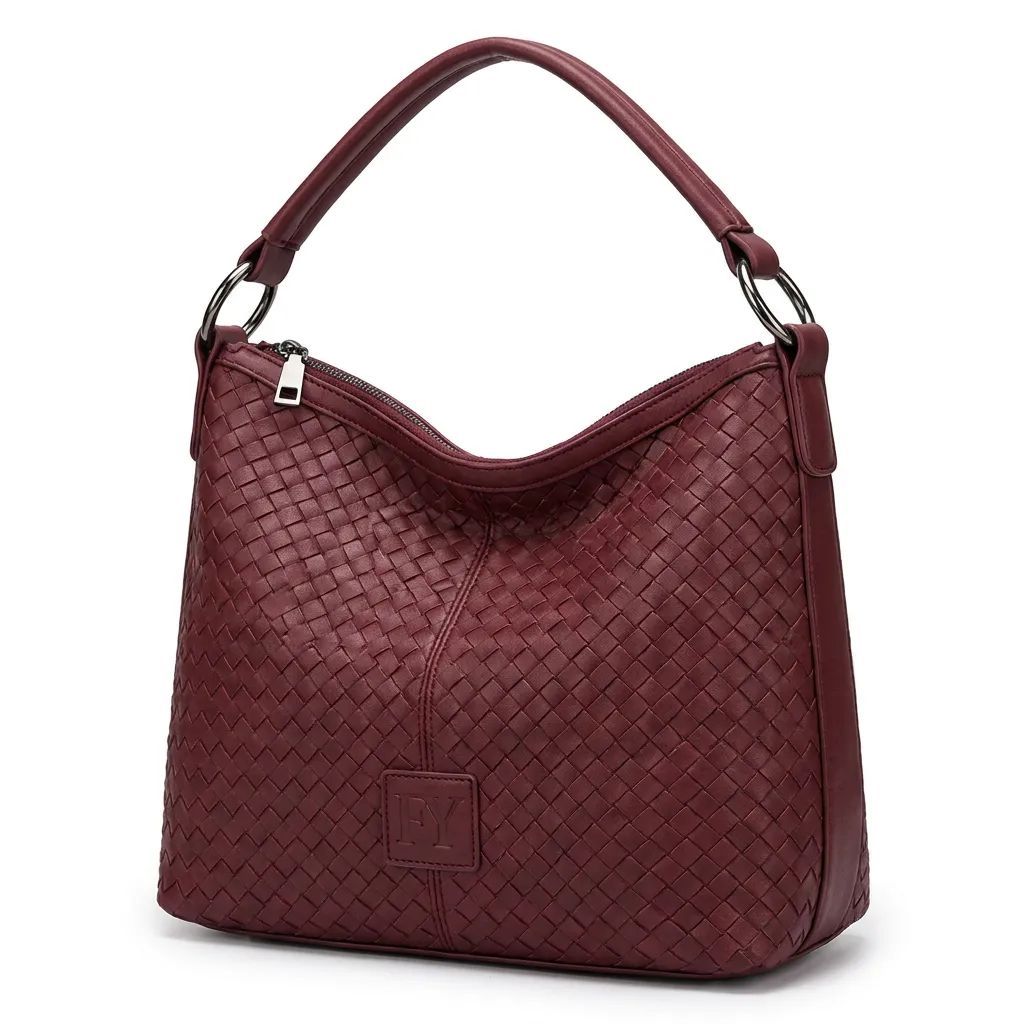
Hobo, flap, or slouchy woven shoulder bag. Medium to large capacity. The relaxed, bohemian woven format — for contemporary fashion and boho-aesthetic brands. PU leather or genuine leather strips.
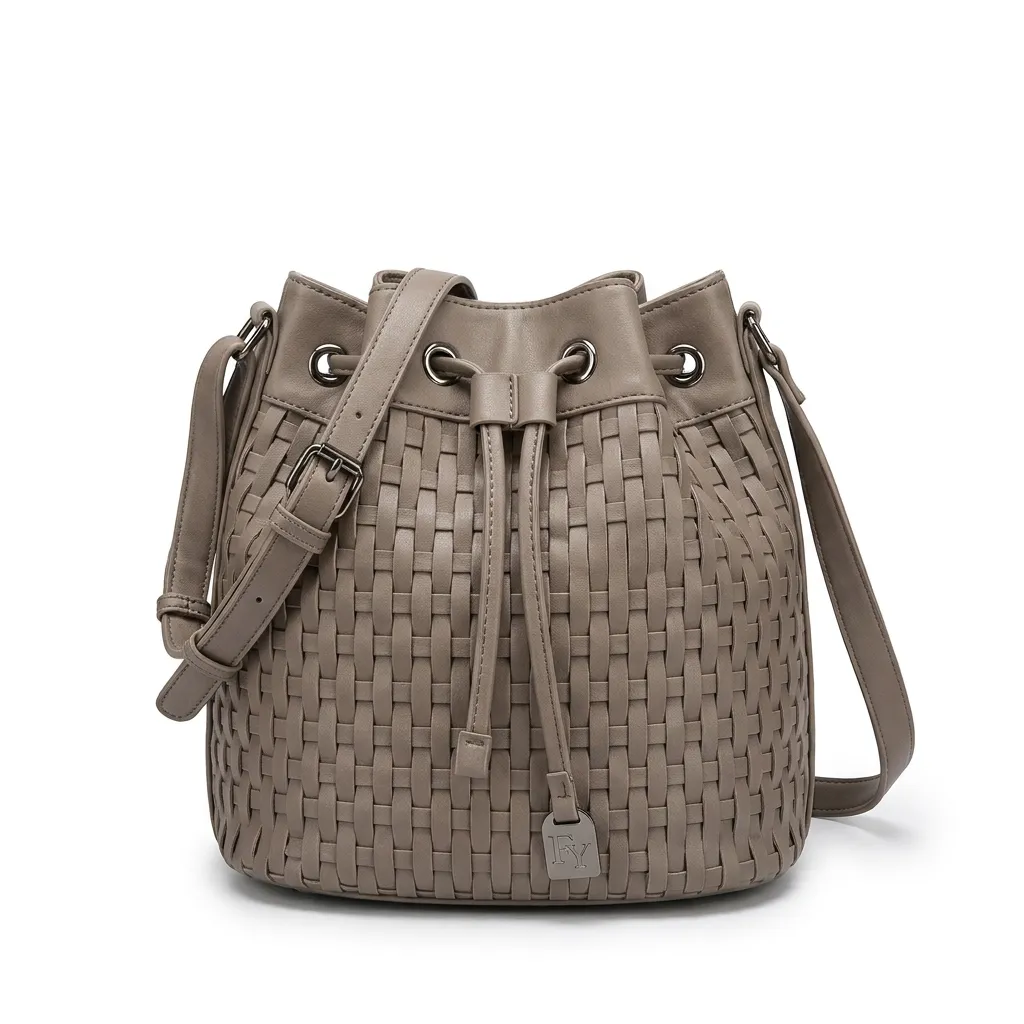
Vertical silhouette woven bucket bag with drawstring or toggle closure. The woven texture adds dimension to the bucket’s cylindrical shape. PU leather or raffia strips. Resort and casual-fashion positioning.
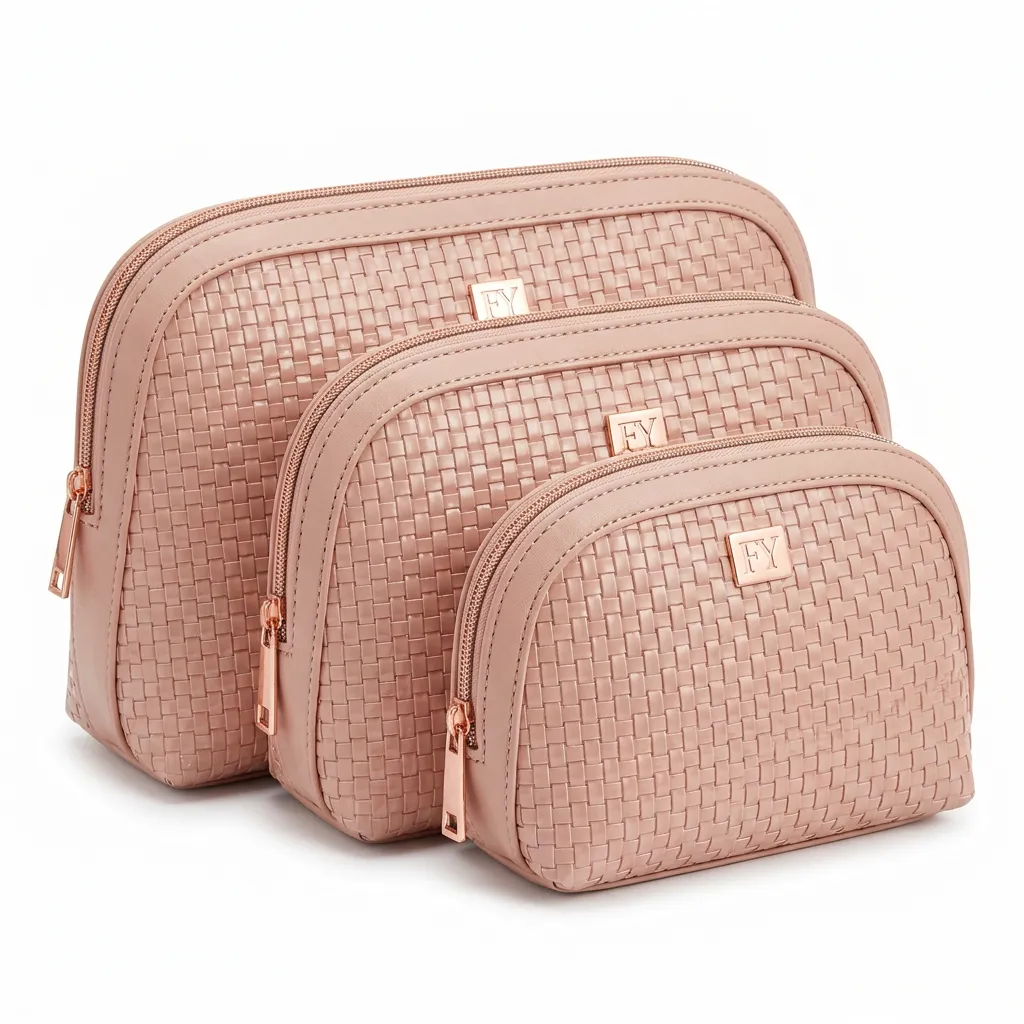
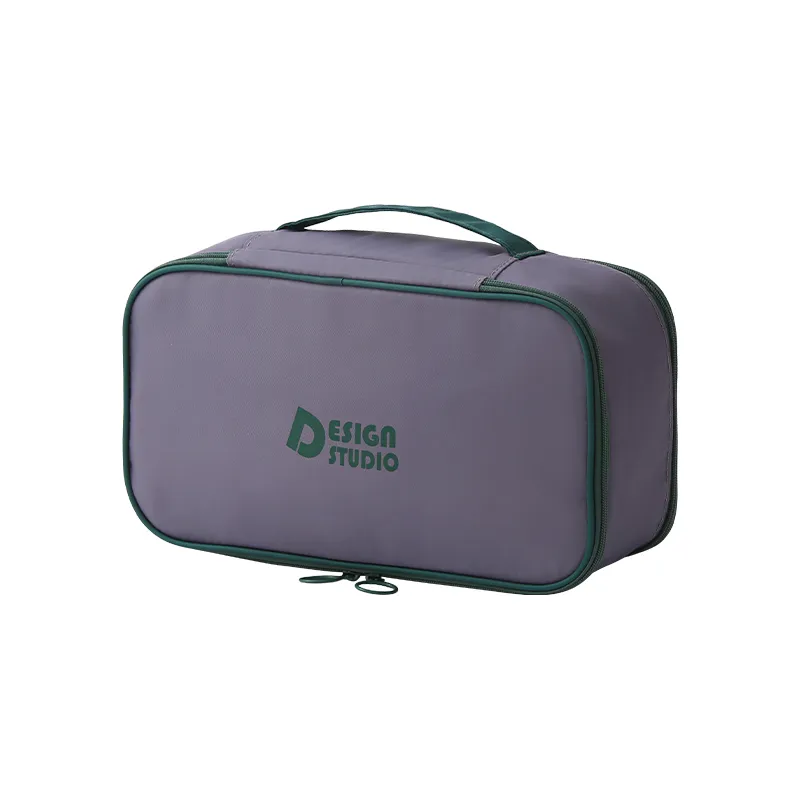
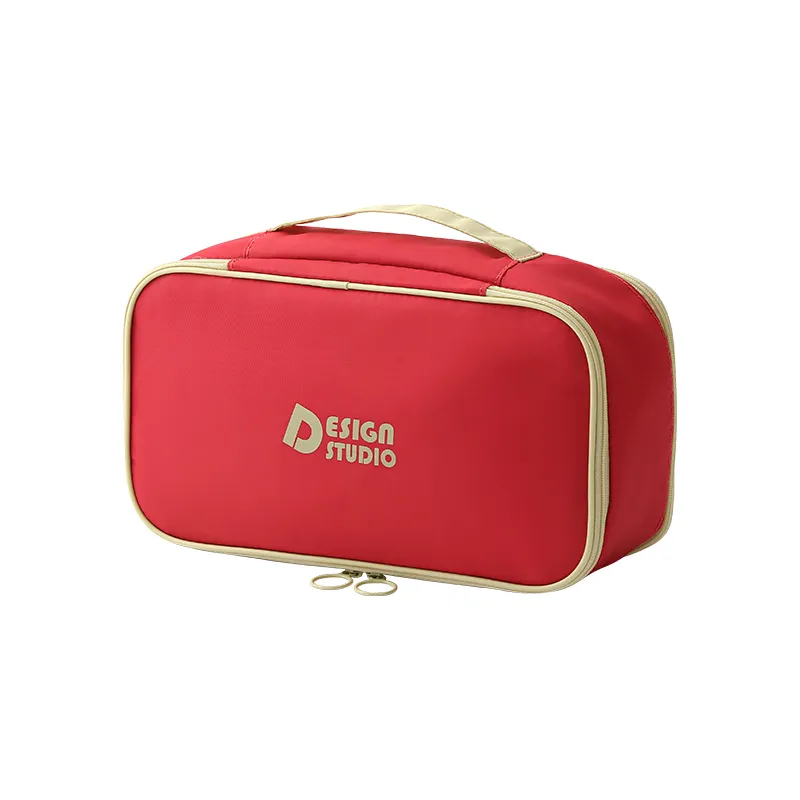
Woven zip pouch in S/M/L nested sets. Cosmetic bag and gift-set staple. PU leather woven exterior with waterproof lining. Subscription-box, gift-with-purchase, and Amazon bestseller format.
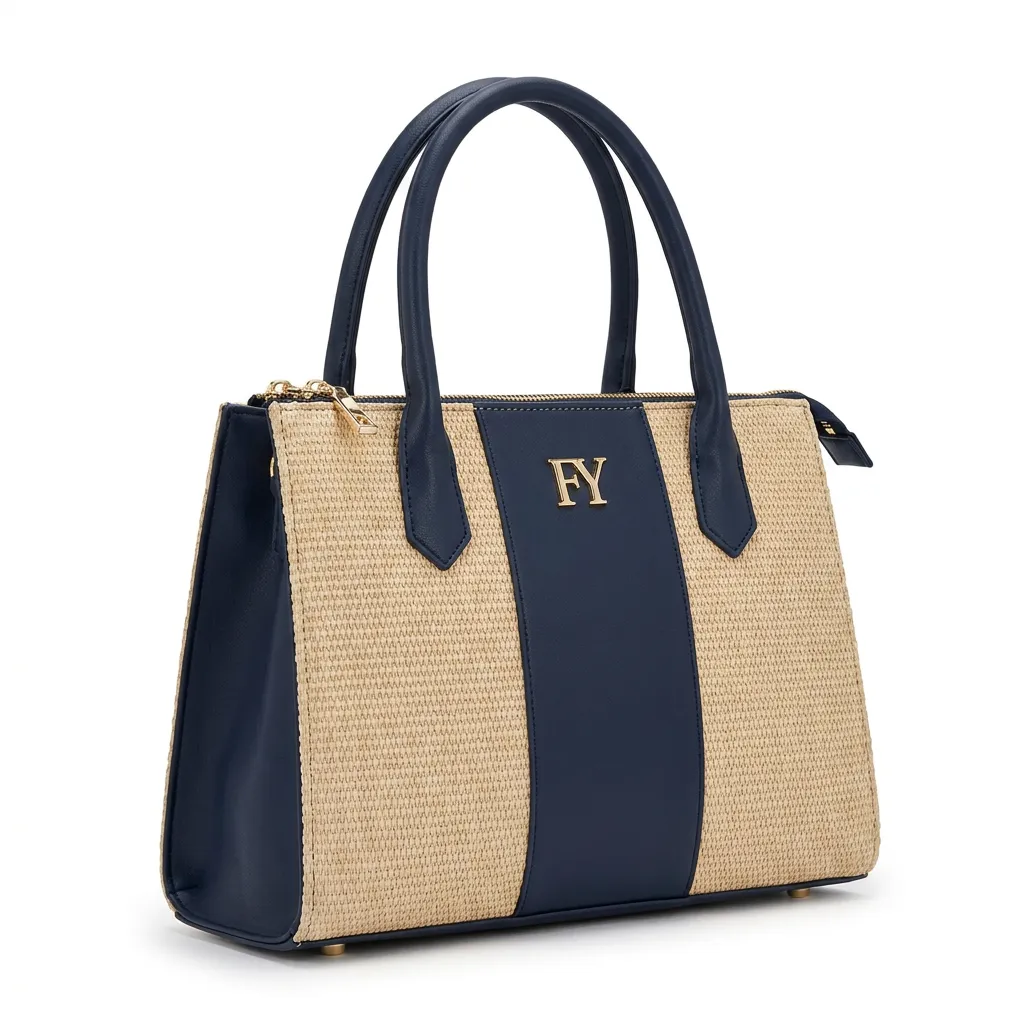
Partial woven panel combined with smooth PU leather or fabric body. Woven front flap, woven side panels, or woven base accent. Lower production cost than full-body weave while retaining the artisan-texture premium. For mid-tier pricing.
The weave pattern is the single most impactful design decision on a woven bag — it determines visual complexity, texture depth, production time, and perceived value. Changing the pattern transforms the product without changing the material, hardware, or silhouette.
Checkerboard
1-Over-1 Plain Weave
Equal-width strips woven in alternating over-under pattern, creating a regular grid. The simplest and most recognized woven pattern. Fastest production speed. Lowest weaving labor cost. The default pattern for PU leather woven totes and crossbodies. Retail starting point for woven collections.
Herringbone
V-Shaped Zigzag
Strips woven at alternating angles to create a V-shaped or zigzag pattern. More complex than checkerboard — requires precise strip alignment and slower production. Commands 20–40% price premium over checkerboard. The pattern most associated with luxury woven leather goods.
Diagonal
Twill-Style Angled
Strips woven at 45° angles creating diagonal lines across the surface. Visually dynamic, modern aesthetic. More challenging alignment than checkerboard but simpler than herringbone. Strong differentiation from standard woven bags. Growing popularity on Amazon and in contemporary fashion.
Mixed-Width
Varied Strip Sizes
Alternating narrow and wide strips (e.g., 8mm + 15mm + 8mm) creating irregular texture patterns. The most visually complex weave — strongest artisanal perception. Slowest production speed, highest labor cost. Commands the highest premium of any weave pattern. For designer and luxury-positioned lines.
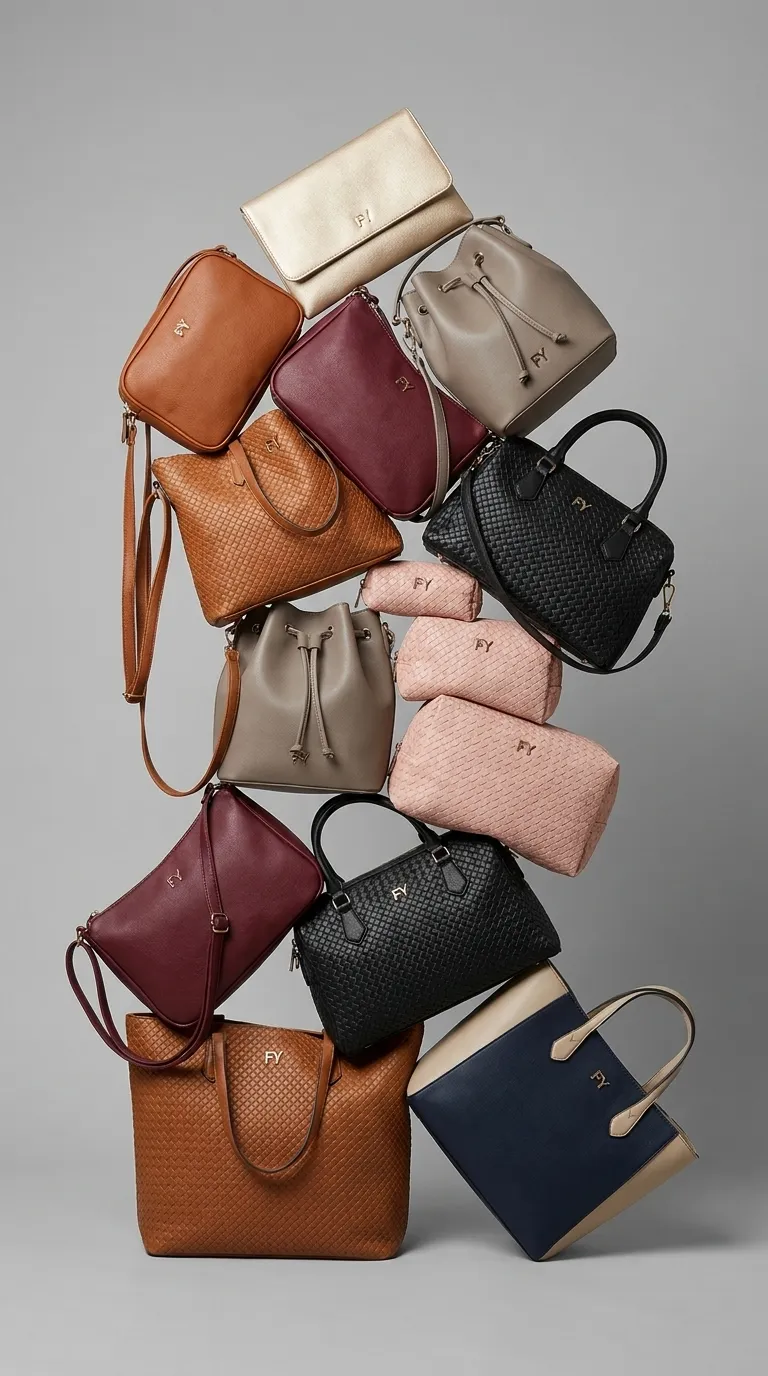
The strip material determines the woven bag’s price tier, hand feel, durability, and target buyer. We produce woven bags in six material families — each creates a completely different product even when using the same weave pattern and bag silhouette. Material choice is the second-most-important decision after weave pattern.
Strip width typically ranges from 5mm to 25mm. Narrower strips create finer, more intricate-looking weaves (slower production, higher cost). Wider strips produce bolder, more graphic patterns (faster production, lower cost). We recommend 10–15mm as the sweet spot for most commercial woven bags.
PU Leather
Most popular strip material for commercial woven bags. Wide color range (Pantone-matched), consistent quality, moderate cost. Available in smooth, pebbled, saffiano, and metallic finishes. The default material for Amazon FBA, mid-tier fashion, and boutique retail. Strip widths 8–20mm typical.
Genuine Leather
Premium tier. Full-grain, top-grain, or split leather strips. Develops patina over time. 2–4× the cost of PU leather. For luxury-positioned brands, designer collaborations, and high-end boutique retail. Requires leather sourcing expertise — we match leather grade to your price tier.
PP / Plastic Strips
Lowest cost, highest volume. Polypropylene woven strips — the material behind traditional woven shopping bags, market bags, and laundry bags. Machine-woven at scale. For commercial/utility woven bags, not fashion. Related to non-woven buyer base but structurally different (woven vs. spunbond).
Straw / Raffia
Natural fiber, seasonal. Woven straw and raffia strips — overlaps with our straw bag category. Summer/resort positioning. Hand-woven or semi-machine-woven. Creates the strongest artisan perception of any strip material. Seasonal demand peaks spring/summer.
Recycled Materials
Eco-positioned. Strips cut from recycled PU, recycled PET webbing, upcycled fabric, or recycled PP. For eco-friendly and sustainability-focused brands. The woven aesthetic naturally aligns with the “repurposed/upcycled” narrative — strips look like reclaimed material even when they’re new.
Every woven bag leaves our Guangzhou factory fully customized. In-house design, strip cutting, weaving (machine and hand-guided), assembly, lining, hardware installation, and QC. 10+ production lines. Sample turnaround in 5–7 days.
Free Add-on: Professional Product Photography Included
Free white-background product photos for your online shop, Amazon listings, and wholesale catalogs — no additional charge on production orders.
Woven bags combine strip-material expertise with standard bag-making construction — lining, hardware, closures, and finishing. The weave panel replaces the outer shell; everything else follows standard bag construction methods.
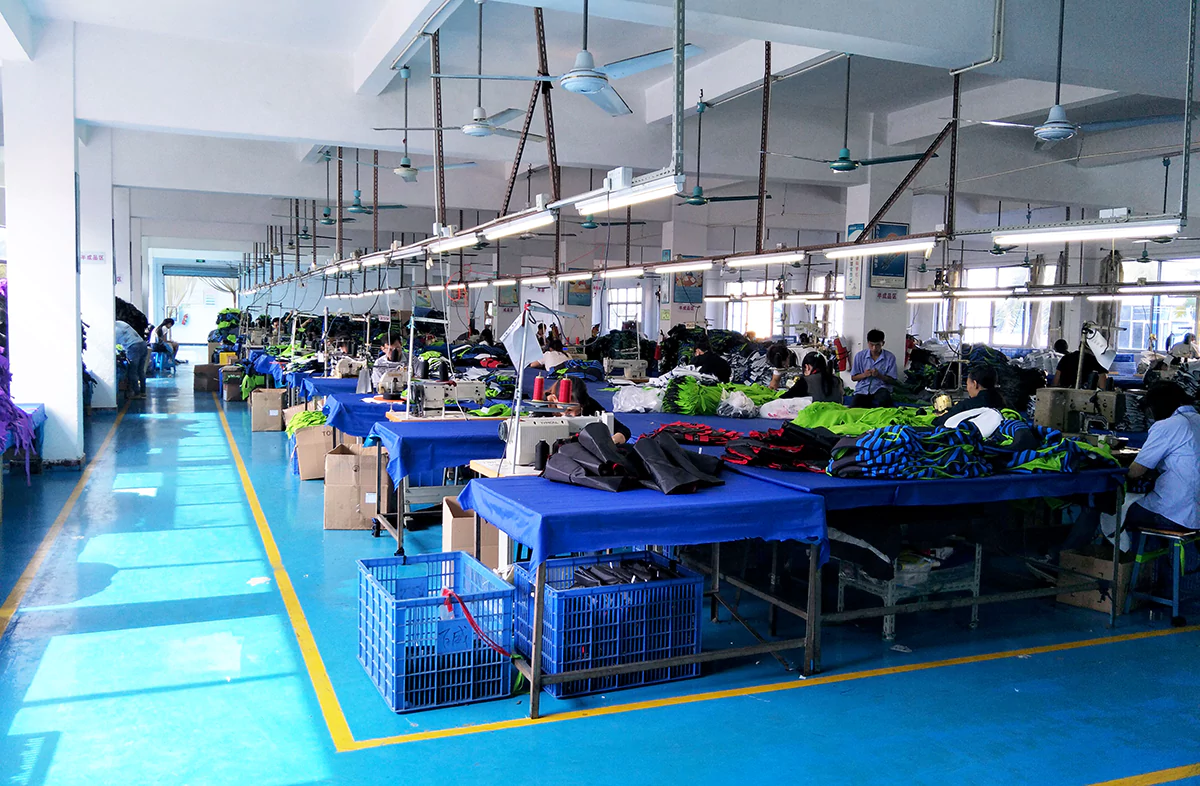
FY Bag Custom operates its own vertically integrated factory in Guangzhou, Guangdong — design, strip cutting, weaving (machine-guided and hand-finished), assembly, lining, hardware installation, and QC all under one roof. Woven bag production requires specialized strip-cutting precision and weaving jigs that maintain pattern consistency across batches — we control both in-house.
Our woven bag production shares material-sourcing capabilities with our leather bag, straw bag, and canvas bag lines — we already source the raw materials used as woven strips, which means faster material procurement and verified supplier quality.
Years in Manufacturing
Factory Floor Area
Professional Staff
Production Lines
Monthly Capacity
Pre-Shipment Inspection
Woven bags face category-specific QC risks — strip-width inconsistency, weave-pattern misalignment, strip color variation between batches, loose weave ends, backing delamination, and edge-binding failure. Our 6-stage QC targets each one. Third-party inspections (SGS, BV, TUV) welcome.
Strip width measured (±0.5mm tolerance). Strip color verified across rolls — PU leather color batch consistency is critical. Genuine leather strips inspected for surface defects, grain consistency, and thickness uniformity. Straw/raffia strips checked for fiber integrity and flexibility.
PPS delivered in 5–7 days with final weave pattern, strip material, and bag construction. Weave tension, pattern alignment, and strip spacing verified. Mass production starts only after your written sign-off on weave quality, color, and overall construction.
Every woven panel inspected before assembly — pattern consistency, strip alignment (no skewing), weave tightness (no gaps), strip edges (no fraying). Loose weave ends trimmed and secured. Backing fabric adhesion verified on backed panels.
Woven panel to lining attachment verified. Edge binding inspected for coverage and adhesion. Hardware function tested — zipper, magnetic closure, turn-lock. Strap attachment points pull-tested. Metal feet alignment checked on structured bags.
Every finished woven bag inspected one by one — weave pattern (no misalignment or gaps), strip color (no batch variation), hardware function, lining cleanliness, edge binding, overall shape, branding placement. Not sampled, not skipped.

Individually stuffed with tissue and polybag-packed to maintain shape. Woven bags are more susceptible to compression damage than smooth-surface bags — packing density adjusted accordingly. Container loading photos and videos sent within 24 hours.
Woven bags have longer production cycles than plain-surface bags due to the weaving step — strip cutting and panel weaving add 5–10 days to the timeline. Sample in 5–7 days, bulk in 25–40 days depending on weave complexity.
Day 1–2
Send tech pack + weave pattern reference; FOB quote in 24 hrs.
Day 3–10
Woven prototype with final pattern in 5–7 days via DHL.
Day 11–13
30% T/T deposit; balance before shipment.
Day 14–45
Daily WIP photos including weave-panel documentation.
Day 45–50
100% inspection with weave-quality verification.
Day 51–60
Sea, air, express, or direct-to-FBA.
Sample Lead Time
5–7 Days
Mass Production
25–35 Days
Payment Terms
30% T/T · 70% Before Shipment
Shipping Terms
FOB · CIF · DDP · Amazon FBA
Over the past 15+ years, FY has manufactured woven bags for fashion brands, boutique retailers, Amazon FBA sellers, and designer labels worldwide.
OEM production of woven PU leather totes, crossbodies, and clutches in checkerboard and herringbone patterns. 12mm strip width, Pantone-matched in 3 colorways. Gold hardware, printed polyester lining. Retail-ready packaging. FOB to US and European distribution centers. Retail $45–85.
ODM partnership on a woven PU leather crossbody in 4 weave patterns (checkerboard, herringbone, diagonal, mixed-width) × 3 colors = 12 SKUs from one tooling setup. FNSKU labeling, Amazon packaging, free photography. Air-shipped to FBA in US and UK. Strong sell-through and low return rates.
Mixed-material woven totes and bucket bags — raffia woven body with PU leather trim and handles. Checkerboard pattern, natural + tan colorway. For resort boutiques and beachside retail. Coordinated with straw bag production line. Seasonal production timed for spring delivery.
Global Shipping Options
•Sea Freight
•Air Freight
•Express (DHL, FedEx, UPS)
•Rail Freight
•Door-to-Door
•Direct-to-Amazon FBA
Straight answers to the questions bulk-order buyers ask most often about custom woven bag production.
Checkerboard (1-over-1) for entry pricing and fastest production — the default for first-time woven-bag buyers and Amazon launches. Herringbone for premium positioning and fashion-forward lines. Diagonal for contemporary differentiation. Mixed-width for designer and luxury positioning. We produce all patterns and can send comparison swatches so you see the difference in person before committing.
Woven bags typically have moderate-to-higher MOQs than plain-surface bags because the weaving step adds labor time. Simple checkerboard PU leather woven bags can start at competitive minimums. Complex patterns (herringbone, mixed-width) and genuine leather strips have higher minimums. Contact us with your pattern, material, and quantity for a specific confirmation.
Most commercial woven bags use machine-guided weaving with hand-finishing — strips are pre-cut to precise widths by machine, then interlaced on jigs (frames) by operators who ensure pattern alignment and strip tension. This combines precision and consistency with the handcraft aesthetic. Fully hand-woven production is available for premium orders at higher cost and longer lead time.
10–15mm is the sweet spot for most commercial woven bags — visible interlace pattern, reasonable production speed, and good visual balance. 5–8mm for finer, more intricate-looking weaves (slower production, premium positioning). 18–25mm for bold, graphic patterns (fastest production). We recommend 12mm as the default for PU leather woven bags.
Yes. Mixed-material weaves — PU leather + fabric tape, leather + straw, metallic + matte PU — create the most visually complex surfaces. Mixed weaves are a strong differentiation strategy but require careful material-thickness matching to ensure flat, even panels. We test material compatibility at the sampling stage.
The weaving step adds 5–10 days to the production cycle compared to plain-surface bags. Strips must be precision-cut, panels woven on jigs, backed with fabric, and then assembled into bags. Complex patterns (herringbone, mixed-width) take longer than checkerboard. We recommend 25–40 days for bulk woven bag orders depending on pattern complexity.
Yes. FNSKU labeling, Amazon-compliant polybag packaging, and carton labeling handled at our Guangzhou factory. Direct to FBA warehouses in the US, EU, UK, and other markets.
Yes. European Industrial Park, Shiling Town, Huadu District, Guangzhou. Monday–Saturday. Video tours available for remote buyers.
Send us your tech pack, weave-pattern reference, or sample — we’ll come back within 24 hours with a detailed FOB quotation covering strip material, strip width, weave pattern, bag silhouette, hardware, lining, and packaging. No templates, no copy-paste pricing.