Tel/WhatsAapp:+86 18011919834
E-mail: chloe.x@fybagcustom.com

Tel/WhatsAapp:+86 18011919834
E-mail: chloe.x@fybagcustom.com
Send Your Inquiry Today

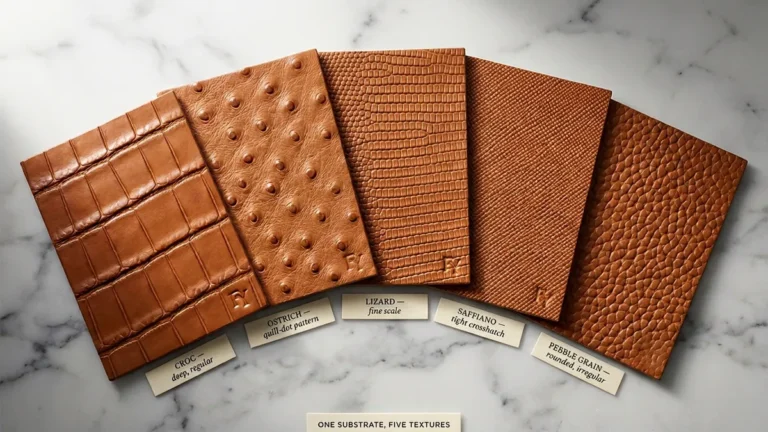
Who this guide is for: brand owners, product developers, and sourcing managers producing the FW26 exotic-finish look at accessible tiers. Croc embossing dominated the fall runways — Gucci’s bamboo-handle styles, Chanel’s soft flaps, Prada’s Galleria and Bonnie, Tory Burch’s investment pieces, Khaite’s elongated clutches — and the finish is the perfect custom-factory brief: it delivers exotic visual drama on standard leather or PU, with no CITES permits, no exotic-skin supply chains, and no reputational exposure. Chanel itself validates the approach — the house has used no genuine exotic skins since 2018, and its FW26 croc pieces are embossed calfskin. But the gap between an embossed bag that reads as luxury and one that reads as budget is wide, and it is decided by three production variables most briefs never specify: emboss depth, glaze quality, and panel matching. This guide covers all three.
Croc embossing owned FW26 the way no single finish has owned a season in years. The runway evidence is broad and specific: Gucci’s debut-season It bags in croc textures, Chanel’s croc-embossed Maxi Flap (including a lilac colorway), Prada’s classics and new icons given an exotic spin — among them a bright green croc-embossed shoulder bag — Tory Burch’s exotic-embossed pieces, and Khaite’s elongated croc clutches. Buyers flagged croc-embossed and glossy textures as a top accessory trend of the season, and the street-style confirmation followed on the arms of the most-photographed women in fashion. The editorial consensus distilled to one phrase: the coolest bags for fall carry a glossy crocodile print.
The strategic logic for accessible-tier brands is even stronger than the trend logic. Genuine crocodile carries CITES permitting, opaque supply chains, extreme material costs, and growing reputational risk — which is why Chanel abandoned genuine exotics in 2018 and why its FW26 croc drama is achieved entirely through embossing. When the most valuable luxury house in the category treats embossed leather as its exotic standard, the finish is not an imitation strategy. It is the category standard, available at every tier.
What separates the tiers is execution. An emboss is a pressing operation, and pressing operations vary enormously in the quality of their output. The same “croc-embossed PU” description covers both the bag that photographs like a runway piece and the bag that reads as budget from across a room. Three variables decide which one a factory produces.
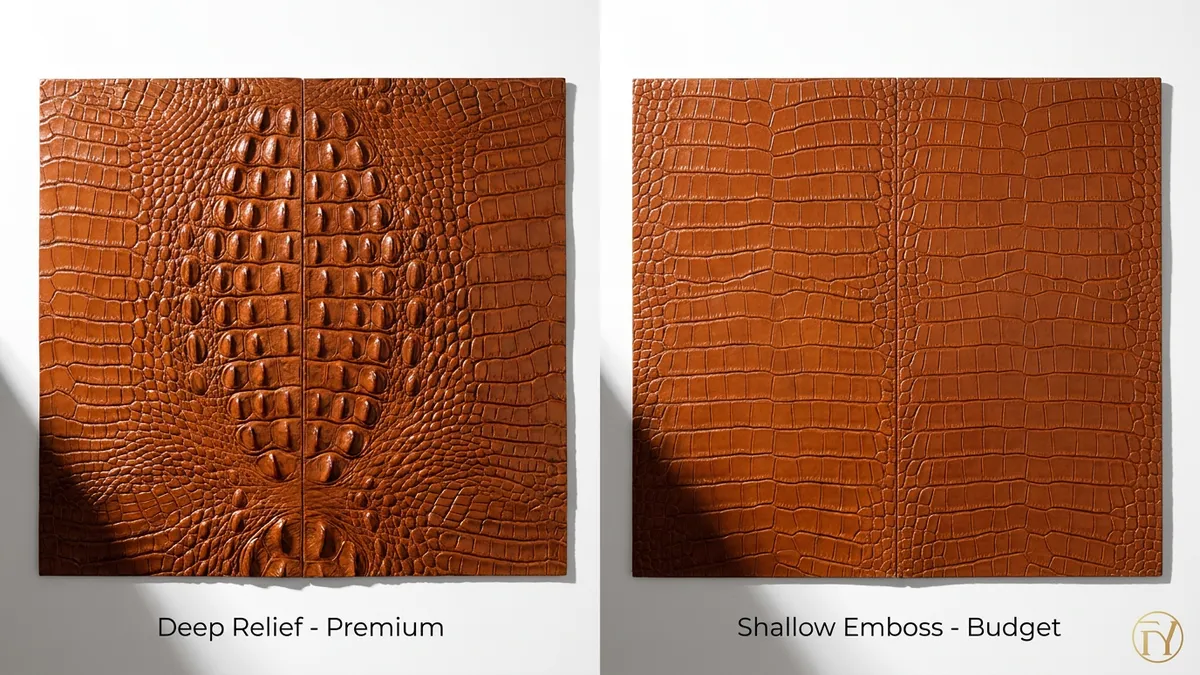
Embossing presses a negative plate into the material under heat and pressure, compressing the surface into the scale pattern. The depth of that relief is the finish’s realism engine — real crocodile scales are dimensional objects with raised centers and deep valleys, and an emboss that fails to reproduce the dimension reads as a printed pattern rather than a textured skin.
| Depth Class | Relief | How It Reads | Durability of the Effect |
|---|---|---|---|
| Shallow emboss (surface texture only) | The scale outlines are pressed faintly into the surface; minimal height difference between scale and valley | A pattern, not a texture — under direct light the surface looks printed; the budget tell | Poor — shallow relief flattens further under handling, heat, and the natural recovery of PU; the pattern visibly fades at grip zones within months |
| Standard emboss | Clear scale definition; visible valleys; the scales read as tiles | Credible at arm’s length; the commercial baseline | Good — adequate relief survives normal wear |
| Deep emboss (the FW26 target) | Pronounced relief; scale centers crown upward; valleys shadow under raking light; the surface is dimensional to the fingertip | The luxury read — light moves across the scales; the finish photographs with depth | Very good — deep relief pressed at correct temperature and dwell is dimensionally stable |
| Element | Specification |
|---|---|
| Depth verification | Approve depth on a physical swatch under raking light, never from photographs — depth is invisible in flat-lit product photos, which is exactly why shallow embosses get approved by accident |
| Process parameters | Depth is produced by plate quality + temperature + pressure + dwell time; the buyer specifies the outcome (matched to the approved swatch), the mill controls the parameters — but a swatch-matched approval standard makes the parameters the mill’s problem, not yours |
| The fingertip test | Run a fingertip across the approved swatch and the production material: the scales must be felt, not just seen; a surface the fingertip reads as smooth is a shallow emboss regardless of how it photographs |
| Recovery check (PU) | For embossed PU: press a thumbnail into a scale valley for 5 seconds; the material must hold the emboss geometry, not dent or flatten — under-cured PU loses its relief under exactly this kind of daily micro-pressure |
The season’s finish is not merely croc — it is glossy croc. The high-shine surface is what delivers the runway drama: Chanel’s FW26 croc pieces run a high-shine finish that adds depth and dimension, and the trend reporting repeats “glossy” as the operative word. The glaze is a separate production stage from the emboss, and its quality is separately visible.
| System | Process | Result | Best For |
|---|---|---|---|
| Roller / plate glazing | The embossed surface is polished under a heated glass or steel roller | A deep, hard, glassy shine integral to the surface — the traditional luxury glaze | Embossed genuine leather; the premium standard |
| Gloss topcoat (spray or roller-applied) | A high-gloss PU lacquer applied over the embossed surface | A bright, uniform shine; controllable gloss level | Embossed PU and mid-tier leather programs; the scalable route |
| Patent-level finish | A thick, mirror-gloss coating built in multiple layers | The maximum-drama wet look | Statement SKUs; note that heavy patent coats reduce the tactile depth of the emboss — the coating partially fills the valleys |
| Semi-gloss / satin | A reduced-sheen topcoat | The quieter alternative — the “matte croc” register | The quiet-luxury variant; correct for brands whose positioning resists shine, but understand it steps outside the season’s glossy center |
| Check | Standard |
|---|---|
| Gloss uniformity | Gloss level consistent across every panel and every unit — patchy gloss (shinier on one panel than its neighbor) is the most visible glaze defect and is checkable in ten seconds under a ceiling light |
| Valley coverage | The glaze must reach into the scale valleys without pooling; pooled lacquer in valleys reads as a white or cloudy line under angled light |
| Flex integrity | Glazed embossed material must pass flex testing without the gloss coat cracking along scale valleys — the valleys are pre-stressed fold lines, and a brittle topcoat cracks there first; specify the standard flex-cycle test on the finished glazed material, not on the base material |
| Scratch behavior | High-gloss surfaces show scratches more than matte ones; specify a scratch-resistant topcoat formulation and test with a controlled fingernail-pressure scratch on the swatch |
Emboss depth and glaze are material properties, decided at the mill. Panel matching is a cutting-room discipline, decided at the factory — and it is the variable that most reliably separates the premium-feel bag from the budget-feel one, because the eye reads pattern discontinuity before it consciously registers anything else about the bag.
| Rule | Specification | The Failure It Prevents |
|---|---|---|
| Scale direction consistency | Croc scale patterns have a direction (scales grow from a spine line outward and from front to back); every panel on the bag is cut with the direction running the same way — downward or spine-centered per the design | Adjacent panels with opposing scale direction read as an error the way upside-down stripes would — the most common matching failure on budget embossed bags |
| Mirror-pairing | Left and right gussets, and left/right halves of a front panel where the pattern is spine-symmetric, cut as mirror pairs from mirrored plate zones | Asymmetric scale layouts on a symmetric silhouette |
| Focal-point placement | The largest, most dramatic scales (the “belly” zone of the plate pattern) placed at the bag’s visual center — front panel center, flap center; edge zones (small, dense scales) placed at gussets and base | A front panel of small edge-pattern scales wastes the emboss’s drama; luxury houses place the belly square on the face |
| Repeat concealment | Embossing plates repeat; the repeat interval must exceed the largest panel dimension, or panels must be cut so no repeat appears twice within one visible panel | A visible pattern repeat — the same distinctive scale cluster appearing twice on one face — is the single fastest “fake” tell; the eye finds repetition with unsettling speed |
| Seam-line awareness | Where two embossed panels meet on a visible seam, the scale rows should approach the seam at consistent scale size — a large-scale panel seamed to a small-scale panel creates a jarring size break | The size-break seam, visible in every product photo taken at three-quarter angle |
Pattern matching consumes material: directional cutting, mirror-pairing, focal-point placement, and repeat concealment all constrain how panels nest on the material, reducing cutting yield by 8–15% against unmatched cutting. This is the honest cost of the premium read — and it is the cheapest luxury signal in the entire build, because it requires no better material, no extra process stage, and no added labor beyond cutting discipline. The brands that skip it save single-digit material percentages and lose the entire finish.
Specification language: “All croc-embossed panels cut directionally per the marked pattern direction. Gussets and symmetric panel pairs mirror-matched. Belly-zone pattern placed at front panel and flap centers. No visible pattern repeat within any single panel. Scale-size continuity across visible seams.”
| Property | Croc-Embossed Genuine Leather | Croc-Embossed PU |
|---|---|---|
| The emboss | Pressed into the corrected grain; takes deep relief beautifully; the Chanel/Prada route | Pressed or release-paper-formed; modern deep-emboss PU holds excellent relief |
| The glaze | Roller-glazed to the integral glassy shine | Gloss topcoat; uniform and controllable |
| Hand-feel | Leather weight and temperature; the premium tell in hand | Lighter; the best embossed PU is convincing to the eye and identifiable to the informed hand |
| Aging | The glaze burnishes; the emboss is permanent in leather | Topcoat wear at grip zones over years; relief stable if properly cured |
| Tier fit | Premium and above | Accessible through mid-premium — and the volume engine of the trend |
| Compliance | Standard leather compliance only — no CITES, no exotic documentation | None beyond standard REACH/prop-65 material compliance |
The two-tier program: run embossed leather on the hero SKU and embossed PU across the volume line, in the same plate pattern and glaze level — the finish reads consistently across the range while the price ladder does its work.
The season’s croc arrived in color, not just neutrals — Chanel showed lilac, Prada showed bright green — and the styling consensus holds that croc functions as a neutral against fall’s key hues.
| Colorway | Role |
|---|---|
| Black, gloss | The volume anchor — the classic exotic read |
| Espresso / chocolate | The FW26 brown wave in croc; the second core |
| Burgundy / oxblood | The season’s strongest accent — croc’s depth suits dark red better than any finish |
| Forest green | The Prada-signal fashion color; one SKU |
| Lilac / powder tones | The Chanel-signal surprise; the content-driving colorway for brands with a fashion audience |
Hardware: gold against gloss croc is the classic luxury pairing; gunmetal or silver shifts the read modern. One finish across the program, per standard discipline.
The embossed program’s compliance story is a marketing asset, not a disclaimer to bury:
| Claim | Status |
|---|---|
| “Croc-embossed leather / PU — no exotic skins” | Accurate and increasingly expected; the honest material name is the modern luxury posture (the Chanel precedent makes this positioning prestigious rather than apologetic) |
| “Crocodile bag” without qualification | Avoid — implying genuine exotic invites both consumer complaints and, in several markets, labeling violations; the material composition on the care card and listing must say “embossed” |
| CITES documentation | None required — embossed cowhide and PU carry no exotic-species obligations; no permits, no port inspection risk, no supply-chain opacity |
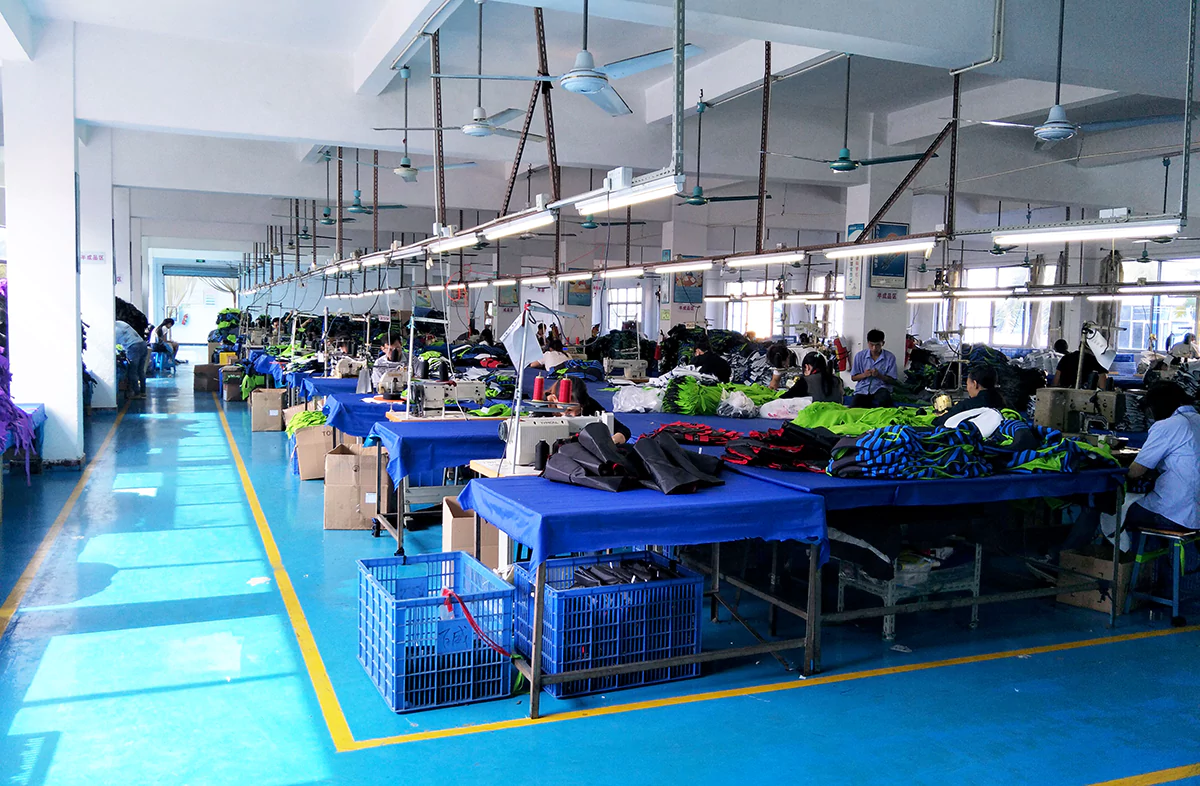
FYBagCustom is Your Trusted Custom Bag Manufacturer in China, with 15+ years of manufacturing experience and the mill relationships and cutting-room discipline the embossed-exotic finish demands. For brands producing FW26 croc programs, our capabilities include:
Contact our development team to brief your croc program — the material tier, the glaze level, and the matching specification.
Croc embossing gives any brand the season’s dominant finish on standard materials — which means the finish itself is no longer the differentiator. The execution is. For B2B buyers producing FW26 exotic-finish programs, three core takeaways:
If you are producing the FW26 croc look and need a factory that specifies depth, controls the glaze, and cuts to match, contact FYBagCustom to brief your program — and receive match-disciplined samples in 7–10 days.
FYBagCustom sources deep-emboss croc materials, controls the gloss to FW26’s glossy standard, and cuts every panel to matching discipline — with zero CITES burden at any tier. Match-disciplined samples in 7–10 days.
Start Your Custom Bag Project →