Tel/WhatsAapp:+86 18011919834
E-mail: chloe.x@fybagcustom.com

Tel/WhatsAapp:+86 18011919834
E-mail: chloe.x@fybagcustom.com
Send Your Inquiry Today

Who this guide is for: brand owners, product developers, and sourcing managers expanding clutch programs beyond eveningwear — into the daily-carry clutch that FW26 has made official. The runway consensus is unambiguous: clutches are no longer occasionwear. They appeared across Michael Kors, Chanel, Coach, Hermès, Celine, Bottega Veneta, and Khaite as daytime bags — larger, frame-closed, carried in the crook of the arm with denim as readily as with a gown. This is a fundamentally different production brief from the evening clutch. An evening clutch is engineered for five outings a year: two hours of careful handling, a phone and a lipstick, a coat-check shelf. An everyday clutch is engineered for 300 days a year: hand oils, sidewalk grit, under-arm compression, a full wallet and keys, and the constant grip that destroys delicate construction in a month. This guide covers the everyday-clutch production specification — sizing, structure, closures, grip-zone durability, and the hidden functionality that makes a handle-less bag survivable as a daily driver.
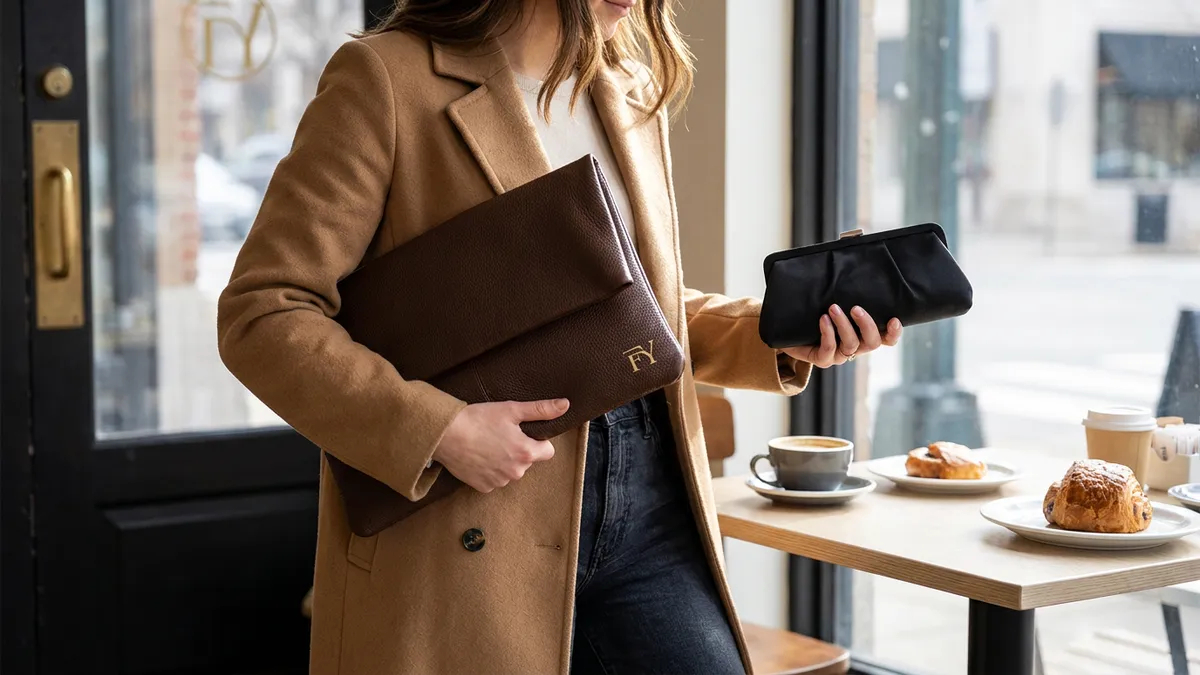
The clutch graduated in FW26. What was once a narrow category built for weddings, red carpets, and black-tie events appeared across all four fashion capitals as a daily-lifestyle bag — as much a part of the everyday rotation, in the words of one runway roundup, as any tote. The evidence was specific: Coach’s east-west frame clutches sold out immediately in the brand’s see-now-buy-now release. Celine sent upsized clutches down the runway carried in the crook of the arm. Proenza Schouler styled an elongated clutch with a skirt suit, not a gown. Michael Kors ran frame clutches through the entire FW26 collection — day looks included — while Hermès tucked a watch under a clasp and Chanel crumpled metallics into sculptural handhelds. The design signals repeat across houses: larger shapes, frame and kisslock closures, day-to-night styling.
For manufacturers and the brands that brief them, this graduation changes everything below the surface. The evening clutch’s construction assumptions — minimal use, careful handling, near-empty carry — no longer hold. A clutch carried daily is one of the hardest-working bags in the market precisely because it has no handles: every minute of carry is direct hand or under-arm contact, and every force the bag encounters passes through its body panels rather than through straps engineered to absorb load. The everyday clutch must be specified like a daily bag that happens to be handle-less — not like an evening bag that got bigger.
| Dimension | Evening Clutch | Everyday Clutch (FW26) |
|---|---|---|
| Annual use | 3–10 outings | 200–300 days |
| Carry duration | 2–4 hours, mostly set down | 6–10 hours, mostly in hand or under arm |
| Contents | Phone, card case, lipstick — under 500 g | Full wallet, phone, keys, sunglasses case, compact — 1–1.5 kg |
| Handling | Careful — the owner protects the bag | Careless — the bag is gripped, squeezed, set on café counters, wedged under arms |
| Material exposure | Climate-controlled interiors | Weather, hand oils, denim friction, sidewalk grit |
| Failure horizon | Must survive the season | Must survive 2+ years of daily contact |
| Size | 20–26 cm wide | 28–40 cm wide |
| The design register | Embellishment, delicate materials, sculptural closures | Robust materials, durable closures, quiet construction |
The rest of this guide specifies the right-hand column.
The FW26 direction is explicitly larger. The everyday clutch must hold a real daily kit — which sets a dimensional floor — while staying grippable one-handed, which sets a ceiling.
| Format | Dimensions | Carries | Role |
|---|---|---|---|
| Day clutch (standard) | 28–32 × 16–20 cm | Full-size wallet, phone, keys, lipstick | The commercial core — the smallest viable daily format |
| Oversized clutch (the FW26 hero) | 34–40 × 20–26 cm | The full kit plus sunglasses case, small pouch, slim notebook | The runway statement — the crook-of-arm carry; portfolio proportions |
| East-West frame clutch | 30–36 × 14–17 cm | The full kit in a slimmer horizontal profile | The Coach-signal silhouette — the frame closure is the design feature |
| Foldover clutch | 30–34 × 18–22 cm folded | The full kit; the fold adds security and a second design line | The soft, casual register — pairs with the FW26 lived-in direction |
The grip test that sets the ceiling: a woman with average hand span must be able to grip the clutch’s top edge one-handed with the bag loaded to 1.5 kg. In practice this caps body thickness at 6–9 cm at the grip zone — a clutch that is too thick to grip gets carried under the arm exclusively, which is acceptable for the oversized format but a failure for the standard day clutch.
The frame clutch — a metal frame sewn or crimped into the top opening, closed by a kisslock (twist-ball) clasp — is the season’s defining closure, confirmed across Coach, Michael Kors, and the broader runway consensus.
| Element | Specification | Why |
|---|---|---|
| Frame | Steel or zinc-alloy channel frame, sized to the opening; plated to match the program’s hardware finish | The frame IS the structure — the body hangs from it; frame quality determines the entire bag’s rigidity and closure feel |
| Frame attachment | Body panels crimped or sewn-and-glued into the frame channel; the attachment must survive daily opening leverage | The #1 frame-clutch failure is the body pulling out of the channel at the corners — specify glue-plus-crimp, never glue alone |
| Kisslock | Ball clasp with a positive, audible close; sized for one-thumb operation | The kisslock is operated 10–30 times a day on an everyday bag; a stiff or mushy clasp becomes a daily irritation |
| Cycle test | 500 open/close cycles on the PP sample — the daily-use multiple of the evening standard (evening clutches are tested to 50) | 300 days × 15 operations = 4,500 cycles per year; 500 test cycles is the minimum proxy |
| Body | Woven fusible 100–120 g/m² + 1–1.5 mm foam; the frame carries the top, the interlining carries the walls | A frame on a limp body produces the “deflated” look; the FW26 frame clutch is plump and structured |
| Element | Specification |
|---|---|
| Body | Full-panel woven fusible (80–100 g/m²) + 1–2 mm foam on both faces — the “padded portfolio” hand-feel |
| Foldover engineering | The fold line is a designed crease: skived or scored at the fold, with the interlining split (not folded) at the line so the flap folds cleanly and recovers flat; an interlining folded through the crease bubbles within weeks |
| Closure under the fold | Magnetic snap (18 mm, positive click) or a full-width zip beneath the flap — daily carry demands secured contents; an open-top foldover spills at the first café counter |
| Edge discipline | All exposed edges 3–4 coat beveled painted; the clutch’s perimeter is entirely exposed edge — there is no strap or hardware to distract from it |
| Element | Specification |
|---|---|
| Closure | Full-width top zip, #5 metal or coil, with a substantial leather pull — the pull is the bag’s only “hardware jewelry” |
| Wrap construction | A single wrapped body panel with side gussets or box corners; the cleanest minimalist read |
| Structure | The stiffest of the three systems: fusible + foam + optional thin panel stabilizer — the portfolio must stay flat and planar |
The everyday clutch’s defining stress is continuous hand contact — a stress the evening clutch never faces at scale. Hand oils degrade coatings, friction burnishes and darkens grip areas unevenly, and fingernails scratch soft finishes. The grip zone — the top third of the bag’s faces and the full top edge — needs its own material logic.
| Risk | Mechanism | Specification Response |
|---|---|---|
| Oil darkening | Skin oils absorb into uncoated and lightly coated leathers, darkening the grip zone against the body within months | Pigmented (coated) leather or premium PU for the everyday clutch body; reserve aniline and naked leathers for the evening line — or embrace the darkening deliberately with pull-up leathers, where the grip patina is the design |
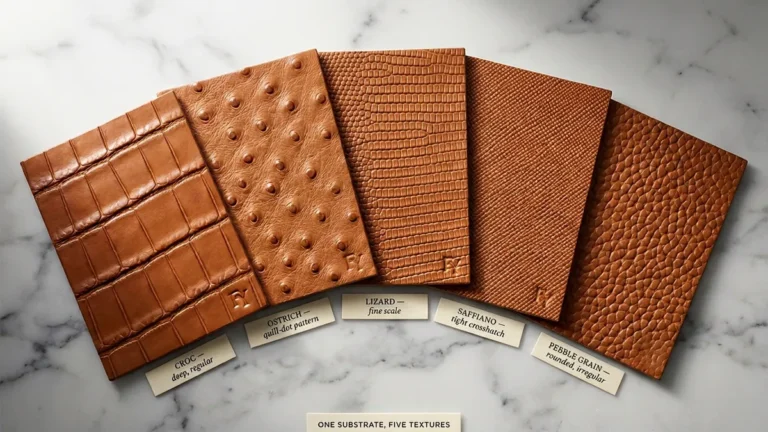
| Friction sheen | Constant hand and under-arm rubbing polishes matte surfaces to an uneven shine at contact points | Fine-pebbled and textured grains hide friction sheen far better than smooth matte surfaces; saffiano-type cross-hatch is the most friction-resistant finish in the category |
| Edge wear at the grip | The top edge is gripped directly — the one edge on any bag that takes daily direct abrasion | Upgrade the top edge specifically: 4–5 coat painted with a flexible topcoat, or a folded-edge top band on premium builds; specify the flex-cycle test (10,000 cycles) on the top edge, the standard normally reserved for handles |
| Corner scuffing | The clutch is set down on its base corners dozens of times daily | Corner reinforcement inside (per standard practice) plus a material note: the four base corners are where color loss appears first — pigmented finishes recover with edge paint touch-up; delicate finishes do not |
| Under-arm compression | The crook-of-arm and under-arm carry squeezes the bag flat repeatedly | The foam-plus-fusible composite must recover — specify recovery testing: compress the bag flat under 5 kg for 60 seconds, release; the body must return to profile within 5 minutes with no visible crease |
The everyday clutch’s biggest commercial risk is buyer’s remorse at week three: “I love it but I need my hands.” The FW26 programs that convert this trend into a retained daily bag build in the escape hatches:
| Feature | Specification | Function |
|---|---|---|
| Detachable wrist strap | A 20–25 cm leather loop on a swivel clip, matching D-ring concealed at one top corner | The one-hand security option — the clutch hangs from the wrist while she pays, texts, holds a coffee |
| Concealed crossbody option | Two low-profile D-rings recessed at the top corners (flat rings, tonal finish, visually silent) + an optional detachable strap sold with or alongside | Converts the clutch to a crossbody for the commute; the FW26 everyday clutch that includes this quietly outsells the purist version because it removes the adoption barrier |
| Back slip pocket | Full-width, flat, on the back face | The phone lives here — reachable without opening the frame or fold; the single highest-utility feature on a daily clutch |
| Interior organization | One zip pocket + card slots sewn to the lining wall + a key clip | The daily kit needs stations; a single cavity turns the everyday clutch into a rummage bag |
| Interior light color rule | Lining in a light or bright tonal (bone, blush, signature color) | A dark cavity with no top light (the frame or fold shades the interior) makes contents invisible; the light lining is a functional spec disguised as a design one |
| Material | Fit | Note |
|---|---|---|
| Pebbled pigmented leather / premium PU (1.0–1.2 mm) | The everyday core | Friction-resistant grain, oil-resistant coating, edge-paintable |
| Saffiano PU | The durability champion | The most grip-resistant surface in the category; the corporate-day register |
| Pull-up / crazy-horse | The lived-in register | The grip patina becomes the design — pairs with the FW26 undone direction |
| Suede | The fashion accent | One SKU, positioned honestly: suede on a daily-grip bag shows wear fast; sell it as the seasonal statement, not the daily driver |
| Croc-embossed leather/PU | The FW26 texture signal | Embossing hides grip wear well; aligns with the season’s texture story |
| Satin, embellished, mirror metallics | Evening line only | Daily contact destroys them in weeks — keep the two programs’ material lists separate |
Colorways: espresso and black carry the volume; burgundy/wine is the FW26 accent with the strongest runway support; one light neutral (bone/taupe) for the day register — specified in pigmented finishes only, given the grip-oil exposure.
Clutch search and purchase interest peaks in September — the FW wardrobe reset — with a second peak in November–December for the holiday/evening overlap. The everyday clutch program targets the September window:
| Milestone | Timing |
|---|---|
| Brief + pattern development | March–April |
| Sampling (including the 500-cycle closure test and compression-recovery test) | April–May |
| Bulk production | June–July |
| Ocean freight | July–August |
| In warehouse / in store | Late August — ahead of the September search peak |
| Holiday evening capsule (the second program) | Produced in the same window, released October–November |
The two-program structure — everyday clutch for September, evening capsule for November — runs on shared patterns where possible (the East-West frame body works in both registers with material and hardware swaps), which halves the tooling investment across the clutch category.
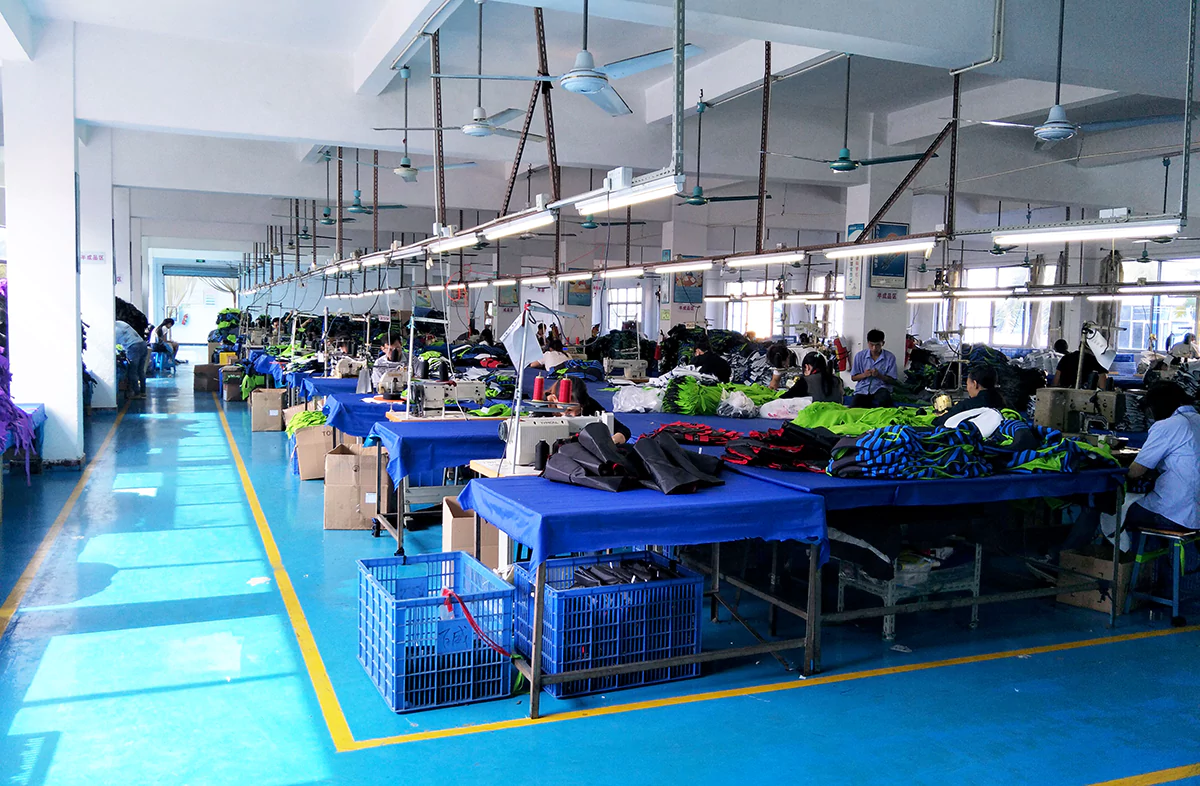
FYBagCustom is Your Trusted Custom Bag Manufacturer in China, with 15+ years of manufacturing experience across evening and daily bag programs — and the frame-setting, edge-durability, and structural-recovery capabilities the everyday clutch demands. For brands building FW26 clutch programs, our capabilities include:
Contact our development team to brief your everyday clutch program — the frame hero, the foldover, the portfolio, or the full FW26 capsule.
The FW26 clutch is a daily driver, and daily drivers are specified for abuse. For B2B buyers expanding clutch programs beyond eveningwear, three core takeaways:
If you are building an FW26 clutch program timed to the September peak and need a factory that engineers for the 300-day year, contact FYBagCustom to brief your line — and receive cycle-tested, recovery-tested samples in 7–10 days.
FYBagCustom engineers the FW26 everyday clutch — cycle-tested kisslocks, grip-zone durability, compression recovery, and concealed carry options — timed to hit the September peak. Tested samples in 7–10 days.
Start Your Custom Bag Project →