Tel/WhatsAapp:+86 18011919834
E-mail: chloe.x@fybagcustom.com

Tel/WhatsAapp:+86 18011919834
E-mail: chloe.x@fybagcustom.com
Send Your Inquiry Today

Who this guide is for: brand owners, product developers, and sourcing managers chasing the biggest FW26 bag story — the deliberately undone, halfway-unzipped, “lived-in” slouchy bag that looks like it has already had a full life. This aesthetic is deceptively hard to manufacture. A bag that slouches by design and a bag that collapses from cheap construction can look identical in a product photo and feel entirely different in the hand — and the consumer can tell within five seconds which one she is holding. This guide covers the two engineering problems the trend creates: controlled softness (how to build a bag that drapes without disintegrating) and pre-distressing (the material treatments — tumbling, washing, waxing, hand-antiquing — that produce the “beat-up luxury” surface at the factory rather than after two years of use).
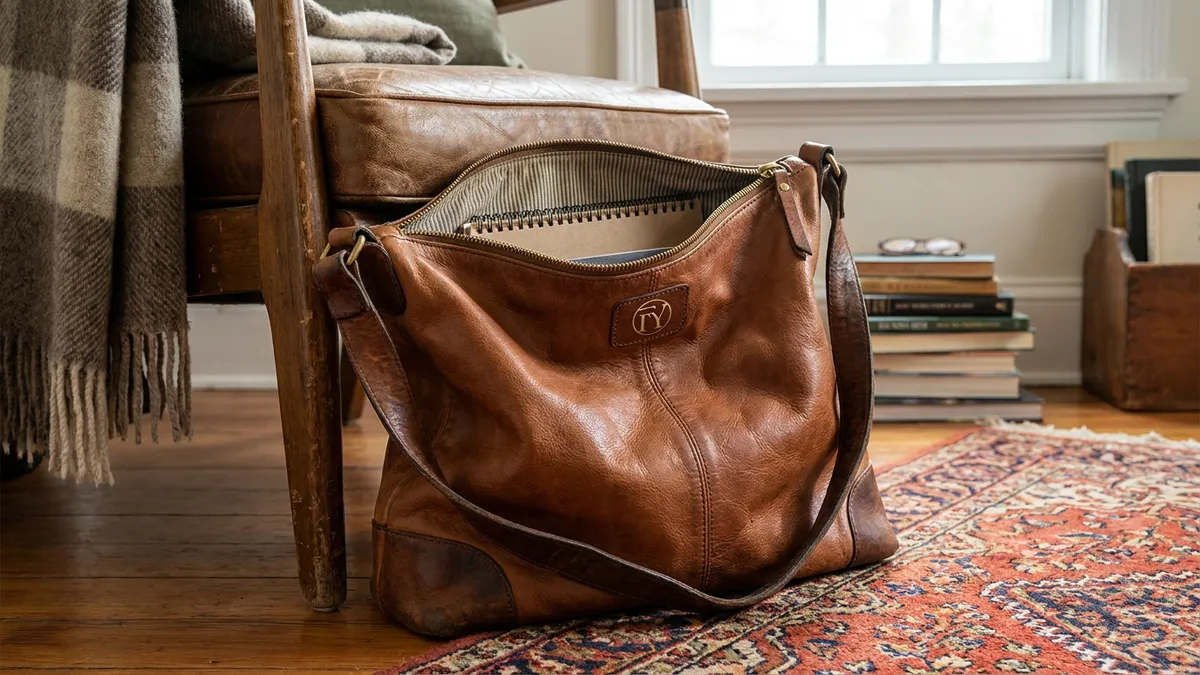
The single biggest story in bags for fall 2026, per the runway consensus, is the art of not trying too hard. Models carried bags halfway unzipped, casually open, and deliberately slouchy — Balenciaga’s reinterpreted work bag anchored the mood — as if rigid structure itself had gone out of style. The aesthetic has a name in merchandising rooms: beat-up luxury. The bag should look inherited, softened, already broken in. It should look like the owner has better things to think about than her handbag.
Producing that look is harder than producing a crisp structured tote, for a reason that sounds like a paradox until you have stood on a factory floor: effortlessness is an engineering outcome. A bag that slouches beautifully — collapsing into soft, photogenic folds, holding a relaxed volume, recovering when picked up — is a bag whose material weight, interlining, seam placement, and hardware load have all been calculated to produce exactly that behavior. A bag that merely lacks structure does something different: it sags into a shapeless lump, its seams pucker under the material’s dead weight, its opening gapes like a feed sack, and its “slouch” reads as failure.
The consumer’s hands know the difference immediately. This guide covers how to land on the right side of it.
| Property | The Engineered Slouch (FW26 target) | The Structural Collapse (the failure) |
|---|---|---|
| How it sits when set down | Settles into 2–3 soft, rounded folds — the same folds every time, because the fold lines are designed | Crumples randomly; a different shapeless heap each time |
| The opening | Relaxes into a soft oval; the halfway-open look is inviting | Gapes to the sides; the opening looks broken, not casual |
| Picked up and loaded | The body drapes around the contents and recovers its lines | Contents pool at the bottom; the material stretches into a permanent bulge |
| Hand-feel | Soft but substantial — the material has weight and body even though it lacks rigid structure | Thin and lifeless — two limp layers with nothing between them |
| After six months | Softens further along its designed lines; the patina deepens; the bag improves | Stretches, bags out, and loses whatever shape it had; the bag deteriorates |
The difference is built in three places: the material, the internal support system, and the seam architecture.
In a structured bag, interfacing and stiffeners hold the shape. In a slouchy bag, those layers are removed — which means the material itself must carry the bag’s body. The single most common production error in this category is specifying a soft silhouette with a lightweight material: the result is the lifeless collapse, because nothing in the build has any substance.
| Material Choice | Weight/Thickness | Slouch Behavior | Verdict |
|---|---|---|---|
| Full-grain or top-grain leather, milled/tumbled | 1.2–1.6 mm | Heavy, supple, drapes in thick rounded folds; the weight IS the structure | The category standard — thicker than structured-bag leather (which runs 0.9–1.1 mm), because the material replaces the interlining |
| Washed leather | 1.1–1.4 mm | Pre-softened by the washing process; drapes readily with a relaxed, crinkled surface | The FW26 hero — the wash produces both the slouch and the lived-in surface in one process |
| Crazy-horse (pull-up) leather / equivalent PU | 1.2–1.6 mm | Waxy, substantial, drapes with heavy folds; the surface changes tone where it flexes | The distressed-look workhorse — every fold and scuff becomes part of the design |
| Garment-grade soft PU | 0.9–1.2 mm (heavier than standard soft PU) | Acceptable drape at the top of the weight range; needs a knit backing with real substance | The accessible-tier route — specify the heaviest soft PU available, and reject anything under 0.9 mm |
| Lambskin / light garment leather | 0.6–0.9 mm | Beautiful drape but no self-support; bags out under load | Only with a bonded stabilizer layer — on its own, it produces the feed-sack failure |
| Standard structured-bag PU | 0.8–1.0 mm, stiff | Does not drape — it buckles in angular creases | Wrong material for the category; stiff PU cannot slouch, it can only crease |
The specification principle: in this category, the material budget moves up while the interlining budget moves down. A slouchy bag in 1.4 mm milled leather with no foam and minimal interlining can carry a similar material cost to a structured bag in 1.0 mm leather with a full interlining composite — the money relocates from the hidden layers into the surface the consumer touches.
“Unstructured” does not mean “nothing inside.” The engineered slouch uses a skeleton so light it is undetectable — but it is there, doing three jobs.
| Support Element | Specification | What It Prevents |
|---|---|---|
| Stretch-control interlining | The lightest woven fusible available (30–50 g/m²), bonded to the panel backs — chosen for dimensional stability, not stiffness | Permanent stretch. Soft leather under daily load elongates; the light woven layer lets the panel drape while stopping it from growing. Without it, the bag is 2 cm longer at month six |
| Designed fold lines | The pattern places seams and darts where the bag should fold — typically two vertical soft-fold zones on the front panel — so the collapse happens at the same lines every time | Random crumpling. The consistent, photogenic slouch in every product photo of a well-made hobo is a patterned behavior, not luck |
| Micro base support | A flexible insert (0.5–0.8 mm PP sheet) in a lining pocket at the base — bendable by hand, invisible in use | Content pooling. The insert spreads the load of keys, wallet, and bottle across the base instead of letting them stretch a single point into a permanent bulge |
| Opening stabilizer | A soft cotton or grosgrain tape sewn into the top-edge seam (not a stiffener — a stretch stop) | The gaping mouth. The tape keeps the opening’s length fixed so the “relaxed oval” never becomes a stretched-out sack mouth |
| Reinforced anchors, unchanged | The standard webbing patches and bartacks at every strap anchor — soft construction changes nothing here | Anchor tear-out. A slouchy bag concentrates load at its anchors more than a structured one, because the soft body transfers every force straight to the attachment points |
The FW26 surface is not new-looking. It is softened, tonally varied, gently worn — the look leather earns over years, produced at the factory in days. Five techniques deliver it, alone or in combination.
| Technique | Process | Surface Result | Consistency Across a Production Run |
|---|---|---|---|
| Milling / tumbling | Finished hides (or cut panels, or in aggressive versions the assembled bag) are tumbled in a rotating drum for 2–12 hours; the mechanical action breaks the leather’s temper, raises a soft pebbled grain, and softens the hand | Soft, supple, naturally wrinkled grain; the foundational “lived-in” process | High — tumbling parameters (time, drum speed, humidity) are controllable and repeatable |
| Garment washing | Cut panels or assembled bags are washed in industrial machines (water, controlled detergents, sometimes enzymes), then re-conditioned with oils | The washed look: relaxed surface, softened color with tonal high-low variation, gentle allover crinkle | Moderate — washing introduces intentional variation; every bag is slightly different, which IS the aesthetic; specify the acceptable variation range on a keep/reject board |
| Wax and oil treatments (pull-up) | Hot waxes and oils are driven into the leather at the tannery; the finished surface lightens wherever it is flexed, scratched, or pulled | The crazy-horse effect: every touch leaves a mark, every mark blends into the patina; the bag records its own history | High at the material level — but the surface then varies with handling; the variation is the product |
| Hand-antiquing / burnishing | Operators hand-apply darker finish to edges, seams, and high points, then buff — shading the bag the way age would | Darkened edges and burnished contact points against a lighter body; the “inherited” look | Lower — hand work varies by operator; control it with a golden sample and per-zone shading references, and accept a defined variation band |
| Controlled abrasion | Targeted mechanical scuffing (buffing wheels, hand pads) at the natural wear points — corners, base edges, flap edge | Deliberate wear marks exactly where real use would put them | Moderate — requires a wear-point map in the tech pack showing where, how large, and how deep each abrasion zone runs |
| Recipe | Process Stack | The Result | Tier |
|---|---|---|---|
| The Washed Slouch | Milled leather → assembled → garment-washed → re-oiled | The FW26 hero finish: soft, crinkled, tonally alive; the halfway-unzipped bag from the runway | Premium |
| The Crazy-Horse Classic | Pull-up leather (or crazy-horse PU) → assembled → light hand-burnish at edges | The distressed workhorse: waxy, marked-by-life surface at strong value; the PU version brings the look to the accessible tier | Mid-market to premium |
| The Heirloom | Milled full-grain → assembled → hand-antiqued seams and edges → controlled abrasion at the wear-point map → conditioning | The inherited bag: shaded, burnished, softly worn at exactly the right points; the most labor-intensive recipe | Premium to luxury |
Distressed finishes break the standard QC logic. On a structured saffiano tote, unit-to-unit variation is a defect. On a washed slouchy hobo, unit-to-unit variation is the point — but only within a band. The tool that manages this is the keep/reject board:
| Element | Specification |
|---|---|
| The board | A physical reference set of 5–7 production units spanning the acceptable variation range — the lightest acceptable wash, the darkest, the most crinkled, the least — approved by the buyer at PP stage |
| The rule | Every production unit must fall inside the board’s range; units lighter than the lightest reference or more distressed than the heaviest reference fail |
| The consumer-facing note | The product page states the variation as a feature: “Each bag is individually washed and finished; tonal variation is a characteristic of the process, and no two bags are identical.” This sentence converts the variation from a complaint risk into a craft story — and it must be true, which the keep/reject board ensures |
| Element | Rule | Why |
|---|---|---|
| Hardware | Distress the leather, never the hardware — plating that arrives scratched reads as defective, not vintage; if aged hardware is wanted, specify antique-finish plating (a deliberate finish) rather than abraded bright plating | Consumers read worn leather as character and worn metal as damage |
| Stitching | Thread stays intact and uniform; abrasion zones stop 5 mm short of every stitch line | A scuffed seam looks like a failing seam |
| Edges (structural) | Edge paint on straps and handles stays whole; burnishing may shade it, abrasion may not break it | A broken edge coat will peel from the distressed spot outward |
| Zipper tapes and linings | Interior components stay new | “Lived-in” is an exterior story; a worn interior reads as a used bag, not a designed one |
The runway styling — bags carried open, half-zipped, casually gaping — is a merchandising cue with two production implications:
| Implication | Specification |
|---|---|
| The interior is on display | The lining will be photographed and seen in-store. Specify a lining worth seeing: cotton drill or heavy twill in a warm tonal or a considered contrast; clean welted zip pocket; a leather-backed interior label. The half-open bag turns the lining from hidden component into visible surface |
| The zip must hold a half-open position | A zipper that slides closed (or open) on its own under the bag’s movement defeats the styling. Specify a slider with adequate self-locking (a standard auto-lock slider holds position); test: set the zip at half, load the bag with 2 kg, walk 5 minutes — the slider must not travel more than 1 cm |
| Silhouette | Slouch Character | Notes |
|---|---|---|
| Soft hobo | The category anchor — the crescent body is the natural slouch shape | Construction fundamentals per our hobo deep-dive; this program adds the distressed-surface recipes on top |
| Slouchy shoulder bag | The FW26 work-bag reinterpretation — a briefcase footprint gone soft | The Balenciaga-adjacent read; the halfway-unzipped hero |
| Soft tote | An unlined or half-lined carryall in heavy milled leather | The most functional entry; the micro base insert matters most here |
| Drawstring slouch | A bucket body without the bucket’s structure | The drawstring gather complements the crinkled surface |
| Stage | Note | Added Time vs. Standard |
|---|---|---|
| Material development | Tumbled/washed/pull-up leathers are tannery processes — the material arrives pre-softened; confirm the finish on a full hide, not a swatch (distressed finishes read differently at scale) | +1–2 weeks for material confirmation |
| Sampling | The PP sample must be made from the actual distressed material and, for washed programs, must go through the actual wash — a sample in undistressed leather approves nothing | Standard 7–10 days once material is confirmed |
| Bulk | Wash and hand-finish stages add process time after assembly | +1–2 weeks for washed and heirloom recipes |
| QC | Keep/reject board inspection replaces single-golden-sample color matching; all structural QC (anchors, zips, seams) unchanged | Standard |
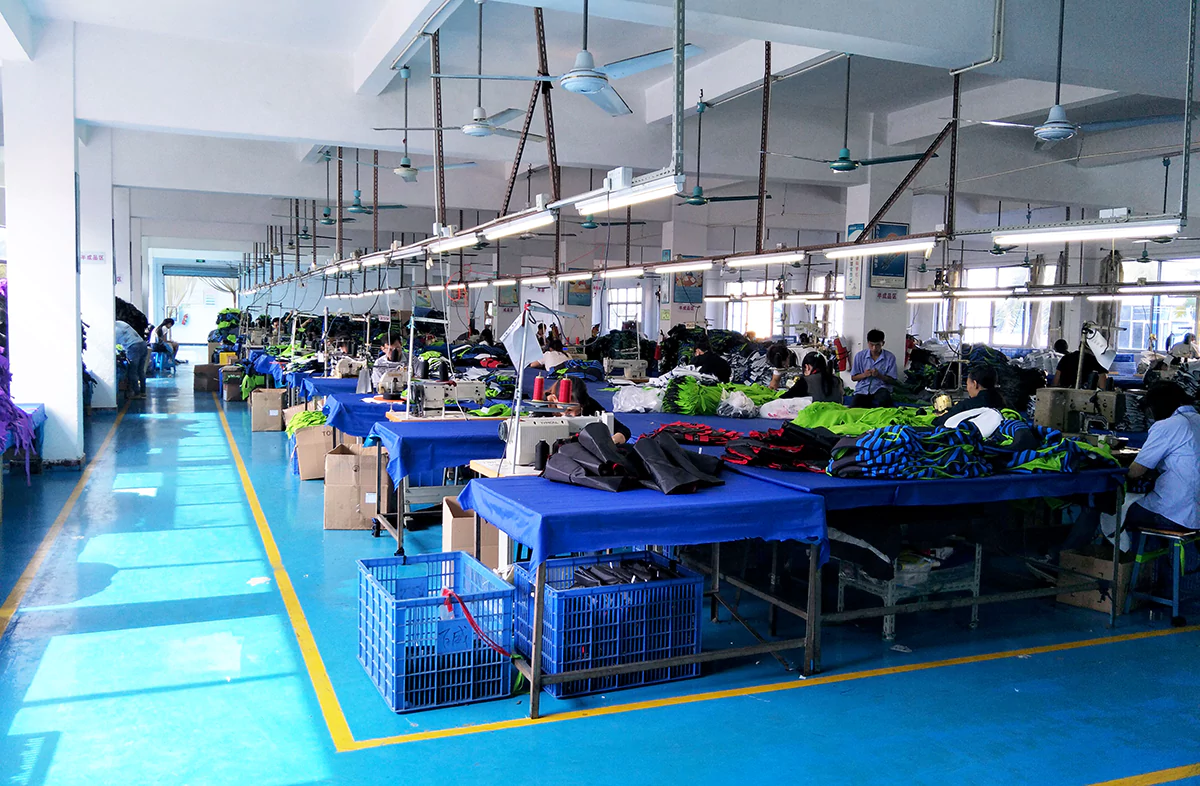
FYBagCustom is Your Trusted Custom Bag Manufacturer in China, with 15+ years of manufacturing experience across both structured precision and the engineered softness this category demands. For brands building FW26 lived-in programs, our capabilities include:
Contact our development team to brief your lived-in program — the material, the recipe, and the variation band.
The FW26 lived-in bag succeeds when the consumer believes no one tried — and that belief is manufactured through material weight, hidden stretch control, designed fold lines, and finish recipes executed within a specified variation band. For B2B buyers building slouchy distressed programs, three core takeaways:
If you are chasing the FW26 undone aesthetic and need a factory that engineers softness rather than merely omitting structure, contact FYBagCustom to brief your program — and receive a sample in the actual distressed material in 7–12 days.
FYBagCustom engineers the FW26 lived-in look — milled and washed leathers, hand-antiqued finishes, designed fold lines, and keep/reject variation control — so the slouch is a design outcome, not a construction failure. Distressed-material samples in 7–12 days.
Start Your Custom Bag Project →