Tel/WhatsAapp:+86 18011919834
E-mail: chloe.x@fybagcustom.com

Tel/WhatsAapp:+86 18011919834
E-mail: chloe.x@fybagcustom.com
Send Your Inquiry Today

Who this guide is for: brand owners, product developers, and sourcing managers racing to add the bowling bag — the confirmed FW26 hero silhouette — to fall assortments. The bowler looks simple: a rounded trapezoidal body, two arched handles, a top zip. It is not simple. The curved panels defeat standard tote patterns, the trapezoidal body collapses without engineered structure, the top-zip curve is one of pattern-making’s harder problems, and the double top-handles concentrate the full load into four small anchor zones. This guide walks through each construction challenge with the specifications a factory needs to produce the silhouette correctly — because a badly built bowler does not read as “this season’s It bag.” It reads as a lunch cooler.
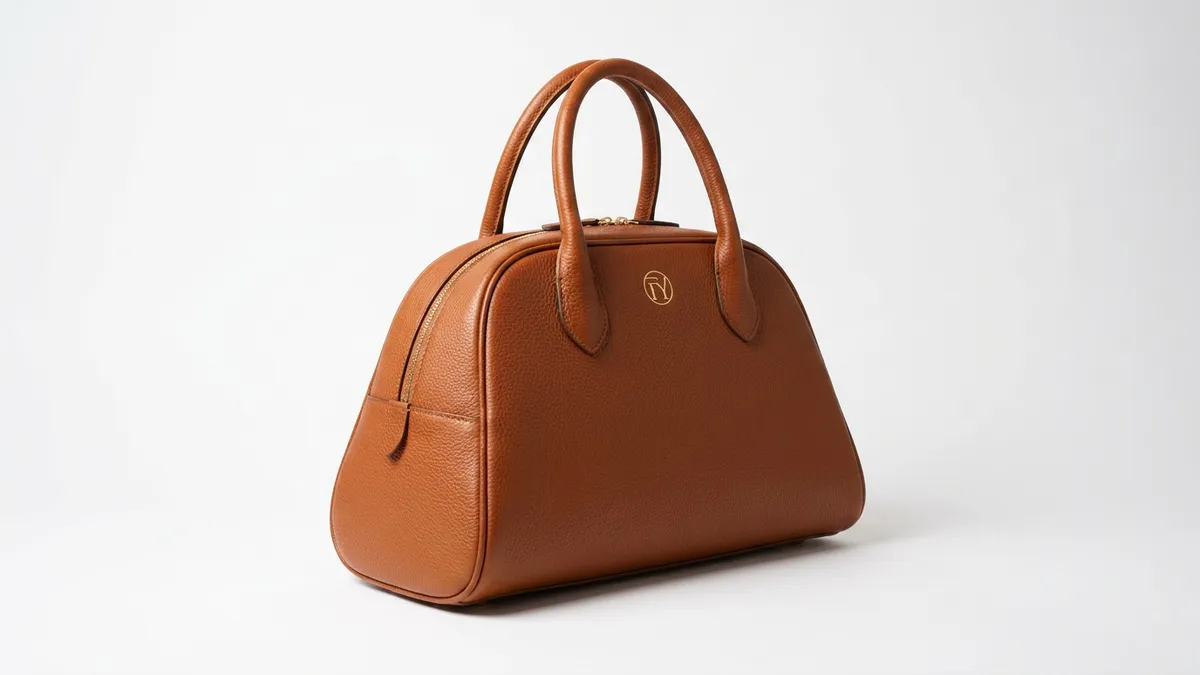
The bowling bag is the most confirmed silhouette of the 2026 runway cycle — appearing consistently across both SS26 and AW26 collections and identified by resale platforms, trade publications, and street-style tracking as the season’s defining shape. Its commercial appeal is structural: the bowler is functional (it holds a full day’s carry), ungendered (the shape reads neither exclusively feminine nor masculine), and photographically distinctive (the rounded trapezoid is recognizable in a product grid at thumbnail size).
For brands, the opportunity carries a production catch. The bowler is one of the harder mainstream silhouettes to construct. A structured tote is a box: flat panels, straight seams, rectangular base. A bowler is a curved volume: an oval base, side panels that curve in two directions simultaneously, a zip that must follow an arc, and a shape that exists only if the internal structure holds it. Factories that quote a bowler at tote pricing have either not understood the construction or are planning to build a tote with rounded corners — which is how the lunch-cooler version happens.
This guide covers the four construction problems that separate a runway-credible bowler from a rounded box: the pattern engineering, the structural system, the curved zip, and the handle anchors.
| Element | Specification | What It Contributes |
|---|---|---|
| Base | Oval or stadium-shaped (rounded ends, straight sides), flat, rigid | The foundation of the silhouette — the rounded base creates the curved body; a rectangular base produces a tote, not a bowler |
| Body panels | Two large side panels (front/back) that curve around the base’s radius and taper slightly inward toward the top | The trapezoidal profile — wider at the base, narrower at the top opening |
| End panels (gussets) | Two curved end panels following the base’s rounded ends | The signature rounded ends that give the bag its “bowling” reference |
| Top opening | An arched or gently curved zip line running the bag’s full length | The mouth of the bag — its curve must match the body’s taper |
| Handles | Two short tubular handles (20–25 cm), arched, mounted on the body panels | Hand or forearm carry; the handles’ arch echoes the body’s curves |
| Optional strap | Detachable crossbody strap on D-rings at the end panels | The modern functional update |
| Dimension | Specification | Tolerance |
|---|---|---|
| Length (at base) | 35–40 cm | ± 1 cm |
| Height | 22–26 cm | ± 1 cm |
| Depth (at base) | 16–20 cm | ± 0.5 cm |
| Taper | Top opening 15–25% narrower than the base length | Per pattern |
| Handle drop | 10–14 cm (hand/forearm carry) | ± 1 cm |
| Empty weight target | Under 750 g (midi, PU construction); under 950 g (leather) | The curved structure adds material; weight discipline matters |
The bowler’s panels cannot be adapted from a tote block. Every major piece is curved, and the curves must match each other within tight tolerance or the assembled bag puckers, twists, or refuses to close.
| Tote Pattern Property | Bowler Requirement | Why Conversion Fails |
|---|---|---|
| Rectangular base | Oval/stadium base with consistent corner radii | The base shape defines every other panel’s seam line; a rectangle cannot be “rounded off” without redrafting every adjoining panel |
| Straight side seams | Side panels with compound curves (curving around the base radius AND tapering toward the top) | Straight seams sewn to curved edges produce puckering — the excess material has nowhere to go |
| Straight top edge | Arched top-zip line | The zip must follow the arc; a straight zip forced onto a curved opening bunches the tape and jams the slider |
A production bowler requires a dedicated pattern set of 6–9 pieces:
| Piece | Quantity | Critical Tolerance |
|---|---|---|
| Base panel (oval/stadium) | 1 | Corner radii identical at all four corners, ± 0.5 mm — asymmetric radii produce a visibly lopsided bag |
| Body panels (front/back) | 2 | The bottom seam line must match the base’s perimeter exactly; the curve is drafted from the base pattern, not estimated |
| End panels (gussets) | 2 | Mirror-image pairs; the curve must match both the base ends and the body panel edges |
| Zip mounting panels (top bands) | 2 | The arc must match the assembled body’s top opening; drafted last, from the assembled top edge measurement |
| Handle pieces | 4 (2 per handle for tubular construction) | Identical lengths within ± 1 mm — mismatched handles are the most visible symmetry defect on a bowler |
| Requirement | Specification | Why |
|---|---|---|
| Die cutting or CNC | Steel-rule dies or CNC knife cutting for all curved pieces; no hand cutting on curves | Hand-cut curves vary unit to unit; the bowler’s curves must be identical across the run or panels will not mate |
| Registration notches | Notches at the base panel’s quarter points and matching notches on every adjoining panel | The operator aligns curved seams by notch, not by eye; without notches, panel rotation errors of 3–5 mm are routine |
| Grain direction | All body and end panels cut with grain running vertically | Curved panels under tension stretch along the bias; consistent grain direction keeps the stretch symmetric |
An empty bowler must stand upright, hold its curved profile, and keep its top line arched. Nothing about the shape is self-supporting: the curved panels want to collapse inward, the taper wants to flatten, and the arch wants to sag. The structure that prevents this comes from one of two systems.
| Layer | Specification | Function |
|---|---|---|
| Body and end panels | Woven fusible, 100–120 g/m², full-panel, PLUS 1.5–2 mm EVA foam laminated on body panels | The fused composite holds the curve; the foam gives the panels the resilience to spring back after compression |
| Base | Rigid base board (1.5–2.0 mm Salpa or HDPE), die-cut to the oval shape, 3–4 mm smaller than the base panel perimeter | The flat, stable foundation; the oval board defines the base shape permanently |
| Top bands | Firm interfacing strip (or light board) fused into the zip mounting panels | Keeps the arched zip line from sagging into a frown |
| Result | A bowler that holds its shape when empty but flexes naturally in use; the commercial standard for the sweet-spot tier | — |
| Element | Specification | Function |
|---|---|---|
| Frame | A shaped steel or aluminum wire (3–4 mm gauge) sewn into a channel along the top opening, following the arched zip line | The frame holds the mouth of the bag open in its designed arc permanently; the bag opens wide (the “doctor bag” gape) and closes to a crisp line |
| Body structure | Same interfacing as System A (the frame supports the opening; the interfacing supports the walls) | — |
| Result | The heritage doctor-bag character: the mouth hinges open, the arch never sags, the silhouette is architectural | — |
| Factor | System A (Interfacing) | System B (Frame) |
|---|---|---|
| Aesthetic | Softer, more casual, contemporary | Crisper, more heritage, “doctor bag” |
| Production complexity | Standard — any competent structured-bag line | Higher — frame bending, channel construction, and frame insertion add steps |
| Weight | Lighter (no metal) | +80–150 g for the frame |
| Cost | Baseline | 15–25% higher on the structural component |
| The 2026 runway read | The majority of FW26 bowlers are System A — semi-structured, slightly relaxed | The heritage minority — brands with vintage positioning |
Recommendation for most programs: System A. The FW26 bowler is a soft-structured shape, not a rigid frame bag. Reserve System B for a heritage-positioned SKU or a premium line extension.
The zip is the bowler’s hardest single construction detail. The zipper tape is manufactured straight; the bowler’s opening is an arc. Forcing a straight zip onto a curve creates tape bunching on the inside of the curve, tension on the outside, and a slider that catches at the arc’s apex.
| Rule | Specification | What Happens If Violated |
|---|---|---|
| 1. Match the zip to the curve’s severity | Gentle arcs (rise under 10% of the zip length): standard metal zip, eased into the curve during sewing. Pronounced arcs: coil zip (nylon coil flexes laterally; metal teeth do not) or a two-piece zip meeting at the apex | A metal zip forced around a pronounced arc jams at the apex — the “zipper sticks at the top” review |
| 2. Ease, never stretch | The zip tape is eased (slightly compressed) into the curve on the concave side; the mounting panel is cut with the arc built into the pattern, so the tape follows a drafted line rather than being pulled into shape | A stretched tape recovers over time, puckering the zip line into visible ripples within weeks |
| 3. Reinforce the apex and the ends | Bartack at both zip ends (standard) PLUS a reinforcement stay at the arc’s apex, where opening forces concentrate | The apex is where the user pulls hardest; without reinforcement, the tape separates from the mounting panel at the top of the curve |
| Slider spec | #5 metal (gentle arcs) or #5–#8 nylon coil (pronounced arcs); paraffin-lubricated; a leather zip pull sized for a gloved hand in FW merchandising | — |
Run the slider end-to-end 20 times on the finished bag. Pass criteria: smooth travel through the apex with one hand, no two-handed assistance, no catching, no tape ripple visible along the arc. This 60-second test catches the defect that generates the bowler’s most common negative review.
The bowler’s two handles mount at four anchor points on the curved body panels. Unlike a tote (where handles often wrap under the base or anchor into a reinforced top band), the bowler’s handles typically mount mid-panel — on a curved, foam-backed surface with no structural member behind the attachment unless one is engineered in.
| Element | Specification | Why |
|---|---|---|
| Reinforcement patch | 50 × 70 mm webbing or canvas patch behind EACH anchor point (four patches total), positioned between the exterior composite and the lining | The mid-panel mount has no seam or band to share the load; the patch is the only load-distribution structure |
| Attachment method | Box-X bartack through all layers (exterior + foam + interfacing + patch), OR rivet + interior backing plate for heritage styling | The bartack must penetrate the full composite; a bartack through the exterior alone pulls free of the foam layer |
| Anchor spacing | Handle anchors positioned symmetrically about the bag’s center line, ± 2 mm | On a curved, symmetric silhouette, anchor asymmetry is immediately visible — the handles lean |
| Anchor tabs (if used) | Leather/PU tabs minimum 30 mm wide; skived and folded edges; the tab wraps the handle end and mounts flat to the curved panel | Narrow tabs concentrate load; unfolded tab edges fray at the flex point |
| Load test | 15 kg sustained for 60 seconds on both handles jointly; 8 kg on each handle individually; no stretch marks, puckering, or anchor movement | The bowler carries as much as a tote; the anchors must match tote-grade load ratings |
| Element | Specification |
|---|---|
| Construction | Tubular (rolled) over a cotton rope or leather cord core, 8–10 mm diameter — the rounded grip is part of the bowler’s retro character |
| Length | 20–25 cm arc length; drop 10–14 cm |
| Edges | Multi-coat painted, beveled — the handle edge is the most-touched surface on the bag |
| Matching | The two handles must match in arc height and mounting position within ± 2 mm; on this silhouette, handle asymmetry is the first defect the eye finds |
| Milestone | Weeks Before In-Store | Note |
|---|---|---|
| Pattern development | 18–20 | The dedicated pattern set + die production for curved pieces; this is the step that cannot be compressed — allow 2–3 weeks for pattern drafting and first fit |
| First sample | 15–17 | Expect the first sample to reveal curve-matching issues; the bowler routinely needs one pattern correction round that a flat-panel bag would not |
| PP sample approval | 12–14 | Verify the zip test, the stand test, and handle symmetry on the PP |
| Bulk production | 6–10 | 4–6 weeks for the run, depending on volume |
| Freight + receiving | 0–5 | Ocean for planned inventory; air split for launch-critical units |
The compression risk: brands entering the FW26 bowler race late are tempted to skip the pattern-correction round. Do not. A bowler with mismatched curves cannot be fixed in bulk — the dies are cut, and every unit inherits the error.
| Element | Recommendation |
|---|---|
| Hero material | Pebbled leather or pebbled PU (1.1–1.2 mm) — the texture suits the sporty-heritage character; suede for the fashion-forward variant (with the care caveats from our suede sourcing guide) |
| Interfacing showthrough check | The curved, foam-backed panels must pass the shadow test under raking light — curved panels telegraph internal edges more readily than flat ones |
| Colorways | Espresso/chocolate (the FW26 brown wave), black, cognac; one trend accent (deep bordeaux or forest) — 3–4 colorways maximum for a launch |
| Hardware | Brushed gold or antique brass on heritage builds; gunmetal on modern builds; one finish across every piece |
| Lining | Twill 100 g/m² in a warm tonal; the bowler’s single-cavity interior benefits from one zip pocket and one slip pocket — over-pocketing stiffens the curved walls |
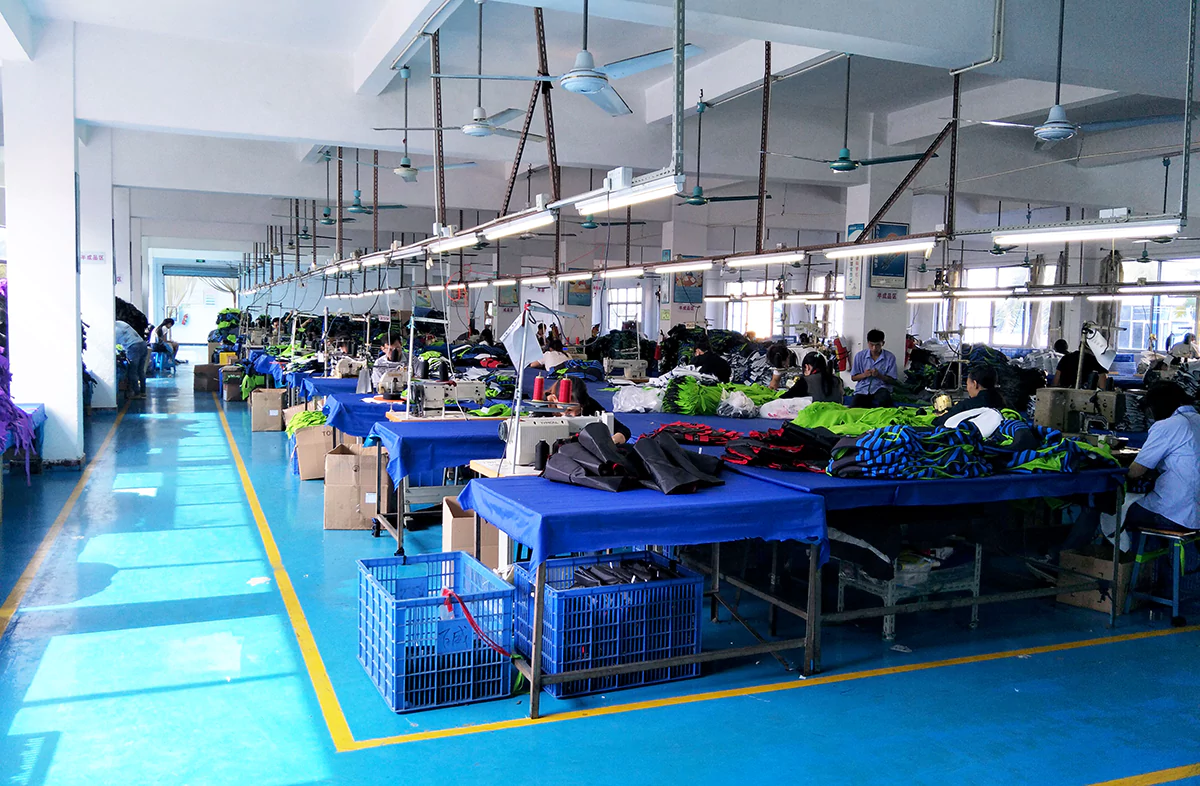
FYBagCustom is Your Trusted Custom Bag Manufacturer in China, with 15+ years of manufacturing experience and the curved-construction capability the bowling bag demands. For brands adding the FW26 hero silhouette, our production includes:
Explore our handbag collection or contact our development team to brief your FW26 bowler program.
The bowling bag rewards the brands that treat it as a construction challenge, not a styling exercise. For B2B buyers racing to add the FW26 hero silhouette, three core takeaways:
If you are adding the bowling bag to your FW26 assortment and need a factory with curved-pattern capability, both structural systems, and honest timelines, contact FYBagCustom to brief your bowler — and receive a pattern-engineered sample in 7–10 days.
FYBagCustom engineers the bowling bag’s curves, structure, zip arc, and anchor points with dedicated pattern development, die-cut consistency, and load-tested handles. FW26 bowler samples in 7–10 days.
Start Your Custom Bag Project →