Tel/WhatsAapp:+86 18011919834
E-mail: chloe.x@fybagcustom.com

Tel/WhatsAapp:+86 18011919834
E-mail: chloe.x@fybagcustom.com
Send Your Inquiry Today

Years Manufacturing
Factory Area
Professional Staff
Inspection Rate
Striped bags serve fashion brands, coastal/resort companies, promotional distributors, Amazon FBA sellers, and any buyer who wants pattern-driven visual interest without the trend risk of more complex motifs.



Unlike florals (seasonal), camo (niche), or geometric (trend-dependent), stripes work across every market segment, every season, and every buyer profile. A plain bag is brand-neutral. A striped bag has instant personality — and five properties make stripes the most commercially versatile pattern available.

Stripes are understood in every culture, every market, every demographic. Nautical stripes = coastal/casual. Pinstripes = professional/corporate. Bold rugby stripes = sporty/bold. Thin candy stripes = playful/feminine. The stripe width and color combination instantly communicates a market position without any text or logo needed.

Floral patterns peak in spring/summer and fade in autumn. Camo trends in and out. Stripes sell year-round — blue/white for summer, black/grey for winter, earth tones for autumn. Change the colorway and the same stripe layout serves a different season. One pattern structure, four seasonal palettes.

Rotate the same stripe 90° and the product identity shifts entirely. Horizontal = relaxed, casual, beach. Vertical = structured, professional, elongating. Diagonal = dynamic, sporty, modern. No other pattern has this directional flexibility. Direction is a design lever unique to stripes.

Stripes work as the entire bag surface (all-over stripe) OR as an accent element — striped pocket on solid body, striped trim, striped handles, striped lining. This accent approach is actually the most popular commercial format — stripe adds visual interest without overwhelming the bag’s functionality.

Woven stripes (premium, structural, permanent) and printed stripes (flexible, affordable, unlimited color) give buyers two production paths at different price points. Same visual pattern, different quality perception and cost structure. Woven for retail fashion; printed for promotional and budget. The choice is a business decision, not just a design one.
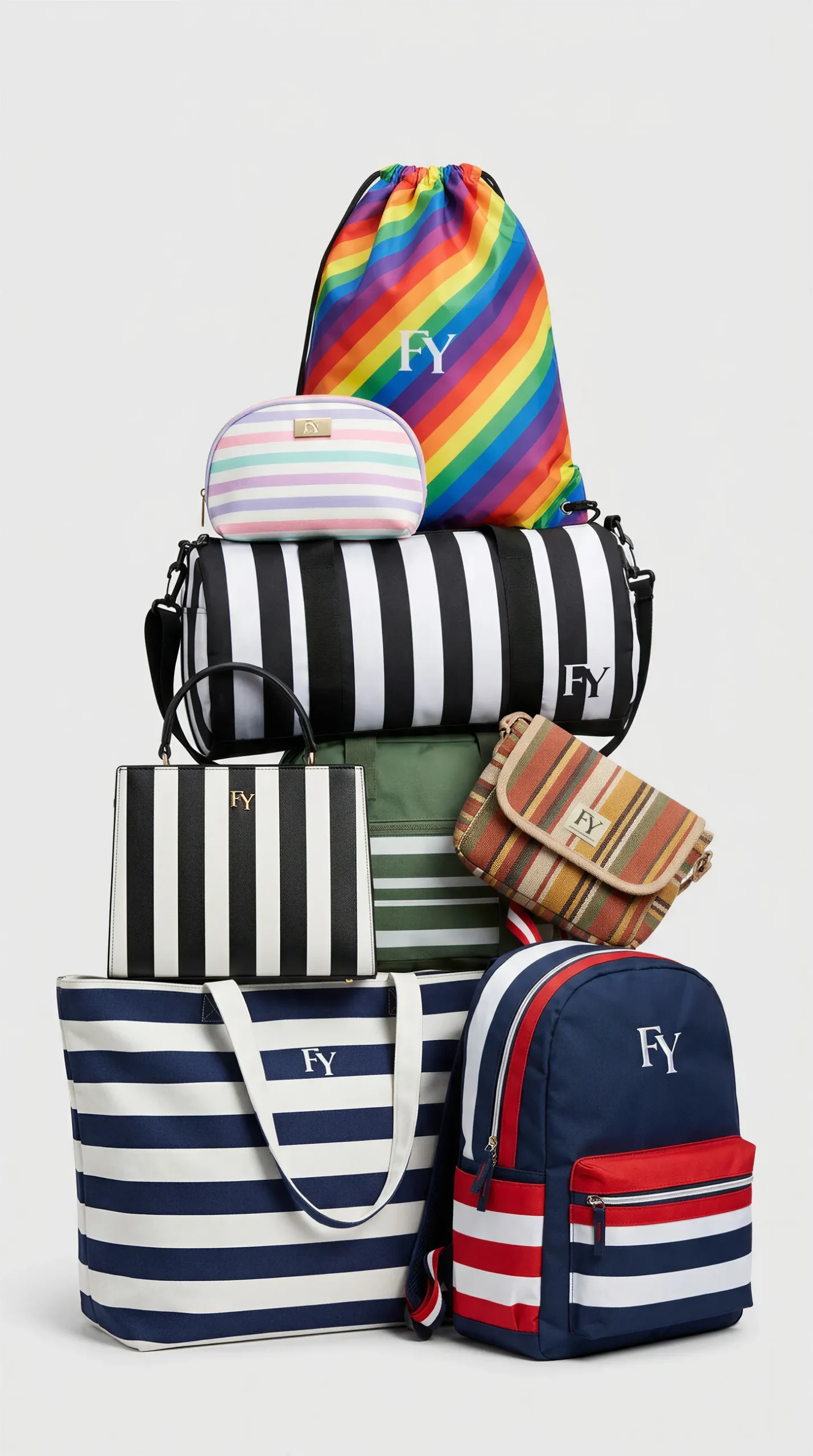
Stripes work on every bag type — from casual canvas totes to structured crossbodies. Here are the eight most-ordered striped bag formats, each available with woven or printed stripes.
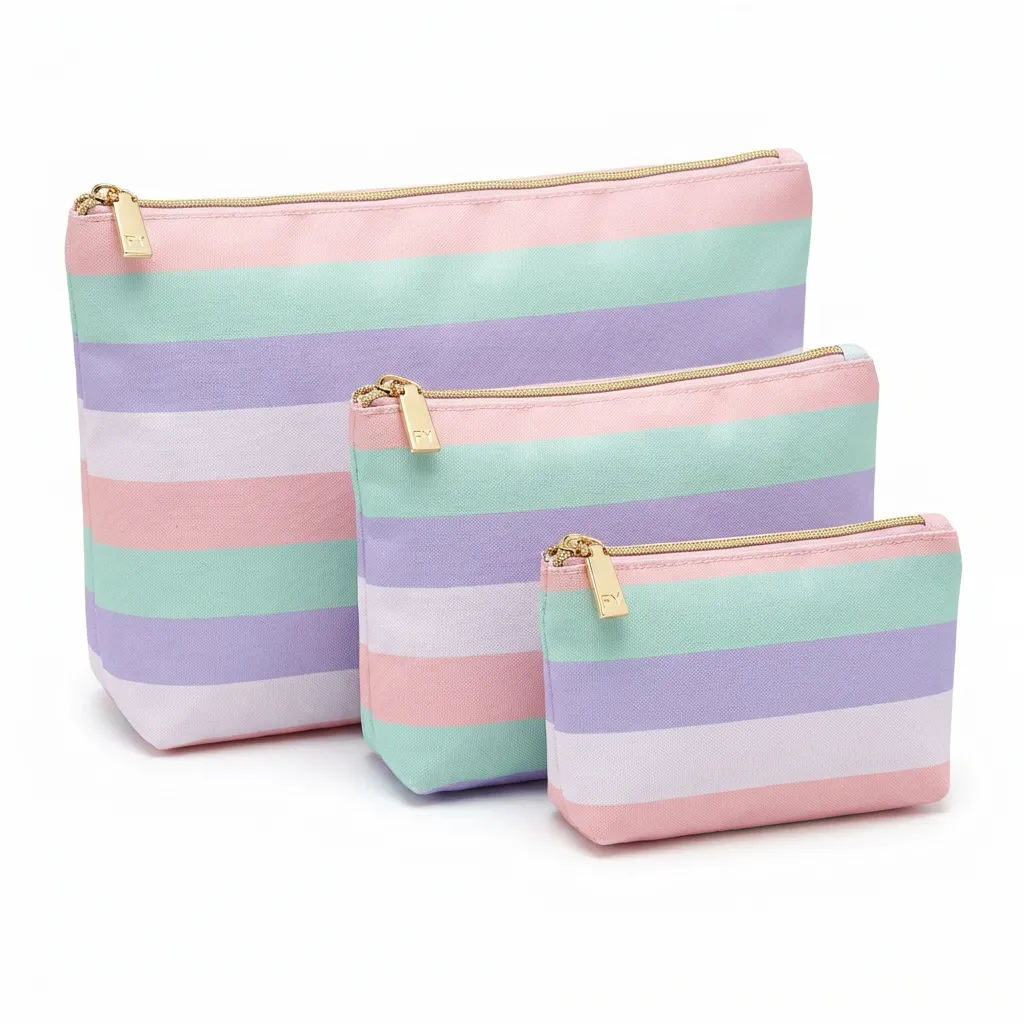
Candy-stripe or bold-stripe cosmetic pouches in cotton, canvas, or polyester. S/M/L nested sets. Woven for gift sets; printed for promotional. Strong gift and retail appeal — stripes read as “designed” rather than “basic.”
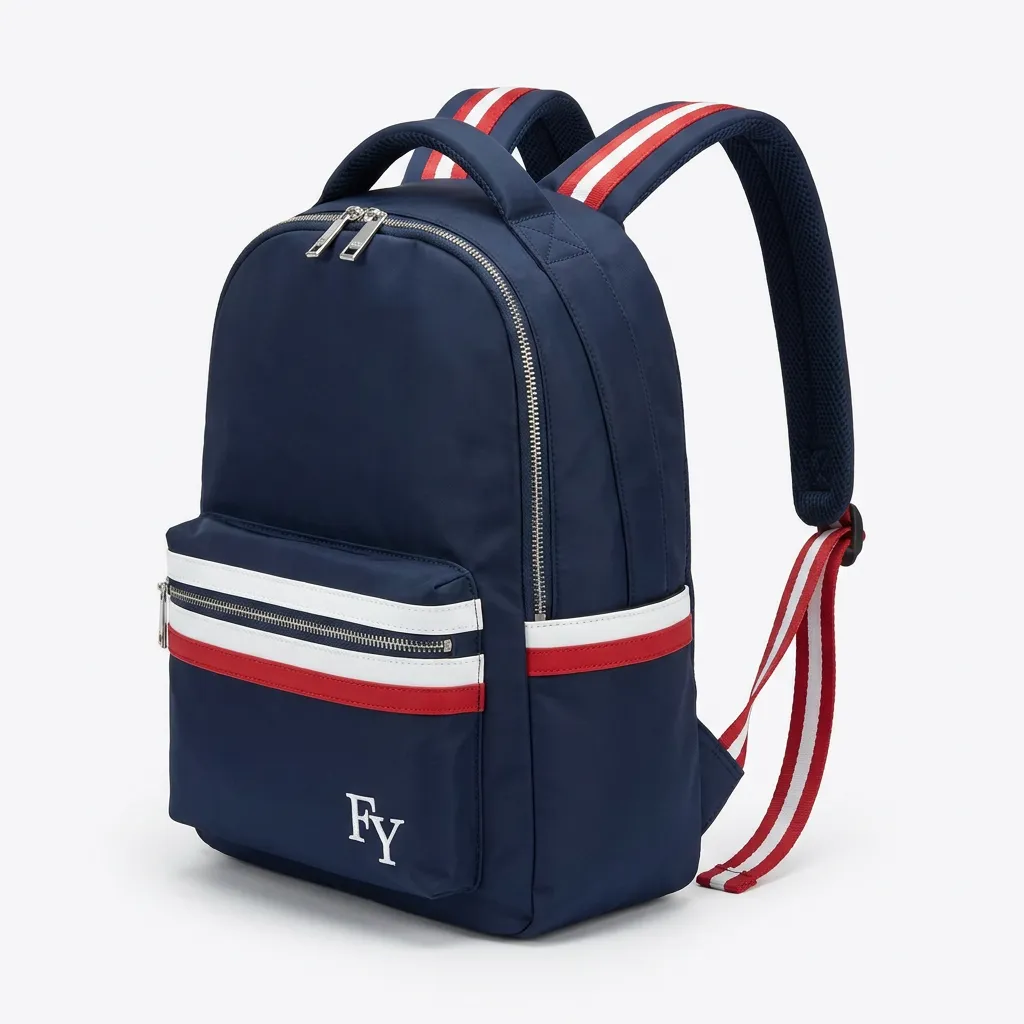
Solid-color backpack with striped accent panel, pocket, or trim. Polyester or nylon. Printed stripes via sublimation or heat transfer. The accent approach — stripe adds personality without overwhelming the pack.
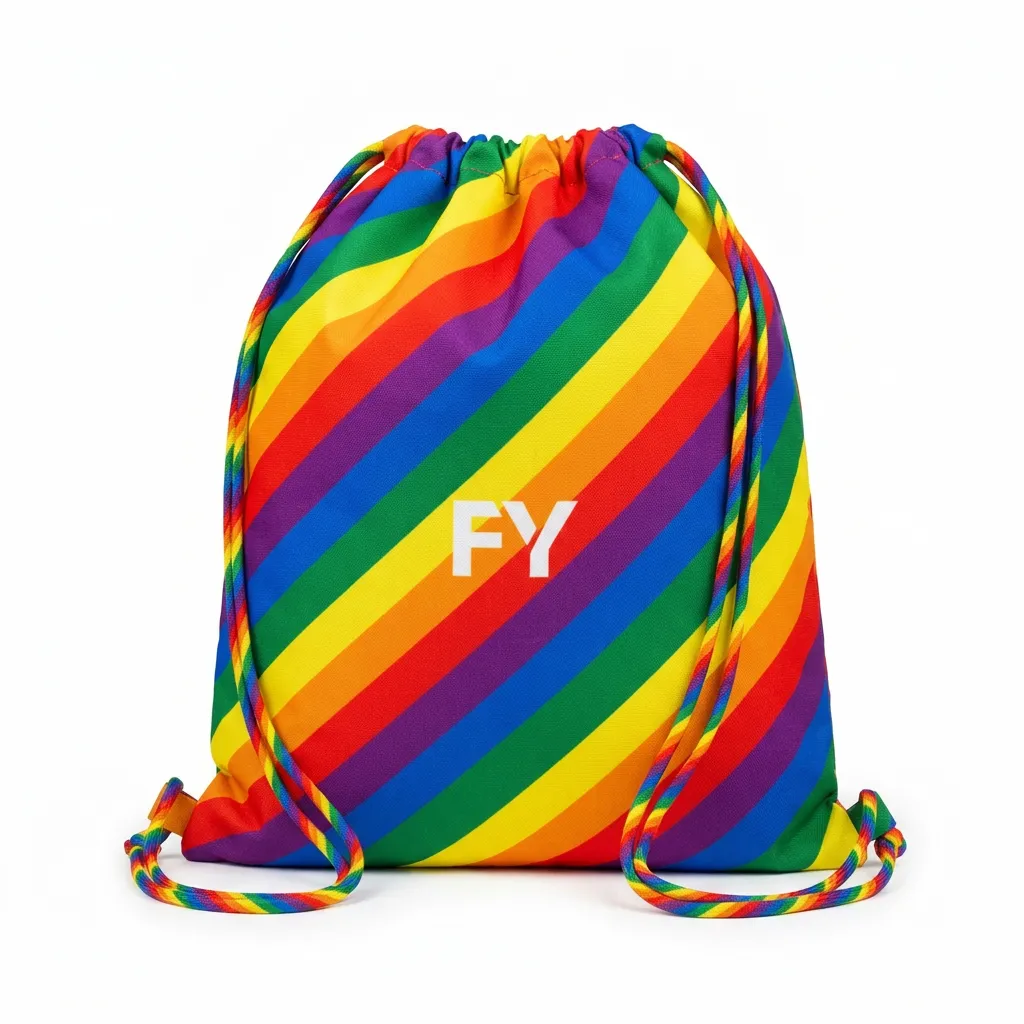
Edge-to-edge stripe pattern on polyester drawstring bag via sublimation. Unlimited stripe colors and widths. Promotional, event, and team merchandise. Budget-friendly full-coverage stripe format.
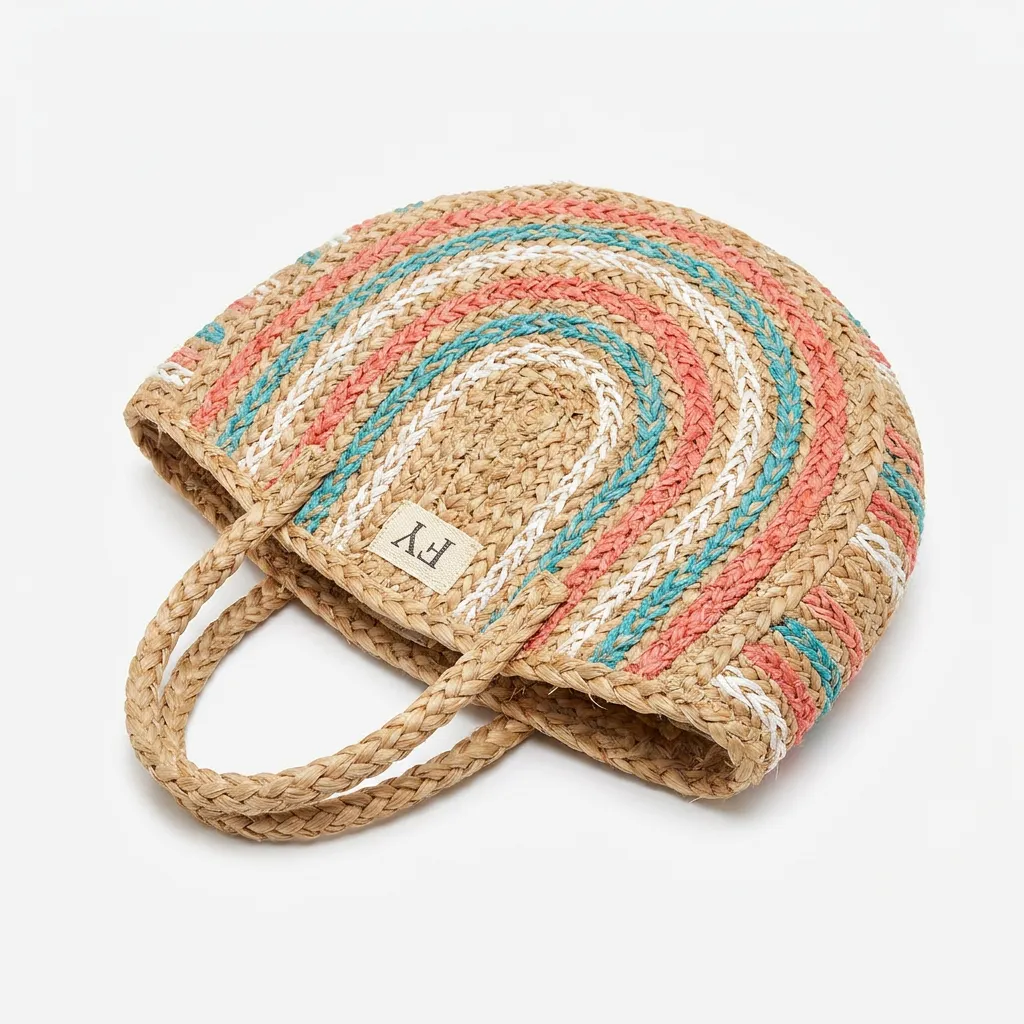
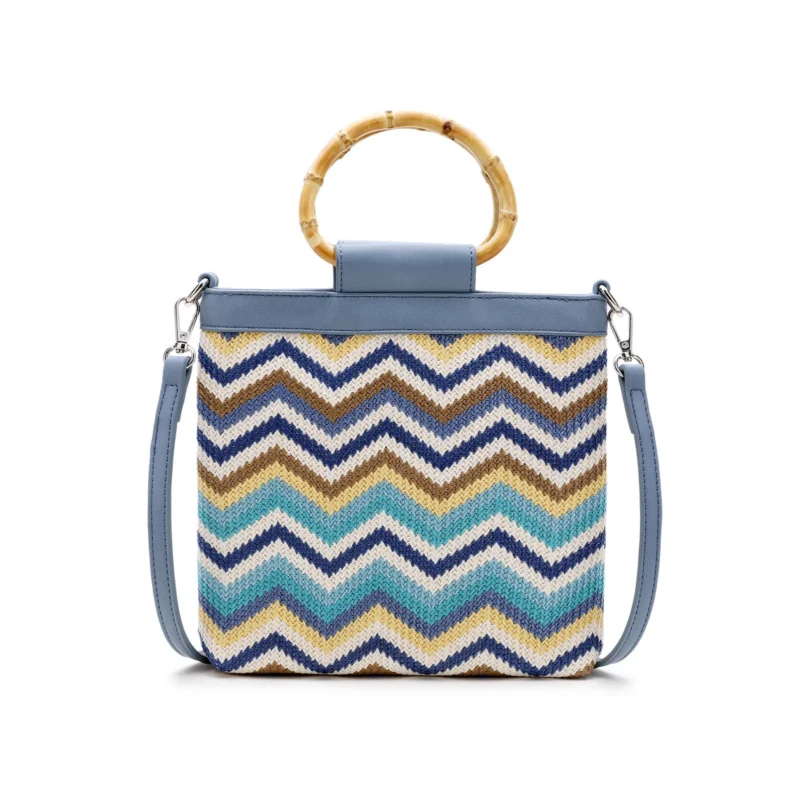
Multi-color striped straw or woven tote, clutch, or bucket bag. Stripes created by alternating colored straw during weaving. Resort, festival, and bohemian positioning. The stripe IS the weave structure.
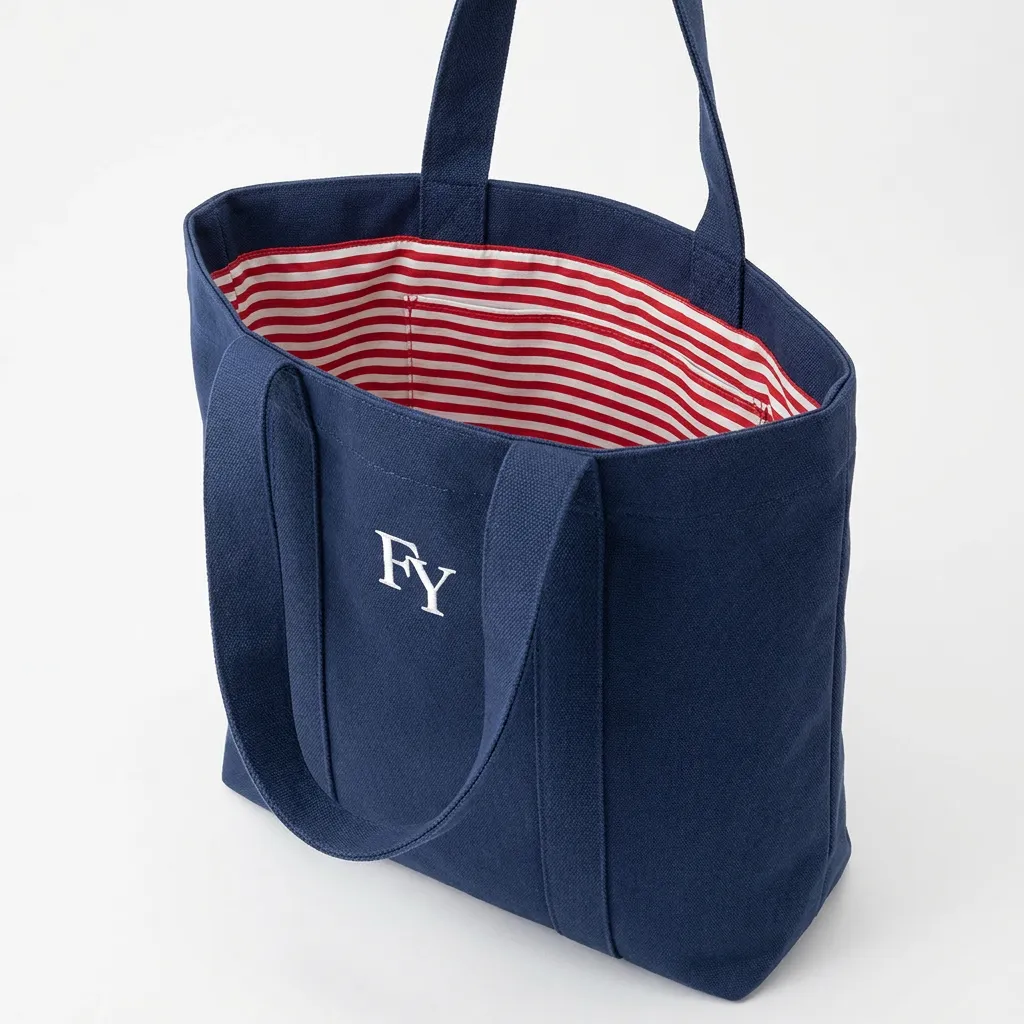
Solid-color bag exterior with surprise striped interior lining. The “reveal” moment when the bag is opened. Printed stripe on lining fabric. For fashion brands, corporate gifts, and premium positioning. Stripe as hidden luxury detail.
The same stripe in the same colors tells a completely different story depending on direction. Direction is the #1 design decision on a striped bag — it sets the product’s personality before the buyer even notices the colorway.
Horizontal
←→ Side to Side
Horizontal stripes read as relaxed, coastal, and casual. The nautical blue/white tote. The beach bag. The market tote. Horizontal is the default direction for lifestyle and resort bags. Wide stripes (2–5 cm) for bold casual; thin stripes (3–8 mm) for refined casual. The most commercially popular stripe direction for totes and pouches.
Vertical
↑↓ Top to Bottom
Vertical stripes read as professional, tall, and structured. Pinstripes on business bags. Vertical ticking on structured totes. Vertical orientation elongates the bag visually — making it look taller and slimmer. For corporate accessories, professional totes, and business-positioned bags. Less common than horizontal — which makes it more distinctive.
Diagonal
↗ Angled
Diagonal stripes read as energetic, modern, and athletic. Speed lines. Motion. For sports brands, youth-market bags, and contemporary fashion. Diagonal requires printed application (woven diagonal = bias-cut, expensive) — sublimation or heat transfer on polyester. The most visually dynamic stripe direction.
Mixed / Block
Multi-Direction
Stripe as accent on solid bag — horizontal stripe band on vertical body, striped pocket on solid panel, striped handles on solid tote. The most commercially popular format. Stripe adds visual interest without overwhelming. Combines the personality of stripes with the brand-clarity of plain solid surfaces.
A stripe on a bag comes from one of two fundamentally different production processes. The choice between woven and printed stripes determines quality, durability, cost, and market positioning. Understanding this distinction is the most important technical decision on a striped bag order.
How They’re Made
Woven: different-colored yarns are interlaced during fabric weaving — the stripe IS part of the fabric structure. Both sides of the fabric show the pattern. Printed: stripe pattern is applied onto a plain fabric surface via screen print, heat transfer, or sublimation. One-sided. The fabric is plain underneath the print.
Durability
Woven: permanent — the stripe cannot fade, peel, or wash out because it IS the fabric. Lifetime of the bag. Printed: depends on print method — sublimation is permanent on polyester; screen print is highly durable on cotton/canvas; heat transfer is good but can eventually peel. Woven wins on durability, but high-quality prints are commercially adequate.
Hand Feel
Woven: no hand feel difference — the stripe is the same textile as the rest of the fabric. The texture is fabric texture, not print texture. Printed: depends on method — sublimation = zero feel on polyester; screen print = slight ink texture; heat transfer = film layer. Woven produces the most natural, textile-quality hand feel.
Design Flexibility
Woven: limited by weave structure — stripe width, color count (typically 2–4 colors), and direction are constrained by the loom. Complex multi-color or gradient stripes are difficult and expensive to weave. Printed: unlimited — any color, any width, any spacing, any direction, gradients, and color transitions. CMYK printed stripes have zero design constraints. Printing wins on flexibility.
Cost
Woven: higher — woven-stripe fabric costs 20–50% more than plain fabric of the same base material because the weaving process is slower with multiple yarn feeds. Fabric MOQ is typically higher (roll minimums). Printed: lower — uses standard plain fabric + print application. At low volume, printing a stripe pattern costs less than sourcing woven-stripe fabric.
Best For
Woven: premium fashion totes, heritage-positioned bags, retail products where fabric quality and hand feel drive the purchase decision. Canvas ticking, cotton shirting stripes, woven webbing accents. Printed: promotional bags, budget products, complex/multi-color stripes, diagonal stripes, all-over stripe patterns on polyester, and any application where design flexibility matters more than textile purity.
Custom stripe width, spacing, colorway, direction, and production method. Woven-stripe fabric sourced from our verified supplier network; printed stripes applied in-house via screen, heat transfer, or sublimation. Sample turnaround in 5–7 days.
Free Add-on: Professional Product Photography Included
Free white-background product photos for your online shop, Amazon listings, and wholesale catalogs — no additional charge on production orders.
The base fabric, stripe production method, and bag construction must all work together — stripe alignment at seams, stripe-direction continuity across panels, and color consistency across the batch are the QC standards specific to striped bags.
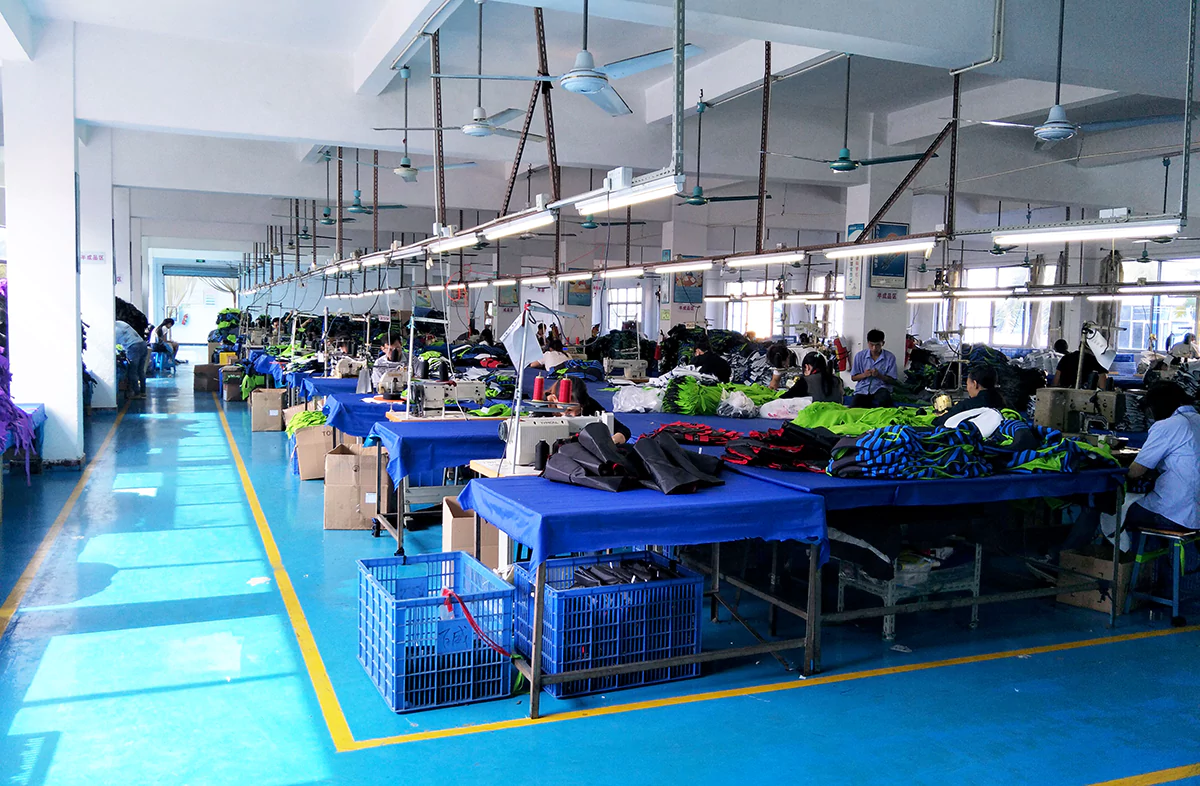
FY Bag Custom operates its own vertically integrated factory in Guangzhou, Guangdong — fabric sourcing, printing, cutting, sewing, and QC all under one roof. For woven-stripe bags, our fabric-sourcing team works with verified weaving mills across Guangdong and Zhejiang to source striped fabrics at production scale. For printed-stripe bags, our in-house print department applies stripes via screen, sublimation, or heat transfer.
Striped bags require additional cutting precision — stripe alignment at seams is the #1 QC concern on any striped product. Our cutting team uses alignment markers to ensure stripes match across panels, and our QC team verifies stripe continuity at every seam on every finished bag.
Years in Manufacturing
Factory Floor Area
Professional Staff
Production Lines
Monthly Capacity
Pre-Shipment Inspection
Striped bags face pattern-specific QC risks that plain bags don’t — stripe misalignment at seams, color inconsistency between stripes, direction reversal on mirrored panels, and cutting-angle errors. Our 6-stage QC adds stripe-specific checkpoints.
Woven: incoming fabric stripe width, color, and spacing verified against approved swatch. Printed: strike-off verified against approved proof. Color consistency checked across the full roll/batch. Stripe regularity measured — any irregularity caught before cutting.
Cutting templates aligned to stripe direction — front, back, and side panels cut with stripes running in the correct orientation. Stripe registration marks used for multi-panel bags. The #1 striped-bag QC failure point is cutting — a 2mm offset at cutting becomes visible misalignment at the seam.
Stripes verified for continuity across every sewn seam — front-to-side, front-to-back, body-to-pocket. Stripe misalignment at seams is the most visible defect on any striped product. Sewing operators trained to match stripes before stitching. Verified during and after assembly.
Stripe direction verified on every panel — horizontal must be horizontal on every panel; no accidental 90° rotation on mirrored pieces. Left/right symmetry confirmed on symmetrical bag formats. Direction reversal is an easy-to-miss cutting error that creates an obviously defective bag.
Every finished striped bag inspected one by one — stripe alignment at all seams, direction consistency, color uniformity, construction quality, hardware, branding, and overall appearance. Striped bags have tighter visual QC standards than plain bags for pattern-specific defects.

Striped bags packed with stripes aligned in the same direction within cartons for consistent unboxing presentation. Container loading photos and videos sent within 24 hours.
Woven-stripe bags add 3–7 days for fabric sourcing (mill lead time). Printed-stripe bags follow standard production timelines. Sample in 5–7 days, bulk in 20–35 days.
Day 1–2
Send stripe concept + bag spec; FOB quote in 24 hours.
Day 3–12
Stripe swatch + bag prototype in 5–7 days.
Day 13–15
30% T/T deposit; balance before shipment.
Day 16–42
Fabric/print → cut (aligned) → sew (matched) → QC. Daily WIP.
Day 43–48
100% stripe alignment + seam-match + final inspection.
Day 46–55
Sea, air, express, or direct-to-FBA.
Sample Lead Time
5–7 Days
Mass Production
25–35 Days
Payment Terms
30% T/T · 70% Before Shipment
Shipping Terms
FOB · CIF · DDP · Amazon FBA
Striped bags serve the design-driven end of our pattern catalog — brands that want pattern-based visual identity without the trend risk of complex prints.
Classic horizontal woven-stripe canvas totes in navy/white, red/white, green/white, and black/white. 12oz cotton ticking. Leather handles. Interior zip pocket. Year-round bestseller in coastal retail stores. Woven stripe = premium hand feel, permanent pattern. FOB to US. Retail $24–32. Annual reorder for 3+ years running.
ODM partnership on candy-striped cotton cosmetic pouches — screen-printed horizontal stripes in 6 colorways. S/M/L nested set. FNSKU labeling, Amazon packaging, photography highlighting stripe pattern. Ranked top 25 in “striped cosmetic bag.” Stripes drive above-average click-through — visual differentiation from plain competitors.
Multi-color woven-stripe canvas crossbody with contrast PU leather trim, strap, and closure. 3 stripe colorways matching seasonal palette. The woven-stripe fabric IS the product identity — leather trim elevates to fashion-retail price tier. FOB to EU and Asia. Retail $35–48. Seasonal stripe-colorway refresh.
Global Shipping Options
•Sea Freight
•Air Freight
•Express (DHL, FedEx, UPS)
•Rail Freight
•Door-to-Door
•Direct-to-Amazon FBA
Straight answers to the questions buyers ask about custom striped bag production.
Woven for premium retail products where fabric quality, hand feel, and permanence justify higher cost. Printed for promotional bags, budget products, and designs requiring complex multi-color stripes, gradients, or diagonal orientation. Woven fabric costs 20–50% more than plain + print. If your retail price is $20+ and you’re targeting fashion or lifestyle channels, woven is worth the investment. If your per-unit budget is under $5, printed stripes on plain fabric are the smarter choice.
Yes — both woven and printed stripes can be Pantone-matched. Woven: yarn-dyed to your PMS reference (mill produces a lap dip for approval). Printed: ink mixed to Pantone (standard color-matching process). Both paths produce accurate color. Woven Pantone matching has longer lead time (yarn dyeing) and higher fabric MOQ than printed.
On properly produced bags, yes. Stripe alignment at seams is our #1 QC priority on striped bags. Cutting templates are aligned to stripe direction. Sewing operators match stripes before stitching. Every seam is inspected for stripe continuity. Some complex constructions (curved seams, 3D gussets) make perfect matching geometrically impossible — we’ll flag this at the sampling stage.
Yes — and this is the most popular commercial approach. Striped body + solid handles. Solid body + striped pocket. Striped front panel + solid back. Solid exterior + striped lining. The combination adds visual interest while maintaining the brand clarity of solid-color surfaces for logo placement.
Woven-stripe fabric typically has higher MOQs than plain fabric because mills produce striped fabric in dedicated weaving runs. Stock striped fabrics (canvas ticking in standard colorways) are available from inventory at lower MOQs. Custom-woven stripes (unique width, color, or yarn) have mill-specific minimums. Contact us with your stripe spec for a specific confirmation.
Yes — but diagonal stripes require printing (sublimation or heat transfer), not weaving. Woven diagonal stripes require bias-cut fabric, which wastes material and is significantly more expensive. Printed diagonal stripes on polyester via sublimation are unlimited in angle, width, and color. For diagonal stripes, we recommend sublimation on polyester as the most cost-effective production path.
Yes. FNSKU labeling, Amazon-compliant packaging, and carton labeling handled at our Guangzhou factory. Free product photography highlighting stripe pattern and direction included.
Yes. European Industrial Park, Shiling Town, Huadu District, Guangzhou. Monday–Saturday. Video tours available for remote buyers.
Send us your stripe concept (direction, width, colors, coverage), bag type, and quantity — we’ll come back within 24 hours with a detailed FOB quotation covering fabric sourcing (woven) or print application (printed), bag construction, and packaging. Physical stripe swatch before bulk. No templates, no copy-paste pricing.