Tel/WhatsAapp:+86 18011919834
E-mail: chloe.x@fybagcustom.com

Tel/WhatsAapp:+86 18011919834
E-mail: chloe.x@fybagcustom.com
Send Your Inquiry Today


Who this guide is for: brand owners, product developers, and sourcing managers producing minimalist utility-inflected bags for the customer who shops The Row, Chloé, Acne Studios, and St Agni — and who has watched the barrel bag become the fastest-growing silhouette in the market. Two adjacent shapes define the 2026 utility story: the barrel (a true cylinder with circular ends, an offshoot of the East-West bag) and the camera bag (a compact cube with multi-pocket organization, borrowed from photography gear). Both look simple. Both are geometry problems that most factories get wrong — because a cylinder is not a softened rectangle and a cube is not a small tote. This guide covers the pattern mathematics, the structural systems, and the QC checks that separate a clean geometric bag from a lumpy approximation.
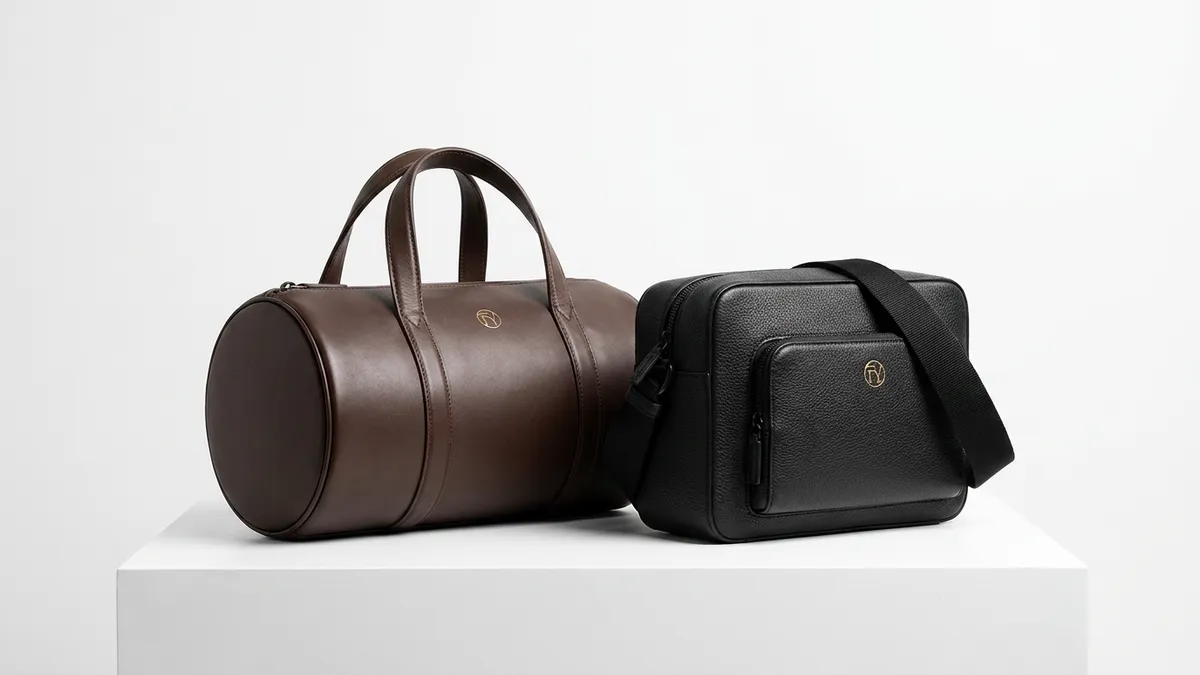
The barrel bag is, by the numbers, the strongest silhouette bet of 2026. Heuritech’s AI trend radar forecasts it as the fastest-growing bag shape worldwide over the next twelve months — a +22% rise, ahead of the bowling bag, the rectangle, and the duffle — classified as a “Consistent Riser” with big commercial volume, led by European adoption and strongest with younger, edge-leaning consumers. The runway and retail evidence matches the data: Coach’s Kisslock Barrel sold out in all five colorways immediately after its runway debut, frame-barrel hybrids appeared at Carolina Herrera and Khaite, and fashion press traces the shape’s modern authority to The Row’s 90s bag — with Australian minimalist retailers like St Agni driving the aesthetic at the accessible-premium tier.
The camera bag is the barrel’s cubic sibling in the same utility family. The 2026 direction that RUSSH describes as “compact structures borrowed from utility gear” lands squarely on the camera silhouette: a small, boxy crossbody with real organization — front pocket, top zip, interior dividers descended from actual photography bags. Where the barrel is architectural minimalism, the camera bag is functional minimalism. The same customer buys both, often in the same season, and both share a production reality: their geometry is their design. A barrel whose ends are not perfectly circular, a cube whose corners are not sharp — these are not quality variations. They are failures of the entire concept, visible from across a room.
A barrel bag is three pattern pieces in concept: two circular end panels and one rectangular wrap panel that curls around them. The simplicity is deceptive, because the pieces are locked together by an equation:
Wrap panel length = π × end panel diameter.
A barrel with 16 cm ends needs a wrap panel whose seam-to-seam length equals 50.3 cm — not “about 50,” not “50 with ease.” If the wrap is 4 mm long, the excess material puckers around the circle. If it is 4 mm short, the end panel domes outward or the seam pulls flat spots into the circle. On a structured tote, a 4 mm pattern error disappears into a corner; on a barrel, it distorts the shape the customer is buying.
| Element | Specification | Tolerance | What Failure Looks Like |
|---|---|---|---|
| End panels (×2) | Die-cut or CNC-cut circles; identical diameter | ± 0.5 mm on diameter; the two ends identical within ± 0.3 mm | Ends that are subtly oval or mismatched read immediately — the tube leans or tapers |
| Wrap panel | Length drafted from the circumference equation, plus seam allowances calculated separately | ± 1 mm on the circumference dimension | Puckering (too long) or flat-spotting (too short) around the end seams |
| Registration notches | Quarter-point notches on both circles and matching notches on the wrap panel | Per pattern | Without notches, the operator distributes the wrap unevenly around the circle — one quadrant crowds, another stretches |
| Zip opening | Cut into the wrap panel along the top axis, ending 4–6 cm before each end seam | Per pattern | A zip run into the end seams creates a corner where three seams and a zip stop converge — a bulk knot that distorts both the circle and the zip line |
The wrap-to-end seam is the barrel’s defining construction challenge: a straight (well, gently curved once the zip opening is in) edge must travel around a full circle. Three requirements:
| Requirement | Specification |
|---|---|
| Ease by notch, not by eye | The operator matches quarter notches first, then distributes the material between them; sewing continuously around the circle without registration is how spirals and puckers happen |
| Stitch on the circle side | The seam runs with the circular panel facing the machine bed and the wrap panel on top — the feed dogs control the circle’s edge while the operator eases the wrap |
| Piped or bound seams | The 2026 utility barrel typically runs a piped end seam (a fabric- or leather-covered cord sewn into the seam) — the piping visually crisps the circle, structurally rounds the seam line, and forgives half a millimeter of easing imperfection; a plain seam is cleaner-looking in theory but shows every distribution error |
An unsupported fabric or leather cylinder does not stay cylindrical — it ovals under its own weight and flattens where it rests. The barrel’s structure lives in three places:
| Structural Element | Specification | Function |
|---|---|---|
| End panel discs | Rigid or semi-rigid inserts (1.0–1.5 mm Salpa, fiberboard, or PP) bonded inside each end panel, 3–4 mm smaller than the finished circle | The ends hold the circular profile; if the ends are round, the tube follows |
| Wrap interlining | Woven fusible 100–120 g/m² full-coverage on the wrap panel; 1–1.5 mm foam optional for the premium squeeze | Keeps the tube’s wall from collapsing between the ends; the foam softens the drum-tight look into the minimalist register |
| Base spine (optional) | A narrow flexible insert (3–4 cm wide) along the bottom axis of the wrap, inside the lining | Prevents the resting flat-spot on bags carried daily; the barrel sits on a gentle flat rather than deforming randomly |
The weight note: a fully structured barrel gets heavy quickly — two rigid discs plus full interlining. For the minimalist register, semi-rigid ends with a softer wrap read more modern (The Row’s version has structure at the ends and suppleness in the body) and save 100–150 g.
| Element | Specification | Why |
|---|---|---|
| Strap anchors | D-rings on tabs mounted at the end panels’ centers or into the end seams — never on the wrap panel’s face | End-mounted anchors let the cylinder hang horizontally and roll naturally with the body; wrap-mounted anchors make the bag hang crooked and crease the tube |
| Top handle (if specified) | A single short handle bridging the zip, mounted on reinforced tabs at the zip tape’s sides | The handle loads pull along the tube’s axis — the strongest direction |
| Zip | #5 metal or coil, with the 4–6 cm end setbacks per the pattern table; a leather pull sized for the minimalist look (clean rectangle, no logo hardware) | The zip is the barrel’s only opening; the 20-cycle slider test applies, run with the bag stuffed |
| Reinforcement | Standard webbing patches behind every anchor tab, through all layers including the end discs where end-mounted | End-mounted anchors pull directly against the disc edge; the patch spreads the load across the disc face |
| Size | End Diameter | Length | Role |
|---|---|---|---|
| Mini | 10–12 cm | 18–22 cm | The trend entry; crossbody-first; the St Agni register |
| Midi (hero) | 14–17 cm | 26–32 cm | The commercial core — fits a phone, wallet, sunglasses case, and a water bottle laid axially |
| East-West barrel | 13–15 cm | 34–40 cm | The elongated version that reads most clearly as the East-West offshoot; under-arm carry |
The camera bag’s geometry is the barrel’s opposite: instead of one continuous curve, it is all planes and corners. A cube reads as a cube only if its faces are flat, its edges are straight, and its corners are sharp — and each of those properties fights how soft materials behave.
| Element | Specification | What Failure Looks Like |
|---|---|---|
| Panels | Six-face construction (front, back, two side gussets, base, top/zip surround) or a wrap-plus-gussets simplification; every panel interfaced flat | Faces that bow or dish; the “inflated” look that turns a cube into a pouch |
| Corners | Seamed corners with the allowances trimmed, graded, and turned sharp; corner reinforcement inside | Rounded-off, ambiguous corners — the single clearest tell of a factory building a small tote instead of a camera bag |
| Edges | Every edge seam straight within ± 1 mm over its run | Wavy edges destroy the geometric read at a glance |
| Structure | Woven fusible 100–120 g/m² on every face + 1–1.5 mm foam on front and back; semi-rigid base insert | The cube must hold its form empty — a camera bag that collapses when set down has lost its category identity |
The customer buys the camera bag for its interior logic as much as its shape. The silhouette descends from photography gear, and the organization is the inheritance:
| Feature | Specification | Function |
|---|---|---|
| Front zip pocket | Full-width, welted or paneled, sized for a phone | The signature exterior feature — the camera bag without a front pocket is just a box |
| Main compartment | Top-zip access opening the full top face (the “lid” opens wide — camera-bag DNA) | Wide access to the full interior; specify the zip to turn both top corners smoothly (coil zip for the corner radii, or a three-side lid opening) |
| Interior dividers (optional, premium) | One removable padded divider on hook-and-loop strips | The direct photography inheritance; doubles as the “customize your interior” story |
| Back slip pocket | Flat, full-width | Boarding pass, phone — the utility layer |
| Strap | Wide webbing (30–38 mm) with a metal slide adjuster, or leather with keeper — worn crossbody | The utility strap is part of the aesthetic; a thin ladylike strap breaks the register |
The camera bag’s top zip typically turns two 90° corners so the lid opens wide. This is the construction detail that separates clean execution from a fight with the slider:
| Rule | Specification |
|---|---|
| Corner radius | Pattern the zip path with a 15–20 mm radius at each corner — never a sharp 90° turn; the slider cannot travel a hard corner |
| Zip type | Nylon coil (#5) for corner-turning builds — coil flexes around radii that metal teeth jam on |
| Stay the corners | A reinforcement stay under each corner radius, where opening forces twist the tape |
| QC | The 20-cycle test, both corners, one-handed, bag stuffed |
The barrel and the camera bag sell to the same customer, and her standards apply to both:
| Standard | Specification |
|---|---|
| Hardware discipline | One finish, few pieces, nothing decorative — matte black, brushed silver, or unlacquered brass; every visible piece functional |
| Tonal everything | Thread matched within ΔE ≤ 3.0; edge paint within ΔE ≤ 2.0; the geometry is the statement, so nothing else speaks — per our quiet luxury specification |
| Edge finishing | 3–4 coat beveled painted edges on straps, handles, and tabs; the minimalist register exposes every edge to inspection because there is nothing else to look at |
| Material | Smooth or fine-pebbled leather and premium PU carry the register; suede for the fashion variant; heavy canvas or nylon with leather trim for the gear-adjacent version |
| Colorways | Espresso, black, taupe, bone — the minimalist core; one seasonal accent maximum |
The barrel and camera bag pair naturally as a two-silhouette utility capsule — and they share enough production infrastructure to be efficient together:
| Shared Element | Efficiency |
|---|---|
| Materials and hardware | One leather/PU article and one hardware finish across both silhouettes — one incoming inspection, one lab dip, blended material minimums |
| Strap system | A shared webbing-and-adjuster strap (interchangeable between both bags via matching D-rings) — one component, two SKUs, and a “buy the second bag, share the strap” merchandising story |
| Blended MOQ | Both silhouettes combinable toward order minimums; test both, restock the winner |
| Distinct tooling | The pattern sets do NOT share — the barrel’s circles and the cube’s corners are separate die investments; budget both |
| Milestone | Timing |
|---|---|
| Pattern development + dies | Weeks 1–3 (both silhouettes in parallel) |
| First samples | Week 4 — expect the barrel to need one circumference-tuning round; the cube to need one corner-sharpness round |
| PP approval | Weeks 6–7 |
| Bulk | Weeks 8–13 |
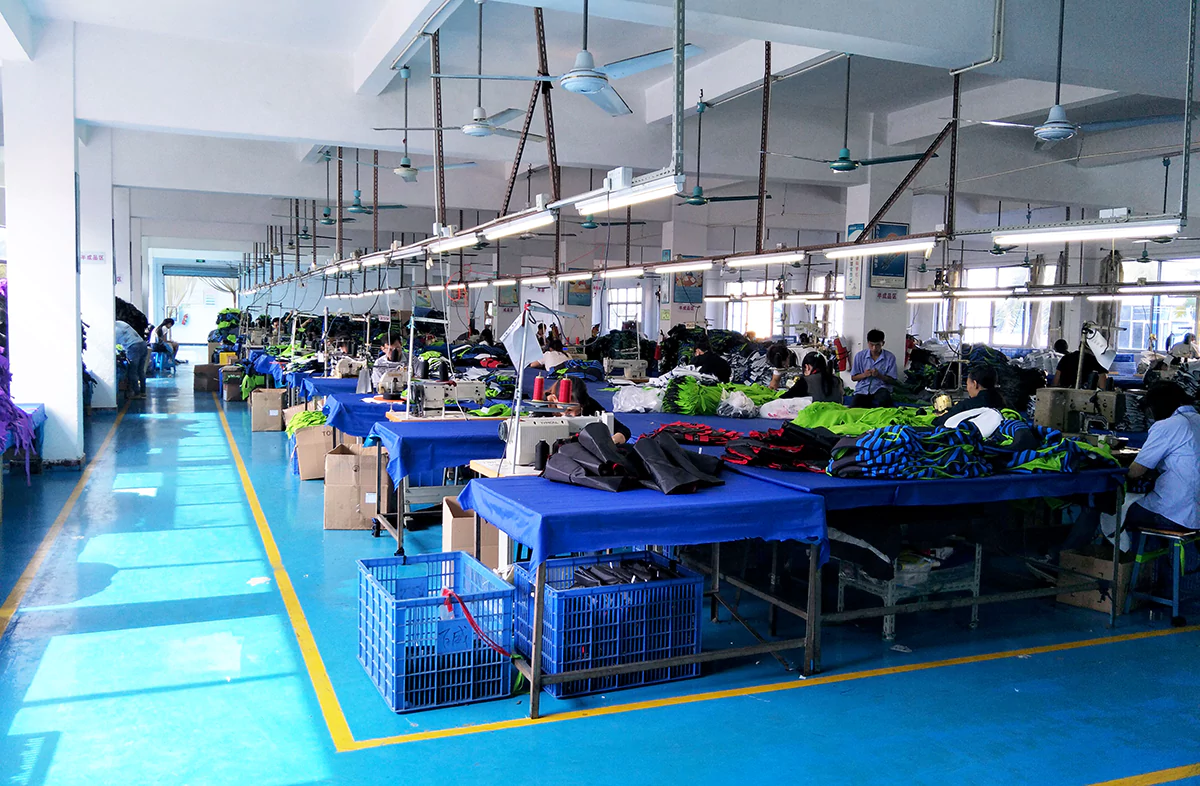
FYBagCustom is Your Trusted Custom Bag Manufacturer in China, with 15+ years of manufacturing experience and the pattern-engineering discipline that geometric silhouettes demand. For brands building barrel and camera bag programs, our capabilities include:
Contact our development team to brief your utility capsule — the barrel, the camera bag, or both on shared materials.
The barrel and the camera bag succeed or fail on precision that most bags never demand — because when the silhouette is the entire design, every millimeter of deviation is visible. For B2B buyers building 2026 utility programs, three core takeaways:
If you are developing barrel bags, camera bags, or the full utility capsule and need a factory that treats geometry as a specification, contact FYBagCustom to brief your program — and receive precision-drafted samples in 7–10 days.
FYBagCustom drafts barrel circumferences to the millimeter, turns camera-bag corners sharp, and finishes both to the tonal minimalist register — with blended MOQ across the capsule. Precision samples in 7–10 days.
Start Your Custom Bag Project →