Tel/WhatsApp:+86 18011919834
E-mail: chloe.x@fybagcustom.com

Tel/WhatsApp:+86 18011919834
E-mail: chloe.x@fybagcustom.com

Who this guide is for: brand owners, DTC founders, sourcing managers, Amazon FBA sellers and corporate merchandise buyers deciding where to produce their next run of custom bags, and whether a domestic label is worth the premium.
Quick answer: Manufacture in China when unit cost, material choice and room to scale matter most; for most structured bags, Chinese production still lands below domestic sewing after freight and duties. Manufacture in the USA when “Made in USA” is part of the brand promise, runs are small and price-insensitive, or you need replenishment in days. Many brands split production between both.
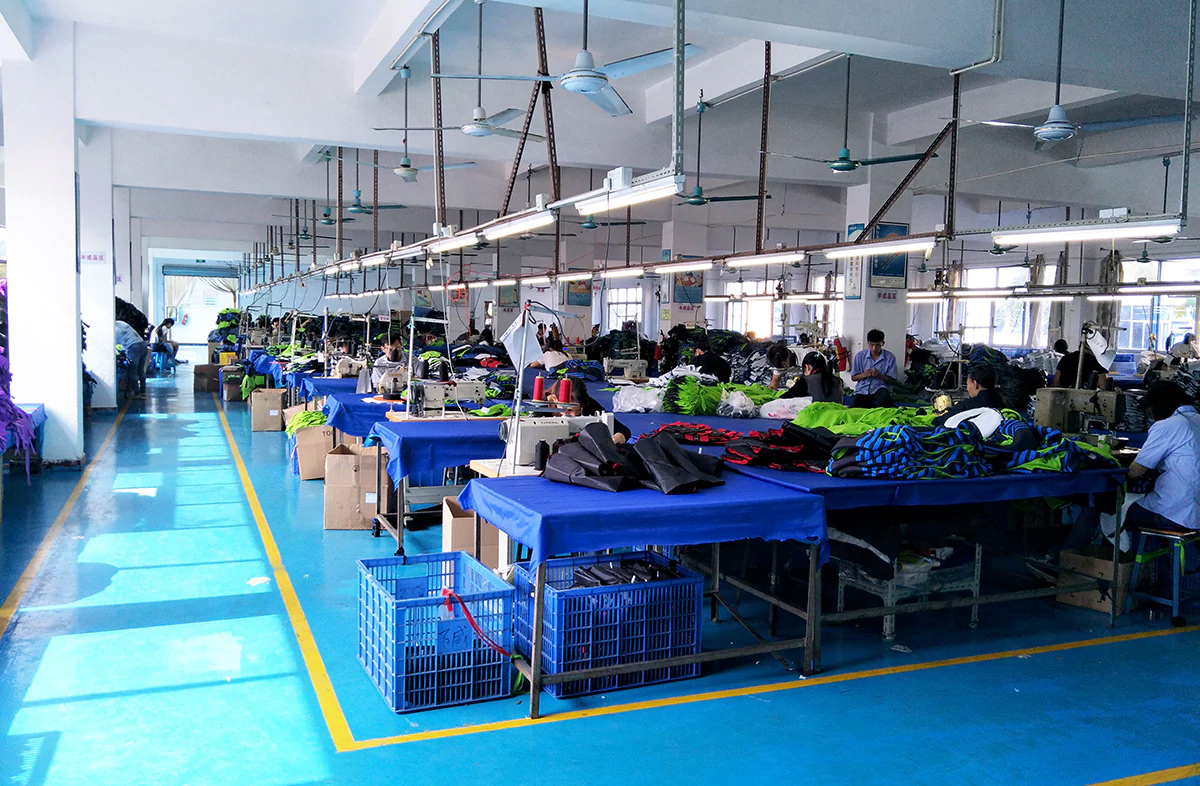
The bag manufacturer USA vs China decision used to be simple arithmetic: China was cheaper, so most brands produced there. Tariff changes since 2018, several rounds of new duties in 2025, the end of duty-free de minimis parcels and a stronger appetite for domestic sourcing have made founders run the numbers again. The answer now depends on your bag type, your volumes, the duty rate in force when your goods clear customs, and what your customers pay for a label.
This comparison uses relative cost and index numbers instead of prices, because quotes vary by design, material and quantity. Plug your own quotes into the same framework.
Landed cost is everything you pay to get a sellable bag into your warehouse. Factory-gate price is only the first line.
| Cost component | China-made, imported to the US | US-made | What drives it |
|---|---|---|---|
| Factory-gate unit price | Lower | Higher, often a multiple of China | Sewing labor, overhead, material sourcing |
| Packaging | Included or low | Included or low | Polybags, hang tags, dust bags |
| International freight and insurance | Ocean or air, per unit | None | Carton volume, mode, season |
| Import duty | MFN rate plus any additional duties | None | HTS code, material, country of origin |
| Brokerage, port and terminal fees | Per shipment | None | Shipment count, filing type |
| Inland freight | Port to warehouse | Workroom to warehouse | Distance, mode |
| Inventory carrying cost | Higher; longer pipeline | Lower; shorter pipeline | Weeks of stock in transit and safety stock |
| Sampling and travel | Courier samples, optional factory visits | Local visits, faster iterations | Number of rounds |
Two items surprise first-time importers. Duty is usually calculated on the transaction value of the goods, which excludes international freight and insurance, so the duty line scales with the factory price and ignores the shipping bill. Inventory carrying cost is also real: a pipeline of eight to ten weeks from factory to shelf ties up cash that a domestic run would not.
Our total landed cost comparison of China, Vietnam, India and Mexico applies the same method to other offshore options.
Bags are labor-heavy. A structured handbag with gussets, a zip pocket, edge paint and a detachable strap passes through dozens of cutting, skiving, gluing, sewing and finishing operations. Sewing labor in the US typically costs several times more per hour than factory labor in Guangdong, and the quote reflects that gap line by line.
Materials narrow the gap less than buyers expect. Many US cut-and-sew shops buy fabric, zippers, webbing and hardware that were made in Asia, so they pay import costs on components before they start sewing. Domestic sourcing works best for specific categories: heritage leather from US tanneries, US-woven canvas, and some webbing and thread.
Typical patterns from quotes brands compare:
These are indicative ranges, not quotes. Ask both sides to price the same tech pack with the same materials before you compare.
Most bags fall under HTS heading 4202. General (MFN) duty rates on handbags, totes and travel bags range from single digits to roughly 20% depending on the outer material, with textile and plastic-sheeting bags at the higher end. Chinese-origin bags have also carried Section 301 duties since 2018–2019 at rates that vary by tariff line, and the US layered on and adjusted further duties on Chinese goods several times during 2025. In 2025 the US also ended duty-free de minimis treatment for low-value parcels, first for goods from China and then for all countries, which hit DTC brands that shipped single orders direct from overseas.
These rates have changed several times, so treat any published figure as a snapshot. Confirm your HTS classification and the full stack of duties with a licensed customs broker before you commit to a cost model, and recheck before each production run.
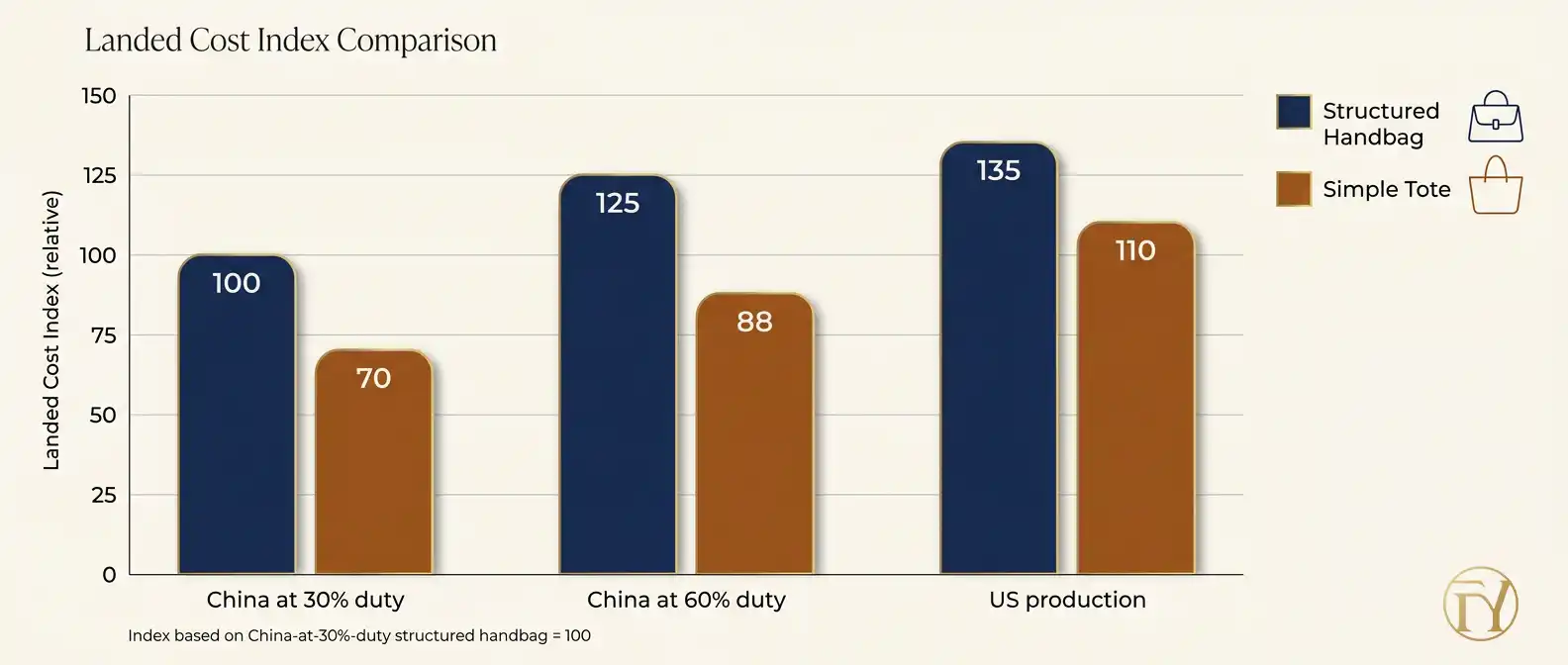
The index model below shows how the routes compare for a structured handbag, with the Chinese factory-gate price set at 100. The duty rates are illustrative scenarios, not current rates.
| Line item (index) | China route, combined duty 30% | China route, combined duty 60% | US route (factory price at 3× China) |
|---|---|---|---|
| Factory-gate price | 100 | 100 | 300 |
| Ocean freight and insurance | 6 | 6 | 0 |
| Duty on customs value | 30 | 60 | 0 |
| Brokerage, port fees, drayage | 4 | 4 | 0 |
| Extra inventory carrying cost | 3 | 3 | 0 |
| Domestic freight to warehouse | 0 (in drayage) | 0 (in drayage) | 2 |
| Landed cost index | 143 | 173 | 302 |
In this example the China route stays well below the US route even at a high combined duty. Swap in a simple tote, where the US multiple might be closer to 1.6×, and the US route lands at roughly 162 against 143 or 173. The two routes then sit close enough that speed, labeling and inventory risk decide the question.
Minimums work differently on each side, and the headline MOQ hides the material minimums underneath.
| Factor | Typical US workroom | Typical Chinese bag factory |
|---|---|---|
| Factory minimum | Often small, but priced with setup fees or hourly rates | Varies; many offer flexible or low MOQ for custom work |
| Price at small quantities | High per unit; little volume discount | Higher per unit at small runs, with steeper volume breaks |
| Blended orders | Possible; depends on the workroom | Many factories blend MOQ across colors and sizes |
| Material minimums | Distributor cut-lengths for stock fabric; specialty items hard to find | Wide stock at material markets; custom colors carry mill minimums |
| Capacity | Limited; booking queues common in peak seasons | Larger; multiple lines can run in parallel |
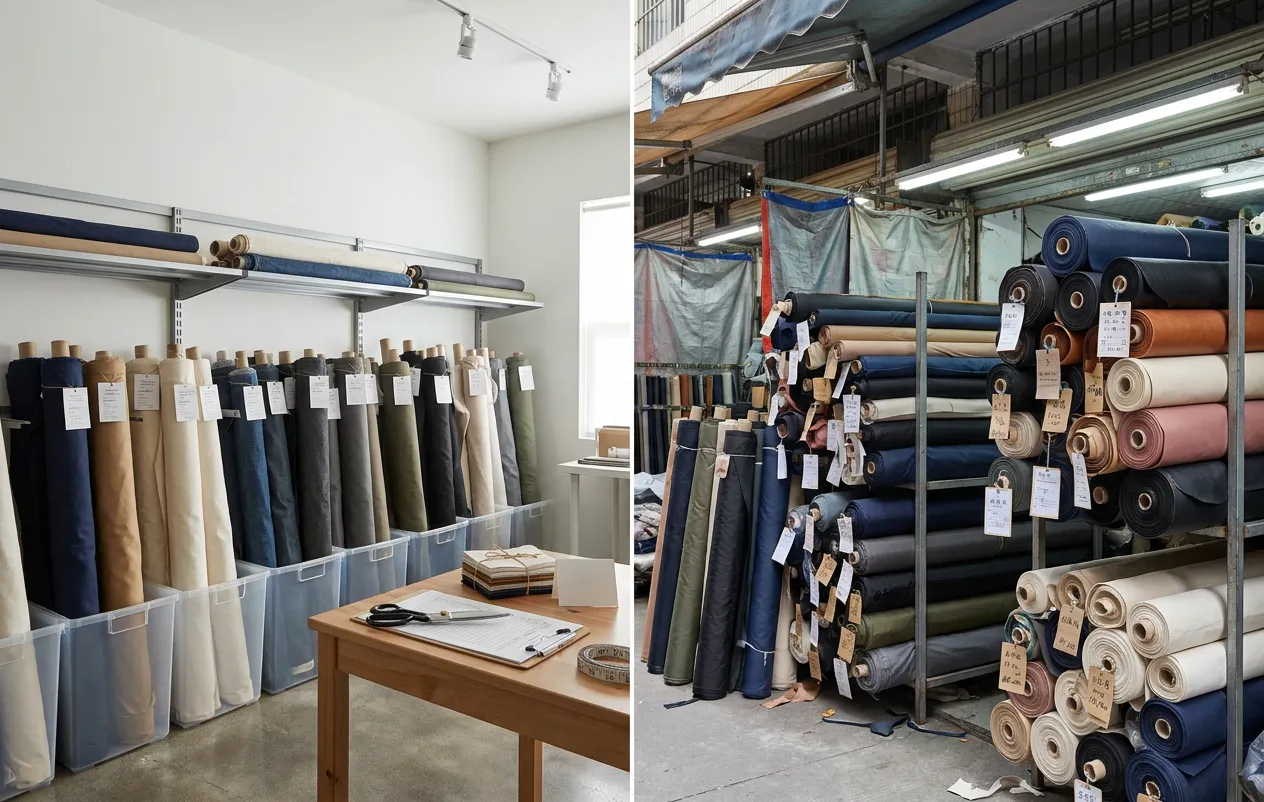
US workrooms suit very small or one-off runs, especially when you need to see the bag before committing to volume. Chinese factories become competitive at test-order sizes when they offer flexible MOQ and can source stock materials from nearby suppliers. Our guide to how MOQ influences bag production cost and lead time explains where the price breaks usually fall.
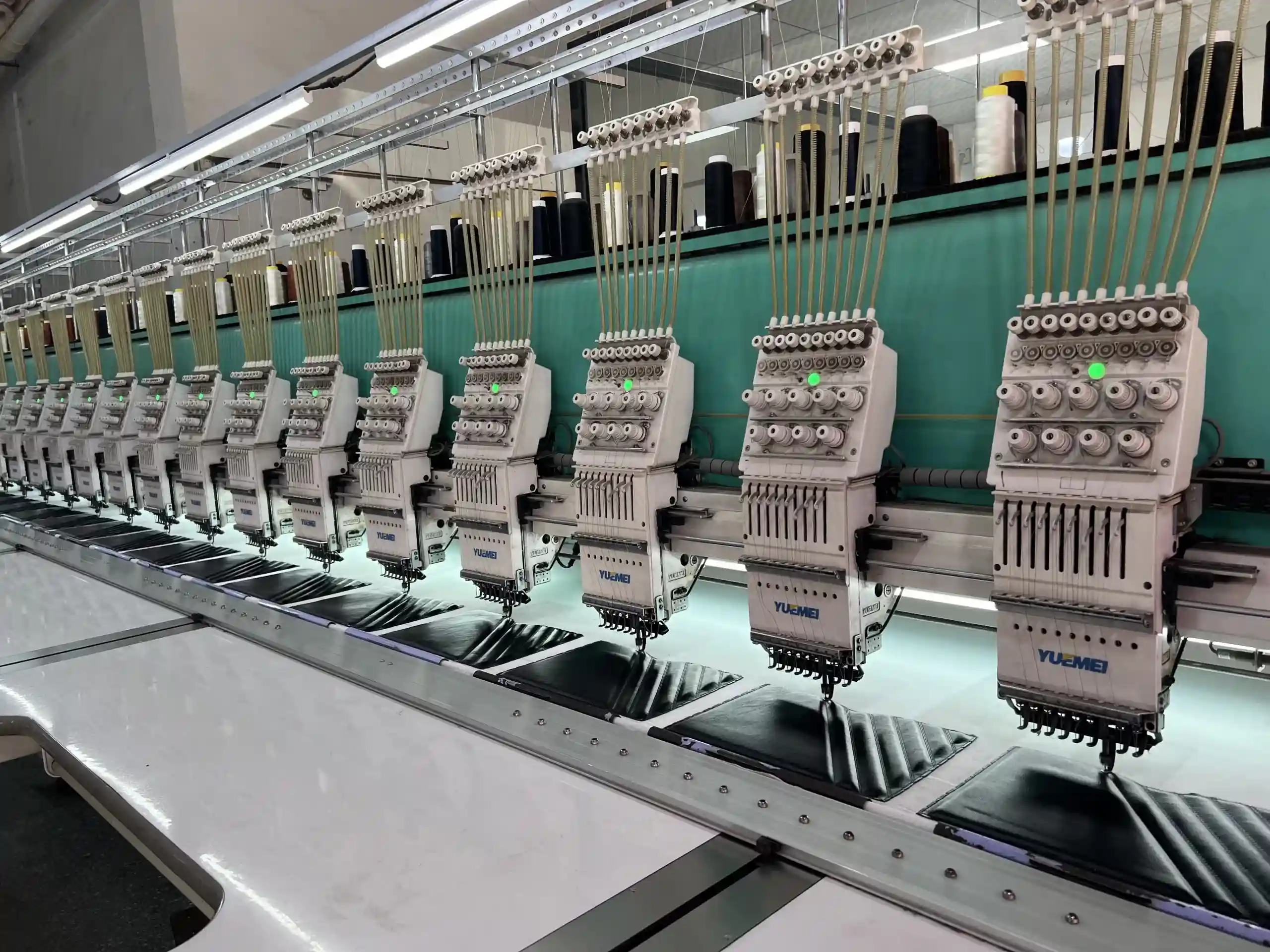
Quality depends on the factory’s systems, skills and materials, and both countries have excellent and poor producers. Guangzhou’s leather goods cluster has decades of handbag experience, deep supplier networks for leather, PU, linings and hardware, and specialist shops for edge painting, embossing and plating. US workrooms bring strengths in heritage leather work, short communication lines and easy in-person checks.
Judge any maker, in either country, on the same evidence:
Distance is the real quality risk with offshore production, because problems found at your warehouse cost more to fix. Close that gap with a sealed approved sample, a third-party or factory inspection before shipment, and clear defect classifications. FYBagCustom’s quality control process shows what a pre-shipment inspection covers.
| Stage | China, shipped to the US | USA |
|---|---|---|
| First sample | About 1–2 weeks at fast-sampling factories | 1–4 weeks, depending on workroom queue |
| Bulk production | Commonly 4–7 weeks after sample approval | Commonly 3–8 weeks, depending on capacity |
| Transit | Roughly 2–3 weeks ocean to the West Coast, longer to the East Coast; about 1 week by air | Days by ground |
| Customs and inland delivery | About 1–2 weeks | None |
| Reorder cycle | Roughly 8–12 weeks door to door by sea | Roughly 4–10 weeks |
China wins on sampling speed and bulk capacity; the US wins on transit and reorder agility. The domestic advantage matters most for products that sell out unpredictably, where a four-week reorder protects revenue that a twelve-week pipeline would lose. Air freight closes part of the gap for urgent replenishment at a higher freight cost per unit. Our shipping solutions page covers sea, air and consolidated options from Guangzhou.
The US Federal Trade Commission requires that a product labeled “Made in USA” be “all or virtually all” made in the United States, and its 2021 Made in USA Labeling Rule allows civil penalties for violations. A bag sewn in the US from imported leather, zippers and hardware will usually not qualify for an unqualified claim.
Options that comply:
Some states, notably California, have their own origin-claim rules, so check state law where you sell. If the domestic label is central to your marketing, have your materials list reviewed before you price the program.
| Your situation | Better fit | Why |
|---|---|---|
| “Made in USA” is your core brand promise | USA | The label requires domestic production and largely domestic materials |
| Structured handbags or leather goods at mid-market prices | China | Labor-heavy construction makes the cost gap widest |
| Simple canvas totes in small runs with fast reorders | Either; model both | Lower labor content narrows the gap |
| First collection, need samples fast and flexible MOQ | China | Fast sampling and broad material access |
| Event merchandise needed in under four weeks | USA, or China by air | Transit time dominates |
| Amazon FBA or wholesale program scaling past test volume | China | Capacity, volume breaks and blended MOQ |
| Monogramming or personalization per order | USA finishing on China-made bags | Split the base production from the custom touch |
Many brands run a hybrid model:
Hybrids work when both makers build from the same tech pack and materials list. Expect small differences in stitching and finish between two factories, and keep them on separate SKUs if consistency matters to your customers.
FYBagCustom is Your Trusted Custom Bag Manufacturer in China, producing OEM, ODM and private label bags for brands that want the cost and capacity of Chinese production with tight control over quality.
FYBagCustom, a custom bag factory in Huadu District, Guangzhou, has 15+ years in bag and handbag manufacturing, a 5,000 m² facility, 500+ staff and 10+ production lines. Materials come from 200+ verified suppliers, so most leather, PU, nylon, canvas and cotton choices can be matched without long material lead times.
If you are modeling both routes, send us your tech pack or reference bag and we will quote it so you can compare like for like.
For most structured bags, yes. Labor-heavy construction keeps the Chinese factory-gate price far enough below US quotes that freight and duties rarely close the gap. Simple, low-labor products such as basic canvas totes can come close when combined duties are high. Build a landed cost model with your HTS code, the current duty stack and real quotes from both sides before deciding.
US workrooms often accept small runs but price them with setup fees or hourly rates, so unit costs stay high. Chinese factories vary: some quote high minimums per color, while others offer flexible MOQ and blend quantities across colors and sizes. In both countries, custom-dyed materials can carry their own mill minimums, so ask about material MOQs as well as factory MOQs.
Usually not as an unqualified claim. The FTC requires “all or virtually all” of the product to be made in the US, which imported leather, zippers and hardware typically rule out. You may be able to use a qualified claim such as “Made in USA with imported materials” or “Assembled in USA” if the last substantial transformation happens domestically. Have the claim reviewed before printing labels.
Ocean freight to the US West Coast typically takes about two to three weeks port to port, and longer to the East Coast. Add roughly one to two weeks for customs clearance and inland delivery. Air freight usually arrives in about a week door to door. A full sea-freight reorder, including production, commonly runs eight to twelve weeks.
Start with a detailed tech pack and an approved, sealed sample. Agree on defect classifications and an AQL level before production, and require a final inspection before shipment, either by the factory’s QC team or a third party. Ask for in-line inspection photos during production, check material sources, and keep retained samples from each run for reorders.
To get a like-for-like quote for your model, contact the FYBagCustom team.
FYBagCustom’s OEM/ODM team quotes from your tech pack so DTC founders, Amazon sellers and sourcing managers can compare like for like, with 5–7 day sampling, flexible MOQ and 100% pre-shipment inspection from our Guangzhou factory.
Start Your Custom Bag Project →