Tel/WhatsAapp:+86 18011919834
E-mail: chloe.x@fybagcustom.com

Tel/WhatsAapp:+86 18011919834
E-mail: chloe.x@fybagcustom.com
Send Your Inquiry Today

Who this guide is for: brand owners, sourcing managers, product developers, wholesale buyers and DTC founders who need to understand handbag costing before they brief a factory, set a retail price or compare quotes.
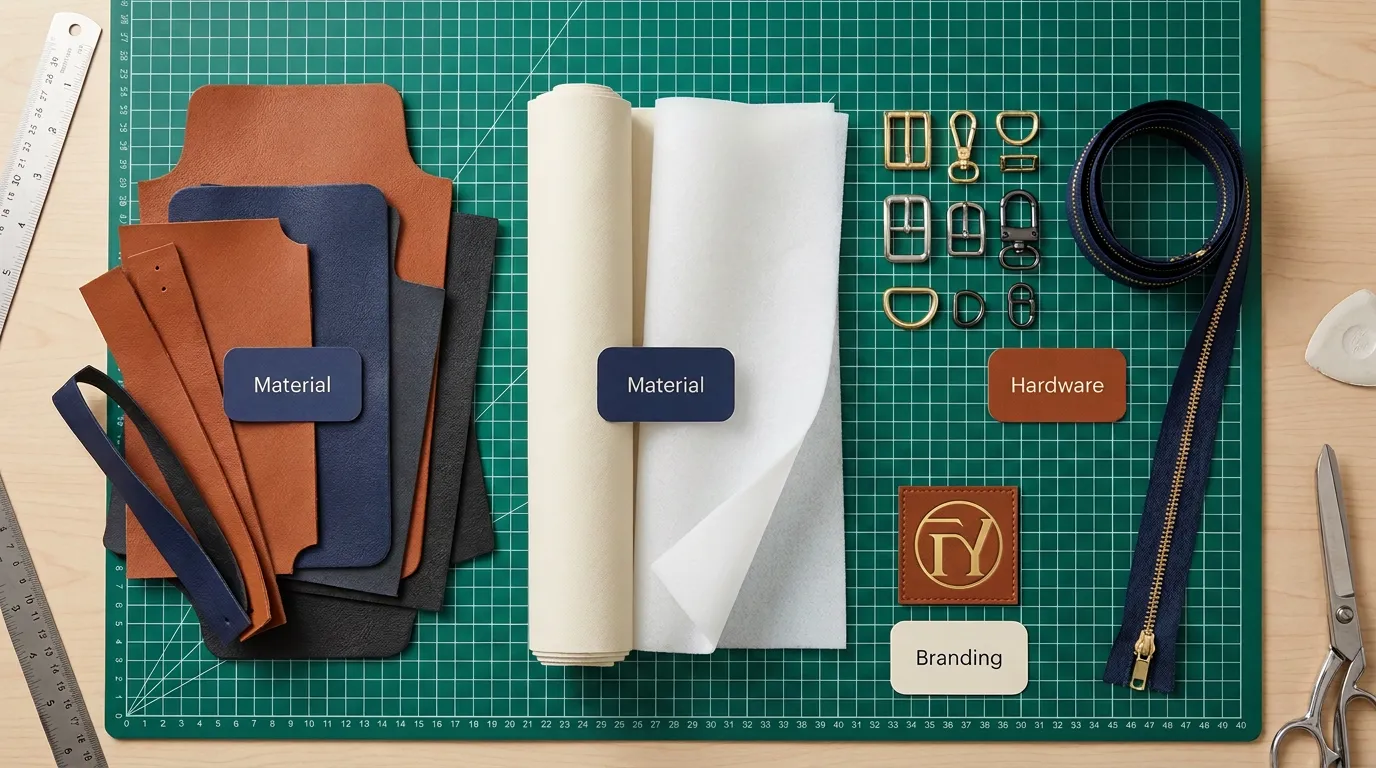
Founders ask “how much does it cost to manufacture a handbag?” early, often before they have a material or a construction in mind. Two bags with the same silhouette can sit at opposite ends of the price scale, so a useful answer starts with the cost structure. Once you know which decisions move the factory price, you can design custom handbags to a target cost instead of discovering the cost after sampling.
Quick answer: A handbag’s factory price is the sum of five things: materials (usually the largest share), labor set by construction complexity, hardware and trims, branding and packaging, and factory overhead and margin. Order size spreads one-time costs such as patterns, cutting dies and hardware molds, so the same bag costs less per unit in a larger run than in a pilot order.
A factory quote, usually given FOB (free on board at the Chinese port), bundles every cost of making the bag and getting it onto a vessel. Breaking it into components shows you where your design decisions carry the most weight. The shares below are indicative ranges for a typical branded handbag in PU or leather. Your own bag can fall outside them, especially at the luxury or promotional ends of the market.
| Cost component | Indicative share of factory price | What moves it | Where buyers can save |
|---|---|---|---|
| Materials (shell, lining, reinforcement) | Roughly 40–60% | Material grade, panel count, cutting yield, lining choice | Use stock colors; simplify panel layout; match lining grade to price point |
| Labor (cutting, sewing, finishing) | Roughly 15–30% | Construction complexity, edge finishing method, number of operations | Reduce pockets and piping; choose raw or bound edges over painted edges where the brand allows |
| Hardware and trims | Roughly 5–20% | Metal type, plating, custom molds, zipper grade | Use stock hardware with a custom finish; reserve custom pieces for the hero element |
| Branding and packaging | Roughly 3–10% | Logo method, dust bags, boxes, hang tags | Deboss instead of metal plates; standard dust bag sizes |
| Overhead, QC and margin | Roughly 10–20% | Factory scale, inspection scope, order size | Larger or blended orders; stable repeat programs |
Two patterns stand out. Materials and labor together usually account for most of the price, so the biggest savings come from material and construction choices. Hardware has the widest range, which is why a single custom clasp can move a quote more than buyers expect.
Material cost depends on three numbers: the price per unit area, the area each bag consumes, and the share of material lost in cutting. Buyers tend to focus on the first and ignore the other two.
| Shell material | Relative material cost | Typical cutting waste | Notes for costing |
|---|---|---|---|
| Full-grain leather | Highest | High (irregular hides, natural marks) | Priced per square foot; grade selection and hide size drive yield |
| Top-grain or corrected-grain leather | High | Moderate to high | More consistent surface than full grain; still hide-based yield |
| Microfiber leather | Moderate to high | Low (rolled goods) | Leather-like hand and strength; consistent width helps nesting |
| Premium PU | Moderate | Low | Wide range of grains and finishes; quality varies sharply by mill |
| Standard PU or PVC | Low | Low | Lowest cost leather look; watch peel and cracking performance |
| Canvas, nylon or polyester | Lowest to moderate | Low | Coatings, weaves and recycled content change the price |
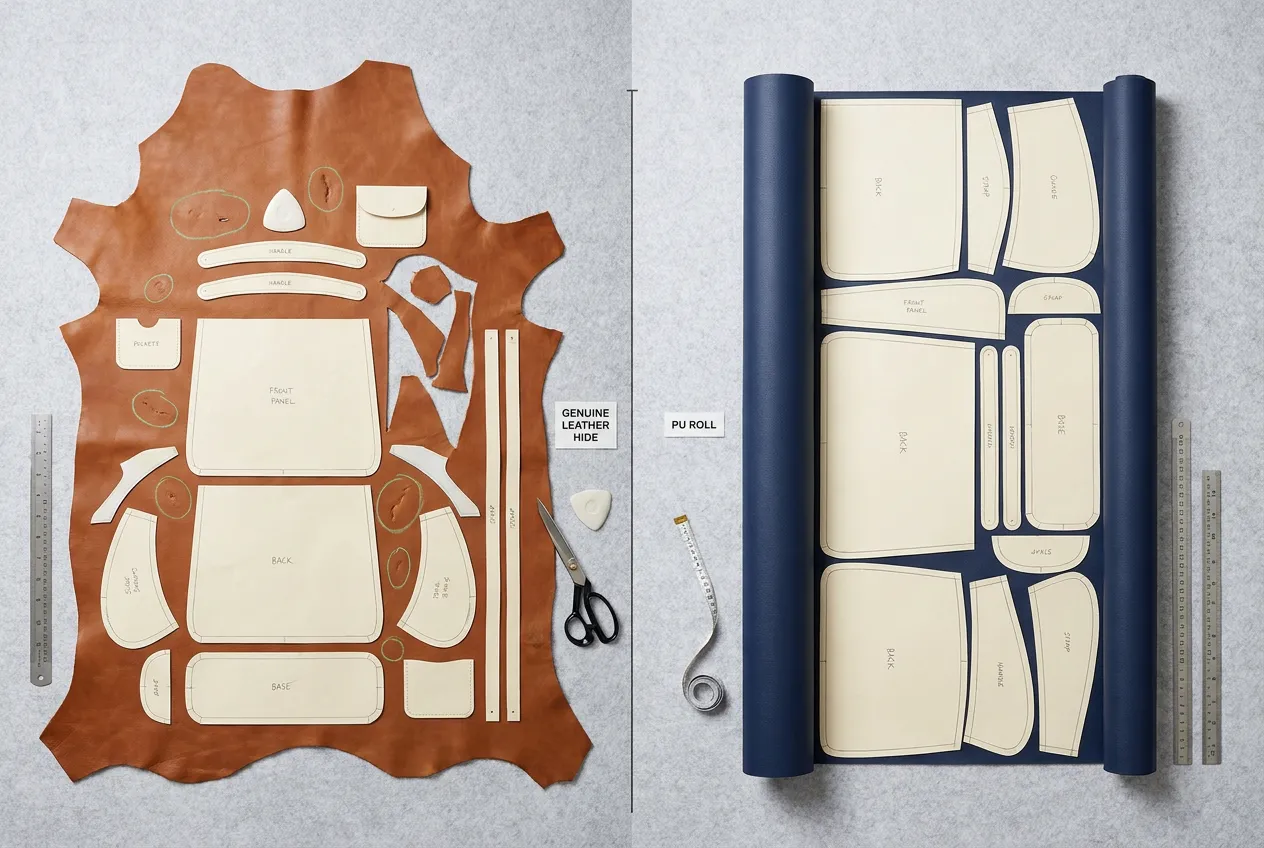
Hides come in irregular shapes with scars, insect bites and thin areas, so a cutter can use only part of each hide. Depending on grade and pattern, usable yield for handbag panels often lands somewhere around 70–85%. Rolled goods such as PU, microfiber and canvas come in fixed widths, and good nesting can keep waste in the single digits to low teens. If you are weighing genuine leather against alternatives, our leather bag materials page compares the options available for custom programs.
The materials you cannot see also add up. A structured handbag may carry a fabric lining, foam or board reinforcement, interfacing behind the logo, edge tape and adhesive. A jacquard lining with a printed logo costs more than a plain polyester twill, and a fully reinforced base costs more than a single board insert. Each of these items belongs in your bill of materials, because each one shows up in the quote.
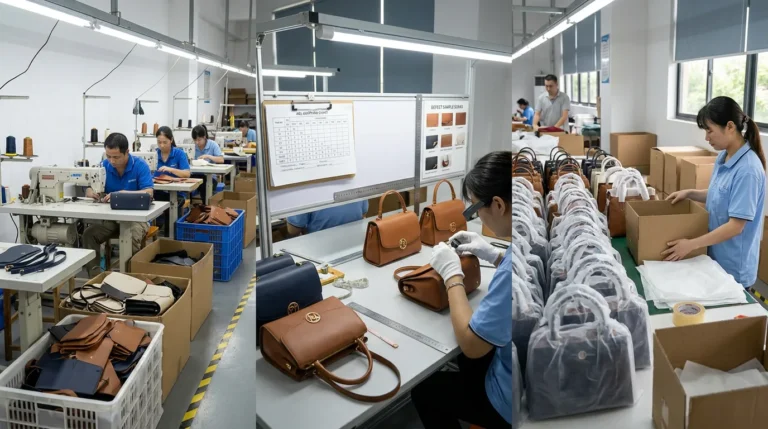
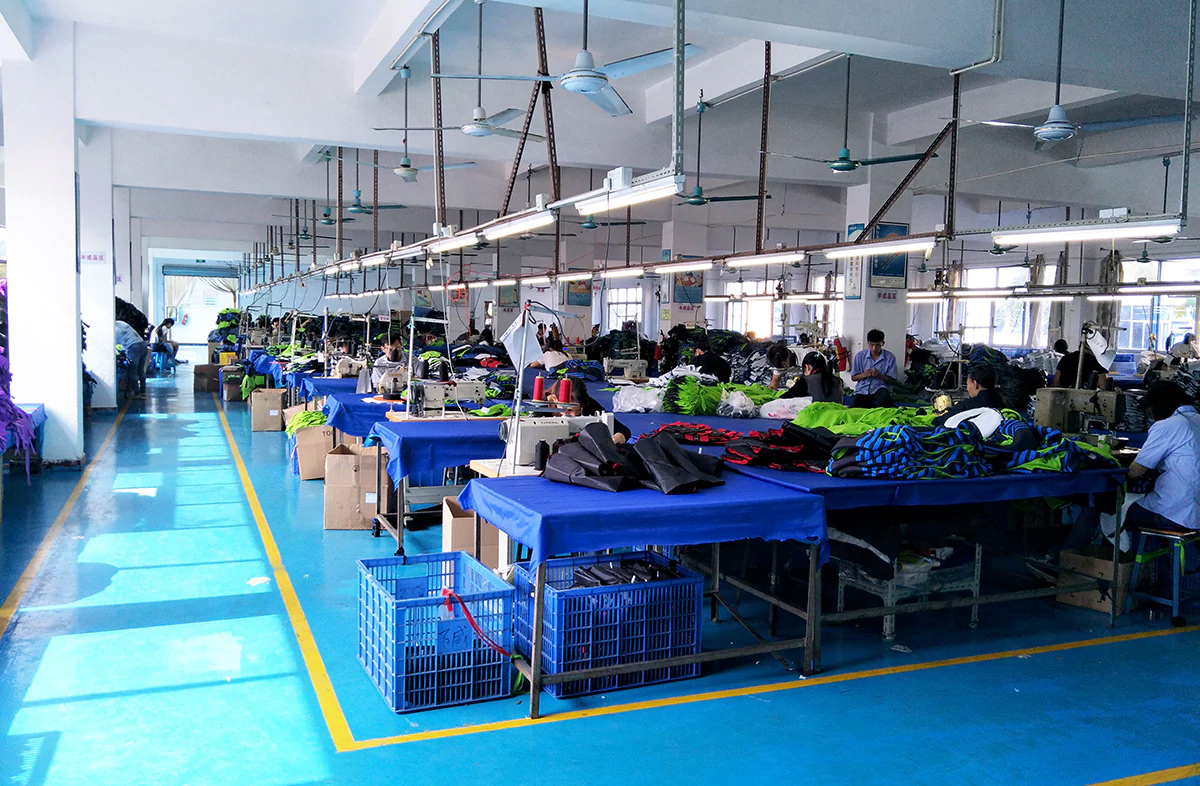
Factories estimate labor from the number of operations and the standard minutes each one takes. A bag with more panels, more pockets and more finishing steps needs more minutes, and minutes are what you pay for. A structured top-handle bag with painted edges can take three to five times the sewing and finishing time of an unlined PU tote, even when the two use similar amounts of material.
| Construction feature | Labor impact | Why it costs more |
|---|---|---|
| Unlined, single-panel body | Low | Few operations, simple assembly |
| Full lining with slip and zip pockets | Moderate | Extra cutting, sewing and turning steps |
| Piping or welting along seams | Moderate | Separate piping preparation and slower sewing around curves |
| Painted edges | Moderate to high | Several coats with sanding and drying between each |
| Turned edges (folded and glued) | High | Skiving, gluing and folding by hand before stitching |
| Quilting or channel stitching | Moderate to high | Extra layers, long stitch runs, pattern alignment |
| Structured frame or boxed gussets | High | Post-bed sewing, reinforcement fitting, shape control |
| Woven or braided panels | Highest | Hand preparation of strips and slow assembly |
Labor rates also vary by region. Guangdong’s labor costs sit toward the higher end within China, and the region earns that through skills depth: experienced pattern makers, edge painters and sample sewers who handle complex handbag constructions. Moving a simple tote to a lower-wage region may save money. Moving a complex structured bag can raise defect rates enough to erase the saving.
Hardware is small, but it combines material cost, tooling, plating and quality risk in one part. A handbag can carry ten or more metal pieces: rings, swivel clasps, feet, magnetic snaps, a turn lock, zipper pulls and a logo plate.
| Hardware choice | Relative cost | Durability and look | Costing note |
|---|---|---|---|
| Iron, plated | Lowest | Prone to rust if plating wears | Suitable for low-cost promotional bags only |
| Zinc alloy, die-cast and plated | Low to moderate | The industry default; wide range of shapes | Plating quality drives most of the performance difference |
| Solid brass | High | Heavier feel, ages well, resists corrosion | Material and machining cost much more than zinc alloy |
| Stainless steel | Moderate to high | Strong and corrosion resistant | Harder to cast into complex shapes |
| Custom-molded logo hardware | Adds a one-time mold cost | Distinctive brand element | Mold cost spreads across every order that reuses it |
Plating thickness, color matching across parts from different suppliers, and an anti-tarnish lacquer layer all add cost and all reduce returns. Zipper choice matters too: branded zippers and metal teeth cost more than generic coil zippers, and the difference shows in the hand feel when a customer opens the bag. FYBagCustom’s custom bag accessories options cover stock and custom hardware, pullers and trims.
A practical rule: put the custom money where the customer looks. A custom logo turn lock on the front flap earns its mold cost. Custom-molded D-rings hidden at the strap ends rarely do.
Order size affects unit cost through three mechanisms.
| Order stage | Relative unit cost | Main driver |
|---|---|---|
| Pilot or test run | Highest | One-time costs and material minimums spread over few units |
| First reorder of a proven style | Moderate | Tooling already paid; materials bought closer to need |
| Established core program | Lowest | Full material runs, efficient lines, stable QC |
Blending helps. A factory that allows one minimum across several colors, sizes or silhouettes sharing a material helps you reach efficient material runs sooner without overstocking any single SKU. Our analysis of how MOQ influences production cost and lead time goes deeper on that trade-off.
Branding costs depend on the method. Debossing or blind embossing uses a metal plate, a small one-time cost, and adds almost nothing per unit afterward. Hot-foil stamping adds foil and a slower press step. A metal logo plate adds hardware cost and an attachment step. Woven labels and printed linings carry their own minimums at the label or fabric mill.
Packaging can climb faster than buyers plan for. A polybag with a printed hang tag sits at the low end. A branded dust bag adds sewing and printing. A rigid gift box adds box tooling, freight volume and storage space, and sometimes it rivals the cost of a simple bag. Decide the unboxing experience early, because it changes carton sizes and freight cost as well.
Testing sits outside the factory price but belongs in your budget. Retailers and some markets require chemical tests on materials, such as restricted substance checks, and the lab fee scales with the number of distinct materials and colors, so consolidating materials lowers the testing bill.
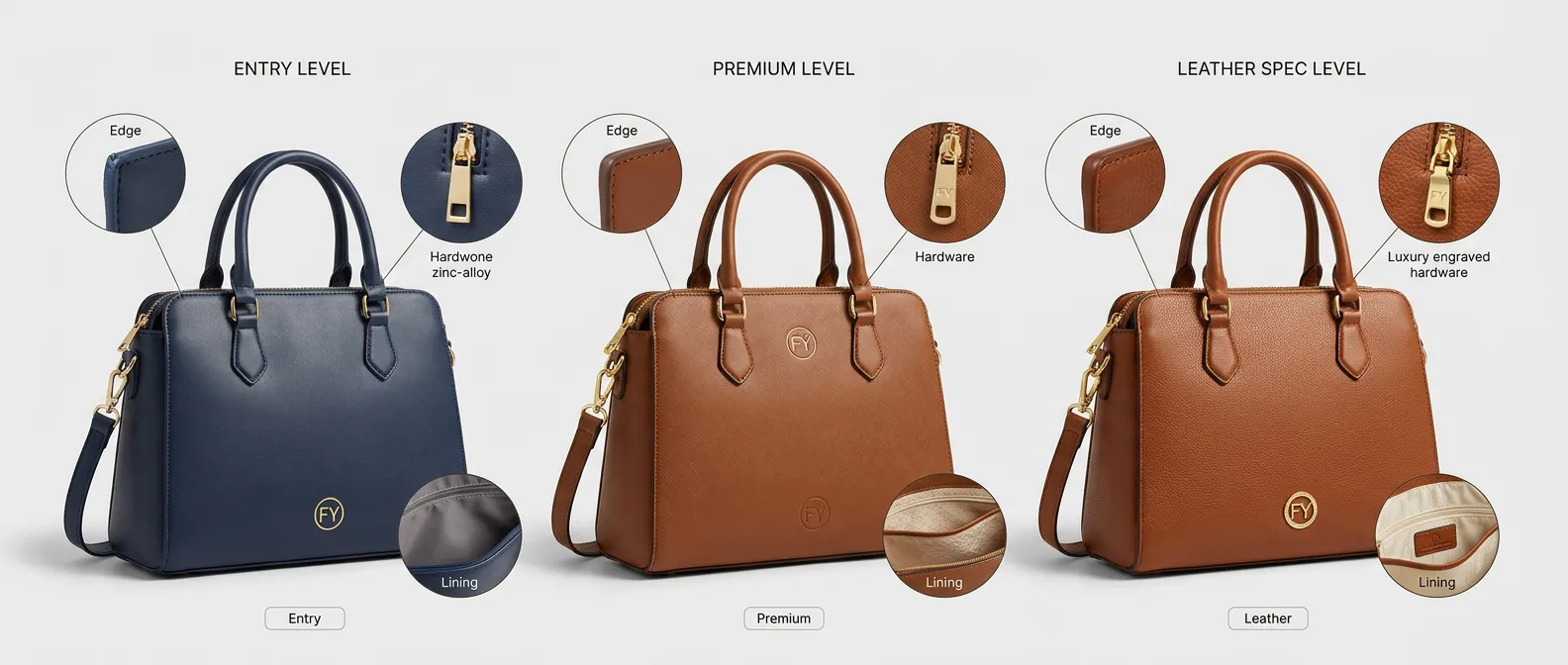
Without quoting prices, you can still compare specifications on a relative scale. The three examples below share a similar size and shape, a mid-size top-handle bag with a shoulder strap.
| Spec | Materials and construction | Hardware and branding | Relative factory cost (indicative) |
|---|---|---|---|
| A: entry PU | Standard PU shell, polyester lining, bound edges, one slip pocket | Stock zinc-alloy hardware, debossed logo | Baseline (1×) |
| B: premium vegan | Microfiber shell, logo jacquard lining, painted edges, zip and slip pockets, reinforced base | Stock hardware in a custom plating color, metal logo plate | Roughly 1.5–2× the baseline |
| C: leather | Top-grain leather shell, turned edges on the flap, piped seams, suede-feel lining | Custom-molded turn lock, solid brass rings, branded zipper, dust bag and box | Roughly 3× the baseline or more |
The jump from A to B comes mostly from material grade and edge finishing. The jump from B to C comes from hide-based material yield, hand-finished edges and custom hardware tooling. Change one variable at a time when you work with a factory on cost, and you will see which choices give the most perceived value per unit of cost.
The factory price is only part of what you pay. Landed cost adds ocean or air freight, insurance, import duty, any additional tariffs, customs brokerage, port fees, inland trucking and warehouse receiving. For bags shipped to the United States, duty depends on the HTS classification under heading 4202, which turns on the outer material. Tariff measures on China-origin goods have also changed several times in recent years, so confirm the current rates with your customs broker before you set a retail price.
Freight also depends on how the bag ships. A structured handbag stuffed with paper and packed in a rigid box takes far more carton volume than a soft bag folded flat in a polybag. On sea freight, volume often drives cost more than weight. If you are comparing sourcing countries on total cost, our landed cost comparison of China, Vietnam, India and Mexico walks through each line.
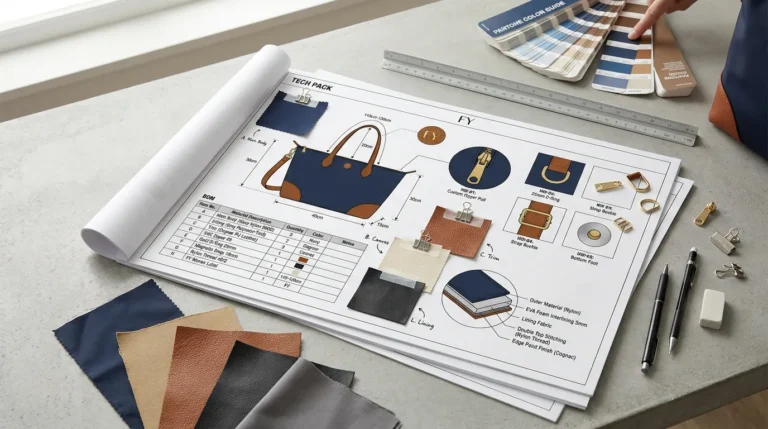
Vague briefs get vague quotes, and vague quotes change after sampling. Send the factory enough detail to price the bag you will sell:
Ask for the quote broken down into the components in the first table, and ask the factory which two or three changes would lower the cost most. Our list of ways to optimize handbag unit cost at the design stage gives you ten specific levers to discuss.
FYBagCustom is Your Trusted Custom Handbag Manufacturer in China, offering OEM, ODM and private label development for brands that want to design to a target cost.
FYBagCustom, a custom bag factory in Huadu District, Guangzhou, has 15+ years of experience, a 5,000 m² facility, 500+ staff and 10+ production lines. Several of the cost levers in this guide depend on factory scale and supply chain depth:
If you have a target retail price and a rough design, send us your brief and our team will point out which material, construction and hardware choices fit the cost tier you need.
Materials are usually the largest share of a handbag’s factory price, often somewhere between 40% and 60%, followed by labor. For leather bags, hide yield pushes the material share higher. For complex constructions with painted or turned edges, labor takes a larger share. Hardware has the widest range and can become a major cost driver when you specify custom molds or solid brass.
In most cases, yes. Genuine leather costs more per unit area and loses more material in cutting because hides are irregular and carry natural marks. Premium microfiber can approach the cost of lower-grade leather, while standard PU sits well below both. The total gap depends on construction, because a leather bag often comes with more expensive edge finishing and hardware.
Smaller orders carry higher unit costs because one-time costs such as patterns, cutting dies, emboss plates and hardware molds spread over fewer bags. Mills may also charge for short material runs in custom colors. Blended minimums across colors and sizes, stock materials and stock hardware are the most effective ways to keep a small first order affordable.
Quotes change when the sample reveals details the brief did not specify: extra reinforcement to hold shape, a thicker material, more edge-paint coats or a hardware upgrade. Material prices and exchange rates can move as well. A detailed tech pack, a component-level quote and a written record of each sample revision keep the final price close to the first estimate.
Start with choices customers do not notice: simplify panel layouts, reduce hidden pockets, use stock hardware in a custom plating color and match lining grade to the price point. Keep spending on visible quality signals such as the shell material, the front hardware and clean edges. Change one variable per sample round so you can see each change’s effect on cost.
FYBagCustom’s OEM/ODM team helps brand owners, DTC founders and wholesale buyers design handbags to a target cost tier. Share your sketch and target retail price: we respond with material alternatives from 200+ verified suppliers, 5–7 day sampling and flexible MOQ blended across colors and sizes.
Start Your Custom Bag Project →