Tel/WhatsAapp:+86 18011919834
E-mail: chloe.x@fybagcustom.com

Tel/WhatsAapp:+86 18011919834
E-mail: chloe.x@fybagcustom.com
Send Your Inquiry Today

Who this guide is for: brand founders, product developers, sourcing managers, DTC entrepreneurs, Amazon FBA sellers, and any B2B buyer who wants to produce custom handbags at the best possible unit cost — without compromising the quality that justifies their retail price. If you have ever received a factory quote higher than expected and wondered “what in my design is making this expensive?” — this guide identifies the ten design decisions that most impact unit cost and shows you exactly how to adjust each one to reduce production cost by 15–40%, before you even place an order.
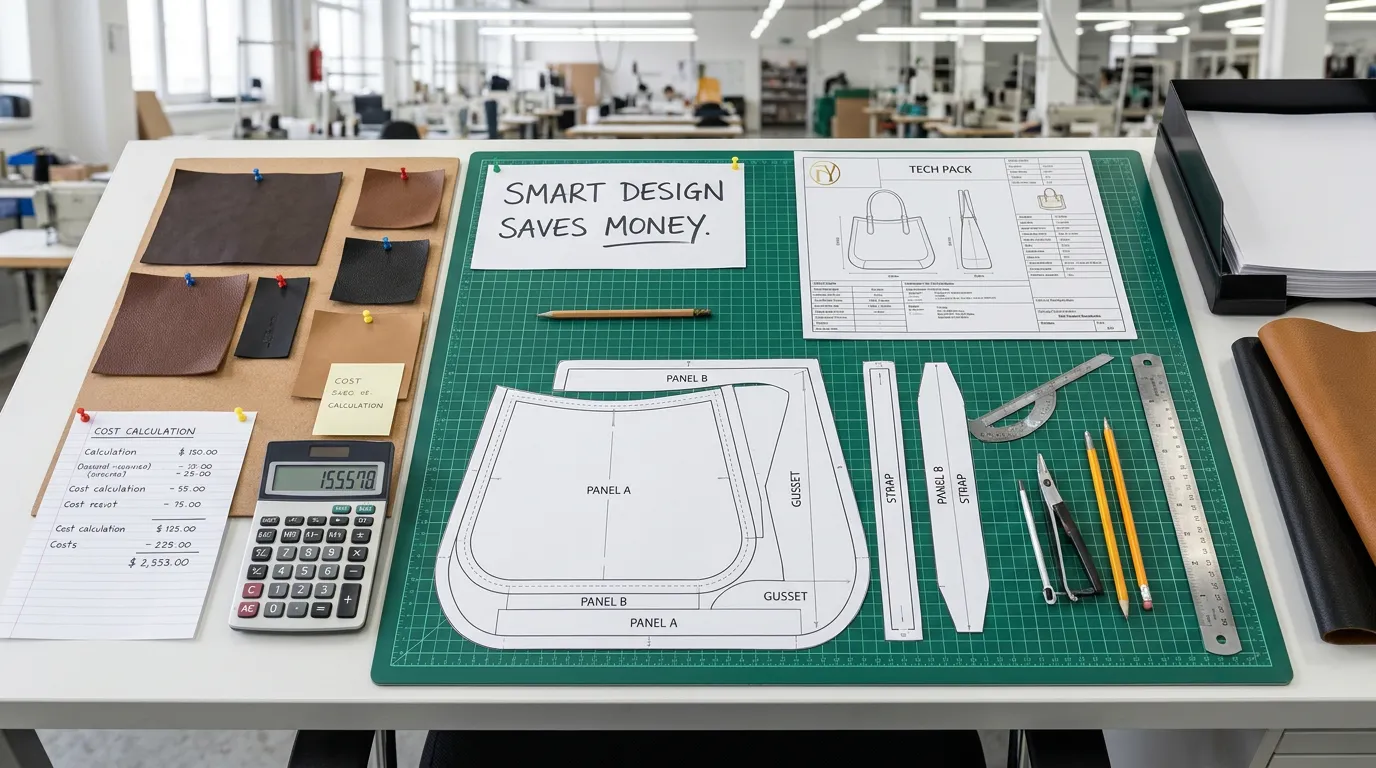
The unit cost of a custom handbag is not determined by the factory. It is determined by you — by the design decisions you make before the factory prices it. Every dimension, material choice, hardware piece, compartment, and construction method in your tech pack has a cost consequence. Some of those consequences are obvious (genuine leather costs more than PU). Many of them are invisible to designers and brand founders who have never worked on a factory floor.
This guide shares the cost knowledge that factories possess internally but rarely communicate to clients. It is written from the manufacturer’s perspective — not to sell you cheaper bags, but to help you design smarter bags where every dollar of production cost delivers maximum perceived value to the consumer. The goal is not to cut corners. The goal is to eliminate waste: wasted material, wasted labor, wasted hardware, and wasted complexity that adds cost without adding value.
Each of the ten tips includes the cost mechanism (why this design decision costs what it does), the optimization (how to adjust it), and the estimated savings (what the adjustment is worth in real dollars per unit). Together, these ten adjustments can reduce unit cost by 15–40% compared to an unoptimized design — often enough to drop an entire price tier or significantly improve your margin at the same retail price.
Before optimizing, you need to understand what you are optimizing. A handbag’s FOB (factory) unit cost breaks down into four components:
The two largest components — material and labor — together account for over 90% of your unit cost. This is where optimization has the greatest impact. Hardware, branding, and overhead offer smaller but still meaningful savings.
The cost mechanism: When pattern pieces are cut from a roll of material, the spaces between pieces — called waste or falloff — are discarded. A poorly laid-out cutting pattern can waste 15–25% of the material roll. A well-optimized layout reduces waste to 8–12%. On a 200-unit order, the difference is hundreds of dollars in material cost.
How waste happens: Curved pieces, irregular shapes, and awkwardly sized panels leave gaps between them when arranged on the cutting table. The more curves and odd angles in your pattern, the more material falls between pieces.
| Pattern Type | Typical Waste Rate | Example |
|---|---|---|
| Rectangular panels (flat tote, box bag) | 8–12% | Simple tote with rectangular front, back, base, gussets |
| Mixed rectangular + curved (structured bag) | 12–18% | Shoulder bag with curved top edge and shaped gussets |
| Highly curved / organic (hobo, crescent) | 18–25% | Hobo bag with deeply curved body panels |
The optimization:
Estimated savings: 1.00 per unit on material cost by reducing cutting waste from 20% to 12%.
The cost mechanism: Material cost varies dramatically — not just between categories (PU vs. genuine leather) but within categories. A premium Italian-grain PU leather at 2.00/m² may look nearly identical in photographs but differ by 125% in material cost.
| Material | Material Needed (medium tote) | Visual Quality (1–10) |
|---|---|---|
| Standard smooth PU | 0.8–1.2 m² | 6–7 |
| Pebbled PU (standard) | 0.8–1.2 m² | 7–8 |
| Saffiano-texture PU | 0.8–1.2 m² | 8–9 |
| Premium Italian-grain PU | 0.8–1.2 m² | 9 |
| Microfiber leather | 0.8–1.2 m² | 9–10 |
| Genuine split leather | 1.0–1.5 m² (more waste) | 9–10 |
The optimization:
Estimated savings: 4.00 per unit by choosing in-stock PU over custom or premium materials; 10.00 per unit by substituting PU for genuine leather.
The cost mechanism: Every pattern piece that must be cut, prepared, and sewn adds labor time. A simple tote with 6–8 pieces (front, back, two gussets, base, two handles) takes approximately 40% less sewing time than a structured bag with 15–20 pieces (front, back, two gussets, base, flap, flap lining, pocket panel, pocket flap, pocket lining, two handle sets, strap loops, binding strips, etc.).
| Bag Complexity | Approximate Piece Count | Sewing Time | Labor Cost Impact |
|---|---|---|---|
| Simple (tote, pouch, clutch) | 6–10 pieces | 15–25 minutes | Baseline |
| Moderate (structured tote, crossbody with pockets) | 12–18 pieces | 25–45 minutes | +40–80% |
| Complex (multi-compartment, convertible, technical) | 20–30+ pieces | 45–90 minutes | +100–200% |
The optimization:
Estimated savings: 2.00 per unit for every 4–5 pieces eliminated from the pattern.
The cost mechanism: Edge finishing — how the cut edges of material are treated — is one of the most labor-intensive steps in bag production. Multi-coat edge paint (the premium standard) requires 2–3 applications with drying and sanding between each coat, consuming 15–30 minutes per bag. Single-coat edge paint requires 5–10 minutes. Folded edges add stitching time. Raw or heat-sealed edges require minimal time.
| Technique | Time Per Bag | Quality Perception |
|---|---|---|
| Raw / heat-sealed | 2–5 min | Budget — acceptable only on interior seams |
| Single-coat edge paint | 5–10 min | Mid-market — adequate for 80 retail |
| Multi-coat edge paint (2–3 coats, sanded) | 15–30 min | Premium — required for $100+ retail |
| Edge folding (turned + stitched) | 10–20 min | Premium — clean, no visible edge |
The optimization:
Estimated savings: 1.50 per unit by zoning edge finishing and reducing total edge length.
The cost mechanism: Custom hardware (logo-engraved zippers, proprietary closures, custom-molded plates) requires tooling — molds, dies, or engraving setups, plus a per-unit premium of 1.00 over standard equivalents. Standard hardware (off-the-shelf zippers, generic D-rings, catalog closures) requires no tooling and benefits from bulk purchasing economies.
The optimization:
Estimated savings: 3.50 per unit by using standard hardware and reducing hardware count.
The cost mechanism: Material comes in standard roll widths — typically 137 cm (54 inches) for PU leather and most fabrics. Your pattern pieces must fit within this width. A bag panel that is 70 cm wide wastes the remaining 67 cm of roll width unless another piece fits beside it. A bag panel that is 65 cm wide may allow two panels to be cut side by side from a single row, effectively halving the material consumption per panel.
| Panel Width | Panels Per Row (137 cm roll) | Material Usage Efficiency | Scenario |
|---|---|---|---|
| 70 cm | 1 per row (67 cm wasted per row) | ~51% | Very wasteful — nearly half the material is scrap |
| 65 cm | 2 per row (7 cm leftover) | ~95% | Excellent — nearly all material used |
| 45 cm | 3 per row (2 cm leftover) | ~99% | Near-perfect efficiency |
| 35 cm | 3 per row (32 cm leftover) | ~77% | Good but imperfect — leftover may accommodate smaller pieces |
The optimization:
Estimated savings: 2.00 per unit by aligning panel dimensions to material roll widths.
The cost mechanism: Higher stitch density (more stitches per inch) requires more sewing time. Increasing from 6 SPI to 9 SPI on all seams adds approximately 25–35% to total sewing time — which translates directly to labor cost.
The optimization:
Specify different SPI by seam visibility:
| Seam Type | Visibility | Recommended SPI | Cost Impact vs. Uniform 9 SPI |
|---|---|---|---|
| Exterior topstitching (front panel, flap, strap) | High — consumer sees it | 8–9 SPI | Baseline — premium where it matters |
| Handle attachment | High — consumer sees and touches | 8–9 SPI | Baseline |
| Interior pocket seams | Low — visible only when bag is open | 6 SPI | Saves 15–20% of interior sewing time |
| Lining body seams | Very low — inside the bag | 5–6 SPI | Saves 20–25% of lining sewing time |
| Base seam (usually hidden by interlining or base board) | None — invisible | 5 SPI | Saves 25–30% on base sewing |
By specifying 8–9 SPI only on visible exterior seams and 5–6 SPI on interior and hidden seams, you save 15–20% of total sewing labor while maintaining the quality perception where the consumer actually inspects it.
Estimated savings: 1.00 per unit by zoning stitch density.
The cost mechanism: A fully bonded lining (stitched at every seam, with multiple organized pockets) adds 20–35% to assembly labor. The lining is the second-most-labor-intensive component after the exterior body — yet it receives a fraction of the consumer’s attention.
The optimization:
Estimated savings: 1.50 per unit by optimizing pocket count and lining construction method.
The cost mechanism: Each branding application adds a production step with its own setup time, tooling cost, and per-unit labor. A bag with debossed logo + embroidered label + foil-stamped hang tag + printed dust bag + branded tissue paper has five separate branding operations. Each one adds 1.50 per unit.
| Branding Element | Setup / Tooling | Visual Impact | Eliminate? |
|---|---|---|---|
| Debossed logo on exterior | Die: 80 (one-time) | Very high — the primary brand mark | Keep — this is essential |
| Woven interior label | 100 for label die (one-time) | Medium — seen when bag is open | Keep — low cost, expected |
| Embroidered exterior logo | Digitization: 50 (one-time) | High — but redundant if debossing is present | Eliminate if debossing is used — choose one |
| Foil-stamped hang tag | Minimal | Low — removed and discarded by consumer | Simplify — printed tag is adequate |
| Branded dust bag (printed) | Screen: 50 (one-time) | Medium — seen at unboxing only | Keep for premium; simplify for mid-market (plain with woven label) |
| Branded tissue paper | Printing plate: 100 | Low — touched once, discarded | Eliminate — use plain tissue; save 0.40 |
| Branded sticker seal | Minimal | Low — seen briefly during unboxing | Keep — very low cost, adds polish |
The optimization:
Consolidate branding into three high-impact elements: (1) debossed logo on exterior, (2) woven interior label, and (3) branded sticker seal. These three cost approximately 2.55 combined per unit and cover the three most important brand touchpoints (what she sees carrying it, what she sees opening it, what she sees unboxing it). Eliminate branded tissue paper, simplify the hang tag, and choose one exterior technique (debossing OR embroidery, not both).
Estimated savings: 2.00 per unit by consolidating from 5–6 branding elements to 3.
The cost mechanism: Certain design features are visually appealing but production-expensive. Others achieve a similar visual result at a fraction of the production cost. The difference is knowing which features cost more to make — and whether the consumer notices or values the expensive version enough to justify the premium.
| Expensive Design Choice | Cost Impact | Alternative | Savings | Visual Difference (consumer-perceptible?) |
|---|---|---|---|---|
| Piping along every seam edge | +2.50 (piping is a separate step per linear meter) | Piping on top edge only; topstitching on other edges | 1.50 | Minimal — topstitching reads as equally intentional |
| Metal zipper with metal teeth | +1.50 over nylon coil zip | Nylon coil zipper with metal slider and pull | 1.00 | Very low — the pull (what the hand touches) is metal; the teeth are invisible when closed |
| Four separate interior pockets (each with its own zip) | +2.00 (4 zips + 4 pocket assemblies) | Two zip pockets + two slip pockets | 1.00 | Minimal — slip pockets are faster to access and equally functional |
| Leather bottom panel (on a PU bag) | +3.00 (leather + cutting + different sewing) | PU bottom panel with reinforced interlining + base feet | 2.50 | Low — base is rarely seen; feet protect it; PU with interlining is functionally equivalent |
| Convertible backpack straps (hidden) | +4.00 (straps + pocket + hardware) | Detachable crossbody strap only (if backpack mode is not essential to the target consumer) | 3.00 | Moderate — but only relevant if your consumer actually needs backpack mode |
The principle: before approving any design feature, ask: “Will my target consumer at my target price point notice this feature enough to pay for it?” If the answer is no, swap it for the lower-cost alternative. If the answer is yes, keep it — and save money on the features she does not notice instead.
| Tip | Savings Per Unit (estimated range) |
|---|---|
| 1. Optimize cutting layout | 1.00 |
| 2. Choose material strategically | 4.00 |
| 3. Reduce pattern piece count | 2.00 |
| 4. Simplify edge finishing | 1.50 |
| 5. Use standard hardware | 3.50 |
| 6. Optimize dimensions for material yield | 2.00 |
| 7. Zone stitch density | 1.00 |
| 8. Simplify lining construction | 1.50 |
| 9. Consolidate branding | 2.00 |
| 10. Design for production efficiency | 2.50 |
| Total potential savings | 21.00 per unit |
On a bag with a baseline FOB of 12.00–1,200–$1,600 in total savings.
Importantly, these savings come from design intelligence, not quality cuts. The consumer sees the same premium stitching on visible seams, the same fashion-grade material on the front panel, and the same branded debossed logo. She does not see the 6 SPI on the hidden base seam, the single-coat edge paint on the gusset, or the standard zipper pull that looks identical to a custom one. The bag looks and feels the same. It costs 30–40% less to produce.
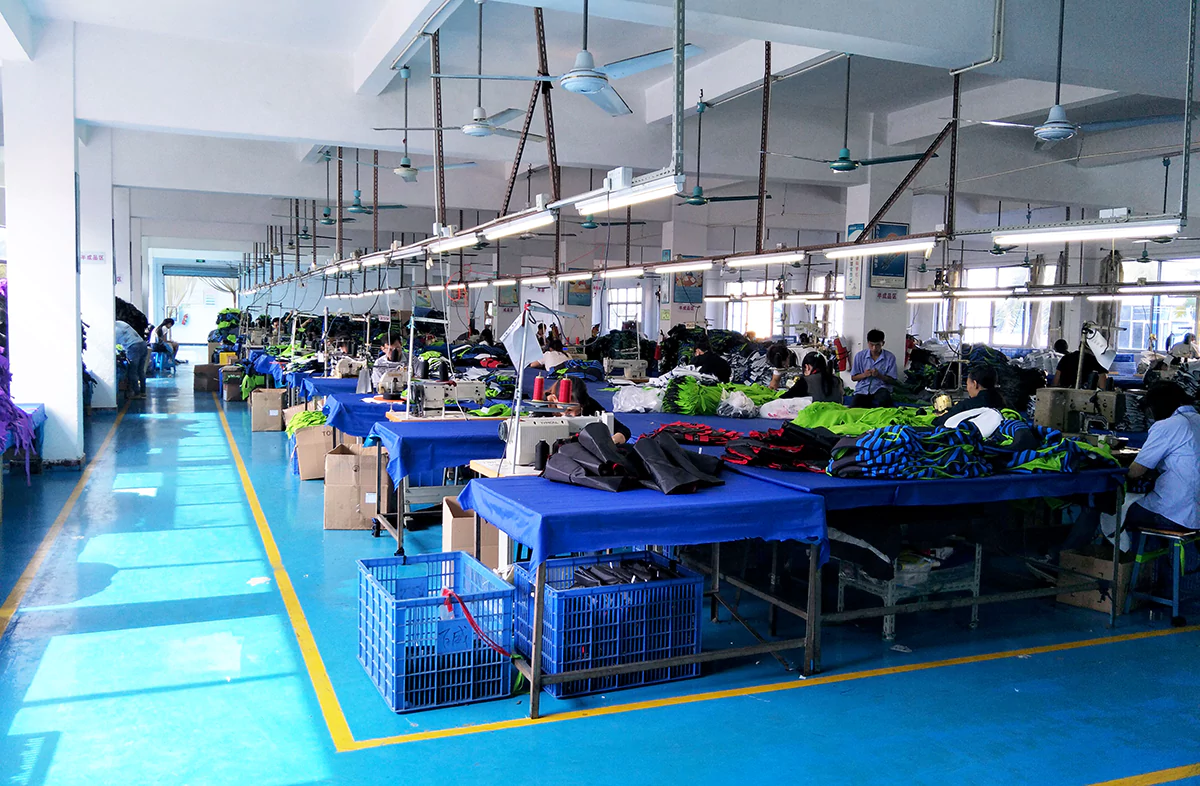
FYBagCustom is Your Trusted Custom Bag Manufacturer in China, and cost optimization is a core part of our development consultation. For every tech pack we receive, our team evaluates not just how to produce the bag, but how to produce it more efficiently — because a lower unit cost benefits both our clients and our long-term partnership. Our cost optimization support includes:
Our 50,000 m² factory in Guangzhou with 10+ production lines, 500+ professional staff, and 15+ years of manufacturing experience produces cost-optimized bags for DTC brands, Amazon FBA sellers, boutique retailers, and fashion labels — helping clients achieve premium quality at competitive unit costs.
Cost optimization is not about making cheaper bags. It is about making smarter bags — where every dollar of production cost delivers maximum value to the consumer and maximum margin to the brand. For B2B buyers designing custom handbags, three core takeaways:
If you have a design that needs cost optimization — or a budget that needs a smarter design to fit — contact FYBagCustom. Send us your tech pack or concept, and we will return a quotation plus a set of specific cost-optimization recommendations, typically within 48 hours. The smartest bag is not the most expensive one to make. It is the one where every cent of cost creates a cent of value the consumer will pay for.
FYBagCustom’s development team reviews every tech pack for cost optimization opportunities — cutting layout, material substitution, hardware consolidation, and production-efficient design. Send us your design and we’ll return a quote plus savings recommendations within 48 hours.
Start Your Custom Bag Project →