Tel/WhatsApp:+86 18011919834
E-mail: chloe.x@fybagcustom.com

Tel/WhatsApp:+86 18011919834
E-mail: chloe.x@fybagcustom.com

Who this guide is for: brand owners, designers, sourcing managers, DTC founders and private label buyers who are about to send their first handbag design to a factory and want to know what happens between the sketch and the sample on their desk.
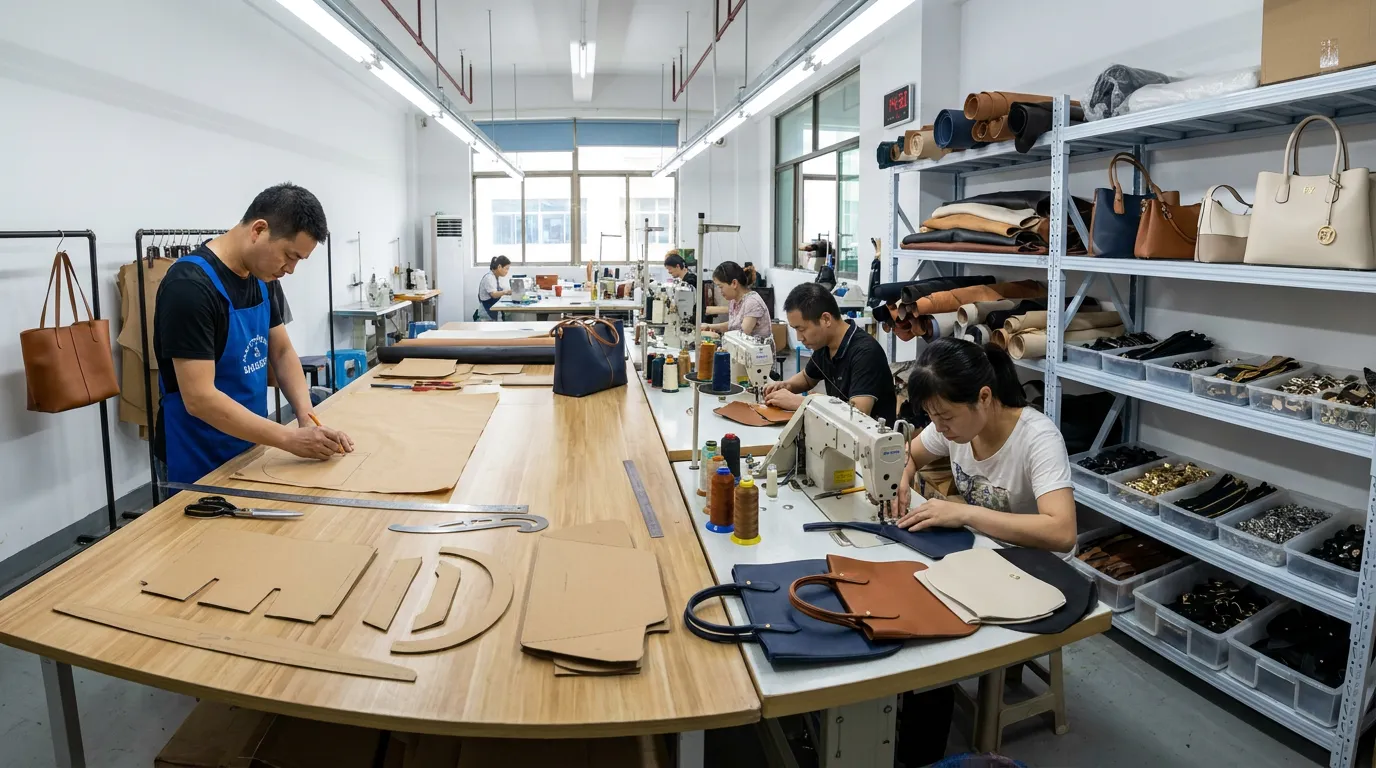
The sample is the first physical proof that a factory understood your design, and for most brands it decides whether the supplier relationship continues. Buyers see the parcel arrive after a week. The work behind it stays hidden: a pattern drafted and corrected, leather chosen from a market a few streets away, a logo plate pressed, edges painted in several coats, and a final check against your measurements before the box is sealed.
This guide walks through the handbag sampling process inside a Guangzhou sampling room: who does the work, what happens on each day of a standard 5–7 day sample, what slows a sample down, and how to read the result. It also covers the signals that tell you whether a factory will be a reliable partner in bulk.
Quick answer: A standard handbag sample moves through five stages: brief review, pattern making, material cutting and preparation, assembly, and finishing with inspection. A well-equipped Guangzhou sampling room completes a standard sample in about 5–7 days once the tech pack and materials are confirmed. Complex structured bags with custom hardware take longer, around 7–12 days, and most designs need one or two revision rounds.
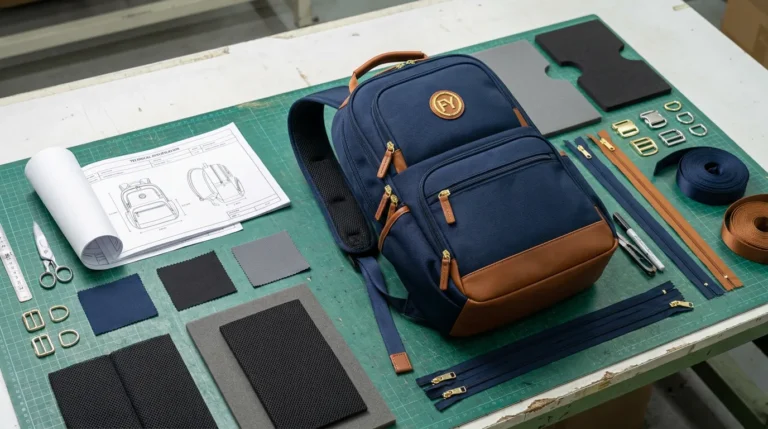
A sampling room is a small factory inside the factory. It holds the most experienced people on site, because a sample has to be built without the jigs, dies and line routines that make bulk production repeatable. A typical handbag sampling team includes these roles:
| Role | What they do on your sample | Why it matters |
|---|---|---|
| Developer or project lead | Reads your brief, lists questions, plans materials and timing | Catches missing information before cutting starts |
| Pattern maker | Drafts the paper pattern, sets seam allowances, interfacing and reinforcement | Decides shape, proportions and how the bag holds up |
| Material and hardware buyer | Sources leather, PU, lining, zippers and hardware from suppliers and local markets | Keeps the sample close to your target materials |
| Cutter and prep worker | Hand-cuts panels, skives edges, glues interfacing | Controls bulk at seams and clean edges |
| Sample sewer | Assembles the bag on flatbed, post-bed and cylinder-arm machines | Builds the construction the pattern describes |
| Finisher | Paints edges, sets hardware, cleans and shapes the bag | Gives the bag its retail-ready look |
| Sample checker | Measures and inspects against your spec, photographs the result | Confirms the sample matches what you asked for |
In a smaller sampling room, one person may cover two roles, such as cutting and skiving. Either way, one named person should own your sample from brief to shipment and answer your questions.
The quality of a sample depends on the quality of the brief. A factory can work from a sketch, but every gap in the brief becomes a guess, and guesses become revision rounds. Our custom design service can turn a sketch or reference image into a workable spec, but the more of the list below you can supply, the closer the first sample lands.
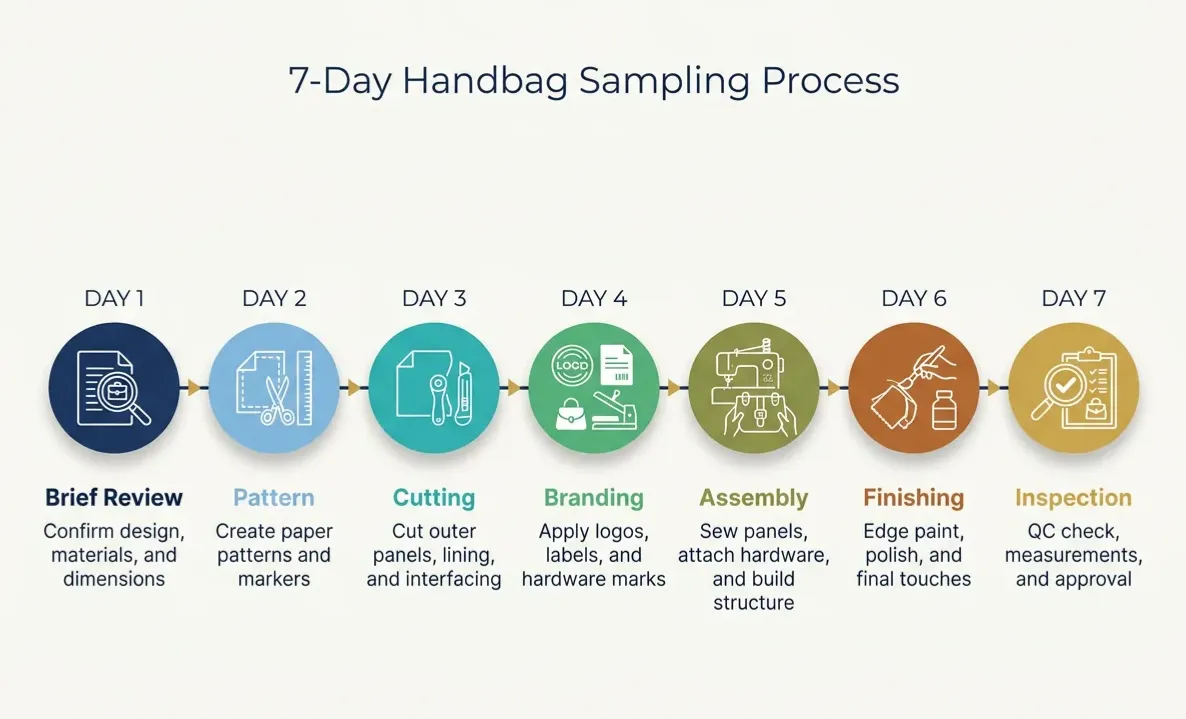
Once the brief is clear and materials are available, a standard handbag sample follows a predictable rhythm. The schedule below shows a typical breakdown; complex details shift the days, and work often overlaps.
| Day | Stage | What happens | What you may receive |
|---|---|---|---|
| Day 0 | Brief review | Developer reviews your files, lists questions, confirms materials and hardware | A written list of questions or assumptions |
| Day 1 | Pattern making | Pattern maker drafts paper patterns; material buyer sources leather, lining and hardware | Material and color options to confirm |
| Day 2 | Mock-up and cutting | A quick paper or offcut mock-up checks proportions; panels are cut and skived | Photo of the mock-up for shape approval |
| Day 3 | Preparation and branding | Interfacing glued, logo debossed or embroidered, handles and straps built | Close-up of the logo application |
| Day 4 | Assembly | Body, gussets and lining sewn; pockets and closures attached | Progress photos on request |
| Day 5 | Finishing | Edges painted, hardware set, bag cleaned, shaped and stuffed | Finished photos and measurements |
| Days 6–7 | Check and buffer | Spec check, corrections, extra time for complex parts; courier dispatch | Final photos, video and tracking number |
The developer’s first job is to find what the brief leaves out. Common questions cover handle drop, base shape, how stiff the bag should be, and whether a pocket is zipped or open. Good factories send these questions in writing and wait for answers, because every assumption made here shows up in the sample.
The pattern maker then drafts the pattern, including seam allowances, turn-backs, interfacing pieces and reinforcement at stress points. A structured handbag can have dozens of pattern pieces once lining, pockets and handle wraps are counted.
A quick mock-up in paper or offcut material confirms proportions before good leather is cut. This saves material and catches shape problems early. Panels are then hand-cut, and edges are skived so seams lie flat. Interfacing goes on, and the logo is applied while the panel is still flat, since deboss and hot-foil are hard to apply once a bag is assembled.
The sample sewer builds the bag in the sequence the pattern maker planned: handles and straps first, then pockets and lining, then the body and gussets. Finishing takes longer than buyers expect. Painted edges need several coats with sanding between them, hardware gets set and tested, and the bag is cleaned and shaped with stuffing.
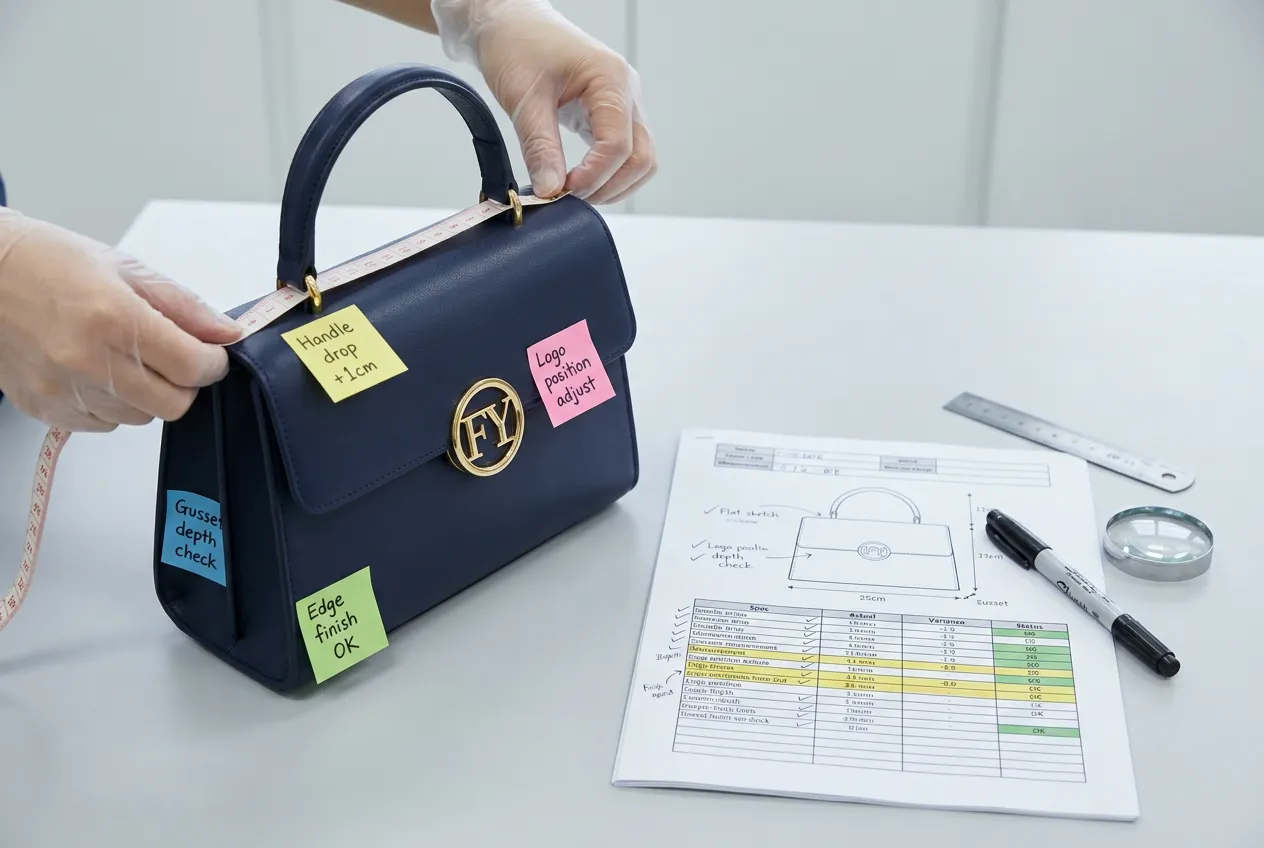
Before the sample ships, a checker measures it against your spec, inspects stitching, edges and hardware, and photographs it. A reliable factory reports any deviation in writing, for example a lining color substituted because the target was out of stock.
A 5–7 day sample assumes a clear brief and materials the factory can source within a day or two. These factors push a sample toward 7–12 days or beyond:
| Factor | Why it adds time | How to avoid delay |
|---|---|---|
| Custom molded hardware | New molds and plating take longer than sampling | Use stock hardware for the first sample, custom parts for the pre-production sample |
| Custom-dyed leather or PU | Mills need time and minimums to dye to a color | Sample in the closest stock color, then dye for bulk |
| Custom printed fabric or lining | Print setup and color matching | Approve a strike-off separately from the bag |
| Incomplete brief | Questions go back and forth before cutting | Send dimensions, materials and hardware in one package |
| Complex structure | Frames, many compartments, multi-material panels | Plan for complex development timing from the start |
| Several decoration methods | Each one needs its own setup | Choose one primary branding method for sample one |
Complex handbag development, such as a structured top-handle bag with custom hardware or a multi-compartment work bag, typically takes 7–12 days for a first sample. If your design has these features, plan for that range from the start.
Open the parcel with your spec sheet beside you. Check the sample in this order:
Then write one consolidated revision brief, with photos and measurements, instead of a stream of separate messages. Our guide to reading the first sample and closing in two rounds shows how to structure that brief. For the cost side of prototyping, see our sketch-to-sample prototyping guide.
Sampling is the cheapest way to test a supplier before you commit to bulk. The way a factory handles your sample predicts how it will handle your production order.
| Signal | What a reliable factory does | Warning sign |
|---|---|---|
| Questions before cutting | Sends written questions and confirms assumptions | Starts immediately with no questions on a complex design |
| Timeline honesty | Gives a realistic date and flags custom parts | Promises speed it cannot meet, then goes silent |
| Progress updates | Shares mock-up and progress photos on request | No updates until the parcel ships |
| Spec accuracy | Sample matches your measurements within agreed tolerance | Dimensions drift without explanation |
| Substitution disclosure | Tells you when a material or part was substituted | You discover substitutions yourself |
| Revision handling | Addresses every point in your revision brief | Fixes some points and introduces new problems |
| Bulk link | Keeps the approved sample as the reference for production | Cannot explain how the sample connects to bulk QC |
A factory that passes these tests during sampling is showing the same habits you will rely on during production.
FYBagCustom is Your Trusted Custom Handbag Manufacturer in China, and the most useful answer to the reliability question is a list of facts you can check. FYBagCustom, a custom bag factory in Huadu District, Guangzhou, has 15+ years in bag manufacturing, a 5,000 m² facility in Shiling Town, 500+ staff, 10+ production lines and 200+ verified material and component suppliers. Being inside the Shiling leather goods cluster puts leather, PU and hardware suppliers close to our sampling room.
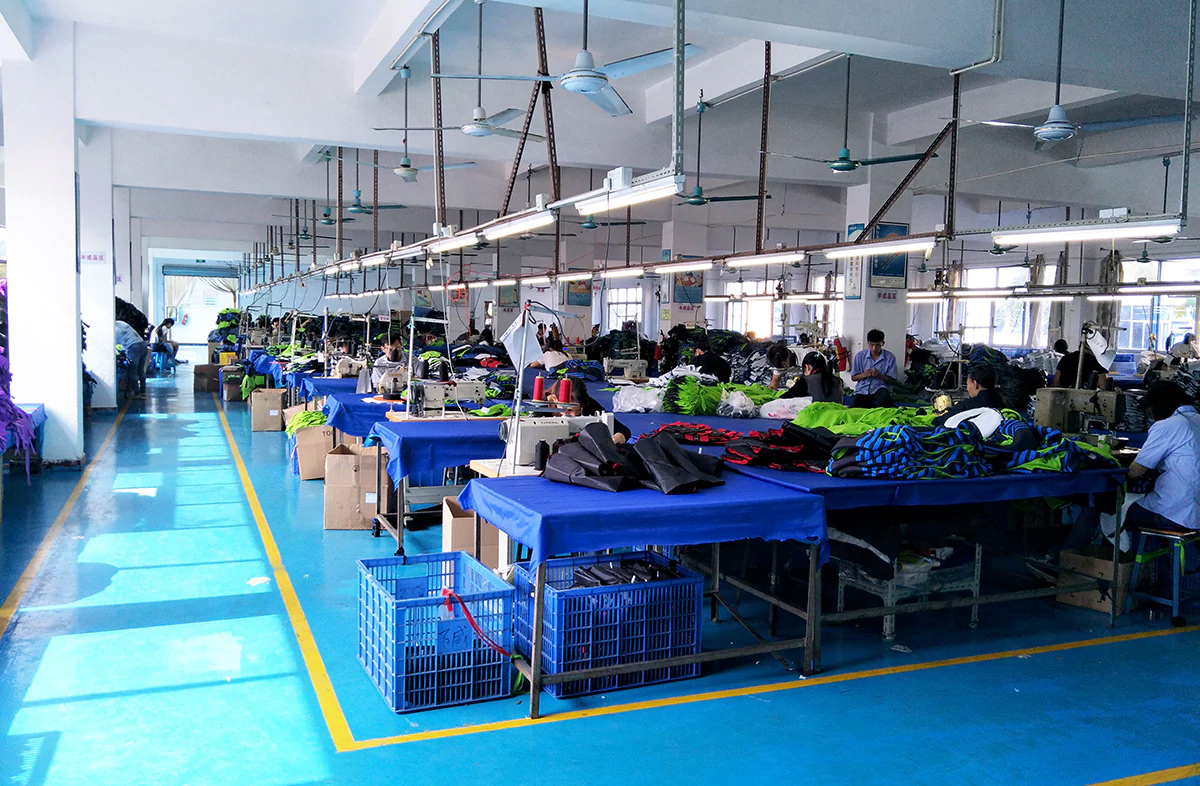
You do not have to take any of this on trust. Order a sample, review it with the checklist above, and ask our team for a live video walk-through of the sampling room and production floor. The free sample page explains the sample options, and you can send your design brief to our team to start a custom handbag project.
A standard handbag sample takes about 5–7 days at FYBagCustom once the brief and materials are confirmed. Complex development, such as structured bags with custom hardware or many compartments, takes around 7–12 days. Add courier time, plus a week or so for each revision round. Custom-dyed materials and new hardware molds can extend the timeline beyond these ranges.
Send design views with key dimensions, material and color references, hardware specifications, logo files with method and placement, and the interior layout. A reference bag and your target price tier help the developer suggest suitable construction. A complete package lets the factory start pattern making on day one instead of spending days on questions and assumptions.
Most handbags need one or two revision rounds after the first sample, followed by a pre-production sample made from bulk materials. Simple soft bags can approve on the first round. Structured bags with custom hardware or several materials often need two rounds. A clear brief and a single consolidated revision list keep the number of rounds down.
Complex bags carry more pattern pieces, interfacing and reinforcement, and they often depend on parts the factory cannot buy off the shelf, such as custom hardware, dyed-to-match leather or printed linings. Each of these adds lead time before or during assembly. Using stock hardware and the closest stock color for the first sample keeps development moving.
FYBagCustom operates a 5,000 m² factory in Shiling Town, Guangzhou, with 15+ years of experience, 500+ staff, 10+ production lines, 5–7 day standard sampling, 100% pre-shipment inspection and AQL final inspection to ISO 2859-1. The best way to judge any manufacturer, including us, is to order a sample, check it against your spec and verify the factory by video call or visit.
FYBagCustom’s sampling team in Shiling, Guangzhou turns sketches and tech packs into handbag samples for brand owners, designers and private label buyers. Expect 5–7 day standard sampling, 7–12 days for complex development, flexible MOQ for your first order, and 100% pre-shipment inspection in bulk.
Start Your Custom Bag Project →