Tel/WhatsApp:+86 18011919834
E-mail: chloe.x@fybagcustom.com

Tel/WhatsApp:+86 18011919834
E-mail: chloe.x@fybagcustom.com

Who this guide is for: brand owners, sourcing managers, wholesale buyers, Amazon FBA sellers and corporate gifting leads who need a realistic sense of custom bag cost by type before they brief a factory or compare quotes for 2027 programs.
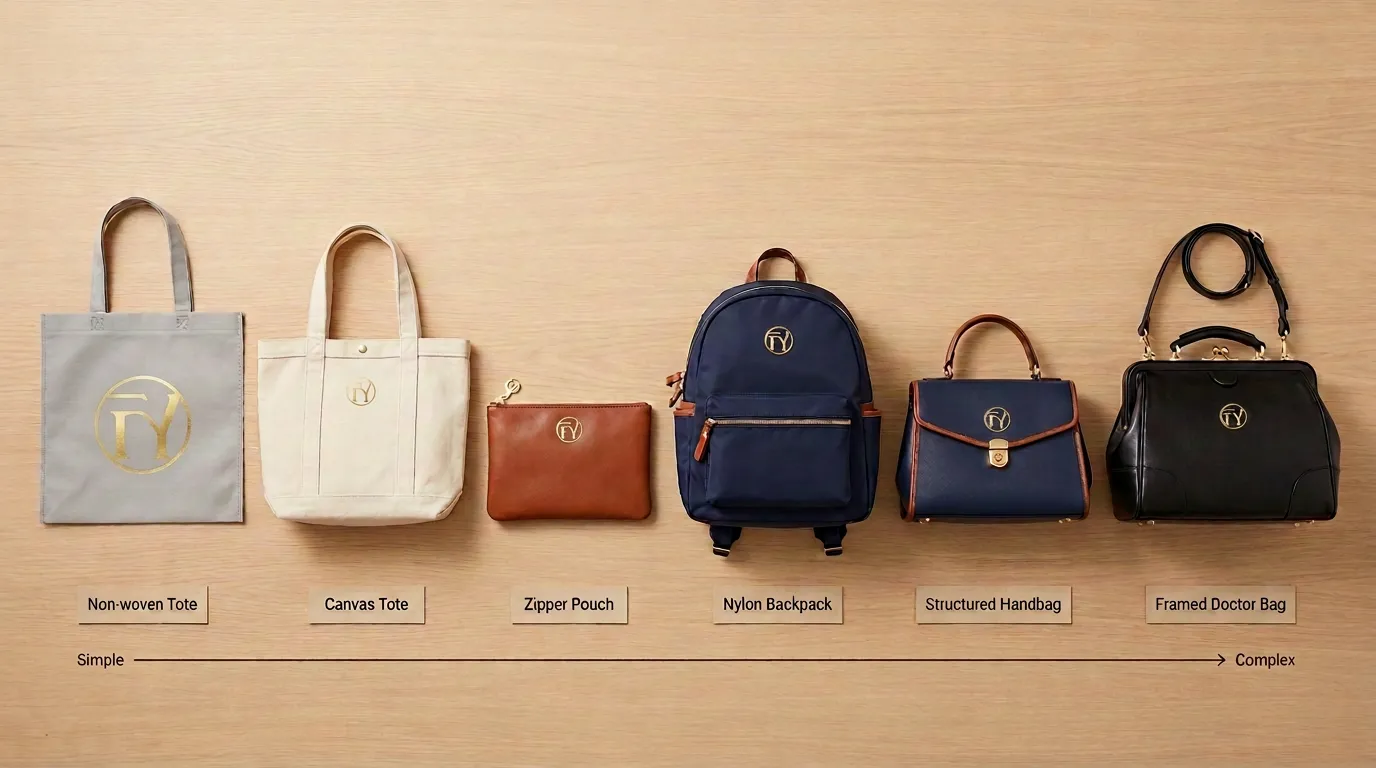
Buyers often ask a factory for “a rough price” before they have a spec. Any honest answer starts with the type of bag, because custom bag cost by type varies more than any other single factor. A framed leather doctor bag can take many times the labor minutes of a printed non-woven tote, carry several times the pattern pieces, and need three sampling rounds where the tote needs one.
This index ranks 30 common bag types by construction complexity, relative cost tier and typical sampling difficulty, based on how bag factories in Guangzhou’s leather goods cluster plan cutting, sewing and finishing work. Use it for budgeting and range planning. Your materials, decoration, quantity and packaging will move any bag within its tier, and a quote against a written spec gives you the number.
Quick answer: The cost of making a custom bag depends on construction complexity: pattern piece count, labor minutes per unit, material grade, hardware, and how much internal structure the bag needs. Flat totes in non-woven, cotton or canvas sit at the low end. Structured leather handbags, framed bags and hand-embellished evening bags sit at the top. Order size, decoration and packaging shift cost within each tier.
The index uses three scales. All three are relative and indicative, and none converts to a price, because two quotes for “a backpack” can describe very different products.
The ranking assumes a mid-market spec: decent materials, stock hardware, one logo application and simple retail packaging. A luxury spec pushes a bag up one tier, and a promotional spec pulls it down.
| Complexity tier | What it looks like on the cutting table | Typical labor profile | Example bags |
|---|---|---|---|
| Tier 1 | A few flat panels, no lining or a simple one, sewn or welded handles | Short sewing time, machine-driven | Non-woven tote, drawstring bag |
| Tier 2 | Lined body, one zipper or closure, light padding or insulation | Short to moderate, mostly machine work | Cosmetic bag, lunch bag, card holder |
| Tier 3 | Several compartments, gussets, adjustable straps, mixed materials | Moderate, with skilled steps such as skiving or edge painting | Backpack, bucket bag, bifold wallet |
| Tier 4 | Interfacing and stiffeners throughout, many pockets, load-bearing parts | Long, spread across several skilled stations | Structured leather handbag, diaper bag backpack, pet carrier |
| Tier 5 | Frames, hand weaving or hand embellishment | Longest, with significant hand work per unit | Framed doctor bag, woven leather bag, beaded evening bag |
Six variables explain most of the gap between the cheapest and the most expensive bag types. They interact, so a buyer who changes one usually changes two.
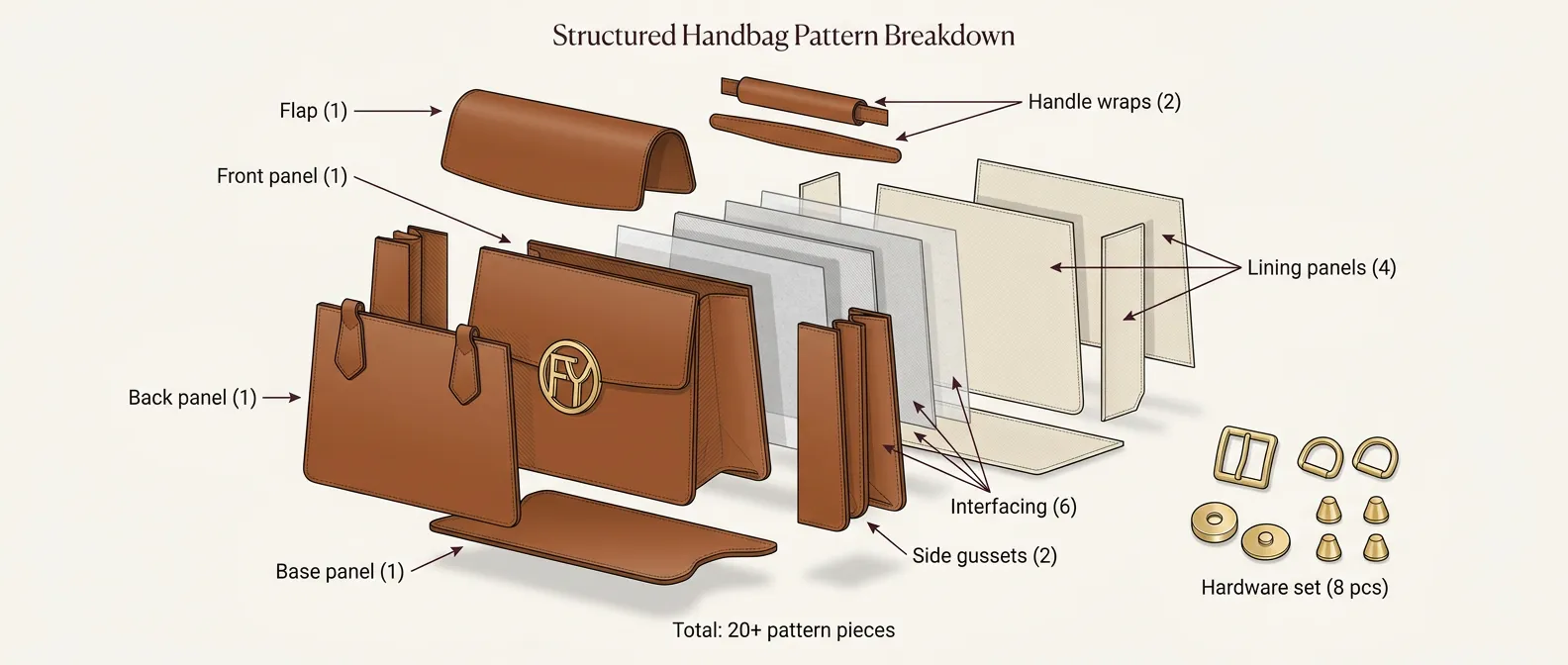
Each pattern piece gets cut, marked, sometimes skived, and joined to its neighbors. A flat tote may have five or six pieces; a structured handbag with lining, interfacing, pockets, gussets and wrapped handles can pass fifty. Labor minutes track piece count, and on complex bags labor is the cost line buyers underestimate most.
Non-woven polypropylene and cotton sheeting sit at the bottom, coated canvas, technical nylon and PU in the middle, full-grain leather at the top. Consumption matters as much as grade. A weekender uses several times the fabric of a pouch, and leather yields depend on hide quality, so leather carries a higher waste factor than roll goods.
Interfacing, foam, board and frames give a bag its shape. Each layer adds material, a cutting step and gluing or sewing time, and structured bags need tighter tolerances because misalignment shows on the outside.
Stock zippers, D-rings and buckles cost little relative to the bag. Custom-molded logo hardware needs a mold, plating trials and its own lead time, and a bag with twelve metal parts carries a very different hardware line from one with two.
A one-color screen print adds little per unit once the screen exists. Embroidery cost scales with stitch count. Debossing needs a plate, and hot-foil needs a plate plus heat control on PU. Each extra logo placement repeats part of that setup.
Dies, plates, screens, molds and marker making are fixed costs spread across the order. On Tier 1 items, setup can take a large share of unit cost at small quantities; on Tier 4 and 5 bags, labor dominates. Our guide on how MOQ influences custom bag production cost and lead time walks through this effect with worked scenarios.
| Cost driver | Influence on Tier 1–2 bags | Influence on Tier 4–5 bags | Main lever for buyers |
|---|---|---|---|
| Pattern pieces and labor | Low | Very high | Simplify panels, merge pockets |
| Material grade | High (large share of a low-cost bag) | High | Match grade to each visible surface |
| Internal structure | Minimal | High | Add structure only where shape needs it |
| Hardware | Low | Moderate to high | Stock hardware, fewer parts |
| Decoration | Moderate to high | Low to moderate | Fewer placements, fewer colors |
| Order size | Very high | Moderate | Blend colors and sizes in one order |
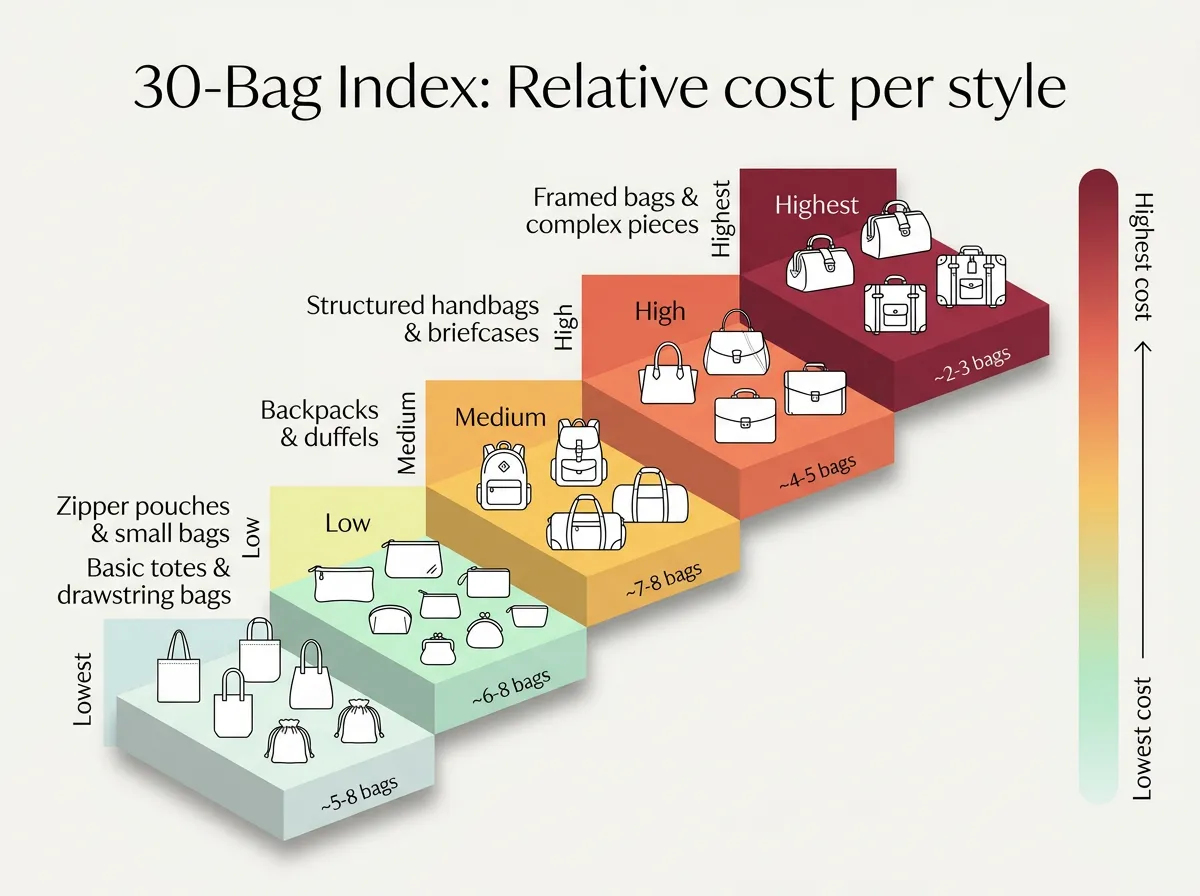
The list runs from the lowest to the highest relative cost at a typical mid-market spec, ordered by complexity within each cost tier. The table is relative and indicative, drawn from common factory practice. Your own spec decides where your bag lands.
| # | Bag type (typical spec) | Complexity tier | Relative cost tier | Sampling difficulty | Main cost drivers |
|---|---|---|---|---|---|
| 1 | Non-woven PP tote, screen printed | 1 | Lowest | Easy | Fabric weight, print colors |
| 2 | Cotton drawstring bag | 1 | Lowest | Easy | Cotton weight, cord, print |
| 3 | Unlined canvas tote | 1 | Low | Easy | Canvas weight, gusset, print method |
| 4 | Jute shopping tote | 1 | Low | Easy | Lamination, handle type, shedding control |
| 5 | Basic zipper pouch | 1 | Low | Easy | Zipper size, lining, print |
| 6 | Neoprene laptop sleeve | 2 | Low | Easy | Neoprene thickness, binding, zipper |
| 7 | Clear PVC or TPU pouch | 2 | Low | Moderate | Film gauge, welded or sewn edges, odor control |
| 8 | Card holder, PU or leather | 2 | Low | Moderate | Edge finish, slot tolerances |
| 9 | Lined cosmetic bag with boxed corners | 2 | Low | Moderate | Wipe-clean lining, zipper, shape retention |
| 10 | Insulated lunch bag | 2 | Moderate | Moderate | Foam plus food-contact liner, sealed seams |
| 11 | Belt bag or fanny pack | 2 | Moderate | Moderate | Curved panels, webbing, buckle |
| 12 | Nylon crossbody or sling bag | 2 | Moderate | Moderate | Strap adjusters, pocket count |
| 13 | Soft envelope clutch | 2 | Moderate | Moderate | Interfacing, magnetic closure, edge finish |
| 14 | Bifold leather wallet | 3 | Moderate | Hard | Skiving, layered slots, edge painting |
| 15 | Basic school backpack | 3 | Moderate | Moderate | Panel count, padded straps, zippers |
| 16 | Gym duffle with shoe compartment | 3 | Moderate | Moderate | Fabric consumption, ventilation, wet pocket |
| 17 | Lined PU tote with zip top | 3 | Moderate | Moderate | PU grade, lining, handle construction |
| 18 | Straw or raffia beach bag | 3 | Moderate | Hard | Hand weaving, natural variation |
| 19 | Bucket bag with drawcord | 3 | Moderate | Moderate | Round base, eyelets, base insert |
| 20 | Hobo bag | 3 | Moderate | Moderate | Drape control, soft material grade |
| 21 | Zip-around wallet | 3 | Moderate | Hard | Accordion gussets, zipper corners, many slots |
| 22 | Structured PU shoulder bag | 3 | Moderate | Moderate | Interfacing, edge paint, metal hardware |
| 23 | Weekender, canvas with leather trim | 3 | High | Moderate | Size, mixed materials, trim and hardware |
| 24 | Diaper bag backpack | 4 | High | Hard | Pocket count, insulated pockets, changing pad, testing |
| 25 | Technical travel backpack | 4 | High | Hard | Suspension, padding, laptop compartment, coated zippers |
| 26 | Pet carrier | 4 | High | Hard | Mesh panels, frame, safety tether, load checks |
| 27 | Structured leather top-handle handbag | 4 | High | Hard | Hide grade, interfacing, edge paint, custom hardware |
| 28 | Framed bag (doctor bag, box clutch) | 5 | Highest | Very hard | Frame sourcing, gluing, fit tolerances |
| 29 | Woven leather (intrecciato-style) bag | 5 | Highest | Very hard | Strip preparation, hand weaving minutes |
| 30 | Hand-beaded or embellished evening bag | 5 | Highest | Very hard | Hand application, fallout prevention |
Promotional bags cluster in Tiers 1 and 2, where material and decoration decide the unit cost. Small leather goods sample harder than their size suggests: a bifold wallet needs skiving and edge finishing on many layered parts, so it can take more development rounds than a school backpack. Hand work defines the top tier, and hand work gains little from higher quantities.
If you develop custom handbags, compare rows 22 and 27. Both are structured styles. Leather raises material cost, yet most of the jump comes from what leather demands around it: skiving, edge painting in several coats, cutting around hide marks, and heavier hardware to match the material.
Bag names describe silhouettes, and a silhouette can be built at almost any level. A tote can be a Tier 1 giveaway or a Tier 4 structured leather bag. A buyer comparing two quotes for “a tote” needs to compare the specs before the numbers.
| Silhouette | Entry spec | Mid spec | Premium spec |
|---|---|---|---|
| Tote | Non-woven or light canvas, unlined, printed (Tier 1, Lowest to Low) | Heavy waxed canvas, lined, inner zip pocket, leather handles (Tier 3, Moderate) | Full-grain leather, structured base, painted edges, custom hardware (Tier 4, High) |
| Backpack | 600D polyester, one main compartment, stock zippers (Tier 3, Moderate) | Nylon with padded laptop sleeve and water-repellent zippers (Tier 3, Moderate to High) | Technical build with suspension and ventilated back panel (Tier 4, High) |
| Crossbody | Nylon, webbing strap, one zipper (Tier 2, Moderate) | PU, lined, adjustable leather strap (Tier 3, Moderate) | Structured leather, chain strap, custom clasp (Tier 4, High) |
| Wallet | PU card holder with raw edges (Tier 2, Low) | Leather bifold with painted edges (Tier 3, Moderate) | Full-grain zip-around with stitched details (Tier 3 to 4, High) |
A move from entry to premium comes from three changes made together: material grade, structure and finishing labor. A canvas tote with upgraded leather handles stays in Tier 1 or 2, because the body construction stays simple. The tote bag production cost guide covers that silhouette across its full spec range.
Sampling difficulty follows complexity, with a few exceptions. Four features make a bag hard to get right in development:
Tier 1 and Tier 2 bags often approve on the first or second sample. Tier 4 and Tier 5 bags can need two or three rounds, followed by a pre-production sample cut from bulk materials. Each round adds roughly a week, which affects launch dates more than unit cost.
The index assumes a normal production quantity. Small orders compress the gaps at the low end, because fixed setup costs dominate: a short run of printed non-woven totes can cost more per unit than its tier suggests once screens, dies and marker setup are spread over few units.
Large orders of Tier 4 bags gain less from scale. Labor minutes per unit stay roughly constant, so the cost curve flattens early. Volume still helps through better material buying and line balancing, but the percentage drop per unit is smaller than buyers expect from promotional products.
Color and size splits complicate this. Many factories quote MOQs per color or per style, which pushes small brands to overbuy one colorway. A blended MOQ, where colors and sizes count toward one order total, lets a brand spread quantity across a range.
On Tier 3 to Tier 5 bags, design-stage decisions save more than negotiation. Seven levers work across most bag types:
For handbag-specific examples, see our 10 design-stage tips for lowering the unit cost of custom handbags.
FYBagCustom is Your Trusted Custom Bag Manufacturer in China, developing OEM, ODM and private label programs across most of the tiers in this index, from simple promotional totes to structured handbags. FYBagCustom, a custom bag factory in Huadu District, Guangzhou, works from a 5,000 m² facility in Shiling Town with 500+ staff, 10+ production lines and 200+ verified material and component suppliers, built up over 15+ years in the leather goods trade.
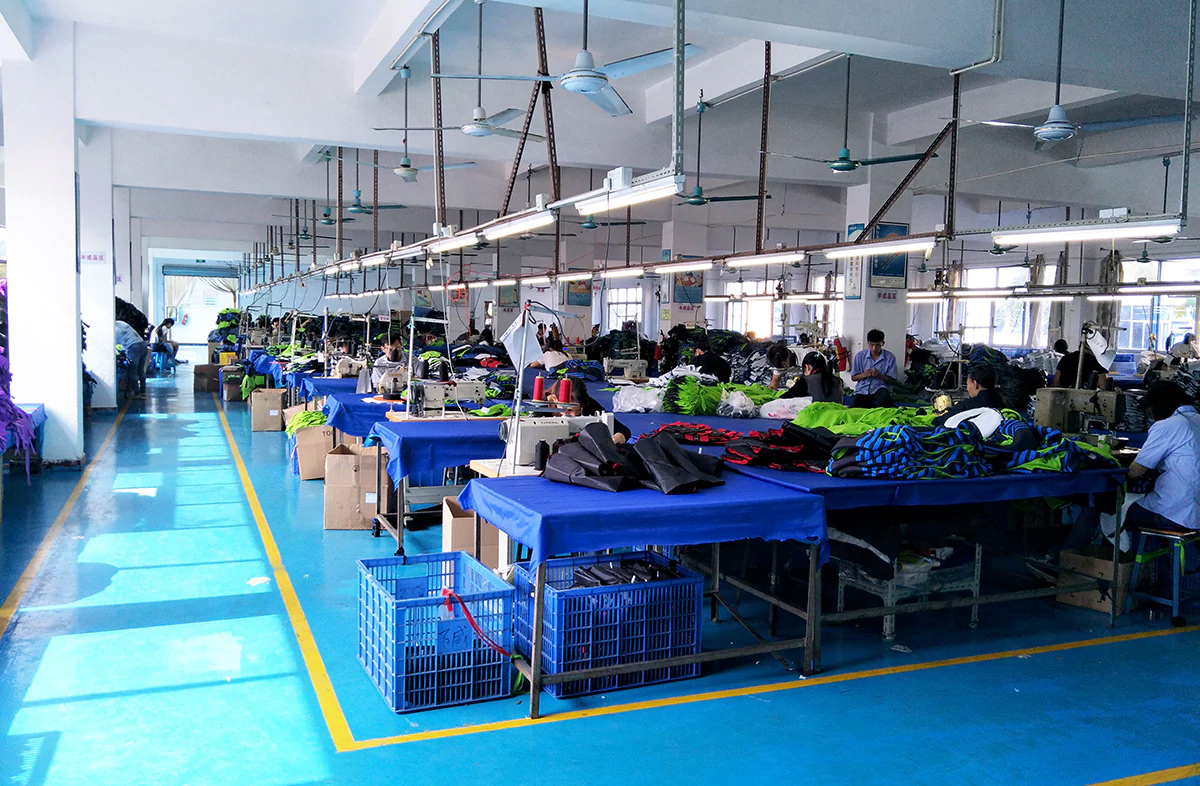
Our quotes are built from the same variables as this index: materials, dimensions, hardware, decoration, packaging and quantity. A tech pack gets you a firmer figure; reference photos get an indicative quote that we refine after the first sample. Browse the full range of custom bag types we produce to see how each silhouette is built.
For a mixed range, the FYBagCustom product catalog shows fabrics, design features and printing methods side by side, which helps you keep a range inside one or two cost tiers. To place your own design on the index, send your spec to our team with a target quantity.
Printed non-woven polypropylene totes and cotton drawstring bags sit at the bottom of the index. They use a few flat panels, low-cost roll materials and short machine sewing times. Fabric weight and the number of print colors drive most of their unit cost. At small quantities, setup for screens and cutting dies takes a larger share, so the gap to Tier 2 bags narrows.
A structured handbag carries many more pattern pieces, plus interfacing, stiffeners, edge painting and metal hardware. Each piece needs cutting, skiving or gluing, and the bag passes through several skilled stations. Labor minutes per unit can be many times those of a simple tote, and leather cutting adds waste. Material grade matters, but labor and structure explain most of the gap.
Quantity helps most where fixed setup costs dominate, which is typical for Tier 1 and Tier 2 bags. On Tier 4 and Tier 5 bags, labor minutes per unit dominate, and those minutes stay roughly constant regardless of order size. Larger orders still help through better material pricing and smoother line balancing, but the percentage drop per unit is usually smaller.
For Tier 1 and Tier 2 bags, one or two rounds is common. For Tier 4 and Tier 5 bags such as structured leather handbags, framed bags or woven designs, plan for two or three rounds plus a pre-production sample. A complete tech pack with measurements, material callouts and hardware references reduces revision rounds more than any other single step.
Yes. Most factories can give an indicative quote from reference photos, approximate dimensions, material preferences, decoration method and target quantity. Expect the figure to move after sampling, once pattern pieces, labor minutes and material consumption are measured. A tech pack locks those variables and makes quotes from different suppliers comparable line by line.
Send FYBagCustom your sketch or tech pack with a target quantity. Our OEM/ODM team helps brand owners, Amazon sellers and corporate gifting buyers place each design in the right spec tier, with 5–7 day sampling, flexible MOQ blended across colors and sizes, and 100% pre-shipment inspection.
Start Your Custom Bag Project →