Tel/WhatsAapp:+86 18011919834
E-mail: chloe.x@fybagcustom.com

Tel/WhatsAapp:+86 18011919834
E-mail: chloe.x@fybagcustom.com
Send Your Inquiry Today

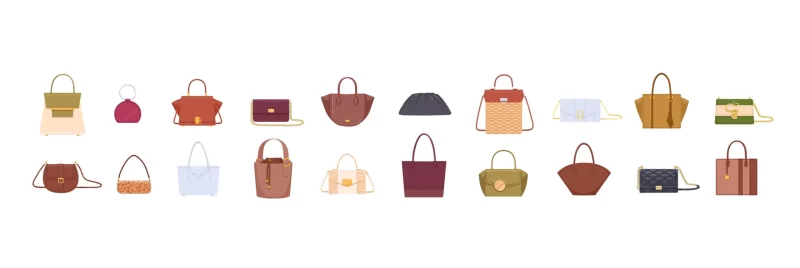
Who this guide is for: product developers and pattern-focused sourcing managers who want to understand the construction element that quietly decides more about a bag than any other — the gusset. The gusset is the side and bottom paneling that gives a bag its third dimension: without it, a handbag is a flat envelope; with it, the bag has capacity, a silhouette, and a stance. Yet among buyers it is the least-understood element on the spec sheet — briefs describe front-face dimensions in careful detail and wave at depth with a single number, leaving the factory to make the decisions that actually determine how much the bag holds, what shape it takes loaded, and whether it stands or slumps on a shelf. This guide opens the gusset up: the three jobs it performs (capacity, shape, stance), the full type catalog — fixed, wrap-around, boxed-corner, accordion, zip-down expandable, structured, and curved — with each type’s construction and its register, the pattern math that connects gusset width to real capacity, and the reinforcement engineering at the gusset’s stress points. Read it and the depth number on your next spec sheet becomes a decision instead of an afterthought.
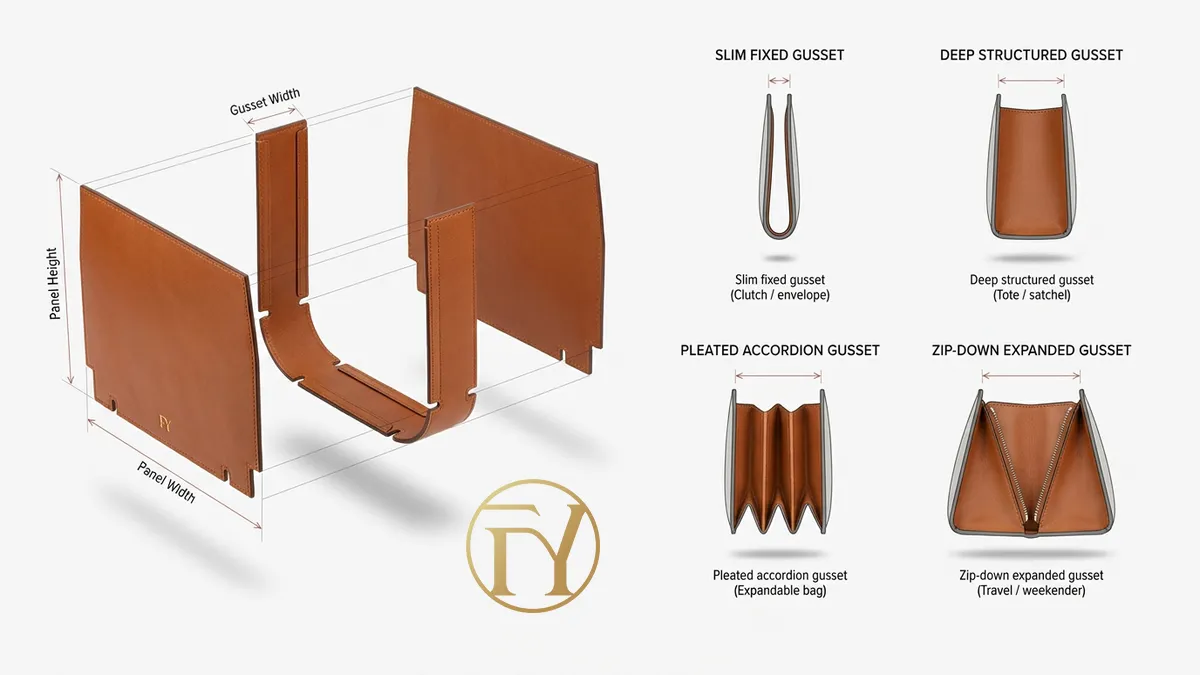
Ask a room of experienced buyers to sketch a bag’s front panel and every sketch will be usable; ask the same room to explain why one 30-centimeter tote swallows a laptop, lunch, and gym kit while another 30-centimeter tote barely takes a folder, and the answers get vague. The difference is almost never the front panel. It is the gusset — the paneling that runs the sides and base, sets the distance between front and back, and thereby sets the volume, the loaded shape, and the standing behavior of the finished product.
That makes the gusset the highest-leverage, lowest-attention element in bag development. A two-centimeter change to a front panel’s height changes a bag noticeably; a two-centimeter change to the gusset changes the bag’s category — a slim portfolio becomes a work tote, a flat crossbody becomes a daily carrier. The gusset also carries structural duty: its seams take the load path from base to handles, its corners are the bag’s most-stressed junctions, and its stiffening (or lack of it) decides whether the bag presents crisply at retail or folds onto itself. This guide treats the gusset with the attention it earns, in the order a developer needs: what it does, the forms it takes, the math that sizes it, and the engineering that makes it last.
| Job | What the Gusset Decides | The Developer’s Question |
|---|---|---|
| Capacity | The bag’s usable volume — front-panel area × the depth the gusset creates | “What must this bag hold, and what gusset width delivers that volume?” |
| Shape | The loaded silhouette — whether the bag reads slim and dressy, boxy and architectural, or soft and expandable | “What should this bag look like on the shoulder, full?” |
| Stance | The base footprint and standing behavior — whether the bag stands upright on a shelf, a desk, a café floor, or slumps | “Does this bag need to stand, and on what base?” |
The three jobs pull against each other, which is why the gusset is a design decision and not a formula: maximum capacity wants a wide gusset, a dressy silhouette wants a narrow one, and a stable stance wants a structured base panel that adds cost and weight. Every gusset type below is a different settlement of that three-way negotiation.
| Element | Detail |
|---|---|
| The build | A separate side-and-bottom panel (or separate side panels plus a base panel) sewn between the front and back panels — the classic structured-bag construction |
| The character | Clean, controlled depth; the gusset panel is a visible design surface that can contrast, match, or carry detail |
| The register | The structured handbag, the work tote, the frame bag — anywhere the silhouette should hold its drawn shape |
| The developer notes | The inset seam is a load-bearing seam and a visible quality line — puckering or wave along the gusset seam is a construction tell; the panel’s grain and pattern must match the body’s |
| Element | Detail |
|---|---|
| The build | One continuous panel running up one side, across the base, and up the other side — a single U-shaped piece joining front and back |
| The character | Smooth, continuous lines with no base-corner seams; the rounded-bottom look |
| The register | Soft and semi-structured bags — hobos, casual crossbodies, bucket-adjacent shapes |
| The developer notes | Fewer seams means fewer stress junctions but a longer continuous seam to sew clean; the U-curve demands accurate pattern-matching around the bends, where ease and pucker fights happen |
| Element | Detail |
|---|---|
| The build | No separate gusset panel at all: the front and back are cut as one (or seamed flat), and depth is created by folding and stitching triangles at the base corners — the “boxed corner” |
| The character | The simplest, most economical route to depth; the flat-bag-that-opens-up construction |
| The register | Canvas totes, cotton gift and promotional bags, pouches, lunch bags, and volume programs where cost and clean simplicity lead |
| The developer notes | The boxed corner’s depth equals the folded triangle’s width — the corner IS the gusset; the corner seams take real load and are bar-tacked or reinforced in anything expected to carry weight |
| Element | Detail |
|---|---|
| The build | A pleated gusset folded like a bellows — expanding when filled, folding flat when empty; often multiplied to create parallel compartments off one opening |
| The character | The organizational gusset: capacity that appears on demand and divides into sections |
| The register | Document and portfolio bags, purse and wallet interiors, diaper bags and multi-compartment organizers, and the multi-function design register |
| The developer notes | The pleat folds must be crisp and repeatable — pressed or edge-stitched — or the accordion sags open; the pleat’s fold lines are flex points, so coated materials are flex-tested there; each internal wall’s attachment carries the load of its compartment |
| Element | Detail |
|---|---|
| The build | A gusset with a concealed extra panel held closed by a perimeter or side zip — zipped, the bag is slim; unzipped, the hidden panel deploys and the depth grows, typically adding 20–40% volume |
| The character | Two bags in one spec: the everyday slim state and the loaded expanded state |
| The register | Travel and commuter formats — the convertible-adjacent backpack, duffle, and work tote — per our expandable-bag engineering guidance |
| The developer notes | The bag must be designed for both states: anchors rated for the expanded load, a base that stays stable at the deeper footprint, and a zipped-closed profile with no bulge or bunching; the expansion zip is a high-cycle component and spec’d accordingly |
| Element | Detail |
|---|---|
| The build | A gusset panel backed with stiffener — board, thermoformed insert, or heavy interlining — so the sides and base hold an architectural, boxy geometry loaded or empty |
| The character | The crisp, standing, drawn-with-a-ruler silhouette; the gusset as architecture |
| The register | Structured top-handle bags, box bags, premium laptop cases, and retail presentations where the empty bag must present its shape on the shelf |
| The developer notes | Stiffener adds weight and cost and resists turning through seams — the construction sequence changes (stiffener inserted after turning, or bagged-out panels); corners are the craft test, where stiff panels must meet clean without bulk |
| Element | Detail |
|---|---|
| The build | A gusset cut with curves — tapering wider at the base and narrower at the top, or shaped to a rounded profile — so depth varies deliberately along the bag’s height |
| The character | The tailored silhouette: full where capacity lives, slim where the profile shows |
| The register | Fashion-led shapes — the trapeze, the rounded shoulder bag, the saddle — where the side profile is the design |
| The developer notes | Curved seams demand ease control and notching discipline; the taper’s math matters — capacity is lost where the gusset narrows, so the taper is drawn against the packing list, not just the sketch |
This is the section the spec sheet skips, and the reason two same-front-panel bags hold wildly different loads.
A bag’s usable volume approximates front-panel width × usable height × effective depth — and the gusset owns the third term. But the gusset’s cut width is not the bag’s effective depth, and the gap between them is where specs go wrong:
| Deduction | Typical Cost | Why |
|---|---|---|
| Seam allowances | ~1–2 cm total across the gusset’s two seams | The stitched allowance is consumed by construction, not capacity |
| Turn of cloth | A few millimeters to a centimeter, more in thick or stiffened materials | Material thickness eats interior space as panels turn at the seams |
| Structural intrusion | Variable — stiffeners, padding, and internal frames all subtract | A padded laptop compartment’s foam takes its space from the payload |
| Shape behavior | Soft bags lose depth as walls bow inward under load; structured bags keep their drawn depth | The same cut gusset yields different usable depth in soft versus structured builds |
The working rule: effective interior depth runs roughly 1.5–3 cm under the gusset’s cut width in typical constructions, and the gap widens with material thickness and structure. A developer who needs a true 10 cm interior depth specs the gusset from the interior requirement backward — the fit-item plus clearance, plus the deductions — not from the exterior sketch forward.
The most reliable capacity spec starts from what must fit:
A developer can send the governing-item list to our team and receive the gusset math run against it — the fastest way to a first pattern that fits on the first sample.
Every centimeter of gusset width buys volume and spends silhouette:
| Gusset Width Band | The Volume Effect | The Silhouette Effect |
|---|---|---|
| Slim (2–6 cm) | Minimal — essentials, flat items | Dressy, refined, close to the body — the evening and clutch-adjacent read |
| Moderate (7–12 cm) | The everyday-carry sweet spot | Balanced — the versatile daily handbag and crossbody band |
| Deep (13–20 cm) | Work-and-family capacity — laptops, kits, a day’s load | Utility-forward — the work tote, diaper bag, and commuter read |
| Very deep (20 cm+) | Travel and equipment volume | The duffle, gym, and weekender territory |
The bands are why “just make it a bit roomier” is never a free request: moving up a band moves the bag’s register, its base footprint, its hardware loads, and often its price tier. The gusset decision is a positioning decision wearing a tape measure.
The third job gets the least spec attention and drives disproportionate customer satisfaction: a bag that stands upright — on the desk, the café floor, the shop shelf — feels resolved, while a bag that flops reads careless regardless of its materials.
| Element | Specification | Why |
|---|---|---|
| The base footprint | The gusset width × the base length is the footprint; stability scales with footprint relative to the bag’s height and top-load | A tall bag on a narrow footprint tips; the proportions are checked at pattern stage, not discovered at retail |
| The base panel | A structured base — stiffened panel, padded board, or a structured gusset’s rigid floor — keeps the footprint flat and load-bearing | A soft base bellies under load and the stance collapses |
| Feet and base hardware | Metal or molded feet lift the base off surfaces and define the contact points | Feet protect the base material and stabilize the stance — and their mounting points are reinforced through the base panel |
| Weight distribution | Interior layout places heavy items (the laptop sleeve against the back wall) so the loaded bag balances on its footprint | A bag engineered to stand empty can still tip loaded if the load sits wrong |
| The retail stance | For structured programs, the empty bag must present its silhouette on the shelf — light stuffing at pack-out plus a gusset that holds its drawn shape | The shelf presentation is the first impression; the gusset’s structure is what delivers it |
The gusset is structural, and its junctions are the bag’s hardest-working seams.
| Zone | The Stress | The Engineering |
|---|---|---|
| The base-gusset corners | The bag’s full contents bear on the base; the corners concentrate it and take every set-down impact | Reinforced stitching, corner patches or protectors, and on premium builds, leather or metal corner guards |
| The gusset-to-body seams | The load path from base to handles runs through these seams; they also flex with every load cycle | Seam construction matched to load class — reinforced, taped, or double-stitched at the heavy classes |
| The gusset-top terminus | Where the gusset meets the opening, the seam takes opening-and-closing flex plus strap-adjacent stress | Bar-tacked terminations; on zip-top bags, clean integration with the zip tape |
| Expansion-zip junctions | On zip-down gussets, the zip ends are stress risers where the expanded load pulls | Reinforced zip-end anchors, per the expandable-bag spec |
| Accordion pleat roots | Each pleat’s fold root flexes on every expansion cycle | Flex-rated materials at the folds; edge-stitching that defines the fold without cutting it |
| Silhouette | The Gusset Call | Why |
|---|---|---|
| Work tote | Deep fixed gusset, structured base, feet | Laptop-class capacity with a standing stance |
| Structured top-handle | Structured rigid gusset | The architectural silhouette is the product |
| Everyday crossbody | Moderate fixed or wrap-around | Balanced capacity, close-to-body profile |
| Hobo | Wrap-around, soft | The slouch is the register; the gusset flows |
| Promotional canvas tote | Boxed corner | Economical depth at volume |
| Document / organizer | Accordion | Compartmentalized capacity on demand |
| Commuter backpack | Zip-down expandable | Slim weekday, expanded travel day |
| Fashion shoulder bag | Curved / shaped | The side profile is the design |
| Makeup bag / pouch | Boxed corner or slim fixed | Simple depth, wipe-clean interiors |
The application read-across: deep and structured gussets serve the daily commuting and work program’s laptop-and-kit loads; zip-down and very-deep gussets serve travel and adventure; accordion and multi-compartment gussets anchor the mom and baby organizer register; boxed-corner economy serves gift and promotional volume; and deep soft gussets carry the fitness and active-life kit loads.
| Element | Detail |
|---|---|
| Body-match vs. contrast | The gusset panel matches the body (leather, nylon, polyester, canvas) or contrasts deliberately — a contrast gusset slims the front-on read while adding depth |
| Print continuity | On printed bodies, the gusset’s pattern alignment is a quality tell — digital and screen-printed programs plan the repeat across the gusset seam |
| Branding placement | The gusset side panel is an underused branding surface — a heat-transfer or embroidered mark on the gusset reads considered rather than loud |
| Weather sealing | On waterproof builds, the gusset seams are the sealing frontier — taped or welded, since the base-gusset seams meet the wet ground first |
| Texture and structure | Textured panels stiffen the gusset’s read; structured programs pair the rigid gusset with matching structured details |
| Check | Method | Standard |
|---|---|---|
| Effective-depth verification | Interior depth measured against spec with the bag assembled | Within tolerance of the interior requirement — not the cut width |
| Fit-item test | The governing items inserted and removed repeatedly | Clean insertion with clearance; no forcing |
| Seam quality along the gusset | The gusset-body seams inspected for pucker, wave, and pattern match | Flat, aligned, matched |
| Corner integrity | Base-gusset corners stressed and set-down-cycled | Reinforced, clean, no distortion |
| Stance test | The bag stood empty and loaded on a flat surface | Stands as designed; no tip, no belly |
| Expansion cycle (zip-down) | The expansion zipped through full cycles loaded | Smooth, no bulge closed, stable expanded |
| Pleat behavior (accordion) | Pleats cycled and inspected at fold roots | Crisp folds, no sag, no flex damage |
| Load-path test | The loaded bag carried and lifted through cycles | Gusset seams and corners hold at class load |
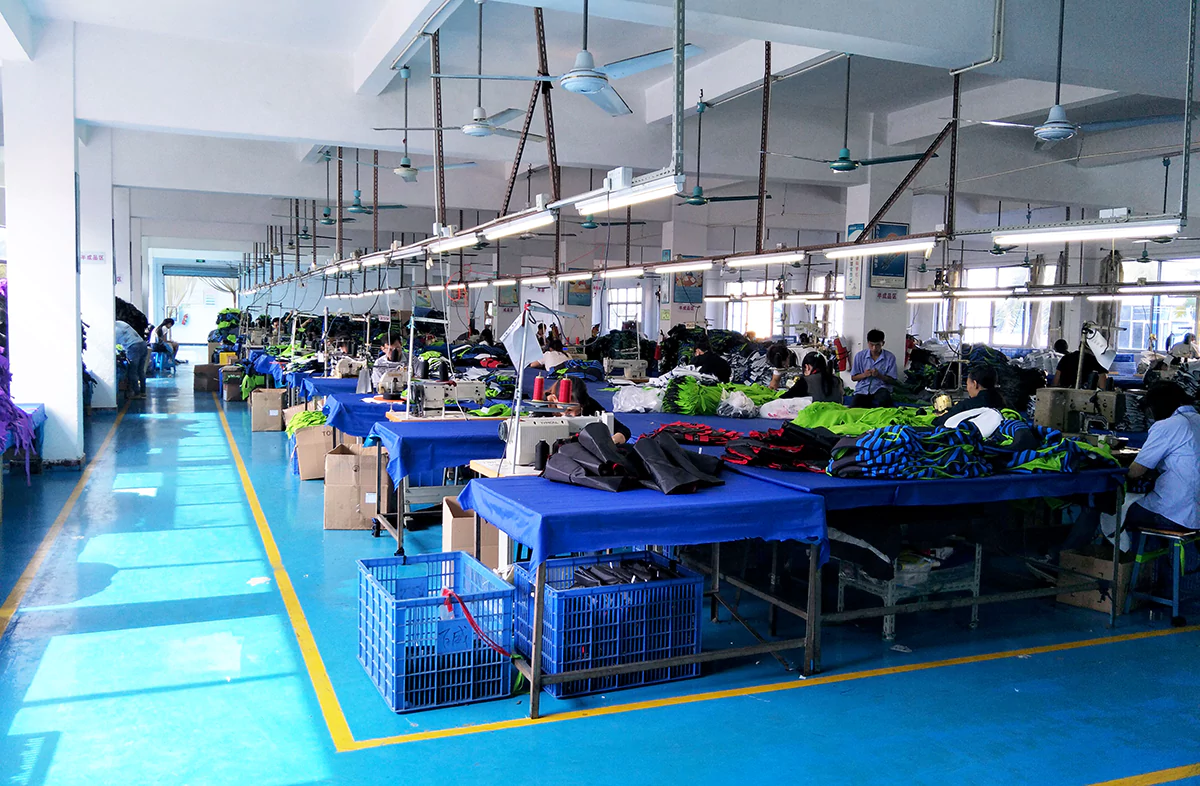
FYBagCustom is Your Trusted Custom Bag Manufacturer in China, with 15+ years of manufacturing experience and the pattern-room discipline the gusset deserves. For developers and sourcing managers, our capabilities include:
The gusset is where a bag’s capacity, silhouette, and stance are actually decided — and it deserves the same spec attention the front panel gets by default. For developers and sourcing managers, three core takeaways:
If you are developing a line and the depth numbers are still placeholders — contact FYBagCustom with the items each bag must hold, and receive gusset-engineered, fit-tested samples in 7–10 days.
FYBagCustom engineers the gusset from your packing list backward — fixed, accordion, zip-down, and structured types, corner-reinforced load paths, and stance-verified samples that fit on the first try. Fit-tested samples in 7–10 days.
Start Your Custom Bag Project →