Tel/WhatsAapp:+86 18011919834
E-mail: chloe.x@fybagcustom.com

Tel/WhatsAapp:+86 18011919834
E-mail: chloe.x@fybagcustom.com
Send Your Inquiry Today

Who this guide is for: travel, commuter, and functional-lifestyle brands building convertible bags — the backpack-to-tote-to-crossbody formats that rank among the strongest functional selling points in the category, and among its most disappointing products when the engineering falls short. The pattern is consistent enough to design against: convertibles don’t fail at the concept, which customers demonstrably want — they fail at five specific, recurring betrayals of the concept’s promise. The straps that dangle in every mode but their own. The conversion that needs two minutes, a flat surface, and the instruction card. The bag that’s mediocre in all three modes because it was designed for all three at once. The hardware that dies at cycle counts no single-mode bag ever faces. And the quiet commercial one: the three-way bag that is bought as a three-way and used as a one-way, because converting it is annoying — the feature that sold but never delivered. This guide is the engineering deep-dive behind our convertible-bag category: each betrayal diagnosed, then cured — the conversion mechanisms graded, the mode-by-mode comfort spec, the stow systems that make unused elements vanish, the hardware spec’d as the machine it is, and the fifteen-second standard that decides whether conversion gets used at all.

The convertible bag sells on an honest and appealing promise: one purchase, several bags — the backpack for the commute, the tote for the meeting, the crossbody for the evening, converted in the moment the day changes. Search demand for 3-way and multi-wear formats is strong and durable, the convertible construction is a top-performing functional feature across travel and commuter assortments, and the customer’s logic is sound: modes multiply the product’s use cases, use cases justify the price.
Which makes the category’s failure pattern all the more instructive, because the failures are not random — they are the same five, product after product, review section after review section. Each one betrays the promise at a specific engineering point, each one has a known cure, and a spec that addresses all five produces the rare convertible that customers actually convert. This guide is organized as that diagnosis and cure, betrayal by betrayal.
The diagnosis. In any given mode, a convertible’s other modes leave remainders — the backpack straps hanging off the tote, the tote handles flopping on the backpack, the crossbody strap swinging under everything. Dangling elements catch on doors and transit gates, slap while walking, ruin the silhouette in photos and mirrors, and broadcast the product’s compromise in every mode. This is the most visible convertible failure and the first one reviews mention.
The cure: stow systems engineered per element.
| Element | The Stow Solutions | The Spec |
|---|---|---|
| Backpack straps in tote/crossbody mode | A zip-back panel that swallows both straps; a slip channel behind the back panel; straps that detach entirely and clip flat | The stow must be one-motion-per-strap and leave a flat, clean back panel — the zip-back panel is the premium standard because it also hides the harness’s sweat-side in tote mode |
| Tote handles in backpack mode | Handles that lie flat under a snap or magnet tab; short-drop handles patterned to rest against the body without securing | Handles shoulddefaultto flat — a handle that must be actively secured will be left flapping |
| The crossbody strap | Fully detachable to the interface standard (below); or stowed in a dedicated flat pocket | Detachable is cleaner; the stow pocket must fit the strapeasily— a strap crammed into a tight pocket gets left dangling instead |
| The remainder test | Each mode inspected worn: nothing hangs, swings, or shows from another mode | The mirror test, run in QC — because it is the test every customer runs on day one |
The diagnosis. A conversion that requires setting the bag down, re-threading webbing, aligning hidden clips by feel, or consulting memory of a diagram doesn’t get performed standing on a train platform — which is where the day actually changes. Fiddly conversion is a mechanism-design failure, and it produces betrayal five (the forgotten conversion) directly.
The cure: the fifteen-second standard, and mechanisms graded against it.
| Mechanism | How It Converts | Fifteen-Second Grade | Cycle-Life Character |
|---|---|---|---|
| Swivel-clip re-hooking | Straps end in swivel clasps; conversion is unclip-and-reclip to different rings | Excellent — the fastest, most legible mechanism; the customer already understands it | High with quality clasps; the rings and gates are the wear points, spec’d per our strap-system standard |
| Slide-and-lock anchors | Strap ends slide into channel anchors and lock | Good once learned; cleaner look than exposed rings | The lock’s spring and the channel’s edges are cycle-tested |
| Zip-transform panels | Zipping/unzipping reconfigures the bag’s geometry (the back panel that zips into a tote gusset) | Moderate — smooth but slower; best when the zipalsoperforms the stow (one motion, two jobs) | The transform zip is high-cycle and load-bearing: reinforced ends per the stress-point map |
| Magnetic re-seating | Handles and flaps re-seat by magnet | Excellent for light elements | Magnets sized to hold in motion, backed per the hardware rule |
| Re-threaded webbing | Webbing re-routed through hardware to change geometry | Fails the standard — minutes, not seconds | Avoided in FYBagCustom convertible specs except as a one-time setup (sizing), never as the daily conversion |
| The choreography principle | The full conversion — stow the old mode, deploy the new — designed as one continuous sequence | The whole sequence, not each step, meets fifteen seconds, one-handed where possible, performable standing | The sequence is printed nowhere because it needs no instructions: hardware placement makes the next move obvious |
The diagnosis. The lazy convertible is designed as one bag with extra straps, and it shows: backpack straps set at tote-frame geometry that dig at the shoulders, a tote whose proportions are really a backpack’s (too tall, too deep, tips when set down), a crossbody the size of luggage. The customer discovers the bag is a real bag in one mode and a costume in the others — and uses it in one mode (betrayal five, again).
The cure: each mode spec’d as a complete bag, then reconciled.
| Mode | The Real-Bag Requirements | The Reconciliation Notes |
|---|---|---|
| Backpack mode | Straps contoured and padded to real harness standards, anchored at real harness geometry (top anchors near the shoulder line, bottom anchors low and wide); the back panel padded; the loaded bag riding against the back, not off it | Harness anchor points are the mode’s non-negotiables — they are positioned for backpack mode first, because harness geometry tolerates no compromise, and the other modes design around them |
| Tote mode | Handle drop in the true shoulder-tote range per our handle-guide geometry; the bag’s proportions standing-stable when set down; the mouth accessible from above | The tote’s stance check runs with the harness stowed — the stowed straps must not lump the base or tip the stand |
| Crossbody mode | The adjustable strap covering the real drop range; the bag’s scale honest for body wear — which usually means crossbody mode belongs on thesmallerconvertibles and is omitted from the large ones | The discipline toomita mode is part of the cure: a 3-way claim on a bag too large for body wear is a spec error, not a feature |
| The mode-by-mode wear trial | Each mode worn loaded through its own movement cycle — commute-walk for backpack, office-carry for tote, errand-loop for crossbody | The bag must pass each trial as if it were a single-mode product; “acceptable for a convertible” is the phrase the spec exists to delete |
The diagnosis. Conversion hardware works harder than any single-mode bag’s fittings: every mode change cycles the clasps, zips, snaps, and locks, and the load path re-routes through different anchors with each conversion. Under-spec’d hardware dies in months — a seized swivel, a sprung gate, a transform zip off its coil — and a convertible with dead hardware is not a 2-way bag, it is a broken 3-way bag, returned as such.
The cure: hardware spec’d as the machine it is.
| Element | Specification |
|---|---|
| Cycle rating above real frequency | Conversion hardware cycle-tested to thedaily-converter’syear, not the occasional user’s — the customer the product is designed for is the one who converts most |
| Load rating per mode’s worst case | Each anchor and clasp rated for the heaviest mode that routes load through it, plus the dynamic margin from our stress-point map — the tote snatch, the backpack shrug-on |
| Welded rings, backed mounts | The strap-system rules apply in full: welded (never open) rings, backing washers and patches behind every mount, gauge matched between clasp and ring so neither saws the other |
| The interface standard | One documented ring-and-clasp standard across the convertible range — which quietly turns the convertible line into a strapplatformper our interchangeable-strap guidance: the 3-way bag that also accepts the brand’s strap wardrobe |
| Weather and grit | Conversion hardware operated outdoors, in rain, with gloved and cold hands — mechanisms chosen to run gritty and wet, finishes wear-rated for constant handling |
| The conversion-count QC | Samples converted through full mode rotations to rated count, loaded — the category’s equivalent of the transition cycling our expandable guidance runs |
The diagnosis. The commercial betrayal, and the one the first four produce: the bag bought as a 3-way and used as a 1-way. No hardware broke and nothing dangles — the customer simply stopped converting, because it was fiddly, or the other modes were worse, or they forgot how. The feature that justified the price delivered nothing; the review says “nice backpack, never use the tote mode”; and the brand’s next convertible launch inherits the skepticism.
The cure: adoption engineered like a product metric.
| Lever | The Practice |
|---|---|
| The fifteen-second standard, enforced | Conversion time is a specification with a number, measured on untrained users at sampling — the single strongest predictor of whether conversion gets used |
| The obvious next move | Hardware placed and shaped so the conversion sequence is self-evident — color-matched pairs, reachable anchors, stow openings where the hand already is |
| Every mode worth wearing | Betrayal three’s cure is also five’s: customers keep converting only if the destination mode is genuinely good |
| The demonstration loop | Product pages and retail display built around the conversion moment — the three-mode photo row, the conversion video measured in seconds; per the merchandising logic our two-state packable guidance applies, the transformation is the converting image |
| The honest mode count | Two excellent modes outsell three mediocre ones — the 2-way spec’d properly beats the 3-way spec’d hopefully, and the range can offer both tiers honestly |
The mode-count question deserves its own moment because it is usually answered by marketing (“3-way sounds better”) when it is an engineering question with a market answer. The third mode costs real things: more hardware to cycle and eventually fail, more stow systems to design and inspect, more conversion time, and — on larger bags — a crossbody mode the bag’s scale cannot honestly support. It pays those costs only when the third mode will genuinely be used, which depends on the format and the customer: the commuter backpack’s tote mode earns its keep in every office lobby, while the same backpack’s crossbody mode may be worn twice and forgotten. The disciplined range answers per-SKU: the compact formats carry three modes because all three are honest at their scale; the large formats carry two done properly; and the marketing tells the truth in both cases, because “the 2-way that converts perfectly” is a stronger claim than “the 3-way” with an asterisk. A brand weighing the count for a specific silhouette can put the format’s dimensions and customer scenario to our team and get the mode-count recommendation argued from the engineering, not the brochure.
Beyond wear-mode conversion, the modular register converts by addition — and inherits every rule above plus an interface discipline:
| Element | Specification |
|---|---|
| Attachable components | Zip-on pouches, clip-onbum bagsthat double as packing cubes, detachable organizer inserts, laptopsleevesthat clip out as standalone carries |
| The documented interface | One attachment standard — rail, zip gauge, or clip spec — across every module and host, per the platform logic of our strap-system guidance |
| The standalone rule | Each module must be a complete product alone (the clipped-out sleeve is a real sleeve, the detached pouch a realmakeup bag) — modules that only work attached are packaging, not products |
| Themulti-functionregister | The modular system is the multi-function design feature at its most literal — and its merchandising is the strap-wardrobe playbook: sell the host once, sell modules forever |
| SKU | The Modes | The Engineering Emphasis |
|---|---|---|
| 3-way commuterbackpack | Backpack / tote / crossbody | The flagship: zip-back strap stow, swivel-clip conversion, all three wear trials |
| 2-way worktote | Tote / backpack | The honest 2-way: two excellent modes, harness-first anchor geometry |
| Convertiblediaper bag | Backpack / tote / stroller-mount | Themom and babyhero — converted more times daily than any format, hardware spec’d accordingly |
| 2-waycrossbody–bum bag | Crossbody / waist | The small-format convertible — one strap, two geometries |
| Convertible garment-carry tote | Tote / garment fold | The business-travel specialist per our garment-format guidance |
| Modular traveldufflehost | Duffle + clip-on modules | The modular platform anchor fortravel |
The application read-across: the convertible register is the daily commuting and work category’s strongest functional story (the commute-to-meeting mode change is the product’s home scenario), anchors travel and adventure through the modular and garment formats, runs the highest conversion frequency of all in mom and baby, and serves fitness and active life through the gym-to-street crossover.
| Element | Specification |
|---|---|
| Bodies | Nylonandpolyester(including recycled) for the technical-commuter register;leatherand PU for the professional tier;canvasfor the casual register |
| Abrasion zones | Stow channels, strap paths, and conversion contact zones in abrasion-rated material — the conversion rubs the same paths thousands of times |
| Structure that survives modes | Light structure per our fabric-structure balance: the bag must hold shape in tote mode and flex against the back in backpack mode — graded, not rigid |
| Weather | Waterproofcoated builds with sealed seams for the commuter reality |
| Branding | Embroideryandheat-transfermarks placed visible ineverymode — the logo that hides in tote mode wastes half the product’s exposure;screenanddigitalprograms planned off the stow openings |
| Check | Method | Standard |
|---|---|---|
| The timed conversion | Untrained users convert between every mode pair, timed | Fifteen seconds per full sequence, standing, no instructions |
| The remainder test | Each mode worn and mirror-inspected | Nothing dangles, swings, or shows from another mode |
| Mode wear trials | Each mode worn loaded through its movement cycle | Passes as a single-mode bag would — no “acceptable for a convertible” |
| Conversion-count cycling | Full mode rotations to rated count, loaded | Hardware, zips, and stow systems intact at count |
| Hardware pull and gate | Clasps, rings, and locks pulled to mode-maximum load plus margin; gates cycled | No deformation, no spring fatigue |
| Stow stress | Stow panels and channels stuffed and zipped at speed, repeatedly | Seams and zips hold per the stress-point standard |
| Wet-and-gritty operation | Conversion performed wet and after grit exposure | Mechanisms run; finishes intact |
| The stance check | Tote mode stood loaded with harness stowed | Stands; stowed elements don’t lump or tip |
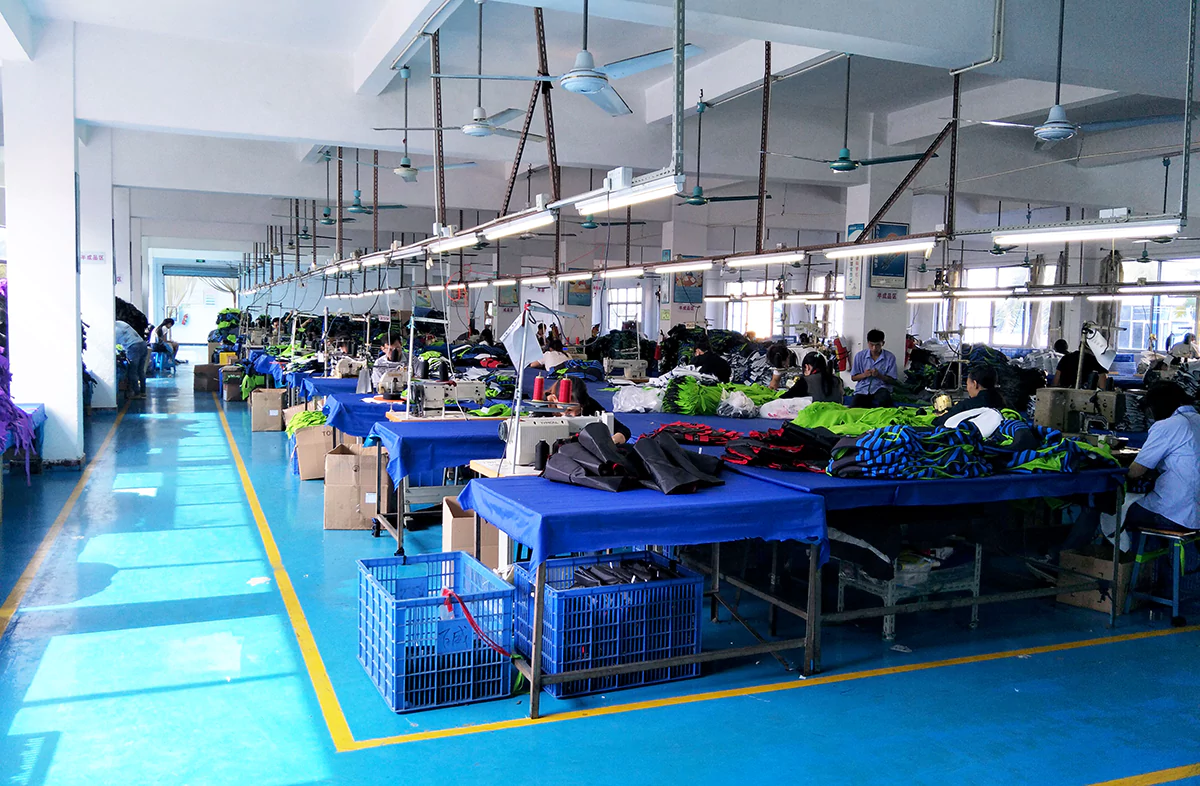
FYBagCustom is Your Trusted Custom Bag Manufacturer in China, with 15+ years of manufacturing experience and the conversion engineering that separates the used 3-way from the forgotten one. For travel, commuter, and functional-lifestyle brands, our capabilities include:
Convertible bags fail in five predictable ways, and every one has a cure the spec can mandate. For travel, commuter, and functional-lifestyle brands, three core takeaways:
If you are building convertible or modular programs — the 3-way commuter, the honest 2-way, or the full modular platform — contact FYBagCustom to brief your line, and receive timed, conversion-cycled samples in 7–10 days.
FYBagCustom engineers against the five convertible failures — complete stow systems, fifteen-second conversions, every mode a real bag, daily-converter hardware ratings — so the 3-way stays a 3-way in year three. Timed, cycled samples in 7–10 days.
Start Your Custom Bag Project →