Tel/WhatsAapp:+86 18011919834
E-mail: chloe.x@fybagcustom.com

Tel/WhatsAapp:+86 18011919834
E-mail: chloe.x@fybagcustom.com
Send Your Inquiry Today


Who this guide is for: product developers spec’ing the finishing layer of a handbag line — the piping, binding, and trim that draw the bag’s lines, seal its edges, and set its register from tailored-vintage to boho to sportif. Trim is routinely filed under “decoration” on spec sheets, and that filing is the root of most trim failures, because piping and binding are structural finishing: they reinforce the seams they decorate, enclose the raw edges they cover, absorb the abrasion that would otherwise wear the body, and — done well — signal craftsmanship at a glance the way a suit’s lapel does. This guide covers the construction methods behind each: cord piping and how it’s built and inserted, contrast versus tonal piping as design language, binding in its single-fold, double-fold, and French forms, the French-bound interior that separates premium unlined construction from raw-seamed economy, rolled edges and the wider trim family, the shared craft challenge of corners and joins, and the register guide that matches each treatment to the aesthetic it serves. Read it and the trim line on the spec sheet stops being an afterthought and starts being the design tool it is.

Look at any bag across a room and the eye reads its lines before its materials: where the seams run, how the edges terminate, whether the silhouette is drawn crisply or dissolves at its boundaries. Piping and binding are how those lines get drawn. A contrast pipe traces the seam it lives in and turns construction into graphic design; a bound edge turns a raw terminus into a deliberate border; and their absence — raw edges, unaccented seams — is itself a design statement, minimal or unfinished depending entirely on execution.
But the eye’s reading is only half the story, because trim earns its keep structurally. A piped seam carries a cord through its core that reinforces the seam line and holds the silhouette’s edge crisp. A bound edge encloses raw material that would otherwise fray, delaminate, or wear open. Both sit proud of the surface, which means both take the first abrasion — the trim is sacrificial armor at the bag’s high points, wearing so the body doesn’t. This double duty is why trim rewards real spec attention: get it right and the bag gains structure, longevity, and a signature line; get it wrong and the failure is doubly visible, a decorative element that broadcasts its own breakdown. What follows is the construction behind getting it right.
Piping is a cord — cotton, polyester, or plastic filler — wrapped in a bias-cut strip of fabric or a skived strip of leather, inserted into a seam so a rounded raised line runs along the finished edge.
| Element | Specification | Why |
|---|---|---|
| The cord core | Filler cord in diameters from fine (~2 mm, delicate line) to bold (~5 mm+, statement line); firm enough to hold a round profile, flexible enough to follow curves | The cord diameter is the line weight — the same decision a designer makes choosing a pen |
| The wrap | A bias-cut fabric strip or a skived leather strip folded around the cord; bias cut is not optional on fabric — straight-grain wraps refuse curves and pucker | Bias stretch lets the wrap follow the seam’s geometry smoothly; leather wraps are skived thin so the pipe stays round, not bulky |
| The flange | The wrap’s flat extension beyond the cord — the part that gets sewn into the seam, sandwiched between the panels | The flange is the pipe’s anchor; too narrow and it pulls free, too wide and it bulks the seam |
| The insertion | For enclosed seam piping, the piping is laid between the two panels with cord facing inward; the seam is sewn through both panels and the flange, then turned so the cord rides the finished edge | Enclosed seam piping normally needs to be planned at pattern stage; surface-applied or topstitched trims follow a different construction sequence |
| The stitch line discipline | The seam stitched tight against the cord (a piping or zipper foot rides the cord’s edge) so the pipe stands proud and even, with no visible gutter of loose wrap | A wandering stitch line makes a slack, irregular pipe — the most common piping quality failure and visible along the bag’s entire silhouette |
| Approach | The Effect | The Register |
|---|---|---|
| Contrast piping | The seam becomes a drawn line — the silhouette outlined in a second color; the bag reads graphic, tailored, deliberate | The vintage and retro registers (cream body, tan pipe; navy body, red pipe), the preppy-heritage look, and the structured handbag tradition |
| Tonal piping | The line is felt more than seen — dimension and crispness without a color statement | Quiet luxury and minimal registers; the structure benefit without the graphic one |
| Metallic and specialty piping | Gold, silver, or holographic pipe as jewelry-line accent | Evening, occasion, and the embellished register |
| Leather pipe on fabric body | The material contrast does the talking — a leather line framing canvas or nylon panels | The heritage-utility register: the piped canvas weekender, the trimmed duffle |
| The restraint rule | Piping every seam turns drawing into scribbling; the classic discipline pipes the silhouette-defining seams (gusset lines, flap edge, base perimeter) and leaves the rest quiet | The pipe’s power is selective emphasis — the developer chooses which lines the eye should follow |
Where piping lives inside seams, binding wraps around exposed edges — a strip folded over a raw edge and stitched through, enclosing it entirely. Binding is edge protection, edge decoration, and on some constructions the primary assembly method itself.
| Form | The Build | Where It Belongs |
|---|---|---|
| Single-fold binding | A strip with edges pre-folded inward, wrapped over the raw edge, stitched through in one pass | The workhorse — pouch openings, lunch bag and makeup bag edges, interior pocket tops |
| Double-fold (bias) binding | The strip folded twice so the raw binding edges are themselves enclosed on both faces | The cleaner, more durable standard — both sides of the bound edge show a folded finish |
| French binding | The full-enclosure method: the binding wraps the seam allowance in full so no raw material shows anywhere, inside or out | The premium interior standard — treated in its own section below |
| Webbing binding | Nylon or cotton webbing folded over the edge — binding and reinforcement in one heavy-duty element | The sportif and utility registers: gym bags, backpacks, gear — and the mesh-bag edges our mesh guide covers, where binding is survival, not decoration |
| Grosgrain and ribbon binding | Fine woven ribbon as the binding strip | The refined register — dressy interiors, clutch edges, the couture finish |
| Leather binding | Skived leather strips wrapped and stitched over edges | The premium-heritage edge: tote mouths, flap perimeters, the bound woven-bag borders our intrecciato guide details |
For most continuous fabric bindings on curved edges, bias-cut strips provide the cleanest fit. Straight-grain binding forced around a curve can pucker on the inside radius or pull and cup on the outside, while bias-cut strips can stretch and contract along the curve. Leather binding uses related control through skiving and, where appropriate, wet or heat forming; webbing has limited conformability, so webbing-bound designs usually keep the edge relatively straight or use shaped segments.
Turn a bag inside out and its construction becomes easier to assess. Raw overlocked seam allowances, seam tape, and fully bound interior seams communicate different cost, durability, and finishing choices. Buyers who inspect the inside can use that finish as one signal of manufacturing quality.
In this article, “French binding” refers to a fully enclosed bound-seam finish on visible interior seams. Suppliers may also use related terms such as bound seam or Hong Kong finish for similar constructions, so the construction drawing should define the expected result.
| Element | Specification | Why |
|---|---|---|
| What it is | Every interior seam allowance wrapped in binding (self-fabric, grosgrain, or contrast) so the inside presents finished edges everywhere — no raw material, no overlock chains | The unlined bag’s interior becomes a designed surface instead of an exposed mechanism |
| Where it matters most | Unlined and half-lined constructions — canvas totes, casual crossbodies, soft hobo builds — where the seams are permanently on display | A lined bag hides its seams; an unlined bag wears them; French binding is what lets a bag go unlined and stay premium |
| The contrast-interior play | Binding the interior seams in a contrast or print strip turns the finishing into a discovery detail — the flash of color when the bag opens | The interior becomes a branding surface: a signature binding color is an ownable detail |
| The cost honesty | French binding adds real labor — every seam handled twice — and belongs in the spec as a deliberate tier decision, not a default | It is the difference between a bag that costs more and a bag that shows why |
| The durability benefit | A correctly applied binding reduces exposed fraying, loose threads, and snagging at the seam allowance | The premium look can also improve edge protection when the complete assembly is suitable for the intended use |
| Treatment | The Build | The Role |
|---|---|---|
| Rolled edge | The material’s own edge rolled under and stitched — a self-finished soft border with no added strip | The minimal edge on soft leathers and fine fabrics; the unlined flap’s underside finish |
| Rolled trim / tubular trim | A rolled tube of leather or fabric applied along an edge — reads like heavy piping but rides on the edge rather than in a seam | The bold statement border on structured bags |
| Flat trim / tape | Flat woven tape or leather strip stitched along a surface — a drawn stripe rather than an edge treatment | The sportif racing stripe, the heritage strap-line, the gift and promotional color-code |
| Fringe and tassel trim | Cut fringe or tassels applied into seams or onto edges | The boho signature — motion and texture at the bag’s boundary |
| Whipstitch and lace trim | Leather lacing whip-stitched along edges | The artisan-western register; handwork on display |
| Zipper-tape reveal | The zipper tape itself run as a visible contrast line | The technical-sportif detail — trim from a functional component |
The brief question every trim spec answers: what should this bag’s finishing say? The registers named below are the vocabulary.
| Register | The Trim Language | The Construction Set |
|---|---|---|
| Tailored / vintage | Contrast piping tracing the silhouette; grosgrain-bound interiors; crisp line discipline | Fine cord piping (2–3 mm), bias wraps, mitred binding corners — the structured handbag and top-handle tradition |
| Boho / artisan | Fringe, tassels, whipstitch lacing, visible handwork; warm leather binding on soft bodies | Applied trims and hand-finished edges on straw, suede, and washed cotton — the register our macramé and natural-weave guides serve |
| Sportif / utility | Webbing binding, contrast zipper tape, flat tape stripes; trim as visible engineering | Heavy webbing over edges, bar-tacked terminations, polyester and nylon bodies — the fitness and gear register |
| Heritage / weekender | Leather piping and binding on canvas; the trimmed-luggage vocabulary | Leather pipe on waxed canvas, leather-bound mouths and corners — the travel register |
| Minimal / quiet luxury | Tonal piping or none; rolled self-edges; French-bound interiors as the only flourish | Restraint executed so cleanly the absence reads as intent — for the daily commuting premium tier |
| Occasion / embellished | Metallic piping, ribbon binding, decorative trim | The evening and embellished register |
The register rule: trim treatments should be combined deliberately. Webbing binding on a vintage-piped body or fringe on a sportif shell can work when one treatment clearly leads and the materials share a coherent purpose. A developer unsure which register a concept sits in can send the mood board to our team for a proposed trim set.
Every trim treatment meets its test at corners and joins — the places where a straight line must turn or two ends must meet.
| Challenge | The Craft Solution | The Failure It Prevents |
|---|---|---|
| Piping around a corner | The flange clipped (outer corners) or notched (inner curves) so the pipe turns without bunching; the stitch line eased around the radius | The bunched, lumpy corner where the pipe kinks instead of curving |
| Piping ends meeting | The join engineered invisible: cord ends trimmed to butt inside the wrap, the wrap overlapped and folded, the join placed at the bag’s least-seen point (base rear corner) | The visible splice — a lump and a raw end where the pipe’s line should run unbroken |
| Binding a mitred corner | The binding folded into a true mitre at square corners — a diagonal fold meeting at 45 degrees, stitched through | The bulked, rounded, or gapped corner that betrays hurried binding |
| Binding ends joining | Ends joined on the bias or folded under at an overlap placed inconspicuously | The stacked raw overlap that frays first |
| Trim across zip junctions | Piping and binding terminating cleanly at zipper tapes — trimmed, tucked, and tacked, never sewn awkwardly across the coil | The jammed zip and the frayed trim end at the bag’s most-operated point |
| Layered trim meetings | Where pipe meets binding (a piped seam ending at a bound mouth), the hierarchy is planned: which element runs continuous, which terminates into it | The collision of two treatments neither of which finishes properly |
Why this section matters to a buyer: corners are where a factory’s trim competence is legible in seconds. On a sample inspection, go straight to the corners and the piping joins — clean mitres and invisible splices certify the whole trim program; lumps and raw ends predict every future complaint.
Trim rides the bag’s high points, which means it wears first — by design. The spec’s job is to make that wear graceful and slow.
| Element | Specification | Why |
|---|---|---|
| Abrasion-rated wrap materials | Piping wraps and bindings in materials chosen for the intended rub exposure — tight-weave fabrics, coated yarns, full-grain leather strips, or other approved materials | The pipe on a base perimeter and the binding on a tote mouth take daily contact; the material and construction should be checked against the intended use |
| Corner and base priority | The trim at base corners and base perimeters — the set-down zones — spec’d heaviest | These are the first-wear points on any carried bag |
| Colorfastness | Contrast trim tested for crocking and bleed against the body, wet and dry | A red pipe that tints a cream body ruins the exact contrast it was chosen for |
| Stitch protection | Trim stitching recessed or channel-set where possible so the thread doesn’t ride the wear surface | Abraded stitching releases the trim; protected stitching outlives the wrap’s surface |
| Repairability logic | On premium builds, trim engineered as replaceable — a worn binding re-bound, a pipe re-wrapped | The trim that wore instead of the body can be renewed; the bag’s life extends |
| Weather integration | On waterproof builds, bound edges paired with sealed or taped construction, with the binding material and seam design reviewed for moisture exposure | Binding materials vary in absorbency and coating; wet-use builds must validate the complete edge system |
| Silhouette | The Trim Call | The Register It Sets |
|---|---|---|
| Structured top-handle handbag | Contrast piping on silhouette seams, grosgrain-bound interior | Tailored-vintage |
| Canvas tote | Leather-bound mouth, leather pipe on base perimeter | Heritage |
| Gym / duffle | Webbing-bound edges, contrast zip tape | Sportif |
| Boho shoulder bag | Fringe seam trim, whipstitch flap edge | Boho-artisan |
| Unlined crossbody | French-bound interior in signature contrast | Premium-casual |
| Evening clutch | Metallic piping, ribbon-bound edge | Occasion |
| Makeup / pouch | Double-fold bound opening, wipe-clean binding | Practical-refined |
| Kids / diaper bag | Rounded bound corners, soft webbing edges | Family-utility for the mom and baby program |
| Check | Method | Standard |
|---|---|---|
| Pipe evenness | The piped line sighted along its full run under raking light | Even diameter, tight against the stitch line, no slack gutter |
| Corner and join inspection | Every corner and splice examined first | Clean mitres, invisible pipe joins, no bunching |
| Binding enclosure | Bound edges checked both faces, plus flexed | Raw edge fully enclosed; no peek-through, no lift |
| Bias behavior on curves | Curved bound and piped edges inspected flat | No pucker, no cupping |
| French-bound interior | The bag turned and every interior seam inspected | Fully bound, consistent, no raw allowances |
| Colorfastness | Contrast trim rub-tested wet and dry against the body using an agreed method | Acceptance limit for crocking, transfer, or visible staining is recorded in the specification |
| Abrasion test | Base-corner and mouth trim tested using an agreed material- and use-appropriate method | Cycle count, test condition, and acceptance limit are recorded before approval |
| Zip-junction finish | Trim terminations at zips operated through full cycles | Clean ends, no interference |
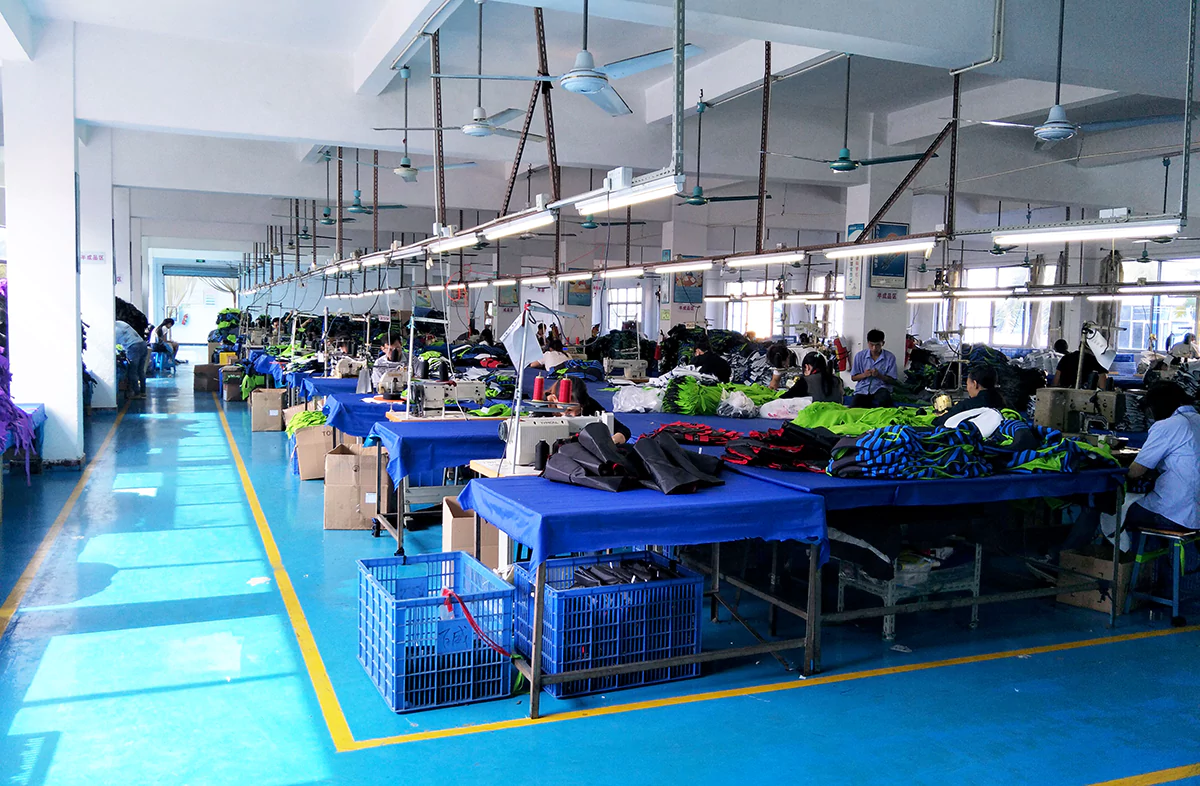
FYBagCustom is Your Trusted Custom Bag Manufacturer in China, with 15+ years of manufacturing experience across every treatment in this guide. For developers spec’ing decorative finishing, our capabilities include:
Piping, binding, and trim are the bag’s drawn lines and its edge armor at once, and they reward being spec’d as both. For product developers, three core takeaways:
If you are spec’ing the finishing layer of a line — contrast piping, French-bound interiors, register trim sets, or a broader treatment catalog — contact FYBagCustom to brief your program and confirm the available sample scope and schedule.
Discuss contrast piping, mitred bindings, French-bound interiors, and register-matched trim with FYBagCustom. Confirm the available construction, sample scope, and schedule for your project.
Start Your Custom Bag Project →