Tel/WhatsAapp:+86 18011919834
E-mail: chloe.x@fybagcustom.com

Tel/WhatsAapp:+86 18011919834
E-mail: chloe.x@fybagcustom.com
Send Your Inquiry Today

Who this guide is for: brand owners, product developers, sourcing managers, DTC founders, Amazon FBA sellers, and athleisure labels who are developing lightweight fashion handbags, quilted “cloud bags,” and puffer-style accessories using ripstop nylon and other high-performance lightweight fabrics. If you want to understand how to combine the tear resistance and featherweight properties of ripstop nylon with the soft, pillowy quilting of puffer/cloud construction — and how factories precisely control padding weight, quilting density, and water resistance to produce bags that weigh under 300 grams yet look like luxury accessories — this guide covers the full material science, construction engineering, and production specification.
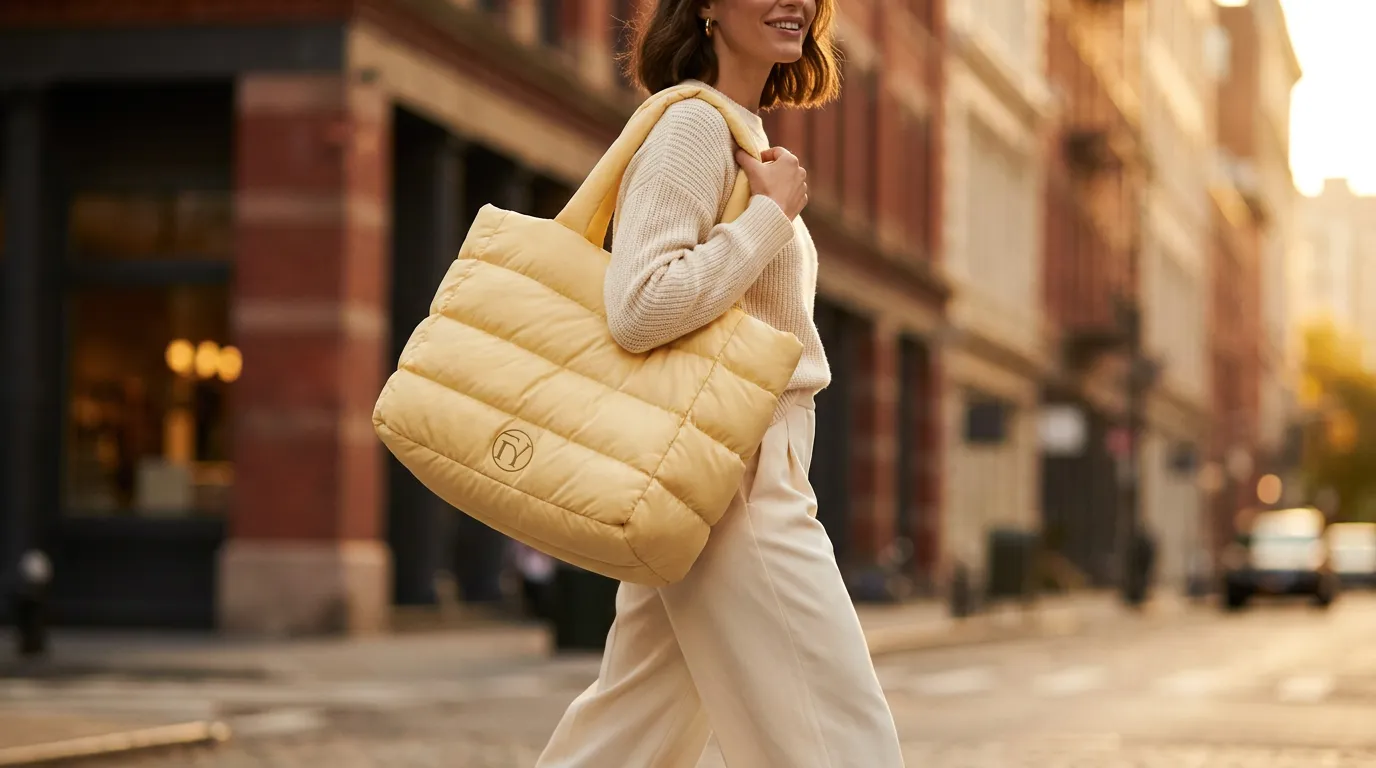
The cloud bag — the quilted, puffed, pillow-soft handbag that looks like it weighs nothing and feels like holding a warm cloud — has moved from Instagram trend to permanent accessory category. What started as a novelty in 2023 has matured by 2026 into a defined product category with established consumer expectations, clear material standards, and a year-round demand cycle that peaks in autumn/winter but sustains through every season in lighter colorways and constructions.
The appeal is intuitive and immediate: the consumer picks up a cloud bag and her first reaction is “how is this so light?” followed by her second reaction: “how is something this soft also a real bag?” These two reactions — surprise at the weight and delight at the texture — are the purchase triggers. They are the reactions that generate the social media content, the word-of-mouth recommendations, and the product reviews that drive the category.
For B2B buyers, the cloud bag and its puffer-style relatives represent one of the strongest growth categories in women’s accessories: premium retail positioning despite relatively modest material costs, strong gifting potential (the tactile “wow” moment makes it an excellent gift), year-round relevance with seasonal color rotation, and a construction process that — once specified correctly — is highly repeatable and scalable. The challenge is technical precision: the quilting density, the padding weight, the fabric tensile strength, and the water-resistance treatment must all be specified with exactness, because the “cloud” effect is a narrow band of parameters — too little padding and the bag looks flat and cheap; too much and it looks like a sleeping bag; wrong fabric and it tears on the first day.
This guide documents the complete engineering framework for producing ripstop nylon cloud bags and quilted puffer handbags at the factory level.
Ripstop nylon is not the most obvious choice for a fashion handbag — it was developed for parachutes, sails, and military tents. But its unique combination of properties makes it the ideal base fabric for quilted puffer bags: extremely light, exceptionally tear-resistant, naturally water-resistant when coated, and available in a full fashion-color range with a subtle sheen that photographs beautifully.
Ripstop nylon is distinguished by a grid of thicker reinforcement threads woven into the fabric at regular intervals (typically every 5–8 mm), creating a visible crosshatch pattern. If the fabric is punctured or nicked, the reinforcement grid stops the tear from propagating — the tear runs to the nearest grid line and stops. Standard nylon, without the ripstop grid, allows a small tear to run across the entire panel under stress.
This tear resistance is critical for a bag that has no interlining, no reinforcement panels, and no structural stiffening — the fabric and the quilting ARE the structure. A puncture or snag on a quilted panel that propagates into a tear can unzip an entire channel of padding. The ripstop grid prevents this.
| Property | Specification Range for Cloud Bags | Why This Range |
|---|---|---|
| Denier (thread thickness) | 20D–40D | Ultra-light range; 20D is the lightest (most translucent, least durable); 40D is the sweet spot (opaque, durable, still very light) |
| Fabric weight | 30–55 g/m² | Featherweight — for comparison, standard bag nylon is 100–200 g/m² |
| Ripstop grid spacing | 5–8 mm | Industry standard; tighter grids (3–4 mm) are available but add visible texture that may be undesirable for fashion applications |
| Tear strength | 15–25 N minimum (tongue-tear test) | Must resist tearing at quilting stitch lines and at strap attachment points |
| Tensile strength | 80–150 N (strip-break test) | Must withstand the weight of bag contents pulling against the fabric |
| Water resistance | DWR-coated (C6 or C0 fluorocarbon-free); water repellent, not waterproof | DWR causes water to bead and roll off the surface; the bag is splash-resistant, not submersion-proof |
| Color range | Full fashion palette — any color dyeable | Ripstop accepts acid dyes and disperse dyes; custom Pantone matching is standard |
| Surface finish | Matte, semi-matte, or calendered (slight sheen) | Calendered finish (heat-polished) gives the subtle sheen that makes quilted channels catch light — the “luxury nylon” finish |
| Fabric | Weight (g/m²) | Tear Resistance | Water Resistance | Quilting Compatibility | Fashion Read | Relative Cost | Recommendation |
|---|---|---|---|---|---|---|---|
| Ripstop nylon (20D–40D) | 30–55 | Excellent (ripstop grid) | Very good with DWR | Excellent — the grid adds texture inside quilting channels | High — the subtle grid reads as “technical luxury” | Moderate | The recommended default — best all-around performance |
| Standard nylon taffeta (20D–40D) | 25–45 | Good (no ripstop grid — tears can propagate) | Good with DWR | Good — smooth surface in channels | High — the smoothest nylon option | Low–Moderate | Acceptable for non-load-bearing quilted elements (clutches, pouches) |
| Recycled ripstop nylon (rNylon) | 35–60 | Excellent | Very good with DWR | Excellent | High + sustainability story | Moderate–High | The eco-friendly alternative — same performance, defensible claim |
| Polyester microfiber (20D–40D) | 30–50 | Moderate | Good with DWR | Good | Medium–High — slightly less “luxury nylon” sheen | Low | Budget alternative; adequate for sub-premium positioning |
| Recycled polyester (rPET) | 35–55 | Moderate | Good with DWR | Good | Medium–High + sustainability | Low–Moderate | Budget + sustainability |
The 40D calendered ripstop nylon with DWR is the recommended default for premium cloud bags. The 40-denier weight is opaque (no see-through), durable enough for daily use, and light enough to produce the “how is this so light?” reaction. The calendered finish gives the subtle sheen that makes quilted channels photograph with soft highlights — the visual signature of the cloud bag category.
The padding inside the quilted channels is what gives the cloud bag its pillowy volume, its soft squeeze, and its distinctive silhouette. The padding material determines the loft (how puffy each channel is), the recovery (whether the channels bounce back after being compressed), and the weight (how much the padding contributes to the bag’s total mass).
| Material | Loft (puffiness) | Recovery (bounce-back after compression) | Weight (for equivalent loft) | Warmth (for insulated bags) | Washability | Relative Cost | Best For |
|---|---|---|---|---|---|---|---|
| Polyester fiberfill (hollow fiber) | High — the standard puffer fill | Very good — springs back reliably | Light | Moderate | Excellent — machine-washable | Lowest | The industry standard for puffer bags; the recommended default |
| Microfiber down-alternative | Very high — mimics the loft of natural down | Excellent — superior recovery to standard fiberfill | Very light | Good | Very good | Low–Moderate | Premium positioning where “down-like softness” is the selling point |
| Natural down (goose or duck) | Maximum — the loftiest fill available | Excellent — natural down has superior long-term recovery | Lightest (for equivalent loft) | Excellent | Moderate — requires gentle wash cycle | Highest | Ultra-luxury; the most authentic “cloud” feel; but ethical sourcing concerns |
| Recycled polyester fiberfill (rPET fill) | High — comparable to virgin polyester fill | Good — slightly less recovery than virgin | Light | Moderate | Excellent | Low–Moderate | Sustainability-positioned brands |
| Cotton batting | Low–Moderate — denser, flatter, less “puff” | Poor — cotton compresses permanently over time | Heavy (for equivalent loft) | Low | Moderate | Lowest | Not recommended for cloud bags — too heavy, too flat, no recovery |
| Memory foam (thin sheets) | N/A — does not create quilted loft; creates a smooth padded surface | Very good — foam returns to original shape | Moderate | Low | Poor — foam does not wash well | Moderate | Specific applications only: padded laptop sleeves, handle wraps |
For the vast majority of cloud bag programs, polyester hollow-fiber fill is the correct choice. It delivers the loft, recovery, and lightness the category demands at the lowest cost and the easiest care (machine-washable — a significant consumer benefit for a bag that contacts skin and clothing daily). Microfiber down-alternative is the premium upgrade when “softer than the competition” is the brand’s specific differentiator.
Natural down is the highest-performance fill but introduces ethical sourcing complexity (Responsible Down Standard certification, animal welfare documentation) and higher cost. Unless the brand specifically targets the luxury consumer who values natural materials above all else, synthetic fill achieves 90%+ of the tactile effect at a fraction of the complexity.
Padding weight — measured in grams per square meter (GSM) of the fill layer — is the single most important specification in cloud bag construction. It determines how puffy each quilted channel is, how soft the bag feels when squeezed, and how heavy the finished bag is.
| Fill Weight (GSM) | Loft Level | Visual Effect | Squeeze Feel | Bag Character | Best For |
|---|---|---|---|---|---|
| 60–80 GSM | Subtle — barely visible channel definition | “Lightly padded” — channels are present but not prominent | Firm — feels padded but not puffy | A bag that happens to be quilted — the quilting is a design detail, not the identity | Quilted leather-look bags; structured quilted totes where stiffness matters more than puff |
| 100–120 GSM | Moderate — clearly defined channels with visible loft | “Padded” — the bag reads as quilted and soft | Medium — gives when squeezed, bounces back | The transitional zone between “quilted bag” and “cloud bag” | Year-round quilted bags; professional-casual positioning |
| 140–180 GSM | High — prominent, pillowy channels | “Puffer” — the bag reads as a soft, volumetric object | Soft — compresses easily, rebounds fully | The classic cloud bag / puffer bag silhouette — this is where the category lives | Cloud bags, puffer totes, and soft shoulder bags — the 2026 hero |
| 200–250 GSM | Maximum — extreme loft; channels are very fat | “Pillow” — the bag reads as an oversized cushion | Very soft — deep compression, slow rebound | Statement / editorial — visually dramatic but can look costume-like | Fashion statements; runway-adjacent; limited editions; winter seasonal |
For commercially successful cloud bags, the 140–180 GSM range produces the visual and tactile profile that consumers associate with the category: channels that are visibly puffy (the “cloud” look), a squeeze feel that is soft but not deflating (the “pillow” feel), and a recovery that is full and relatively quick (the “bounce-back” that signals quality).
Below 140 GSM, the bag does not look “cloudy” enough — it reads as a padded bag, not a puffer bag. Above 180 GSM, the bag begins to look overstuffed — the channels are so fat that the bag’s silhouette becomes round and undefined, and the weight increases noticeably.
Specify in your tech pack: “Fill: polyester hollow-fiber, 150 GSM (±10%), evenly distributed within each quilted channel.” The ±10% tolerance ensures consistency across channels — if some channels have 130 GSM and others have 170 GSM, the bag looks lumpy and asymmetric.
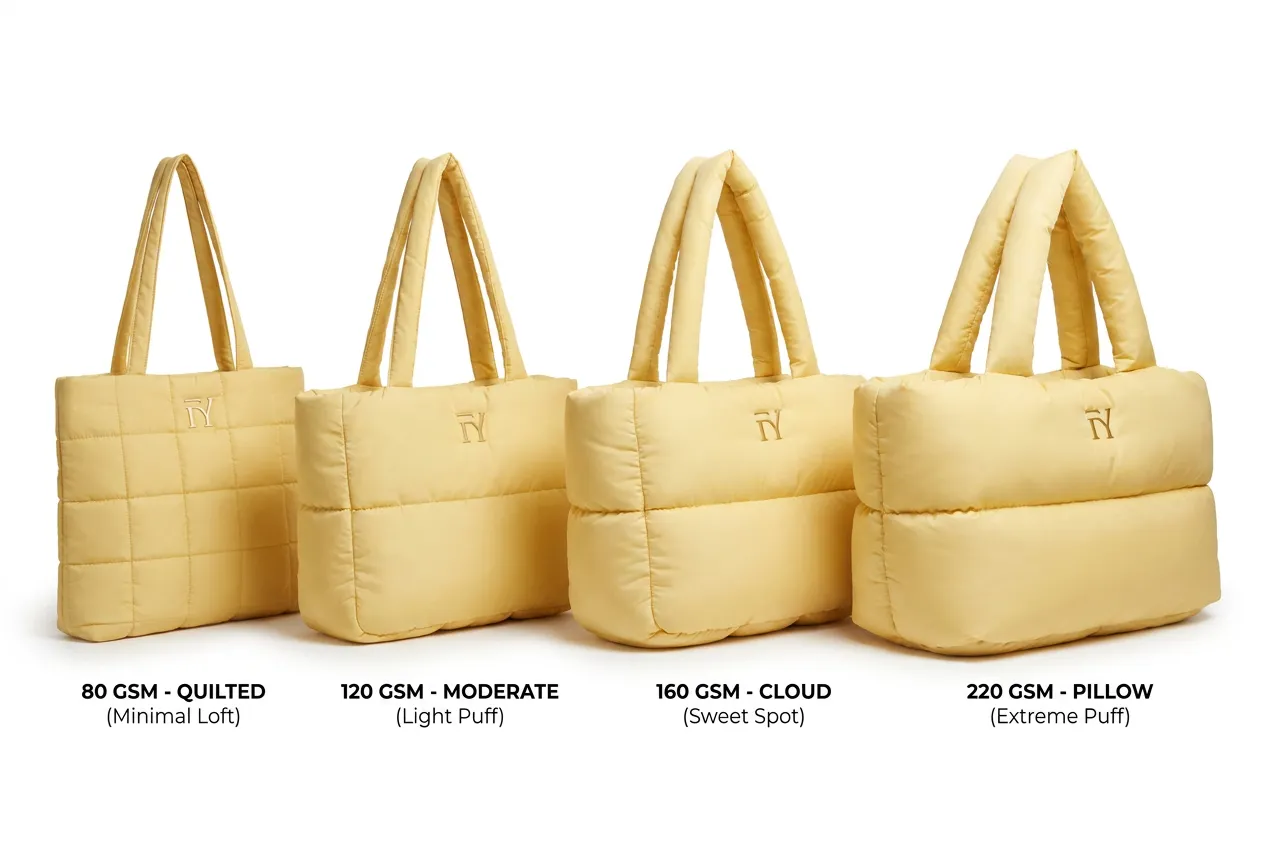
The quilting pattern — the stitch lines that create the channels holding the fill — is both a structural element (it holds the padding in place and prevents migration) and a visual design element (it defines the bag’s surface aesthetic). The choice of quilting pattern communicates the brand’s design language as clearly as material color or hardware finish.
| Pattern | Description | Visual Effect | Channel Width | Construction Complexity | Brand Read |
|---|---|---|---|---|---|
| Horizontal channels | Parallel horizontal stitch lines across the bag’s body | Classic puffer — the most recognizable quilted pattern | 4–8 cm between lines | Lowest — straight parallel lines are the simplest to sew | Athletic, casual-premium, accessible |
| Vertical channels | Parallel vertical stitch lines | Elongating, modern — the channels run the same direction as gravity, creating a “waterfall” effect | 4–8 cm | Low | Contemporary, urban, elongated aesthetic |
| Diamond quilting | Diagonal intersecting lines creating a diamond grid | The most “luxury” read — associated with heritage quilted accessories | 5–10 cm diamond diagonal | Moderate — requires precise diagonal alignment | Luxury, heritage, classic — the Chanel-adjacent aesthetic |
| Box quilting (square grid) | Horizontal + vertical lines creating a square grid | Geometric, modern, structured | 5–8 cm squares | Moderate | Modern, graphic, architectural |
| Wave / curved channels | Undulating curved stitch lines | Organic, fluid, distinctive — the most visually unique pattern | 4–7 cm between waves | High — curved stitching requires skilled operators and/or programmed machines | Fashion-forward, editorial, distinctive |
| Asymmetric / mixed | Different channel sizes or patterns on different panels | Bold, deconstructed, avant-garde | Variable | High | Statement; designer-level differentiation |
For brands positioning in the premium-to-luxury space, diamond quilting is the default pattern — it carries the strongest “luxury” association due to decades of use by major fashion houses. The diamond grid creates a more visually complex surface than parallel channels, catches light at more angles (each diamond face tilts slightly differently), and distributes fill more evenly across the panel (preventing the “sagging to the bottom” migration that parallel horizontal channels can experience).
Diamond quilting specification:
| Element | Specification |
|---|---|
| Diamond size (point to point, diagonal measurement) | 7–10 cm — smaller diamonds look more refined but increase sewing time; larger diamonds look more casual |
| Stitch angle | 45° to the horizontal — creates equilateral diamonds; other angles create elongated or compressed diamonds |
| Stitch line width | The quilting stitch creates a visible “valley” between puffed diamonds; this valley should be 3–5 mm wide (the stitch compresses the two fabric layers together at this line) |
| Pattern alignment | Diamonds must be symmetrical left-to-right across the bag’s center line; partial diamonds at the edges must be equal on both sides |
A quilted panel for a cloud bag is a three-layer sandwich: the exterior fabric (ripstop nylon), the fill layer (polyester fiberfill), and the interior fabric (lining). These three layers are stitched together in the quilting pattern, and then the quilted panels are cut and sewn into the bag’s body.
| Step | Process | Critical Detail |
|---|---|---|
| 1. Layer preparation | Exterior fabric, fill, and lining fabric are each cut to panel size + 5 cm excess on all sides (quilting compresses the sandwich, reducing its dimensions by 8–15%) | The 5 cm excess compensates for quilting shrinkage — without it, the finished panel will be too small |
| 2. Layer alignment | The three layers are laid flat, smoothed to remove wrinkles, and pinned or spray-adhered together to prevent shifting during quilting | Any wrinkle in any layer creates a permanent pucker in the finished quilted panel — the three layers must be perfectly smooth and aligned |
| 3. Quilting (stitching the pattern) | An industrial quilting machine stitches the channel pattern through all three layers simultaneously | The machine must maintain consistent stitch tension across the entire panel — tension variations create channels that are tighter (flatter) in some areas and looser (puffier) in others |
| 4. Shrinkage measurement | After quilting, the panel is measured and compared to the target dimensions; quilting typically shrinks the panel by 8–15% (the stitch lines pull the layers together, compressing the sandwich) | If the shrinkage exceeds the excess allowance, the panel is undersized — this is why the 5 cm excess and the shrinkage percentage must be known before cutting |
| 5. Panel cutting | The quilted sandwich is cut to the final pattern dimensions, accounting for measured shrinkage | Cut lines must follow the quilting pattern’s geometry — cutting through a diamond at an asymmetric angle creates partial diamonds that look unintentional |
| 6. Edge preparation | The cut edges of the quilted panel are either bound (with bias tape or piping), folded, or sealed to prevent fill from escaping at the seams | Every cut edge exposes the fill layer — without edge treatment, fill fibers migrate out of the seam over time, creating visible “whiskers” of fill protruding from the seam line |
Quilting compresses the three-layer sandwich, reducing the finished panel’s dimensions relative to the pre-quilting size. The amount of shrinkage depends on the fill weight, the quilting density (how close together the stitch lines are), and the stitch tension.
| Fill Weight | Quilting Pattern | Approximate Shrinkage (%) |
|---|---|---|
| 80–100 GSM | Horizontal channels, 6–8 cm spacing | 5–8% |
| 100–140 GSM | Diamond, 8–10 cm | 8–12% |
| 140–180 GSM | Diamond, 7–8 cm | 10–15% |
| 200+ GSM | Any pattern, tight spacing (5–6 cm) | 15–20% |
Why this matters: if your bag’s front panel should be 35 × 30 cm when finished, and quilting shrinks the panel by 12%, you need to start with a panel of approximately 39.8 × 34.1 cm before quilting. If you cut the fabric at 35 × 30 cm and then quilt it, the finished panel will be approximately 30.8 × 26.4 cm — too small. Specify the post-quilting finished dimensions in your tech pack and let the factory calculate the pre-quilting cutting size based on their measured shrinkage rate.
Cloud bags made from ripstop nylon are naturally somewhat water-resistant (nylon is a hydrophobic fiber), but the quilting stitch holes create thousands of tiny penetration points where water can enter the fill layer. DWR (Durable Water Repellent) coating applied to the exterior fabric prevents this by causing water droplets to bead on the surface and roll off rather than penetrating.
| Property | Specification | Why |
|---|---|---|
| DWR type | C0 (fluorocarbon-free) — also called PFC-free DWR | C6 and C8 fluorocarbon DWR treatments are being phased out due to PFAS environmental concerns; C0 is the responsible default in 2026 |
| Water repellency rating | AATCC 22 spray test: rating 80 minimum (on a 0–100 scale where 100 = no wetting) | Rating 80 means water beads and rolls off at moderate rain angles; the bag handles light rain and splashes |
| Wash durability | DWR must maintain rating 70+ after 5 home wash cycles | The consumer will wash or wipe the bag; the DWR must survive regular cleaning |
| Application method | Pad-dry-cure (applied during fabric finishing, before the fabric arrives at the bag factory) | Factory-applied DWR is more uniform than spray-applied post-production; specify DWR at the fabric-sourcing stage |
| Feel impact | DWR should not change the fabric’s hand-feel (no stiffness, no tackiness, no odor) | If the DWR makes the nylon feel stiff or waxy, it undermines the soft “cloud” tactile experience |
Product-page language: “Water-resistant finish repels light rain and splashes. Not waterproof — prolonged exposure to heavy rain may allow water penetration. For best care, wipe clean with a damp cloth.”
For brands wanting a step beyond DWR — for travel bags or bags marketed for outdoor use — a waterproof PU or TPU lamination can be applied to the exterior fabric before quilting. This makes the bag genuinely waterproof (not just water-resistant) but adds weight and changes the fabric’s hand-feel (slightly stiffer, slightly less soft). For most cloud bag applications, DWR alone is sufficient.
The cloud bag’s most powerful selling point is its weight — or rather, its lack of weight. The consumer’s “how is this so light?” reaction is the emotional trigger that drives purchase. Engineering that reaction requires precise weight management across every component.
| Component | Target Weight | Material Choice to Hit Target |
|---|---|---|
| Exterior fabric (ripstop nylon, two panels + gussets) | 40–60 g | 40D ripstop at 45 g/m² × approximately 0.8–1.2 m² = 36–54 g |
| Fill (polyester fiberfill, 150 GSM) | 50–80 g | 150 GSM × approximately 0.3–0.5 m² of quilted area = 45–75 g |
| Lining (interior layer of quilted sandwich) | 20–35 g | Lightweight nylon taffeta (20D) at 25 g/m² |
| Interior pockets (lightweight nylon) | 10–20 g | 2–3 flat pockets in 20D nylon |
| Handles / strap | 30–50 g | Quilted nylon straps (matching the body) or lightweight webbing |
| Hardware (zipper, snap, D-ring) | 20–40 g | Nylon coil zipper (lighter than metal); lightweight magnetic snap; minimal D-rings |
| Thread + seam allowances | 10–15 g | Standard |
| Total empty weight | 180–300 g | The target: under 250 g for a medium tote — lighter than a smartphone |
Achieving the sub-250 g target requires discipline: every component must be evaluated for weight, and heavier alternatives must be eliminated. A metal zipper instead of nylon coil adds 15–25 g. A cotton canvas lining instead of 20D nylon adds 40–60 g. A leather handle instead of quilted nylon adds 30–50 g. Each substitution pushes the bag further from the “impossibly light” reaction that drives the category.
The cloud bag should be so light that a consumer can lift it with one finger (hooked through the handle) without the weight being uncomfortable. This is the in-store and unboxing moment that generates the “wow” reaction. If the bag cannot pass the one-finger-lift test comfortably, it is too heavy for cloud bag positioning.
The quilted puffer construction transforms the visual read of every bag silhouette — panels that would be flat and defined in standard construction become puffy, rounded, and organic. Not every silhouette benefits from this transformation.
| Silhouette | Cloud Suitability | Why | Best Quilting Pattern | Fill Weight |
|---|---|---|---|---|
| Tote (medium–large) | Excellent — the hero format | Large flat panels maximize the visual impact of quilting; the puffer tote is the most commercially successful cloud bag format | Diamond or horizontal channels | 140–180 GSM |
| Shoulder bag (medium) | Very good — the everyday option | The quilted shoulder bag conforms to the body beautifully; the puffer construction adds comfort against the hip | Diamond | 140–160 GSM |
| Crossbody (small–medium) | Very good | Compact quilted format works for going-out and travel; the puffy silhouette makes a small bag look substantial | Diamond or box | 120–160 GSM |
| Clutch / pouch | Good — the accessible entry product | Quilted clutches are the lowest-cost cloud product; they make excellent gifts and impulse purchases | Any pattern | 100–140 GSM (lighter — a clutch should not be too voluminous) |
| Backpack | Moderate — requires careful execution | The puffer backpack looks distinctive but can appear costume-like if over-filled; keep fill weight at the lower end | Horizontal or vertical channels | 100–140 GSM |
| Duffle / weekender | Good — the travel format | Quilted weekender is a natural extension for travel-lifestyle brands; the puffy construction adds built-in cushioning for contents | Horizontal channels | 120–160 GSM |
The recommended launch collection: quilted tote (hero) + quilted crossbody (everyday) + quilted clutch/pouch (entry/gift) — three products covering daily carry, going-out, and gifting at three different volume points.
Quilted surfaces interact with light differently from flat surfaces — the ridges of each channel catch highlights while the valleys between channels fall into shadow. This light-and-shadow interplay makes certain colors more visually effective on quilted bags than others.
| Color | Quilting Highlight Effect | Shadow Depth | Photography Performance | 2026 Demand | Recommendation |
|---|---|---|---|---|---|
| Black | Subtle highlights; shadows barely visible | Minimal — black absorbs most light | Moderate — cloud shape visible but tonal range is narrow | Stable — the safe neutral | Staple — always stock |
| Cream / off-white | Very bright highlights; soft shadows | Moderate — visible tonal variation | Excellent — the most photogenic cloud bag color | Growing — the “hero editorial” color | Launch hero |
| Butter yellow | Warm highlights; gentle shadows | Moderate | Excellent — luminous, eye-catching | High — 2026 trend | Trend hero |
| Lavender | Soft, cool highlights; gentle shadows | Moderate | Very good — fresh, modern, gifting-friendly | High — the 2026 cloud-bag signature color | Strong trend play |
| Sage green | Muted highlights; natural shadows | Moderate | Good — organic, calming | Growing | Trend complement |
| Dusty rose / blush | Warm, soft highlights | Moderate | Very good — feminine, Instagram-ready | Stable — strong in gifting | Gifting staple |
| Powder blue | Cool, airy highlights | Moderate | Good — serene, seasonal (spring/summer) | Moderate | Seasonal option |
| Metallic (silver or gold nylon) | Maximum highlights — the fabric itself is reflective; quilting creates dramatic light play | Deep — reflective surface makes shadows darker by contrast | Exceptional — the most dramatic cloud bag option | Growing — statement/evening positioning | Limited edition / evening |
The launch palette: cream (hero) + lavender or butter yellow (trend) + black (staple) — three colorways covering the editorial, the trend, and the safe option.
Light colors (cream, lavender, butter yellow, blush) outperform dark colors on quilted surfaces because the shadow definition is more visible. On a cream cloud bag, each quilted channel casts a visible shadow into the valley below, creating the three-dimensional texture that makes the bag look “puffy” in photographs. On a black cloud bag, the shadows are invisible against the dark surface — the bag looks dark and rounded but the quilting detail is lost.
This is why cloud bags in light colors consistently outperform dark colors in click-through rate on e-commerce platforms: the light color makes the quilting — the bag’s entire visual identity — readable at thumbnail size.
Cloud bags demand the lightest possible hardware — every gram of metal competes with the “impossibly light” proposition. The hardware strategy mirrors the material strategy: minimize quantity, minimize weight, maximize impact.
| Component | Standard Bag Hardware | Cloud Bag Specification | Why the Difference |
|---|---|---|---|
| Main closure | Metal zipper, heavy slider | Nylon coil zipper (#3), lightweight slider, matching-color tape | Nylon coil weighs 40–60% less than metal; color-matched tape “disappears” into the quilted surface |
| Zipper pull | Cast metal pull | Lightweight stamped pull or quilted fabric loop pull | A fabric loop pull tied through the slider weighs almost nothing and matches the bag’s material story |
| D-rings | Cast zinc alloy, 20 mm | Lightweight zinc alloy, 15 mm, or eliminate entirely and sew strap directly to body | Smaller D-rings weigh less; direct strap attachment eliminates the hardware entirely |
| Magnetic snap | Standard neodymium, metal housing | Ultra-thin neodymium disc sewn into the quilted layers | The snap is invisible — no metal housing on the surface; the quilted panel itself is the closure |
| Base feet | Cast metal, 4 pieces | Eliminated — the quilted base IS the cushion | Base feet on a cloud bag look incongruous — the bag’s softness is its protection |
| Chain strap (if used) | Heavy chain links | Ultra-fine chain (2–3 mm links) or quilted fabric strap | Fine chain adds the “jewelry” detail at a fraction of the weight; a quilted strap extends the cloud aesthetic to the carry system |
The most elegant closure for a cloud bag is a magnetic snap embedded within the quilted layers — invisible from the outside. The snap components are sewn between the exterior fabric and the fill, so the closure is achieved by pressing one quilted panel against another. The consumer feels the magnetic engagement through the puffy surface; no metal is visible. This technique costs slightly more in labor (the snap must be positioned before quilting) but creates the seamless, all-soft aesthetic that defines the premium cloud bag.
Quilted puffer bags present specific manufacturing challenges that differ from standard bag construction:
| Challenge | Why It Happens | Solution |
|---|---|---|
| Fill migration (padding shifts to one end of the channel) | Gravity and handling cause loose fill to slide within a channel, creating thick and thin zones | Use batting sheets (pre-formed flat sheets of fill) rather than loose fiberfill; batting sheets maintain uniform distribution because the fibers are thermally bonded into a cohesive sheet |
| Quilting pucker (fabric wrinkles between stitch lines) | Uneven tension or poor layer alignment during quilting | Spray-adhesive tacking of all three layers before quilting; quilting at consistent speed with calibrated tension; walking-foot quilting machine |
| Edge-fill escape (fill fibers protrude from seams after cutting) | Cut quilted edges expose the fill layer; loose fibers work their way out through the seam over time | Sealed edges — either heat-sealed (for nylon) or bound with bias tape before seaming; the seal prevents fiber escape |
| Quilting line alignment across seams | When two quilted panels are sewn together (e.g., front to gusset), the quilting lines on each panel must align at the seam — misalignment is immediately visible | Pattern-match quilting — the factory quilts both panels in the same operation (or with the same pattern template) to ensure lines match at the seam junction |
| Strap attachment on soft surface | Strap attachment points must bear the full bag weight, but the quilted surface is soft and compressible — the strap can pull through the quilted layers | Webbing backing strip sewn between the quilted layers at the attachment zone, extending 5–8 cm beyond the attachment point; the strap is sewn through the quilted panel + the webbing strip, distributing the load across a wider area |
| SKU | Format | Quilted Dimensions | Fill Weight | Weight Target (empty) | Target Consumer |
|---|---|---|---|---|---|
| Cloud Tote | Medium quilted tote with twin handles + optional crossbody strap | 35 × 30 × 15 cm | 150 GSM | Under 250 g | The hero — daily carry, work-to-weekend |
| Cloud Crossbody | Small–medium quilted crossbody with adjustable strap | 25 × 18 × 8 cm | 140 GSM | Under 150 g | Going-out, travel, everyday light carry |
| Cloud Clutch | Quilted pouch with zip closure | 28 × 18 cm | 120 GSM | Under 80 g | Entry product, gifting, cosmetics, evening |
| Cloud Weekender | Large quilted duffle with handles + shoulder strap | 48 × 28 × 22 cm | 140 GSM | Under 400 g | Travel, weekend trips, the “puffer suitcase” |
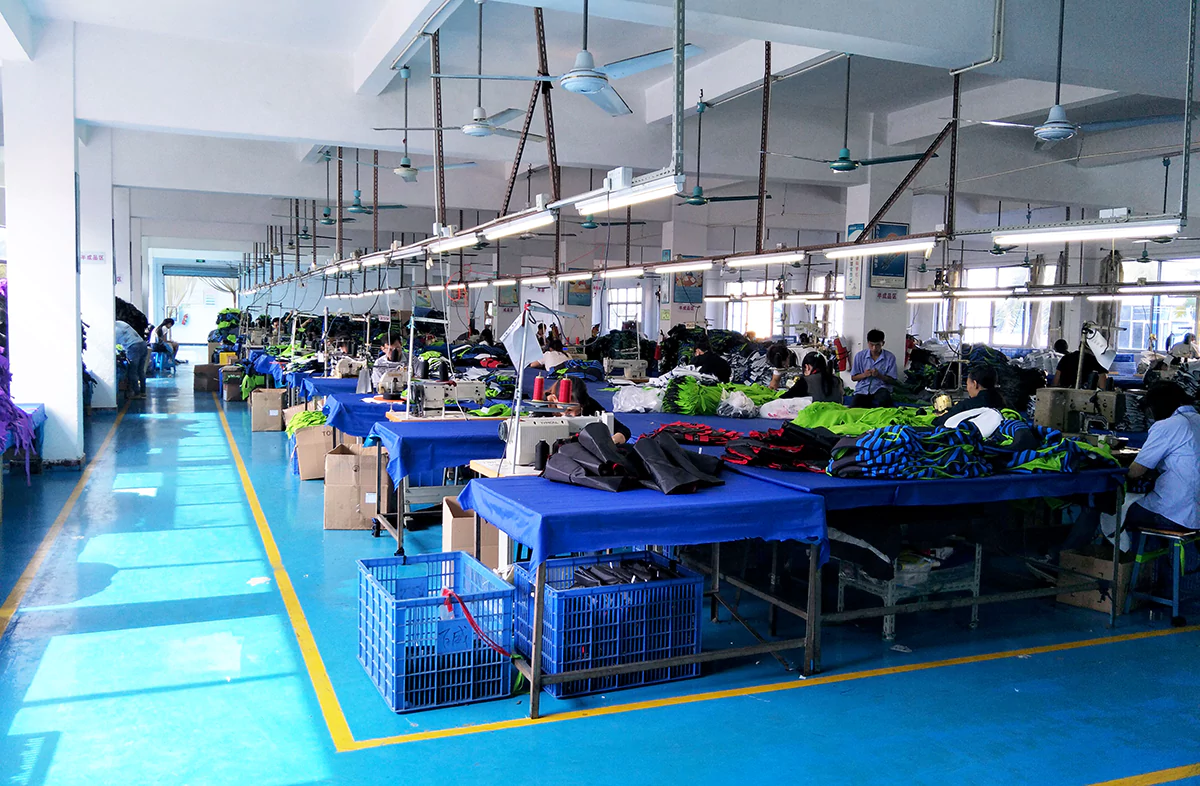
FYBagCustom is Your Trusted Custom Bag Manufacturer in China, with 15+ years of manufacturing experience and dedicated quilting production capability. For brands developing cloud bags, puffer bags, and quilted accessories, our capabilities include:
Contact our development team to discuss ripstop sourcing, quilting specifications, and padding weight targets for your cloud bag collection.
The cloud bag looks effortless — but every aspect of its “softness” is precisely engineered. The ripstop grid that prevents tears. The 150 GSM fill weight that creates the exact right puffiness. The diamond quilting at 45° that distributes fill and catches light. The DWR coating that repels rain without stiffening the fabric. The sub-250 g total weight that produces the “how is this so light?” reaction. For B2B buyers developing cloud bags and puffer accessories, three core takeaways:
If your 2026 collection includes cloud bags, puffer totes, or quilted accessories, now is the time to source DWR-coated ripstop, specify fill weights, and approve quilting patterns. Contact FYBagCustom to discuss quilting engineering, weight targets, and fabric options — and receive quilted samples with fill-weight verification, typically within 5–7 days.
FYBagCustom’s quilting production team develops cloud bags and puffer accessories with precision fill-weight control, DWR-coated ripstop nylon, diamond quilting, and ultra-lightweight construction — targeting sub-250 g empty weight. Quilted samples with weight verification in 5–7 days.
Start Your Custom Bag Project →