Tel/WhatsAapp:+86 18011919834
E-mail: chloe.x@fybagcustom.com

Tel/WhatsAapp:+86 18011919834
E-mail: chloe.x@fybagcustom.com
Send Your Inquiry Today

Who this guide is for: brand owners, product developers, sourcing managers, DTC founders, and private label developers who specify construction details for custom handbags at the premium and luxury-adjacent tier. If you have ever wondered what invisible materials sit between the exterior leather and the interior lining — and why one bag holds its shape for five years while an identical-looking bag collapses in five months — this guide explains the hidden structural layer: the reinforcement materials (Salpa, microfiber backing, buckram, EVA foam, and others) that give a handbag its skeleton, its memory, and its longevity.
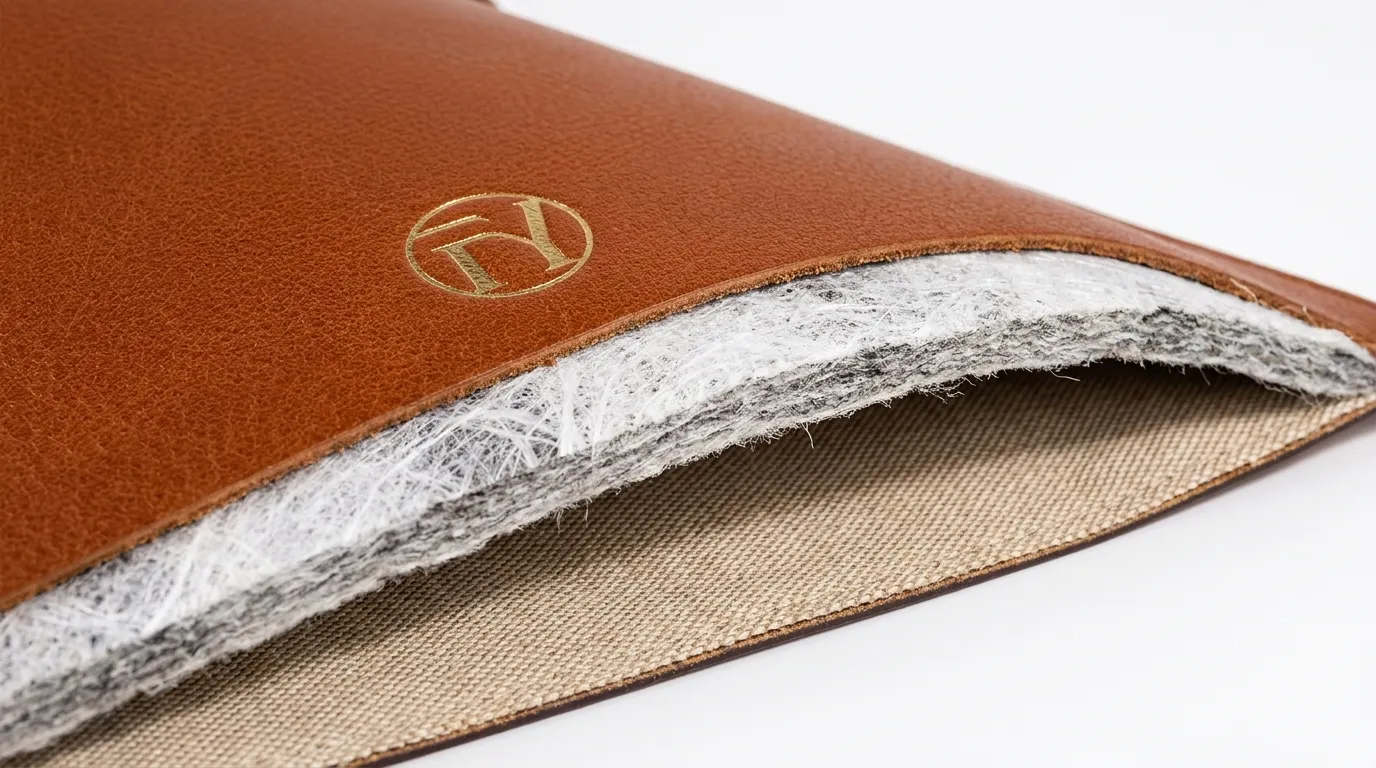
When a consumer picks up a premium handbag and it “feels right” — when the body holds its shape without being rigid, when the panels have substance without heaviness, when the bag stands upright on a table with quiet confidence — she is responding to something she cannot see. She is not responding to the leather (which she can see) or the lining (which she finds when she opens the bag). She is responding to the reinforcement layer — the hidden structural material sandwiched between the exterior and the lining that gives the bag its posture.
This reinforcement layer is the most technically important and least understood component in handbag construction. It is invisible in every product photograph. It is unmentioned on almost every product page. Most consumers — and many brand founders — do not know it exists. Yet it determines the difference between a bag that maintains its silhouette through years of daily use and a bag that sags, wrinkles, and loses its shape within months.
The reinforcement material is what luxury houses invest in most carefully and what budget manufacturers cut first. When a factory reduces cost, the first material they thin or eliminate is the one the buyer never sees: the backing. A bag that looks identical in a product photograph can cost 15–25% less to produce simply by using thinner, cheaper backing — and the buyer will not discover the difference until the bag has been in consumers’ hands for three months and the one-star reviews arrive: “lost its shape,” “sides collapsed,” “looks nothing like it did when I bought it.”
This guide is the antidote. It documents every reinforcement material used in professional handbag manufacturing, explains the structural physics of each one, compares them across the dimensions that determine long-term performance, and provides the specification language you need to ensure your factory uses the right backing for your design — not the cheapest one they can substitute without you noticing.
Every structured or semi-structured handbag is built in three layers:
| Layer | Position | What the Consumer Sees/Feels | Material Examples | Function |
|---|---|---|---|---|
| Layer 1: Exterior | Outermost | Sees it (the visual surface) and touches the outside | Leather, PU, canvas, nylon | Aesthetics, color, texture, brand identity |
| Layer 2: Reinforcement | Middle — hidden | Feels it indirectly (the “body” and “substance” of the panel) but never sees it | Salpa, microfiber backing, buckram, EVA foam, fusible interlining, Pellon | Structure, shape memory, stiffness, longevity |
| Layer 3: Lining | Innermost | Sees it when the bag is open; touches it when reaching inside | Polyester, nylon, cotton, microfiber suede | Interior protection, tactile quality, pockets, branding |
Layer 2 is the subject of this guide. It is the layer that factories call “backing,” “interlining,” “reinforcement,” or “substrate” — and the layer that most founders specify as simply “interlining” without understanding that there are a dozen different materials with dramatically different structural properties.
A handbag’s shape is maintained by a balance of three physical properties in the reinforcement layer:
| Property | What It Means | Too Little | Too Much | The Sweet Spot |
|---|---|---|---|---|
| Stiffness (resistance to bending) | How much force is required to bend the panel | The panel flexes freely — the bag collapses, folds, and loses its silhouette | The panel feels like cardboard — the bag is rigid, uncomfortable, and cracks at fold points | The panel holds its shape under its own weight but yields gracefully when pressed by the hand or the body |
| Resilience (ability to return to original shape after deformation) | Whether the panel bounces back after being bent, compressed, or loaded | The panel takes a permanent set — every fold, press, and compression leaves a lasting mark | The panel is so springy it resists normal use — closures fight to stay closed; the bag feels “tense” | The panel returns to its original shape within seconds after normal deformation; fold marks disappear |
| Weight (mass per unit area) | How much the reinforcement adds to the bag’s empty weight | Too light means insufficient structure — the material cannot support the exterior | Too heavy fatigues the consumer’s shoulder and adds unnecessary production cost | Heavy enough to provide structure; light enough that the total bag weight stays within target |
Different reinforcement materials deliver different combinations of these three properties. Selecting the right material means matching the structural profile to the bag’s intended silhouette — a structured doctor bag needs high stiffness and high resilience; a semi-structured shoulder bag needs moderate stiffness and high resilience; a slouchy hobo needs minimal stiffness and high resilience (so it drapes but recovers from storage folds).
| Material | Composition | Stiffness | Resilience | Weight | Thickness Range | Breathability | Bonding Method | Longevity (shape retention over years) | Relative Cost | Best For |
|---|---|---|---|---|---|---|---|---|---|---|
| Salpa (cellulose board) | Compressed cellulose fiber board (similar to stiff cardboard but engineered for bags) | Very high — the stiffest common backing | Low — once bent past its yield point, it takes a permanent crease | Medium–Heavy | 0.5–2.0 mm | Low | Glued to exterior material; not fusible | Moderate — holds shape well if never over-bent, but creases are permanent | Low | Base panels, rigid bottom inserts, bag sides that must never flex |
| Microfiber backing (non-woven synthetic) | Non-woven polyester/nylon microfiber sheet, needle-punched or thermally bonded | Moderate — firm but flexible | Very high — returns to shape reliably even after repeated deformation | Light–Medium | 0.4–1.2 mm | Good | Fusible (iron-on) or glued | Excellent — the gold standard for long-term shape retention | Moderate–High | Body panels of premium structured bags; flaps; gussets |
| Buckram (stiffened cotton or synthetic) | Woven cotton or polyester heavily sized with starch or resin | High — stiff and crisp | Moderate — some recovery, but prolonged bending weakens the sizing | Light–Medium | 0.3–0.8 mm | Moderate | Fusible or sewn | Moderate — sizing can break down with moisture and repeated flexing over 1–2 years | Low–Moderate | Flaps, structured closures, areas that need crispness without extreme rigidity |
| EVA foam (ethylene-vinyl acetate) | Closed-cell synthetic foam | Low–Moderate (depends on density) — soft and cushioning | High — excellent memory; compresses and recovers repeatedly | Light | 1.0–5.0 mm | Low (closed-cell) | Glued or laminated | Very good — EVA maintains its cushioning and recovery for years | Low–Moderate | Padding (handle wraps, laptop sleeves, shoulder pads); base cushion; combined with stiffer backing for composite structure |
| EPE foam (expanded polyethylene) | Closed-cell polyethylene foam | Very low — soft, flexible, minimal structure | Moderate — recovers from light compression; permanent set under sustained heavy compression | Very light | 1.0–10.0 mm | Low | Glued or laminated | Moderate — lighter and less durable than EVA | Lowest | Lightweight padding; shipping protection; combined with other materials |
| Fusible woven interlining (standard) | Woven polyester or cotton with heat-activated adhesive dots on one side | Low–Moderate — adds body without significant stiffness | Moderate | Very light | 0.1–0.3 mm | High | Fusible (ironed onto the exterior material’s back side) | Moderate — the adhesive can delaminate with heat/moisture over 2–3 years if low-quality | Lowest | Light-bodied bags; unstructured-to-semi-structured; the minimum reinforcement |
| Fusible non-woven interlining (standard) | Non-woven polyester felt with heat-activated adhesive | Low–Moderate — similar to woven but slightly stiffer per unit thickness | Low–Moderate | Very light | 0.1–0.5 mm | Moderate | Fusible | Moderate — can bubble or separate if applied at incorrect temperature | Lowest | Budget bags; areas requiring minimal body; interior pocket stiffening |
| HDPE sheet (high-density polyethylene) | Rigid plastic sheet | Very high — rigid, does not bend | N/A — plastic is either flat or permanently deformed | Light (for its rigidity) | 0.5–2.0 mm | None | Cut to shape, inserted between layers (not bonded) | Excellent — plastic does not degrade | Low | Base boards exclusively — never used on body panels (too rigid) |
The table reveals four clear tiers of reinforcement:
Tier 1 — Rigid elements (base, bottom insert): Salpa or HDPE. These materials provide maximum stiffness for the base panel, enabling the bag to stand upright. They are never used on body panels because their inflexibility would make the bag feel like a box.
Tier 2 — Premium structural backing (body panels, flaps, gussets): Microfiber backing. This is the material that defines the “premium feel” of a well-made structured handbag. It provides moderate stiffness with excellent resilience — the panel holds its shape but yields to the hand, then returns. It is the material used by luxury houses for body panels.
Tier 3 — Moderate structure (closures, pockets, secondary panels): Buckram or medium-weight fusible interlining. These materials add crispness and definition without the cost of microfiber backing. They are appropriate for elements that need structure but are not the primary body panels.
Tier 4 — Padding and light body (handles, laptop sleeves, light-bodied bags): EVA foam, EPE foam, or lightweight fusible interlining. These provide cushioning or minimal body rather than structural stiffness.
The most consequential reinforcement decision in premium handbag development is the choice between Salpa (the traditional stiff backing) and microfiber backing (the modern flexible-structure alternative) for the bag’s primary body panels. This choice determines the bag’s long-term structural behavior more than any other specification.
| Dimension | Salpa | Microfiber Backing |
|---|---|---|
| Base material | Compressed cellulose fiber (essentially engineered paper/cardboard) | Non-woven synthetic microfiber (polyester or polyester-nylon blend) |
| Stiffness | Very high — firm, board-like | Moderate — firm but flexible, with a “give” when pressed |
| Resilience (crease recovery) | Poor — once creased, the crease is permanent; Salpa’s cellulose fibers break at the fold point and cannot self-repair | Excellent — microfiber’s entangled synthetic fibers spring back to their original position after deformation |
| Moisture resistance | Poor — Salpa absorbs moisture, which softens and weakens the cellulose structure permanently; a humid environment or a water spill can destroy the backing | Very good — synthetic microfiber does not absorb water; retains its properties in humid conditions |
| Weight (at equivalent structural performance) | Heavier — needs greater thickness (1.0–2.0 mm) to achieve the required stiffness | Lighter — achieves comparable body at thinner profile (0.6–1.0 mm) |
| Temperature sensitivity | Moderate — Salpa can soften slightly in extreme heat (car trunk in summer) | Low — microfiber maintains its properties across normal temperature ranges |
| Longevity (years of daily use) | 2–5 years before structural degradation begins (creases, moisture damage, loss of stiffness at flex points) | 5–10+ years — synthetic fibers do not degrade under normal use conditions |
| Bonding to exterior material | Glued (contact adhesive or spray) — requires precise application to avoid bubbles | Fusible (heat-activated adhesive) or glued — fusible bonding is more uniform and reliable |
| Common failure mode | Permanent crease lines at stress points (where the bag flexes during daily use); softening in humid environments | Rare — adhesive delamination if poorly fused (a production quality issue, not a material issue) |
| Where luxury houses use it | Base panels and rigid inserts only — never on body panels that flex | Body panels, flaps, gussets — everywhere the bag needs flexible structure |
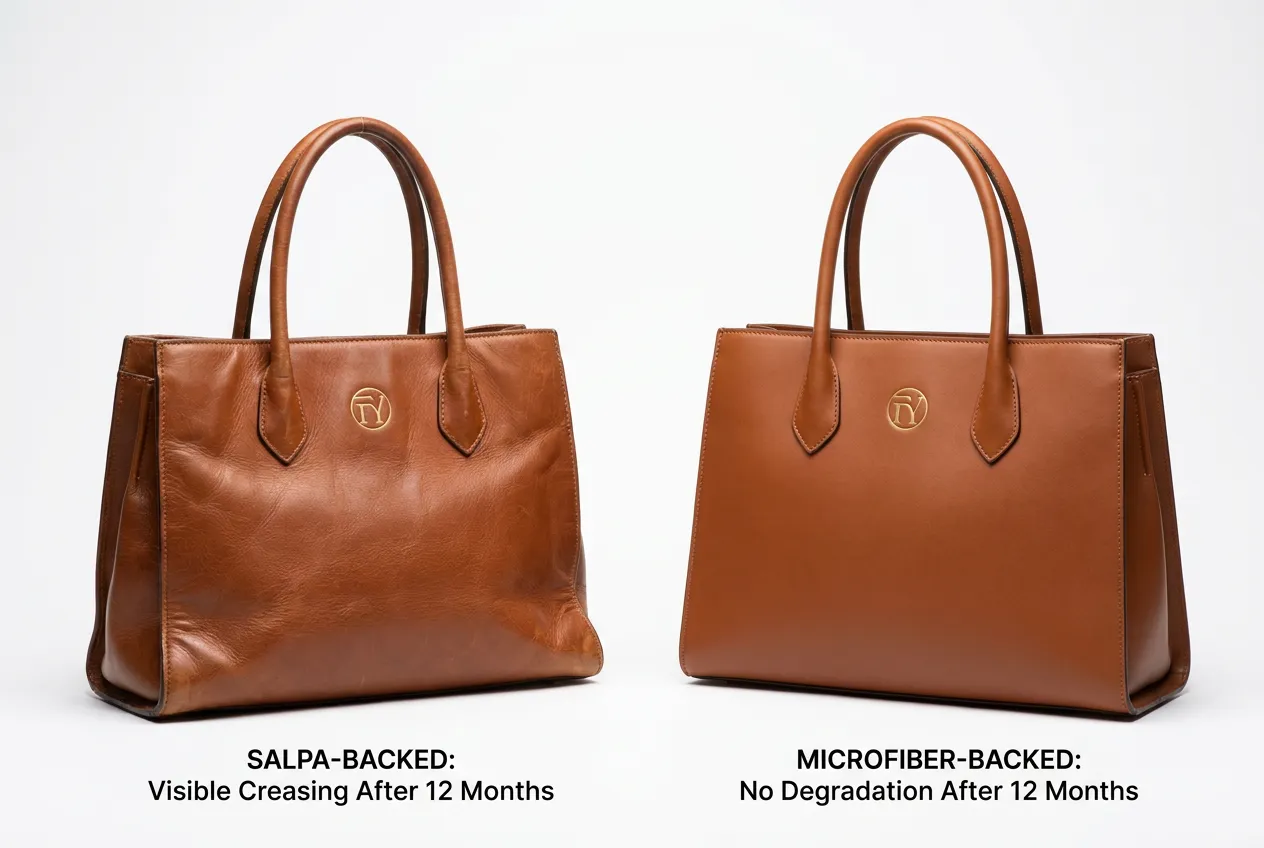
Salpa-backed body panels produce a bag that feels impressively structured on day one — firm, precise, architectural. But within 6–18 months of daily use, the panels develop permanent crease lines at every flex point (where the bag bends against the body, where the top folds slightly when closed, where the gusset meets the front panel). These creases are irreversible because the cellulose fibers at the fold have physically broken.
Microfiber-backed body panels produce a bag that feels slightly less stiff on day one — firm but with a perceptible “give” when pressed. But after 3 years of daily use, the panels show no structural degradation — no crease lines, no loss of stiffness, no shape change. The bag looks and feels the same as it did in month one.
This is the fundamental trade-off: Salpa gives you a more impressive day-one stiffness but shorter structural life. Microfiber gives you a slightly softer (but still firmly structured) day-one feel but dramatically longer structural life.
The recommendation for premium bags: microfiber backing on all body panels (front, back, gussets, flap). Salpa or HDPE for the base board only (where maximum rigidity is needed and flexing never occurs). This combination — which is the standard at quality-focused manufacturers — delivers a bag that feels structured and substantial at first touch, holds its shape through years of daily use, and does not develop the permanent crease lines that prematurely age a handbag.
Professional handbag construction rarely uses a single reinforcement material throughout. Instead, it uses a composite approach — different materials in different zones of the bag, matched to the structural demands of each zone.
| Bag Zone | Structural Demand | Recommended Reinforcement | Thickness | Why This Material Here |
|---|---|---|---|---|
| Front panel | Must hold shape while flexing slightly when the bag is loaded or pressed against the body | Microfiber backing | 0.6–0.8 mm | Flexible structure with excellent crease recovery — the front is the most-seen and most-evaluated surface |
| Back panel | Same as front; slightly less scrutinized visually but must match the front’s structural feel | Microfiber backing | 0.6–0.8 mm | Must match front panel — any stiffness mismatch between front and back is immediately perceptible |
| Gussets (side panels) | Must hold shape while flexing at the corners where they meet the front and back | Microfiber backing | 0.5–0.7 mm (slightly thinner — gussets are narrower and need more flexibility at the corners) | The gusset corners are the highest-flex zone; Salpa here would crease within months |
| Base / bottom panel | Must be rigid — the bag stands on this surface; it must not sag or flex under load | Salpa (1.0–1.5 mm) or HDPE (1.0–1.5 mm) + microfiber backing overlay | 1.0–1.5 mm (Salpa/HDPE) + 0.4 mm (microfiber wrap) | The base never flexes — pure rigidity is needed; Salpa’s weakness (crease under flex) is irrelevant here |
| Flap (if present) | Must hold shape while repeatedly folding open and closed | Microfiber backing | 0.5–0.7 mm | The flap flexes every time the bag is opened — Salpa here would crease at the hinge within weeks |
| Handle base (where handle attaches to body) | Must resist deformation under the full concentrated weight of loaded bag | Webbing + microfiber backing | 0.6 mm microfiber + 25 mm cotton webbing | The highest-stress point on the bag; reinforcement prevents material tearing at attachment |
| Pocket openings | Must hold the pocket’s opening shape so the consumer can access it cleanly | Lightweight fusible interlining | 0.2–0.3 mm | Minimal stiffness needed; the pocket does not bear structural load |
| Zipper area | Must prevent the zipper from puckering the surrounding material | Lightweight fusible interlining (2 cm strip along zip) | 0.2 mm | Localized micro-stiffening; keeps the zipper seam flat |
A common shortcut in budget manufacturing: applying the same reinforcement material at the same thickness to every panel. This produces either:
The composite approach matches the reinforcement to the functional demand of each zone — rigid where rigidity is needed (base), resilient where flexing occurs (panels, flaps, gussets), and minimal where structure is not required (pockets, zip area). Specify this zone-by-zone in your tech pack; do not write “interlining throughout.”
The single most important action a brand owner or product developer can take to ensure proper reinforcement is to specify the material, thickness, and zone for every panel in the tech pack — rather than writing “add interlining” and leaving the factory to choose.
| Panel | Reinforcement Material | Thickness | Bonding Method | Notes |
|---|---|---|---|---|
| Front panel | Microfiber backing | 0.7 mm | Fusible | Full panel coverage; must match back panel stiffness |
| Back panel | Microfiber backing | 0.7 mm | Fusible | Full panel coverage; must match front panel stiffness |
| Left gusset | Microfiber backing | 0.6 mm | Fusible | Slightly thinner for corner flexibility |
| Right gusset | Microfiber backing | 0.6 mm | Fusible | Match left gusset exactly |
| Base panel | Salpa board + microfiber wrap | 1.2 mm Salpa + 0.4 mm microfiber | Salpa inserted; microfiber fused to exterior material covering the Salpa | Rigid — bag must stand upright independently |
| Flap | Microfiber backing | 0.6 mm | Fusible | Must flex at hinge without creasing |
| Pocket openings (interior) | Lightweight fusible woven interlining | 0.2 mm | Fusible | 3 cm strip above pocket opening only |
| Zipper area | Lightweight fusible woven interlining | 0.2 mm | Fusible | 2 cm strip along both sides of zipper tape |
| Handle attachment zone | Cotton webbing (25 mm) + microfiber backing | 0.6 mm microfiber + 25 mm webbing | Microfiber fused to panel; webbing sandwiched between panel and lining | Box-X bartack through all layers |
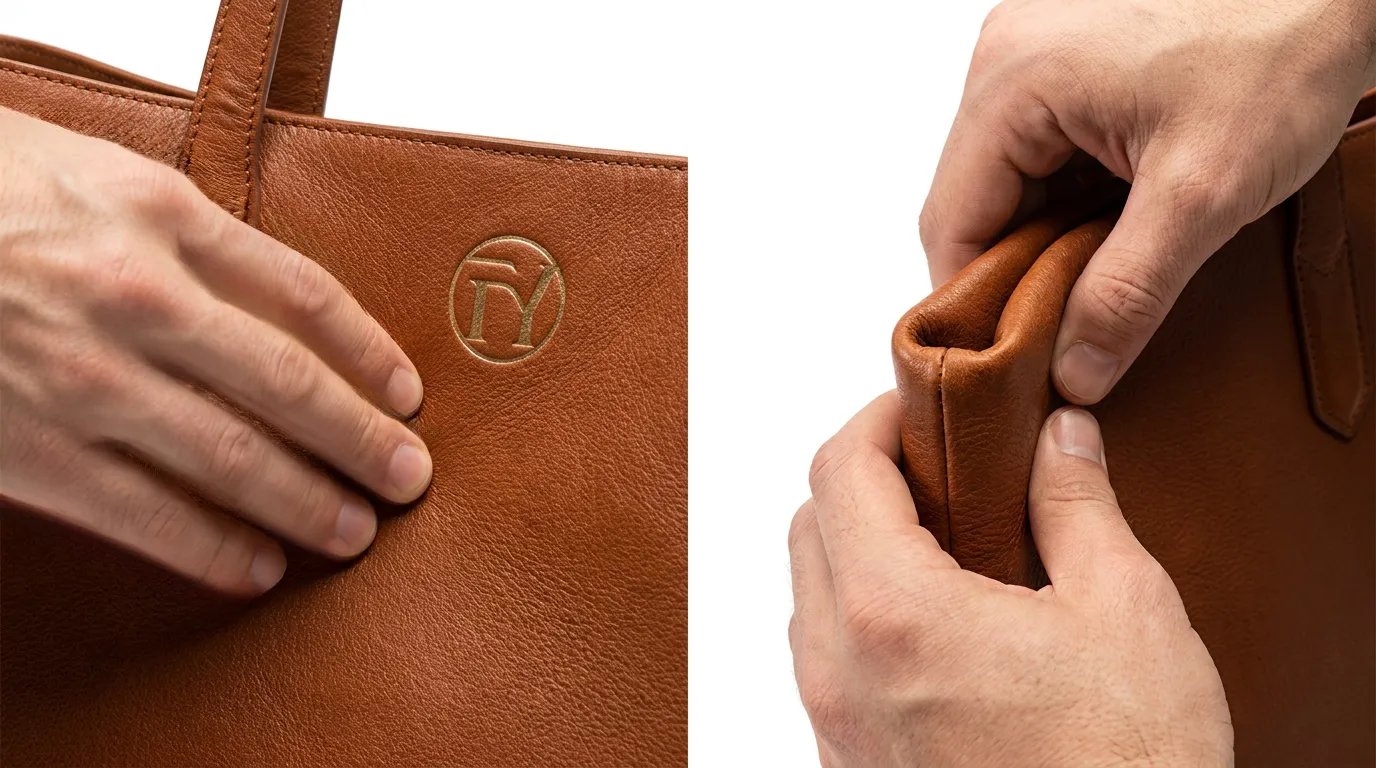
When evaluating a prototype’s structural quality, perform the squeeze test on every major panel:
If the panel feels too soft (your fingers push through with minimal resistance), the reinforcement is too thin or absent. If the panel feels too stiff (it resists your press like cardboard), the reinforcement is too thick or the wrong material (likely Salpa where microfiber should be). If the fold mark does not disappear, the reinforcement lacks resilience — it is probably Salpa or low-quality fusible that has permanently deformed.
Understanding failure modes helps you prevent them in specification and catch them in QC.
| Failure | What It Looks Like | Root Cause | Prevention |
|---|---|---|---|
| Permanent crease lines on body panels | Visible fold marks that do not disappear; panel has a “broken” look at the crease | Salpa or buckram used on body panels that flex during daily use; the cellulose/sizing breaks at the fold | Specify microfiber backing on all body panels that experience repeated flexing |
| Bubble delamination | Visible bubbles or waves under the exterior surface where the backing has separated from the material | Fusible interlining applied at incorrect temperature (too low = weak bond; too high = adhesive migrates through material) | Specify correct fusing temperature and pressure in the tech pack; request the factory to test-fuse on a swatch before full-panel application |
| Panel inconsistency (one side stiffer than the other) | One gusset or one front section feels stiffer or softer than its corresponding panel | Different reinforcement thickness or type used on left vs. right; or the backing was applied to one panel but missed on another | Specify identical reinforcement for corresponding panels; QC checks both sides of the bag for matched stiffness |
| Base sag (bag won’t stand upright) | The bag tilts, leans, or collapses when placed on a flat surface | Base board is too thin, absent, or made from flexible material instead of rigid Salpa/HDPE | Specify Salpa ≥1.0 mm or HDPE ≥1.0 mm for the base; test by placing the bag upright empty |
| “Cardboard feel” (bag feels cheap-rigid, not luxury-structured) | The bag feels stiff and unyielding, like pressing on a cardboard box rather than a premium handbag | Over-thick Salpa or buckram used on body panels where flexible microfiber should be | Specify microfiber backing at 0.6–0.8 mm for body panels; reserve Salpa for base only |
Different bag silhouettes require different structural philosophies. The reinforcement specification should be driven by the design intent — not by a one-size-fits-all formula.
| Silhouette | Design Intent | Stiffness Target | Reinforcement Approach |
|---|---|---|---|
| Structured tote | Upright, architectural, holds shape when empty and loaded | High (but not rigid) | Microfiber 0.7–0.8 mm on all panels; Salpa 1.2 mm on base |
| Semi-structured crossbody | Holds shape when carried but conforms slightly to the body | Moderate | Microfiber 0.5–0.6 mm on panels; lightweight fusible on flap; Salpa 0.8 mm on base |
| Structured doctor bag / frame bag | Rigid, box-like, maintains precise geometric shape | Very high | Microfiber 0.8–1.0 mm on panels; Salpa 1.5 mm on base; buckram on flap for crispness |
| Soft structured (relaxed tote) | Holds general shape but allows gentle draping and settling under contents | Low–Moderate | Lightweight fusible 0.3–0.5 mm on panels; microfiber 0.5 mm on gussets for corner definition; thin Salpa 0.8 mm on base |
| Clutch / envelope | Flat, rigid when closed; the panel IS the structure | Moderate–High | Microfiber 0.5–0.7 mm on both panels; no base board needed (no base) |
| Slouchy hobo / unstructured | Drapes freely; no rigid structure; conforms to the body | Minimal to none | No reinforcement on body panels; webbing reinforcement at strap attachment only |
| Backpack | Back panel firm (against the wearer’s back); front and sides moderate | Variable by panel | Microfiber 0.8 mm on back panel (comfort + structure); microfiber 0.5 mm on front/sides; HDPE in base |
The method by which the reinforcement is bonded to the exterior material affects the final feel, the longevity, and the risk of delamination.
| Method | How It Works | Bond Strength | Risk | Best For |
|---|---|---|---|---|
| Fusible (heat + pressure) | The reinforcement has a heat-activated adhesive on one side; it is ironed onto the back of the exterior material using a fusing press at a specific temperature and duration | Very good if fused correctly | Delamination if temperature is wrong; adhesive bleed-through if temperature is too high | Woven and non-woven interlinings; microfiber backing (fusible grade); the standard for most applications |
| Contact adhesive (glue) | Adhesive is applied to both the reinforcement and the back of the exterior material; both surfaces are allowed to tack, then pressed together | Good | Uneven application creates stiff and soft zones; excess adhesive can soak through thin materials | Salpa (which is not fusible); genuine leather (which can be damaged by heat); thick or rigid backings |
| Lamination (factory-applied) | The reinforcement is bonded to the exterior material in a continuous process using heat, pressure, and adhesive film | Excellent — the strongest, most uniform bond | Requires specialized equipment; changes the material’s hand-feel slightly (adds stiffness) | High-volume production; materials that will be sold as “pre-backed” composite |
If your reinforcement uses fusible bonding (the most common method), the fusing parameters must be specified to prevent the two most common bonding failures:
| Parameter | Specification | If Too Low | If Too High |
|---|---|---|---|
| Temperature | 130–150°C (depends on adhesive type; factory confirms based on their equipment) | Adhesive does not activate fully → weak bond → delamination risk | Adhesive melts through the exterior material → visible dots or shine on the surface; or adhesive migrates → the panel feels “gummy” |
| Pressure | 2–4 bar (uniform pressure across the panel) | Uneven bonding → soft spots and stiff spots on the same panel | Excessive compression → material thickness changes; texture flattens |
| Duration | 10–15 seconds (varies by material and backing thickness) | Under-bonded → adhesive partially active → peels over time | Over-bonded → adhesive over-penetrates → same issues as high temperature |
The quality check: after fusing, peel-test a corner of the reinforcement from the exterior material. It should require firm, deliberate force to separate — not peel easily (under-bonded) and not tear the exterior material (over-bonded). This peel test should be performed on the first panel of every production run and documented.
As brands increasingly adopt eco-friendly positioning, the reinforcement layer is entering the sustainability conversation. Traditional reinforcement materials (Salpa, synthetic microfiber, EVA foam) are not inherently sustainable — they are derived from cellulose pulp (Salpa) or petroleum-based synthetics (microfiber, EVA, HDPE).
| Standard Material | Sustainable Alternative | Performance vs. Standard | Availability | Relative Cost |
|---|---|---|---|---|
| Salpa (cellulose board) | FSC-certified Salpa (sourced from sustainably managed forests) | Identical — the material is the same; the sourcing is verified | Growing — FSC-certified Salpa is available from European and Asian suppliers | Slight premium |
| Microfiber backing (virgin polyester) | Recycled microfiber backing (rPET-based non-woven) | Comparable — recycled microfiber achieves similar stiffness and resilience | Moderate — fewer suppliers than virgin, but growing | Moderate premium |
| EVA foam | Bio-based EVA (partially derived from sugarcane ethanol) | Comparable — the foam properties are equivalent | Limited but growing | Moderate premium |
| Fusible interlining (virgin polyester) | Recycled fusible interlining | Comparable | Growing | Slight premium |
| HDPE base board | Recycled HDPE (from post-consumer plastic waste) | Comparable — recycled HDPE is functionally identical | Widely available | Comparable to virgin |
For brands making sustainability claims, specifying recycled HDPE for base boards and recycled microfiber backing for panels adds a defensible reinforcement-layer claim to the product’s sustainability story at a modest cost premium. The consumer never sees the reinforcement — but the claim “made with recycled structural materials” adds credibility to the overall eco-positioning.
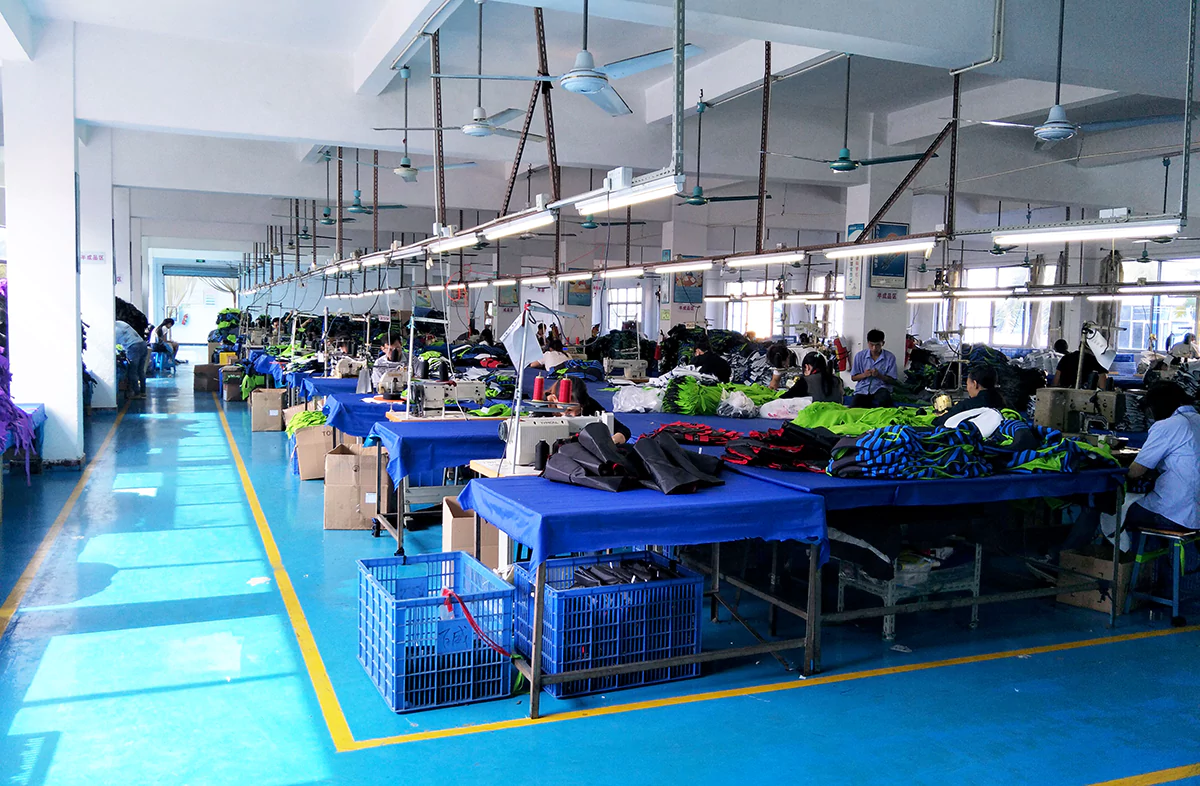
FYBagCustom is Your Trusted Custom Handbag Manufacturer in China, with 15+ years of manufacturing experience and a material engineering approach that treats the reinforcement layer with the same precision as the exterior material. For brands specifying structured and semi-structured handbags, our reinforcement capabilities include:
Explore our full range of custom bag products or contact our development team to discuss reinforcement specifications for your next collection.
The reinforcement layer is the component that no consumer sees, no product page describes, and no competitor discusses — yet it determines whether your bag holds its shape for five years or loses it in five months. For B2B buyers specifying premium handbags, three core takeaways:
If your next collection includes structured or semi-structured handbags, now is the time to specify your reinforcement system — material, thickness, and zone — in your tech pack. Contact FYBagCustom to discuss microfiber backing options, composite reinforcement specifications, and structural engineering for your designs — and receive samples with the full reinforcement system applied, typically within 5–7 days.
FYBagCustom’s development team engineers the reinforcement system for every bag — microfiber backing, Salpa base boards, composite zoning, and calibrated fusing — with the same precision as the exterior material. Discuss your structural specifications and receive samples with full reinforcement in 5–7 days.
Start Your Custom Bag Project →