Tel/WhatsAapp:+86 18011919834
E-mail: chloe.x@fybagcustom.com

Tel/WhatsAapp:+86 18011919834
E-mail: chloe.x@fybagcustom.com
Send Your Inquiry Today

Who this guide is for: brand owners, sourcing managers, wholesale buyers, Amazon FBA sellers, DTC founders, and retail merchandisers who are selecting colorways for their 2026 handbag collections. If you are deciding which colors to develop with a custom bag manufacturer in China — and how to use color to elevate perceived value — this guide is written for you.
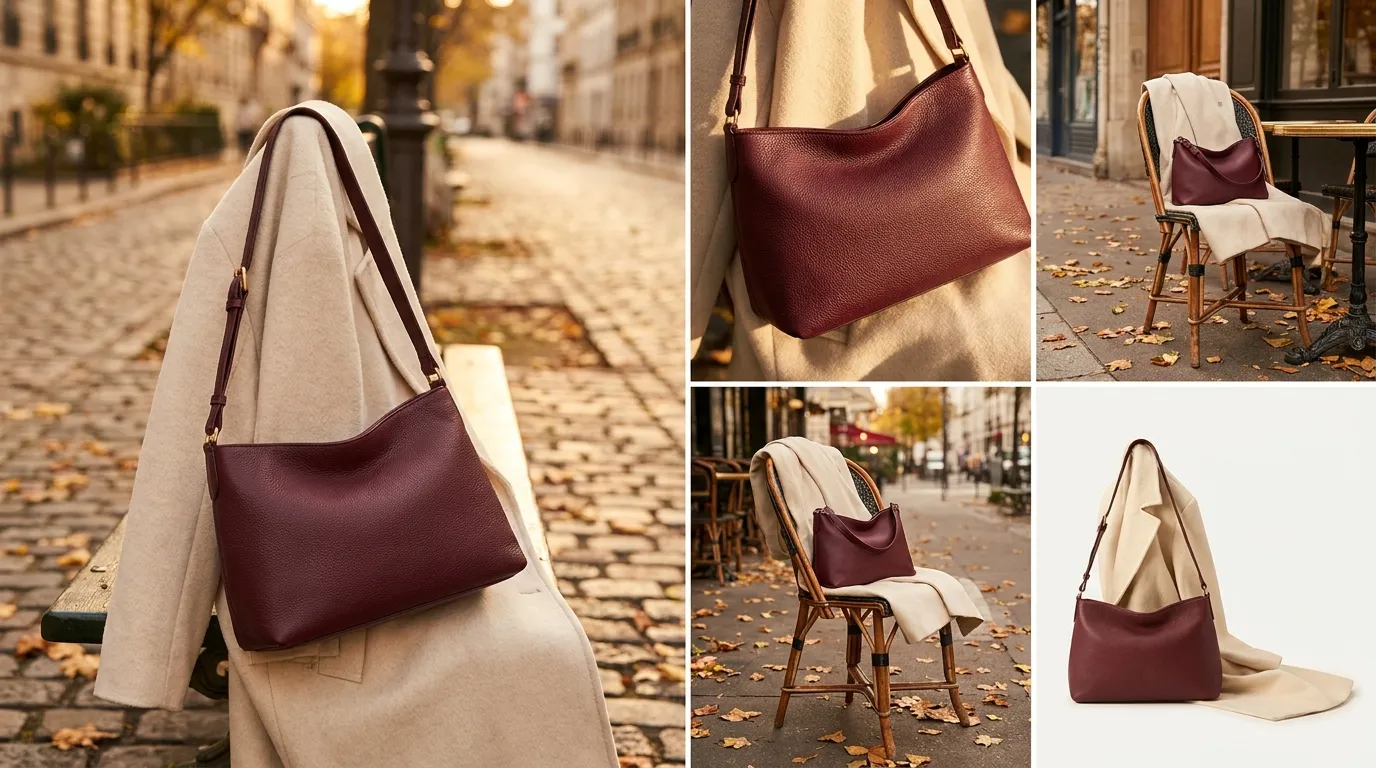
Color sells handbags before a customer ever touches the leather. In physical retail, it is the first signal visible from across the floor; on a mobile screen, it determines whether a thumb stops scrolling. For 2026, two color families have moved to the front of buyer search queries and wholesale order sheets: burgundy (and its spectrum of wine, oxblood, and merlot) and metallic shades (silver, champagne gold, pewter). Together, they represent the season’s strongest answer to the question every brand asks at development stage — which colors will move units and justify premium pricing?
This guide examines why these colors are dominating, how they perform across materials and silhouettes, what B2B buyers should specify when placing OEM or ODM orders, and how to pair color strategy with customization decisions that amplify the “luxurious feel” consumers are searching for.
Color trends in accessories follow a slower, more predictable cycle than apparel. A color enters through runway and editorial channels, picks up search volume over two to three seasons, reaches peak commercial viability, then gradually yields to the next palette. Understanding where burgundy and metallics sit on this curve matters for inventory planning and development timing.
Burgundy has resurfaced as the dominant non-neutral in handbags for three converging reasons. First, the ongoing “quiet luxury” movement rewards deep, muted tones that signal taste without volume — burgundy reads as expensive in a way that bright reds or pinks do not. Second, the color works across seasons: it anchors fall and winter collections naturally, but in lighter iterations (rose-wine, dusty berry) it extends into spring without feeling heavy. Third, burgundy photographs exceptionally well on both white-background product shots and lifestyle imagery, maintaining depth and richness at thumbnail size on mobile — a practical advantage for e-commerce sellers.
Metallic handbags have historically occupied a narrow lane: evening clutches and holiday-season capsule drops. In 2026, the category has expanded. Metallic silver, champagne gold, and pewter are now being specified as full-collection hero colors, not seasonal accessories. The shift is driven by social media styling culture, where reflective surfaces create visual impact in short-form video content (TikTok, Instagram Reels). A metallic bag reads as a styling “statement piece” that elevates otherwise simple outfits — exactly the positioning that drives DTC and influencer-adjacent brands.
Relative search interest indexed to 2023 = 100. Based on B2B and consumer search trends.
The data pattern is clear: burgundy has more than doubled in search interest since 2023 and continues to accelerate, while metallics are on a steep upward curve roughly one season behind. Classic black remains stable as a baseline staple, and beige/tan has softened slightly as consumer appetite shifts toward richer, more statement-driven color choices. For brands placing development orders in 2026, burgundy is the highest-confidence hero colorway, with metallic silver as the strongest complementary option.
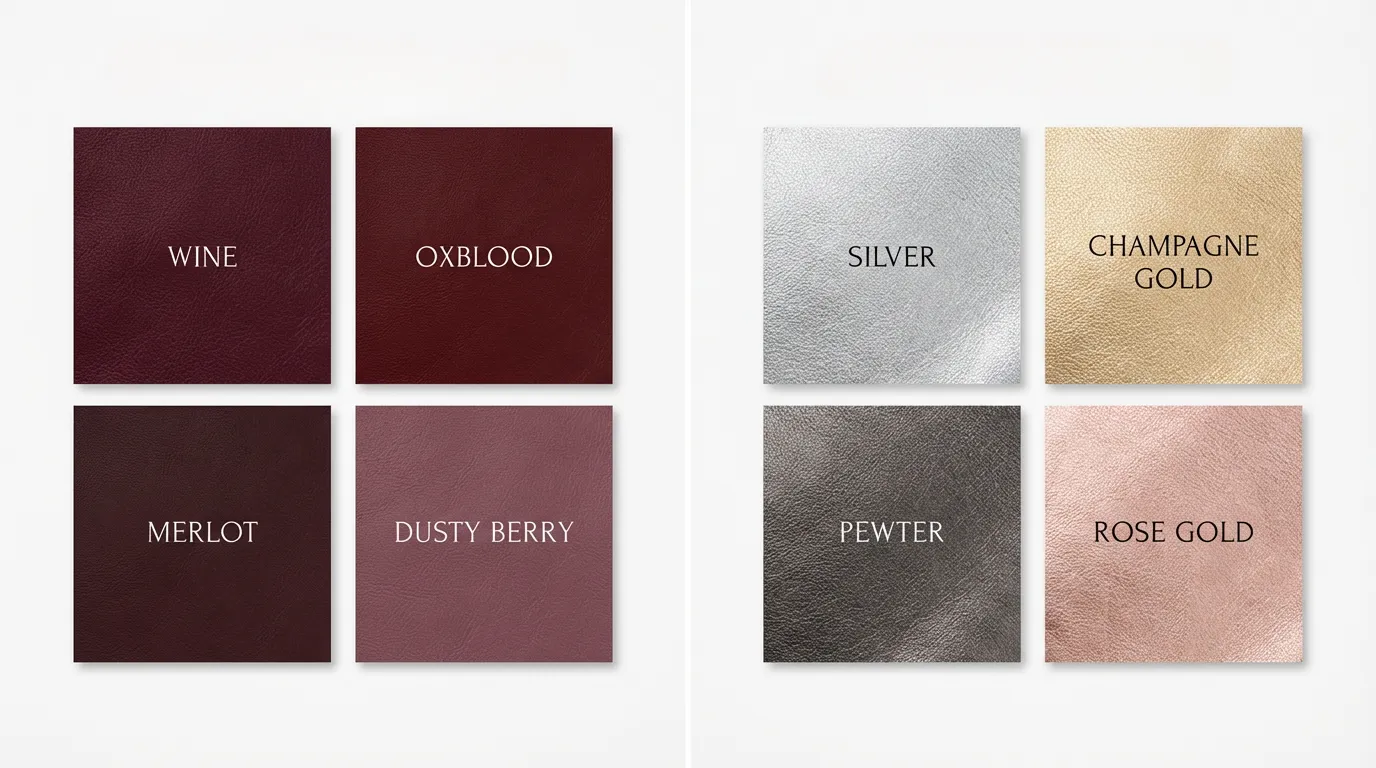
“Burgundy” is not a single color — it is a family of related tones, each with a distinct mood and market position. Specifying the wrong shade is one of the most common mistakes brands make when ordering from overseas manufacturers, because a Pantone reference that looks correct on screen can shift dramatically depending on material, finish, and lighting conditions.
| Shade | Hex Reference | Mood | Best Material Pairing | Target Market Position |
|---|---|---|---|---|
| Deep wine | #4C0013 | Dramatic, formal, heritage | Smooth genuine leather, polished PU | Premium / boutique retail |
| Classic burgundy | #800020 | Warm, versatile, the “safe choice” | Pebbled leather, structured PU | Mass-market, Amazon, DTC |
| Oxblood | #4A0000 | Dark, editorial, slightly masculine | Vegetable-tanned leather, matte PU | Designer-inspired, streetwear-adjacent |
| Merlot | #722F37 | Soft, approachable, feminine | Suede, nubuck, microsuede | Contemporary fashion, gifting |
| Dusty berry / rose-wine | #8E4585 | Lighter, seasonal extension into spring | Nylon, canvas, washed cotton | Resort, spring drops, younger demographic |
Sending a hex code or a photo from Pinterest is not enough for production accuracy. Best practice for B2B buyers placing OEM orders:
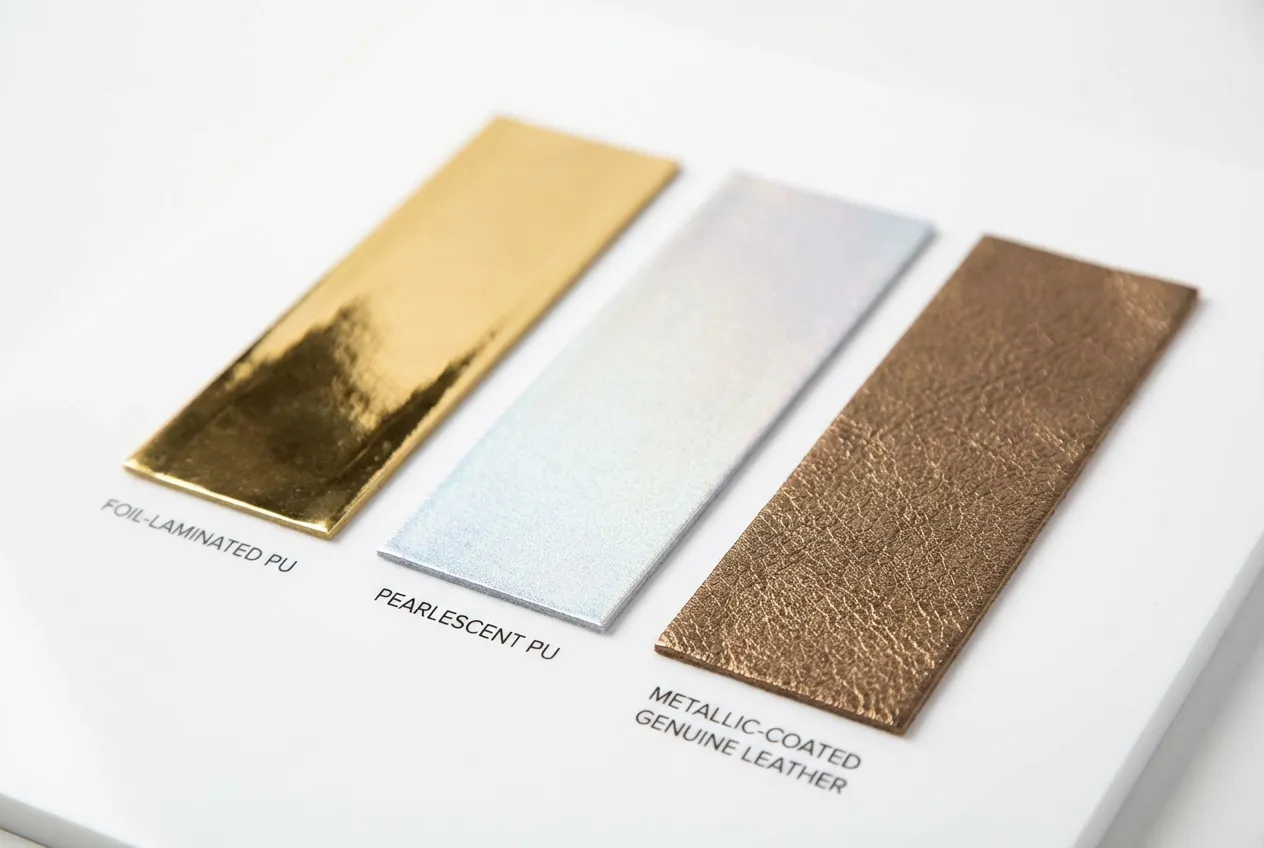
Metallic handbags present unique manufacturing considerations that go beyond color selection. The “metallic” effect is not a color applied to a standard material — it is a coating, lamination, or embedded finish that interacts with light differently from matte or semi-gloss surfaces. Understanding these production realities helps buyers avoid common quality issues.
| Metallic Type | Production Method | Visual Effect | Durability | Cost Tier | Best Silhouettes |
|---|---|---|---|---|---|
| Foil-laminated PU | Metallic foil heat-bonded to PU base | High shine, mirror-like | Moderate — foil can crack at flex points | Low–Mid | Clutches, structured bags, mini bags |
| Pearlescent PU | Pearlescent pigment mixed into PU coating | Subtle shimmer, shifts with angle | Good — integrated into material | Mid | Shoulder bags, totes, crossbodies |
| Metallic-coated leather | Metallic finish applied to genuine leather surface | Rich, textured, premium | High — leather base supports coating | High | Premium handbags, boutique pieces |
| Metallic nylon / polyester | Metallic yarn woven into fabric or surface-coated | Technical, sport-lux | Very high — fabric flexibility | Mid | Backpacks, gym bags, nylon shoulder bags |
| Crushed metallic / crinkle | Foil or coating on deliberately textured base | Distressed, editorial | Moderate — texture hides minor wear | Mid | Statement pieces, oversized clutches |
Metallic finishes carry specific QC risks that buyers should address in their tech packs and supplier agreements:
The impact of a trend color depends entirely on what material it is applied to and what silhouette carries it. A burgundy clutch in smooth PU tells a completely different brand story than a burgundy tote in washed canvas. The matrix below helps buyers map color choices to their brand positioning and target customer.
| Color | Material | Silhouette | Brand Story | Typical Buyer |
|---|---|---|---|---|
| Classic burgundy | Pebbled PU leather | East-West shoulder bag | Everyday elevated, quiet luxury | DTC, Amazon premium |
| Deep wine | Genuine cowhide | Structured top-handle | Heritage, investment piece | Boutique retail, department stores |
| Merlot | Suede / microsuede | Hobo or crescent bag | Soft femininity, seasonal | Contemporary fashion brands |
| Oxblood | Matte PU | Crossbody or belt bag | Urban edge, streetwear-adjacent | Streetwear, youth-oriented brands |
| Metallic silver | Pearlescent PU | Mini or clutch | Night-out, statement | Influencer-driven DTC, fast fashion |
| Champagne gold | Metallic-coated leather | Medium shoulder bag | Understated glamour, gifting | Premium gifting, retail chains |
| Pewter | Metallic nylon | Backpack or gym bag | Sport-lux, functional style | Athleisure, lifestyle brands |
This matrix is not prescriptive — it is a starting framework. The strongest collections combine one or two trend colors with a neutral anchor (black, taupe, or cream) to give retailers and consumers a clear “hero + staple” assortment structure.
For B2B buyers, the goal is not just to pick a trending color — it is to use color as one lever in a system of customization decisions that together create a perception of elevated value. End consumers do not consciously analyze why a bag “feels expensive,” but the perception is engineered through deliberate choices at the development stage.
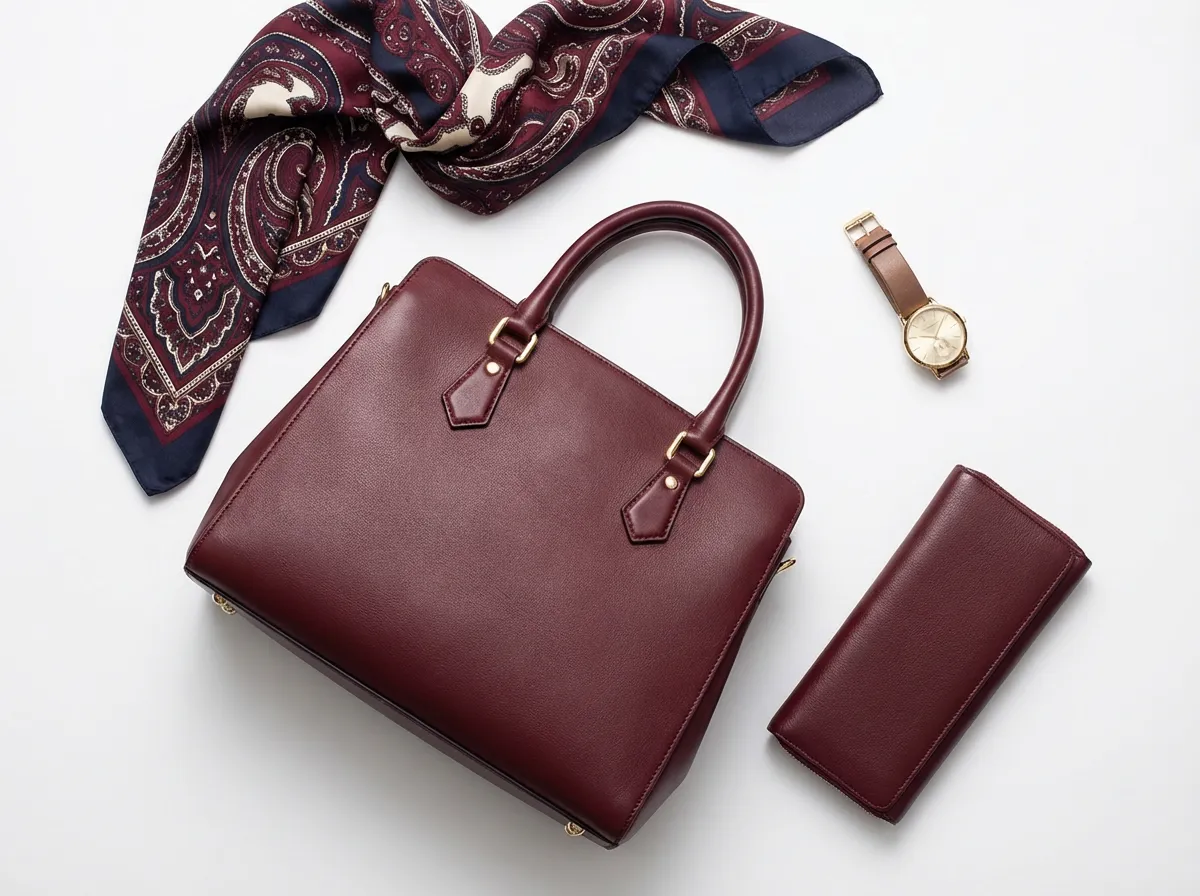
A common question from brands entering a new season: how many colorways should we order? Over-developing colors fragments your MOQ across too many SKUs; under-developing limits your shelf appeal and cross-selling potential.
| Brand Stage | Recommended Colors per Silhouette | Suggested Mix |
|---|---|---|
| Launch / test phase | 2–3 | 1 neutral (black or taupe) + 1 burgundy + 1 metallic |
| Growth phase | 4–5 | 2 neutrals + 1 burgundy + 1 metallic + 1 seasonal accent |
| Established collection | 6–8 | 3 neutrals + 2 from burgundy family + 2 metallics + 1 seasonal |
For brands working with a manufacturer that offers flexible MOQ and multi-colorway combination programs, the growth-phase assortment (4–5 colors) is the most commercially efficient. It provides enough variety for a compelling product page grid while keeping per-colorway volumes at viable levels.
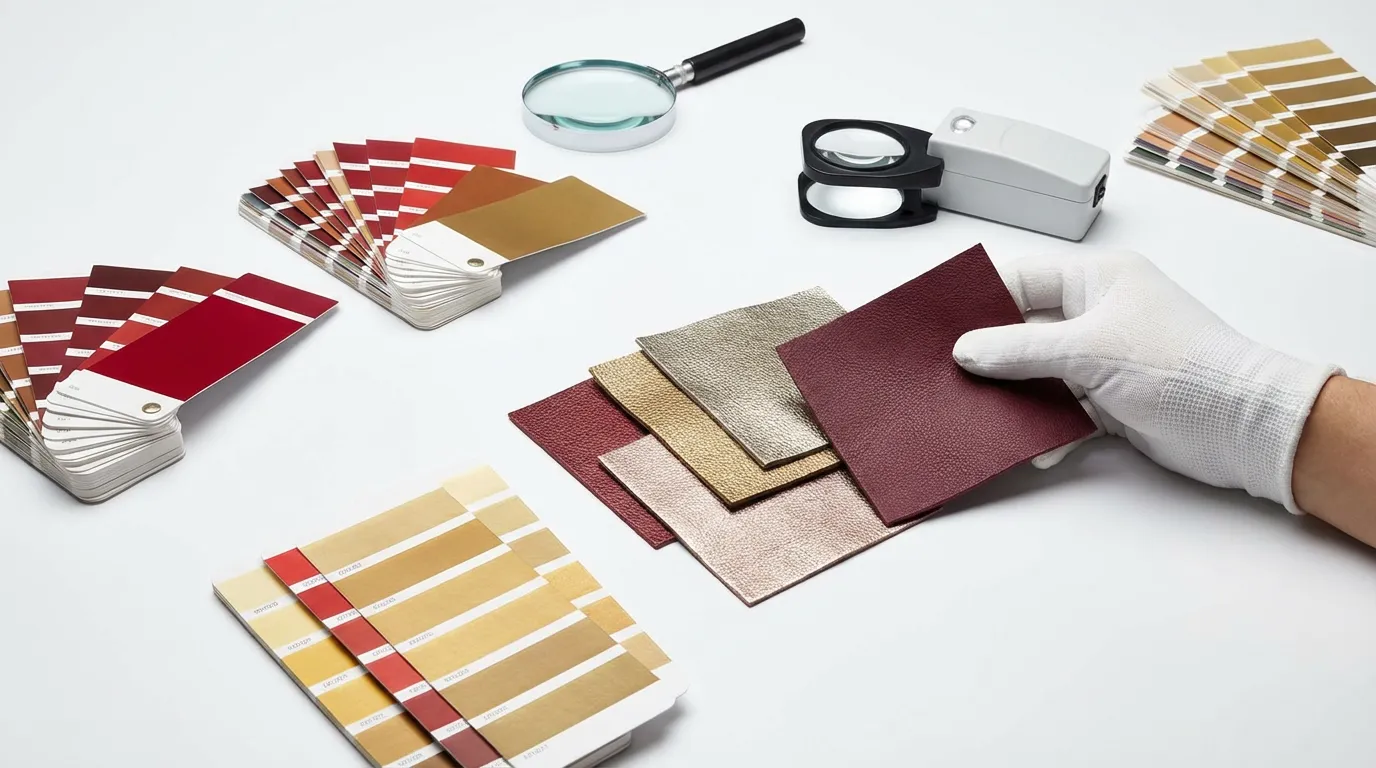
FYBagCustom is Your Trusted Custom Handbag Manufacturer in China, with 15+ years of manufacturing experience and a dedicated color development process for OEM, ODM, and private label programs. For brands developing burgundy, metallic, or other trend color collections, our capabilities include:
Our color development team works from our 50,000 m² factory in Guangzhou, and we routinely produce burgundy and metallic collections for DTC brands, Amazon FBA sellers, retail boutiques, and corporate gifting programs across international markets.
For brands planning 2026 handbag collections, color is not a cosmetic afterthought — it is a strategic decision that affects perceived value, photography performance, and sell-through velocity. Three takeaways to carry into your next development brief:
If your fall or holiday 2026 collections need burgundy, metallic, or any other trend colorway, now is the right moment to begin color development and sampling. Contact FYBagCustom to request swatch cards on your preferred materials and discuss custom color programs with transparent quotations, typically within 48 hours.
FYBagCustom’s OEM and ODM team works with global brands, Amazon sellers, wholesalers, and corporate programs to bring trend colors from swatch to shelf — with custom color matching, low MOQ, 5–7 day sampling, and full decoration support from tonal embossing to metallic hardware.
Start Your Custom Bag Project →