Tel/WhatsAapp:+86 18011919834
E-mail: chloe.x@fybagcustom.com

Tel/WhatsAapp:+86 18011919834
E-mail: chloe.x@fybagcustom.com
Send Your Inquiry Today

Who this guide is for: brand founders, sourcing managers, product developers, wholesale buyers, Amazon FBA sellers, DTC entrepreneurs, boutique retailers developing private label, and anyone evaluating how to partner with a handbag factory in China. If you have encountered the terms OEM, ODM, private label, and white label and are unsure which model fits your situation — or if you are deciding between bringing your own design versus customizing a factory’s existing design — this guide provides the definitive comparison with real cost data, timeline differences, risk analysis, and decision frameworks.
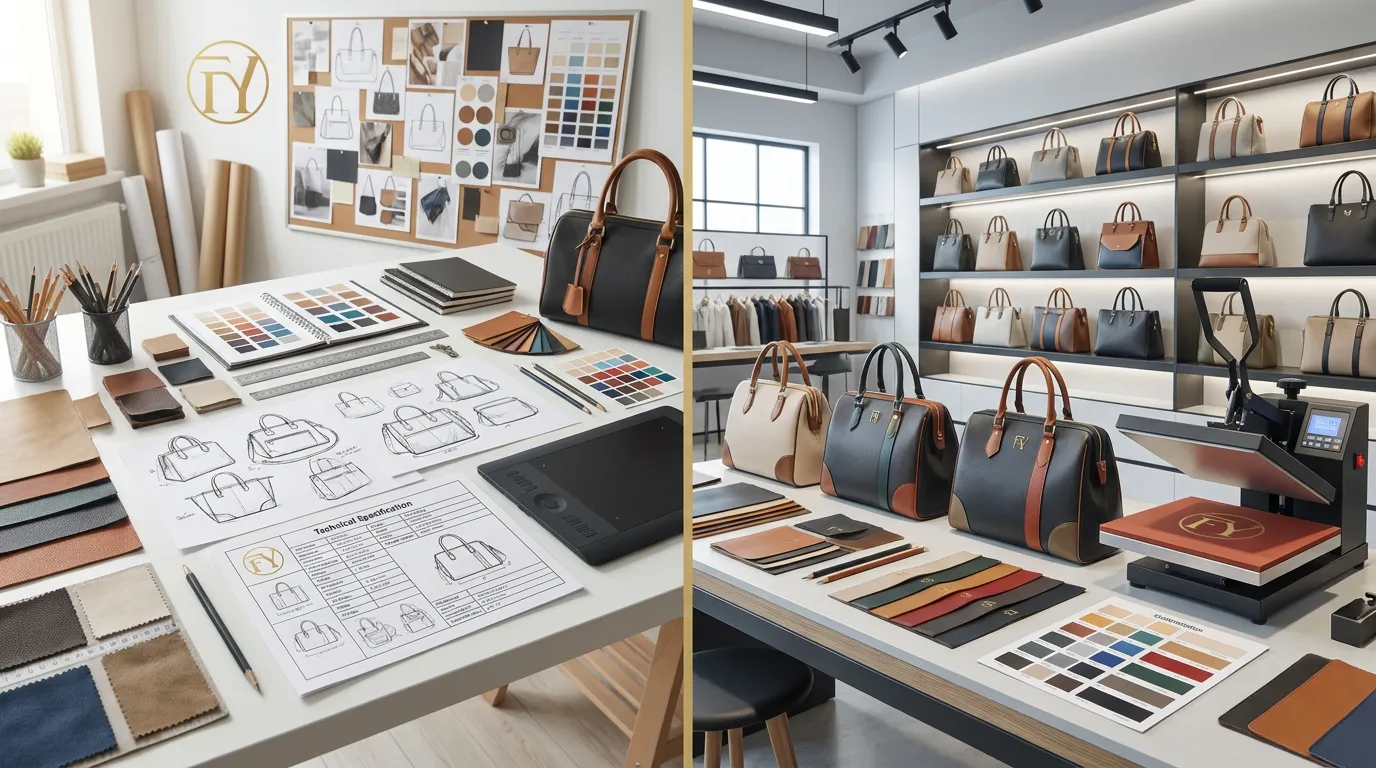
Two acronyms define the handbag manufacturing industry, and misunderstanding them costs brands thousands of dollars, months of development time, and sometimes the viability of their business. OEM (Original Equipment Manufacturing) and ODM (Original Design Manufacturing) describe two fundamentally different relationships between a brand and its factory partner. Choosing the wrong model for your situation is like hiring an architect when you need an interior decorator, or vice versa — the professional is competent, but the engagement does not match your actual need.
The confusion is understandable. Both models produce bags with your brand name inside. Both involve a factory in China manufacturing your product. Both result in bags that are “custom” in some meaningful sense. But the differences in design ownership, development cost, timeline, minimum investment, risk profile, and brand differentiation are profound — and they compound over time.
This guide provides the clearest possible explanation of each model, compares them across every dimension that matters to a B2B buyer, introduces the related concepts of private label and white label, and provides decision frameworks that match the right model to your specific business situation.
The industry uses OEM, ODM, private label, and white label loosely and sometimes interchangeably. This creates confusion. Here are precise definitions:
| Model | Who Designs the Bag | Who Manufactures the Bag | Whose Brand Goes on It | Simple Analogy |
|---|---|---|---|---|
| OEM (Original Equipment Manufacturing) | You — you provide the complete design (tech pack, patterns, specifications) | The factory — they produce exactly to your specification | Yours | You are the architect; the factory is the construction company |
| ODM (Original Design Manufacturing) | The factory — they offer existing designs from their library | The factory — they produce their design with your customizations | Yours | You are the interior decorator; the factory designed the house, and you choose the finishes |
| Private label | Either you (OEM private label) or the factory (ODM private label) | The factory | Yours — “private label” simply means the product carries your brand, regardless of who designed it | The label is the constant — the design origin varies |
| White label | The factory — generic, unbranded products | The factory | Yours (minimally branded) — you add your logo to a generic product | You buy a finished house and hang your nameplate on the door |
OEM = your design, their production.
ODM = their design, your customization, their production.
Everything else — cost, timeline, risk, differentiation, brand equity — flows from this single distinction.
In an OEM partnership, you are the designer and the factory is the manufacturer. You provide the complete product specification — tech pack, dimensional drawings, material callouts, hardware specifications, branding instructions — and the factory produces exactly what you have specified. The factory does not contribute to the design; it executes your design with its manufacturing capability.
| Deliverable | What It Contains | Level of Detail Required |
|---|---|---|
| Tech pack | Complete product specification: sketches, dimensions, materials, hardware, pockets, branding | High — every dimension in mm, every material by name, every hardware piece by type and finish |
| Pattern (optional) | Flat pattern pieces — if you have a pattern maker, you can provide these; otherwise the factory develops patterns from your tech pack | Optional — most factories develop patterns from your tech pack; providing your own patterns saves 2–5 days |
| Material references | Physical swatches, Pantone codes, or exact material SKUs from suppliers | Specific — “pebbled PU leather in Pantone 7530C” not “beige leather-like material” |
| Hardware specifications | Zipper type/brand, closure mechanism, D-ring size, feet, finish | Specific — “YKK #5 metal zip, antique brass finish, 30 cm length” |
| Logo and branding files | Vector artwork (.AI/.EPS), placement coordinates, application technique, size | Complete — vector file is mandatory; placement to the nearest mm |
| Reference samples (ideal) | A competitor’s bag or a previous season’s sample showing the quality and construction level you expect | Highly recommended — a physical reference eliminates the most common quality-expectation mismatches |
| Deliverable | What It Contains |
|---|---|
| Pattern development | The factory’s pattern maker translates your tech pack into flat cutting patterns (unless you provide your own) |
| Material sourcing | The factory sources materials matching your specifications from its supplier network |
| Prototype production | The factory produces one or more prototype samples for your approval |
| Revision execution | The factory modifies the prototype based on your feedback |
| Bulk production | The factory manufactures the approved design at the confirmed quantity |
| QC and packing | The factory inspects, packs, and prepares for shipment |
| Dimension | Strength | Limitation |
|---|---|---|
| Design ownership | You own the design completely — it is your intellectual property | You must be capable of creating a production-ready design (or hire someone who can) |
| Differentiation | Maximum — no other brand has the same product | Your design is untested — you bear the full risk of market acceptance |
| Brand equity | Strongest — every product is uniquely yours | Requires ongoing design investment for new collections |
| Timeline | Longer — pattern development + 2–3 sample rounds before bulk | Faster iteration is possible if your tech pack is excellent |
| Cost | Higher — sample development, pattern making, possible revisions add up | Lower per-unit at scale because you control the specification |
| Minimum expertise | Requires design knowledge (or a freelance designer) to produce a viable tech pack | Not suitable for founders with no design capability and no budget to hire |
In an ODM partnership, the factory has already designed a collection of bag styles — patterns cut, construction methods tested, production processes validated. You select a base design from the factory’s library and customize it: different materials, different colors, different hardware finishes, different branding, different pocket configurations, and sometimes dimensional modifications. The factory produces the customized version with your brand label.
| Deliverable | What It Contains |
|---|---|
| Design library / catalog | A collection of existing bag designs — photographs, dimensions, material options, available modifications |
| Customization consultation | Guidance on which modifications are possible (material, color, hardware, size, branding) and which affect the base pattern |
| Customized prototype | A sample of the selected design in your chosen materials, colors, and branding |
| Bulk production | Manufacturing of the customized design at confirmed quantity |
| Deliverable | What It Contains | Level of Detail Required |
|---|---|---|
| Design selection | Which base design(s) from the factory’s library you want to customize | Simple — “I want Design #B-2047 in sage green PU with gold hardware and my logo debossed” |
| Customization specifications | Material, color, hardware finish, lining, branding, and any dimensional modifications | Moderate — less detail than a full OEM tech pack because the base design is already defined |
| Logo and branding files | Vector artwork, placement, application technique | Same as OEM — complete and production-ready |
| Material preferences | Color references, texture preferences | Can be less specific than OEM — the factory guides you toward options that work with the base design |
| Dimension | Strength | Limitation |
|---|---|---|
| Design risk | Very low — the base design is already production-tested and market-proven | Limited differentiation — other brands may use the same base design with different customization |
| Timeline | Significantly shorter — no pattern development, fewer revision cycles | Modifications to the base pattern (changing dimensions, adding compartments) add time and cost |
| Cost | Lower development cost — no pattern making fee, often fewer sample rounds | Slightly higher per-unit for custom materials if the factory’s standard materials are not used |
| Minimum expertise | Very low — no design skills needed; the factory guides the customization process | You are customizing, not creating — the design DNA is the factory’s, not yours |
| Speed to market | Fastest path from idea to finished product — often 4–8 weeks shorter than OEM | Speed comes from using existing patterns; major design changes negate the speed advantage |
| Brand equity | Moderate — your brand, your customization, but the underlying design is shared | Long-term brand building may require transitioning to OEM for fully unique products |
| Dimension | OEM | ODM | Winner for… |
|---|---|---|---|
| Design originality | 100% original — your unique creation | Customization of an existing base design | OEM — if differentiation is your competitive advantage |
| Design ownership (IP) | You own the design | Factory owns the base; you own your customization layer | OEM — if you plan to license, sell, or legally protect your designs |
| Development timeline | 12–20 weeks (brief to delivery) | 6–12 weeks (selection to delivery) | ODM — 4–8 weeks faster to market |
| Sample cost | 300 per prototype | 120 per customized sample | ODM — 40–60% lower sampling investment |
| Sample rounds | Typically 2–3 | Typically 1–2 | ODM — fewer revisions because the base is pre-tested |
| Per-unit production cost | Determined by your specification; potentially lower at scale if spec is efficient | Determined by base design + customization; comparable at equal quality | Tie — depends on design complexity |
| MOQ flexibility | Standard factory MOQ | Often slightly lower — factory already has patterns and material plans | ODM — marginally better |
| Design expertise required | High — must produce or commission a tech pack | Low — factory guides you through customization options | ODM — accessible to non-designers |
| Market risk | Higher — untested design; may not resonate | Lower — design is production-tested, often market-validated | ODM — lower risk for first-time brands |
| Brand differentiation | Maximum — no competitor has the same product | Limited — competitors may offer the same base in different colors/materials | OEM — if brand uniqueness is essential |
| Long-term brand equity | Strongest — your design library grows with each collection | Moderate — customization differentiates but the DNA is shared | OEM — for brands building lasting identity |
| Ability to iterate | Full control — change anything between production runs | Can iterate customization; changing the base design is a separate engagement | OEM — for data-driven product development |
| Production quality | Depends on tech pack clarity and factory capability | Often higher on first run — the base design’s construction is already optimized | ODM — for first-run quality consistency |
| Competitor vulnerability | Low — your design is exclusive | Moderate — another brand could use the same base with similar customization | OEM — for defensible positioning |
| Best for first product | Requires more investment and expertise | Ideal — fast, low-risk, low-cost entry | ODM — for launching quickly and learning |
These two terms are often used interchangeably, but they describe meaningfully different levels of customization.
White label means you purchase a finished, generic product and add your label. The product is not customized to your specifications — the material, color, hardware, construction, and design are all the factory’s standard. You add your brand name (logo, hang tag, woven label) and sell it as your product.
| What You Customize | What You Do Not Customize |
|---|---|
| Logo on exterior (heat transfer, patch, or label) | Material, color, texture |
| Woven label inside | Hardware type, finish |
| Hang tag | Dimensions, silhouette |
| Packaging (dust bag, box) | Interior layout, pockets |
White label is the fastest and cheapest path to having “your own” product — but it offers the weakest differentiation. Any other brand can buy the same generic product from the same factory and apply their own label. It is effectively reselling with branding.
Private label means the product is manufactured exclusively for your brand with your specifications — whether those specifications are your original design (OEM private label) or a factory design customized to your requirements (ODM private label). The product is not generic; it is configured for you.
| Private Label Type | Design Origin | Customization Level | Differentiation |
|---|---|---|---|
| OEM private label | Your design | Full — everything is your specification | Maximum |
| ODM private label | Factory’s base design | Moderate — material, color, hardware, branding, possibly dimensions | Moderate |
| White label (often called private label, incorrectly) | Factory’s generic product | Minimal — logo and packaging only | Minimal |
The recommendation: when someone says “private label,” ask specifically whether they mean OEM private label (your design), ODM private label (factory design + your customization), or white label (generic product + your logo). The answer determines everything about cost, timeline, differentiation, and brand equity.
Rather than prescribing a single answer, this framework matches the right model to your specific situation based on five variables.
| Variable | Choose OEM If… | Choose ODM If… | Choose White Label If… |
|---|---|---|---|
| Design capability | You have a designer or can create a tech pack | You know what you want but cannot create a technical specification | You have no design input and want the fastest possible launch |
| Budget for development | 3,000+ for sampling and development | 800 for sampling | Under $200 for initial product |
| Time to market | 3–5 months is acceptable | 2–3 months is your target | 2–6 weeks is required |
| Differentiation priority | “Nobody else has this exact product” is essential to your positioning | “My version is different enough” is acceptable | Differentiation is not a priority; price or speed is |
| Business stage | Growth or established — you have revenue, customer data, and design confidence | Launch or early growth — you are testing the market and learning | Pre-launch testing — you want to validate demand before investing in development |
| Scenario | Recommended Model | Why |
|---|---|---|
| “I have a sketch for a unique bag that doesn’t exist. I want to bring it to life.” | OEM | You have a specific vision that requires original pattern development |
| “I want to sell handbags but I’m not a designer. I want something that looks like my brand.” | ODM | You select from proven designs and customize material, color, and branding |
| “I’m an influencer launching my first product. I need something fast and good.” | ODM (first launch) → OEM (second collection) | ODM for speed and low risk; transition to OEM once you have revenue and audience feedback |
| “I run a boutique and want my own house brand of bags alongside the brands I carry.” | ODM private label | Select styles that complement your store’s aesthetic; customize with your branding |
| “I want to test whether handbags sell in my market before investing in design.” | White label | Minimal investment; validate demand; invest in ODM or OEM once demand is proven |
| “I have a proven best-seller and want to protect it from copycats.” | OEM (with IP protection) | Original design + trademark + design patent gives you legal defensibility |
| “I’m launching on Amazon and need multiple SKUs fast for my storefront.” | ODM (multiple styles) | Select 3–5 styles from the factory’s library, customize each, and launch a complete storefront quickly |
| “I have a successful ODM product and want to evolve it into something fully original.” | Transition from ODM to OEM | Use the ODM product’s sales data and customer feedback to inform your first OEM design |
The most commercially savvy approach for new brands is not choosing permanently between OEM and ODM — it is using ODM to launch and OEM to differentiate once the business has revenue, customer data, and design confidence.
| Phase | Model | Purpose | Timeline | Investment |
|---|---|---|---|---|
| Phase 1: Launch | ODM | Get to market fast; prove demand; generate first revenue; gather customer feedback | 2–3 months | 5,000 (samples + first production) |
| Phase 2: Differentiate | ODM with heavy customization (modified dimensions, added features, custom hardware) | Improve the product based on customer data; push the ODM base toward something more unique | 3–4 months (on second or third order) | 8,000 (revised samples + production) |
| Phase 3: Own | OEM | Design a fully original product informed by 6–12 months of market data, customer reviews, and production experience | 4–6 months (new development cycle) | 15,000 (full OEM development + production) |
By Phase 3, you are not designing blind. You know which features your customers love (because they told you in reviews). You know which materials hold up (because you have seen return data). You know which price point converts (because you have tested it). Your OEM design is informed by evidence, not assumptions — dramatically reducing the market risk that makes OEM scary for first-time founders.
| Cost Item | OEM | ODM | White Label |
|---|---|---|---|
| Design / tech pack creation | 800 (freelancer) or $0 (if you do it yourself) | $0 (factory provides the design) | $0 |
| Pattern development | 200 (included in sample cost at most factories) | $0 (patterns already exist) | $0 |
| Proto sample | 200 | 100 | 30 (factory sends existing stock) |
| Revision sample (1 round) | 150 | 80 | N/A |
| Custom tooling (debossing die, hardware mold) | 300 | 150 (branding tooling only) | 30 (logo application only) |
| Total pre-production investment | 1,650 | 330 | 60 |
| Bulk production per unit (200 units, mid-range PU tote) | 20 | 18 | 15 |
| Total investment for 200 units including development | 5,650 | 3,930 | 3,060 |
The development cost difference between OEM and ODM is 1,320 — significant for a bootstrapped founder, but modest in the context of a total launch investment. The per-unit production cost difference is marginal (3 per unit). The real cost difference is in time (OEM takes 4–8 weeks longer) and risk (OEM’s untested design vs. ODM’s production-proven design).
| Stage | OEM Timeline | ODM Timeline | White Label Timeline |
|---|---|---|---|
| Design / tech pack | 1–4 weeks (you create or commission) | 0 — factory provides design catalog | 0 |
| Factory selection + brief | 1–2 weeks | 1 week (select from catalog) | 1 week (select from stock) |
| Proto sample | 5–12 days | 5–7 days | 0 — existing product |
| Revision(s) | 10–24 days (1–2 rounds) | 5–10 days (0–1 round) | 0 |
| Bulk production | 25–40 days | 20–35 days | 15–25 days |
| Shipping (sea) | 25–35 days | 25–35 days | 25–35 days |
| Total: brief to product in hand | 12–20 weeks | 8–14 weeks | 6–10 weeks |
| IP Element | OEM | ODM | White Label |
|---|---|---|---|
| Bag design (silhouette, proportions, pattern) | You own it — include an IP clause in your agreement | Factory owns the base design; you own your customization layer | Factory owns everything |
| Brand name and logo | You own it (register a trademark) | You own it | You own it |
| Custom hardware designs (if you commissioned them) | You own them (specify in agreement) | Factory owns standard hardware | Factory owns |
| Product photography | You own what you shoot; factory-provided photos are often shared | Same | Same |
| Customer data | You own it (if selling DTC) | You own it | You own it |
The OEM IP advantage: if you plan to build a brand that has lasting value — one that could be sold, licensed, or franchised — OEM provides the strongest IP foundation. You own the designs, the patterns, and the brand. An ODM brand can be replicated by anyone who buys the same base design from the same factory. An OEM brand cannot.
A common assumption: OEM produces higher quality because “it’s custom.” This is incorrect. Quality is determined by factory capability, material selection, and QC rigor — not by whether the design originated with you or the factory.
| Quality Factor | OEM | ODM | Impact |
|---|---|---|---|
| Construction quality on first run | Variable — depends on tech pack clarity and factory’s interpretation skill | Often higher — the factory has already optimized the construction sequence | ODM advantage on first run |
| Material quality | You specify — can be higher or lower depending on your budget and knowledge | Factory recommends proven materials — generally reliable | Tie — depends on your specification vs. factory’s default |
| Consistency across production runs | Depends on pattern precision and QC protocol | Usually more consistent — the factory has more production data on the design | ODM slight advantage in consistency |
| Maximum achievable quality | Unlimited — you can specify any quality level your budget allows | Limited by the base design’s construction approach | OEM advantage at the premium end |
The practical implication: ODM typically produces more consistent quality on the first order because the factory knows the design intimately. OEM has higher quality ceiling but higher quality variance — your tech pack’s precision directly determines the result.
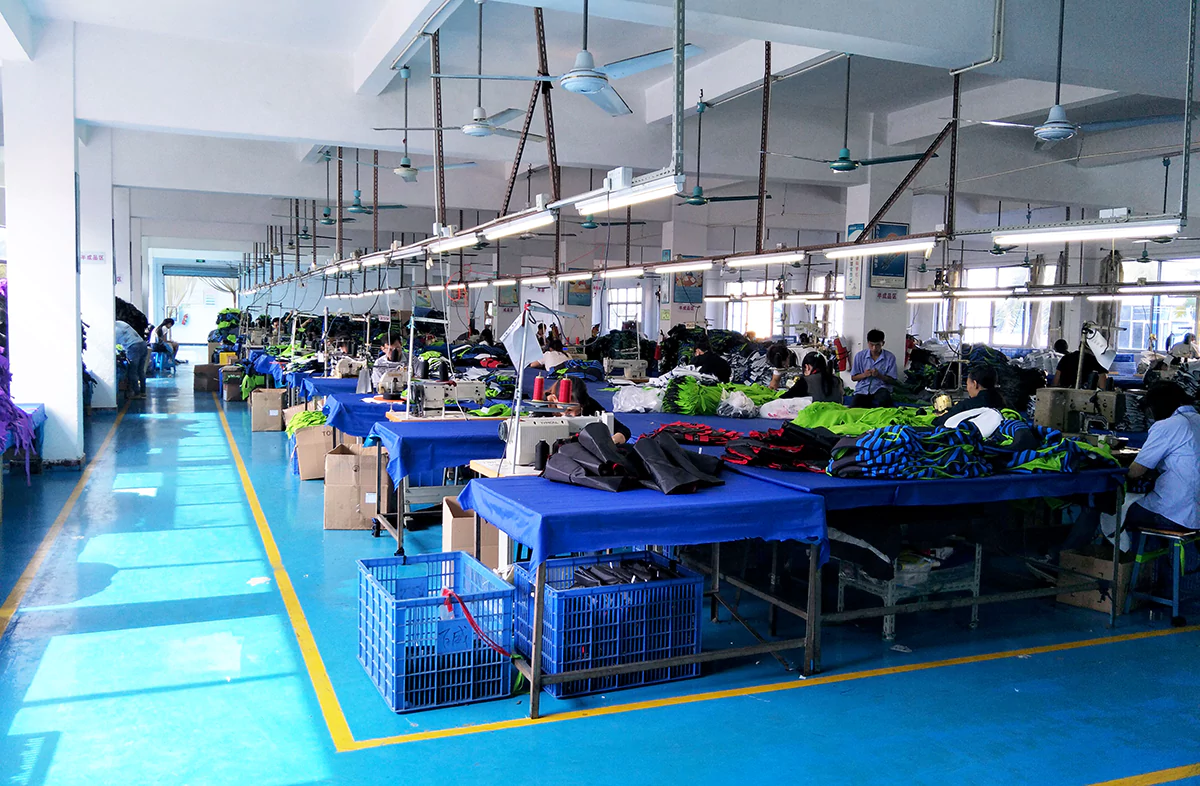
FYBagCustom is Your Trusted Custom Bag Manufacturer in China, with 15+ years of experience serving both OEM and ODM clients — from first-time founders launching their first product to established brands developing fully custom collections. Our dual-model capabilities include:
OEM Services:
ODM Services:
Both Models:
OEM and ODM are not “better” and “worse” — they are different tools for different situations. The brand that launches with ODM and transitions to OEM as it grows is not compromising; it is being strategically intelligent. For B2B buyers evaluating their factory partnership model, three core takeaways:
If you are deciding between OEM and ODM — or planning a transition from one to the other — contact FYBagCustom. Tell us your brand stage, your design capability, and your timeline, and we will recommend the model that fits and provide options under both approaches with transparent pricing, typically within 48 hours.
FYBagCustom offers both OEM custom development and ODM design customization — and honest guidance on which model fits your brand, budget, and timeline. Send us your situation and we’ll respond with options, pricing, and a realistic development plan within 48 hours.
Start Your Custom Bag Project →