Tel/WhatsAapp:+86 18011919834
E-mail: chloe.x@fybagcustom.com

Tel/WhatsAapp:+86 18011919834
E-mail: chloe.x@fybagcustom.com
Send Your Inquiry Today

Who this guide is for: brand owners, sourcing managers, wholesale buyers, Amazon FBA sellers, DTC founders, athleisure labels, yoga and fitness brands, and outdoor lifestyle companies who are developing performance-grade crossbody bags and fanny packs for camping, trail running, yoga commuting, outdoor fitness, and active daily carry. If you need to understand how to engineer waterproofing, reflective safety features, sweat-resistant materials, and sport-specific pockets into a bag that still looks fashionable enough for post-workout life — this guide covers every technical and design decision.
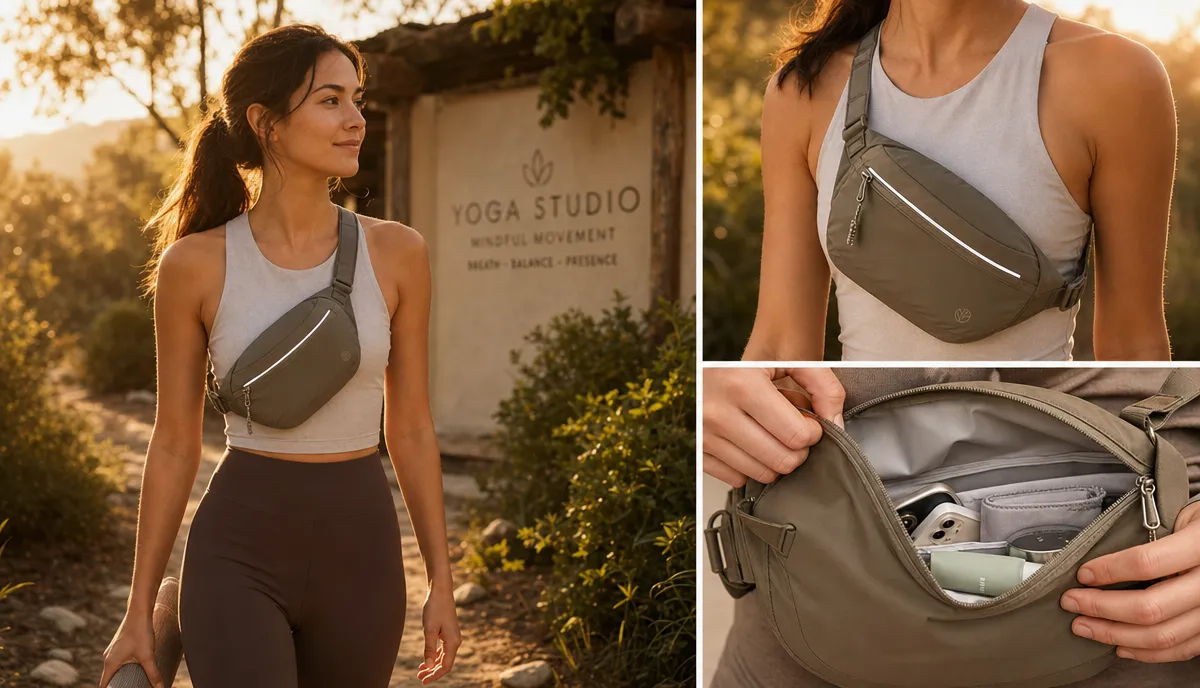
The line between “outdoor gear” and “everyday carry” has dissolved. In 2026, the same consumer who hikes on Saturday mornings wears the same crossbody bag to a weekday yoga class, a farmer’s market, and a coffee meeting afterward. She does not want a separate bag for each context. She wants one lightweight, waterproof, hands-free bag that transitions from trail to town without requiring a costume change.
This blending of outdoor performance with everyday fashion is driving an explosion in demand for custom crossbody bags and personalized fanny packs designed specifically for active lifestyles. Search volume for performance crossbody bags with features like reflective strips, waterproof construction, and yoga mat straps has climbed steadily as camping culture, outdoor fitness, and athleisure fashion continue to converge. The consumer expectation is specific: the bag must perform genuinely well in rain, sweat, and movement — and it must look good enough that she does not swap it out when the activity ends.
For B2B buyers, this convergence creates a product development challenge that rewards precision. The bag must be lightweight but durable, waterproof but breathable, visible in low light but not covered in garish safety orange. This guide addresses how to engineer these competing requirements — with particular focus on waterproofing levels, reflective strip integration, sweat management, and sport-specific compartment design — and how to specify an OEM program that delivers performance credibility without sacrificing fashion appeal.
The traditional outdoor bag market and the fashion crossbody market operated independently for decades. Outdoor brands built for function and ignored aesthetics; fashion brands built for looks and ignored performance. The 2026 consumer has rejected this binary entirely.
| Persona | Activities | What She Searches For | Key Features Required | Price Sensitivity |
|---|---|---|---|---|
| The trail-to-town commuter | Hiking, trail running, then errands or brunch | “Waterproof crossbody bag for hiking” | Waterproof, lightweight, reflective, secure pocket | Mid (60) |
| The yoga/fitness commuter | Yoga, Pilates, gym, cycling to class | “Crossbody bag for yoga” “gym fanny pack” | Sweat-resistant, phone pocket, mat carry option, compact | Low–Mid (45) |
| The weekend adventurer | Camping, festivals, kayaking, travel | “Waterproof fanny pack for camping” | Fully waterproof, durable, expandable, lantern/bottle clip | Mid (55) |
All three personas share the same foundational requirement: the bag must handle moisture (rain, sweat, splashes, condensation) while keeping contents safe and accessible during physical activity. This is the engineering baseline that separates a genuine performance crossbody from a fashion crossbody marketed with outdoor photography.
Relative search volume indexed to 2022 = 100. U.S. market.
Waterproof and outdoor-specific crossbody bags have nearly tripled since 2022, while yoga and fitness crossbodies have more than doubled. Standard fashion crossbodies remain flat — the growth is entirely in the performance segment. For brands, this means the opportunity is not in another generic fashion crossbody but in one that can credibly claim outdoor and fitness functionality.
“Waterproof” is the most searched — and most misused — feature term in the active crossbody category. Buyers must understand the three distinct waterproofing levels and specify the correct one for their target use case, because overclaiming leads to returns and underclaiming leaves money on the table.
| Level | Technical Method | What It Resists | What It Does NOT Resist | Marketing Claim | Cost Impact vs. Standard |
|---|---|---|---|---|---|
| Water-resistant (WR) | DWR (durable water repellent) spray coating on fabric surface | Light rain, splashes, brief exposure | Sustained rain, submersion, pressure | “Water-resistant” only | +0.80 per unit |
| Waterproof (WP) | TPU lamination on fabric interior + DWR exterior | Heavy rain, puddle contact, snow | Full submersion, extended underwater | “Waterproof” | +2.50 per unit |
| Submersible (IP67/IPX7) | Welded seams + TPU lamination + waterproof zipper (YKK Aquaguard or equivalent) | Full submersion up to 1 meter for 30 minutes | Deep water, extreme pressure | “Waterproof / submersible” | +6.00 per unit |
The critical detail for product-page accuracy: never claim “waterproof” for a DWR-coated bag. DWR is water-resistant only. Consumers who buy a “waterproof” bag and find their phone wet after a rainstorm will return the product and leave a one-star review. Specify the level precisely in your tech pack and mirror it precisely in your listing copy.
Fabric waterproofing is only effective if the seams are also sealed. Stitched seams create needle holes that allow water penetration regardless of fabric treatment.
| Seam Method | Water Protection | Production Speed | Cost | Best For |
|---|---|---|---|---|
| Standard stitched seam | None — water penetrates through needle holes | Fastest | Baseline | Water-resistant bags (WR) only |
| Stitched + seam tape | Good — tape covers needle holes from inside | Moderate | +0.60 | Waterproof (WP) bags — recommended standard |
| RF-welded (radio frequency) | Excellent — no needle holes, bonded at molecular level | Slower | +1.50 | Submersible bags, premium waterproof |
| Heat-welded + seam tape | Very good — combines heat bonding with tape backup | Moderate | +1.00 | High-performance WP bags |
For most B2B active crossbody programs, stitched + seam tape is the recommended standard. It delivers genuine waterproof performance at a moderate cost and works with standard production equipment. RF-welded seams are justified only for brands making submersible or IP-rated claims.
Reflective detailing is one of the most searched customization features for outdoor and fitness crossbody bags. It serves a dual purpose: safety (visibility for runners, cyclists, and walkers in low-light conditions) and style (reflective accents have become a fashion detail in athleisure and techwear). Getting the specification right means the reflective element performs when it matters — at night, in headlights — while looking intentional rather than utilitarian during the day.
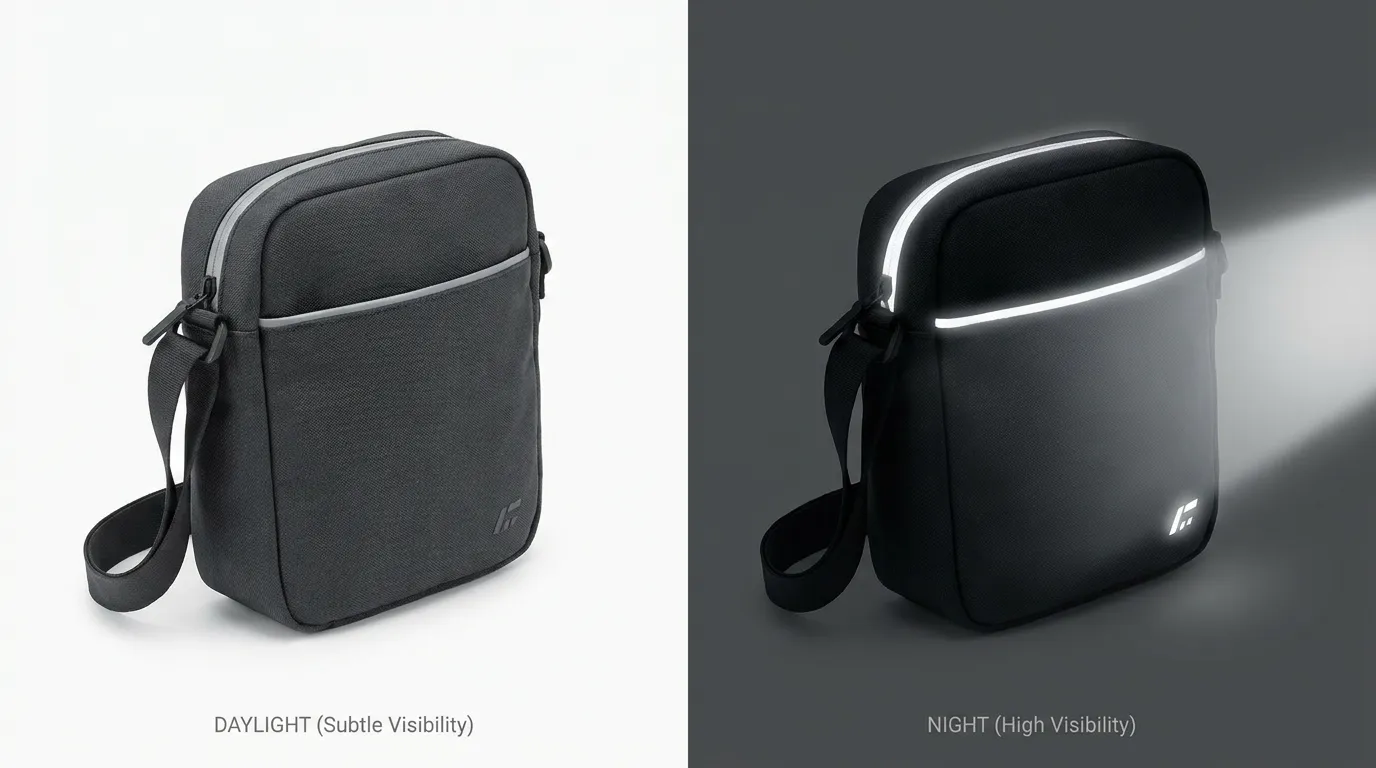
| Reflective Type | Daytime Appearance | Nighttime Visibility | Flexibility | Durability | Cost Impact |
|---|---|---|---|---|---|
| Standard reflective tape (3M-type) | Silver-gray, obviously “safety” | Excellent — visible from 200+ meters | Low — stiff, does not flex well | Good — adhesive or sewn | +0.50 per strip |
| Reflective fabric (woven with glass bead yarn) | Subtle texture, blends with bag material | Very good — visible from 100+ meters | High — bends and drapes normally | Excellent — woven in, cannot peel | +2.00 per panel |
| Reflective heat transfer (HTV) | Nearly invisible when not lit | Good — visible from 50–100 meters | High — follows material contour | Good — bonds to fabric | +0.80 per application |
| Reflective piping (sewn into seams) | Thin silver line along seams | Good — visible from 50–100 meters | High — follows seam curves | Excellent — structurally integrated | +0.40 per meter |
| Glow-in-the-dark print | Faint green/white glow | Moderate — charges with light exposure, fades | High | Moderate — print can wear | +1.00 per print |
| Iridescent / holographic material | Colorful, fashion-forward | Low — not truly reflective (decorative only) | Medium | Good | +0.80 |
For active lifestyle crossbody bags that bridge outdoor and everyday use, the strongest specification is a combination approach:
Avoid covering the bag in standard reflective tape strips — this reads as construction-site safety gear and undermines the fashion positioning. The goal is functional reflectivity that is architecturally integrated, not bolted on.
Any bag worn against the body during physical activity faces the sweat problem: moisture builds between the bag’s back panel and the wearer’s body, creating discomfort and potential odor. For active crossbody bags, the back panel treatment is as important as the exterior waterproofing.
| Solution | Mechanism | Comfort Level | Added Weight | Cost Impact | Best For |
|---|---|---|---|---|---|
| Standard fabric back (no treatment) | None — traps sweat against body | Low — uncomfortable during activity | None | Baseline | Fashion-only crossbody (NOT for active) |
| Air mesh back panel | 3D spacer mesh creates air gap between bag and body | High — promotes airflow, reduces heat | Minimal | +0.80 | Running, cycling, hiking — recommended |
| Perforated foam + mesh | Foam cushion with mesh overlay and ventilation perforations | Very high — cushioned + ventilated | Moderate | +1.20 | Heavy-load sport slings, hiking |
| Quick-dry fabric back | Moisture-wicking fabric that dries rapidly | Medium–High — wet but dries fast | None | +0.50 | Yoga, gym, light fitness |
| Antimicrobial-treated mesh | Mesh panel with silver-ion or zinc antimicrobial treatment | High — reduces odor buildup | Minimal | +1.00 | All active bags — premium feature |
For any crossbody or fanny pack marketed for active use, air mesh back panel is the minimum specification. Without it, the bag becomes uncomfortable within 15–20 minutes of physical activity, which generates negative reviews and returns regardless of how good the rest of the product is.
The premium option — antimicrobial-treated air mesh — adds a genuinely defensible product-page claim (“odor-resistant back panel”) at modest cost and addresses the long-term concern of bags that develop smell after repeated sweaty use.
Beyond the three-zone layout (quick-access, main, secure) that applies to all crossbody bags, active lifestyle crossbodies benefit from sport-specific features that address real use-case needs.
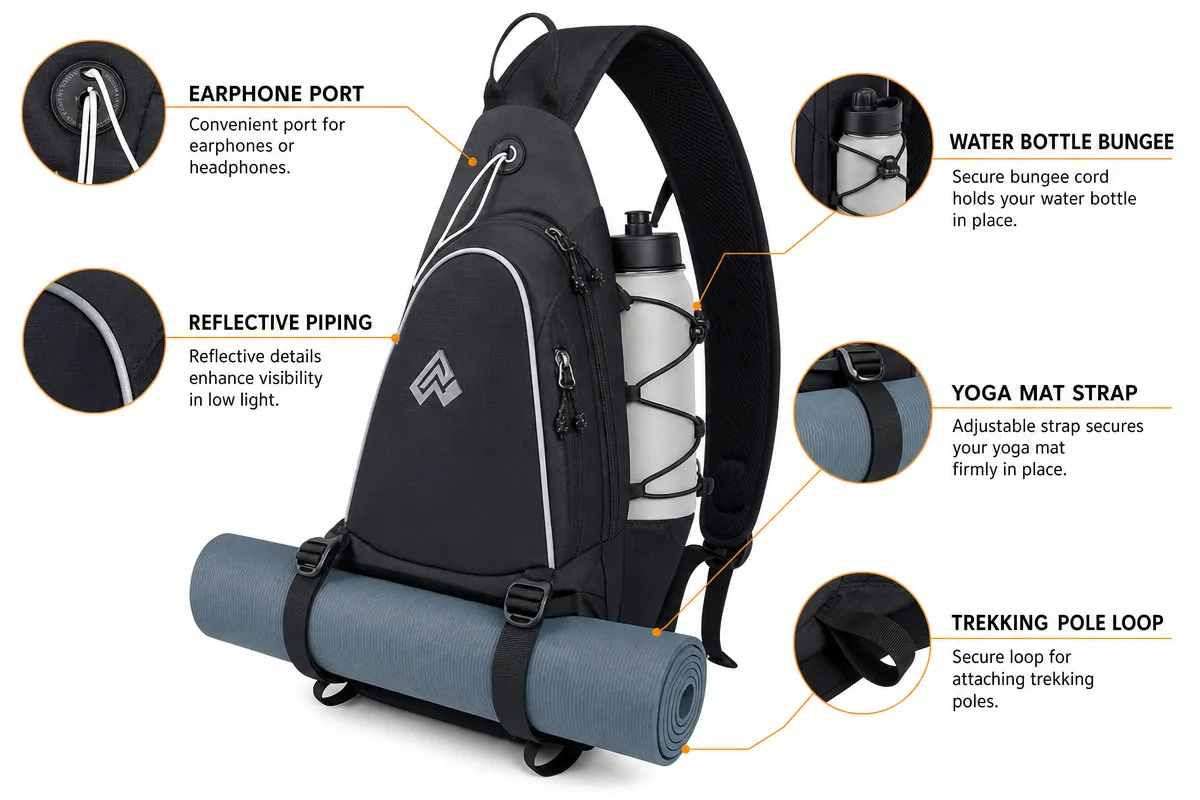
| Feature | What It Is | Weight Adds | Cost Adds | Best For | Worth Specifying? |
|---|---|---|---|---|---|
| Earphone/cable port | Rubberized grommet on top or side panel for cable pass-through | Negligible | +0.20 | Running, commuting with wired earbuds | Yes — near-zero cost, high perceived value |
| External bungee / elastic web | Elastic cord on front panel for stashing a jacket or layer | 10–15 g | +0.40 | Hiking, trail running, cycling | Yes for outdoor; skip for yoga/urban |
| Water bottle bungee / side pocket | Elasticized external sleeve or bungee loop for small bottle | 15–20 g | +0.50 | Hiking, camping, trail running | Yes for outdoor; optional for fitness |
| Yoga mat carry strap | External webbing loop or adjustable strap on bottom | 20–30 g | +0.60 | Yoga commuters specifically | Only if yoga is a primary market |
| Trekking pole / tripod loop | Webbing loop with elastic cinch on side panel | 10–15 g | +0.30 | Hiking, photography, camping | Only for outdoor-specific lines |
| Whistle buckle (integrated into strap buckle) | Strap buckle with built-in emergency whistle | Negligible | +0.30 | Hiking, trail, safety-conscious consumers | Good differentiator at near-zero cost |
| Sunglasses hang loop | Microfiber-lined loop on exterior for hanging sunglasses | 5 g | +0.20 | All outdoor, cycling, hiking | Yes — solves a universal problem |
| Key clip on retractable cord | Internal retractable cord with clip, 15–20 cm | 10 g | +0.40 | All active use | Yes — prevents key loss during activity |
Rather than including every feature on every bag, the most commercially effective approach is to create 2–3 configurations from a single base pattern, each targeting a different activity cluster:
| Configuration | Base Bag | Added Features | Target Persona | Retail Position |
|---|---|---|---|---|
| Trail / Outdoor | Sport sling, 8–12 L | Bungee web + water bottle loop + trekking pole loop + whistle buckle + reflective piping | Trail-to-town commuter, weekend adventurer | 55 |
| Yoga / Fitness | Belt bag or compact crossbody, 3–6 L | Yoga mat strap + quick-dry back panel + earphone port + sunglasses loop | Yoga/fitness commuter | 40 |
| Urban Active | Classic crossbody, 5–8 L | Antimicrobial mesh back + reflective logo + earphone port + key clip | All three personas — broadest appeal | 45 |
This three-configuration approach maximizes market coverage while keeping your base pattern engineering cost to one development cycle. The Trail and Yoga configurations are add-ons to the Urban Active base.
Active crossbody bags demand different material priorities than fashion crossbodies. Weight, moisture handling, and abrasion resistance outrank visual luxury.
| Material | Weight | Water Handling | Abrasion Resistance | UV Resistance | Fashion Crossover | Best Activity |
|---|---|---|---|---|---|---|
| Ripstop nylon (40D–70D) | Ultra-light | Good — DWR-coatable | Moderate — light use | Good | Medium — technical read | Trail running, ultralight hiking |
| High-denier nylon (210D–420D) | Light | Very good — DWR + TPU compatible | Very good | Good | Medium–High | Hiking, camping, general outdoor |
| Cordura-type (500D–1000D) | Medium | Very good | Exceptional | Excellent | Medium — utility read | Heavy outdoor, adventure travel |
| Recycled nylon (rPET blend) | Light | Good — coatable | Good | Good | High — sustainability story | Yoga, fitness, eco-conscious urban |
| Neoprene | Light | Excellent — inherently waterproof | Good | Moderate | High — sporty-modern | Yoga, water sports, beach fitness |
| Oxford polyester (300D–600D) | Light–Medium | Very good — PU-coated | Very good | Good | Medium–High — clean, professional | Urban commute, gym, everyday active |
For the broadest market coverage, high-denier nylon (210D–420D) with DWR coating serves the Trail and Urban Active configurations, while recycled nylon or neoprene serves the Yoga/Fitness configuration. All three are lightweight, moisture-competent, and fashion-adjacent enough for post-activity wear.
Active crossbody bags must be noticeably lighter than fashion crossbodies. The target empty weight:
Exceeding these targets is the single most common negative-review trigger for active crossbody bags. Specify the target empty weight in your tech pack and require the factory to weigh the proto sample.
Personalization techniques that work on leather fashion bags do not always translate to performance nylon and technical fabrics. The active crossbody needs decoration that survives rain, sweat, UV exposure, and physical abrasion.
| Technique | Outdoor Durability | UV Resistance | Wash Resistance | Best Surface | Visual Effect |
|---|---|---|---|---|---|
| Reflective heat transfer logo | Very good — bonded to fabric | Good | Good (cold wash) | Nylon, polyester | Subtle by day, glowing at night — dual function |
| Silicone heat transfer | Excellent — flexible, waterproof | Excellent | Excellent | Nylon, polyester, neoprene | Raised, tactile, modern |
| Woven label (sewn on) | Excellent — fabric-on-fabric | Good | Excellent | All fabrics | Classic, outdoor heritage, trusted |
| Embroidery (direct) | Very good — thread is permanent | Good | Very good | Canvas, nylon (heavier denier) | Textured, premium, brand-forward |
| UV printing (on fabric) | Good — UV-cured | Moderate — can fade over 2+ years direct sun | Good | Smooth nylon, polyester | Full color, detailed graphics |
| Rubber / PVC patch (sewn or heat-bonded) | Excellent — waterproof, flexible | Excellent | Excellent | All fabrics | 3D, bold, modern, outdoor-authentic |
For active crossbody bags, reflective heat transfer (for the brand logo) combined with a woven label (for the brand name) is the strongest combination. Both withstand outdoor conditions, both read as intentional design rather than decoration, and the reflective element adds the dual-purpose safety feature discussed earlier. Avoid foil stamping and debossing on nylon — these techniques require a leather or PU surface that active crossbodies typically do not feature.
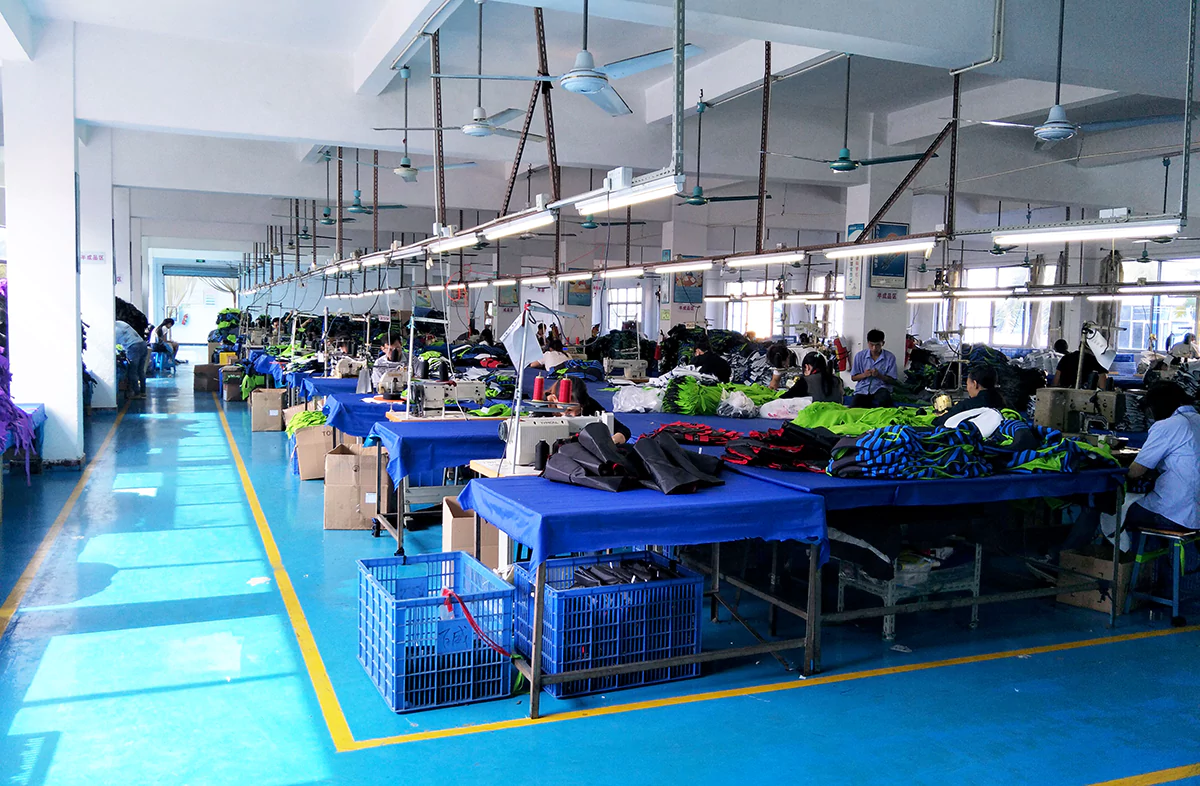
FYBagCustom is Your Trusted Custom Crossbody Bag Manufacturer in China, with 15+ years of manufacturing experience producing crossbody bags, fanny packs, sling bags, and gym bags for active lifestyle and outdoor brands worldwide. For buyers developing performance-grade active crossbody programs, our capabilities include:
Our 50,000 m² factory in Guangzhou with 10+ production lines produces active crossbody and sport bag programs for outdoor brands, athleisure labels, fitness brands, DTC sellers, Amazon FBA businesses, and lifestyle companies across international markets.
The active crossbody bag market in 2026 is defined by convergence — outdoor performance meeting everyday fashion in a single hands-free format. For B2B buyers developing sport crossbody and fanny pack programs, three core takeaways:
If your 2026 product line includes crossbody bags or fanny packs for outdoor fitness, yoga, camping, or active daily carry, now is the time to lock in material specifications, waterproofing levels, and reflective detailing. Contact FYBagCustom to discuss performance configurations, request waterproof test data, and receive physical samples — typically within 5–7 days of your brief.
FYBagCustom’s OEM and ODM team works with outdoor brands, fitness labels, DTC founders, and Amazon sellers to produce performance crossbody bags and fanny packs — with waterproof construction, reflective safety features, sport-specific engineering, low MOQ, and samples in 5–7 days.
Start Your Custom Bag Project →