Tel/WhatsAapp:+86 18011919834
E-mail: chloe.x@fybagcustom.com

Tel/WhatsAapp:+86 18011919834
E-mail: chloe.x@fybagcustom.com
Send Your Inquiry Today

Who this guide is for: brand owners, sourcing managers, wholesale buyers, Amazon FBA sellers, DTC founders, travel-product companies, and lifestyle brands who are developing modular, customizable travel bag systems — bags with interchangeable straps, swappable outer shells, detachable compartments, and configurable interiors. If you want to understand how to engineer a “capsule bag” system where a single base unit transforms into multiple products through modular components — and why this approach is generating some of the highest customer lifetime values in the travel bag category — this guide covers the system design, the engineering, and the commercial model.
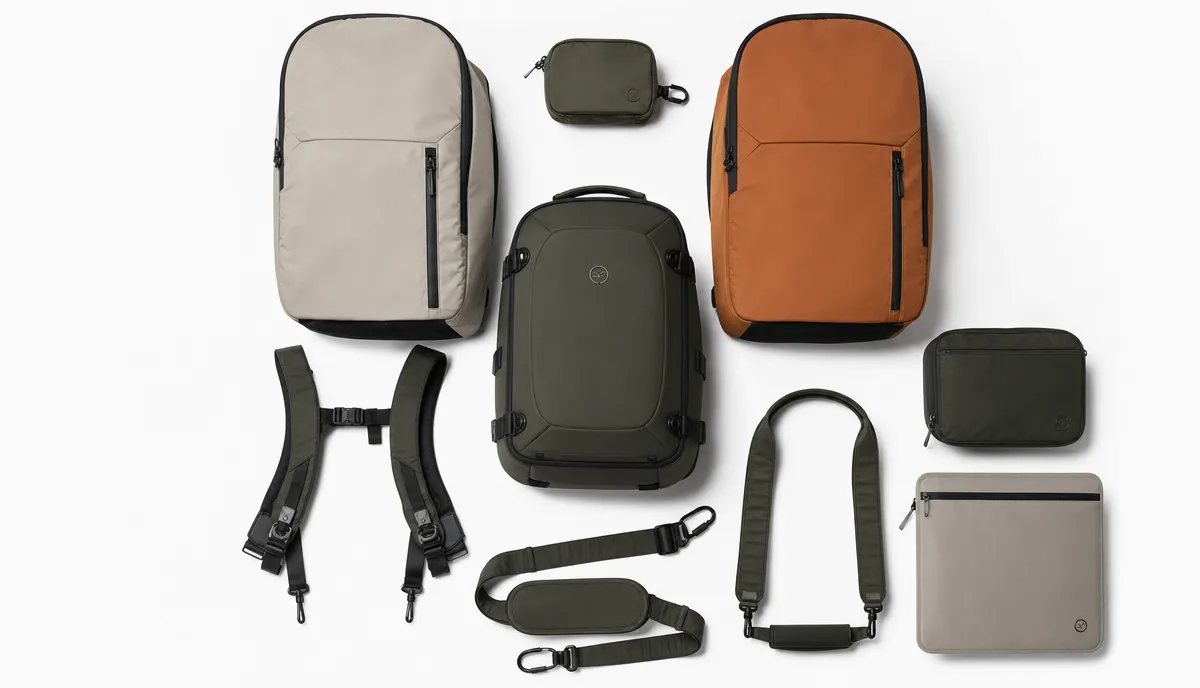
The one-bag travel movement has matured from a Reddit subculture into a mainstream consumer expectation. In 2026, a significant and growing segment of travelers — particularly women who take 4–8 trips per year in a mix of business, leisure, and hybrid contexts — no longer want to own multiple specialized bags. They want one system that reconfigures for each trip: a backpack for weekend hiking that converts to a professional tote for a Monday client meeting, with the same base unit carrying different shells, straps, and compartments depending on the context.
This is the “capsule bag” concept — borrowed from the capsule wardrobe philosophy where a small number of versatile, interchangeable pieces replace a large closet of single-purpose items. Applied to bags, it means a modular system where a structural base unit accepts swappable outer shells (different colors, materials, patterns), interchangeable carry straps (backpack, crossbody, shoulder, tote handles), and detachable organizational inserts (laptop sleeve, packing cubes, tech pouch, toiletry kit) that clip, zip, or Velcro into the base.
For B2B buyers, the capsule bag system is commercially compelling for a reason that no single-product bag can match: the customer buys the base once and returns to buy components forever. A consumer who purchases a 150–$300 over the following 12–24 months on shells, straps, inserts, and accessories. The system creates a recurring revenue model in a category that has historically been single-transaction.
This guide covers the system architecture, the engineering of each modular connection point, the component hierarchy, the material and production considerations, and how to build a capsule bag program with a manufacturer in China.
Before diving into engineering, it helps to understand why the modular approach outperforms traditional single-product bags on every key commercial metric.
| Metric | Traditional Single Bag | Modular Capsule System |
|---|---|---|
| Initial purchase value | 150 (one transaction) | 150 (base + 1 shell + 1 strap set) |
| Repeat purchase potential | Near zero — consumer does not buy the same bag twice | Very high — new shells, straps, inserts purchased seasonally |
| Customer lifetime value (24-month) | 150 | 500+ (base + 3–5 component purchases) |
| Product-page cross-selling | Limited — “you may also like” generic recommendations | Native — every component page links to every other component |
| Return rate | Standard (8–12%) | Lower (5–8%) — modularity allows adjustment without returning the base |
| Brand loyalty / switching cost | Low — consumer can switch brands next purchase | Very high — components only work with your system; switching means abandoning investment |
| Social media content potential | Moderate — one product, one look | Very high — endless reconfiguration content, unboxing of new components |
| Sustainability narrative | Standard | Strong — “one system replaces five bags; buy components, not entire new products” |
The switching cost line is the most important for long-term brand building. Once a consumer invests in your modular system base, every subsequent component purchase reinforces her commitment. She is not choosing between your brand and a competitor for each new purchase — she is choosing which component to add to the system she already owns. This creates a closed ecosystem with recurring revenue mechanics similar to a subscription model, but without the subscription.
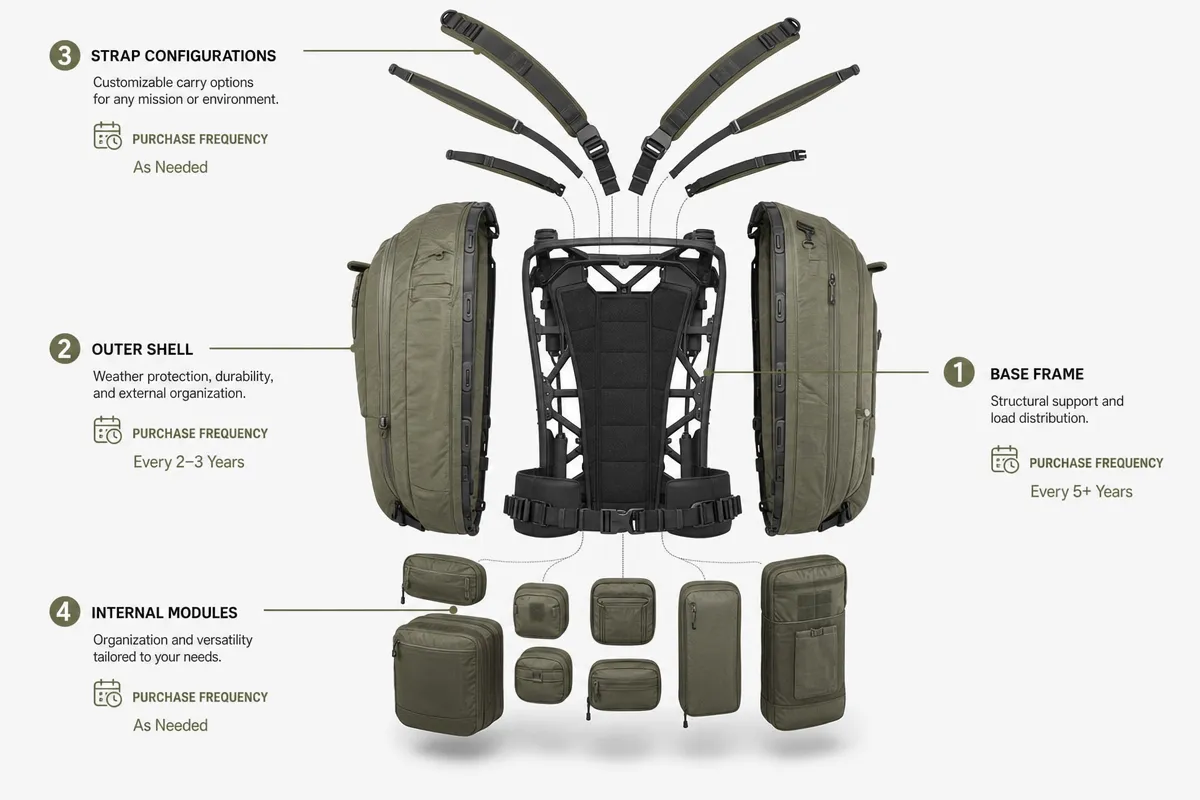
A well-designed capsule bag system consists of four distinct layers, each serving a different function and each independently customizable.
| Layer | What It Is | Function | User Interaction | Purchase Frequency |
|---|---|---|---|---|
| Layer 1: Base frame | The structural skeleton — internal frame, padding, attachment points | Provides the bag’s shape, weight distribution, and all connection interfaces | Bought once; rarely replaced | One-time (every 3–5 years) |
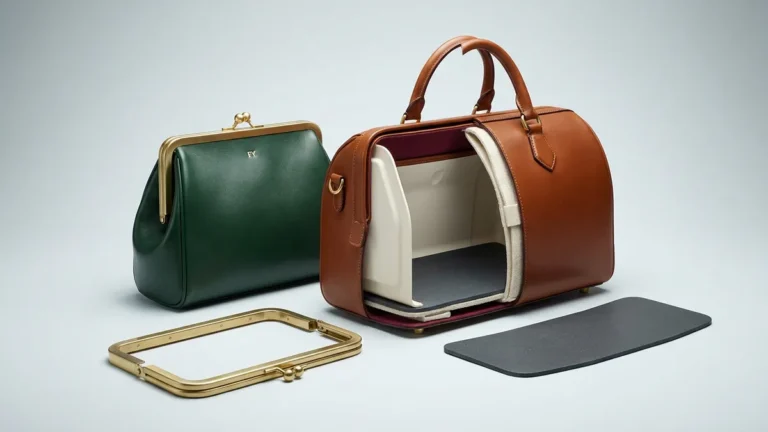
| Layer 2: Outer shell | The visible exterior — the “skin” of the bag | Provides color, texture, pattern, weather protection, and visual identity | Swapped per trip, season, or mood | 2–4 shells over the system’s lifetime |
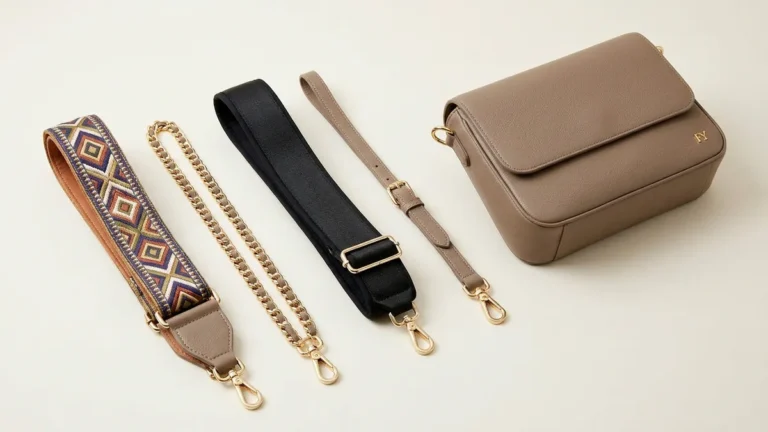
| Layer 3: Carry system | Straps and handles — how the bag is worn | Converts the bag between backpack, crossbody, shoulder, tote, and briefcase carry | Swapped per context (commute vs. travel vs. meeting) | 2–3 strap sets over the system’s lifetime |
| Layer 4: Internal modules | Inserts, pouches, cubes, and organizers — how the interior is configured | Organizes contents for specific trip types (tech trip, weekend getaway, gym day) | Configured per trip | 3–6 modules over the system’s lifetime |
| Component | Retail Price | Margin | Purchase Occasion |
|---|---|---|---|
| Base frame | 120 | Moderate (30–40%) — priced to attract initial purchase | First purchase; gateway into the system |
| Outer shell | 55 each | High (50–65%) — lower production cost, higher perceived value | Seasonal color drops, travel context changes, wear replacement |
| Strap set | 35 each | High (50–60%) | Context changes (backpack for hiking, tote handles for meetings) |
| Internal module (laptop sleeve, packing cube, tech pouch, toiletry kit) | 30 each | High (55–70%) — small, low-cost items with strong perceived value | Trip preparation, organizational needs, gifting |
| System bundle (base + 1 shell + 1 strap + 2 modules) | 220 | Moderate-High (40–50%) | Initial purchase — the “starter kit” |
The starter bundle is the recommended initial purchase format. It provides everything the consumer needs for her first trip, demonstrates the system’s versatility, and generates immediate familiarity with the modular mechanic — making subsequent component purchases feel natural rather than upsold.
The base frame is the most technically demanding component because it must be rigid enough to maintain structure, lightweight enough to not add unnecessary bulk, and studded with standardized attachment points that every shell, strap, and module connects to reliably.
| Element | Specification | Why |
|---|---|---|
| Frame material | Semi-rigid HDPE (high-density polyethylene) sheet + EVA foam laminate | HDPE provides structural rigidity; EVA provides cushioning. Together they hold shape without excessive weight |
| Frame weight | 200–350 g (for a 25–35 L bag frame) | Must stay light — the base is always present; excess weight here penalizes every configuration |
| Back panel | Breathable air-mesh over the frame, with lumbar support contouring | Comfort during backpack carry; air mesh prevents sweat buildup |
| Shell attachment system | Perimeter zipper track (continuous coil zip around all four edges) or snap-button grid (12–16 snap studs) | The shell must attach and detach quickly, securely, and without tools |
| Strap attachment points | 4 reinforced webbing loops at top, 2 at bottom, 2 at sides (8 total) | Different strap configurations use different attachment combinations |
| Module attachment (interior) | MOLLE-style webbing rows on interior back panel + Velcro strips on interior side walls | Standard MOLLE allows any compatible pouch to attach; Velcro gives flexible divider positioning |
| Laptop sleeve (built into frame) | Padded sleeve against back panel, 10 mm foam, fits up to 15″ | The laptop sleeve is always needed — building it into the frame means every configuration includes it |
The method by which the outer shell connects to the base frame determines the system’s usability, durability, and consumer satisfaction. Two primary approaches:
| Approach | Mechanism | Swap Time | Security | Durability | Cost | Visual |
|---|---|---|---|---|---|---|
| Perimeter zipper | Continuous coil zipper around the shell opening; shell zips onto the frame edge | 60–90 seconds | Very good — continuous zip is strong | Good — zipper teeth wear over 500+ swaps | +4.00 for zip track | Clean — zip hidden when closed |
| Snap-button grid | 12–16 heavy-duty snap buttons on frame perimeter; shell snaps onto matching sockets | 30–60 seconds | Good — each snap holds independently; if one fails, others compensate | Very good — snaps are mechanically simple | +3.00 for snap hardware | Slightly visible snap heads on frame edge |
The perimeter zipper produces the cleanest visual finish (no visible hardware when the shell is attached) and the strongest seal (no gaps for dust or rain). It is the recommended approach for premium systems targeting the fashion-conscious travel consumer.
The snap-button grid is faster to swap and more forgiving of slight misalignment, making it the better choice for adventure/outdoor systems where the consumer may swap shells in a tent or a car rather than a hotel room.
The outer shell is the consumer-facing layer — it is what the world sees, what photographs capture, and what expresses the consumer’s personal style. Because shells are designed to be swapped, they are also the primary recurring revenue driver in the system.
| Variable | Options | Impact on Consumer | Revenue Implication |
|---|---|---|---|
| Color | Full fashion palette — sage, butter yellow, cream, navy, black, seasonal limiteds | Each color is a reason to buy another shell | Seasonal color drops drive repeat purchases |
| Material | Nylon (technical), canvas (heritage), PU leather (fashion), recycled nylon (eco) | Different materials suit different trip contexts | Material-specific shells expand the use-case range |
| Pattern | Solid, printed, woven, textured | Expression of personal style | Limited-edition prints create urgency and collectibility |
| Weather protection | DWR-coated (rain-resistant), waxed (heritage rain), uncoated (fair-weather) | Functional differentiation by climate | A “rain shell” is a distinct purchase from a “city shell” |
| Pockets (shell-level) | External zip pockets integrated into the shell; vary by shell design | Different shells offer different quick-access options | Functional variety reinforces the “each shell is a different bag” perception |
| Shell | Material | Color | Context | Retail Price |
|---|---|---|---|---|
| Everyday Urban | 420D recycled nylon, DWR-coated | Black | Commute, city travel, rain | 45 |
| Weekend Away | Heavy canvas (14 oz), waxed finish | Natural / cream | Weekend trips, casual travel, heritage | 50 |
| Professional | Saffiano-texture PU leather | Navy or taupe | Business travel, client meetings | 55 |
| Adventure | Ripstop nylon, fully waterproof (TPU-laminated) | Olive or sage green | Hiking, outdoor travel, adventure | 45 |
| Limited Edition (seasonal) | Varies — printed, embroidered, collaboration | Seasonal trend color or pattern | Fashion, collectibility, social media | 60 |
Five shells at launch provides enough variety to demonstrate the system’s range while remaining manageable for inventory. The limited-edition shell rotates quarterly, creating the content calendar and urgency mechanics discussed in the revenue architecture.
The interchangeable strap system converts the same base + shell combination into fundamentally different bag types. This is the layer that delivers the “one bag replaces five” promise.
| Strap Set | Components | Carry Mode | Best For | Retail Price |
|---|---|---|---|---|
| Backpack straps | Padded shoulder straps (25–40 mm) + sternum clip + load-lifter adjustments | Standard backpack — weight on both shoulders | All-day carry, hiking, airport transit, hands-free | 35 |
| Crossbody strap | Single wide strap (38–50 mm), padded, adjustable 80–130 cm | Diagonal crossbody — bag at hip or front | Urban day trips, markets, sightseeing, quick access | 28 |
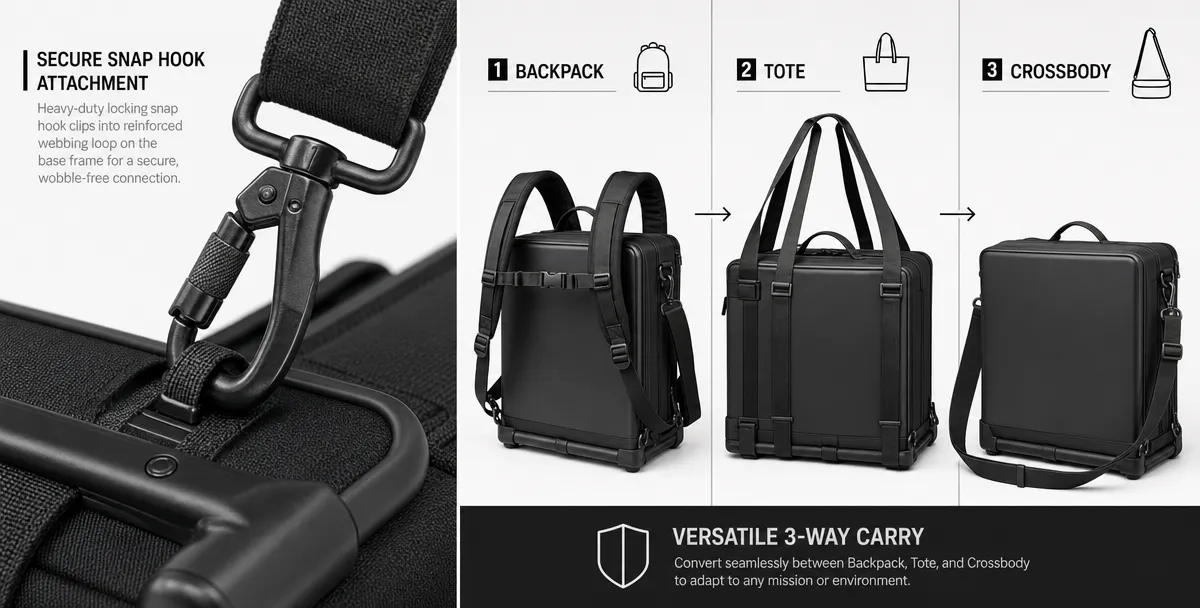
| Tote handles | Twin rolled or flat handles, 50–58 cm span | Hand or shoulder carry — the “handbag” mode | Meetings, restaurants, hotel lobbies, professional contexts | 30 |
| Messenger / briefcase strap | Wide strap (50 mm) + shoulder pad + handle attachment for side-carry | Messenger — bag at side, flap forward | Business commute, laptops, urban professional | 32 |
| Waist / hip belt (for backpack mode) | Padded hip belt (50–80 mm) attaching to base frame’s lower loops | Load transfer from shoulders to hips | Heavy loads, long-distance walking, hiking with full pack | 25 |
The starter bundle should include backpack straps (the most versatile default). Additional strap sets are sold separately, with the tote handles being the strongest upsell — the transformation from “backpack” to “tote” is the most dramatic visual shift and the one that resonates most with the fashion-conscious travel consumer.
All strap sets must connect to the same standardized attachment points on the base frame. The attachment mechanism must be:
| Requirement | Specification | Why |
|---|---|---|
| Quick-swap | Under 30 seconds to change strap sets | Consumer must be willing to swap — if it takes 5 minutes, she will not bother |
| Tool-free | No screwdrivers, clips, or complex threading | Must be doable in a hotel room, an airport, or a car |
| Secure under load | Hold 15 kg without slippage or disconnection | A fully loaded bag on backpack straps cannot detach during movement |
| Gender-neutral | Adjustable to fit a wide range of body sizes | One strap set serves all consumers |
The recommended attachment mechanism: heavy-duty snap hooks with locking gates (similar to climbing carabiners but lighter). Each strap terminates in a locking snap hook that clips into the base frame’s reinforced webbing loops. Swap time: 15–20 seconds per strap set. Security: locking gate prevents accidental release.
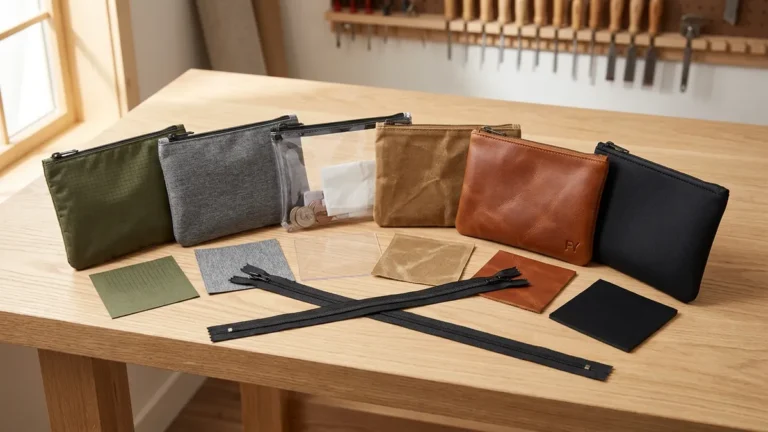
The interior of the capsule bag changes based on what the consumer is packing. Rather than fixed compartments that are sometimes useful and sometimes wasteful, the modular interior uses detachable inserts that the consumer selects before each trip.
| Module | Dimensions | Attachment | Contents | Retail Price |
|---|---|---|---|---|
| Padded tech pouch | 25 × 18 × 6 cm | MOLLE straps + internal clip | Charger, cables, power bank, earbuds, adapters | 28 |
| Packing cube (compression, set of 2) | 30 × 20 × 10 cm each | Free-standing (sits in main compartment) | Clothes — one cube per outfit or per category | 30 (set) |
| Toiletry kit (hanging) | 24 × 14 × 10 cm, unfolds to hang | Clip to internal D-ring or MOLLE | Toiletries, cosmetics, medications | 25 |
| Shoe bag (ventilated) | 34 × 20 × 14 cm | Free-standing or clips to bottom MOLLE | One pair of shoes, isolated from clothes | 18 |
| Insulated snack/bottle pouch | 12 × 12 × 25 cm | Clips to side MOLLE or external loop | Water bottle, snacks, temperature-sensitive items | 20 |
| Document organizer | 25 × 16 × 3 cm | Velcro to interior wall | Passport, boarding passes, itinerary, pen, cards | 18 |
A powerful product-page and marketing concept: show the consumer how to configure the modules for specific trip types.
| Trip Type | Modules Selected | Why This Configuration |
|---|---|---|
| Weekend city break (2 nights) | 2 packing cubes + toiletry kit + tech pouch | Maximum clothes organization; all tech in one place |
| Business overnight (1 night) | 1 packing cube + document organizer + tech pouch + toiletry kit | Document organizer for meeting materials; tech for presentations |
| Day hike + city evening | Shoe bag + 1 packing cube + insulated pouch | Hiking shoes separated from evening clothes; water and snacks accessible |
| Gym + work commute | Shoe bag + 1 packing cube + toiletry kit | Gym clothes and shoes isolated; toiletries for post-workout shower |
| Minimalist travel (1–2 nights, no checked bag) | 1 packing cube + toiletry kit | Maximum simplicity — the “I packed in 10 minutes” configuration |
This framework serves both as a product-page conversion tool (the consumer sees herself in a specific scenario and selects the corresponding modules) and as a content marketing engine (each trip type becomes a blog post, email, or social media series).
Modular bags are more complex to produce than single-product bags because interoperability must be guaranteed across all components. A shell produced in March must fit perfectly on a base frame produced in January. A strap set purchased in June must clip into attachment points identical to those on a frame produced in December.
| Component Interface | Tolerance | Why It Matters |
|---|---|---|
| Shell-to-frame perimeter zip | ±1 mm on zip track alignment | Misalignment causes zipper binding or gaps |
| Snap-button socket spacing | ±0.5 mm | Misaligned snaps will not engage or will pop open under load |
| Strap attachment loop position | ±2 mm | Slight variation acceptable; straps have adjustment range |
| MOLLE webbing row spacing | Standard 25 mm intervals, ±1 mm | MOLLE is a military standard; any compatible pouch must fit |
| Test | What to Check | Pass Criteria |
|---|---|---|
| Shell fit test | Attach every shell variant to the base frame | All shells zip/snap on smoothly without forcing; no gaps, no binding |
| Strap load test | Attach each strap set; load 15 kg; hang for 60 seconds | No detachment, no slippage, no deformation at attachment points |
| Swap cycle test | Attach/detach the shell 50 times; attach/detach each strap set 100 times | No wear on zip teeth, snap sockets, or webbing loops that affects function |
| Cross-batch compatibility | Test a shell from batch A against a frame from batch B | Must be interchangeable — this is the test that validates the modular promise |
The cross-batch compatibility test is the most important and the most often overlooked. If a consumer buys a new shell six months after purchasing the base, and the shell does not fit because of a slight tooling drift between production batches, the entire system’s credibility collapses. Specify this test explicitly in your QC protocol and request documented results.
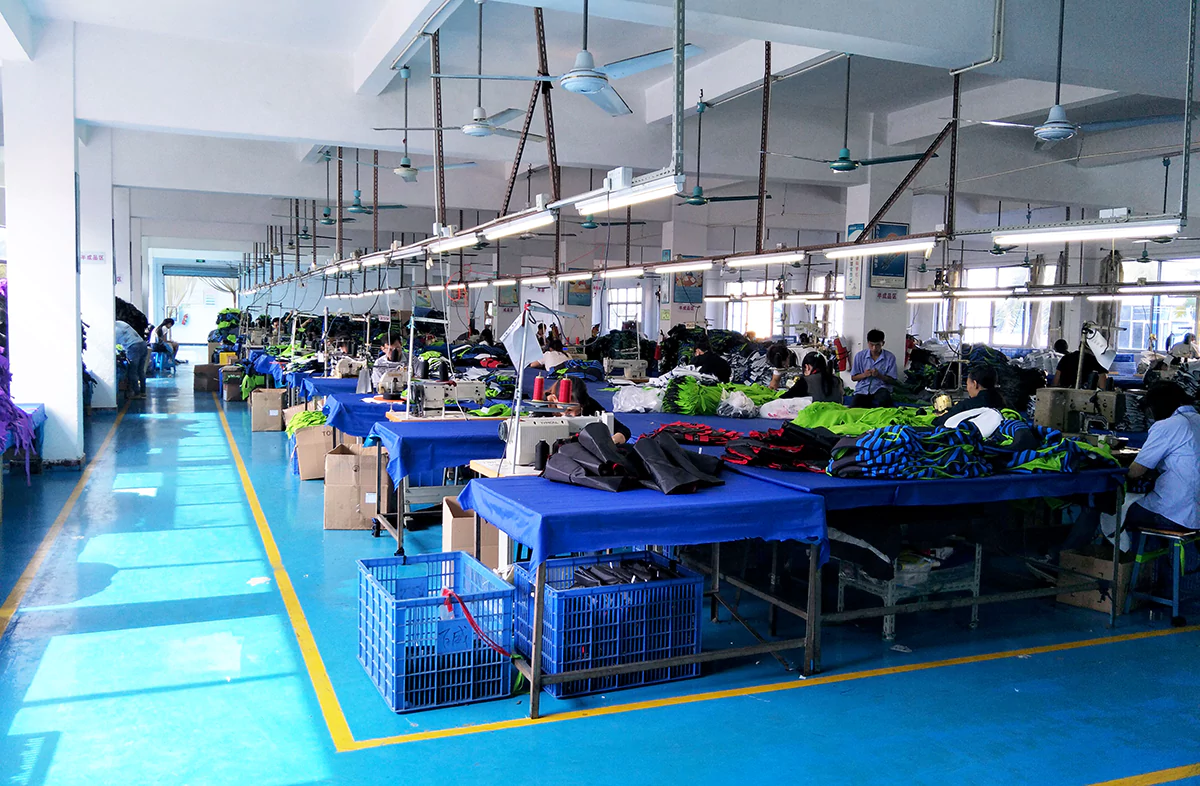
FYBagCustom is Your Trusted Custom Bag Manufacturer in China, with 15+ years of manufacturing experience producing multi-function bags, convertible systems, and modular accessories for brands worldwide. For buyers developing customizable capsule bag systems, our capabilities include:
Our 50,000 m² factory in Guangzhou with 10+ production lines and 500+ professional staff produces modular bag systems, convertible travel bags, and multi-function accessories for DTC brands, Amazon FBA sellers, travel companies, and lifestyle brands across international markets.
The modular capsule bag system represents a fundamental shift in how travel bags are designed, sold, and monetized. Instead of a single transaction for a single product, the system creates a platform for recurring component purchases, seasonal content, and deep brand loyalty. For B2B buyers developing modular bag systems in 2026, three core takeaways:
If your 2026 product strategy includes a modular travel bag system, now is the time to finalize the base-frame architecture, the shell attachment mechanism, and the first-season shell and strap collection. Contact FYBagCustom to discuss four-layer engineering, interoperability QC protocols, and component production planning — and receive a full system sample set, typically within 7–14 days.
FYBagCustom’s OEM and ODM team works with travel brands, DTC founders, Amazon sellers, and lifestyle companies to produce modular capsule bag systems — with interchangeable shells, convertible straps, MOLLE-compatible modules, and cross-batch interoperability QC at low MOQ with system samples in 7–14 days.
Start Your Custom Bag Project →