Tel/WhatsAapp:+86 18011919834
E-mail: chloe.x@fybagcustom.com

Tel/WhatsAapp:+86 18011919834
E-mail: chloe.x@fybagcustom.com
Send Your Inquiry Today

Who this guide is for: craft brands, yarn retailers, indie dyers, and maker-market entrepreneurs producing project bags — the specialized bags that hold a knitting, crochet, or embroidery project in progress and that a passionate, high-loyalty niche values for function far more than trend. The maker market is one of the most rewarding B2B bag opportunities precisely because it is not fashion-driven: knitters, crocheters, cross-stitchers, and other crafters are devoted, repeat-buying, community-driven customers who know exactly what they need from a project bag and reward the maker who delivers it. And what they need is specific — a yarn-feed grommet that lets working yarn pay out without tangling, organized homes for needles and notions, protection for a work-in-progress that may take weeks, and a size matched to the project type. Get those details right and a craft retailer or indie dyer becomes a consistent B2B partner, because this community buys project bags the way other people buy phone cases: repeatedly, in variety, and with strong opinions. This guide covers the project-bag spec — yarn-feed grommets, needle and notions organization, WIP protection, and the size-and-format family — and the maker-market dynamics that make craft retailers and indie dyers reliable, function-focused buyers. It complements our storage bag and organization category with the craft-specific engineering.
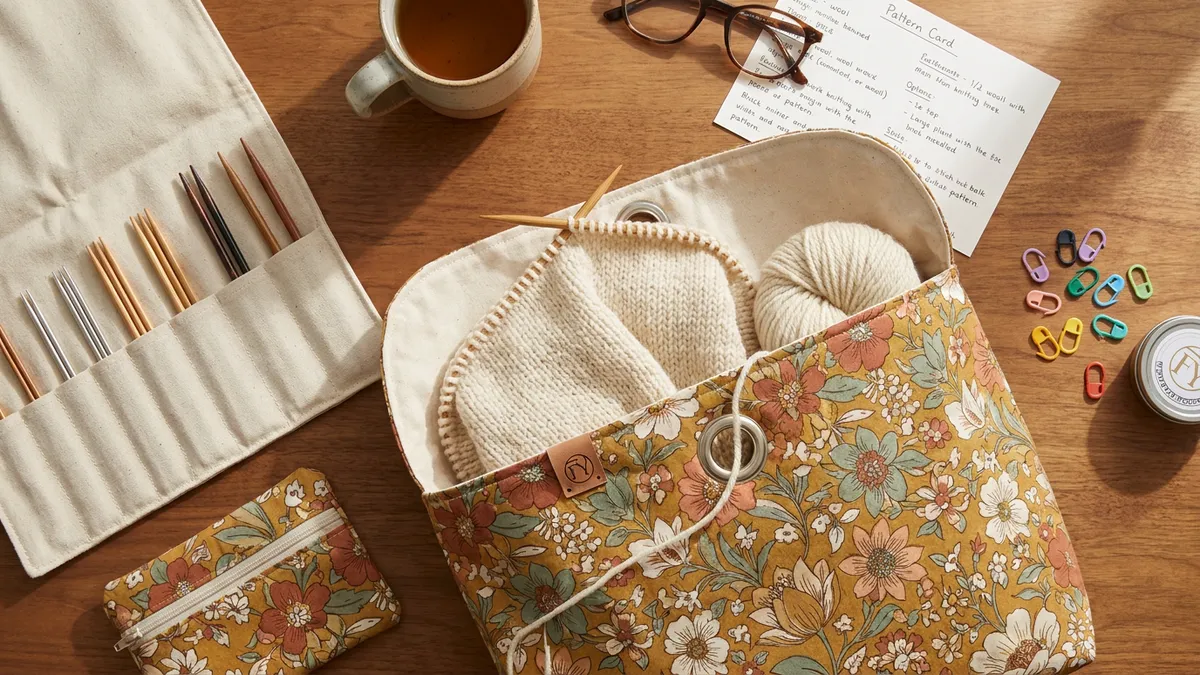
The maker market runs on a dynamic that most bag categories would envy: intense customer loyalty, community-driven discovery, and a willingness to own many project bags rather than one. A knitter frequently has several projects going at once, each in its own bag, and treats the project bag as both a functional tool and a small pleasure — a beautiful, well-made object that makes the craft more enjoyable. Indie yarn dyers and craft retailers sell project bags alongside yarn as a core part of their business, and the “notions” and “project bag” categories are among the most repeat-purchased in the craft retail world. This is a niche, but a deep and durable one, and it rewards suppliers who understand it.
What makes it a particularly good manufacturing relationship is that this customer values function over trend, which means a well-designed project bag does not go out of style — the same thoughtful bag sells year after year, and a craft brand’s line is built on function and print rather than seasonal fashion. The indie dyer who commissions a project bag with their own print, the yarn shop building a house line, the maker-market entrepreneur launching a craft-accessory brand — these are consistent B2B buyers who reorder proven designs and who care most about whether the bag actually works for the craft. This guide is about building the project bag that works, so a craft business can build a loyal line on it.
The single detail that separates a real knitting or crochet project bag from a generic pouch is the yarn-feed grommet — a reinforced eyelet in the bag that lets the working yarn feed out from a skein kept inside, so the yarn pays out cleanly as the maker works without the ball rolling around, falling out, or getting dirty.
| Element | Specification | Why |
|---|---|---|
| The grommet itself | A smooth-edged, reinforced metal or durable eyelet set into the bag body (or lid), sized for yarn to pass through freely | The grommet is the functional heart of the knitting project bag — it turns the bag into a yarn dispenser that keeps the working ball contained and clean while feeding the strand out |
| Smooth, snag-free edge | The grommet’s inner edge finished perfectly smooth — no burrs, rough metal, or sharp plastic that could catch, fray, or split delicate yarn | Yarn passes through this eyelet thousands of times per project; any rough edge frays or damages the yarn — the smoothness is the whole point, and a bad grommet ruins the yarn it’s meant to serve |
| Grommet placement | Positioned so the yarn feeds at a natural angle to the maker’s hands (often high on a side or the lid), where the working strand runs cleanly to the needles | Placement determines whether the feed is smooth or fights the maker; it’s engineered for the working position |
| Multiple grommets | Some project bags include two or more grommets for colorwork (feeding multiple yarns at once, kept from tangling) | Colorwork and stranded knitting use multiple yarns; separate grommets keep them from twisting together — a premium feature for the serious knitter |
| The grommet-free option | Not every project bag needs a grommet (embroidery, cross-stitch, and finished-project bags don’t) — the grommet is specific to yarn crafts, and the range includes both | The line serves multiple crafts; grommets where the craft needs them, clean bags where it doesn’t |
Why this detail wins the maker: a knitter evaluating a project bag looks for the grommet and checks its smoothness immediately, because they know a rough grommet frays yarn and a well-placed smooth one makes the craft flow. A manufacturer that executes the grommet perfectly — smooth, reinforced, well-placed — signals to the whole community that it understands the craft, which in this word-of-mouth market is worth more than any advertising.
Beyond the yarn, a craft project involves a specific and beloved kit of tools — needles, hooks, stitch markers, scissors, tape measures, darning needles, cable needles — and the project bag that organizes them well is the one the maker reaches for.
| Element | Specification |
|---|---|
| The needle organization | Dedicated storage for needles and hooks — interior slip pockets, elastic loops, or a roll-up needle organizer insert; circular needles, straight needles, and DPNs (double-pointed needles) each have their storage logic |
| The notions pouch | A small zippered or closable notions pocket/pouch for the little tools (markers, scissors, tape measure) that otherwise disappear to the bottom — often a separate coordinating pouch, which is its own SKU and add-on |
| Secure small-tool storage | Secured pockets so scissors and darning needles don’t wander loose and poke the project or the maker |
| The project-pattern pocket | A flat pocket or sleeve for the printed pattern or a phone/tablet showing a chart — the maker follows a pattern as they work |
| The transparent option | Clear or mesh pockets and pouches so the maker sees what’s inside without digging — a valued craft-organization feature |
| The chart-keeper | On premium bags, a way to hold the pattern open and visible (a clip, a clear sleeve) at the working position |
A knitting or embroidery project is a work-in-progress (a “WIP” in craft language) that may take weeks or months, represents real time and money in yarn and effort, and lives in its bag between sessions — so protecting it is a core function.
| Element | Specification | Why |
|---|---|---|
| The secure closure | A reliable closure (zipper, drawstring with toggle, or a secured flap) that keeps the project contained and clean between sessions | The WIP lives in the bag; the closure keeps it from spilling, snagging, or collecting dust and pet hair |
| Clean, snag-free interior | A smooth interior lining with no exposed rough seams, hardware, or hook-and-loop that could catch the yarn or the live stitches | A WIP has live stitches on the needles; anything rough inside can snag them or the yarn — the interior is finished smooth |
| Needle protection | The closure and structure protect the project from having the needles pushed out or stitches dropped in transit | Dropped stitches from a jostled bag are a real setback; the bag guards against it |
| Structure to prevent crushing | Enough structure (or a structured base) that the project isn’t crushed, keeping delicate work and blocked pieces from being mangled | Some projects (lace, finished blocks) shouldn’t be crushed; structure protects them |
| Moisture and cleanliness | A clean, protective, ideally spill-resistant environment — yarn shows dirt and moisture, and a stained WIP is heartbreaking | The project must stay clean over weeks; the bag is its protective home |
| Project separation | For the multi-project knitter, the bag keeps each project self-contained (with its yarn, needles, and pattern together) so projects don’t tangle | The knitter with several WIPs needs each in its own contained world; the bag provides it |
Craft projects range from tiny (a sock, a pair of mittens) to large (a sweater, a blanket), and the project-bag family is organized by project size — a knitter owns several sizes for different projects.
| Format | Size | The Project |
|---|---|---|
| The sock/small project bag | Small | Socks, mittens, hats, small accessories — the most-owned size, often a drawstring or small zip bag; the everyday grab-and-go |
| The shawl/medium project bag | Medium | Shawls, baby garments, medium projects — the versatile middle |
| The sweater/large project bag | Large | Sweaters, cardigans, large garments — room for the growing project and multiple skeins |
| The blanket/XL project bag | Extra-large | Blankets, afghans, big projects — the largest, holding a lot of yarn and bulk |
| The tote-style project bag | Medium–large | An open or zip-top tote for project-plus-supplies, worn on the shoulder |
| The backpack project bag | Large | The hands-free project bag for the crafter on the move (to a knitting group, on transit) |
| The notions pouch (companion) | Small | The coordinating tool pouch — sold with or alongside the project bag |
| Type | Detail |
|---|---|
| The drawstring project bag | The classic — a drawstring closure (often with a grommet), the simplest and most beloved format; fast open/close, cinches secure |
| The zippered project bag | A zip-top or box-zip bag for fuller enclosure and protection — the secure format |
| The wristlet/small-handle bag | A small project bag with a wrist strap or handle for grab-and-go portability |
| The structured project bag | A bag with a flat/structured base that stands open while the maker works — the premium functional format that stays upright and accessible |
| The clear or mesh panel bag | See-through elements so the maker sees the project and tools inside |
The project bag’s materials serve function, and its print is a huge part of its appeal — this is a market where beautiful, distinctive prints drive sales, and the indie-dyer and craft-brand aesthetic is central.
| Material | Application | The Read |
|---|---|---|
| Printed cotton and canvas | The project-bag body — the print carrier | The craft market’s signature: beautiful, distinctive prints (florals, craft motifs, indie-dyer designs) are a primary purchase driver — the print sells the bag |
| Canvas (cotton/organic) | Durable structured bodies | The sturdy, natural, craft-appropriate material |
| Nylon and polyester (incl. recycled) | Durable, spill-resistant bags, linings | The wipe-clean, water-resistant option; recycled for the eco-conscious maker |
| Clear vinyl / mesh | See-through panels and pouches | The visibility feature |
| Smooth lining fabrics | Interiors | The snag-free WIP-protecting interior |
| Cork, leather, and natural accents | Handles, trim, detail | The premium craft-lifestyle touch |
The print-and-branding opportunity: the craft market’s aesthetic runs on distinctive prints, so the project-bag program’s core customization is digital printing of the brand’s or dyer’s own designs, plus embroidery and screen print for logos and craft motifs. The indie dyer’s own artwork on the bag — matched to their yarn colorways — is often the entire product concept, and textured and multi-function design features suit the craft register.
Understanding why the maker market is a good B2B relationship helps a manufacturer serve it well.
| Dynamic | Detail |
|---|---|
| Function over trend | Crafters value whether the bag works, not whether it’s on-trend — so a well-designed bag sells for years, and a craft brand’s line is durable rather than seasonal |
| High loyalty and repeat purchase | Crafters own multiple project bags (one per project) and buy more regularly — the “another project, another bag” dynamic drives repeat purchase in a way few categories match |
| Community-driven discovery | The craft community discovers products through word of mouth, social media (Ravelry, Instagram, podcasts), and craft fairs — a bag that the community loves spreads organically, and getting the craft details right is what earns that love |
| The indie-dyer and retailer channel | Indie dyers and yarn shops are consistent B2B buyers commissioning their own-print project bags to sell alongside yarn — a reliable, reorder-driven wholesale relationship |
| The print-collaboration model | Many craft-bag sales are driven by exclusive or seasonal prints (a dyer’s new colorway, a collaboration, a craft-fair exclusive) — a print-driven reorder cycle on a proven bag construction |
| The gift and self-treat market | Project bags are bought as gifts for crafters and as self-treats — a steady, emotionally-driven demand |
The manufacturing implication: serve this market by getting the craft-specific function exactly right (the grommet, the organization, the WIP protection), supporting distinctive print customization, and being a reliable reorder partner on proven designs — and a craft brand or indie dyer becomes a long-term, repeat B2B customer whose loyalty matches their community’s. A craft business ready to build a house line on a proven construction can brief our team with its prints and craft requirements to start.
| SKU | Format | Spec Summary |
|---|---|---|
| Sock/small drawstring bag | Small drawstring | Grommet, drawstring, printed cotton — the most-owned, everyday SKU |
| Sweater project bag | Large zip | Grommet, notions organization, WIP protection, large capacity — the big-project SKU |
| Structured project bag | Structured | Flat base, stands open, full organization — the premium functional SKU |
| Notions pouch | Small pouch | Zippered tool organization — the companion/add-on SKU |
| Project tote | Tote | Project-plus-supplies, shoulder carry — the versatile carryall |
| Project backpack | Backpack | Hands-free, for the crafter on the move |
The application fit: craft project bags sit in the gift and promotional vertical (craft-retail, indie-dyer, and craft-fair programs — the core of this business), the daily commuting and work segment (the crafter who knits on transit or at lunch), the travel and adventure program (project bags for travel knitting), and the fitness and active-life-adjacent hobby-lifestyle space.
| Check | Method | Standard |
|---|---|---|
| Grommet smoothness | The yarn-feed grommet’s inner edge inspected and yarn-passed for snag | Perfectly smooth; no burr, no snag, no fray — the critical check |
| Grommet security | The grommet’s set into the body pull-tested | Securely anchored; doesn’t pull out under yarn tension |
| Interior snag-safety | The interior inspected for exposed rough seams, hardware, or edges | Smooth, snag-free — safe for yarn and live stitches |
| Closure security | The closure tested for reliable containment | Keeps the WIP secure and clean |
| Print quality and fastness | Printed designs checked for quality, registration, and colorfastness | Vivid, accurate, durable — the print that sells the bag |
| Seam and handle strength | Seams and any handles/straps load-tested | Survives a full project’s worth of use and a bag of yarn’s weight |
| Cleanability | Spill-resistant and wipe-clean surfaces tested where specified | Cleans as promised; protects the WIP |
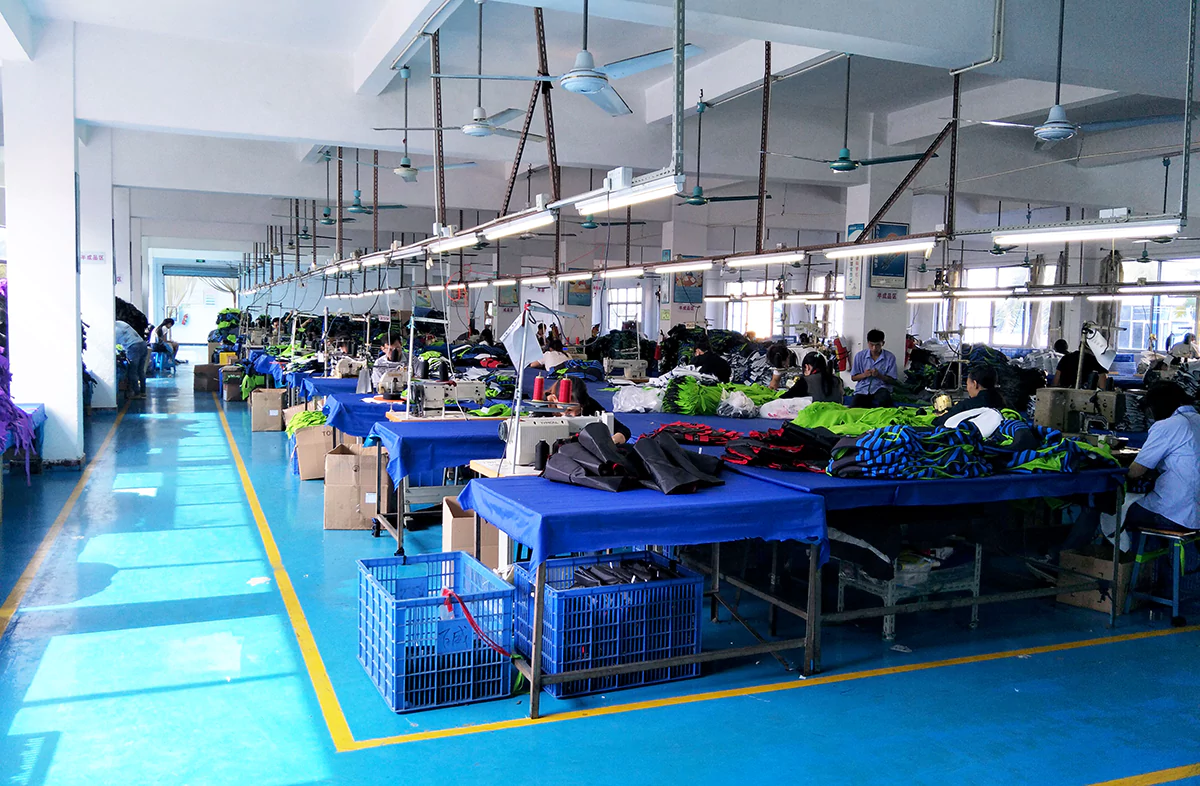
FYBagCustom is Your Trusted Custom Bag Manufacturer in China, with 15+ years of manufacturing experience and the detail discipline the maker market rewards. For craft brands, yarn retailers, and indie dyers, our capabilities include:
The craft project bag is a function-driven product for a passionate, high-loyalty niche, and it rewards the manufacturer who gets the craft details exactly right. For craft brands, yarn retailers, and indie dyers, three core takeaways:
If you are building a craft project-bag line — grommet knitting bags, notions pouches, or a full print-driven range — contact FYBagCustom to brief your line, and receive a grommet-and-print-built sample in 7–10 days.
FYBagCustom builds craft project bags the maker market trusts — smooth yarn-feed grommets, real needle and notions organization, WIP protection, and your own prints on proven constructions that reorder season after season. Grommet-and-print samples in 7–10 days.
Start Your Custom Bag Project →