Tel/WhatsApp:+86 18011919834
E-mail: chloe.x@fybagcustom.com

Tel/WhatsApp:+86 18011919834
E-mail: chloe.x@fybagcustom.com

Who this guide is for: handbag brand owners, DTC founders, Amazon sellers, retail buyers and corporate gifting leads who need packaging that protects the product, fits the price tier and ships at a sensible cost.
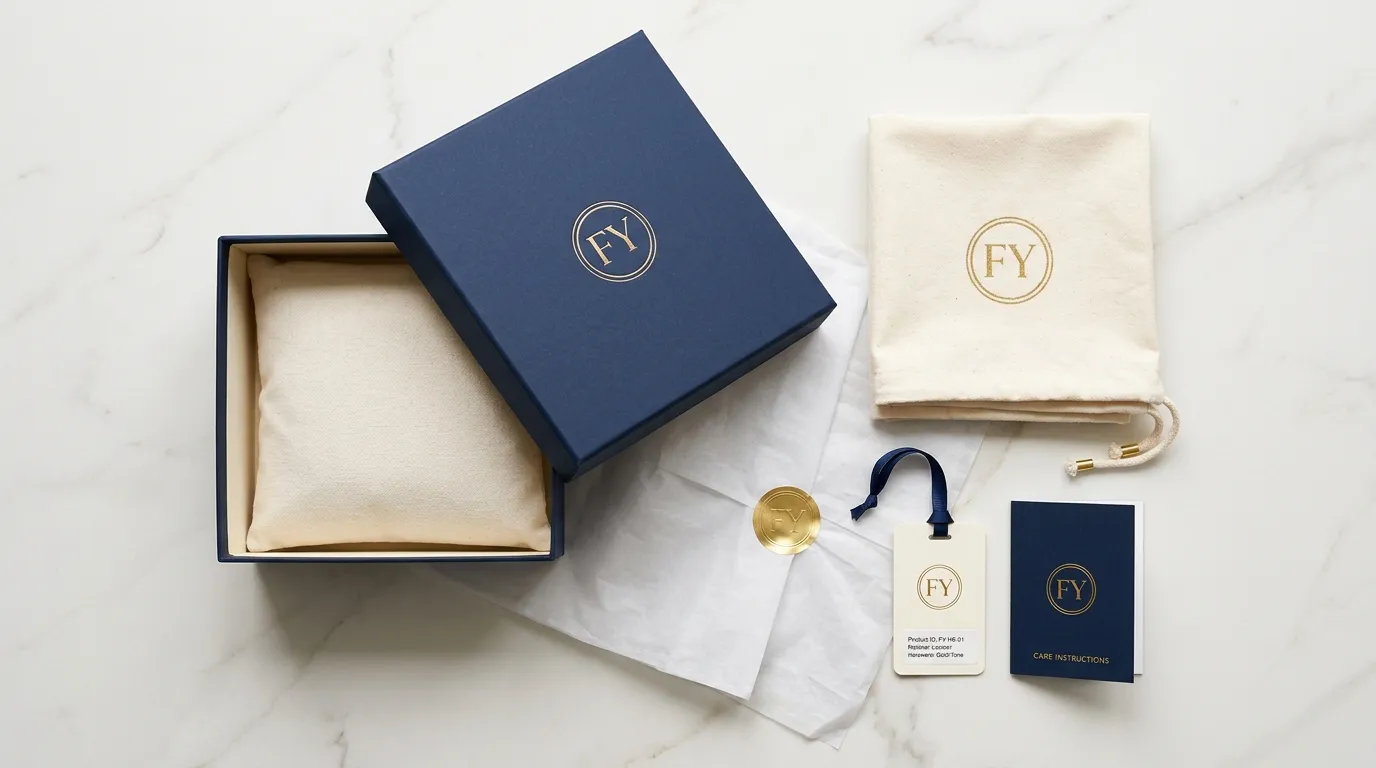
Custom bag packaging does two jobs at once. It protects the bag on a long trip from the factory floor to a customer’s door, and it shapes the first impression when the box opens. For a DTC handbag brand, packaging is often the first physical contact a customer has with the label. It also drives freight cost, adds lead time and carries its own compliance rules, so packaging decisions belong in the product brief from the first sample.
Quick answer: Package custom handbags in layers: shape-holding stuffing and hardware protection inside the bag, a branded dust bag, then a gift box or mailer sized to the bag, with a hang tag and care card. Match the level to your price tier: rigid gift boxes for premium lines, printed mailers and dust bags for DTC, and polybag plus hang tag for wholesale and FBA.
A complete system has five layers. Most brands use three or four, depending on channel and price.
| Layer | Purpose | Common options | Typically used by |
|---|---|---|---|
| Inner protection | Holds shape, protects hardware and straps | Acid-free tissue, paper stuffing, shaped inserts, hardware film | All handbag programs |
| Dust bag | Protects the surface in transit and in storage | Cotton, flannel, non-woven, satin, microfiber | Mid-price to premium |
| Branding pieces | Identify the product and tell the brand story | Hang tag, care card, authenticity card, thank-you note | All tiers, scaled to price |
| Gift or retail packaging | Presentation at sale or gifting | Rigid box, folding carton, mailer box, paper carrier bag | DTC, premium retail, gifting |
| Shipping layer | Survives freight and handling | Polybag where required, inner carton, export master carton | All programs |
Wholesale and FBA programs often stop at inner protection, a polybag, a hang tag and the master carton. A premium handbag sold online might use every layer. Our custom packing service covers dust bags, gift boxes, hang tags, FBA labels and eco packaging, so you can build any of these tiers around the bag.
The dust bag is the piece customers keep. Many reuse it for storage or travel for years, so it carries your logo long after the box goes into recycling.
| Fabric | Feel | Logo methods | Relative cost | Best for |
|---|---|---|---|---|
| Cotton twill or drill | Natural, breathable | Screen print, embroidery | Moderate | Most handbag brands |
| Flannel or brushed cotton | Soft, plush | Screen print, heat transfer | Moderate to High | Premium leather bags |
| Non-woven PP | Light, papery | Screen print | Lowest | Budget lines, promotions |
| Polyester satin | Smooth with sheen | Screen print, heat transfer | Low to Moderate | Evening bags, clutches |
| Microfiber (suede-touch) | Soft, polishes hardware | Screen print, heat emboss | Moderate to High | Luxury bags with metal hardware |
| Linen or cotton-linen | Textured, natural | Screen print, embroidery | High | Natural and eco-positioned brands |
Breathable fabrics suit leather. Leather and PU stored in sealed plastic in a humid climate can stick, smell or grow mold, so cotton and flannel remain the default for leather goods. If you want a natural-fiber dust bag, our cotton bag fabrics page shows the weights and finishes most brands choose.
Size the dust bag about 5–10 cm larger than the bag in each direction so the customer can slide the bag in without forcing the handles. A cotton drawstring is the most common closure; an envelope flap looks cleaner for clutches and flat bags. Dyed dust bags can transfer color onto light leather in heat, so ask for a rubbing test on dark dust bag fabric if your bag comes in pale colors.
Box choice affects presentation, freight cost and lead time all at once. The table compares the common formats in relative terms.
| Box type | Construction | Relative cost | Shipping volume | Lead-time impact | Best for |
|---|---|---|---|---|---|
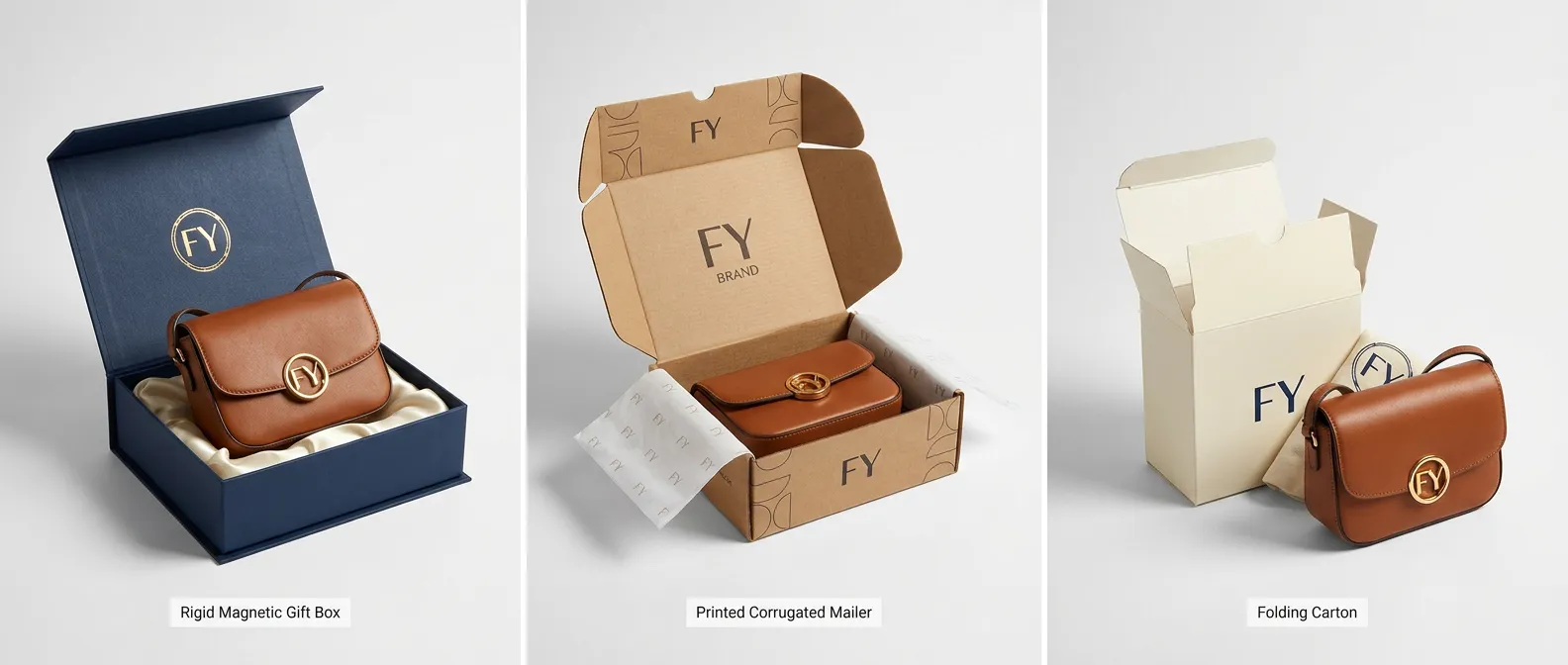
| Rigid lid-and-base box | Greyboard wrapped in printed or specialty paper | High | Bulky; ships assembled | Longest; hand wrapped | Premium handbags, gifting |
| Collapsible magnetic box | Rigid panels with magnets, folds flat | High | Flat until assembled | Long | Premium DTC shipping long distances |
| Drawer box | Rigid sleeve with sliding tray | High | Bulky | Long | Wallets, small leather goods |
| Folding carton | Printed paperboard | Low to Moderate | Flat | Short | Accessories, retail shelves |
| Corrugated mailer box | Printed E-flute board, inside or out | Low to Moderate | Flat | Short | DTC orders that ship in the brand box |
| Paper carrier bag | Art paper or kraft with rope or ribbon handles | Low to Moderate | Flat | Short | Stores, pop-ups, events |
Volume drives freight cost. Air and express carriers charge by dimensional weight, which they typically calculate by dividing the box volume in cubic centimeters by 5,000 or 6,000. A rigid box a few centimeters too large on each side can raise chargeable weight by more than the box itself costs. Collapsible rigid boxes ship flat from the packaging supplier and fold into shape at packing, which suits brands that want a rigid feel without paying to ship air.
For many DTC brands, a printed corrugated mailer with a dust bag inside gives the best balance. It works as shipper and presentation box at once, and the customer opens your branding first instead of a plain courier box. For luxury goods, some brands prefer a plain outer shipper over the branded box to reduce theft in transit.
Hang tags carry practical information for retailers and story for customers. Get both right on the first print run, because reprinting tags late in production delays packing.
Stock and finish. Heavy card stock reads as premium, and some brands laminate two sheets for extra thickness or a colored core. Common finishes include hot foil, emboss or deboss, spot UV and soft-touch lamination. Keep the tag’s finish in step with the logo on the bag itself, whether that is a debossed patch or a metal plate; our page on custom brand logo options shows the methods most brands pair with their tags.
Attachment. Use cotton or waxed string, ribbon or a string lock. Avoid plastic tag pins through leather, because the holes are permanent. Attach tags to a handle base, strap ring or zipper pull.
Content. Retail and marketplace programs usually need:
Cards. A care card explains cleaning and storage. An authenticity card with a serial number supports resale value for premium lines, and some brands add an NFC chip for digital verification. A short thank-you card works well in DTC orders.
Country-of-origin marking needs care. U.S. Customs expects imported goods to carry a legible, permanent country-of-origin marking, typically a sewn label or stamp on the bag itself, with outer cartons marked as well. Rules differ by market, so confirm requirements with your customs broker before artwork approval.
Damage in transit usually comes from crushing, humidity, hardware contact or ink and dye transfer. Factory packing practice handles each one.
| Risk | Cause | Packing fix |
|---|---|---|
| Lost shape | Bag crushed in carton | Acid-free tissue or paper stuffing; shaped inserts for structured bags |
| Hardware scratches | Metal parts rubbing the body | Protective film on plates; tissue wrap on buckles and chains |
| Strap marks | Straps pressing into leather | Coil straps in a separate pouch or tissue wrap |
| Mold and odor | Humidity in sea freight | Breathable dust bags, silica gel desiccant, dry storage before packing |
| Color transfer | Printed or colored tissue on light leather | Plain white acid-free tissue; rub-test colored materials |
| Sticking surfaces | PU sealed against plastic in heat | Tissue barrier between PU and any polybag |
Two rules carry legal weight. First, never use dimethyl fumarate (DMFu) anti-mold sachets; the EU bans DMFu in consumer products after it was linked to severe skin reactions. Second, polybags need suffocation warnings in many markets. Amazon, for example, requires a suffocation warning on polybags with an opening of 5 inches or more and sets a minimum film thickness. Our Amazon FBA solution covers labeling and prep in more detail.
Export master cartons for sea freight are usually double-wall corrugated. Carton marks should show PO number, style, color, quantity, gross and net weight, dimensions, carton number and country of origin, laid out to match your warehouse’s receiving rules.
A good unboxing follows a sequence. The customer opens the outer box, sees a tissue wrap closed with a branded sticker, finds a card on top, lifts out the dust bag and then reveals the bag with its tag. Each layer builds a small pause before the product appears.
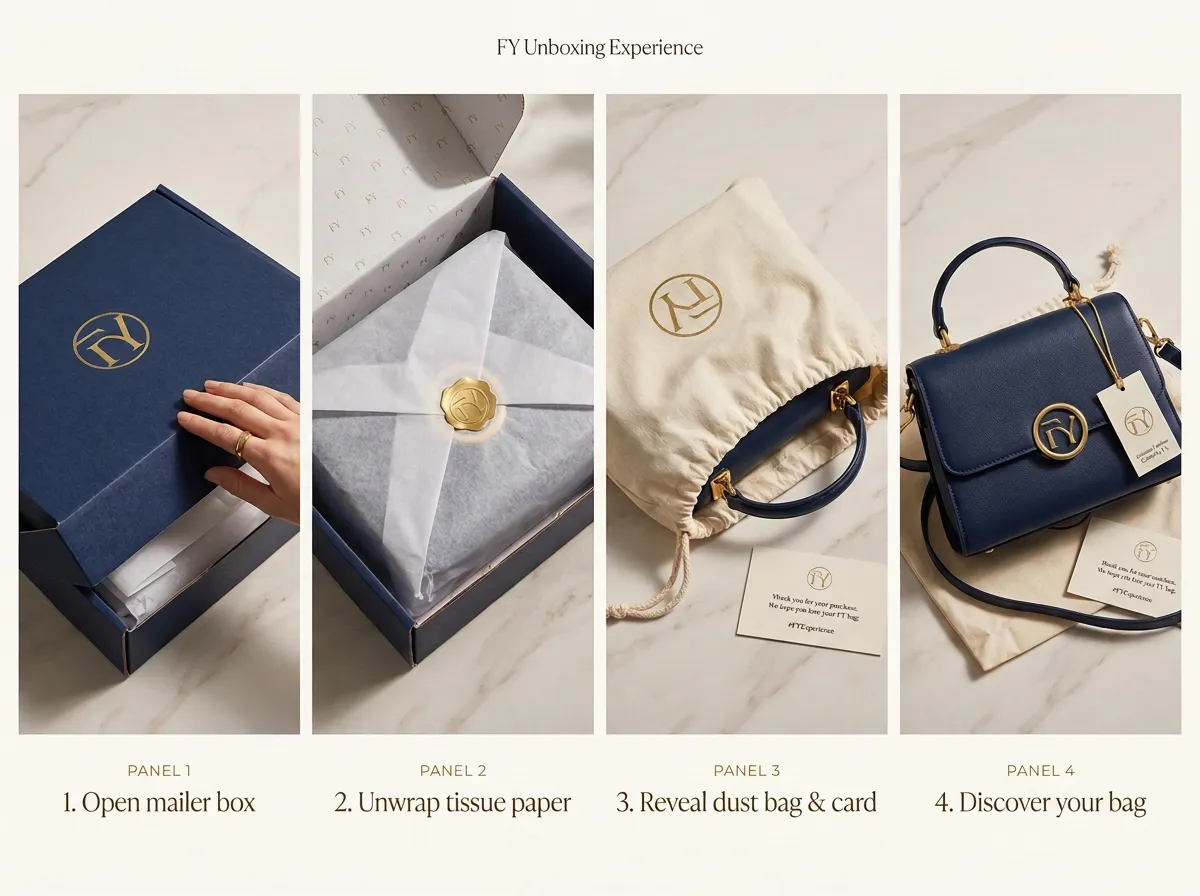
Keep the sequence short. Every extra piece adds packing labor, material cost and a chance for something to shift in transit. Three or four layers usually feel considered. Beyond that, customers start to notice the waste.
Use the inside of the box. A printed message or pattern inside a mailer lid costs little more than plain board and shows up in customer photos. For seasonal programs, a ribbon, sleeve or limited-edition sticker can turn a standard box into a gift-ready one without a new box design. Brands planning year-end lines can find more ideas in our guide to holiday gift handbags and gift-ready packaging.
Customers and regulators both push for less packaging waste. Practical steps:
Packaging cost scales with the tier you choose. For a promotional tote, a polybag and hang tag add little. For a premium handbag, a rigid box, flannel dust bag and printed cards can form a meaningful share of landed cost.
| Packaging tier | Typical components | Relative cost per unit | Added lead time | Best for |
|---|---|---|---|---|
| Basic | Polybag, hang tag, stuffing | Lowest | Minimal | Wholesale, promotional, FBA |
| Standard | Non-woven or cotton dust bag, hang tag, care card | Low to Moderate | Short | Mid-price retail, DTC |
| Branded DTC | Printed cotton dust bag, custom mailer, tissue, sticker, cards | Moderate | Moderate | DTC unboxing |
| Premium | Flannel or microfiber dust bag, rigid magnetic box, ribbon, authenticity card, carrier bag | High | Longest | Premium handbags, gifting |
Packaging runs on its own calendar. Printed boxes and tags need artwork approval, a pre-production sample and their own production slot, and rigid boxes involve hand assembly. All of it must arrive before final packing. Approve packaging artwork in the same round as the bag sample.
Packaging suppliers also set their own minimums for printed boxes, tags and woven labels. If your first order is small, a stock box with a custom sticker or printed sleeve keeps the presentation branded without a large packaging run.
FYBagCustom is Your Trusted Custom Handbag Manufacturer in China, producing custom handbags, totes and accessories with packaging planned into the same project for brands, wholesalers, Amazon sellers and gifting programs.
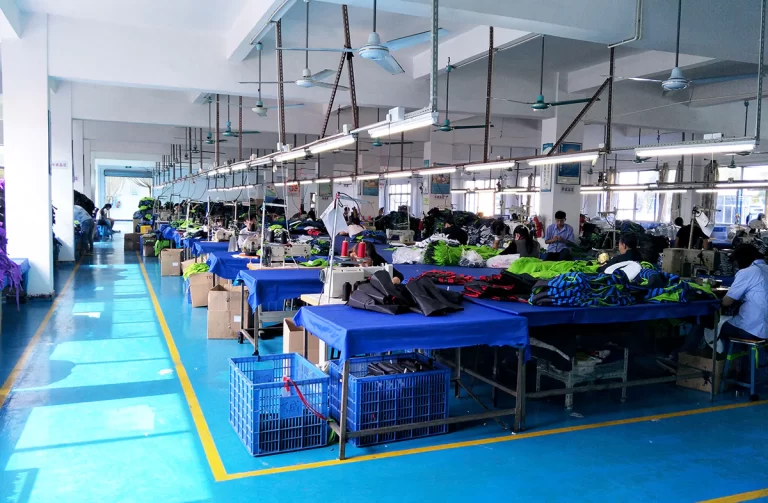
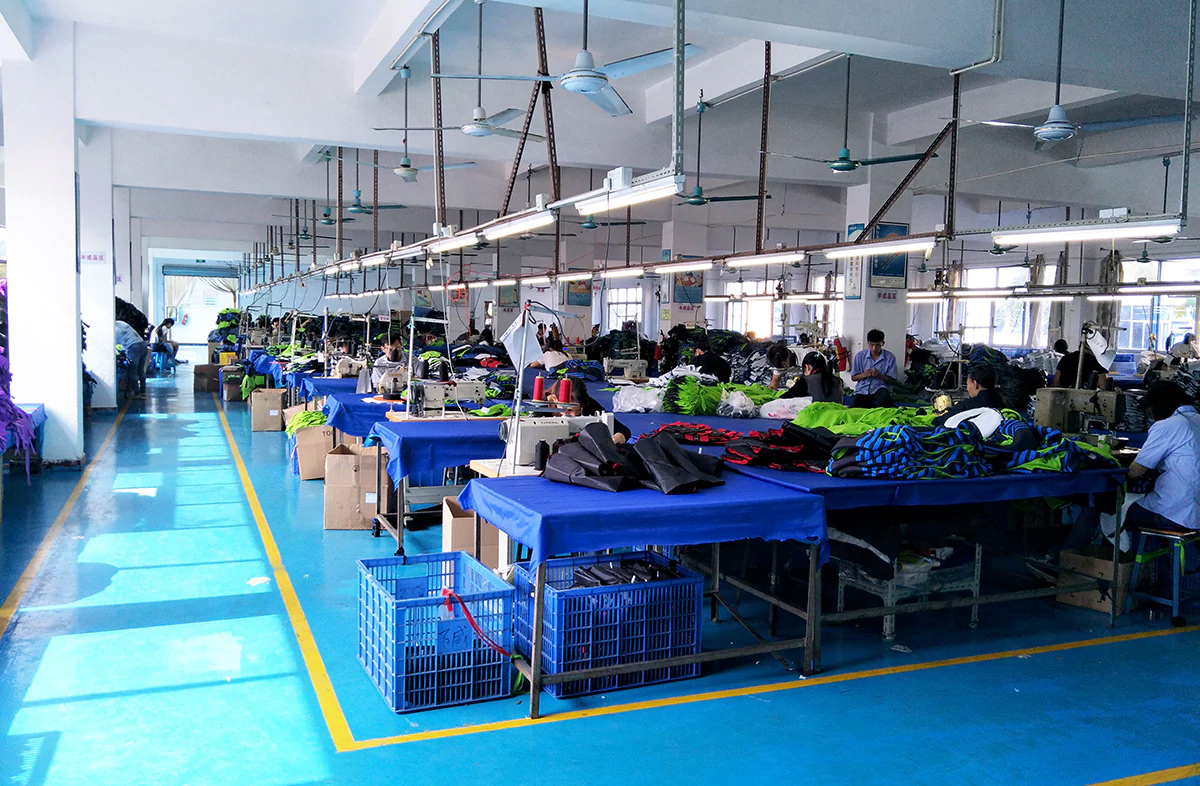
FYBagCustom, a custom bag factory in Huadu District, Guangzhou, brings 15+ years of production, a 5,000 m² facility, 500+ staff, 10+ production lines and 200+ verified suppliers to each program. For packaging, that means:
To plan packaging for your next collection, send our team your bag and packaging brief with your channel, price tier and target markets.
Most handbag packaging includes tissue or paper stuffing to hold shape, protection for metal hardware, a branded dust bag, a hang tag and a care card. DTC and premium lines add a gift box or printed mailer, tissue wrap and a thank-you or authenticity card. Wholesale and FBA programs often use a polybag with a suffocation warning instead of a box.
Cotton twill or drill suits most handbags because it breathes, takes screen printing and embroidery, and lasts for years of reuse. Flannel and microfiber feel more luxurious and suit premium leather bags. Non-woven PP keeps cost lowest for budget lines. Avoid sealed plastic for leather, since trapped humidity can cause sticking, odor or mold.
Choose a rigid box for premium handbags, gifting and retail displays where presentation justifies the higher cost and larger shipping volume. Choose a printed corrugated mailer for most DTC brands, since it works as both shipper and presentation box. Collapsible magnetic rigid boxes are a middle path: they ship flat and still feel premium.
Keep bags dry before packing, use breathable dust bags, add silica gel desiccant for sea freight and stuff each bag with acid-free tissue. Wrap metal hardware and coil straps separately. Never use dimethyl fumarate anti-mold sachets, which the EU bans. Double-wall export cartons packed to the right count prevent crushing during handling.
Packaging suppliers often set their own minimums for printed boxes, tags and woven labels, separate from the bag order. For small first orders, a stock box or plain mailer with a custom sticker, sleeve or printed tissue keeps the presentation branded without a large packaging run. Plan fully custom boxes for reorders once volumes settle.
FYBagCustom’s OEM/ODM team helps handbag brands, DTC founders and Amazon sellers plan the bag and its packaging as one project. Get custom dust bags, gift boxes, hang tags and FBA labels, 5–7 day sampling, and flexible MOQ blended across colors.
Start Your Custom Bag Project →