Tel/WhatsAapp:+86 18011919834
E-mail: chloe.x@fybagcustom.com

Tel/WhatsAapp:+86 18011919834
E-mail: chloe.x@fybagcustom.com
Send Your Inquiry Today

Who this guide is for: pet-lifestyle brands and DTC founders in the pet-accessory category — one of the fastest-growing corners of the entire bag market, and the deep-dive companion to our pet bag category page. Pet carriers and dog-walking bags look like general bags with an animal theme and are nothing of the sort: a carrier holds a living creature that must breathe, stay contained, and not overheat, and it often has to meet airline under-seat requirements to be usable at all; a dog-walking bag is a hands-free organization system for the specific kit of a walk (treats, waste bags, water, keys). Both are engineering problems with safety stakes a fashion bag never carries. This guide covers the pet-carrier spec — ventilation, airline-compliance dimensions, safety tethers and escape prevention, and the comfort that makes a carrier humane — and the dog-walking bag spec — treat pouches, integrated waste-bag dispensing, hands-free carry, and the organization a dog owner actually needs. It sits on top of the pet-humanization trend, which has turned pet accessories from utility purchases into lifestyle investments and made this category one of the market’s most reliable growth stories.
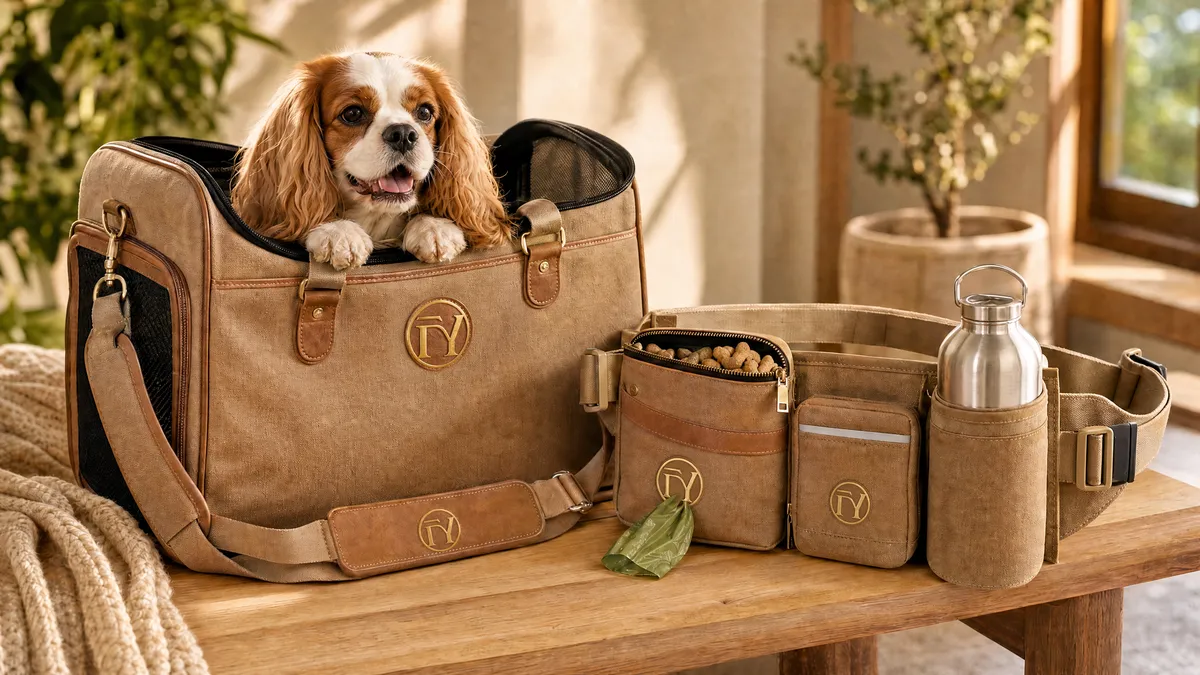
The pet-accessory category is riding one of the most durable consumer trends of the decade: pet humanization, the shift in how owners relate to their animals — as family members whose comfort, health, and style are worth investing in — which has reshaped the entire pet-products market. The numbers make the opportunity concrete.The pet travel accessories market was valued at 8.42 billion dollars in 2026 and is projected to reach 12.36 billion by 2033, a 6.6% compound annual growth rate, and the demand is explicitly premium: the surge in pet humanization and owners’ willingness to spend more on premium experiences for their pets is fueling the market, with rising demand for comfortable carriers, harnesses, and travel accessories as owners prioritize their pets’ well-being.
For a brand, that combination — a large, growing market and a customer willing to pay for quality and design — is close to ideal. But the pet carrier and the dog-walking bag both carry requirements that a general bag maker underestimates, and the consequences of underbuilding them are not a fashion miss but a safety failure: a carrier with inadequate ventilation endangers the animal, a carrier that isn’t airline-compliant can’t be used to fly, a tether that fails lets a frightened dog bolt into traffic. The brands that win this category are the ones whose manufacturing takes the safety and compliance seriously while delivering the design and premium feel the humanization customer is paying for — a combination worth discussing with a manufacturer that builds to the safety spec rather than treating a pet carrier as a themed bag. This guide is how to build both products right.
The pet carrier’s defining feature — the thing that separates it from every other bag — is that its contents are alive, which makes ventilation, containment, and comfort not features but requirements with welfare stakes.
An enclosed animal generates heat and needs constant fresh air; inadequate ventilation is the carrier’s most dangerous failure. Real ventilation is engineered, not decorative.
| Element | Specification | Why |
|---|---|---|
| Mesh on multiple sides | Ventilation mesh panels on a minimum of three sides of the carrier — the airline and welfare standard — so air moves through regardless of how the carrier is set down | A single mesh panel can be blocked against a seat or wall; multi-side ventilation guarantees airflow in any position, and airlines require mesh ventilation on multiple sides |
| Cross-ventilation | Mesh positioned to create airflow through the carrier, not just openings on one face | Air must move, not just exist — cross-ventilation prevents heat building inside |
| Mesh quality and security | Strong, chew-resistant mesh, securely stitched into reinforced panel borders — mesh that a stressed animal can’t claw or chew through and that won’t tear at the seam | A pet that escapes through failed mesh is the carrier’s worst failure; the mesh is structural, not a window |
| Breathability in all closures | The closed carrier maintains airflow — the top, the door, and the panels all contribute, and closing the carrier never seals off the air | The animal is enclosed for the whole journey; the ventilation works closed, which is how it’s used |
| Visibility for calm | Mesh that lets the animal see out (reducing stress) while remaining secure | Visibility calms the animal; a pet that can see its owner is a calmer, safer traveler |
For the large and growing segment of owners who fly with pets, an airline-compliant carrier is the difference between a usable product and one that gets turned away at the gate. The requirements are specific and buildable — though, importantly, they vary by airline and “airline-approved” is a marketing phrase rather than an official certification, so the compliant product is built to the widely-accepted standard and states its dimensions plainly.
| Requirement | Specification |
|---|---|
| Under-seat dimensions | The carrier must fit under the airplane seat; the widely-accepted soft-carrier standard is approximately 18″ × 11″ × 11″, with airlines varying (some as small as 18″×14″×8″) — the compliant product is built to the common ~18×11×11 soft standard and clearly states its size |
| Soft-sided and compressible | Soft-sided carriers that compress slightly to fit varying under-seat clearances are the in-cabin standard — a slightly flexible structure that conforms to the space |
| The pet-comfort minimum | The carrier must be large enough for the pet to stand up, turn around, and lie down comfortably — a welfare requirement airlines enforce |
| Leak-proof base | A leak-proof, lined base — an accident happens on a long flight, and it must be contained |
| Secure, escape-proof closure | Secure zippers, ideally with zipper locks or clips, that prevent accidental opening and escape — the containment requirement |
| Mesh ventilation on multiple sides | The same multi-side ventilation, which airlines specifically require |
| The scarcity note for the product page | Because in-cabin pet spots per flight are limited and owners are advised to book early, the airline-ready carrier is a considered purchase the owner researches — the product page that clearly states compliance and dimensions wins that research |
The design-to-compliance principle: build the airline carrier to the common ~18″×11″×11″ soft standard with all the welfare and containment features, state the dimensions and the “fits under most airline seats — always confirm your airline” guidance plainly, and it serves the broad in-cabin travel market. The carrier that’s an inch too tall or lacks multi-side mesh fails the customer at the gate. Because airline rules vary and shift, a brand targeting specific carriers can share the target airlines with our team and we build the carrier to the tightest common denominator among them, so one product serves the widest set of routes.
A pet is not cargo — it can panic, struggle, and try to escape, and the carrier’s containment system is a safety system.
| Element | Specification | Why |
|---|---|---|
| The internal safety tether | An internal clip/leash that attaches to the pet’s harness, preventing escape when the carrier is opened (at security, at the vet, getting in and out) | The escape moment is when the carrier is opened; the tether means an opened carrier doesn’t mean a bolting pet — the single most important safety feature after ventilation |
| Escape-proof closures | Zippers with locks, clips, or toggles that a clever, determined animal can’t nose or paw open | Cats and dogs learn to open simple zippers; the lock is what actually contains them |
| Reinforced, chew-resistant construction | Materials and seams that resist chewing and clawing at stress points | A stressed animal works at the weak points; the construction denies them |
| Secure carry so the carrier doesn’t drop | Strong strap and handle anchors — a dropped carrier is a trauma and an escape risk | The carry is a safety element; the anchors are built for the animal’s weight plus its movement |
| Stability | A stable base and structure so the carrier doesn’t tip and distress the animal | A tipping carrier terrifies the pet; stability is welfare |
| Element | Specification |
|---|---|
| The padded, washable base | A comfortable padded, removable, washable base pad — the pet stands and lies on it, and accidents happen, so it must clean |
| Structural comfort | Enough structure that the carrier doesn’t collapse on the animal, balanced with the soft-sided compressibility airlines need — the premium carriers solve this with compressible-but-supportive construction |
| Temperature consideration | Ventilation for heat, and in premium carriers, weather consideration for the animal’s comfort |
| The calm environment | A den-like interior (the carrier as a safe space), with visibility balanced against cozy security |
| The premium materials | The humanization customer wants a carrier that looks good and feels quality — premium materials and finishing, because this is a lifestyle object carried in public |
The dog-walking bag is an entirely different product from the carrier — not for carrying the pet, but for carrying the kit of a walk, hands-free, so the owner can handle the leash, pick up after the dog, and reward it, all while keeping their hands free.
| Element | Specification | Why |
|---|---|---|
| The treat pouch | An easy-open, quick-access treat pouch — ideally with a hinged or magnetic opening the owner can reach into one-handed while holding the leash | Training and rewarding happen constantly on a walk; the treat pouch must open one-handed and fast, or it doesn’t get used |
| The treat-pouch lining | A wipe-clean, crumb-tolerant lining — treats are greasy, crumbly, and sometimes moist | The treat pouch is a mess zone; a cleanable lining is essential |
| Integrated waste-bag dispenser | A built-in waste-bag roll dispenser with a pull-through opening — the poop-bag roll lives in the bag and dispenses like tissues | Every walk needs waste bags; the integrated dispenser means never forgetting them and never fumbling for them |
| The used-bag pocket | A separate, sealed, odor-resistant pocket for the tied used bag until a bin is found | The used bag needs somewhere that isn’t next to the treats and the phone — the wet/dirty separation of the dog world |
| Water and bowl | A bottle holster and a collapsible-bowl pocket for the dog’s hydration on longer walks | The dog needs water; the bag carries it and a packable bowl |
| Owner essentials | Secure pockets for phone, keys, cards — the owner’s kit, kept separate from the dog kit | The owner is out with just this bag; it holds their essentials too |
| The leash attachment | A clip or loop to secure or hang the leash when needed (bagging waste, both hands busy) | The moment both hands are needed, the leash needs somewhere to go |
| Format | Detail |
|---|---|
| The belt bag / fanny pack | The bum bag is the dog-walking default — worn at the waist or cross-body, hands-free, everything in reach; the format that dominates the category |
| The crossbody walking bag | A compact cross-body organized for the walk — hands-free with slightly more capacity |
| The treat-pouch-on-belt | The minimalist trainer’s format — a clip-on treat pouch with a waste-bag dispenser, worn on the owner’s own belt |
| The longer-walk / hike day bag | A backpack or larger bag for long hikes with the dog — more water, more kit, the adventure format |
The humanization trend supports a wide pet-accessory range beyond the carrier and the walking bag.
| Product | Detail |
|---|---|
| The pet travel tote / weekender | A bag for the pet’s gear (food, bowls, toys, bed) on trips — the “diaper bag for the dog,” a strong premium SKU |
| The carrier backpack | A pet carrier in backpack form — hands-free pet carrying, popular for cats and small dogs, with the ventilation and safety spec |
| The sling carrier | A soft cross-body sling for small pets — the fashion-forward humanization carrier |
| The car-and-carrier hybrid | Carriers that convert to car seats or beds — the multi-function premium format |
| The stroller-adjacent and specialty | The wider pet-mobility range the category’s growth supports |
| Material | Application | The Read |
|---|---|---|
| Nylon and polyester (incl. recycled) | Carrier bodies, walking bags | Durable, cleanable, the category workhorse; recycled for the eco-conscious pet owner |
| Ventilation mesh | Carrier panels | The chew-resistant, secure breathing surface — the carrier’s critical material |
| Wipe-clean linings / coated fabrics | Leak-proof bases, treat pouches, waste pockets | The mess-zone surfaces — cleanable and leak-proof |
| Canvas and cotton | The premium natural-aesthetic register | The considered, lifestyle look |
| Padded / structural materials | Carrier structure, comfort pads | Support balanced with soft-sided compressibility |
| PVC / TPU | Leak-proof and wipe-clean elements | The waterproof functional zones |
Construction non-negotiables: securely-stitched chew-resistant mesh into reinforced borders, escape-proof closures, leak-proof lined bases, strong anchors for the animal’s weight and movement, and cleanable mess-zone surfaces. A sustainability-positioned line uses recycled polyester and nylon per our recycled-materials capabilities — which the values-driven pet owner appreciates — and branding runs restrained via embroidery, heat-transfer, and multi-function and waterproof design-feature construction.
| SKU | Format | Spec Summary |
|---|---|---|
| Airline-compliant soft carrier | Carrier | ~18×11×11, multi-side mesh, safety tether, leak-proof base, escape-proof closure — the travel hero |
| Carrier backpack | Carrier backpack | Hands-free pet carrying, full ventilation and safety spec |
| Fashion sling carrier | Sling | Cross-body small-pet carrier, premium humanization aesthetic |
| Dog-walking belt bag | Walking | Treat pouch, integrated waste dispenser, used-bag pocket, water holster — the walking hero |
| Dog-walking crossbody | Walking | More capacity, hands-free, full walk organization |
| Pet travel tote | Travel | The pet’s gear bag — the “dog diaper bag” |
The application fit: pet carriers and walking bags sit in the travel and adventure program (pet travel, the airline carrier’s home), the daily commuting and work segment (the urban pet owner’s daily carry), the fitness and active-life program (the dog-walking and hiking bags), and the gift and promotional vertical, where pet-brand and pet-retail bulk programs sit.
| Check | Method | Standard |
|---|---|---|
| Ventilation verification | Mesh coverage on multiple sides confirmed; airflow through the closed carrier checked | Multi-side ventilation; genuine cross-airflow — the welfare requirement |
| Mesh security | Mesh pull- and stress-tested at the seams | Chew/claw-resistant, securely anchored, no seam failure |
| Airline-dimension verification | Finished carrier measured against the ~18×11×11 standard | Within the stated compliant dimensions |
| Escape-proof closure | Zippers and locks tested against opening | Secure; can’t be nosed or pawed open |
| Safety-tether strength | The internal tether and its anchor load-tested | Holds a struggling pet’s force |
| Leak-proof base | The base tested for leak containment | Contains an accident; doesn’t leak through |
| Anchor and carry strength | Straps and handles load- and cycle-tested at pet weight plus movement | Survives carrying a moving animal |
| Cleanability | Treat pouch, waste pocket, and base pad wipe/wash tested | Clean easily; mess zones are cleanable |
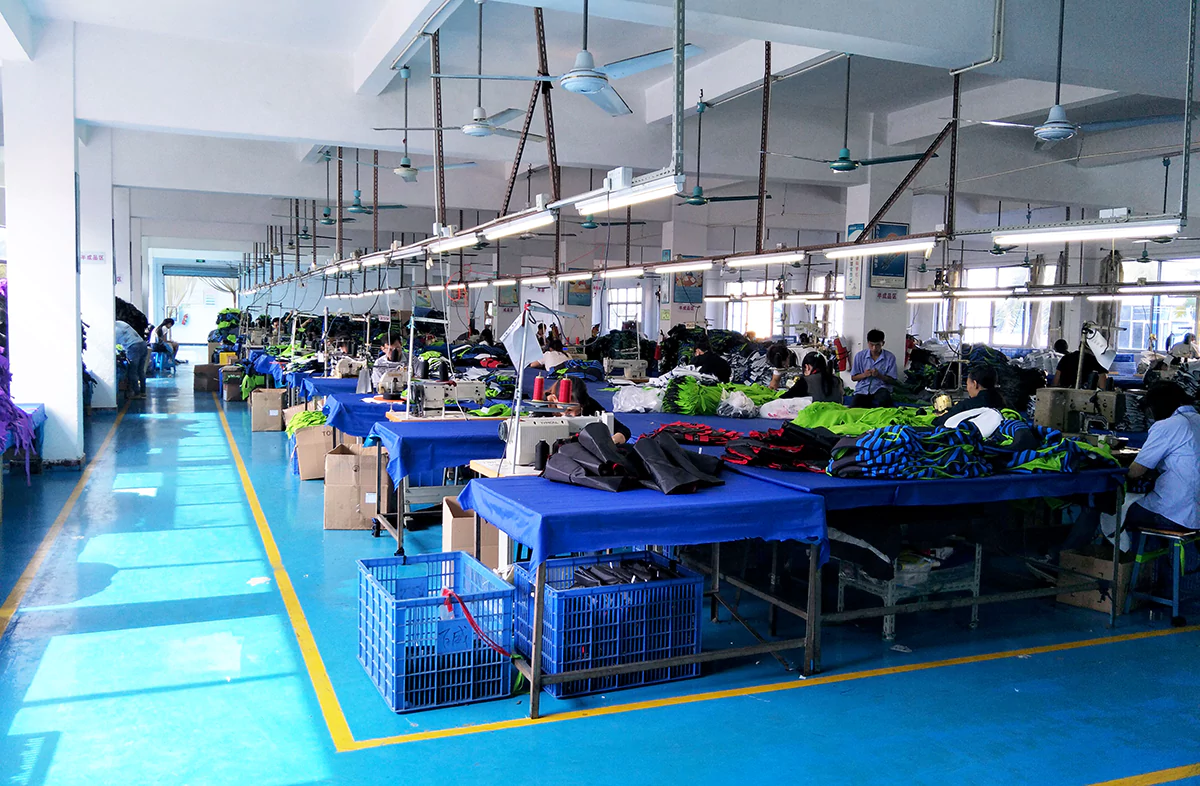
FYBagCustom is Your Trusted Custom Bag Manufacturer in China, with 15+ years of manufacturing experience and the safety-and-compliance discipline the pet category requires. For pet-lifestyle brands and DTC founders, our capabilities include:
The pet carrier and dog-walking bag are engineering products with safety stakes, riding a durable premium-growth trend, and they reward the manufacturer who takes both seriously. For pet-lifestyle brands and DTC founders, three core takeaways:
If you are building a pet-lifestyle bag program — airline carriers, dog-walking bags, or a full range — contact FYBagCustom to brief your line, and receive a safety-and-compliance-built sample in 7–10 days.
FYBagCustom builds pet-lifestyle programs — airline-compliant carriers with multi-side ventilation and safety tethers, and dog-walking bags with real treat, waste, and water organization — engineered for living stakes and finished for the humanization customer. Samples in 7–10 days.
Start Your Custom Bag Project →