Tel/WhatsAapp:+86 18011919834
E-mail: chloe.x@fybagcustom.com

Tel/WhatsAapp:+86 18011919834
E-mail: chloe.x@fybagcustom.com
Send Your Inquiry Today


This guide is for brands developing adjustable and interchangeable bag straps. It explains how to select compatible attachment hardware, compare adjustment mechanisms, and choose strap materials and widths for different uses. It also covers comfort testing, common durability issues, and ways to offer straps as separately sold accessories. Start by defining the attachment hardware across your bag range, then develop strap options for everyday wear, heavier loads, and different styles.
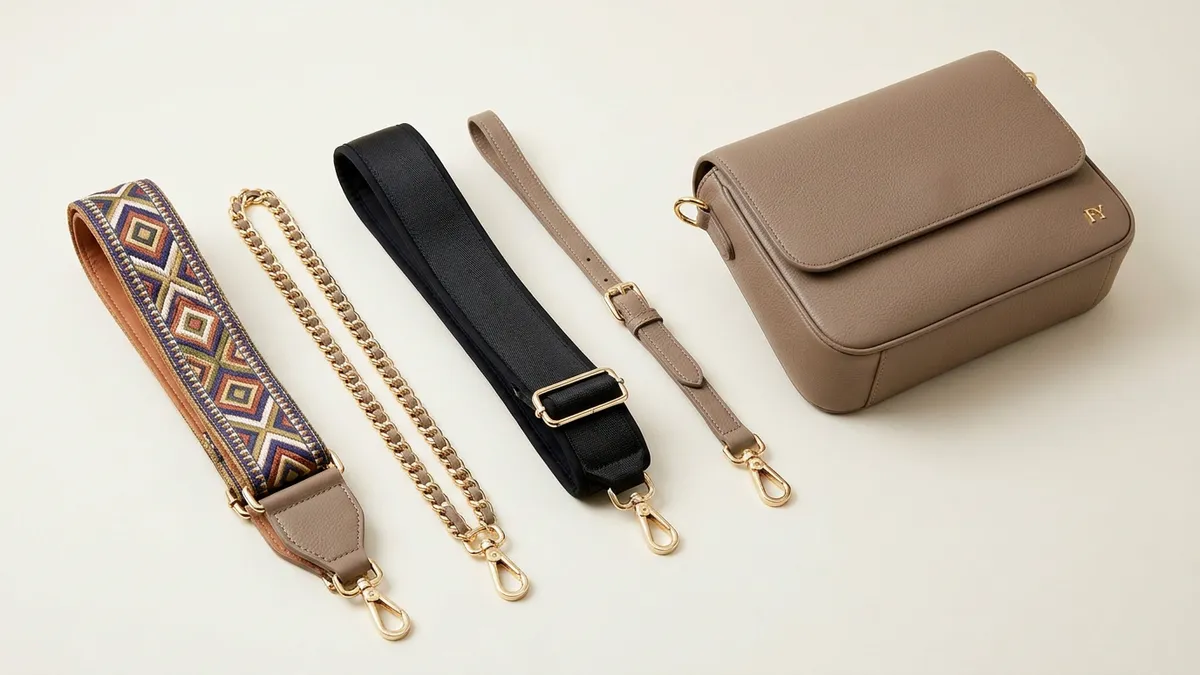
Interchangeable straps let customers update a bag’s appearance or carrying comfort without replacing the bag. For brands, they create an opportunity to sell additional accessories alongside an existing bag range. A practical starting point is one included strap, compatible attachment hardware, and a small selection of separately sold alternatives.
For B2B buyers, this requires clear specifications for compatibility, ease of use, and durability. Clasps should fit the rings on each compatible bag, adjustment mechanisms should hold at the intended load, and separately sold straps need their own finish and packaging specifications.
Define the attachment hardware before developing individual straps. Consistent ring dimensions and compatible clasps allow straps to be used across the intended bag range. Without a shared specification, different bags may require separate strap designs.
| Element | Specification | Why |
|---|---|---|
| The bag-side anchor | Welded D-rings or O-rings, gauge-matched to the heaviest strap-and-load combination the range will carry, mounted through reinforced tabs | The ring is the permanent half of the interface; it must outlast every strap that will ever clip to it, and a welded closure is non-negotiable — open-jump rings deform and release |
| The strap-side connector | Swivel clasps (lobster / trigger snap style) sized to the rings — smooth spring action, one-handed operation, and a swivel that prevents strap twist | The clasp is the interface’s moving part and the customer’s daily touchpoint; a stiff, gritty, or fiddly clasp makes the whole system feel cheap |
| One interface, whole range | The same ring size and clasp standard across every bag and every strap in the program | Each strap should fit every bag included in the compatibility specification. |
| Ring placement geometry | Anchor points positioned so straps hang balanced in shoulder and crossbody wear — high enough on the body that the bag doesn’t tip forward loaded | Placement is set at pattern stage per our gusset and stance guidance; a strap system on badly-placed rings carries badly in every configuration |
| The finish family | Hardware finishes (gold, silver, gunmetal) held consistent within each colorway family so straps coordinate across bags | Coordinate hardware finishes so bags and replacement straps look consistent when paired. |
| Future-proofing | The interface documented as a standard — ring inner diameter, clasp gate size, finish codes — so next season’s bags and straps stay compatible | Keep attachment specifications consistent so future straps remain compatible with earlier bags. |
Our team can help define ring and clasp specifications before bag pattern development. Agreeing on these details early can reduce later changes to bags and straps.
An adjustable strap is a mechanism the customer operates constantly, and each mechanism trades speed, hold, and look differently.
| Mechanism | How It Works | Holds Under Load? | Typical Applications |
|---|---|---|---|
| The slide adjuster (tri-glide slider) | The strap doubles back through a three-bar slider; friction holds the set length; sliding the hardware re-sets it | Good when the slider’s bars are correctly profiled for the webbing; poor pairings creep under load — the loaded strap slowly lengthening is the classic failure | The universal default — webbing straps, technical straps, most crossbody systems |
| The ladder lock / cam buckle | A lever or cam clamps the webbing; flip open to adjust, snap closed to lock | Excellent — mechanical clamp, zero creep; the choice for heavy loads | Sports bags, equipment bags, gym bags, and duffles where secure adjustment is a priority. |
| The holed-strap buckle (pin buckle) | A pin-and-holes buckle like a belt — discrete length positions | Absolute at each position; adjustment is slower and stepped, not continuous | Leather straps for formal or classic bag styles, where the buckle also serves as a decorative detail. |
| The snap-hook ladder | A hook engaging a ladder of sewn loops or a chain of holes | Positive hold at each step | Guitar-strap builds and statement webbing, where the chunky hardware is part of the look |
| Chain adjustment | The clasp re-hooks into a different chain link | Absolute; adjustment by link | Chain and chain-and-leather straps for evening bags. |
| The creep test | Whatever the mechanism: the strap loaded at class weight and worn through a movement cycle, length marked before and after | The spec’s verdict — a strap that creeps a centimeter an hour fails regardless of how smooth the showroom adjustment felt | Applies to every mechanism above |
Guitar-style bag straps use wide webbing, typically 4–5 cm or wider, with jacquard patterns, stripes, logos, or printed designs. Leather end tabs and larger clasps complete the design.
| Element | Specification |
|---|---|
| The webbing | Jacquard-woven polyester or cotton webbing — the pattern woven in, not printed on, for the premium version; printed webbing serves the accessible tier |
| The pattern opportunity | Custom options include geometric patterns, brand monograms, stripes, and seasonal designs. Jacquard weaving incorporates the pattern into the webbing and gives it a textured appearance. |
| The leather ends | Leather or PU end tabs connect the webbing to the clasps. Specify neat stitching and smooth edge finishing for a consistent appearance. |
| Comfort Benefits | The wide webbing provides space for decorative patterns and helps distribute the load across the shoulder. |
| The adjustment | Slide adjuster integrated into the webbing run, or the snap-hook ladder for the chunky-hardware look |
| Element | Specification |
|---|---|
| The physics | Pressure is load over area: doubling strap width halves shoulder pressure before any padding enters; width is the first comfort lever, padding the second |
| The build | 4–6 cm webbing or leather, with a padded shoulder zone — foam or gel core under a soft, grippy underside that keeps the strap seated |
| The non-slip underside | Textured or rubberized facing on the shoulder zone so the loaded strap doesn’t migrate |
| Where it belongs | The heavy classes — laptop crossbodies, diaper bags, travel duffles, camera-style bags — and as the sold-separately upgrade for any bag whose owner carries it loaded |
| Element | Specification |
|---|---|
| The forms | Full chain (the evening classic), chain-and-leather (leather woven through links — comfort plus the luxury signal), and half-and-half (chain at the visible drop, leather over the shoulder) |
| Weight Considerations | Chain mass adds to carried weight; hollow-link and alloy chains manage it, and the half-and-half construction puts the comfort where the shoulder is |
| The finish spec | Test the plating for wear and tarnishing, particularly where links rub together or are frequently handled. |
| Typical Applications | Suitable for clutches with attachment rings and for adding a more formal look to compatible bags. |
| Element | Specification |
|---|---|
| The build | 1.5–2.5 cm leather or PU, edge-painted, with the pin-buckle or slide adjustment |
| The role | A suitable included strap for bags that need a simple, coordinated appearance. |
| Element | Specification |
|---|---|
| The build | Nylon webbing, ladder-lock or cam adjustment, matte hardware, sometimes a stabilizing second attachment |
| The role | Suitable for commuting, travel, and fitness bags that require secure adjustment and practical carrying features. |
Evaluate each strap with the bag loaded to its intended carrying weight. Check comfort during walking, sitting, and reaching.
| Element | Specification | Why |
|---|---|---|
| Width by weight class | Strap width matched to the bag’s loaded class per our handle-guide arithmetic — slim straps for light bags, wide for heavy | A narrow strap may feel uncomfortable under a heavier load. Consider strap width and intended carrying weight together during development. |
| The shoulder zone | Padding, taper, and grip concentrated where the strap meets the body — the rest of the run can stay slim | Concentrate padding and grip where the strap contacts the shoulder, and check the position across the intended adjustment range. |
| Crossbody geometry | Adjustment range covering roughly 50–60 cm of drop across body sizes and winter layering, with the mechanism reachable while worn | Check the adjustment range across different body sizes and over outerwear. |
| Swivel Clasps | Swivel clasps at both ends so the strap self-corrects twist | A twisted flat strap digs its edge into the shoulder — the swivel is a comfort part, not a convenience |
| Edge finishing | Webbing edges woven or heat-sealed smooth; leather edges painted — the strap edge crosses the neck and collarbone in crossbody wear | Finish strap edges smoothly to reduce rubbing against the neck and shoulder. |
| The wear trial | Each strap style worn loaded through a movement cycle — walk, sit, reach, transit | Assess comfort during loaded wear trials as well as visual sample reviews. |
| Weak Point | The Failure | The Engineering |
|---|---|---|
| Slider creep | The loaded strap lengthening through the slider over a day | Slider bar profile matched to webbing thickness and weave; creep-tested at class load; cam or ladder lock where loads run heavy |
| Clasp cycle fatigue | The spring gate weakening over thousands of swaps and snags | Cycle-tested clasps at rated load; gate springs spec’d above the swap frequency an interchangeable program invites |
| Ring wear | The clasp sawing the ring at the contact point over years | Ring gauge and hardness matched to clasp material; the ring outlasts the strap by design |
| End-tab pull-out | The webbing-to-leather-tab junction separating under load | The junction stitched through reinforcement and bar-tacked; pull-tested to class load plus dynamic margin |
| Jacquard edge fray | The woven strap’s edges wearing fuzzy | Woven selvage edges or bonded edge finishing; abrasion-tested |
| Plating wear on chain | Finish loss at handled links | Plating thickness spec’d for handling; wear-tested at the touch zones |
Once compatibility and construction are confirmed, decide which strap will be included with the bag and which options will be sold separately.
| Element | The Strategy |
|---|---|
| The included default | Include one versatile strap with each bag, such as tonal leather or matching webbing. Offer additional straps with different patterns, materials, or padding. |
| The launch wardrobe | Consider launching three to five separately sold straps, such as patterned webbing, chain, wide padded, and seasonal printed options. Give each option a clear purpose, such as changing the bag’s appearance or improving carrying comfort. |
| Seasonal Updates | Use approved strap constructions as a starting point for seasonal colors and patterns. Review new artwork and material samples before production, while retaining compatible attachment hardware. |
| Gift Options | Separately sold straps can be offered as gifts or seasonal accessories. Make bag compatibility clear on the packaging and product page. |
| The packaging spec | Use branded boxes or display cards for separately sold straps, with clear compatibility information and a presentation suited to retail or gifting. |
| The compatibility promise | The marketing states the standard plainly — “fits every bag in the collection” — which only works if the interface discipline above held; ask our team to run a cross-compatibility check on an existing range before the promise goes on a product page |
| The personalization tier | Embroidered monograms, heat-transfer names, and custom jacquard or printed runs — the strap as the range’s personalization vehicle, at strap-sized cost |
| Bag | The Interface | The Default Strap | Optional Straps to Sell Separately |
|---|---|---|---|
| Everyday crossbody | Standard rings, both ends | Tonal slim leather | Guitar statement + chain dress-up |
| Shoulder bag | Standard rings | Body-matched webbing | Wide-comfort + seasonal jacquard |
| Clutch | Discreet interior rings | Detachable chain | Chain-and-leather upgrade |
| Camera-style bag | Standard rings | Guitar strap included (the format’s signature) | Additional jacquard patterns |
| Commuter tote | Rings + handles (convertible dual-carry) | Wide-comfort padded | Technical ladder-lock |
| Bum bag | Fixed adjustable belt + ring option | Integrated webbing | Statement webbing swap |
| Duffle / gym | Heavy-gauge rings | Wide padded technical | — (function over wardrobe) |
| Diaper bag | Standard rings + stroller loops | Wide-comfort | The mom and baby comfort upgrade |
The application read-across: the wardrobe strategy anchors the fashion-led daily commuting and gift programs; the comfort-and-hold members serve travel, fitness, and mom and baby; and the multi-function and convertible formats consume the whole catalog.
| Check | Method | Standard |
|---|---|---|
| Interface compatibility | Every strap clipped to every bag in the program sample set | Universal fit — the platform promise verified physically |
| Clasp operation | Clasps operated one-handed, cycled to rated life | Smooth, positive, no grit; gate spring intact at cycle limit |
| Creep test | Each adjustable strap loaded at class weight through a movement cycle, length marked | No measurable creep |
| End-tab pull test | Webbing-to-tab junctions pulled to class load plus margin | No separation, no stitch failure |
| Loaded wear trial | Each strap style worn loaded — walk, sit, reach | Comfortable, seated, twist-free |
| Edge and finish | Webbing edges, leather edge paint, chain plating inspected and abrasion-tested | Smooth, finished, wear-rated |
| Jacquard quality | Woven patterns checked for registration, density, and edge integrity | Crisp pattern, clean selvage |
| Cross-season check | New-season straps clipped to prior-season bags | The standard held — compatibility across drops |
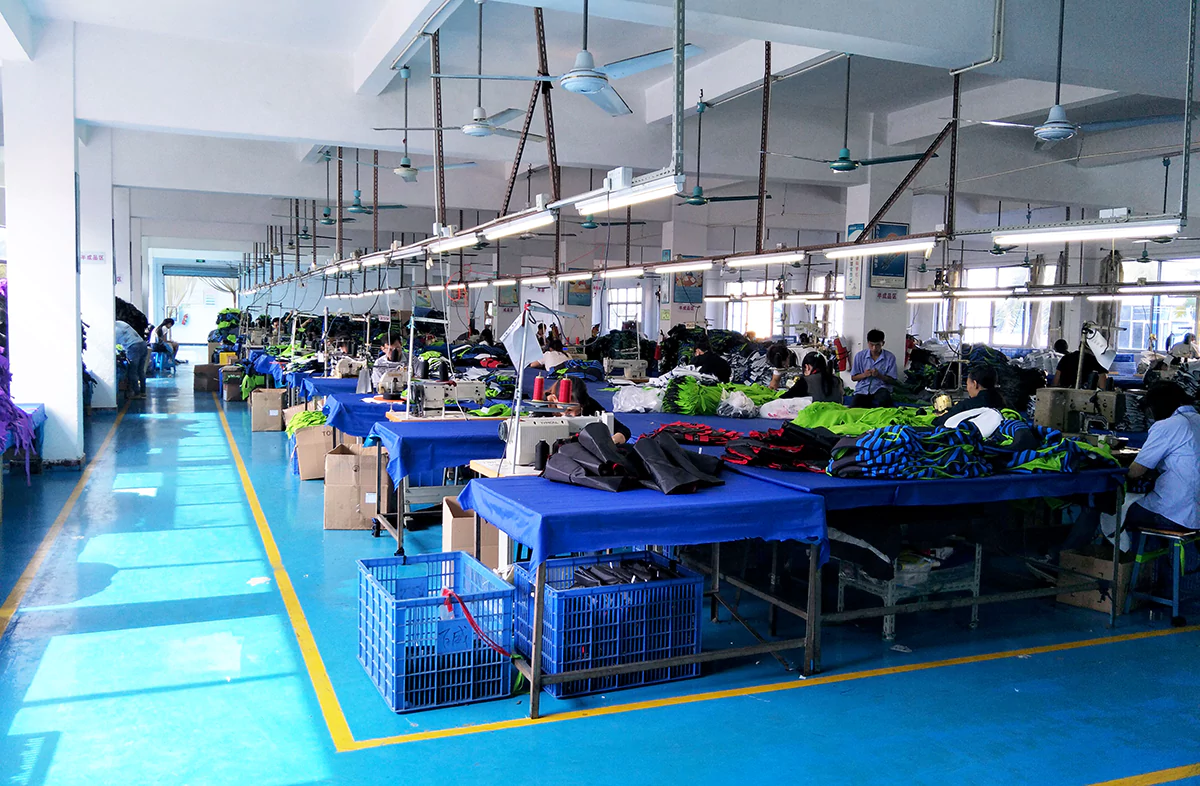
FYBagCustom helps brands develop custom bags and compatible strap collections. Our services cover attachment hardware, strap construction, decoration, testing, and retail packaging.
When developing interchangeable bag straps, focus on three priorities:
Contact FYBagCustom to discuss your bag and strap requirements. Share your bag design, intended carrying weight, preferred strap styles, and order quantity so our team can review compatibility and sampling options.
Develop compatible straps for your bag collection, including jacquard webbing, wide padded, and chain styles. Contact our team to discuss hardware, testing, packaging, and sample lead times.System samples in 7–10 days.
Discuss Your Strap Project →