Tel/WhatsAapp:+86 18011919834
E-mail: chloe.x@fybagcustom.com

Tel/WhatsAapp:+86 18011919834
E-mail: chloe.x@fybagcustom.com
Send Your Inquiry Today

Who this guide is for: brand owners and product developers producing the FW26 plush-texture and gothic-romantic look in bag form — velvet and corduroy handbags that carry the season’s richest, most tactile story and that punish a manufacturer who treats them like any other fabric. Velvet has landed across the FW26 runways as a defining texture of the gothic-romantic, “Wuthering Heights winter” mood, and it brings a specific and unforgiving production challenge with it: velvet and corduroy are pile fabrics — cloth with a raised, directional surface of dense fibers — and that pile changes color with viewing angle, crushes under pressure, marks with handling, and demands construction disciplines that flat fabrics never require. Get the pile direction wrong across a bag’s panels and the front reads as two different colors; ignore crush resistance and the bag arrives at retail with permanent pressure marks; skip the cleaning consideration and the customer’s first rainy day ruins the finish. This guide covers pile-fabric bag production in full: how pile direction works and why it governs cutting and panel layout, crush resistance and how to build for it, the velvet and corduroy types and their trade-offs, cleaning and care, and the FW26 texture story these fabrics tell. It extends our seasonal FW26 texture and gothic-romantic palette work into the specific craft of the pile fabrics.
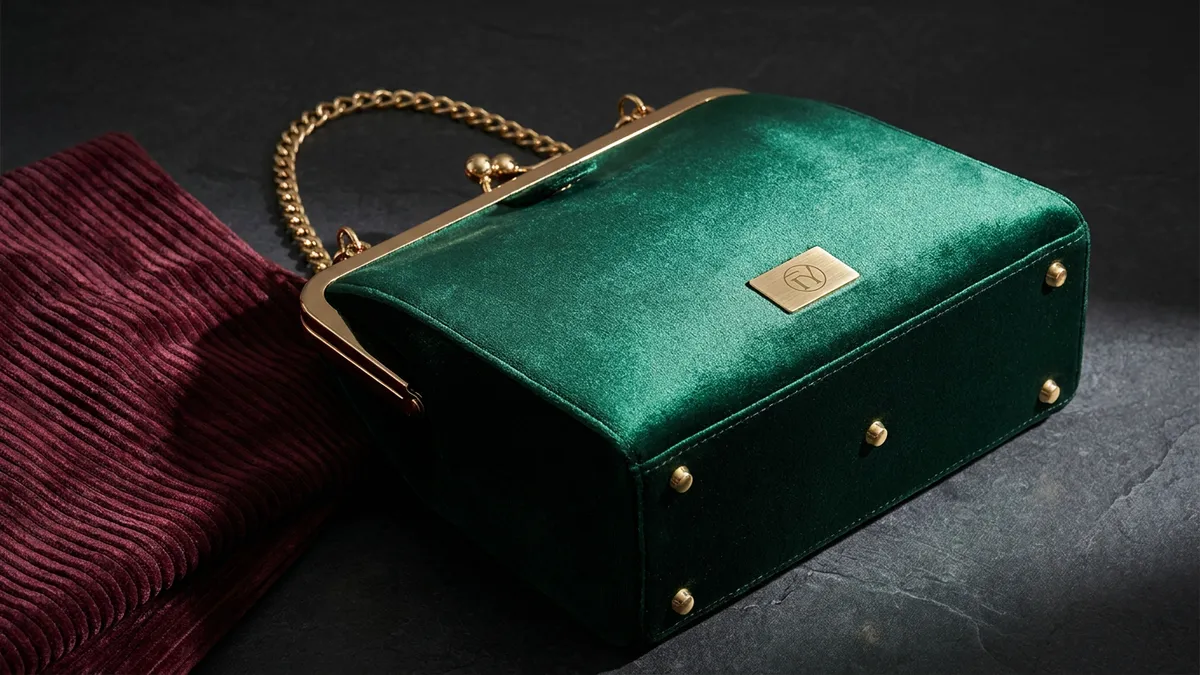
Velvet occupies a particular place in fashion: it is the texture of richness, depth, and status, and it returns to prominence whenever the mood turns romantic, moody, and luxurious — which is precisely the FW26 story. The season’s gothic-romantic direction, its restrained-but-rich palette of bottle green, scarlet, and deep purple, and its emphasis on letting texture carry the drama all point directly at velvet, and the runways delivered it across evening and ready-to-wear. For a bag brand, velvet is the material that translates that whole seasonal mood into an accessory — a velvet clutch or a structured velvet frame bag in the season’s colors is the FW26 texture story, carried in the hand.
But velvet and its cousin corduroy are pile fabrics, and pile is a fundamentally different material to work with than a flat weave or a leather. The pile — the raised surface of cut fibers standing up from the base cloth — is what gives these fabrics their plush hand and their light-catching depth, and it is also the source of every one of their production challenges. The pile has a direction, so it looks different depending on which way it lies relative to the light and the eye. The pile crushes, so pressure leaves marks. The pile shows handling, so fingerprints and water spots register. And the pile frays and shifts in construction, so cutting and sewing require specific disciplines. A manufacturer who understands pile produces velvet and corduroy bags that look as rich as the fabric promises; one who doesn’t produces bags with mismatched panels, crush marks, and disappointed customers. This guide is about being the former.
Before the specifics, the core concept: a pile fabric has a nap — a direction in which the raised fibers naturally lie — and that nap direction determines how the fabric looks, because light reflects differently depending on whether it hits the pile with the nap, against the nap, or across it.
| Pile Behavior | What Happens | The Consequence |
|---|---|---|
| The nap catches light directionally | Run a hand down velvet one way and it looks lighter and shinier; the other way, darker and richer — the same fabric, two appearances, purely from pile direction | Every panel of a bag must have its pile running the same direction, or adjacent panels read as different colors under the same light |
| “Pile up” vs. “pile down” | With the pile brushed downward (smooth to the touch running down), velvet looks lighter and more lustrous; with pile up (running against the hand), it looks deeper, richer, and more saturated | The brand chooses one direction as the standard for the whole bag and cuts every panel to it — a deliberate decision, usually “pile up” for the deepest, richest color |
| Cross-panel consistency | If the front panel’s pile runs up and the side panel’s runs sideways, the two catch light differently and look mismatched | Pile-direction consistency across all panels is the single most important velvet-construction discipline |
| The directional-cutting requirement | All pattern pieces must be cut in the same orientation relative to the pile, laid out one-directional on the fabric | This uses more fabric than a flat weave (pieces can’t be nested in both directions), which affects material cost — a real, plannable factor |
The foundational rule: pile fabric is cut one-directional, with every pattern piece oriented the same way relative to the nap, so the entire finished bag presents a single consistent color and sheen. This is the discipline that separates a properly-made velvet bag from a cheap one, and it is visible at a glance — a customer who sees a velvet bag with panels that don’t match knows something is wrong, even if they can’t name the pile direction as the cause. A brand producing velvet for the first time can discuss the pile-direction and fabric-yield implications with our team before committing a design, since the one-directional cutting affects both the look and the material cost.
Applying pile awareness to an actual three-dimensional bag is where the craft lives, because a bag has panels facing different directions and the pile has to be managed across all of them.
| Element | Specification | Why |
|---|---|---|
| Single-direction panel layout | Every major panel (front, back, sides, flap, bottom) cut with the pile running the same direction — conventionally vertically, pile-up, so the bag reads deep and rich from the primary viewing angle | Consistency of color and sheen across the whole bag; the front and sides must match |
| The gusset and side consideration | Gussets and sides, which wrap around, need their pile direction planned so they don’t create an obvious mismatch line at the seam | The wrap-around panels are where mismatches show; they’re planned deliberately |
| The flap and front alignment | On a flap bag, the flap and the body below it must have matching pile direction so the bag reads as one continuous surface when closed | The flap-to-body transition is the most visible; it must match |
| Directional-nap marking | Every pattern piece marked with the nap direction, and the cutting laid out to honor it — a controlled cutting process, not freehand nesting | The discipline is enforced at cutting; an unmarked piece cut the wrong way ruins the panel |
| Strategic pile-direction use | On some designs, a deliberate pile-direction contrast (a panel intentionally cut cross-nap) is used as a design feature — but as a choice, executed precisely, not an accident | Intentional contrast is a design tool; accidental contrast is a defect — the difference is control |
| Matching across the run | Not just within one bag, but across the production run — every bag in the order presents the same direction and color | Consistency across the order, so a retailer’s stock all matches |
Velvet’s second defining challenge is that the pile crushes — pressure flattens the raised fibers, and depending on the velvet type, the crush may be permanent, leaving marks where the bag was pressed, folded, or handled. Managing crush is central to producing a velvet bag that reaches the customer looking right and stays looking right.
| Factor | Specification | Why |
|---|---|---|
| Velvet type selection | Choosing a crush-resistant velvet construction (below) is the first and biggest lever — some velvets recover from pressure, others mark permanently | The material choice determines the crush behavior; it’s decided before construction |
| Structure to prevent self-crushing | Enough internal structure (interlining, structured panels, a firm base) that the bag holds its shape and the pile isn’t crushed by the bag collapsing on itself | An unstructured velvet bag crushes its own pile as it slumps; structure protects the surface |
| The handling and packing protocol | Velvet bags handled and packed to avoid pressure marks — stuffed to hold shape, wrapped to protect the pile, not stacked under weight that crushes | Crush marks often happen in packing and transit, not use; the protocol prevents them |
| Panel-pressure points | Design that avoids hardware, straps, or closures pressing hard into the velvet and marking it | Pressure points from hardware mark the pile; the design routes them to avoid it |
| Crush as aesthetic (crushed velvet) | Where the look is crushed velvet, the crush is deliberate and uniform — a specific fabric with an intentional, all-over crushed texture, not accidental marks | Crushed velvet is a chosen finish; the distinction from accidental crush is that it’s uniform and intended |
| Recovery testing | Testing the chosen velvet’s recovery from pressure, so its real-world behavior is known before production | The velvet’s crush-recovery is verified, not assumed |
Not all velvet is the same, and the type chosen governs the bag’s look, durability, crush behavior, and cost. Corduroy, velvet’s ribbed pile cousin, brings its own character.
| Type | Character | Best For |
|---|---|---|
| Cotton velvet / velveteen | A matte, dense, substantial velvet with a rich hand; less shiny, more structured | Structured bags, the understated-luxe look |
| Silk / rayon velvet | The most luxurious — fluid, lustrous, deep-colored, but delicate and prone to crushing | Premium evening bags and clutches where the drape and sheen justify the care |
| Synthetic velvet (polyester) | Durable, more crush-resistant, colorfast, and cost-effective — the practical workhorse for bags | The volume bag; where durability and value matter |
| Crushed velvet | A deliberately crushed, textured surface with a distinctive multi-directional sheen | The statement piece; the crush is the look |
| Stretch velvet | Velvet with spandex for stretch — less common in structured bags | Soft, unstructured formats |
| Micro velvet / velour | A short, dense, durable pile — practical and hard-wearing | Everyday and cost-conscious bags |
| Devoré / burnout velvet | Velvet with a pattern chemically burned into the pile, revealing sheer base cloth | The decorative, pattern-in-pile statement piece |
| Element | Detail |
|---|---|
| What it is | A ribbed pile fabric — the pile is arranged in vertical ridges (wales) rather than an even surface — giving a distinctive ridged texture with the same directional-pile behavior as velvet |
| Wale weight | Corduroy is graded by wale (ridges per inch): wide-wale (bold, chunky, casual), standard, and pinwale/needlecord (fine, refined); the wale sets the character |
| The directional nature | Corduroy has the same nap-direction requirement as velvet — the wales and pile must run consistently across panels, conventionally vertically |
| The aesthetic | Corduroy reads warmer, more casual, and more retro/heritage than velvet — the ’70s-lifestyle and cozy-texture register rather than the gothic-luxe one |
| Durability | Cotton corduroy is durable and hard-wearing, a practical pile fabric for everyday bags |
| The FW26 fit | Corduroy serves the season’s texture story in a more casual, wearable register than velvet — the everyday-texture option alongside velvet’s evening drama |
Velvet’s relationship with color is part of its power: the pile’s depth makes colors read richer and deeper than the same shade in a flat fabric, which is exactly why velvet suits the FW26 palette so well.
| Palette Element | Detail |
|---|---|
| The FW26 gothic-romantic colors | Bottle green, scarlet/deep red, and rich purple — the season’s palette — are colors velvet renders with unmatched depth; a bottle-green velvet bag is richer than a bottle-green anything-else |
| The depth advantage | Velvet’s pile absorbs and reflects light so saturated jewel tones gain dimension — the reason velvet and rich color belong together, and the reason the season pairs them |
| Black and neutral velvet | Black velvet (the gothic-romantic staple) and neutral velvets (chocolate, deep grey) render with a luxe depth that flat black can’t match |
| Color-matching the pile | Matching velvet color requires assessing it under the pile-up viewing angle and controlled light, since the pile’s directionality affects the perceived shade |
| The tonal-texture play | Velvet’s texture lets a restrained palette feel rich (texture carrying the interest), aligning with the season’s “let texture do the storytelling” direction |
The seasonal-production point: the velvet bag in the FW26 palette is a direct translation of the season’s dominant texture-and-color story into an accessory, which makes it a timely, on-trend product — and the color must be matched with pile-direction awareness, per the same disciplined color-matching our FW26 palette guidance covers. Brands building an FW26 velvet capsule can brief our team with the season’s target colors and silhouettes to develop pile-matched, palette-correct samples ahead of the season.
Pile fabrics need care that flat fabrics don’t, and the honest brand builds the product and communicates the care so the customer’s bag stays beautiful.
| Element | Specification | Why |
|---|---|---|
| Water sensitivity | Many velvets (especially silk/rayon) water-spot and crush when wet; synthetic velvets tolerate moisture better | Water marks are velvet’s common damage; the material choice and a protective finish manage it |
| Protective finishes | A stain- and water-resistant finish where the velvet type accepts it, adding real-world durability | The finish extends the bag’s practical life; it’s specified where possible |
| The care communication | Clear care guidance (avoid crushing, brush the pile, spot-clean, keep dry) so the customer maintains the finish | The customer keeps the bag beautiful if they know how; the care card tells them |
| Pile restoration | Velvet’s pile can often be restored (steamed and brushed) after crushing — useful guidance for the customer and a durability reassurance | The recoverability is a selling point; the guidance shares it |
| Synthetic for durability | For bags that will see hard use, synthetic velvet’s crush-resistance and cleanability make it the durable choice over delicate naturals | The durability-vs-luxury trade-off is chosen for the use case |
| Interior and construction durability | The pile is the surface story, but the bag underneath still needs full structural durability — anchors, seams, base | The velvet is the finish; the bag is still a bag and built to last |
| Material | Application | The Read |
|---|---|---|
| Cotton and synthetic velvet | The pile bodies | The plush, directional, FW26 surface |
| Corduroy (cotton) | The ribbed-pile bodies | The casual, warm, heritage-texture register |
| Cotton and canvas backing | Structural backing, linings | The stability under the pile |
| Leather and PU trim | Trim, handles, base | The structural and contrast elements framing the velvet |
| Structured interlinings | Body structure | The crush-preventing, shape-holding core |
| Smooth linings | Interiors | The finished interior |
Construction non-negotiables: one-directional pile cutting with marked nap, crush-preventing structure, careful handling and packing to avoid pressure marks, secure seams that manage pile fray, and full structural durability under the pile finish. The velvet surface pairs with restrained hardware and can carry embroidery (on velvet, a rich effect), tonal branding, and embellished and textured design-feature construction; a sustainability-positioned line uses recycled-content velvet and backings per our recycled-materials capabilities.
| SKU | Format | Spec Summary |
|---|---|---|
| Velvet frame clutch | Clutch | Structured velvet frame bag, FW26 palette, gold hardware — the evening hero |
| Structured velvet shoulder bag | Shoulder bag | Pile-matched panels, crush-resistant build, jewel-tone — the day-to-evening SKU |
| Velvet crossbody | Crossbody | Compact velvet, the accessible entry into the texture story |
| Corduroy tote | Tote | Wide-wale corduroy, casual-texture register, everyday carry |
| Corduroy bucket bag | Bucket | The heritage-casual pile silhouette |
| Crushed-velvet statement bag | Statement | The deliberate-crush look, the maximal texture piece |
The application fit: velvet and corduroy bags sit in the gift and promotional vertical (the holiday-season and evening-gift register velvet suits perfectly), the travel and adventure segment (for the corduroy everyday pieces), and the daily commuting and work space for the structured velvet and corduroy day bags — with velvet’s evening drama and corduroy’s casual warmth covering the register’s range.
| Check | Method | Standard |
|---|---|---|
| Pile-direction consistency | Every panel checked for consistent nap direction under controlled light, within the bag and across the run | All panels match in color and sheen; no mismatched panels |
| Crush and recovery | The velvet’s crush behavior and recovery checked; the finished bag inspected for pressure marks | No unwanted crush marks; the velvet performs as its type promises |
| Color matching | Velvet color matched under the pile-up angle and controlled light | Accurate, consistent color across panels and the run |
| Pile security and fray | Seams checked for pile fray and secure construction | No fraying or pile loss at seams |
| Structure and shape | The bag checked for shape retention and crush-preventing structure | Holds shape; doesn’t self-crush |
| Finish and water resistance | Any protective finish checked; water-spot behavior verified where relevant | Performs as specified |
| Structural durability | Anchors, seams, and base tested as any bag | Full durability under the pile finish |
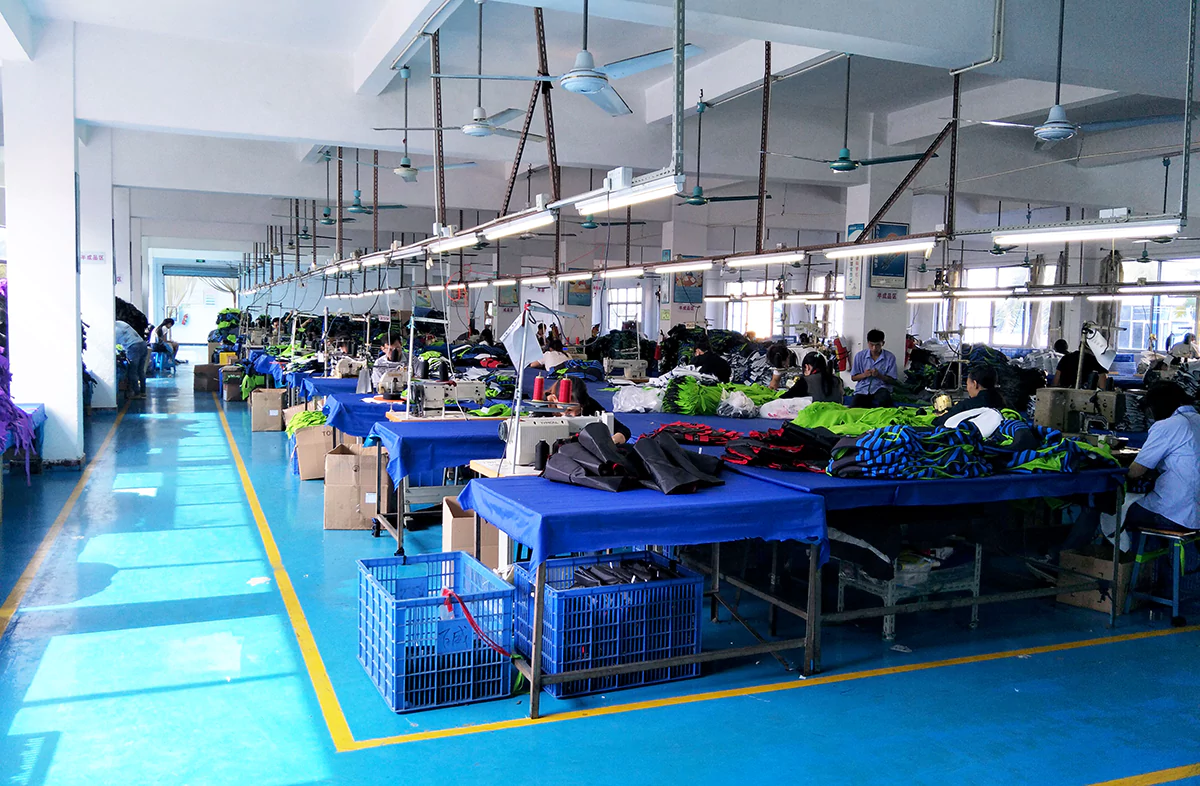
FYBagCustom is Your Trusted Custom Bag Manufacturer in China, with 15+ years of manufacturing experience and the pile-fabric discipline that velvet and corduroy demand. For brands producing the FW26 texture story, our capabilities include:
Velvet and corduroy carry the FW26 texture story better than any flat fabric, and they reward the manufacturer who respects the pile’s disciplines. For brand owners producing the plush-texture look, three core takeaways:
If you are producing velvet or corduroy bags for the FW26 texture story — clutches, structured bags, corduroy totes, or a full range — contact FYBagCustom to brief your line, and receive a pile-matched, palette-correct sample in 7–10 days.
FYBagCustom produces pile-fabric bags with the discipline velvet demands — one-directional pile cutting, crush-resistant construction, and the FW26 palette rendered in velvet’s signature depth. Pile-matched, palette-correct samples in 7–10 days.
Start Your Custom Bag Project →