Tel/WhatsAapp:+86 18011919834
E-mail: chloe.x@fybagcustom.com

Tel/WhatsAapp:+86 18011919834
E-mail: chloe.x@fybagcustom.com
Send Your Inquiry Today

Who this guide is for: sports brands, lifestyle brands, and DTC founders entering the pickleball accessory boom — the fastest-growing bag niche of 2026, and one splitting cleanly into two markets most factories are ill-equipped to serve well. The performance market wants thermal paddle protection, ventilated shoe compartments, ball sleeves, and fence hooks — a genuine functional spec, not a gym bag with a logo. The fashion market, which brands like Lilly Pulitzer are winning and Tumi has entered from the luxury-luggage side, wants quilted totes, puffer slings, and prints that look good off the court as much as on it — with just enough real function to be credible. Most manufacturers treat both as generic sports bags and lose on both fronts: the performance buyer notices the missing thermal sleeve, and the fashion buyer notices the bag looks like equipment. This guide covers the pickleball-specific engineering — paddle protection, ball access, shoe ventilation, court hardware — and the fashion-tier crossover that is the category’s biggest margin opportunity, so a brand can build a bag that wins the exact buyer it is chasing.
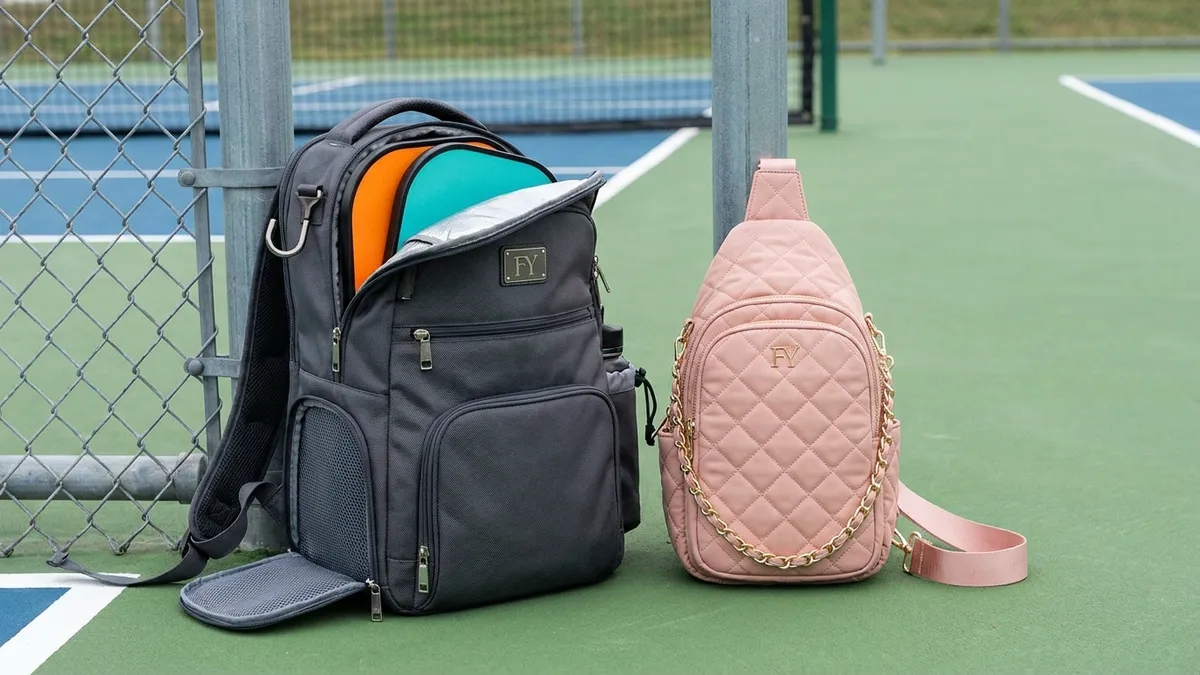
Pickleball did to the accessory market what few sports ever have: it created an entirely new bag category from nothing in the space of a few years, and then, almost immediately, split that category in two. The sport’s explosive, demographically broad growth pulled in two very different customers at once — the competitive player who treats gear as performance equipment, and the lifestyle player for whom the bag is a fashion accessory that happens to carry a paddle. The market has organized itself around that divide, and the entry of names from opposite ends of the spectrum makes it visible: on one side, performance brands engineering ventilated, thermal, tournament-ready systems; on the other, Tumi arriving from premium luggage and Lilly Pulitzer arriving from resort fashion, each treating the pickleball bag as an extension of its existing world.
For a brand entering now, the single most important decision is made before any spec is written: which of the two markets is this bag for? The performance bag and the fashion bag share a sport and almost nothing else — different materials, different construction priorities, different buyers, different retail channels, different price logic. A bag that tries to be both usually satisfies neither. The factories that will win the category’s manufacturing are the ones that understand each tier’s real requirements deeply enough to build a credible entry in either — and this guide is that understanding, tier by tier.
| Dimension | The Performance Bag | The Fashion Bag |
|---|---|---|
| The buyer | Competitive and frequent players; gear is equipment | Lifestyle and social players; the bag is an accessory |
| What sells it | The feature list — thermal paddle protection, shoe ventilation, capacity, durability | The look — silhouette, print, color, off-court wearability |
| Materials | Ballistic and technical nylon, ripstop, structured and abrasion-resistant | Quilted nylon, puffer, canvas, coated cotton, fashion prints |
| Silhouette | Backpack, tour duffel, structured sling | Tote, quilted sling, puffer crossbody |
| The channel | Pickleball retail, pro shops, sporting goods, specialist DTC | Boutiques, lifestyle DTC, resort and gift retail |
| The risk of getting it wrong | Missing function the player will notice on day one | Looking like equipment the fashion buyer won’t carry |
| The reference entry | The tournament-ready systems (ventilated, thermal, fence-hook) | Lilly Pulitzer’s printed totes, the quilted fashion slings, Tumi’s ballistic-nylon luxury compact |
The strategic read: the performance tier is more crowded and more spec-driven; the fashion tier is younger, higher-margin, and the one where a lifestyle brand’s existing identity (print, color, brand world) transfers directly onto a new product with a fast-growing audience. Both are real opportunities — but they are different products, and the brief for each must be written separately; our development team can help scope which tier fits a brand’s existing strengths.
The performance pickleball bag earned its category by solving problems a generic sports bag ignores. Three features define a credible one, and the market has made all three effectively mandatory.
The modern pickleball paddle is a precision instrument — a carbon-fiber or composite face with an engineered surface texture that generates spin, and a core whose properties are tuned for a specific feel. Both are sensitive to two things a car trunk and a court bag routinely inflict: temperature extremes and surface abrasion.
| Element | Specification | Why |
|---|---|---|
| The thermal sleeve | A dedicated paddle compartment lined with reflective, foil-faced insulation (the same closed-cell/reflective-film construction as a quality lunch bag’s envelope), sealing the paddles from heat and cold | Paddles left in a hot trunk or a freezing car degrade — cores soften in heat, materials stiffen in cold, and playing characteristics shift; the thermal sleeve is the “insurance policy” language the category’s buyers use, and its presence or absence is the first thing a serious player checks |
| The surface-safe interior | Soft, non-abrasive lining (brushed tricot or microfiber) in the paddle compartment; paddles separated from each other by a divider so face doesn’t grind against face | The paddle’s spin-generating surface texture is the expensive part; a bag that scuffs it has ruined the gear it was bought to protect |
| Capacity by tier | 2-paddle (sling/compact), 3–4 paddle (backpack), 6+ paddle (tour duffel) dedicated sleeves, sized to current paddle dimensions with margin for oversized shapes | Paddle sizes vary; the sleeve is dimensioned to the real range, not one model |
| Compression and retention | Paddles held snug (light elastic or a retention flap) so they don’t rattle loose in transit | Loose paddles knock against each other and the bag’s hardware — the retention is protection, not tidiness |
The second near-mandatory feature addresses the pickleball bag’s least glamorous and most decisive problem: court shoes, worn hard, sealed in a bag, in a warm car.
| Element | Specification | Why |
|---|---|---|
| Dedicated ventilated compartment | A separate zippered shoe compartment (typically bottom or side-access) with mesh ventilation panels and a wipe-clean liner, isolated from the paddle and clothing compartments | The odor and moisture from court shoes must not reach the paddles, the clothes, or the fashion of the bag; isolation plus ventilation is the specification, and “so your bag doesn’t reek” is, verbatim, how the market describes the stakes |
| Drainage and cleanability | A liner that tolerates a wet, dirty shoe — wipe-clean, ideally with a drainage-tolerant base | Shoes come off a wet court; the compartment is engineered for that reality |
| Ventilation that works | Mesh sized and placed for actual airflow, not a token panel | A sealed “shoe compartment” without real ventilation is a smell amplifier |
| Feature | Specification |
|---|---|
| The fence hook | A reinforced hook or loop letting the bag hang on the court fence or net post — a signature pickleball feature that keeps the bag off the wet/dirty ground and within reach; the anchor is reinforced because it carries the full loaded bag |
| Ball storage | A dedicated ball sleeve or pocket (pickleballs are rigid, perforated spheres) sized to hold several without crushing them into the paddles; easy-access, because balls are grabbed mid-session |
| Insulated bottle pocket(s) | Exterior bottle pockets, ideally one insulated, because hydration is constant and the bottle should not live inside with the paddles |
| Personal-item and tech pocket | A small secured/soft-lined pocket for phone, keys, wallet — the player arrives from the car and leaves from the court |
| The access logic | Compartments laid out for how a player actually moves — paddles and balls fast-access, shoes isolated, personal items secure; the category’s own critique is that too many bags “prioritize storage capacity over usability,” so considered access is itself a differentiator |
| Moisture-resistant zippers and base | Water-resistant coated zippers (the premium tier specifies sealed/AquaGuard-type) and a water-resistant reinforced base, because the bag lives outdoors and on wet courts |
The performance market has settled into three silhouettes by capacity and use, and a full brand program covers the range.
| Tier | Capacity | Paddle Load | The Player | Construction Priority |
|---|---|---|---|---|
| The sling | ~12L | 2 paddles | Grab-and-go, local open play | Compact, fast single-strap access, one-shoulder comfort |
| The backpack | 20–35L | 3–4 paddles | The universal club-player choice | Weight distribution, the full feature set, shoe + paddle + tech organization |
| The tour duffel | 45L+ | 6+ paddles | Tournament players, coaches | Maximum organized capacity, structure, durability under heavy load |
The premium hybrid note: the fastest-growing performance sub-category is the hybrid — backpack comfort plus tour-level organization — and the multi-sport reality (players moving between pickleball, padel, and tennis in one week) is pushing design toward the broader “paddle sports” bag that adapts to different paddle sizes rather than one sport. A brand building now should design paddle sleeves to the paddle-sports range, not pickleball alone.
Here is where the category gets commercially interesting, and where a lifestyle brand’s existing identity becomes an instant advantage. The fashion pickleball bag is bought by a player who wants to look good arriving at the court and to carry the bag to brunch afterward — and it is the tier where brand, print, and silhouette command a premium that pure performance cannot.
| Element | Specification |
|---|---|
| The silhouette shift | The fashion tier borrows from handbags, not sports bags: the quilted tote, the puffer sling, the structured shoulder bag — silhouettes that read as fashion first and carry a paddle second |
| The material shift | Quilted nylon (the diamond-quilted fashion signature, per our quilted-construction standards), puffer/padded nylon, coated cotton, and printed canvas — water-repellent where it can be, but chosen for look and hand over ballistic toughness |
| Print and color as the product | This is where a resort or lifestyle brand’s existing print library transfers directly: florals, coquette bows, bright color-blocking, the brand’s signature motifs — printed via digital printing or woven in, on a silhouette that shows them off |
| The credible-minimum function | The fashion bag still needs a real paddle pocket and ideally a small ventilated shoe or wet pocket — enough genuine function that it is a pickleball bag, not a tote with a hashtag; the fashion tier fails when it is all look and no credible use, which the performance-minded press is quick to call out |
| Off-court wearability | The design brief includes life after the court: a bag that works as a day tote or weekend bag doubles its use occasions and its perceived value — the reason the fashion tier can charge more |
| The embellishment options | Quilting, embellished details, textured surfaces, tonal hardware — the handbag finishing vocabulary applied to a sports object |
Why the fashion tier is the opportunity: it is younger and less crowded than the performance tier, it carries handbag-tier margins rather than sporting-goods margins, and it lets a brand with an existing aesthetic (a print house, a resort label, a lifestyle DTC) enter the fastest-growing bag category by extending what it already does well onto a new silhouette. The performance tier rewards engineering; the fashion tier rewards brand — and brand is the harder thing to copy. Brands ready to translate an existing print library onto a pickleball silhouette can brief our team directly.
The most sophisticated entries refuse the binary: a bag that reads as fashion and functions as performance. This is the hardest brief and the highest ceiling.
| Approach | Execution |
|---|---|
| Hidden function | The thermal paddle sleeve and ventilated shoe pocket built into a silhouette that reads as a premium tote or weekender — the function concealed inside the fashion, the way Tumi’s ballistic-nylon compact reads as luxury luggage rather than sports gear |
| Premium materials doing double duty | Ballistic nylon and technical fabrics finished and colored to read premium — the material is tough enough for the performance buyer and refined enough for the fashion buyer |
| The refined neutral | A restrained, design-led color palette (the quiet-luxury register) that works on court and in a café, avoiding both loud sports branding and overtly girly prints — the widest-appeal crossover |
| Convertible carry | Multiple carry modes (backpack straps that stow, a tote handle, a crossbody strap) so one bag serves the commute, the court, and the weekend |
| Material | Tier | Application |
|---|---|---|
| Ballistic / technical nylon | Performance & crossover | The abrasion-resistant, shape-holding standard for serious bags — the Tumi-register material |
| Ripstop nylon | Performance | Lightweight tour and backpack bodies |
| Quilted / puffer nylon | Fashion | The fashion sling and tote signature |
| Coated cotton and printed canvas | Fashion | The resort/lifestyle print carrier |
| Polyester (incl. recycled) | All tiers | Linings, mesh, and the sustainability-positioned option |
| Foil/reflective insulation | Performance & crossover | The thermal paddle sleeve envelope |
| Mesh | Performance | Shoe-compartment ventilation |
Construction non-negotiables across all tiers: reinforced strap and handle anchors (the loaded bag is thrown into trunks daily — the market explicitly rewards “stitching that holds up”), a reinforced water-resistant base, quality moisture-tolerant zippers, and the structural battery that keeps a loaded bag holding its shape. A sustainable-positioned program can build much of this in recycled-content nylon and polyester per our recycled-materials capabilities, which resonates with the category’s younger buyer.
| SKU | Tier | Spec Summary |
|---|---|---|
| Performance backpack | Performance | 20–35L, 3–4 paddle thermal sleeve, ventilated shoe compartment, fence hook, ball + bottle + tech pockets |
| Compact performance sling | Performance | ~12L, 2-paddle thermal sleeve, fast access, fence hook |
| Tour duffel | Performance | 45L+, 6+ paddle capacity, full tournament organization |
| Quilted fashion tote | Fashion | Quilted nylon, print, paddle pocket, off-court wearability |
| Puffer fashion sling | Fashion | Padded nylon, tonal hardware, credible-minimum function |
| The crossover weekender | Crossover | Premium ballistic body, hidden thermal sleeve and shoe vent, convertible carry |
| Printed fashion handbag crossover | Fashion | The brand’s signature print on a handbag silhouette with a paddle sleeve |
The application fit: pickleball bags sit naturally in the fitness and active-life program, the travel segment (tournament and destination play), and — for the fashion and crossover tiers — the gift and promotional vertical, where club-branded and event bags are a fast-growing corporate order.
| Test | Method | Standard |
|---|---|---|
| Thermal sleeve performance | The insulated paddle compartment checked for genuine thermal isolation (temperature differential across the envelope) | Real insulation, not a foil-look liner |
| Shoe compartment isolation | Ventilation airflow and odor/moisture isolation from adjacent compartments verified | No cross-contamination to paddle/clothing zones |
| Fence hook load | The hook and its anchor loaded to the full bag weight plus dynamic shock | Holds a loaded bag hung and jostled |
| Strap and handle anchors | Loaded pull and cycle testing on all carry points | Survives daily trunk-toss loads |
| Zipper and water resistance | Zipper cycling, plus a water-resistance check on the base and coated zips | Smooth cycling; base and zips shed a splash |
| Abrasion | Ballistic/technical bodies abrasion-tested; fashion bodies checked for print and quilt durability | Per material and tier |
| Loaded structure | The bag loaded to capacity and checked for shape retention | No slump; structured bags hold form |
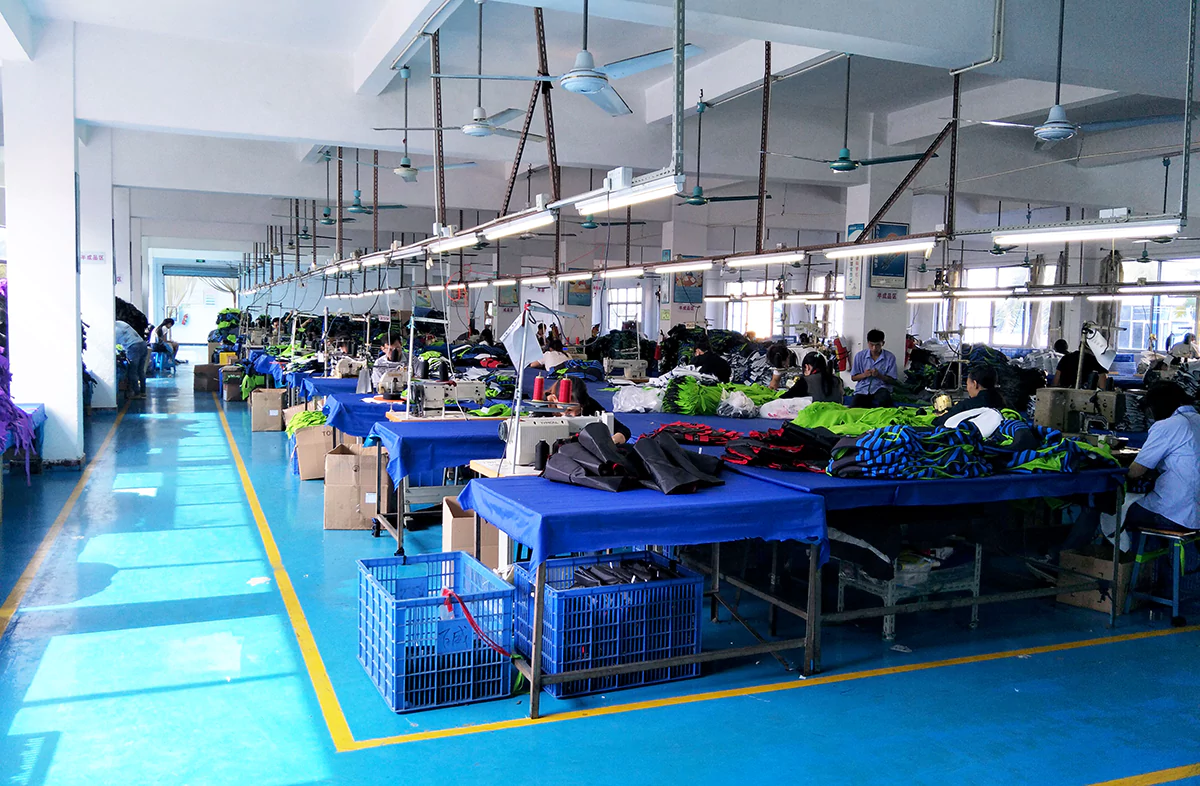
FYBagCustom is Your Trusted Custom Bag Manufacturer in China, with 15+ years of manufacturing experience across technical sports bags and fashion handbags — the exact two competencies the pickleball category’s split demands. For brands entering the boom, our capabilities include:
Pickleball is the accessory market’s fastest-growing category, and it rewards brands that understand it is really two categories. For B2B buyers entering the boom, three core takeaways:
If you are entering the pickleball category and want a factory that can build either tier — or the crossover that wins both — contact FYBagCustom to brief your program, and receive a function-built sample in 7–10 days.
FYBagCustom builds both sides of the pickleball boom — performance bags with real thermal paddle sleeves, ventilated shoe compartments, and fence hooks, and fashion bags in quilted, printed, handbag-grade constructions. Function-built samples in 7–10 days.
Start Your Custom Bag Project →