Tel/WhatsAapp:+86 18011919834
E-mail: chloe.x@fybagcustom.com

Tel/WhatsAapp:+86 18011919834
E-mail: chloe.x@fybagcustom.com
Send Your Inquiry Today

Who this guide is for: importers, sourcing managers, brand owners, and CFOs running the “stay or shift” analysis in response to 2026 U.S. tariff pressure on Chinese goods. If you are evaluating whether to move some or all of your handbag production from China to Vietnam, India, or Mexico — or if you want to understand why China still dominates despite the highest tariff exposure — this guide compares the four countries across every variable that determines total landed cost: manufacturing capability, material ecosystem, tariff stack, freight, lead time, quality consistency, and the hidden costs that headline comparisons omit.
Disclaimer: Tariff rates, trade agreements, and freight costs change frequently. The data in this guide reflects publicly available information as of mid-June 2026 and is provided for planning and educational purposes only. Always verify rates with a licensed customs broker and freight forwarder before making sourcing commitments.
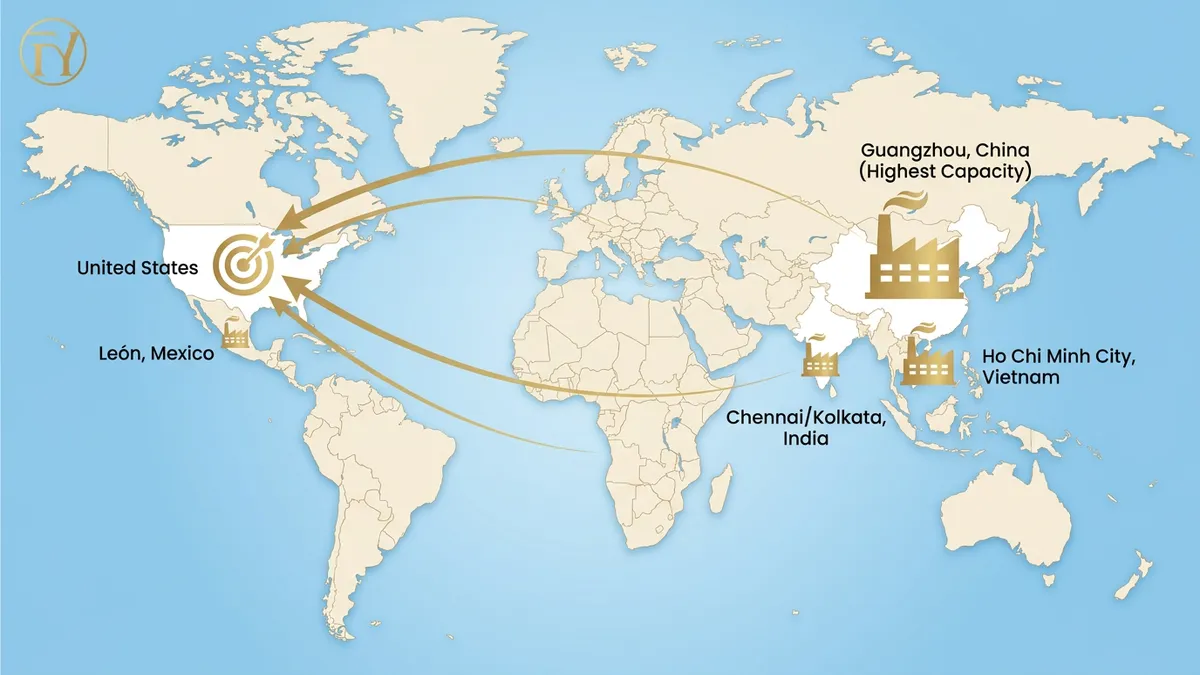
The 2026 tariff environment has made country selection the most consequential sourcing decision for U.S.-bound handbag brands. A leather handbag manufactured in China faces an effective duty of approximately 43% when entering the United States. The same bag, manufactured in Vietnam, faces approximately 18–19%. Manufactured in India, approximately 18–19%. Manufactured in Mexico under USMCA rules of origin, potentially 0%.
Those numbers make the decision sound obvious: leave China. But the numbers do not tell the whole story. The tariff differential is real — but so are the manufacturing capability gap, the material-sourcing complexity, the quality-consistency risk, and the hidden costs of supplier transition that headline tariff comparisons always omit.
This guide presents the complete picture — honestly, country by country — so that buyers can make the decision that optimizes total landed cost, not just duty cost.
Total landed cost is not FOB + duty. It is the sum of every cost from design concept to warehouse shelf:
| Cost Component | What It Includes | Which Countries Differ Most |
|---|---|---|
| FOB cost (factory price) | Materials, labor, overhead, factory margin | China and Vietnam are lowest; India is comparable; Mexico is highest |
| Duty (tariff stack) | MFN base + Section 301 (China only) + Section 122 (all countries) + fees | China is highest by a wide margin due to the 25% Section 301 layer |
| Freight | Ocean/air/truck from factory to U.S. port or warehouse | Mexico is cheapest (truck, 4–8 days); Asia origins are similar to each other |
| Lead time cost | The financial cost of inventory tied up during transit; the cost of missed market windows | Mexico is fastest; China and Vietnam are similar; India is slowest |
| Quality cost | Rejection rates, rework, returns, warranty claims | China is most consistent; Vietnam is improving; India is variable; Mexico is developing |
| Transition cost | Factory qualification, sample development, trial orders, travel, communication overhead | Zero for existing China suppliers; significant for any new-country transition |
| Material availability | Whether the factory can source the materials locally or must import them (adding cost and lead time) | China has the deepest ecosystem; all others import some materials from China |
| Dimension | China’s Position |
|---|---|
| Factory base | The world’s largest — hundreds of thousands of bag and leather goods factories across Guangdong, Zhejiang, Fujian, and Hebei provinces |
| Material ecosystem | The decisive advantage: tanneries, PU mills, hardware foundries, zipper factories, lining mills, packaging suppliers, and thread producers are all clustered within the same industrial zones as the bag factories — materials can be sourced locally in days, not imported in weeks |
| Leather goods capability | The strongest — China produces everything from budget PU pouches to luxury full-grain leather goods; the full quality spectrum is available |
| Technical capability | The most advanced — laser engraving, custom embossing dies, multi-layer edge finishing, complex multi-pocket construction, and hardware engineering are routinely available |
| Quality consistency | The highest (at scale) — decades of export manufacturing have produced a workforce and a QC infrastructure that delivers consistent quality across large orders |
| Sampling speed | Fastest — 5–7 days for standard constructions; the deep material ecosystem means samples do not wait for imported components |
| MOQ flexibility | The most flexible — many factories offer low MOQ (50–200 units per style) alongside high-volume programs |
| Layer | Rate |
|---|---|
| MFN base (leather, HTS 4202.21) | ~8% |
| MFN base (PU/textile, HTS 4202.22) | ~17.6–20% |
| Section 301 (List 3) | 25% |
| Section 122 (global, through ~July 24) | 10% |
| Total (leather) | ~43% |
| Total (PU/textile) | ~53–55% |
| Scenario | Why China Wins |
|---|---|
| Complex constructions (multi-pocket, multi-material, custom hardware, precision finishing) | No other country matches China’s breadth of technical capability for complex leather goods |
| Speed-to-market | China’s sampling speed (5–7 days) and deep material ecosystem compress the development timeline; a new SKU can go from tech pack to shipped bulk in 8–12 weeks |
| Full collections (multiple silhouettes, sizes, colors in one order) | China’s blended-MOQ flexibility and multi-capability factories can produce a diverse collection in a single factory; splitting across countries adds coordination cost |
| Premium-to-luxury quality | China’s top-tier factories deliver quality that matches or exceeds any global competitor at the same tier |
| Material-led products (specific PU textures, custom embossing, specialty hardware) | The material ecosystem is in China — the PU, the dies, the hardware; sourcing these materials for a non-China factory often means importing them from China anyway |
The tariff stack. At 43–55% total duty, the tariff on Chinese-origin handbags is the highest of any major manufacturing country. For buyers whose margin model cannot absorb this cost, China becomes unviable regardless of its other advantages.
| Dimension | Vietnam’s Position |
|---|---|
| Factory base | Growing rapidly — major global brands (Coach, Michael Kors, Kate Spade, Fossil) already source handbags from Vietnam; the factory base is concentrated in Ho Chi Minh City, Dong Nai, Binh Duong, and Long An provinces |
| Material ecosystem | Developing but incomplete — Vietnam has nylon, polyester, and some PU production locally; but premium PU, specialty hardware, custom embossing dies, and high-end leather are still largely imported from China; this adds 2–4 weeks to the material sourcing timeline and adds import duty at the Vietnamese end |
| Leather goods capability | Moderate and improving — Vietnam is strongest in nylon, polyester, and synthetic bags (backpacks, sport bags, travel bags); leather handbag capability is growing but the depth is not yet equal to China’s; fewer factories with full leather-goods expertise |
| Technical capability | Good for standard constructions; limited for complex specialty work (custom hardware casting, precision embossing, multi-layer edge systems); the technical ceiling is lower than China’s top tier |
| Quality consistency | Good and improving — factories serving major global brands deliver consistent quality; smaller factories have more variability |
| Sampling speed | Moderate — 7–14 days (longer than China because some materials must be imported) |
| MOQ flexibility | Moderate — many factories have higher MOQs than China (300–500 units minimum is common); the largest factories serve high-volume programs, not small-brand low-MOQ orders |
| Layer | Rate |
|---|---|
| MFN base (leather, 4202.21) | ~8% |
| MFN base (PU/textile, 4202.22) | ~17.6–20% |
| Section 301 | 0% — Vietnam is NOT subject to Section 301 |
| Section 122 (global) | 10% (through ~July 24) |
| Total (leather) | ~18–19% |
| Total (PU/textile) | ~28–30% |
The tariff advantage is 25 percentage points — the entire Section 301 layer that Chinese goods pay and Vietnamese goods do not. This is the single largest structural cost advantage of Vietnam over China.
| Scenario | Why Vietnam Wins |
|---|---|
| Nylon, polyester, and synthetic bags (backpacks, sport bags, travel bags) | Vietnam’s strongest manufacturing capability aligns with these material categories; the quality is proven at global-brand scale |
| High-volume programs (5,000+ units per style) | The largest Vietnamese factories are optimized for volume; the tariff savings at scale are massive |
| Buyers with existing Vietnam supplier relationships | If you already have a qualified factory in Vietnam, adding handbag SKUs to the relationship reduces transition cost |
| Brands where the tariff saving is the difference between profitable and unprofitable | The 25-point Section 301 avoidance turns an unviable landed cost into a viable one |
| Limitation | Impact |
|---|---|
| Material dependency on China | Much of the PU, hardware, and specialty material still comes from China; the “made in Vietnam” label avoids Section 301, but the material cost includes Chinese import duty into Vietnam + Vietnam-to-factory logistics |
| Leather handbag depth | Fewer factories with deep leather expertise compared to China; the quality ceiling for complex leather goods is lower; for premium leather programs, the factory options narrow significantly |
| Smaller factory base | Fewer factories means less competition, less MOQ flexibility, and longer lead times when capacity is tight (which it frequently is, as demand has shifted to Vietnam from China) |
| Compliance risk (“tariff hopping”) | U.S. Customs is actively investigating “tariff hopping” — goods that are substantially manufactured in China but minimally finished in Vietnam to claim Vietnamese origin; if your Vietnamese supplier is importing Chinese-made components and doing minimal assembly, CBP may reclassify the goods as Chinese-origin and apply full China tariffs retroactively |
| Dimension | India’s Position |
|---|---|
| Factory base | Concentrated in three leather clusters: Kolkata (the heritage leather-goods hub), Chennai/Ranipet (tanning and finished goods), and Kanpur (lower-cost production); additional bag manufacturing in Delhi/NCR |
| Material ecosystem | Strong for leather — India has a deep tanning industry and a centuries-old leather craftsmanship tradition; weaker for synthetic materials — PU, nylon, and specialty hardware are less developed than in China |
| Leather goods capability | Genuinely strong — India produces high-quality leather goods for European and U.S. luxury brands; the craftsmanship tradition, particularly in hand-stitching and finishing, is deep |
| Technical capability | Good for leather-specific techniques; moderate for mixed-material and high-volume synthetic production |
| Quality consistency | Variable — the top-tier Indian factories deliver excellent quality; the mid-tier is less consistent than China’s mid-tier; factory qualification and ongoing QC oversight are more important in India than in China |
| Sampling speed | Slower — 10–21 days (infrastructure and communication speed add time) |
| MOQ flexibility | Good — many Indian factories accept low MOQs (100–300 units), particularly for leather programs |
| Layer | Rate |
|---|---|
| MFN base (leather, 4202.21) | ~8% |
| MFN base (PU/textile, 4202.22) | ~17.6–20% |
| Section 301 | 0% — India is NOT subject to Section 301 |
| Section 122 (global) | 10% (through ~July 24) |
| Total (leather) | ~18–19% (same as Vietnam) |
| Total (PU/textile) | ~28–30% |
India’s tariff exposure is effectively identical to Vietnam’s — the 25-point Section 301 avoidance applies equally.
| Scenario | Why India Wins |
|---|---|
| Premium leather goods with hand-craftsmanship positioning | India’s leather heritage is genuine and deep; “handcrafted in India” carries authentic artisanal credibility |
| Small-batch leather programs (100–500 units) | Indian factories are comfortable with small-batch leather production; the low-MOQ culture aligns with emerging brands |
| European market access | India has preferential trade agreements with the EU; for brands selling into both the U.S. and Europe, India offers favorable tariff treatment in both markets |
| Limitation | Impact |
|---|---|
| Lead time | The longest of the four countries — 40–55 days ocean freight to the U.S. West Coast; add inland transit in India, and the door-to-door lead time can reach 60–70 days |
| Infrastructure | Port congestion, power reliability, and domestic logistics are less consistent than China’s; delays are more common and harder to predict |
| Quality variance | The gap between the best and worst Indian factories is wider than in China; qualification visits and ongoing QC programs (third-party inspection) are essential |
| Synthetic capability gap | For PU, nylon, and mixed-material bags, India’s capability and material ecosystem lag behind China and Vietnam |
| Dimension | Mexico’s Position |
|---|---|
| Factory base | Concentrated in León, Guanajuato — Mexico’s historic leather capital, with a deep cluster of tanneries, leather-goods workshops, and finished-goods factories; additional capacity in Jalisco and Mexico City |
| Material ecosystem | Strong for leather (León has domestic tanneries and a full leather supply chain); weak for synthetic materials — PU, nylon, and specialty hardware are imported (often from China); this can complicate USMCA rules of origin if the imported materials exceed origin thresholds |
| Leather goods capability | Moderate — León produces quality leather bags, belts, and accessories; the tradition is genuine; however, the factory base is much smaller than China’s or Vietnam’s, and capacity for large-volume orders is limited |
| Technical capability | Moderate — standard leather construction is strong; complex multi-material, custom-hardware, and specialty-finishing capability is less developed |
| Quality consistency | Good within established factories; the smaller factory base means fewer options if your first supplier does not meet standards |
| Sampling speed | Fast — 5–10 days (the proximity to the U.S. allows for quick sample shipping via ground) |
| MOQ flexibility | Good — many Mexican factories serve small-to-medium brands and accept MOQs of 100–500 units |
| Layer | Rate | Notes |
|---|---|---|
| MFN base | ~8–20% | Applies if the product does NOT qualify for USMCA preferential treatment |
| Section 301 | 0% — Mexico is not subject to Section 301 | — |
| Section 122 | Exempt for USMCA-qualifying goods (per CBP guidance, USMCA-qualifying goods are excluded from Section 122) | The bag must meet USMCA rules of origin to claim this exemption |
| Total (USMCA-qualifying leather bag) | Potentially 0% | If the bag meets USMCA rules of origin (regional value content or tariff-shift rules), it enters the U.S. duty-free |
| Total (non-USMCA-qualifying) | ~18–30% (MFN + Section 122) | If the bag contains too many non-NAFTA-origin materials (Chinese PU, Chinese hardware), it may fail the USMCA origin test and pay MFN + Section 122 |
The 0% duty rate under USMCA is conditional — the bag must qualify as a “product of Mexico” under the agreement’s rules of origin. For handbags (HTS 4202), this typically requires either:
The complication: if the bag is manufactured in Mexico using Chinese-origin leather, Chinese-origin PU, and Chinese-origin hardware (all imported into Mexico), the materials may not satisfy the tariff-shift or RVC requirements — and the bag may not qualify for USMCA preferential treatment. In that case, the bag pays MFN + Section 122, not 0%.
The practical implication: Mexico’s 0% tariff advantage is real but conditional on a genuinely Mexican or North American material supply chain. A “Mexican-assembled” bag made from Chinese materials may not qualify — and if it is claimed as USMCA-qualifying but later audited and found non-compliant, the importer faces retroactive duties plus penalties.
| Scenario | Why Mexico Wins |
|---|---|
| Speed is the priority | México-to-U.S. lead time of 4–8 days by truck vs. 30–45 days by ocean from Asia; for brands that need rapid replenishment, Mexico is the only option that delivers in under two weeks |
| The bag uses Mexican-origin leather (from León’s tanning cluster) and North American materials | USMCA qualification is achievable; the 0% duty rate is real; the total landed cost is the lowest of any country |
| The brand values proximity for oversight and control | A factory in León is a 3-hour flight from Dallas or Los Angeles; regular factory visits are feasible; communication is in the same or adjacent time zones |
| Small-batch, fast-turnaround programs (restock in 2 weeks) | Mexico’s combination of short lead time + small MOQ + proximity enables a replenishment model that Asian sourcing cannot match |
| Limitation | Impact |
|---|---|
| Higher FOB cost | Mexican labor costs are higher than Asia’s; the FOB cost of a handbag manufactured in Mexico is typically 20–40% higher than the same bag manufactured in China |
| Limited factory base | Fewer factories means less capacity, less competition, and fewer options for complex or high-volume programs |
| Synthetic material gap | PU, nylon, and specialty hardware must be imported — usually from China — which adds cost, lead time, and USMCA-qualification risk |
| USMCA qualification complexity | Ensuring origin compliance requires careful bill-of-materials management; non-compliance carries retroactive duty and penalty risk |
| Cost Component | China | Vietnam | India | Mexico (USMCA) | Mexico (Non-USMCA) |
|---|---|---|---|---|---|
| FOB cost (index) | 100 | 85–110 | 80–100 | 120–140 | 120–140 |
| Duty (approximate total %) | ~43% | ~18% | ~18% | ~0% | ~18–28% |
| Ocean freight (relative) | Baseline | Similar | Similar–Higher | N/A (truck) | N/A (truck) |
| Truck freight | N/A | N/A | N/A | Much lower than ocean | Much lower |
| Transit time | 30–45 days | 25–40 days | 40–55 days | 4–8 days | 4–8 days |
| Quality consistency | Highest | Good (improving) | Variable (factory-dependent) | Good (factory-dependent) | Good |
| Material ecosystem | Complete (all local) | Partial (imports from China) | Partial (strong leather; weak synthetic) | Partial (strong leather; weak synthetic) | Same |
| Sampling speed | 5–7 days | 7–14 days | 10–21 days | 5–10 days | Same |
| MOQ flexibility | Most flexible | Moderate (higher MOQs) | Good (low MOQ) | Good (low MOQ) | Same |
| Transition cost (from China) | Zero (existing) | Moderate | Moderate–High | Moderate–High | Same |
| USMCA complexity | N/A | N/A | N/A | Significant | N/A |
| Your Situation | Recommended Primary Source | Why |
|---|---|---|
| Complex leather goods; multiple silhouettes; custom hardware; premium-to-luxury quality; you can absorb or pass through the tariff | China | No other country matches the combination of capability, speed, material ecosystem, and quality consistency; the tariff is the cost of the world’s best manufacturing ecosystem |
| Nylon, polyester, or synthetic bags at high volume; tariff saving is critical to your margin | Vietnam | The 25-point Section 301 avoidance + strong synthetic-bag manufacturing = the best value for synthetic and textile programs |
| Premium leather goods; artisanal positioning; small-batch programs; you sell into both U.S. and EU markets | India | Genuine leather heritage + favorable tariff access to both markets + small-batch flexibility |
| Speed is non-negotiable; you need 2-week replenishment; the bag uses Mexican-origin leather; USMCA qualifies | Mexico | The only country that delivers in under 2 weeks; the 0% duty (if USMCA-qualifying) is the lowest possible landed cost |
| You want to hedge tariff risk without fully leaving China | China (primary) + Vietnam or India (secondary) | Maintain the China relationship for complex/premium work; develop a Vietnam or India supplier for simpler, tariff-sensitive SKUs; the dual-source model balances capability with tariff management |
For most brands in 2026, the optimal strategy is not “leave China” — it is “China plus one.” Keep the most complex, highest-quality, fastest-turnaround work in China (where the ecosystem advantage is decisive). Move the simpler, higher-volume, most tariff-sensitive SKUs to Vietnam, India, or Mexico (where the tariff savings outweigh the capability gap).
| SKU Type | Recommended Source | Rationale |
|---|---|---|
| Hero leather tote with custom hardware, multi-layer edge, branded jacquard lining | China | The construction complexity, hardware tooling, and material sourcing all require China’s ecosystem; no alternative matches the combination |
| Nylon backpack or canvas tote (simpler construction, high volume) | Vietnam | The construction is within Vietnam’s capability range; the tariff saving at volume is significant; the quality is proven at this tier |
| Artisanal leather crossbody with hand-finished details, small batch | India | India’s leather craftsmanship is genuine; the small MOQ is comfortable; the artisanal positioning is authentic |
| Fast-replenishment leather accessory (wallet, card case, clutch) for the U.S. market | Mexico | The 4–8 day lead time enables restocking in under 2 weeks; USMCA qualification is achievable with Mexican-origin leather; the small-format product is within Mexico’s capability range |
Brands considering a full exit from China manufacturing should model not just the tariff saving but the transition costs that the tariff comparison omits:
| Transition Cost | What It Includes | Approximate Impact |
|---|---|---|
| Factory qualification | Travel, audits, quality assessments, communication setup | 3–6 months of development time before the first production order |
| Sample development | New samples from the new factory — which may require 2–3 rounds of revision vs. the 1 round your Chinese factory delivers | Each sample round = 2–4 weeks; total = 1–3 months of additional development |
| Material re-sourcing | If the new factory cannot source your specific PU, hardware, or specialty materials locally, they must import them — often from China | Material lead time adds 3–6 weeks; import duty into the new country adds cost; material consistency may vary from the Chinese supplier’s output |
| Quality ramp-up | The first 2–3 orders from a new factory typically have higher defect rates than established production; the quality learning curve requires investment in QC oversight | Budget for third-party inspection on every order during the ramp-up period; factor in a 5–15% higher rejection/rework rate for the first year |
| Communication overhead | New time zones, new languages, new communication styles; the relationship efficiency you have built with your Chinese supplier over years must be rebuilt from zero | More management time per order; more miscommunication risk; slower problem resolution |
The honest math: for a brand that manufactures 5,000 units/year, the transition cost to a new-country supplier may consume 6–12 months of the tariff savings that motivated the move. For a brand that manufactures 50,000+ units/year, the tariff savings overwhelm the transition cost within the first order. Volume determines whether the move makes financial sense in year one.
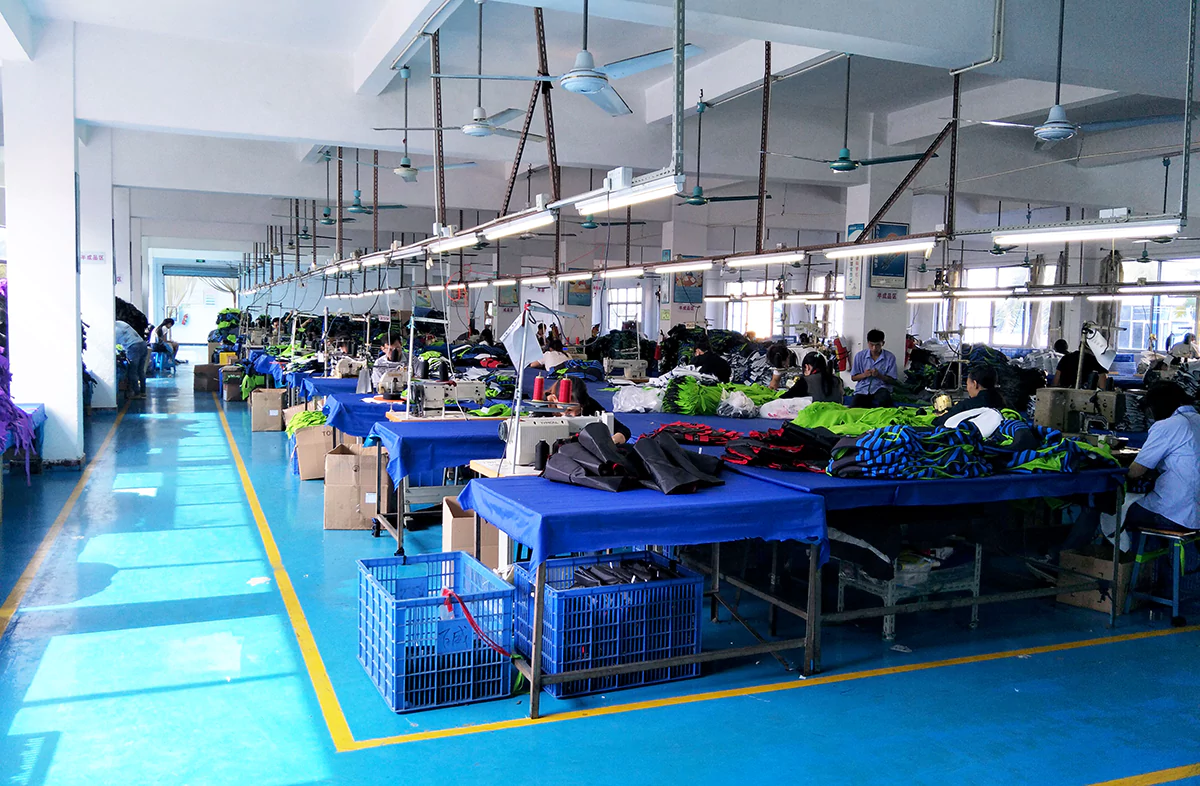
FYBagCustom is Your Trusted Custom Bag Manufacturer in China, with 15+ years of export manufacturing experience and a clear understanding of the tariff-driven sourcing environment. We do not pretend China’s tariff exposure does not exist. We address it directly:
We believe the right sourcing decision depends on the product, the volume, and the margin model — not on a headline about tariffs. For many brands, the capability-speed-quality combination that China offers makes it the right source despite the tariff premium. For others, a dual-source model (China for complex work, Vietnam or India for simpler SKUs) optimizes across both axes.
Contact our team to discuss your specific product, volume, and tariff situation — and to receive a transparent quotation that lets you model your landed cost accurately.
The tariff is one variable in a multi-variable equation. The country that charges the lowest duty is not automatically the country that delivers the lowest total landed cost — because FOB, freight, lead time, quality, material access, and transition cost all matter. For B2B buyers evaluating 2026 sourcing options, three core takeaways:
If you are running the “stay or shift” analysis and want a transparent conversation about where your specific product should be made — including an honest comparison of what China can do that other countries cannot yet match — contact FYBagCustom for a consultation that starts with your product, not with a sales pitch.
FYBagCustom offers transparent quotations, material documentation for HTS classification, and FOB optimization — because we believe China earns your business on capability, not on hiding from the tariff conversation. Contact us to model your specific product’s total landed cost.
Start Your Custom Bag Project →