Tel/WhatsAapp:+86 18011919834
E-mail: chloe.x@fybagcustom.com

Tel/WhatsAapp:+86 18011919834
E-mail: chloe.x@fybagcustom.com
Send Your Inquiry Today

Who this guide is for: Amazon FBA sellers, TikTok Shop sellers, DTC founders, social commerce brands, Shopify dropshippers transitioning to private label, and any B2B buyer who has experienced the most painful moment in e-commerce — a product goes viral, inventory sells out in 48 hours, and the 35-day restocking timeline means six weeks of lost sales, lost ranking, and lost momentum. If you want to understand how to build a quick-response (QR) restocking system with your custom bag manufacturer that delivers restock shipments in 7–14 days instead of 35–50, this guide explains the supply chain architecture, the factory-side pre-positioning strategies, and the seller-side planning frameworks that make rapid restocking possible.
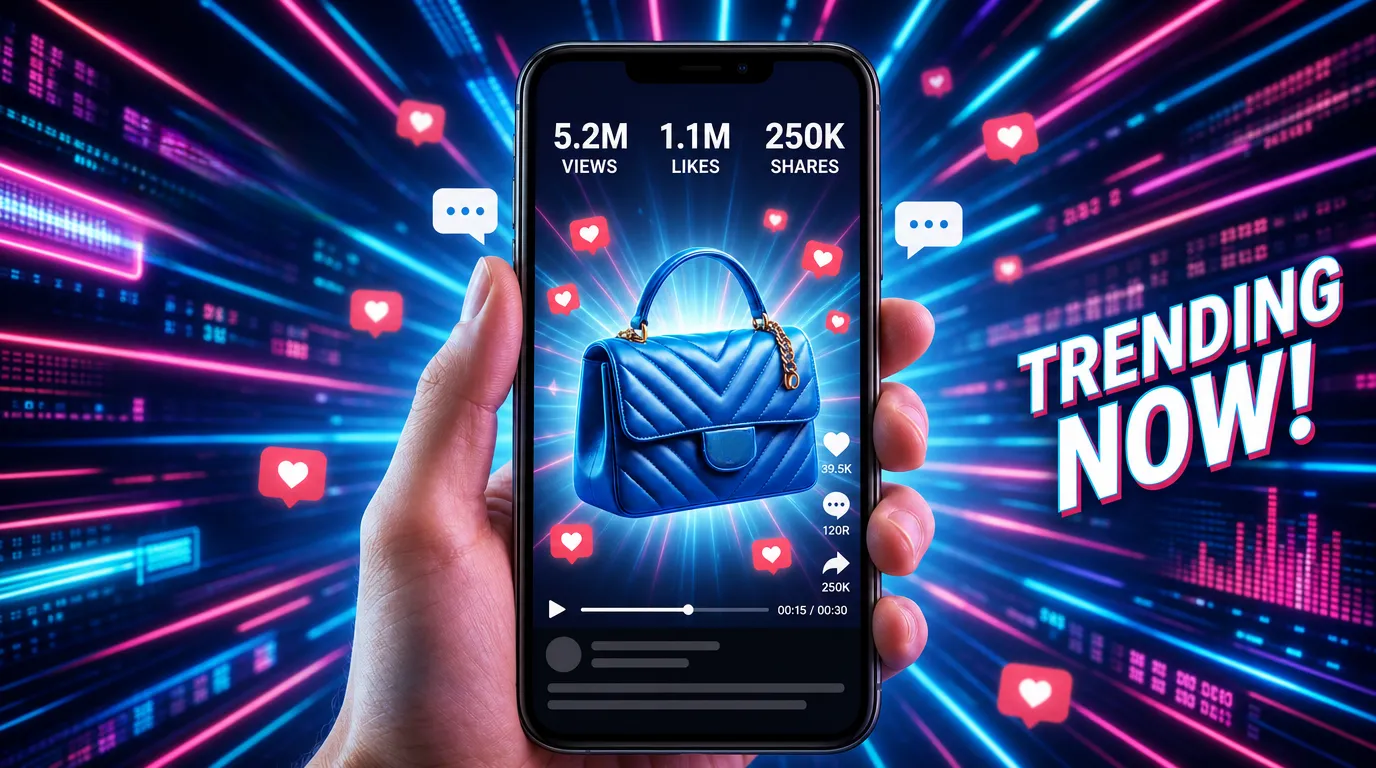
The economics of social commerce in 2026 are merciless. A bag that goes viral on TikTok — featured by a creator, surfaced by the algorithm, shared across millions of For You pages — can sell 500–2,000 units in a weekend. The same bag on Amazon, boosted by a Best Seller badge and the flywheel of reviews + ranking + conversion, can sustain 50–100 units per day for weeks. In both cases, the demand curve is steep, sudden, and unforgiving: the window of peak demand lasts 2–6 weeks, and every day your listing shows “out of stock” is a day of revenue, ranking, and algorithmic momentum that you never recover.
The standard restocking timeline for a custom bag manufactured in China and shipped to a U.S. warehouse is 35–50 days: 5–7 days for material sourcing, 20–30 days for production, 3–5 days for QC and packing, and 5–8 days for air freight (or 25–35 days for sea freight). This timeline was designed for planned replenishment — predictable, quarterly, spreadsheet-driven inventory management. It was not designed for a world where a single TikTok video can create demand equivalent to a month’s forecast in 72 hours.
The quick-response (QR) restocking model compresses this timeline from 35–50 days to 7–14 days for repeat orders of proven products. It does not require a different factory, faster sewing machines, or overnight shipping miracles. It requires a pre-positioned supply chain — materials sourced and held before you need them, patterns locked and ready to cut, production capacity pre-allocated, and shipping channels pre-arranged. This guide explains how to build that system.
Before engineering the solution, it helps to quantify the problem. The cost of a stockout is not just the lost sales during the out-of-stock period — it is a cascade of compounding losses that continues long after inventory is replenished.
| Stage | What Happens | Revenue Impact | Recovery Time |
|---|---|---|---|
| Day 1–3 of stockout | Listing shows “out of stock” or “currently unavailable” | 100% revenue loss — zero sales | — |
| Day 4–14 | Amazon: organic ranking drops as sales velocity goes to zero; TikTok Shop: listing deprioritized by algorithm | Revenue loss continues + future discoverability damaged | 2–4 weeks after restock to regain ranking |
| Day 15–30 | Competitors absorb your search traffic; consumers find alternatives and build new purchase habits | Revenue loss + market share loss | May never fully recover if competitor establishes |
| Day 30+ | Amazon: listing may lose Best Seller badge; TikTok: product memory in algorithm fades | Long-term positioning damage | 1–3 months of aggressive advertising to rebuild |
| Post-restock | Even after inventory returns, ranking and algorithmic positioning have degraded; sales restart at a lower baseline | 20–40% lower daily sales rate than pre-stockout peak | Gradual recovery over 4–8 weeks |
Consider a bag selling 80 units per day at its viral peak. A 30-day stockout (standard restock timeline) results in:
Compressing the restock timeline from 30 days to 10 days reduces the direct lost sales from 2,400 to 800 units, preserves most of the algorithmic ranking, and enables a faster return to peak sales velocity. The 20-day improvement in restocking speed can be worth thousands of units in preserved sales over the product’s viral lifecycle.
Quick-response restocking is not about making the factory work faster during a crisis. It is about pre-positioning every element of the supply chain so that when the restock signal fires, the factory’s only remaining task is assembly.
| Strategy | What Is Pre-Positioned | Timeline Compressed | Standard Timeline | QR Timeline |
|---|---|---|---|---|
| 1. Material pre-stocking | Fabric, PU, hardware, lining, interlining held in factory inventory before the restock order is placed | Material sourcing (5–7 days → 0 days) | 5–7 days | 0 days |
| 2. Pattern and die locking | Cutting patterns, debossing dies, and hardware specifications are permanently stored and ready to deploy | Pattern setup and die preparation (1–2 days → 0 days) | 1–2 days | 0 days |
| 3. Pre-allocated production capacity | A production slot is reserved on the factory’s schedule for your restock, activated by a single message | Production queue waiting (3–7 days → 0 days) | 3–7 days | 0 days |
| 4. Parallel QC + packing | QC happens on the line (in-process) rather than as a separate post-production stage | QC + packing (3–5 days → overlaps with production) | 3–5 days | 0 additional days |
| 5. Pre-arranged express logistics | Freight forwarder, airline routing, and customs documentation are pre-configured; shipment launches same day production completes | Logistics coordination (2–3 days → 0 days) | 2–3 days | 0 days |
| Timeline Element | Standard Order | Quick-Response Restock |
|---|---|---|
| Material sourcing | 5–7 days | 0 (pre-stocked) |
| Pattern / die setup | 1–2 days | 0 (locked) |
| Production queue | 3–7 days | 0 (pre-allocated) |
| Production (cutting + sewing + assembly) | 15–25 days | 5–10 days (smaller batch + dedicated line) |
| QC + packing | 3–5 days | 0 additional (parallel with production) |
| Logistics coordination | 2–3 days | 0 (pre-arranged) |
| Air freight to U.S. | 5–8 days | 3–5 days (express air) |
| Total | 35–55 days | 8–15 days |
The production stage itself compresses from 15–25 days to 5–10 days because QR restock orders are typically smaller batches (200–500 units, not 1,000–3,000) of a product the factory has already produced — meaning no learning curve, no new pattern development, and the ability to dedicate a single production line to a rush run.
Material sourcing is the single largest bottleneck in standard restocking. When you place a restock order, the factory must order PU leather, lining, interlining, zippers, hardware, and packaging from its suppliers — each with their own lead times. A custom-color PU leather may take 7–10 days to produce. A specific zipper configuration may take 5 days. The factory cannot start cutting until every material arrives.
Pre-stocking eliminates this bottleneck entirely.
| Element | What Happens | Who Holds the Inventory | Who Bears the Cost |
|---|---|---|---|
| You identify your top 3–5 SKUs that are most likely to need rapid restocking | Based on sales velocity, viral potential, and seasonal demand patterns | — | — |
| You and the factory agree on a buffer stock level for each SKU’s materials | Typically enough material for 200–500 units (one restock batch) | The factory holds the materials in their warehouse | Negotiable — some factories hold at no charge if you commit to quarterly repurchase; others charge a small warehousing fee |
| The factory sources and warehouses the materials | PU/fabric rolls, hardware bags, lining bolts, interlining, packaging components — all stored and labeled for your SKU | Factory warehouse — labeled with your brand name and SKU identifier | Material cost is typically invoiced when the restock order is placed, not when the material is stocked |
| When you trigger a restock, the factory starts cutting immediately | No sourcing delay — everything is on the shelf | — | — |
| Material | Pre-Stock Quantity (for 300-unit buffer) | Why This Material Is the Bottleneck |
|---|---|---|
| Exterior material (PU, leather, nylon, canvas) | 150–250 m² (depends on bag size and cutting waste) | Custom-color PU is the longest-lead material (5–10 days); in-stock colors are faster but may not match your specific shade |
| Lining material | 100–200 m² | If you use a custom-color or branded lining, this requires sourcing; standard linings are in-stock at most factories |
| Hardware (zippers, snaps, D-rings, closures) | 300–500 sets | Custom-engraved or custom-color hardware has its own lead time (3–7 days); standard hardware is in-stock |
| Interlining | 100–150 m² | Usually in-stock at the factory; less likely to be a bottleneck |
| Packaging (dust bags, boxes, hang tags, tissue) | 300–500 complete sets | Custom-printed packaging (branded tissue, printed dust bags) requires sourcing; plain packaging is in-stock |
| Branding components (debossing die, screen, embroidery file) | 1 set (reusable) | Already held from the first order — this is a “lock” strategy, not a pre-stock |
Rather than pre-stocking once and depleting, the most effective approach is a rolling buffer: after each restock order consumes the buffered materials, the factory immediately re-orders replacement materials to bring the buffer back to its target level. This ensures the buffer is always full — ready for the next restock trigger at any time.
| Event | Buffer Status | Factory Action |
|---|---|---|
| Buffer established (initial) | Full — 300 units of material on shelf | None — waiting for restock trigger |
| Restock order triggered (200 units) | Depleting — 200 units consumed, 100 remaining | Start production immediately; simultaneously re-order 200 units of material to refill buffer |
| Production completes + ships | Buffer at 100 units | Replacement material arrives (5–7 days); buffer refills to 300 |
| Buffer refilled | Full — 300 units ready | None — waiting for next trigger |
This rolling model means you are never more than one production cycle away from a restock shipment — the materials for your next order are already on the factory shelf before you ask for them.
Every time a factory produces a bag, it must set up the production line: retrieve the cutting patterns, configure the cutting equipment, calibrate the sewing machines, install the debossing die, and brief the workers. For a first order, this setup takes 1–3 days. For a restock of a product the factory has already produced, setup can be compressed to hours — if the patterns and dies are locked and stored.
| Element | Locked State | Storage Location | Retrieval Time |
|---|---|---|---|
| Paper cutting patterns | Stored flat or rolled, labeled with your SKU, in the factory’s pattern archive | Factory pattern room | 15 minutes — pull from shelf, verify against reference sample |
| Digital pattern files (CAD) | Stored in the factory’s CAD system, labeled and version-controlled | Factory server / computer | Instant — open file, send to plotter |
| Debossing / foil die | Stored in die storage, labeled with your brand name and logo version | Factory hardware room | 15 minutes — pull, install in press |
| Embroidery digitization file | Stored in the embroidery machine’s file system | Embroidery department computer | Instant — load file, calibrate to material |
| PP (pre-production) reference sample | Stored in a sealed bag, labeled, in the factory’s sample archive | Factory sample room | 10 minutes — the QC team uses this as the quality benchmark for every restock |
The action item: after your first production order, confirm with the factory in writing: “Please retain all cutting patterns, CAD files, debossing dies, embroidery files, and the PP reference sample for my SKUs [list]. These will be used for future restock orders.” Most quality factories do this automatically, but confirming in writing prevents the (rare but catastrophic) scenario where patterns are discarded to make storage space.
A factory’s production lines are scheduled weeks in advance. When you place a standard restock order, your order enters the production queue behind orders that were placed earlier. Queue time — the wait between placing your order and the factory starting production — adds 3–7 days to the timeline.
Pre-allocated capacity eliminates queue time by reserving a production slot before you need it.
| Approach | How It Works | Best For | Commitment Required |
|---|---|---|---|
| Standing production window | You and the factory agree on a recurring production slot (e.g., “the first week of every month, Line 3 is available for your restocks”) | Brands with predictable monthly restock cycles | Monthly commitment — you either use the slot or lose it (some factories charge a “slot fee” if unused) |
| Priority queue agreement | The factory agrees to start your restock within 48 hours of receiving the order, bypassing the standard queue | Brands with unpredictable viral spikes who need on-demand speed | Annual volume commitment — the factory offers priority in exchange for a guaranteed annual order volume |
| Dedicated micro-line | A small production team (5–10 workers) is semi-permanently assigned to your brand’s products, running your SKUs continuously or on-demand | High-volume brands with constant restock demand (50+ restocks/year) | Highest commitment — you effectively retain a production team; requires consistent volume to justify |
For most TikTok Shop and Amazon sellers in the growth stage, the priority queue agreement is the most practical approach. It does not require a fixed monthly schedule (which is difficult when demand is viral and unpredictable), and the annual volume commitment is achievable for brands selling consistently on major marketplaces.
In standard production, QC is a sequential stage that happens after all bags are assembled. The factory produces 200 bags, then inspects them — adding 3–5 days after production completes.
In QR restocking, QC is embedded in the production line as an in-process activity:
| Aspect | Sequential QC (Standard) | Parallel QC (Quick Response) |
|---|---|---|
| When inspection happens | After all units are completed | During production — at defined checkpoints on the sewing line |
| Time added to timeline | 3–5 days (a separate stage after production) | 0 additional days — QC happens simultaneously with production |
| Defect detection timing | Defects found after the bag is fully assembled — rework is expensive | Defects found during assembly — correction is immediate and low-cost |
| Inspector location | QC station (separate from production line) | On the production line — the inspector moves between stations |
| Packing | Happens after QC, as a separate step | Happens immediately after each unit passes in-line inspection — bags are packed as they complete |
The parallel QC model is actually superior to sequential QC in defect prevention (problems are caught earlier) and timeline (zero additional days). It requires an inspector who is physically present on the production line during the restock run — which is standard practice at factories experienced with quick-turn orders.
The logistics stage — booking freight, preparing export documents, coordinating with the carrier, arranging customs clearance — adds 2–3 days to the timeline when arranged ad hoc after production completes. Pre-arranging these elements reduces logistics coordination time to near-zero.
| Element | What to Pre-Arrange | How | Time Saved |
|---|---|---|---|
| Freight forwarder relationship | A standing relationship with a forwarder who handles your China-to-U.S. shipments regularly | Select one forwarder; provide them with your standard shipping profile (origin factory address, destination warehouse, preferred airline/carrier, customs broker) | 1–2 days (no need to request quotes or onboard a new forwarder) |
| Airline routing | Pre-identified air freight routing for express shipments (Guangzhou → LAX or Guangzhou → JFK) | Your forwarder maintains a standing booking option with a carrier on this route | 0.5–1 day (no routing research or booking delay) |
| Export documentation template | Commercial invoice, packing list, and certificate of origin templates pre-filled with your company details, product descriptions, and HTS codes | Factory holds templates; only quantity and value change per shipment | 0.5–1 day |
| Customs pre-clearance profile | Your U.S. customs broker has your importer of record number, bond, and product classification on file | Provide your customs broker with the product HTS code and a standing import profile | 0.5–1 day at U.S. arrival |
| Amazon FBA shipment template | A pre-configured FBA inbound shipment template in Seller Central, ready to activate with updated quantities | Create the shipment template in advance; activate it when production is confirmed | Immediate — no fumbling with FBA shipment creation under time pressure |
For QR restocks, express air freight (3–5 day transit) is the standard shipping method. The per-unit cost is higher than sea freight, but the math strongly favors speed: 20 additional days of in-stock selling (the difference between air and sea) at 50–80 units per day generates revenue that dwarfs the air freight premium.
| Shipping Method | Transit Time | Relative Cost Per Unit | When It Makes Sense |
|---|---|---|---|
| Sea freight (LCL) | 25–35 days to West Coast | Lowest | Planned replenishment; seasonal pre-stocking; not for QR restocks |
| Standard air freight | 5–8 days | Moderate (roughly 3–5× sea freight per unit) | QR restocks where 5–8 days is acceptable |
| Express air freight (expedited routing) | 3–5 days | Highest (roughly 4–7× sea freight per unit) | Critical QR restocks where every day of stockout costs significant revenue |
| Express courier (DHL/FedEx) | 3–5 days door-to-door | Highest (but includes customs clearance) | Small QR restocks under 100 units; simplest logistics |
The factory-side QR system is only effective if the seller triggers the restock at the right time — early enough to prevent stockout, but not so early that inventory accumulates before demand materializes.
The optimal restock trigger point is:
Trigger when: Current inventory = (Daily sales rate × QR lead time) + Safety buffer
| Variable | How to Calculate | Example |
|---|---|---|
| Daily sales rate | Average units sold per day over the last 7 days (use 7-day average, not 30-day, to capture viral acceleration) | 60 units/day |
| QR lead time | Your confirmed quick-response restocking time (production + shipping) | 12 days |
| Safety buffer | Additional inventory to cover demand spikes during the lead time (typically 20–30% of lead-time demand) | 20% × (60 × 12) = 144 units |
| Trigger point | (60 × 12) + 144 = | 864 units — trigger the restock when inventory hits 864 |
When your inventory reaches the trigger point, you send a single message to the factory: “Restock [SKU], [quantity], [ship express air].” The pre-positioned system activates: materials are already on the shelf, patterns are locked, production starts within 48 hours, and logistics are pre-arranged.
| Platform | Demand Pattern | Restock Trigger Adjustment | Inventory Strategy |
|---|---|---|---|
| Amazon FBA | Predictable daily velocity with occasional spikes (Lightning Deals, Prime Day, seasonal) | Use 14-day rolling average for daily rate; add 30% buffer for known promotional events | Split inventory between FBA and a 3PL backup; FBA restock limits may cap how much you can send |
| TikTok Shop | Highly volatile — a single creator video can 5–10× daily sales overnight | Use 3-day rolling average during viral spikes (not 7-day — too slow to capture acceleration); add 50% buffer | Maintain a domestic 3PL buffer stock for immediate FBT (Fulfilled by TikTok) replenishment; use factory QR for the next wave |
| Shopify / DTC | Moderate volatility; driven by email campaigns, ad spend, and influencer features | Use 7-day average; 20% buffer is usually sufficient | Simpler — you control fulfillment directly; ship from your own warehouse or 3PL |
| Wholesale / retail | Seasonal, planned, lower volatility | Standard 30-day planning cycle; QR not typically needed | Pre-season bulk orders via sea freight; QR only for unexpected reorders |
When a product goes viral (sales spike 5–10× within days), the demand trajectory is often too steep for a single restock to cover. The two-wave model addresses this:
| Wave | Trigger | Quantity | Shipping | Purpose |
|---|---|---|---|---|
| Wave 1 (emergency) | Triggered immediately when viral spike is detected (Day 1–2 of the spike) | 200–300 units (the factory’s QR capacity) | Express air (3–5 days) | Prevents stockout during peak demand; arrives while demand is still high |
| Wave 2 (sustained) | Triggered simultaneously with Wave 1, but produced on a standard-expedited timeline | 500–1,000 units (larger batch, standard production) | Standard air (5–8 days) or sea freight if demand will sustain for 4+ weeks | Replenishes inventory for the “long tail” of post-viral sustained demand |
The two-wave model ensures you never run out during the spike (Wave 1 arrives fast) while also building sufficient inventory for the sustained demand that follows a viral moment (Wave 2 arrives in volume).
Not every bag design is equally restockable. Certain design decisions — made at the initial product development stage — make future QR restocks dramatically faster or slower.
| Design Decision | Fast-Restock Choice | Slow-Restock Choice | Why It Matters |
|---|---|---|---|
| Material | In-stock material from the factory’s standard library | Custom-dyed or custom-ordered material | In-stock material is available immediately; custom material requires 5–10 days to source |
| Hardware | Standard catalog hardware (zippers, snaps, D-rings) in stock finishes | Custom-molded, custom-engraved, or proprietary hardware | Standard hardware is in stock at any quantity; custom hardware has its own restocking lead time |
| Branding | Debossing with a stored die; or screen printing with a stored screen | Complex multi-step branding (embroidery + foil + multiple application zones) | Simpler branding = fewer production steps = faster line speed |
| Color range | 2–3 core colors using in-stock materials | 6+ colors including custom shades | Fewer colors = fewer material SKUs to pre-stock; less inventory complexity |
| Construction complexity | Moderate — 10–15 pattern pieces; standard assembly sequence | High — 25+ pieces; multi-compartment; specialty features | Simpler construction = faster per-unit production time = shorter restocking window |
| Packaging | Standard packaging with stored components (printed dust bag, standard box) | Multi-component luxury packaging with custom printing per color/style | Pre-printed packaging components can be held in buffer; elaborate packaging adds assembly time |
The smartest product architecture for TikTok Shop and Amazon sellers combines a restockable core (2–3 SKUs optimized for QR) with seasonal extensions (limited-run colorways or variations produced on standard timelines):
| Product Tier | SKU Count | Material | Restock Model | Purpose |
|---|---|---|---|---|
| Restockable core | 2–3 SKUs (hero colors: black, cognac, one trend color) | In-stock materials only | QR system — 7–14 day restocking | The revenue engine; always in stock; never out; pre-stocked materials |
| Seasonal extension | 2–4 SKUs per season (limited colors, seasonal trends) | Custom or seasonal materials | Standard timeline — 35–50 day production | Freshness and content variety; drives new traffic; OK to sell out |
| Limited edition | 1 SKU per quarter (collaboration, special material, one-time) | Specialty material | One-time production; no restock planned | Urgency and scarcity; FOMO content; sells out intentionally |
This architecture ensures your best sellers never stock out (the core is always restockable) while your seasonal and limited-edition products create content, urgency, and variety. The viral spike typically happens on a core SKU — precisely the one that is QR-ready.
Building a QR restocking system requires explicit agreements with your factory that go beyond a standard purchase order. These agreements should be negotiated during or shortly after your first production order.
| Element | What to Negotiate | Why It Matters |
|---|---|---|
| Material buffer commitment | The factory agrees to hold pre-stocked materials for your top SKUs; you agree to replenish or consume the buffer within a defined period (e.g., 90 days) | Prevents the factory from tying up warehouse space indefinitely; gives you a reliable material buffer |
| Production priority | The factory agrees to start QR restock production within 48 hours of receiving your order | Eliminates queue time; gives you a defined SLA for response speed |
| Minimum QR order quantity | The minimum restock quantity the factory will produce on a QR basis (typically 100–300 units, depending on factory size) | Sets expectations; QR runs below 100 units may not be economical for either party |
| QR lead time guarantee | The factory commits to a maximum production duration for QR restocks (e.g., “7 working days for 200 units”) | Gives you a reliable number for your restock trigger formula |
| Communication protocol | Agreed channel (WeChat, WhatsApp, email) and response time (e.g., order confirmation within 4 hours) | Speed requires fast communication; establish the channel and expectation upfront |
| Annual volume commitment | You commit to a minimum annual order volume across all orders (standard + QR) in exchange for QR priority | The factory invests in your QR system (pre-stocking, capacity reservation) in exchange for volume certainty |
For TikTok Shop and Amazon sellers, inventory management across multiple locations is the operational backbone of a QR system:
| Location | What It Holds | Purpose | Replenished By |
|---|---|---|---|
| Factory buffer (China) | Pre-stocked raw materials for your top SKUs | The “raw material ready” position; enables 7–14 day production-to-shipment | You trigger restocking of the material buffer after each QR order consumes it (rolling buffer model) |
| Domestic 3PL warehouse (U.S.) | 2–4 weeks of finished goods inventory for your top SKUs | The “ready to ship” position; replenishes FBA or fulfills DTC orders directly | Factory QR restocks (air freight) every 2–4 weeks based on sales velocity |
| Amazon FBA / TikTok FBT | 1–2 weeks of inventory at the marketplace fulfillment center | The “last mile” position; inventory the consumer sees and buys | Replenished from your domestic 3PL as FBA/FBT inventory depletes |
The domestic 3PL acts as a shock absorber between the factory and the marketplace fulfillment center. Amazon FBA has inventory receiving limits that cap how much you can send at once. TikTok FBT is still maturing and can have unpredictable receiving timelines. The 3PL holds your reserve — when FBA inventory drops, you send units from the 3PL (1–3 day domestic transit) while simultaneously triggering a factory QR restock (7–14 day international transit) to refill the 3PL.
This three-location model ensures zero stockout risk as long as the 3PL buffer and the factory material buffer are maintained.
For TikTok Shop sellers specifically, the restock trigger is often not sales data — it is a content event that is about to happen. An influencer collaboration, a scheduled live stream, a trend-riding video, or a seasonal campaign can create predictable demand spikes that should trigger pre-emptive restocking.
| Content Event | Expected Demand Spike | Pre-Emptive Restock Timing | Restock Quantity |
|---|---|---|---|
| Influencer collaboration (major creator, 500K+ followers) | 3–10× normal daily sales for 3–7 days | Trigger factory QR restock 14 days before the content drops | 2–3 weeks of projected elevated demand |
| Scheduled TikTok Live (your own account) | 2–5× normal daily sales on live day + 2–3 days after | Trigger 10 days before live | 1 week of elevated demand + normal buffer |
| Seasonal campaign (holiday, back-to-school, etc.) | 1.5–3× normal for 2–4 weeks | Trigger 21 days before campaign start (standard production may suffice for planned campaigns) | 3–4 weeks of elevated demand |
| Trend-riding content (unplanned — you notice a trend and create reactive content) | Unpredictable — could be 2× or 20× | Cannot pre-trigger; rely on the standing QR system + domestic 3PL buffer | The domestic 3PL buffer absorbs the initial spike; factory QR restocks for sustained demand |
The 14-day pre-trigger before an influencer collaboration is the most actionable insight for TikTok Shop sellers. If you know a creator is going to feature your bag on a specific date, trigger the factory QR restock 14 days earlier — so that fresh inventory arrives at your 3PL just as the content drives the demand spike. This transforms the QR system from reactive (restocking after a stockout) to proactive (restocking before the demand hits).
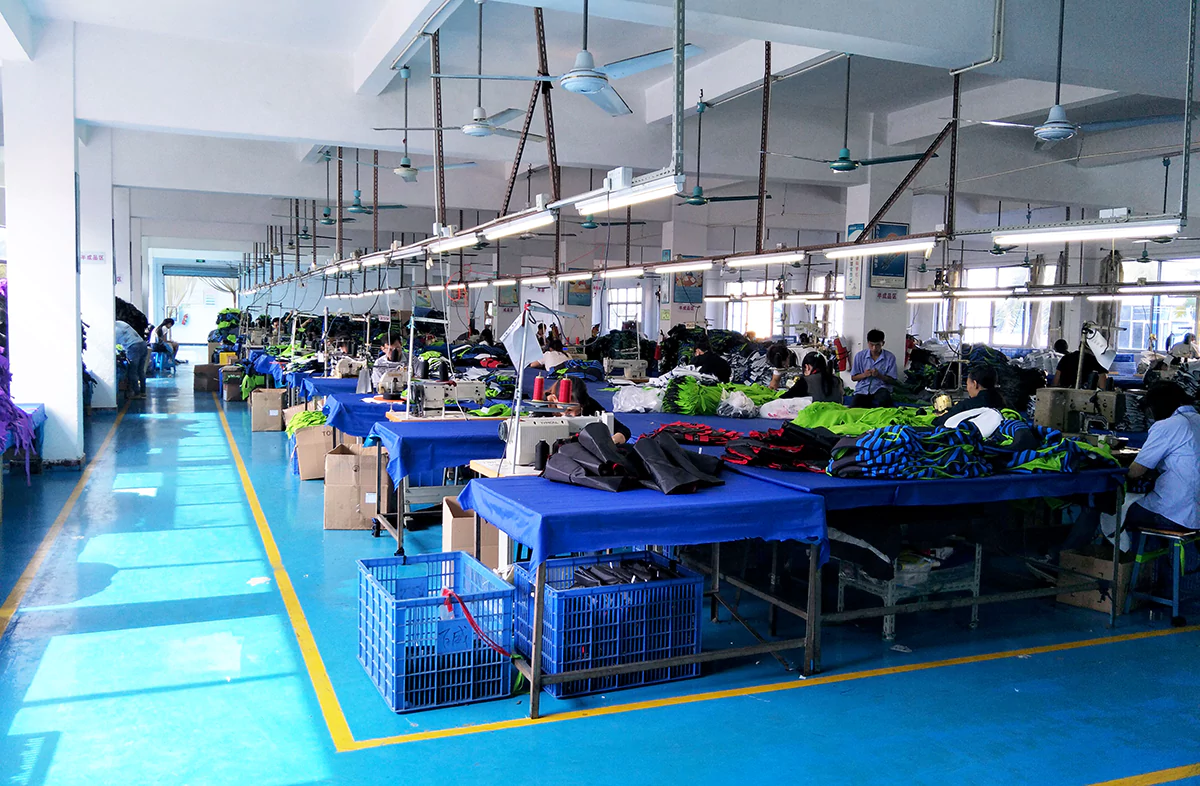
FYBagCustom is Your Trusted Custom Bag Manufacturer in China, with 15+ years of manufacturing experience and a production system structured for flexible, rapid-response restocking. For TikTok Shop sellers, Amazon FBA businesses, and DTC brands that need speed, our QR capabilities include:
Our 50,000 m² factory in Guangzhou with 10+ production lines and 500+ professional staff serves fast-response programs for TikTok Shop sellers, Amazon FBA businesses, social commerce brands, and DTC labels across international markets. Contact our team to discuss QR setup for your top-performing SKUs.
Quick-response restocking is not about asking your factory to work overtime during a crisis. It is about building a pre-positioned supply chain where every element — materials, patterns, production capacity, QC, and logistics — is ready before you need it. When the viral spike hits, the system activates with a single message. For sellers on TikTok Shop and Amazon, three core takeaways:
If your products sell on TikTok Shop, Amazon, or any platform where a stockout means lost ranking and lost momentum, now is the time to establish a QR partnership with your manufacturer. Contact FYBagCustom to discuss material pre-stocking, priority production agreements, and QR lead times for your top SKUs — and never lose another viral moment to a restocking gap.
FYBagCustom’s quick-response system delivers restock shipments in 7–14 days through material pre-stocking, locked patterns, priority production, in-line QC, and pre-arranged express logistics. Contact us to set up QR restocking for your best-selling SKUs.
Start Your Custom Bag Project →