Tel/WhatsAapp:+86 18011919834
E-mail: chloe.x@fybagcustom.com

Tel/WhatsAapp:+86 18011919834
E-mail: chloe.x@fybagcustom.com
Send Your Inquiry Today

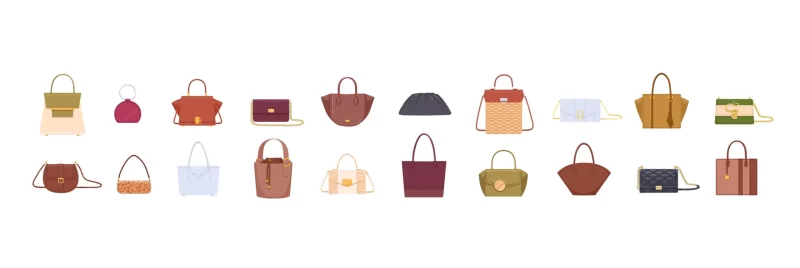
Who this guide is for: brand owners, merchandising managers, wholesale buyers, DTC founders, Amazon FBA sellers, and product line planners who are building their 2026 handbag assortments and facing the central question of the season: how much of the collection should be mini, how much should be oversized, and how much should be the mid-size “midi” that neither makes headlines nor generates returns? If you are planning SKU allocation across size tiers and want a data-informed framework — not runway speculation — this guide provides the sell-through logic, the tier-by-tier allocation model, and the production considerations for balancing trend bets with commercial reliability.
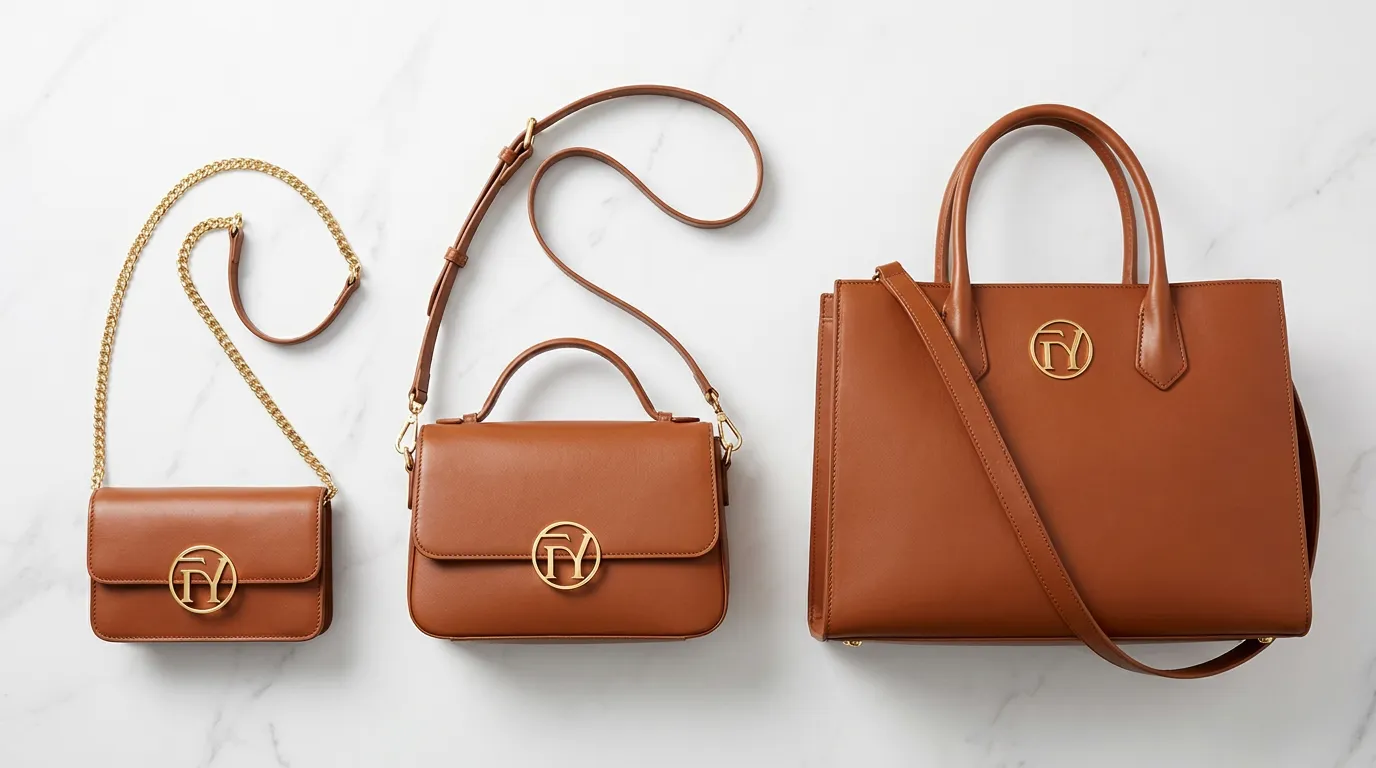
Every season, the fashion press declares a size winner. In 2023–2024, micro bags dominated: the smaller the bag, the louder the editorial coverage. In late 2025 and into 2026, the pendulum has swung — oversized totes, capacious shoulder bags, and “everything bags” are claiming runway real estate and editorial attention from the largest luxury houses. The trend narrative writes itself: “micro is dead, oversized is back.”
The narrative is wrong — or rather, it is incomplete. Neither size is dead. Neither size is back. Both sizes are permanently present in the market at different functions, different price tiers, and different sell-through velocities. The micro bag did not disappear when oversized returned to the runway; it simply stopped being the editorial novelty and became a category staple — a permanent fixture in the accessories market with consistent demand regardless of trend cycles. The oversized tote did not “return” from nowhere; it was always the functional backbone of the handbag market — the bag women actually carry to work, to the store, and through their daily lives.
What HAS changed in 2026 is the distribution of editorial energy and consumer attention across the size spectrum — and this shift in attention creates both opportunity and risk for B2B buyers building assortments. The opportunity: oversized bags are receiving the trend energy that generates content, press coverage, and social media virality. The risk: buyers over-correct toward oversized, under-allocate to midi (the perennial volume driver), and end up with an assortment that photographs well but sells unevenly.
This guide provides the framework for avoiding that over-correction — a size-tier allocation model based on sell-through patterns, not trend headlines.
Before allocating SKUs, you need a shared definition of what “mini,” “midi,” and “oversized” mean in functional terms — because the size labels are surprisingly inconsistent across the industry.
| Tier | Approximate Dimensions | Volume | What It Holds | Consumer Function |
|---|---|---|---|---|
| Mini / Micro | Under 22 × 16 × 8 cm | Under 3 L | Phone, cards, keys, lipstick — the “essentials only” loadout | Going-out; events; the “fashion statement” carry where the bag is the outfit, not the utility |
| Midi / Medium | 22–35 × 16–28 × 8–16 cm | 3–12 L | Phone, wallet, keys, sunglasses, cosmetics pouch, small water bottle, notebook — the “daily essentials” loadout | Everyday carry; commuting; the bag that goes from morning to evening without a size compromise |
| Oversized / Large | Over 35 × 28 × 16 cm | Over 12 L | Everything in the midi tier + laptop, water bottle, gym layer, book, lunch container, change of shoes — the “everything” loadout | Work carry; travel; errand running; the “I don’t want to carry two bags” solution |
Midi bags generate approximately 50–65% of unit sales volume across most handbag brands — yet they receive less than 20% of editorial and social media attention. The reason is structural: midi bags are not remarkable. They are not tiny enough to be a visual novelty (like a micro bag) and not large enough to be a lifestyle statement (like an oversized tote). They are the middle — the Goldilocks size that fits the consumer’s daily life without demanding to be discussed.
This invisibility is exactly what makes them dangerous to under-allocate. A brand that devotes 60% of its SKU budget to trend sizes (mini + oversized) and 40% to midi will likely generate 40% of its revenue from 60% of its SKUs and 60% of its revenue from 40% of its SKUs — a lopsided allocation that results in midi stockouts and trend-size overstock.
| Size Tier | 2024 Trend Energy | 2026 Trend Energy | Change | 2024 Sell-Through (% of units) | 2026 Projected Sell-Through | Change |
|---|---|---|---|---|---|---|
| Mini / Micro | Very high — the dominant editorial narrative | Moderate — still present but no longer the novelty; editorial attention shifting to oversized | Declining trend energy; stable commercial demand | 15–25% | 12–20% | Slight decline — the trend tourists have moved on; the core mini consumer remains |
| Midi / Medium | Low — rarely featured editorially; “boring” by media standards | Low — still the invisible workhorse; no editorial shift | Unchanged — midi never trends and never un-trends | 50–65% | 50–65% | Stable — midi demand is function-driven, not trend-driven |
| Oversized / Large | Low–Moderate — present but not the narrative | High — the 2026 editorial darling; major houses showing oversized prominently | Rising trend energy; growing commercial interest | 15–25% | 20–30% | Growing — both trend-driven new demand AND practical “return to office” demand |
The mistake most buyers make is assuming that editorial attention predicts sales volume. It does not — at least not proportionally. A size tier that receives 60% of the editorial attention might generate 25% of the sales. The relationship between trend energy and sell-through is real but non-linear and lagged:
| Phase | Trend Energy | Sell-Through | What Is Happening |
|---|---|---|---|
| Emerging trend (the first 6 months) | Very high — editorials, runway coverage, influencer features | Low–Moderate — early adopters buy; the mass market is still watching | The trend is visible but not yet commercial; buyers who over-allocate here get stuck with inventory |
| Peak trend (6–18 months) | High — the trend is mainstream; it appears in fast fashion and mass market | High — the mass-market consumer has adopted it; sell-through peaks | This is when the trend generates maximum commercial value; the smart buyer allocates heavily here |
| Mature trend (18+ months) | Declining — editorials move on to the next thing | Moderate and stabilizing — the trend has become a category staple; the consumers who love it continue buying; the trend tourists leave | The size tier is no longer “trending” but it is still selling; it has become part of the permanent assortment |
Mini bags in 2026 are in the “mature trend” phase — editorial attention has moved on, but commercial demand has stabilized. The consumer who wants a micro crossbody for going out still wants one; she just does not need the trend cycle’s permission to buy it.
Oversized bags in 2026 are in the “emerging-to-peak” transition — editorial energy is high and growing, and commercial demand is following, driven by both trend adoption AND the practical reality of the return-to-office movement (more women commuting with laptops, lunch, and layers).
For a brand with 10–20 active SKUs in its handbag collection, the following allocation balances trend opportunity with commercial reliability:
| Size Tier | % of Total SKUs | % of Total Production Units | Rationale |
|---|---|---|---|
| Mini / Micro | 15–25% of SKUs | 10–20% of units | Trend energy is declining but stable demand remains; mini serves the “going-out” and “fashion statement” function that no other size fills; under-allocation risks missing the occasion-wear consumer |
| Midi / Medium | 45–55% of SKUs | 50–65% of units | The volume driver — midi serves the everyday-carry function that the majority of consumers need; midi demand is relatively price-insensitive and trend-independent; the safest allocation |
| Oversized / Large | 20–30% of SKUs | 20–30% of units | Rising trend energy + practical demand from the return-to-office shift; oversized serves both the “trend” consumer (who wants the editorial look) and the “function” consumer (who needs to carry a laptop); the growth allocation for 2026 |
SKU allocation (how many unique styles) and unit allocation (how many total units produced) are different decisions:
The optimal size-tier allocation shifts depending on the brand’s retail positioning:
| Retail Tier | Mini Allocation | Midi Allocation | Oversized Allocation | Why the Shift |
|---|---|---|---|---|
| Luxury / premium | 25–35% of SKUs | 35–45% | 20–30% | The luxury consumer buys mini bags as fashion accessories / collector pieces; mini is a higher proportion of luxury purchases because the “fashion statement” function is more valued at this tier |
| Mid-market | 15–20% | 50–60% | 20–30% | The mid-market consumer prioritizes function over statement; midi dominates because it is the most functional size; mini is a smaller allocation because the mid-market mini buyer is more price-sensitive (she is less willing to pay mid-market prices for a bag that holds only a phone) |
| Budget / value | 10–15% | 55–65% | 20–30% | The budget consumer buys bags for function; midi and oversized serve daily needs; mini at budget pricing is a small, impulse-driven category |
| Attribute | Profile |
|---|---|
| When she carries it | Evenings out, dates, parties, brunches, weddings, events — occasions where she does not need full daily-carry capacity |
| What she values | The bag as a fashion accessory — the shape, the color, the detail, the “adorable” factor; capacity is secondary; the bag is the outfit punctuation |
| How many she buys | Multiple — the mini is a relatively accessible purchase (lower absolute price than midi or oversized); she may own 3–5 across different colors and silhouettes |
| Her trend sensitivity | Moderate–High — she pays attention to what is “current” but she has already adopted mini as a permanent part of her wardrobe; she does not need the trend cycle to justify the purchase |
| Her price sensitivity | At luxury: low (she collects minis). At mid-market: moderate (the “why should I pay $X for a bag that holds nothing?” objection emerges) |
| Silhouette | Why It Sells | Trend Status | Production Notes |
|---|---|---|---|
| Mini crossbody (phone-sized, chain strap) | Hands-free; fits the going-out use case perfectly; the chain adds a jewelry-like quality | Mature staple — not new, not going away | Standard crossbody construction at a reduced scale; chain strap sourcing |
| Micro shoulder bag (crescent or half-moon) | The most photogenic mini shape; sits at the shoulder like a fashion accessory | Growing — the crescent mini is the 2026 “it” mini silhouette | Curved pattern pieces; precision sewing at small scale (see production notes below) |
| Mini tote (structured, under 20 cm) | The “mini version of the hero” — a collectible, gift-able miniature of the brand’s signature tote | Stable — the mini tote is a permanent gifting and impulse-purchase product | Same construction as the full tote at 40–50% scale; hardware must be proportionally reduced |
| Clutch / wristlet / card case | The ultimate minimalist accessory — holds phone + 2 cards; the “do I even need a bag?” product | Stable — the clutch is perennial | Simplest construction; lowest material cost; the entry-price-point product |
Mini bags are more complex to produce per unit than most buyers expect — the reduced scale creates manufacturing challenges that do not exist at standard sizes:
| Challenge | Why It Happens at Mini Scale | Impact |
|---|---|---|
| Sewing precision at reduced seam allowance | Seam allowances on mini bags are 5–8 mm (vs. 10–15 mm on standard bags); a 1 mm sewing error on a 6 mm seam allowance is proportionally much larger than on a 12 mm seam allowance | Higher defect rate if the sewing team is not experienced with mini scale; requires skilled operators or machine calibration |
| Hardware proportion | Standard hardware (30 mm D-rings, #5 zippers, 20 mm buckles) is too large for mini bags; proportionally reduced hardware (#3 zippers, 15 mm D-rings, 12 mm buckles) must be sourced or ordered | Smaller hardware may have limited availability or longer lead times; specify mini-scale hardware in the tech pack |
| Material waste | Mini pattern pieces are small and irregularly shaped; they nest less efficiently on the cutting table than standard pieces, increasing material waste | Higher per-unit material cost due to waste; offset by the lower total material consumption per unit |
| Interior organization at micro scale | A phone pocket in a micro bag occupies 60–70% of the interior — there is almost no room for additional pockets or organization | Simplify the interior to 0–1 pocket; the mini bag’s interior is essentially a single cavity |
The 2026 oversized trend is unusual because it is driven by two independent demand sources that are converging:
| Demand Source | What Is Driving It | Consumer Profile |
|---|---|---|
| Trend demand | Major houses (and the editorial ecosystem that amplifies them) showing oversized silhouettes prominently in SS26 and AW26 collections; influencer adoption; “big bag energy” as a social media narrative | The fashion-forward consumer who buys based on trend currency; she wants the bag that is “of the moment” |
| Functional demand | The return-to-office movement — more women commuting with laptops, documents, lunches, and outfit layers; the post-pandemic work pattern requires a bag that holds a full professional loadout | The professional woman who needs capacity; she has been using a tote or work bag all along but now the “trend” gives her permission to buy a new one |
This dual-source demand is why oversized allocation should be higher in 2026 than in a typical trend cycle — the trend demand is additive to the functional demand that was already present, not a replacement for it.
| Silhouette | Why It Sells | Trend Status | Production Notes |
|---|---|---|---|
| Structured oversized tote (the “everything bag”) | The #1 functional oversized silhouette — holds laptop + full daily carry; reads as professional and polished | Peak — this is the oversized hero for 2026 | Standard tote construction at large scale; laptop sleeve critical; weight management important (the bag is large — every gram of material adds up) |
| Soft oversized shoulder bag (slouchy crescent or hobo) | The trend oversized silhouette — editorial, fashion-forward, dramatic drape | Emerging-to-peak — the editorial darling | Unstructured construction; material drape is critical; see our slouchy hobo guide for specifications |
| Oversized weekender / duffle | The travel-crossover — works as both a weekend bag and an oversized daily carry | Growing — the “multipurpose large bag” consumer is expanding | Duffle construction; trolley sleeve; multiple carry modes (handles + shoulder strap) |
| Challenge | Why It Happens at Oversized Scale | Impact |
|---|---|---|
| Material consumption per unit | An oversized tote uses 2–3× the material of a midi crossbody; material cost is proportionally higher | Higher per-unit cost; ensure your pricing model accounts for the material multiplier |
| Weight management | More material = more weight; an oversized tote that weighs 1.2 kg empty + 5 kg of contents = 6.2 kg on the consumer’s shoulder all day | Specify lightweight materials (PU over genuine leather where possible; lightweight interlining; nylon lining instead of cotton); target empty weight under 1.0 kg for oversized totes |
| Structural integrity under load | An oversized bag carries more weight than a midi; handles, strap attachments, and base seams must be proportionally reinforced | Heavier-duty reinforcement: wider webbing at handle attachment (30–40 mm vs. 25 mm); box-X bartack with additional passes; base seam reinforced with heavy-duty thread |
| Dimensional consistency across units | Larger panels are more difficult to cut and sew consistently; a 2 mm alignment error that is invisible on a 25 cm panel is visible on a 45 cm panel | Tighter QC on panel alignment, symmetry, and topstitching straightness; first-article inspection on oversized SKUs |
For brands launching a new collection or a seasonal capsule, the following models translate the allocation framework into specific SKU plans.
| SKU # | Size Tier | Silhouette | Function | Priority |
|---|---|---|---|---|
| 1 | Midi | Structured tote | The everyday hero — daily commute, work, errands | The #1 priority — this SKU will generate the most revenue |
| 2 | Midi | Crossbody | The hands-free everyday — casual days, weekends, going out lighter | #2 priority — the crossbody captures the “not carrying a tote today” occasions |
| 3 | Oversized | Large structured tote or soft shoulder bag | The work + travel carry — laptop, full loadout | #3 — captures the functional oversized buyer AND the 2026 trend buyer |
| 4 | Mini | Mini crossbody or clutch | The going-out / evening / gift product | #4 — a lower-volume SKU but essential for assortment completeness and entry-price accessibility |
| 5 | Midi | Shoulder bag or bucket bag | A silhouette alternative to the tote — captures the consumer who does not want a tote shape | #5 — assortment variety; prevents the collection from looking “all totes” |
| 6 | Oversized or Midi | Weekender or travel bag | The weekend / travel extension — captures the “I need a bag for trips” consumer | #6 — the collection extension; positions the brand as a “full wardrobe” bag brand |
| Size Tier | # of SKUs | Silhouettes |
|---|---|---|
| Mini (3 SKUs) | 3 | Mini crossbody, mini shoulder bag, clutch/wristlet |
| Midi (6 SKUs) | 6 | Structured tote, crossbody, shoulder bag, bucket bag, work bag with laptop sleeve, convertible backpack-to-shoulder |
| Oversized (3 SKUs) | 3 | Oversized structured tote, soft oversized shoulder bag, weekender/duffle |
| SKU # | Size Tier | Silhouette | Why This SKU |
|---|---|---|---|
| 1 | Midi | Structured tote | The must-have; validates the brand’s design and quality |
| 2 | Midi | Crossbody | Captures a different occasion; provides silhouette variety |
| 3 | Oversized | Large tote | Captures the 2026 trend opportunity; demonstrates the brand can produce larger formats |
| 4 | Mini | Clutch or wristlet | The entry-price product; the gift product; the social media product (most photographed format relative to price) |
Size and color interact — certain colors sell disproportionately well at certain sizes. The interaction is driven by the size tier’s function: the mini is a fashion accessory (bold colors perform), the midi is an everyday tool (neutrals perform), and the oversized is a practical carry (neutrals dominate, with one trend color for editorial energy).
| Color | Mini (fashion accessory) | Midi (daily workhorse) | Oversized (practical carry) |
|---|---|---|---|
| Black | Moderate — the “safe mini” for evening | Strong — the #1 midi color across all tiers | Very strong — black dominates oversized because the bag is large and visible; dark colors reduce the visual “bulk” |
| Cognac / tan | Low–Moderate — cognac mini reads as “heritage accessory” | Very strong — the #1 warm neutral; the “leather bag” color | Strong — cognac oversized totes are the “professional” choice |
| Cream / off-white | Moderate — the “editorial mini” for photographed outfits | Moderate — beautiful but maintenance-intensive for daily use | Low — a cream oversized tote shows every mark; consumers avoid it for practical sizes |
| Butter yellow / sage green / lavender | High — trend colors are the mini’s strength; the small surface area makes bold color feel “delightful” not “overwhelming” | Moderate — the trend-conscious midi buyer wants one color-pop option alongside her neutrals | Low–Moderate — one trend color in the oversized tier (for the editorial buyer); neutrals dominate |
| Black + trend accent (black body, colored strap or hardware) | Very effective — the black mini with a colored detail serves both “safe” and “fashion” simultaneously | Moderate | Low — at oversized scale, accent details are proportionally less visible |
If you offer 3 colors per SKU and have a 12-SKU collection:
| Size Tier | SKUs | Colors Per SKU | Priority Colors |
|---|---|---|---|
| Mini (3 SKUs) | 3 | 3 colors each | 1 neutral (black) + 1 warm (cognac or blush) + 1 trend (butter yellow, sage, or lavender) |
| Midi (6 SKUs) | 6 | 2–3 colors each | 2 neutrals (black + cognac) + 1 trend or accent color for the 2–3 most commercial styles |
| Oversized (3 SKUs) | 3 | 2–3 colors each | 2 neutrals (black + cognac) + 1 trend for the hero oversized style only |
Beyond SKU count and color allocation, inventory depth (how many units per SKU/color) must be calibrated to each size tier’s sell-through velocity and reorder pattern.
| Size Tier | Sell-Through Velocity | Reorder Frequency | Initial Inventory Depth (Per SKU/Color) | Rationale |
|---|---|---|---|---|
| Mini | Moderate — steady but not fast; multiple SKUs dilute volume per style | Quarterly — mini styles rotate seasonally; the trend consumer wants novelty | Moderate — enough to last one quarter without stockout; plan for smaller reorders as the style’s sell-through is validated | Mini styles have shorter lifecycles and more SKU variety; avoid over-investing in any single mini style |
| Midi | High — the volume driver; consistent daily sell-through | Monthly or continuous — midi hero styles are in constant demand; stockouts in midi are the most commercially damaging | Deep — the hero midi styles (structured tote, crossbody) need the deepest inventory; these are the styles that generate the majority of revenue | Midi stockouts cost the most revenue per day of being out of stock; err on the side of deeper inventory |
| Oversized | Moderate–High (growing in 2026) — driven by both trend and function | Quarterly — oversized styles have longer consideration cycles (consumers take longer to decide on large purchases) | Moderate-to-deep — the hero oversized style (structured tote) needs depth similar to a midi hero; the secondary oversized styles (weekender, soft shoulder) need moderate depth | Oversized has growing demand in 2026 but the trend is still establishing; validate sell-through before committing to very deep inventory |
For the mini and oversized tiers — where trend-driven demand can spike unpredictably (an influencer features your mini crossbody; an editorial publishes your oversized tote) — maintain a quick-response material buffer at the factory for your top 1–2 trend-tier SKUs. Pre-stock the material for 200–300 additional units so that a restock can be produced in 7–14 days rather than 35+ days. (For the detailed QR framework, see our quick-response restocking guide.)
For brands that heavily allocated to mini in 2023–2025 and now need to shift toward a more balanced assortment, the transition should be gradual, not abrupt:
| Phase | Timeline | Mini Allocation | Midi Allocation | Oversized Allocation | Action |
|---|---|---|---|---|---|
| Phase 1: Test | Season 1 (first quarter) | Maintain current mini allocation | Maintain current midi | Add 2–3 oversized SKUs as “test” styles alongside the existing collection | Introduce oversized without cutting mini; validate oversized sell-through with real data before reallocating |
| Phase 2: Shift | Season 2 | Reduce mini by 2–3 SKUs (cut the lowest-selling minis) | Maintain or add 1 midi SKU | Expand oversized by 1–2 SKUs (add the silhouettes that tested best) | Use Season 1 data to inform the reallocation; cut mini styles that under-performed; invest in oversized styles that over-performed |
| Phase 3: Stabilize | Season 3+ | Land at 15–25% of SKUs | Land at 45–55% | Land at 20–30% | The assortment is now balanced; adjust annually based on sell-through data, not trend headlines |
The key principle: never reallocate based on runway coverage alone. Always validate with sell-through data from your own customer base before making significant SKU shifts. Your customer may be earlier or later than the market average in adopting the oversized trend — the data will tell you.
| Size Tier | Material Per Unit (exterior, approximate) | Material Per Unit (lining) | Hardware Pieces | Production Time Per Unit |
|---|---|---|---|---|
| Mini | 0.15–0.30 m² | 0.10–0.20 m² | 3–6 pieces (small zipper, snap, mini D-ring) | 15–25 minutes |
| Midi | 0.40–0.80 m² | 0.25–0.50 m² | 5–10 pieces (standard zipper, closure, D-rings, strap hardware) | 25–45 minutes |
| Oversized | 0.80–1.50 m² | 0.50–1.00 m² | 6–12 pieces (larger zipper, closure, D-rings, strap hardware, base feet) | 35–60 minutes |
For brands ordering multiple size tiers from the same factory, the total order can be structured as a blended MOQ — where the factory’s minimum order quantity is met by the combined total across all sizes and colors, rather than requiring the MOQ per individual SKU.
| Approach | Example | Advantage |
|---|---|---|
| Per-SKU MOQ | Each of 12 SKUs must meet the factory’s MOQ (e.g., 100 units) = 1,200 total units minimum | Simplest for the factory; but forces the buyer to produce 100 units of slow-moving mini styles that may only sell 50 |
| Blended MOQ | The total order must meet 1,200 units, distributed as: minis at 50–80 units each, midis at 100–150 each, oversized at 80–120 each | The buyer allocates units proportionally to projected sell-through; no SKU is forced to over-produce |
Discuss blended MOQ with your factory at the quoting stage. Most experienced manufacturers — including those producing for brands with diverse size assortments — offer blended MOQ structures that accommodate variable unit quantities across SKUs.
After launching a size-balanced assortment, track these KPIs by size tier to validate the allocation and inform future seasons:
| KPI | What It Measures | Target by Size Tier |
|---|---|---|
| Sell-through rate (% of units sold vs. units produced, over 90 days) | How efficiently the inventory converts to sales | Mini: 65–80% (higher is better; minis should sell through before the next season). Midi: 75–90%. Oversized: 65–80% |
| Revenue contribution (% of total revenue from each size tier) | Which tier generates the most revenue | Mini: 10–20%. Midi: 50–65%. Oversized: 15–30%. If midi is below 50%, the collection may be over-indexed on trend sizes |
| Average order value (AOV) | Whether the size tier is pulling up or diluting the brand’s average price | Mini: lower AOV (expected — smaller bag, lower price). Midi: baseline AOV. Oversized: higher AOV (expected — larger bag, higher price). If oversized AOV is below midi, the oversized pricing may need adjustment |
| Return rate (% of units returned) | Whether the size is meeting consumer expectations | Mini: watch for “too small” returns (the consumer expected more capacity). Midi: lowest return rate (the most predictable size). Oversized: watch for “too heavy” or “too large” returns |
| Reorder rate (how frequently the SKU is reordered) | Which SKUs are sustaining demand beyond the initial order | Midi heroes should be reordered every 4–8 weeks. If a mini or oversized SKU reorders consistently, it has graduated from “trend” to “staple” — increase its allocation |
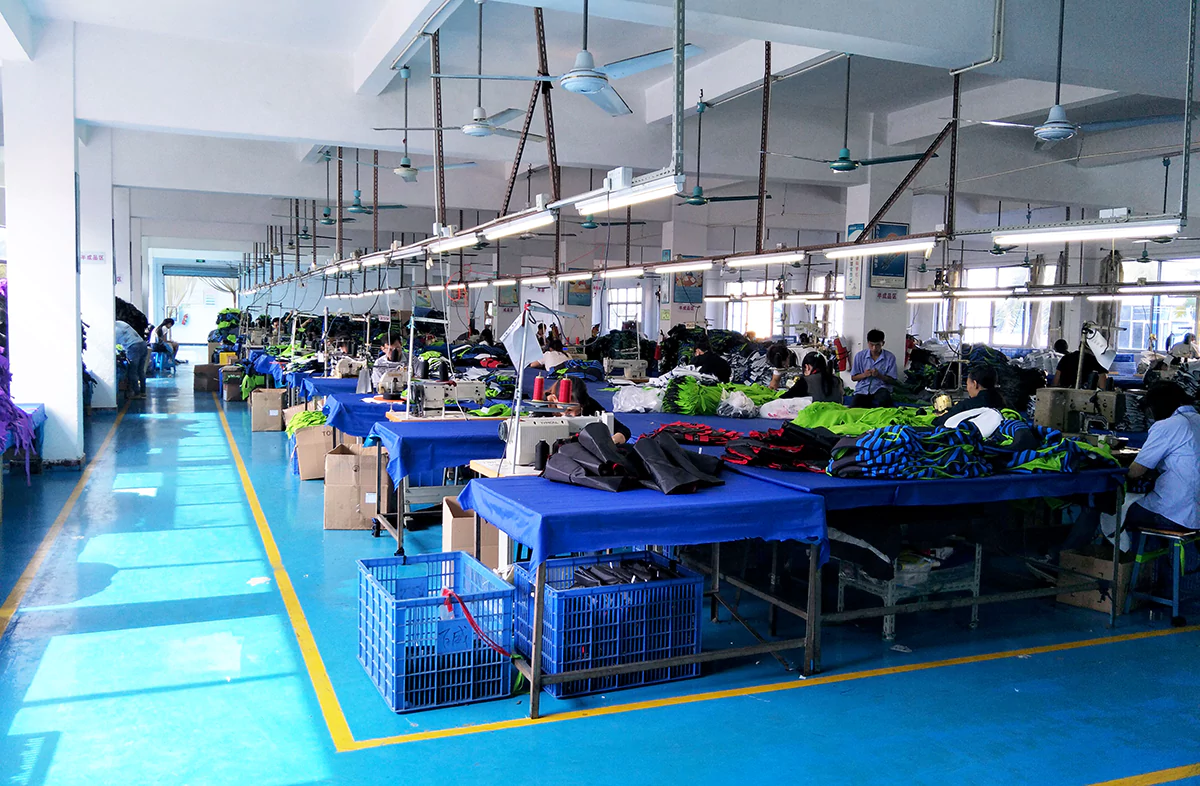
FYBagCustom is Your Trusted Custom Bag Manufacturer in China, with 15+ years of manufacturing experience across every size tier — from micro clutches to oversized weekenders. For brands building size-balanced collections, our capabilities include:
Contact our development team to discuss size-balanced assortment planning, blended MOQ structures, and multi-size sample development for your 2026 collection.
The 2026 handbag market does not belong to mini bags or oversized totes — it belongs to the brand with the balanced assortment that serves every occasion, every consumer, and every function. For B2B buyers planning their 2026 collections, three core takeaways:
If your 2026 collection needs to balance trend bets across sizes — and you want a factory that produces mini, midi, and oversized in a single order with blended MOQ — contact FYBagCustom to discuss size-balanced assortment planning, multi-size sampling, and production-unit allocation.
FYBagCustom produces mini, midi, and oversized bags in a single blended-MOQ order — with quick-response material buffers for trend sizes, weight optimization for oversized, and proportional hardware sourcing for every scale. Multi-size samples in 5–7 days.
Start Your Custom Bag Project →