Tel/WhatsAapp:+86 18011919834
E-mail: chloe.x@fybagcustom.com

Tel/WhatsAapp:+86 18011919834
E-mail: chloe.x@fybagcustom.com
Send Your Inquiry Today

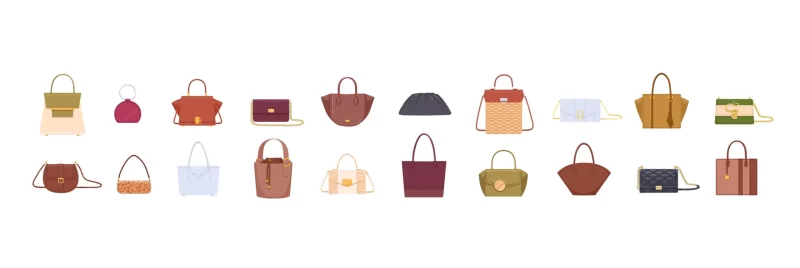
Who this guide is for: brand owners, sourcing managers, wholesale buyers, Amazon FBA sellers, DTC founders, retail chain merchandisers, and corporate gifting program leads who are evaluating handbag silhouettes for their 2026 collections. If you are deciding which shapes to develop with a custom bag manufacturer in China — and how to customize them intelligently — this guide is written for you.
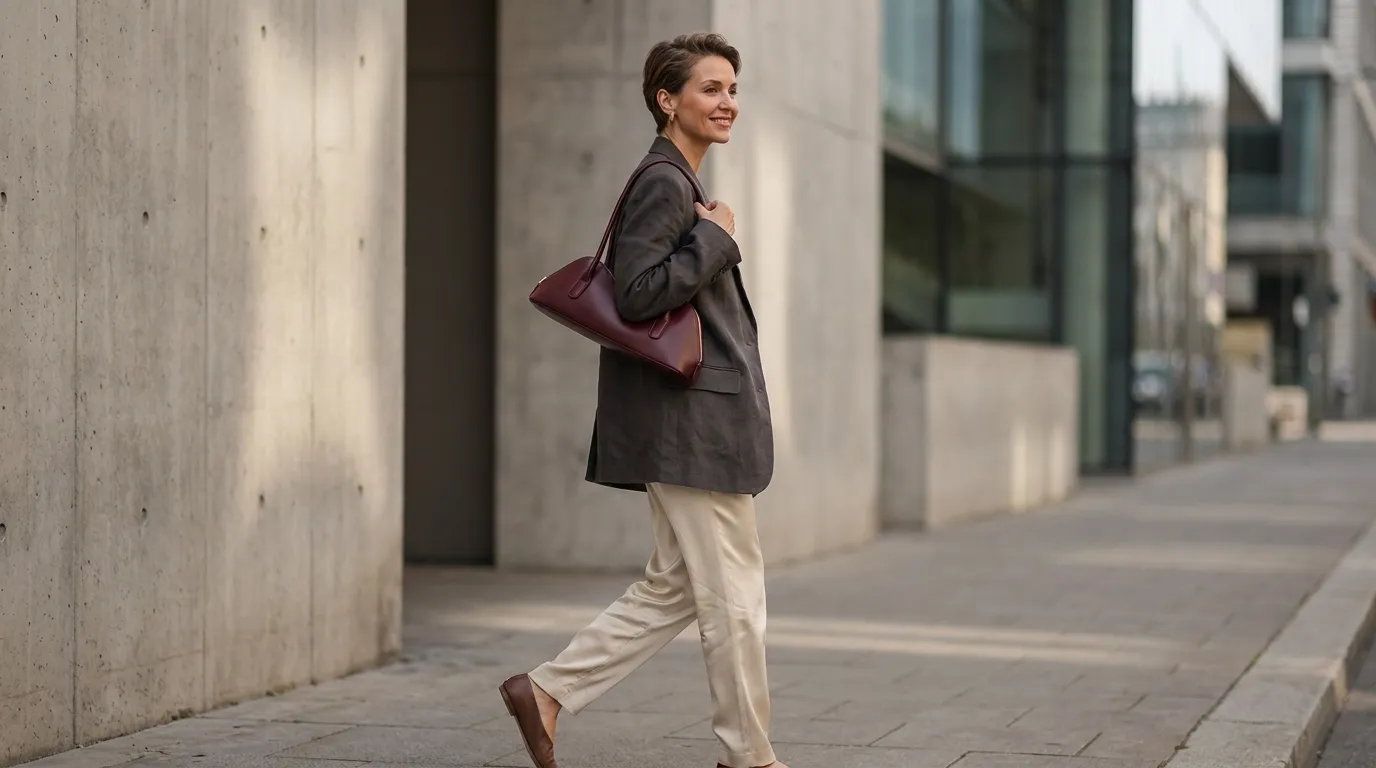
If you have been scanning runway recaps, retail shelves, or Amazon best-seller lists in the past six months, one silhouette keeps resurfacing: a wide, low-profile, horizontally oriented shoulder bag that sits against the hip like a sleek rectangle. Industry editors call it the “East-West” silhouette — a term borrowed from 1970s American fashion — and it has quietly replaced the vertical “North-South” tote as the most commercially relevant handbag shape heading into 2026.
For B2B buyers, this is more than a styling note. A silhouette shift of this magnitude affects pattern cutting, hardware selection, strap engineering, packaging dimensions, and — critically — how a bag photographs on an e-commerce grid. Getting ahead of the curve means placing development orders now, while late adopters will be chasing capacity in Q3. This guide breaks down what the East-West silhouette actually is, why it is trending, how to customize it intelligently, and what to look for when specifying OEM or ODM production.
In handbag terminology, “East-West” (E-W) refers to a bag whose width is greater than its height — the body extends horizontally across the torso rather than hanging vertically. The opposite orientation, known as “North-South” (N-S), has dominated the market for the better part of a decade through vertical totes, bucket bags, and tall shoulder bags.
A typical East-West bag has a width-to-height ratio between roughly 1.5:1 and 2.4:1. Anything flatter starts to read as a clutch or an envelope; anything closer to square loses the signature “slim and long” visual rhythm that makes the shape photograph so well. The silhouette is usually paired with a short top handle, a shoulder strap that can be tucked under the arm, or a fixed thin strap that rides high on the body.
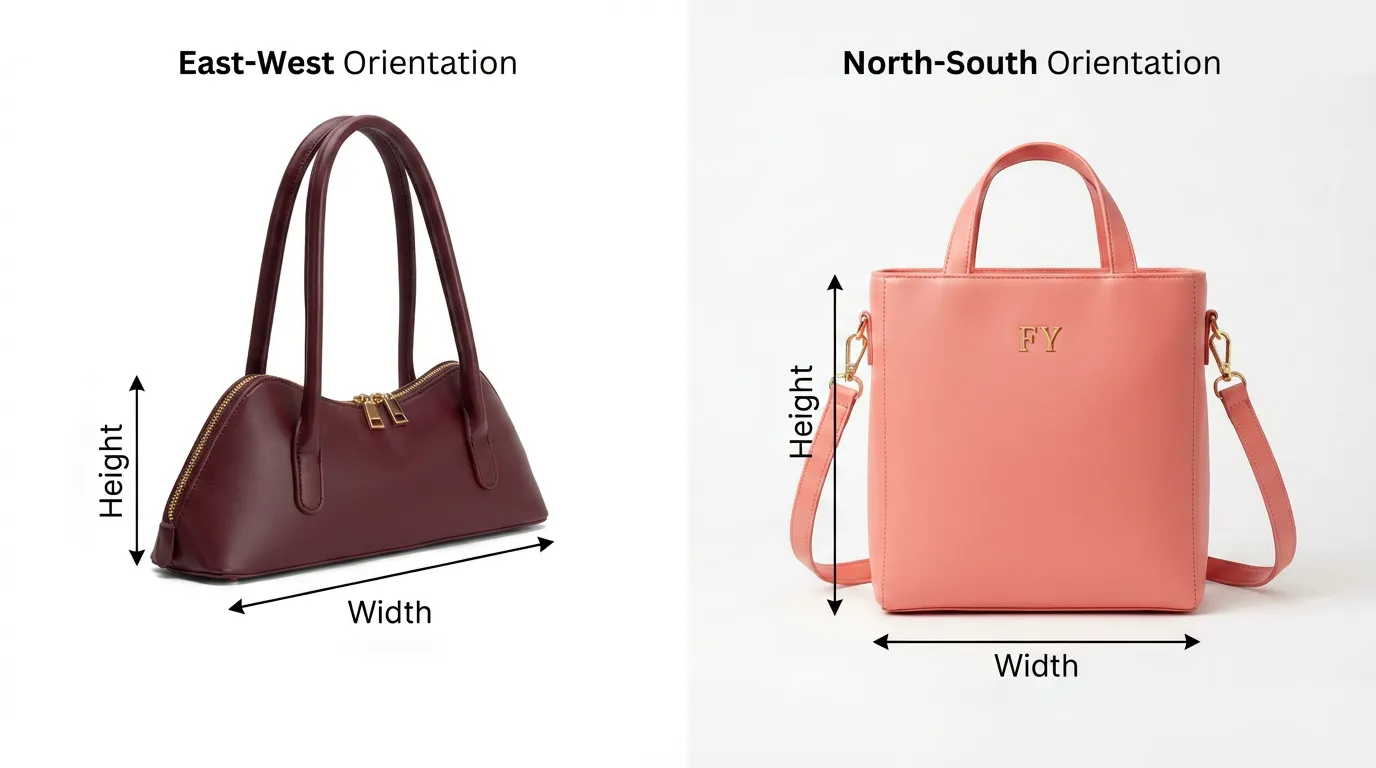
| Size Category | Width (cm) | Height (cm) | Depth (cm) | Typical Use Case |
|---|---|---|---|---|
| Mini E-W | 20–24 | 10–12 | 5–7 | Evening, going out, phone + essentials |
| Small E-W (most popular) | 25–30 | 13–16 | 6–9 | Daily wear, urban commute, retail hero SKU |
| Medium E-W | 31–36 | 17–20 | 9–12 | Work-capable, fits small tablet, travel day bag |
| Oversized E-W “Hobo” | 37–45 | 20–25 | 12–15 | Weekend, airport, statement piece |
For brands entering the category for the first time, the Small E-W (25–30 cm wide) is the safest commercial choice. It photographs beautifully at the standard 1:1 and 4:5 aspect ratios used on Amazon, Shopify, and Instagram, fits a smartphone plus a slim wallet and keys, and translates across seasons without reading as too formal or too casual.
Trends in handbags rarely appear from nowhere. The East-West revival is the product of four overlapping forces that buyers should understand — not just to justify a purchase order, but to position product copy and retail storytelling correctly.
Over the past two seasons, major European and American houses have shown slim, horizontal shoulder bags at the top of their leather goods rotations. This “halo effect” flows down predictably: luxury silhouettes get interpreted by contemporary brands within six months and reach mass-market private label programs within twelve. We are now in that mass-market window, which is why OEM development inquiries for the shape have surged across Chinese bag factories since late 2025.
The Y2K and 1990s revival brought back the short-strap underarm bag — a styling that inherently requires an East-West shape to sit naturally under the arm. Tall North-South bags are awkward in this position; they dig into the ribcage or hang below the elbow. A flat, wide silhouette slides into the space neatly, which is why this shape dominates content from fashion creators under 35.
East-West bags typically feature clean, uncluttered front panels — a large flat surface that lets material quality, stitching, and subtle branding speak for themselves. This maps perfectly onto the “quiet luxury” aesthetic driving premium contemporary sales: no loud logos, no excessive hardware, just proportion and finish. For private label brands, this makes the silhouette a natural vehicle for embossed logos, tonal debossing, or discreet metal nameplates rather than large printed graphics.
A wide, horizontal bag fills the frame in lifestyle photography more effectively than a vertical one. On model shots, it creates a strong horizontal line at the hip or underarm that anchors the composition. On flat-lay product photography, the shape reads clearly at thumbnail size on mobile. These practical advantages matter enormously for Amazon FBA sellers and DTC brands whose conversion rates depend on first-frame impact.
The chart below visualizes why the East-West silhouette is the category to invest in right now — and why the window for arriving at retail during peak demand is closing.
Relative demand indexed to 2022 = 100. Projected for 2026.
The East-West curve more than doubles across the five-year span, while the North-South tote steadily declines. Hobo shapes are approaching saturation, and top-handle styles remain stable without breaking out. For buyers, the practical implication is clear: East-West is the single silhouette where early commitment in 2026 is most likely to translate into outsized retail velocity.
Before committing a development budget, it is worth understanding exactly how the two orientations differ in construction, cost, and end-user experience. A silhouette change is not simply a matter of rotating a pattern ninety degrees — it affects nearly every component of the bag.
| Dimension | East-West (Horizontal) | North-South (Vertical) |
|---|---|---|
| Visual mood | Modern, editorial, minimal, retro-referential | Classical, practical, roomy, office-appropriate |
| Typical carry position | Underarm, shoulder, short top-handle | Shoulder, crossbody, hand-carry |
| Interior capacity | Moderate; wide but shallow | Higher; deeper vertical well |
| Pattern complexity | Simpler front panel; wider main pieces | More seam work if structured |
| Strap engineering | Critical — length affects whole look | Forgiving; most lengths work |
| Hardware scale | Smaller, more refined, often minimal | Can support larger statement hardware |
| Photography performance | Stronger on mobile grids, lifestyle | Stronger for “capacity” selling points |
| Target demographic 2026 | Fashion-forward 18–40, DTC, premium contemporary | Everyday, mass-market, utility-driven |
| Typical MOQ impact | Same tooling cost; pattern-level adjustment | Baseline |
The takeaway for buyers: if your brand sits in the fashion, premium contemporary, or lifestyle categories, the East-West silhouette is currently the higher-velocity choice. If your core customer prioritizes capacity — laptop bags, travel totes, mom-bags — the North-South shape remains structurally superior. Many brands now stock both orientations in parallel collections to cover the full use-case spectrum.
Because East-West bags expose a wide, flat front surface, the material does a disproportionate amount of aesthetic work. Small flaws in grain, printing, or coating that would be hidden on a curved or multi-panel body become visible on a clean rectangular panel. This makes material selection and supplier-side quality control especially important.
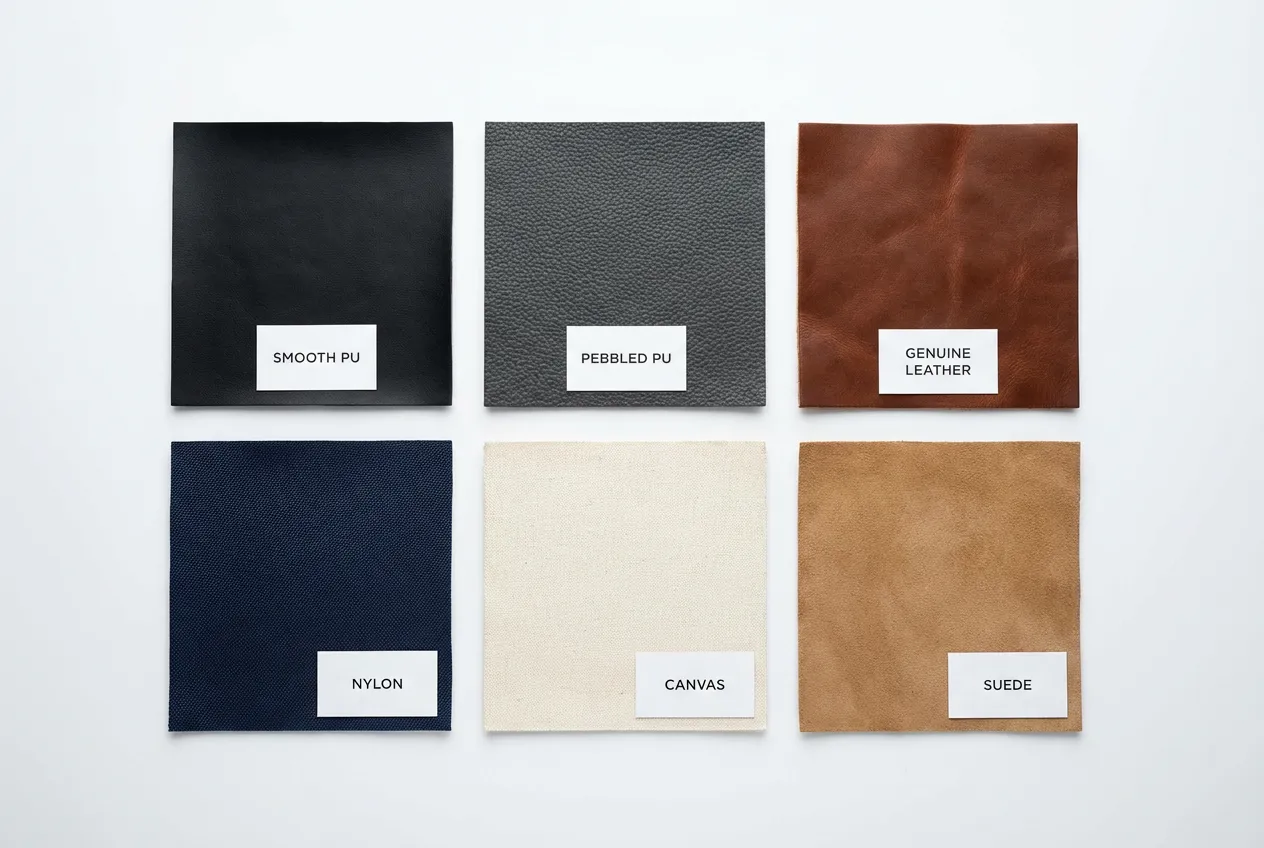
| Material | Visual Effect on E-W | Pros | Cons | Best For |
|---|---|---|---|---|
| Smooth PU leather | Clean, luxe, photographs like real leather | Cost-effective, consistent, wide color range | Mid-tier scratch resistance | Contemporary fashion, DTC, Amazon |
| Pebbled / lychee PU | Forgiving texture, hides minor wear | Premium feel, stylish, durable | Slightly higher unit cost than smooth | Everyday, daily-carry positioning |
| Genuine cowhide | Luxury flagship product | Ages beautifully, premium pricing power | Higher MOQ viability, longer lead time | Premium private label, boutique retail |
| Nylon / recycled nylon | Modern sport-lux, editorial | Lightweight, easy colorways, sustainability angle | Shows weft lines under low-angle light | Y2K-inspired, streetwear-adjacent brands |
| Canvas / washed canvas | Casual, artisanal, tactile | Eco-friendly, affordable, print-friendly | Limited structure; needs interlining | Lifestyle, gifting, resort collections |
| Suede / microsuede | Soft, seasonal, high-fashion | Distinctive feel, premium visual | Stain-prone, seasonal demand | Fall/winter drops, limited editions |
| Woven / raffia | Artisanal, textured, resort-ready | Differentiating, craft story | Longer lead times, more handwork | Resort, summer, premium artisanal |
One practical note for OEM buyers: because the front panel is so prominent, ask your manufacturer to run a pre-production “panel approval” step where a single flat-cut piece of your chosen material is sent for inspection before bulk cutting begins. This catches dye lot inconsistencies, coating issues, or grain direction problems that cost far more to fix after assembly.
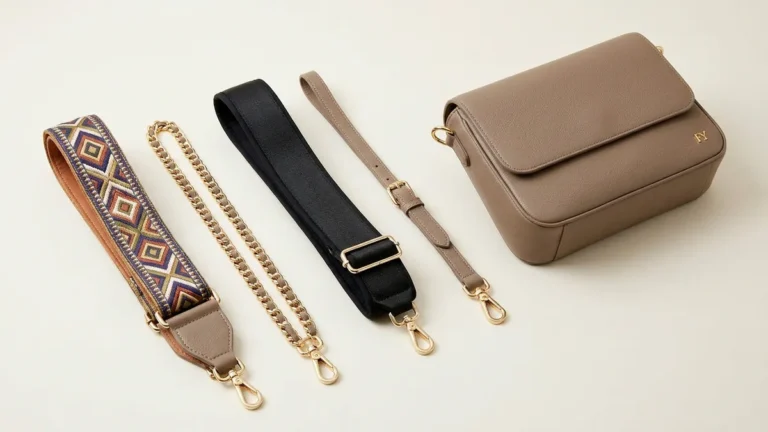
Nothing defines an East-West bag more than its strap. The same body can read as minimalist, retro, sporty, or utilitarian depending entirely on strap length, width, and attachment geometry. For buyers, this is the single most important customization decision — and the one most often handled poorly by inexperienced factories.
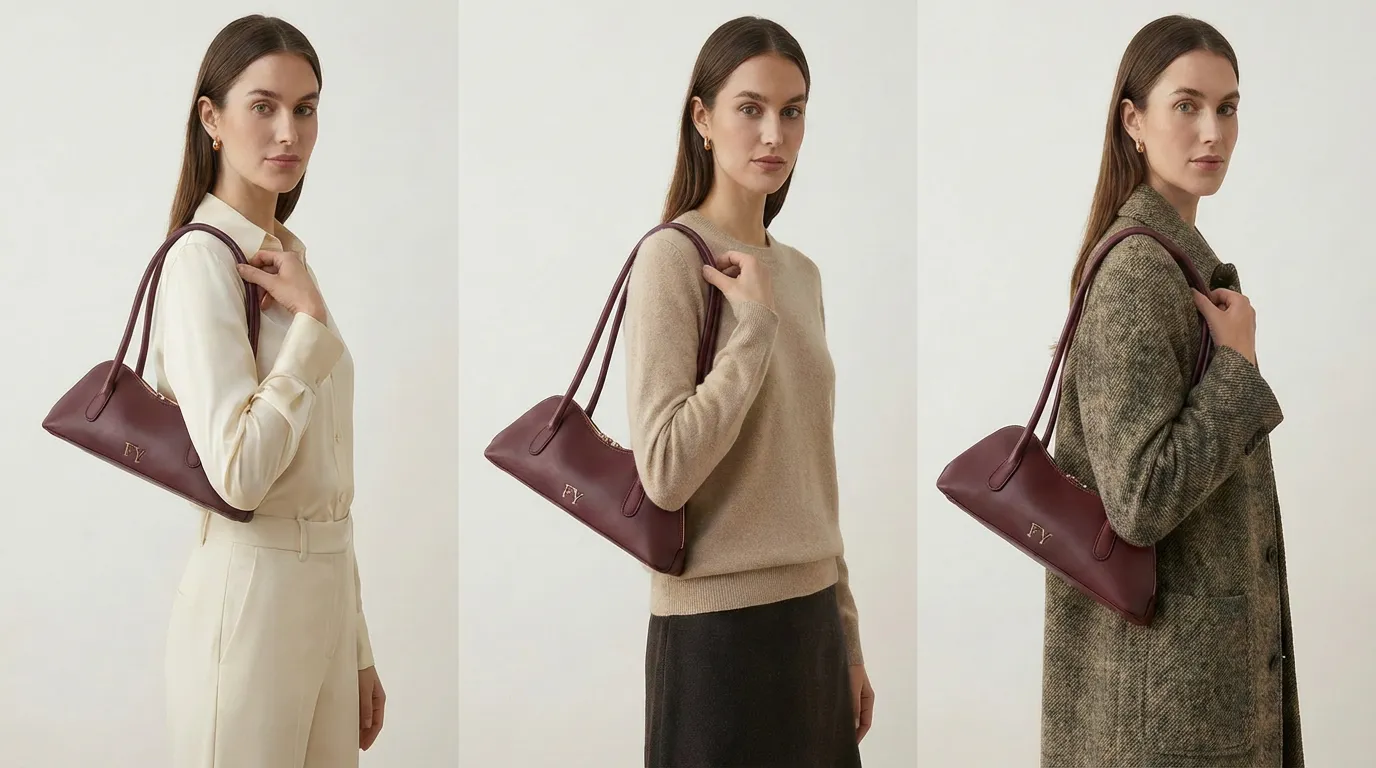
| Configuration | Drop Length (from shoulder) | Strap Width | Where the Bag Sits | Aesthetic Read |
|---|---|---|---|---|
| Short underarm / “shoulder clip” | 15–22 cm | 1.5–2.5 cm | Under the armpit, hugging the ribcage | Y2K, 90s minimalist, editorial |
| Classic shoulder | 23–30 cm | 2–3 cm | At the waist or upper hip | Refined, office-to-evening, quiet luxury |
| Long shoulder / low slung | 31–40 cm | 2.5–4 cm | At or below the hip | Casual, relaxed, “mom jean” era styling |
| Adjustable with removable crossbody | Short built-in + optional 100–120 cm strap | Varies | Multi-position (most versatile) | Best commercial flexibility |
If you are a brand selling East-West bags direct to consumers, your product page or size guide should help shoppers visualize where the bag will sit. This is not just good service — it measurably reduces return rates. A practical framework to include in your copy or educational content:
For OEM programs, we recommend specifying adjustable buckles with at least 8 cm of travel so one production SKU can serve multiple body types. This is a small tooling detail that dramatically expands the addressable customer base.
Every brand entering the East-West category will face the same question: how do we make this shape ours when dozens of competitors are cutting similar patterns? The good news is that the clean, minimal body acts as a canvas — small decisions create strong differentiation.
A sophisticated approach is to lock in two or three of these levers as your brand’s signature (for example: always brushed gold hardware, always tonal embossing, always signature striped lining) and let the silhouette and material vary across seasons. This builds recognition without forcing you to reinvent tooling every collection.
For buyers who have not run a handbag development program before, a realistic timeline looks like this. The visualization below reflects standard production at a mid-to-large Chinese bag factory with in-house sampling capability.
Typical duration ranges in days for a standard East-West handbag program.
Total realistic lead time: roughly 60–90 days standard, or 45–60 days expedited with in-stock materials.
Brands aiming for a strong fall or holiday 2026 retail window should finalize tech packs no later than mid-Q2 to avoid being pushed into next year’s cycle.
Not every factory that quotes you for this shape is actually equipped to execute it well. The East-West silhouette magnifies small construction errors — a misaligned front panel, an asymmetric strap attachment, or inconsistent edge paint is immediately visible because the geometry is so simple. Use this checklist when vetting manufacturers:
A supplier who answers these questions with concrete numbers and examples — rather than generic reassurances — is almost always the right choice.
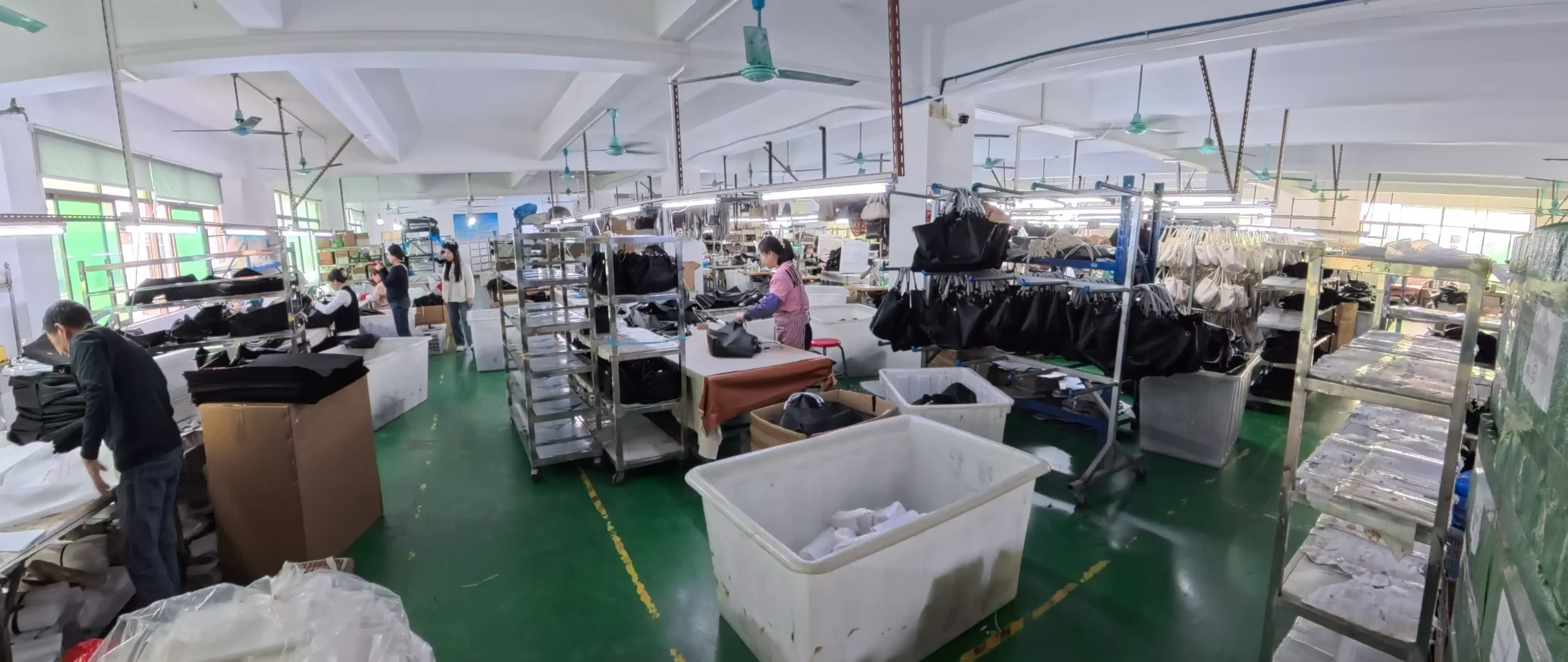
FYBagCustom is Your Trusted Custom Handbag Manufacturer in China, specializing in OEM, ODM, and private label programs for brands worldwide. For buyers evaluating the East-West category, our support covers:
For brands entering the East-West category for the first time, we typically recommend beginning with a single Small E-W body in two to three colorways, proving demand in-market, then expanding to Medium and Mini sizes in the following season. This phased approach limits development risk while building a coherent collection narrative.
The East-West silhouette is not a micro-trend — it is a durable shape-language shift with at least two to three commercially viable seasons ahead of it. For buyers, sourcing managers, and brand owners, the decision to invest in the category should be informed by three clear points:
If you are planning a handbag drop for fall 2026 or later, now is the moment to lock in tech packs, approve samples, and secure production capacity. Contact FYBagCustom to discuss your East-West silhouette program — whether that is a single hero SKU for an e-commerce launch, a full collection for a retail rollout, or a corporate gifting program with custom branding. Our team can review your brief, propose ODM starting points, and provide transparent quotations typically within 48 hours.
FYBagCustom’s OEM and ODM team works with global brands, Amazon sellers, wholesalers, and corporate programs to translate the East-West trend into production-quality custom bags — with low MOQ, 7-day sampling, and full decoration support from tonal embossing to engraved hardware.
Start Your Custom Bag Project →