Tel/WhatsAapp:+86 18011919834
E-mail: chloe.x@fybagcustom.com

Tel/WhatsAapp:+86 18011919834
E-mail: chloe.x@fybagcustom.com
Send Your Inquiry Today

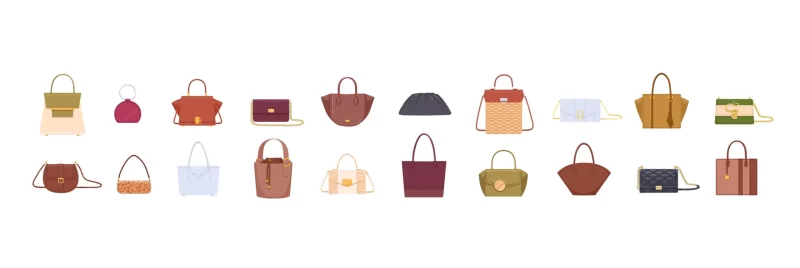
Who this guide is for: brand owners and product developers producing the FW26 suede-forward boho look — the season’s confirmed continuation of a multi-year surge. The trend reporting is aligned: suede, in the words of the retail trend coverage, isn’t slowing down, and it arrives in a specific brown story — rich chocolate, warm caramel, and soft desert sand — wrapped in a boho revival that the 2026 trade coverage is careful to define as a pared-down, everyday interpretation (plaited leather, fringe, tassels, studs) rather than a festival costume. On the FW26 runways, designers used suede and soft leathers for exactly the slouchy, updated-detail silhouettes this guide covers, with The Row’s Bindle standing as the boho-suede archetype and suede bowling bags at Miu Miu and Prada extending the material into structured shapes. This guide is the seasonal production application of our broader suede sourcing guide: the three browns translated color-by-color into dye, crocking, and soil realities; the suede-versus-nubuck decision; the boho details as manufacturing operations; and the QC layer that keeps a napped, pale-capable, hand-detailed material consistent across a production run.
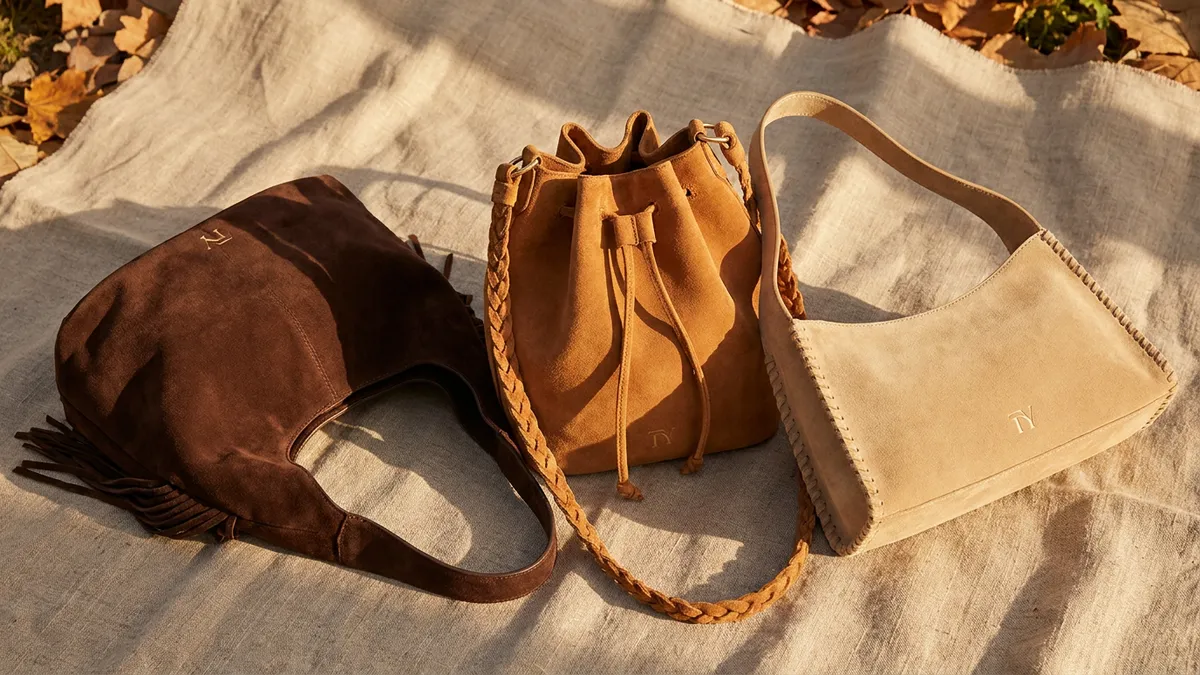
Suede’s run is unusual in trend terms: rather than spiking and fading, it has compounded — each season adding a new expression while the previous ones keep selling. FW26’s expression is precise. The material story is suede and nubuck in warm browns; the color story runs from deep chocolate through caramel to pale desert sand, with the broader market’s Mocha Mousse afterglow keeping the whole brown family commercially warm; the silhouette story is slouchy and relaxed, per the runway consensus; and the detail story is the boho revival’s second, more disciplined act — fringe, braiding, studding, and drawstrings applied with restraint, on bags that work with a blazer as readily as with denim.
For production, this combination concentrates every suede-specific challenge into one program. Nap direction discipline meets hand-applied details. The palette’s dark end (chocolate) carries the material’s heaviest dye loads and its classic crocking risk; the pale end (desert sand) carries the soil and handling exposure of a light napped surface — the two hardest suede colors to manufacture consistently, bracketing the season’s easiest (caramel) in a single color story. And the boho details — fringe, plaiting, studs — are labor operations with their own tolerances, costs, and failure modes, each of which reads as either “artisanal” or “sloppy” depending entirely on execution.
The brief says suede; the season, examined closely, splits between suede and nubuck — two napped materials with different production personalities. Both apply to genuine leather and to their microfiber equivalents (the genuine-versus-microfiber decision itself is covered in the sourcing guide; everything below applies to both, with microfiber softening several of the risks).
| Property | Suede | Nubuck |
|---|---|---|
| What it is | The flesh (inner) side of the hide, buffed to a nap — or a split finished the same way | The grain (outer) side of the hide, lightly sanded to a fine, tight velvet nap |
| The nap | Deeper, looser, more directional — the classic brushed-suede stroke | Shorter, denser, subtler — a peach-skin surface that barely shows direction |
| Hand-feel | Soft, warm, casual | Soft but firmer — the structure of grain leather beneath the velvet |
| Durability | The more delicate of the two: looser fibers, more absorbent, wears and bruises faster | The stronger: the grain layer’s tight fiber structure survives daily carry better and resists abrasion |
| The look it serves | The boho registers — slouchy hobos, fringe, the relaxed drape | The refined registers — structured shoulder bags, the East-West, the suede bowling bag; nubuck is how the season’s structured suede shapes stay crisp |
| Soiling and care | High absorbency; the higher-maintenance surface | Lower absorbency than suede but still napped; the same protection treatments apply |
| Production note | Cuts and sews softly; panels stretch if handled carelessly | Behaves closer to grain leather at the machine — the easier material to hold tolerances on |
The program logic: suede for the slouchy boho anchor pieces, nubuck for the structured silhouettes — one napped story, two engineering personalities, and the two can share a dye program so the chocolate hobo and the chocolate East-West match on the shelf.
The FW26 suede palette is one hue family at three depths — which sounds simple and is not, because depth is precisely what drives suede’s two biggest color risks: crocking at the dark end and soiling at the light end.
| Production Dimension | Profile |
|---|---|
| Dye behavior | Deep brown on suede means heavy dye penetration into an absorbent, open-fibered surface — the classic recipe for rub-off. Chocolate suede is the palette’s crocking risk concentrated |
| The fastness spec | Raise the standard: dry crocking rating 4 minimum, wet 3.5, tested per dye lot — and tested on the nap surface with the standard rubbing method, because a chocolate suede bag that browns a cream knit sleeve is the season’s most predictable complaint. Reject lots that fail; no finishing step reliably fixes under-fixed dye in a napped surface |
| Batch consistency | Deep browns drift between dye lots like any saturated color; the ALD-and-spectro system from our color program applies, with one suede-specific addition — measure and visually compare with the nap laid in the same direction, because a napped surface reads a full shade different with and against the nap, and a spectro reading taken carelessly will “fail” a perfectly matched lot |
| Line role | The season’s premium dark — the chocolate slouchy hobo is the FW26 suede image; pairs with brass and antique gold hardware |
| Production Dimension | Profile |
|---|---|
| Dye behavior | The mid-depth brown is suede’s most forgiving color: enough dye for richness, not enough for chocolate’s rub-off exposure; batch drift is visible but manageable at standard tolerances |
| Soil and wear | Mid-tones hide life’s evidence better than either extreme — light soil disappears into caramel that would show on sand, and wear-lightening blends in rather than announcing itself |
| The nap advantage | Caramel is where suede’s direction-shading works hardest for the design: the light-dark shift as the nap moves is most photogenic in the mid-browns — the “alive” surface that sells suede on camera |
| Line role | The volume color — the caramel drawstring bucket and crossbody carry the program’s units; the safest reorder in the palette |
| Production Dimension | Profile |
|---|---|
| The soil reality | Pale suede is the most soil-exposed surface in the handbag material universe: absorbent, napped, and light enough to show everything. The risk begins in the factory, not the consumer’s hands — cutting-table dust, machine oil traces, handling marks, and packing scuffs all read on desert sand |
| The production discipline | White-glove protocol from cutting onward: gloves at every station after the material leaves the roll, covered work surfaces, machine-oil checks at each sewing station before the run starts, and interleaving tissue between stacked cut panels. The light-color disciplines from our light-program experience, applied to their most demanding surface |
| Protection treatment | Factory-applied protector spray (fluorocarbon-free formulations available for sustainability-positioned programs) as a finishing stage — applied evenly, verified with a water-droplet bead test on a sacrificial panel per batch |
| The consumer contract | The care card does real work on this colorway: protection reapplication guidance, brush-and-eraser care, and the honest note that pale suede evolves with wear. Set the expectation at unboxing and the January “it got dirty” complaint becomes a care conversation instead of a return |
| Line role | The fashion statement — produced at accent depth, not volume depth; the colorway that makes the campaign imagery and takes the styling editorials’ “suede on suede” pairings |
The 2026 boho revival’s defining trait, per the trade coverage, is restraint — hand-plaited leather, macramé-adjacent details, and fringe carried into everyday bags, explicitly not the pure festival look. That restraint is also the production standard: each detail below reads as artisanal only when executed to tolerance.
| Detail | The Operation | The Specification | The Failure Mode |
|---|---|---|---|
| Fringe | Strips cut from matching suede, seamed into a gusset seam, flap edge, or base seam | Strand width uniform ± 0.5 mm; length uniform ± 2 mm across the run; strands cut with the nap running down each strand so the fringe shades consistently; fringe anchored in a bound seam, never surface-glued | Uneven strand widths read as home-made; nap-random strands make the fringe look two-toned; glued fringe sheds strands by month two |
| Plaiting / braiding | Hand-braided suede or leather cords forming straps, handle wraps, or trim lines | Braid tension consistent (specify by reference sample — braid density per 10 cm); cord ends captured in hardware or bound tabs, never exposed; braided straps load-tested like any strap (the braid is structure, not decoration, when it carries the bag) | Loose-tight-loose tension variation is visible at arm’s length; unbound cord ends unravel |
| Studs | Metal studs (pyramid, dome, or ring) set through the material at flap edges, strap lines, or base corners | Every stud backed: prong or screw studs set through a reinforcement layer (interlining patch behind the set zone), spacing jig-controlled ± 1 mm; finish matched to the program’s single hardware standard | Unbacked studs pull through suede’s soft fibers under wear; eye-spaced studs wander visibly on a straight run — the studded line is a ruler test the eye performs automatically |
| Drawstring closures | Suede or leather cord through eyelets or a channel, per the season’s bucket silhouettes | Eyelets set with backing washers through reinforced holes; cord ends finished with metal tips or knotted leather beads; the cord replaceable (threaded, not sewn captive) | Torn eyelet holes in soft suede are unrepairable; frayed cord ends undo the artisanal read |
| Whipstitch / lacing | Hand or machine lacing along edges and seams — the folkloric edge treatment | Lacing slot spacing jig-punched; lace tension even; lace suede-matched or deliberately contrast per design | Irregular slot spacing and slack loops read exactly like what they are: rushed handwork |
| Tassels | Wrapped-head suede tassels on zips and drawstring ends | Per the small-goods standards in our charm program — uniform strand cutting, bound heads, load-tested attachment | The shedding tassel is the shedding fringe in miniature |
The costing honesty: fringe, plaiting, studding, and lacing are hand-labor operations that add real minutes per unit — a fringe-and-braid hobo carries meaningfully more labor than its plain twin. Specify the details that earn their cost in the product photography and the hand-feel, and resist the temptation to stack all six on one bag: the 2026 boho brief is one or two details per silhouette, which is also the budget’s preference.
The FW26 suede silhouettes are slouchy — and everything in our slouchy-construction guide applies, with two suede-specific overlays:
| Overlay | Specification |
|---|---|
| Suede stretches more than smooth leather | The stretch-control interlining (light woven fusible, 30–50 g/m²) moves from recommended to mandatory on suede hobos and drawstring bodies; suede’s open fiber structure elongates under daily load, and the pale colorways show strap-zone stretch as visible shading distortion |
| Fusing onto nap | Interlining bonds to the suede’s back (flesh or split reverse) at controlled temperature — over-hot fusing strikes through and flattens the face nap in a visible rectangle; specify a fusing test on each material lot before production, checked from the face side under raking light |
Nubuck’s structured silhouettes (the East-West, the suede bowling shapes) run the standard structured builds from their respective guides, with the material simply demanding the nap-direction and handling disciplines throughout.
| Check | Method | Standard |
|---|---|---|
| Nap direction at panel pairing | Every cut panel direction-marked on the reverse; QC verifies direction match at pairing, before sewing — the check that prevents the two-toned bag | 100% of panels; zero tolerance for mismatched primary panels |
| Crocking per dye lot | Dry and wet crock tests on the nap face, per lot, results retained | Dry 4 / wet 3.5 on chocolate; dry 4 / wet 3 on caramel and sand |
| Shade under directional light | Golden-sample comparison in the booth with nap laid consistently, both illuminants | ΔE per the PO, measured nap-down |
| Detail tolerances | Fringe strand gauge, stud spacing jig check, braid density against reference | Per the specifications table above |
| Soil inspection (sand colorway) | Every finished unit inspected under bright light for handling marks before packing; protector-spray bead test per batch | Zero visible marks; bead test pass |
| The stroke test | The finished bag stroked with a dark cloth (fiber release) and a white cloth (dye release), 20 passes each | Trace release only, tapering — the suede version of the fur program’s discipline |
| SKU | Material + Color | Details | Role |
|---|---|---|---|
| Slouchy hobo | Chocolate suede | Fringe at gusset seam OR plaited strap — one detail | The trend hero; the FW26 suede image |
| Drawstring bucket | Caramel suede | Drawstring with leather-bead ends; tassel zip pull | The volume core |
| Crossbody | Caramel suede | Whipstitch edge or clean | The daily-carry entry |
| East-West shoulder bag | Desert sand nubuck | Clean — the color IS the statement | The fashion statement, accent depth |
| Structured tote or bowling shape | Chocolate nubuck | Stud line at base corners or clean | The structured counterpoint; the work-appropriate suede |
One hardware finish across the program — antique brass or aged gold suits all three browns — and the handbag line’s smooth-leather trim (handles, strap keepers, base) in a matched chocolate serves every colorway, simplifying procurement while giving the pale suede its wear-zone protection where hands grip.
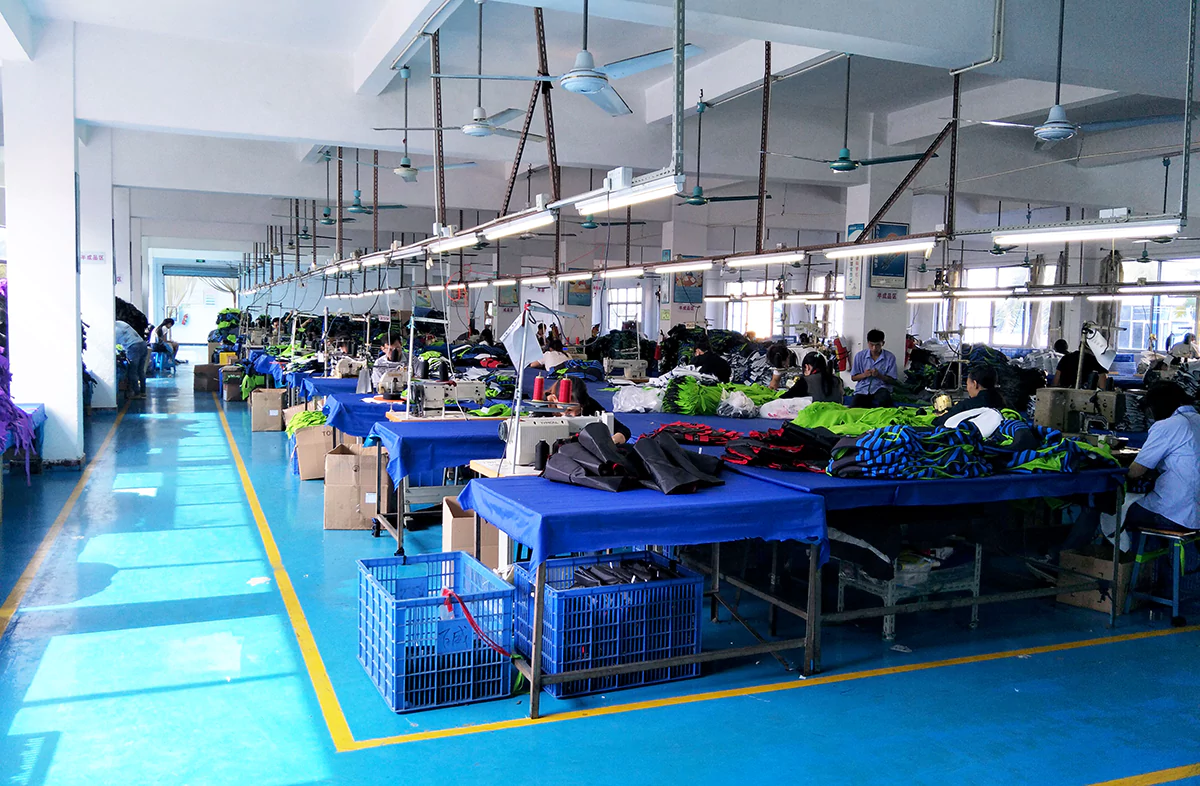
FYBagCustom is Your Trusted Custom Bag Manufacturer in China, with 15+ years of manufacturing experience across genuine and microfiber suede and nubuck programs. For brands producing the FW26 suede story, our capabilities include:
Contact our development team to brief your FW26 suede program — the browns, the details, and the disciplines.
The FW26 suede story is commercially simple — three browns, boho details, slouchy shapes — and technically layered, because nap, depth, and handwork each bring their own failure modes. For B2B buyers producing the season’s suede, three core takeaways:
If you are producing the FW26 suede story and need a factory with nap discipline, detail tolerances, and the light-colorway protocol, contact FYBagCustom to brief your program — and receive samples in the dyed suede, details executed, in 7–10 days.
FYBagCustom runs the FW26 suede program end to end — chocolate crock-tested per lot, desert sand handled in white gloves, fringe cut to half a millimeter, and every panel nap-verified before sewing. Dyed-suede samples with details executed in 7–10 days.
Start Your Custom Bag Project →