Tel/WhatsAapp:+86 13366396425
E-mail: chloe_xia@vleap.com.cn

Pebbled leather and Saffiano leather are defined primarily by their surface topography and finishing method rather than by a single standardized tannage or hide type. In luxury bag manufacturing, both terms function as finish families: they describe how the grain side is physically modified (naturally or by embossing) and how the surface is protected (through pigments, resins, waxes, or clear topcoats).
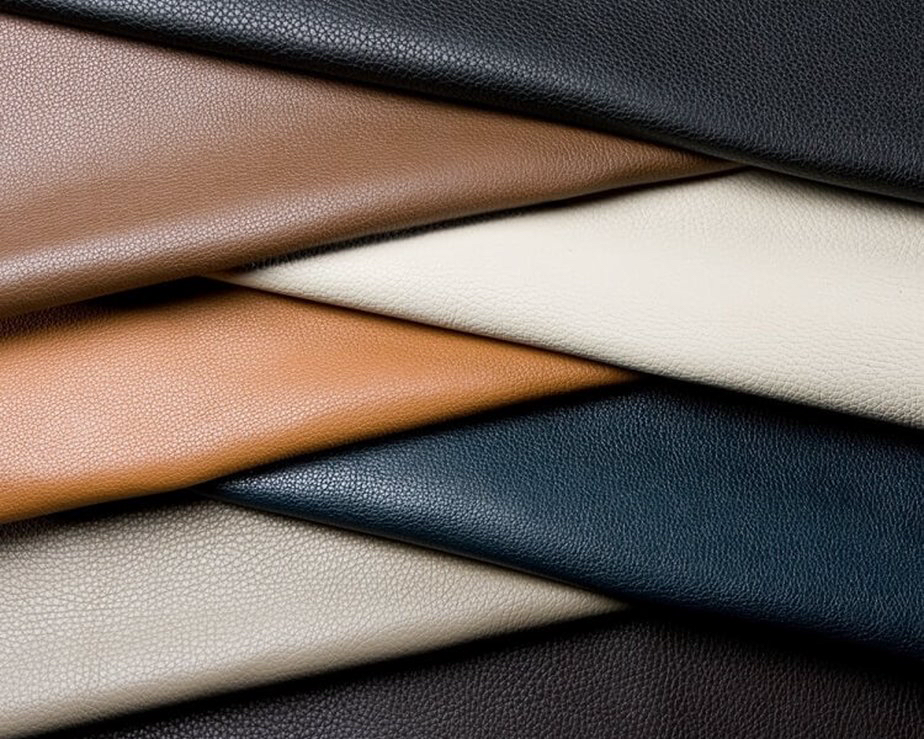
Pebbled leather (also described as pebble-grain leather) refers to leather with a raised, irregular “pebble” texture that may be naturally present or mechanically created through milling/tumbling and/or embossing under heat and pressure.
Saffiano leather generally refers to leather given a uniform crosshatch texture by stamping/embossing, commonly paired with a relatively protective surface finish that increases resistance to scuffing and staining compared with more open, aniline-type surfaces.
In luxury bags, the choice between these finishes affects cutting yield, panel appearance under light, edge construction choices, logo application fidelity, repairability, and the test methods typically used to qualify performance.

Pebbled and Saffiano are often misunderstood as “leather types” comparable to calf, cowhide, lamb, or goat. In technical specifications, they are more accurately treated as surface pattern + finishing system applied to a base leather substrate.
Pebbled leather is defined by a non-flat grain surface that visually masks fine scratches and hides minor substrate irregularities. The pebble texture can be produced in two common ways:
In purchasing documents, factories typically require clarity on whether the pebble effect is natural/milled or embossed, since the two behave differently in skiving, creasing, and logo marking.
Saffiano leather is typically defined by a regular crosshatch emboss applied using a stamping process; the finish is often paired with protective topcoats that reduce visible abrasion and liquid staining compared with more porous finishes.
In procurement language, “Saffiano” may also be used for non-leather materials (e.g., coated textiles or PU/PVC synthetic substrates) that mimic the crosshatch; this makes it important for B2B contracts to specify substrate composition (full-grain, corrected grain, split + coating, synthetic) separately from texture name.

Surface engineering in luxury bag materials is the combination of (a) grain modification and (b) finishing stack design. The two leather families differ in how factories balance aesthetics with protection.
Leather finishing stacks vary by tannery, but in manufacturing terms they typically include base coats (for color/leveling), effect coats (for gloss/matte control), and topcoats (for abrasion and stain resistance). Saffiano programs more commonly trend toward higher surface protection, which can reduce the perception of softness and reduce patina formation. Pebbled programs can range widely: milled pebble may retain a more “natural” hand, while embossed pebble may behave closer to a protected grain system depending on the coating load.
In luxury bag production, “durability” is not a single property. Factories evaluate surface abrasion, flex cracking, tear propagation, and edge behavior as separate risks linked to specific construction methods.
Rub fastness testing is used to verify whether pigment and topcoat systems transfer color or burnish under friction from clothing or repeated handling. ISO 11640 specifies a method for assessing the behavior of a leather surface during rubbing with wool felt.
In practice, highly protected Saffiano programs often show strong rub performance, but failures can occur when topcoat adhesion is marginal or when high-gloss systems are used. Pebbled leathers may “hide” micro-abrasion better due to texture, but poor coating systems can still show rub-through on high points.
Bags concentrate flexing at flap folds, gusset turns, and handle bases. ISO 5402-1 specifies a method to determine dry or wet flex resistance of leather and finishes applied to leather.
In production, embossing geometry can concentrate stress: Saffiano crosshatch can create repeated stress lines if the finish is brittle; pebble patterns can distribute flex stresses but may show whitening on raised peaks if coating elongation is insufficient.
While luxury bags are not usually loaded to failure, structural integrity matters at strap anchors, handle bases, and corner impacts. ISO 3376 defines a method for determining tensile strength and elongation characteristics of leather.
Tear behavior is relevant for stitch lines and hardware holes; methods such as ISO 3377 series evaluate tear load using defined tear geometries.
From a factory standpoint, these tests are used more for comparative qualification and supplier control than for predicting exact in-field failure modes.
Skiving reduces thickness at folds and edges. Coating-heavy Saffiano finishes can be more sensitive to heat buildup and surface cracking during aggressive skiving or tight turns, especially at lower thickness targets. Pebbled leathers with higher softness (particularly milled) can turn more easily, but the raised grain can complicate achieving perfectly crisp folded edges.
Luxury bag edge systems typically include sanding, priming, multiple paint coats, and heat smoothing. The key risk is adhesion between the leather edge (and sometimes the coated surface at the edge) and the edge paint stack.
| Attribute (Manufacturing-Relevant) | Pebbled Leather | Saffiano Leather |
|---|---|---|
| Primary identifier | Pebble-grain surface (natural/milled or embossed) | Crosshatch emboss + protective finish family |
| Visual uniformity across lots | Moderate to high (depends on milled vs embossed) | Typically high due to standardized emboss |
| Scratch/scuff visibility | Often low due to texture masking | Often low due to protective topcoat; can show glossy scuffing on high-sheen finishes |
| Flex-crack risk at tight folds | Depends on finish elasticity; raised peaks can whiten | Crosshatch can show line cracking if finish is brittle |
| Foil/logo fidelity | Can be challenged by uneven peaks | Can be challenged by pattern interference with small text |
| Edge paint risk factors | Deep grain near edge can create micro-voids | Slip/wax topcoats can reduce adhesion without prep |
| Typical QC emphasis | Grain consistency, pebble size distribution, rub on peaks | Emboss clarity, rub resistance, finish cracking at folds |
Analytical summary: The dominant trade-off is forgiveness versus geometry. Pebbled surfaces are typically selected to visually forgive handling and minor defects, while Saffiano is typically selected for geometric consistency and surface protection. Both require construction-specific controls at edges and branding operations because the surface topography reduces the margin for error in adhesion and mark clarity.
Quality assurance is typically implemented as (1) incoming material inspection, (2) in-process checks during cutting and assembly, and (3) finished-goods testing.
Analytical summary: For pebbled and Saffiano leathers, the most frequent field complaints relate to finish behavior (rub-off, cracking, staining) rather than substrate tensile failure. As a result, luxury programs usually allocate more testing budget to rub/flex/color migration than to ultimate strength—while still using tensile/tear testing to keep suppliers within stable process windows.
From a manufacturing perspective, “pebbled vs Saffiano” is evaluated through five operational lenses: cost structure, MOQ feasibility, throughput and cycle time, defect risk, and after-sales repair behavior.
MOQ is typically determined by tannery production runs (color batch, finishing line setup, emboss plate scheduling) rather than by the bag factory alone. Saffiano programs often require consistent emboss tooling and finish recipes; this can simplify continuity if a program is standardized, but can be restrictive for small color runs. Pebbled programs can be easier to diversify across pebble sizes and substrates, but consistency across lots may require tighter supplier control and more incoming inspection labor.
Lead time is affected by (a) tanning/finishing capacity and (b) the factory’s internal sampling iterations. Both materials can extend development time when:
Saffiano’s protective finishes can perform well in stain resistance and day-to-day scuffing, but repairs can be challenging when the finish is difficult to blend or re-texture. Pebbled surfaces can conceal localized repairs more effectively, but deep pebble can complicate uniform recoloring or refinishing.
Luxury brands often impose RSL/MRSL requirements and may request audited supply chains. The Leather Working Group (LWG) describes its audit standard as an international certification framework focused on environmentally and socially accountable leather manufacturing.
However, broader luxury supply chains may still face auditing limitations at subcontractor levels; investigative reporting has documented cases where formal audits did not detect labor and compliance issues in parts of luxury production networks, illustrating why brands often add layered due diligence beyond a single certification.
Saffiano is frequently selected for structured silhouettes where surface protection and consistent appearance under lighting are prioritized. The geometric emboss also visually communicates stiffness and precision, which aligns with structured panels and reinforced edges.
Pebbled leather is frequently selected where scuff camouflage and tactile softness are prioritized, particularly for larger surface areas that receive repeated handling. Milled pebble programs can also support more comfortable carry due to higher drape and softness.
Both finishes are used in SLG. Saffiano can support high uniformity across wallets and cardholders, while pebble-grain can provide a more tactile surface and reduce visible wear. For matching sets (bag + wallet), the decision often depends on whether the brand identity emphasizes geometric precision (Saffiano) or tactile grain character (pebbled).
In B2B sourcing, the practical question is often not “which is better,” but “which finish family aligns with the product’s construction and warranty risk profile.” Programs with extensive edge painting, tight folds, or micro-logo marks often require more sampling iterations for both finishes, with different failure modes:
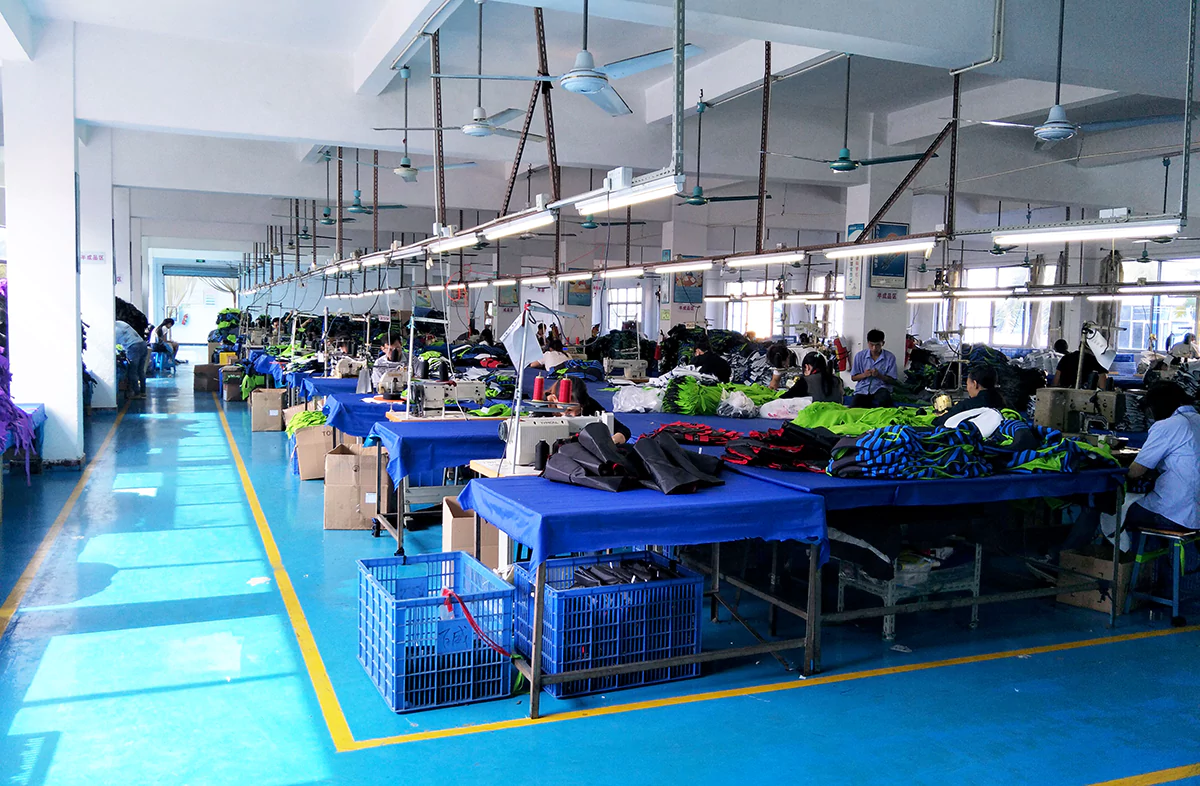
FYBagCustom is a B2B custom bag manufacturer specializing in private-label and OEM/ODM bag production for international brands, wholesalers, and retailers, with experience across a wide range of materials, product categories, and manufacturing standards.
Pebbled leather and Saffiano leather are best understood as finish-driven material families that can be applied to multiple substrates and quality tiers. Pebbled leather typically emphasizes visual forgiveness and tactile grain character, with manufacturing attention centered on grain consistency, branding fidelity on uneven surfaces, and edge uniformity near deep texture. Saffiano leather typically emphasizes geometric uniformity and surface protection, with manufacturing attention centered on fold-line durability, emboss clarity, and edge system compatibility with protective topcoats.
In luxury bag manufacturing, the most decision-relevant differences appear in construction behavior (skiving, folding, edge paint adhesion, logo marking) and finish performance qualification (rub and flex resistance), rather than in a simplistic hierarchy of “luxury level.” Standardized test methods such as ISO 11640 (rubbing) and ISO 5402-1 (flexing) are commonly used to control finish behavior, while ISO 3376 (tensile) and tear tests are used to keep substrates within stable structural ranges, and chemical methods such as ISO 17075-1 support restricted-substance compliance expectations for leather programs.