Tel/WhatsAapp:+86 13366396425
E-mail: chloe_xia@vleap.com.cn

Years Manufacturing
Factory Area
Professional Staff
Inspection Rate
Our insulated bag production serves food brands, grocery chains, meal-prep and delivery companies, Amazon FBA sellers, promotional distributors, and pharmaceutical cold-chain buyers — any buyer who needs temperature-controlled carry and storage.




A 600D polyester bag with aluminum-foil lining retains temperature for 2–4 hours. The same bag with 8mm XPE foam retains it for 6–8+ hours. Identical outer shell, identical silhouette — the insulation lining alone determines thermal performance. The lining is the product.

Insulated bags that contact food or beverages must use food-safe lining materials — PEVA (BPA-free, phthalate-free), food-grade aluminum foil, or FDA-compliant films. Standard EPE foam is NOT food-safe for direct contact. Getting the food-safety spec wrong creates compliance risk and return liability.

An insulated bag with a standard open top or loose zipper loses heat through the opening — not through the walls. Insulated closures (insulated flap + Velcro, double-zip with thermal guard, magnetic snap + insulated panel) retain temperature 30–50% longer. The closure is the thermal weak point. Same principle as waterproof bags.

Insulation thickness directly determines retention time. 3mm foam = 2–4 hours. 5mm = 4–6 hours. 8mm+ = 6–8+ hours. Every additional millimeter adds roughly 30–60 minutes of thermal performance (with ice packs, at 25°C ambient). Thickness is the single most impactful variable after material choice.

Insulated bags carry liquids — melting ice, condensation, spilled drinks, leaking containers. The interior lining must be leak-proof (sealed seams, waterproof material). A leaking insulated bag is a failed product regardless of thermal performance. Interior leak-proofing is as critical as insulation performance.
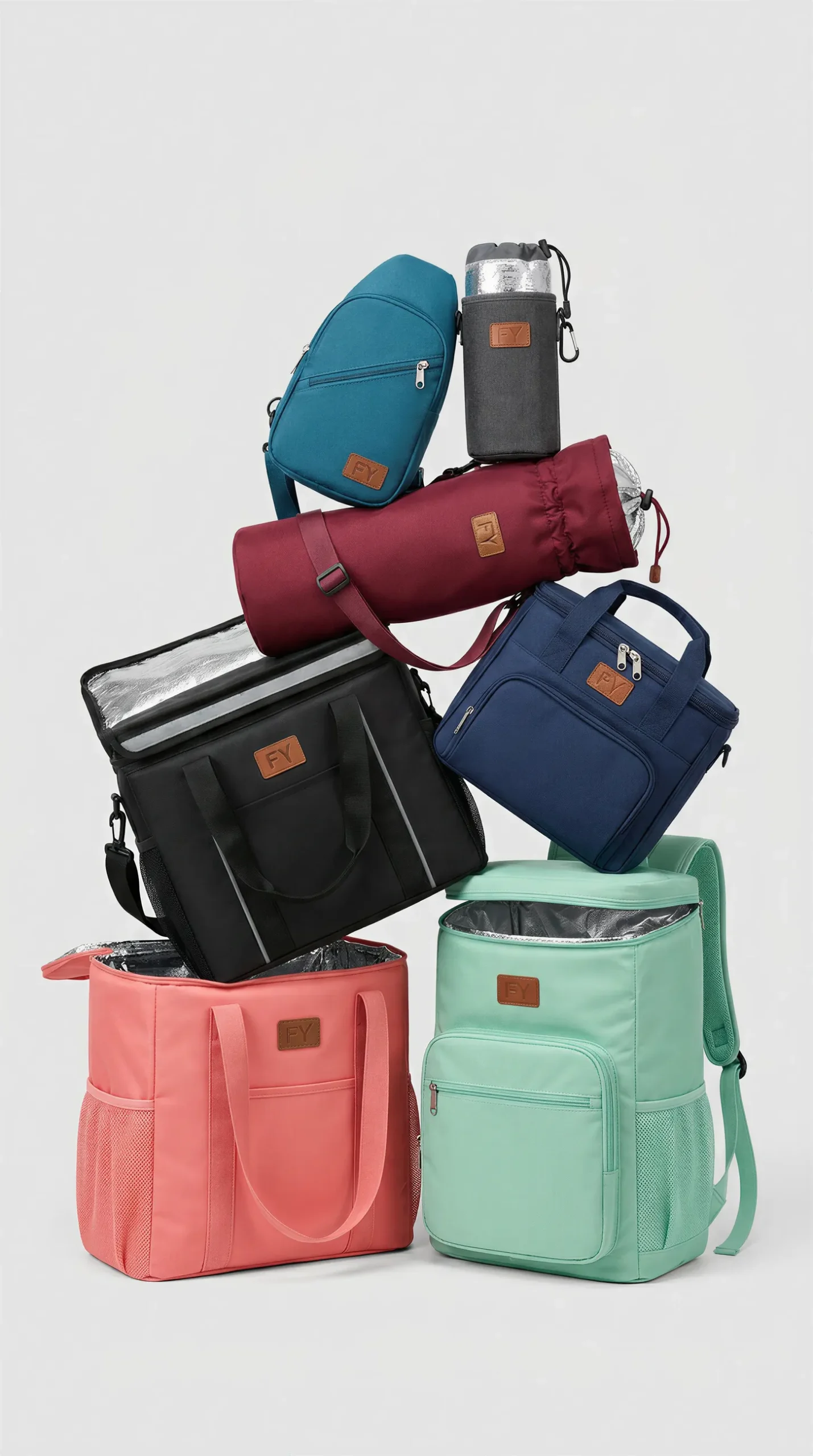
Insulation can be integrated into any bag silhouette that carries temperature-sensitive items. The insulation material, thickness, and closure type change depending on the bag format and target thermal performance.
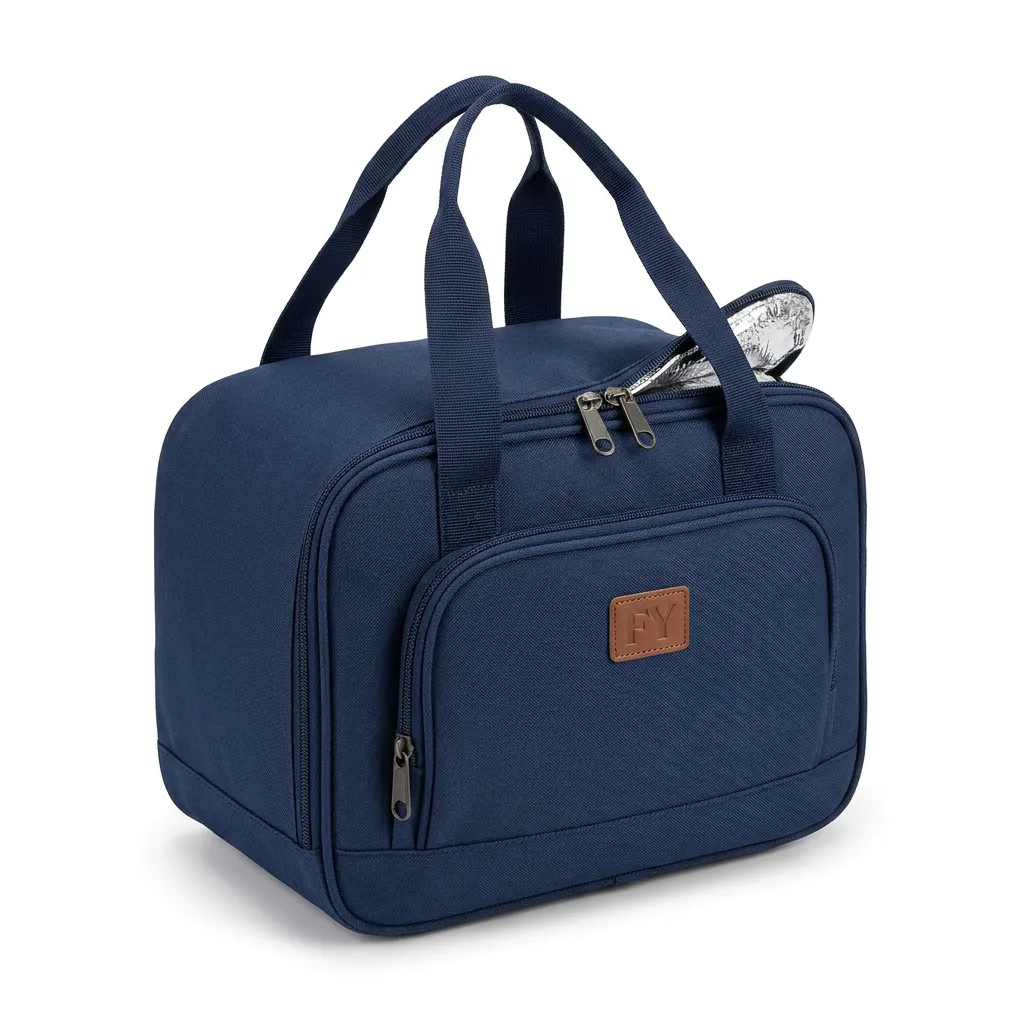
The #1 insulated bag format. 5–10L capacity, PEVA or foil lining, zip closure. For work, school, and daily commute. Links directly to our lunch bag production line. 4–6 hour cold retention with ice pack. Year-round Amazon bestseller.
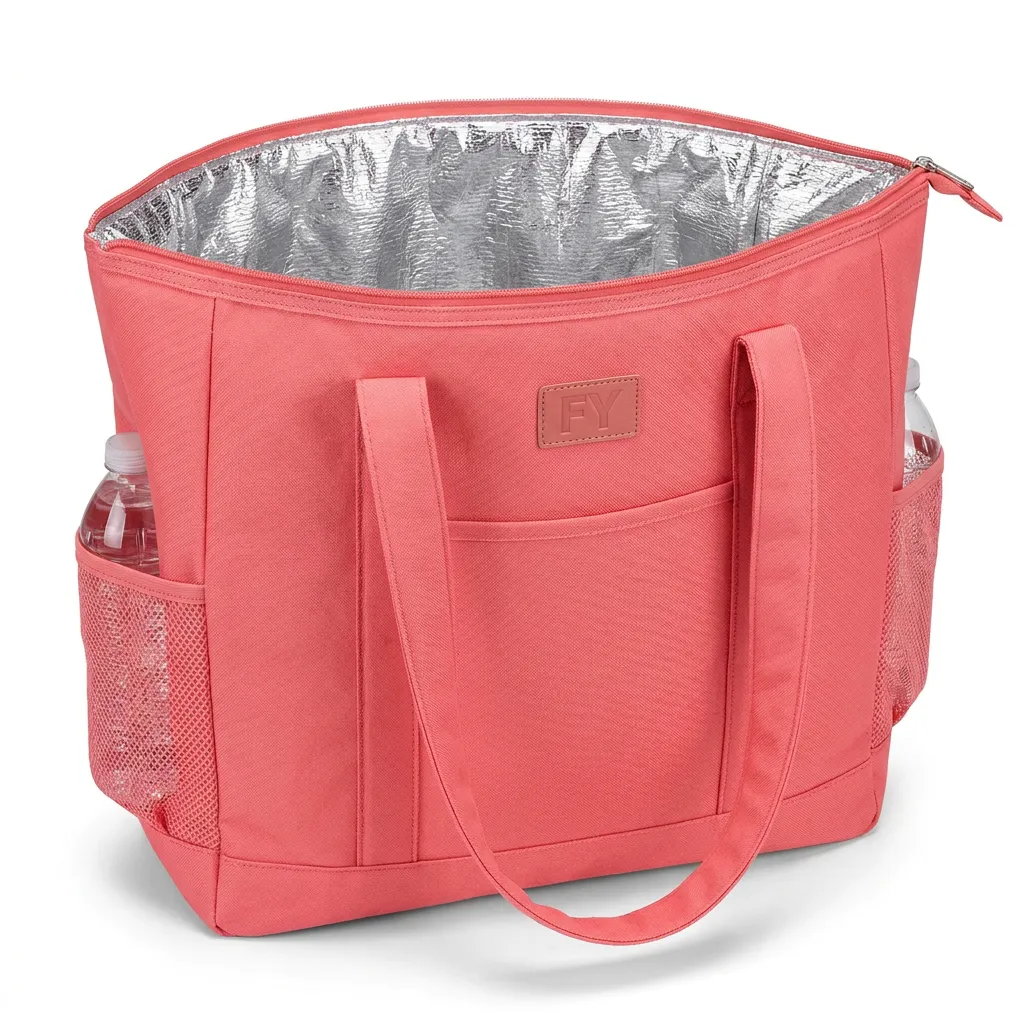
Full-size insulated tote bag for grocery, picnic, and beach. 15–30L capacity. Foil or EPE/XPE foam lining. Reinforced handles. For grocery chains, outdoor brands, and promotional buyers. 4–8 hour retention depending on insulation tier.
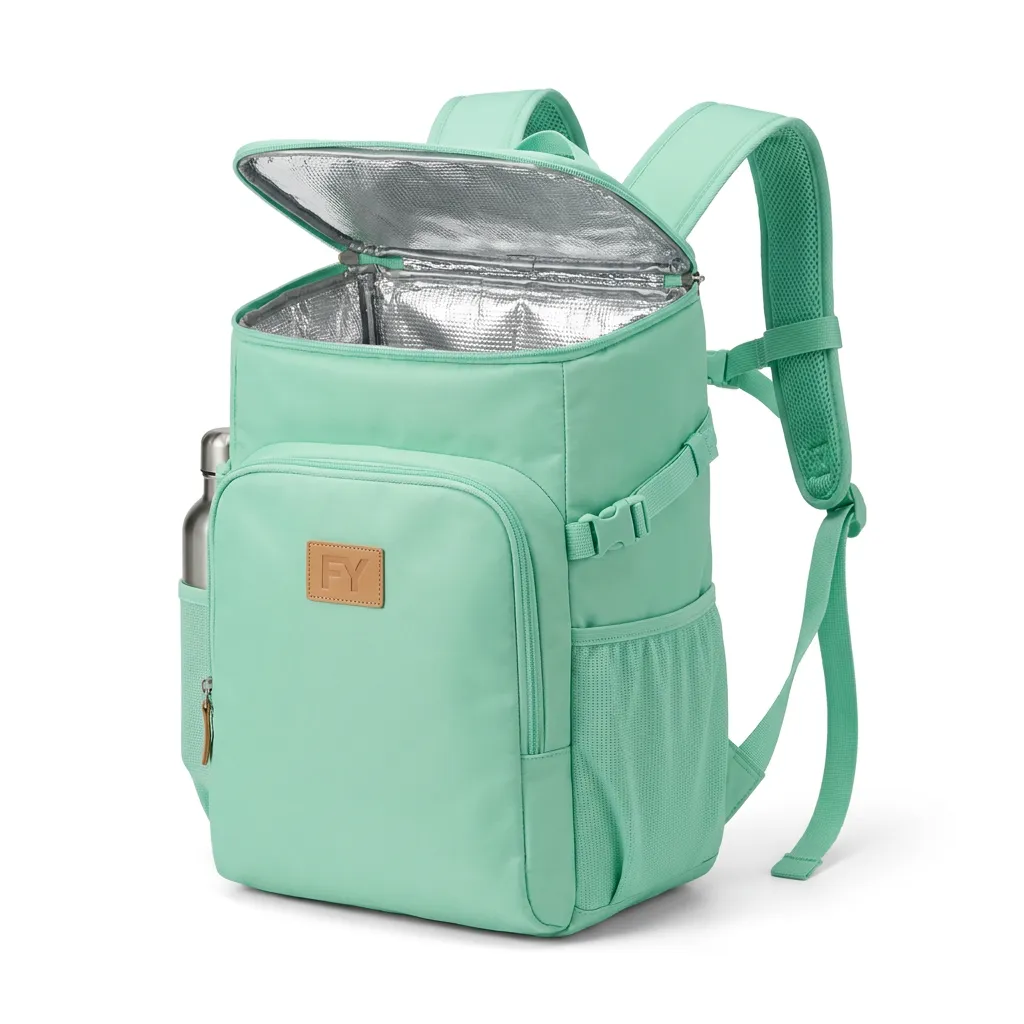
Insulated backpack with thermal-lined main compartment. For hiking, outdoor events, picnics, and day trips. 15–25L. EPE or XPE foam lining with leak-proof PEVA interior. Padded straps. Hands-free insulated carry — growing outdoor segment.
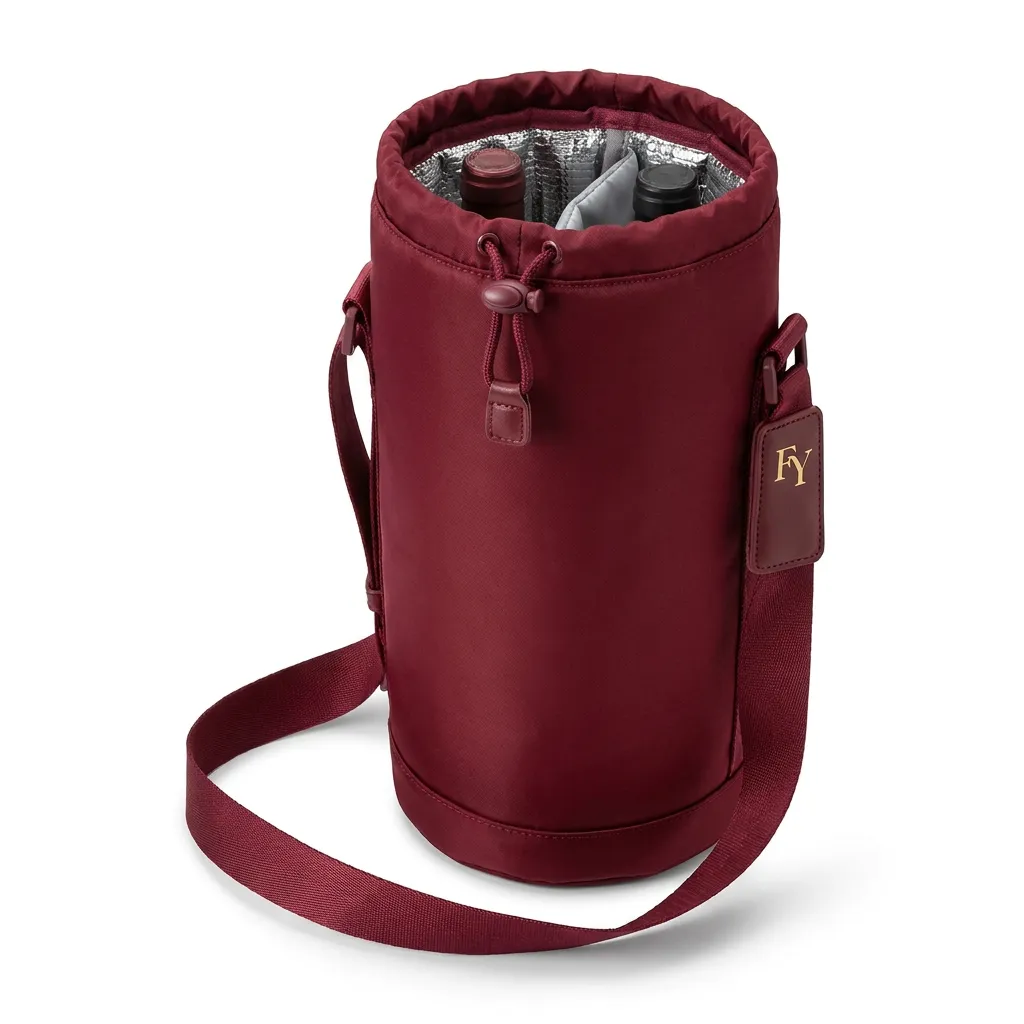
Single or multi-bottle insulated carrier with dividers. EPE foam insulation + PEVA lining. For wine brands, liquor stores, gift packaging, and holiday promotions. Overlaps with non-woven wine bag production but adds thermal lining. Strong Q4 gift demand.
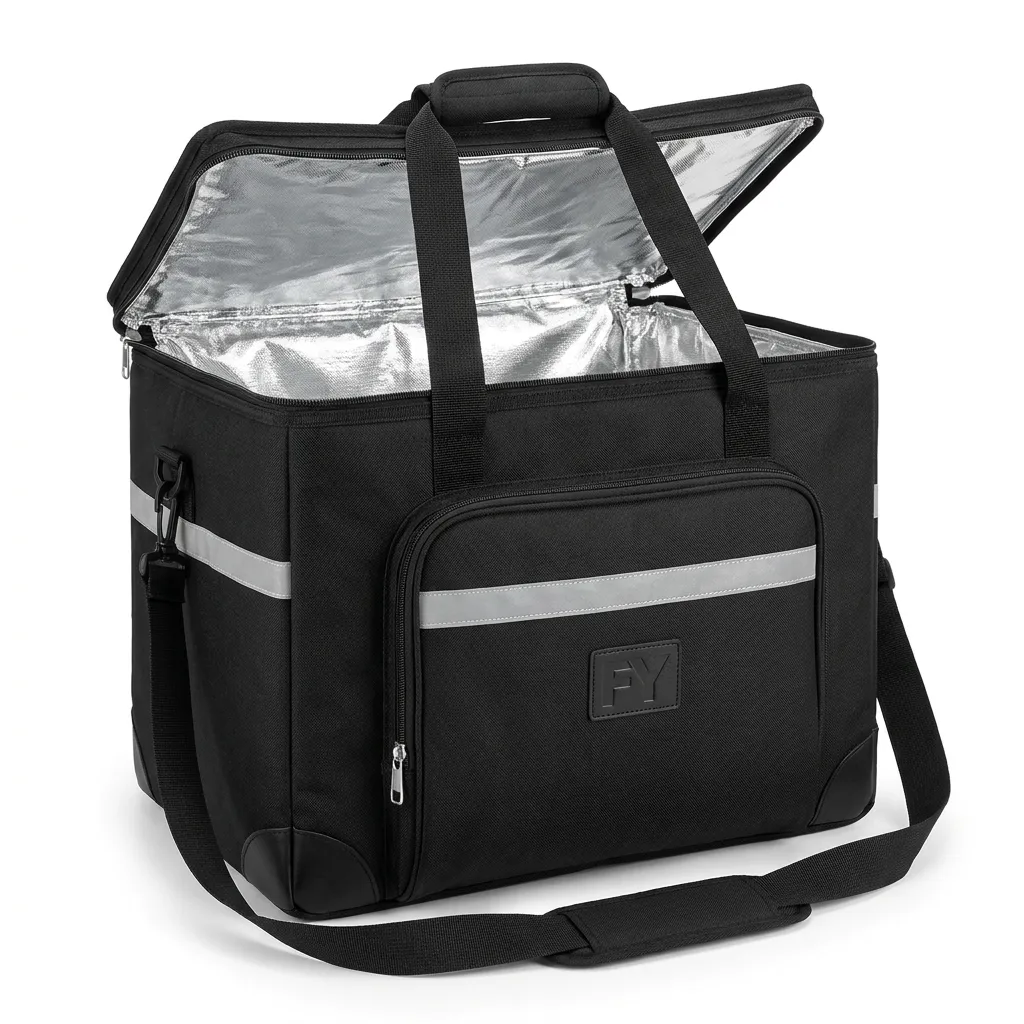
Large-format insulated bag for food delivery, catering, and meal-kit transport. 30–60L+. Thick XPE or EPE foam (8mm+) for maximum retention. Velcro or zip-and-flap closure. Rigid structure with base board. For meal-delivery services and catering companies.
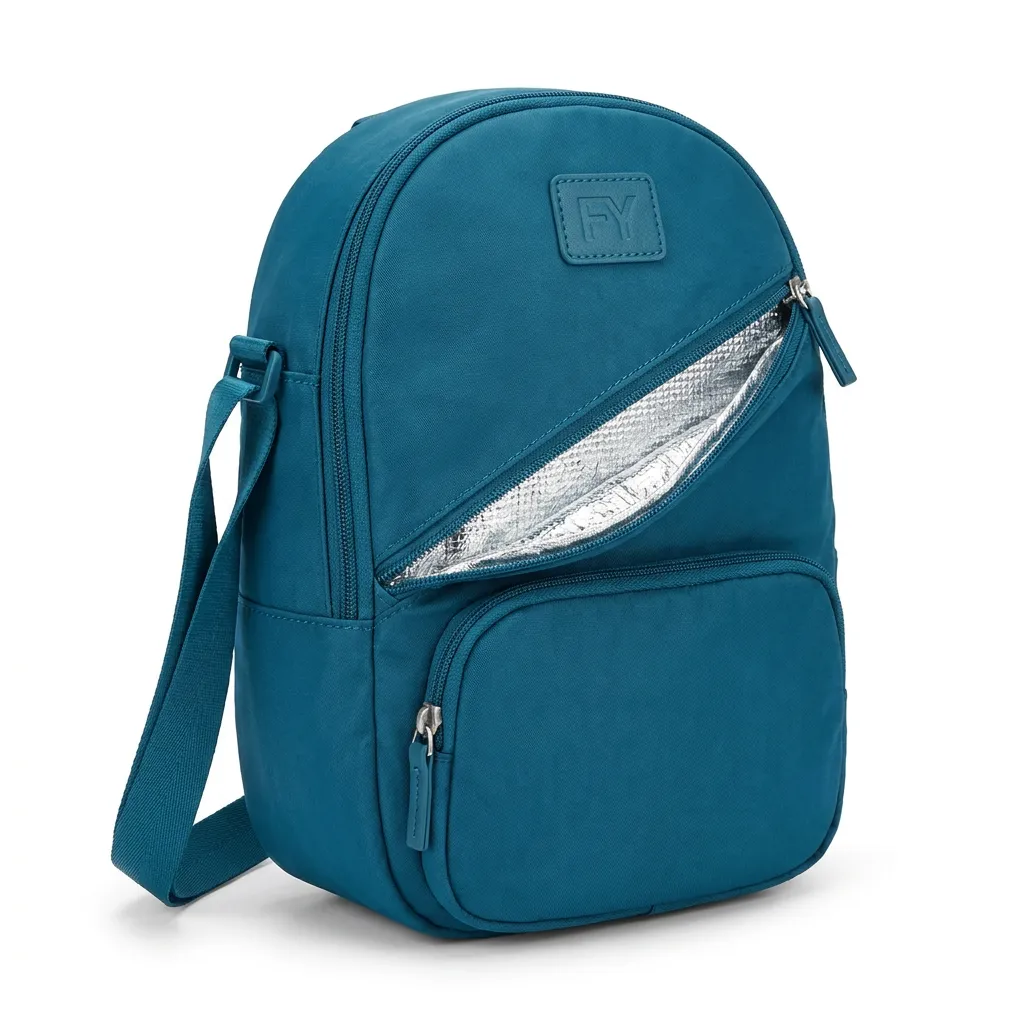
Compact insulated crossbody for personal beverage and snack carry. 3–6L. Foil or thin EPE lining. For outdoor events, hiking, and theme parks. The fashion-forward insulated format — prioritizes style alongside thermal performance.
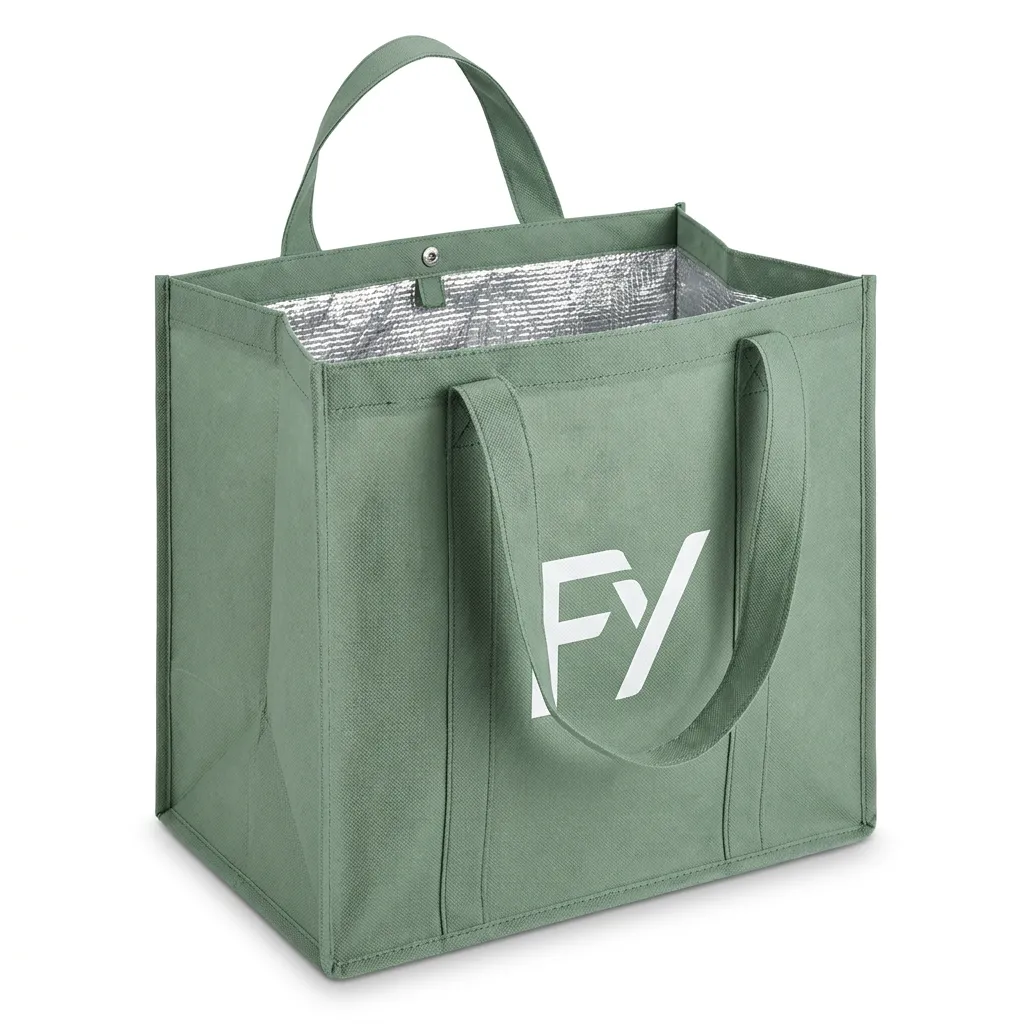
Foil-lined non-woven reusable grocery bag. The highest-volume, lowest-cost insulated format. For supermarket checkout, cold-chain last-mile, and plastic-bag-replacement programs. 80–120 GSM non-woven outer. Foil lining. Die-cut or sewn handles.
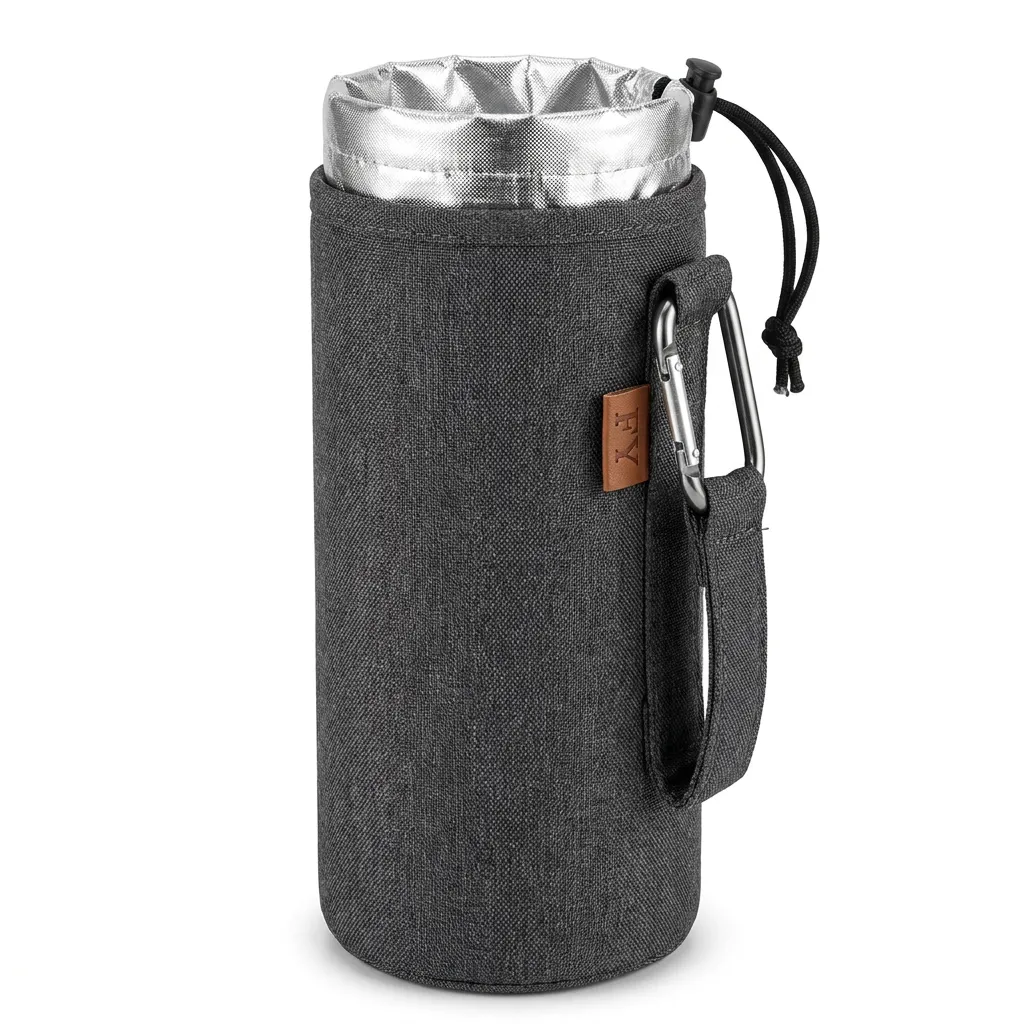
Insulated pocket integrated as a component into diaper bags, multi-function backpacks, and gym bags. Not a standalone product — an insulated compartment engineered into a larger bag design. Foil or PEVA lining. For baby bottles, water bottles, or beverage cans.
The insulation material determines thermal retention, food-safety compliance, cost, and bag thickness. Choosing the right material for your application is the first and most critical sourcing decision. Over-specifying wastes money; under-specifying creates returns.
Aluminum Foil
2–4 Hours · Budget
Thin aluminum-foil laminate bonded to non-woven or polyester backing. Reflects radiant heat but provides minimal conductive insulation. The thinnest, lightest, and cheapest insulation option. Food-safe when food-grade foil is specified. For grocery totes, promotional cooler bags, and short-duration cold carry. Not suitable for 4+ hour retention targets.
PEVA Lining
3–5 Hours · Food-Safe
PEVA (polyethylene vinyl acetate) — BPA-free, phthalate-free, lead-free. Waterproof and leak-proof. Moderate thermal performance when combined with thin foam backing. The standard food-safe insulation for lunch bags and food-contact applications. Wipe-clean surface. FDA and EU food-contact compliant. The most-specified lining for lunch bags.
EPE Foam
4–6 Hours · Mid-Tier
Expanded polyethylene (EPE) closed-cell foam — 3mm, 5mm, or 8mm thickness. Good insulation and cushioning. Typically laminated with foil on the interior face (foam + foil composite). The standard mid-tier insulation for cooler bags, picnic totes, and outdoor applications. Not inherently food-safe — requires PEVA or foil interior face for food contact.
XPE / EVA Foam
6–8+ Hours · Premium
Cross-linked polyethylene (XPE) or EVA closed-cell foam — 5mm, 8mm, 10mm+ thickness. The best thermal performance available in flexible bag construction. For food-delivery bags, pharmaceutical cold-chain, premium coolers, and any application requiring 6+ hours of retention. Higher cost and thicker profile than EPE. The top-tier insulation material.
“How many hours will it stay cold?” is the #1 question buyers ask — and it doesn’t have a one-word answer. Thermal retention depends on three interacting variables: insulation material, insulation thickness, and closure system. We engineer all three at the sampling stage and can provide actual thermal-test data on prototype bags before production.
The retention times below assume ambient temperature of 25°C with standard ice-pack loading. Higher ambient temperature, direct sun exposure, and frequent opening all reduce retention. We test with standardized conditions so you can compare materials fairly.
Material Impact
Foil alone: 2–3 hours (reflects radiant heat only). PEVA + thin foam: 3–5 hours. EPE foam 5mm + foil: 4–6 hours. XPE/EVA 8mm + foil: 6–8 hours. XPE 10mm+ double-layer: 8+ hours. Material selection is the biggest single driver of thermal performance — it determines the baseline retention range before closure and thickness adjustments.
Thickness Impact
Each additional 2mm of closed-cell foam adds roughly 30–60 minutes of cold retention (with ice packs, at 25°C). 3mm EPE = baseline. 5mm = +1 hour vs. 3mm. 8mm = +1.5–2 hours vs. 3mm. Diminishing returns above 10mm — at that point, the bag becomes rigid and heavy. We recommend 5mm as the sweet spot for most lunch and cooler bags, 8mm for delivery and cold-chain.
Closure Impact
The closure is the #1 thermal leak point. Open-top: worst (continuous heat exchange). Standard zip: moderate (air leaks through zipper teeth). Insulated zip-flap (zipper + insulated fabric flap over zip): good (+30% vs. standard zip). Roll-top: excellent (no mechanical opening, fully sealed). Magnetic snap + insulated panel: premium (convenient + thermally efficient). We recommend insulated zip-flap as the default for lunch and cooler bags.
Ice-Pack vs. No Ice
Without ice packs, cold retention drops by approximately 50%. An insulated bag is NOT a refrigerator — it slows heat transfer, it doesn’t generate cold. Marketing claims should always specify “with ice pack” or “without ice pack.” We test retention both ways at sampling and recommend appropriate claims for your product listing.
Hot Retention
Insulation works in both directions. The same material and thickness that keeps cold food cold also keeps hot food hot. Hot retention is approximately 60–80% as effective as cold retention (hot air rises and escapes through the top). For hot-food delivery bags, top-panel insulation thickness is as important as side-wall insulation.
Testing Protocol
We thermal-test prototype bags at the sampling stage: bag loaded with standard ice packs (or heated contents for hot-retention testing), sealed, placed at 25°C ambient. Internal temperature measured at 30-minute intervals. Test report documents temperature curve over 8 hours. This data supports your marketing claims and Amazon listing.
Every insulated bag leaves our Guangzhou factory with verified thermal performance and food-safety-compliant lining. In-house design, insulation assembly, sewing, leak-proofing, and QC. 10+ production lines. Sample turnaround in 5–7 days.
Free Add-on: Professional Product Photography Included
Free white-background product photos for your online shop, Amazon listings, and wholesale catalogs — no additional charge on production orders.
Insulated bags combine standard outer fabrics with specialized thermal linings and leak-proof construction. The outer fabric determines aesthetics and durability; the inner lining determines thermal performance and food safety.
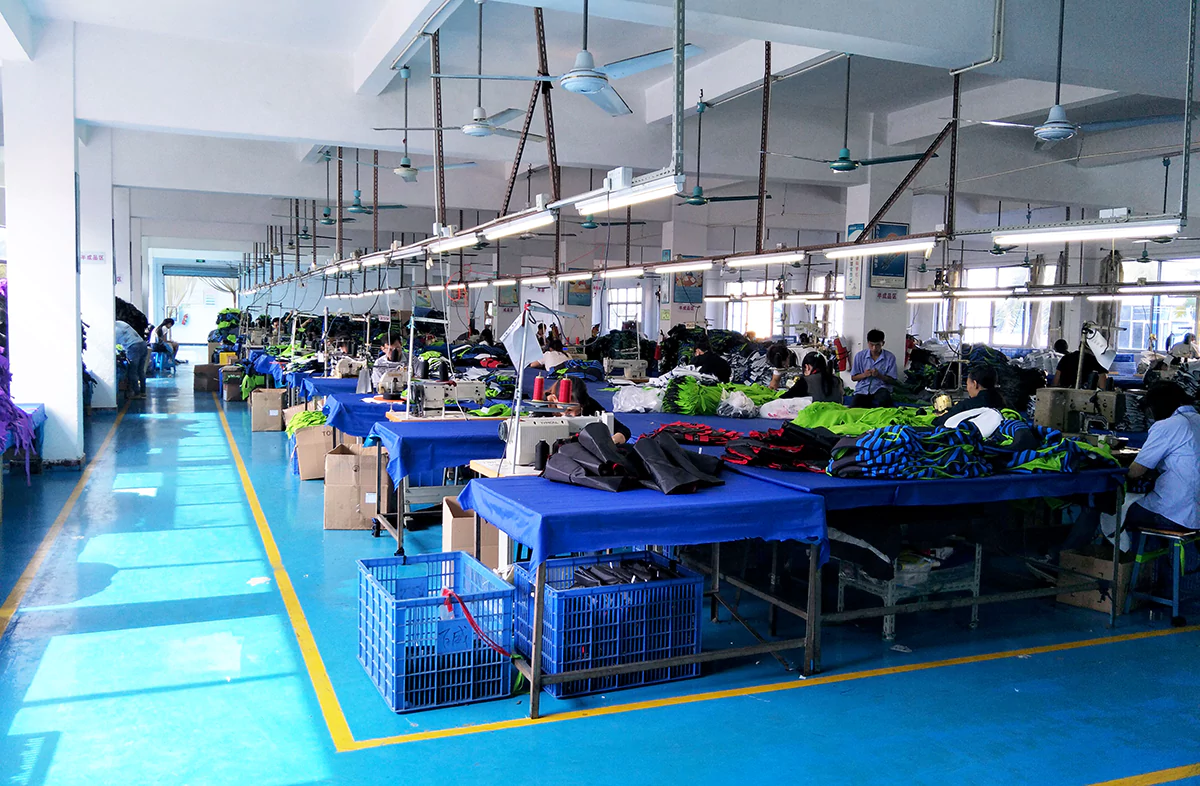
FY Bag Custom operates its own vertically integrated factory in Guangzhou, Guangdong — design, foam cutting, lining lamination, sewing, leak-proof sealing, and QC all under one roof. Insulated bag production shares foam-cutting and lining-assembly capabilities with our lunch bag line (identical insulation technology) and our laptop sleeve line (shared foam-cutting equipment).
In-house insulation assembly means we control thermal performance directly — foam thickness, lining adhesion, and seam sealing are all verified on our production floor. Every insulated bag prototype is thermal-tested before we ship it to you for approval.
Years in Manufacturing
Factory Floor Area
Professional Staff
Production Lines
Monthly Capacity
Pre-Shipment Inspection
Insulated bags face category-specific QC risks — lining delamination, interior seam leaks, foam thickness variation, closure air gaps, and food-safety compliance of lining materials. Our 6-stage QC includes leak testing and thermal-performance verification. Third-party inspections (SGS, BV, TUV) welcome.
Foam thickness measured with micrometer (±0.5mm tolerance). PEVA and foil lining inspected for surface integrity — no pinholes, no delamination, no contamination. Food-grade certification verified for food-contact linings. Outer fabric weight and color checked against approved swatch.
PPS delivered in 5–7 days, thermal-tested before shipping. Temperature-curve report included. Leak test performed (bag filled with colored water, inverted 15 minutes). Mass production starts only after your written sign-off on thermal performance, lining quality, and overall construction.
Insulation lining adhesion checked — foam-to-foil bond, PEVA-to-fabric bond. Interior seam sealing verified for leak-proof performance. Lining-to-outer-shell alignment checked — no bunching, no gaps at corners. Foam thickness consistent across all six interior surfaces.
Sample units from every production batch leak-tested — bag filled with water and inverted for 15 minutes. Any leak from interior seams, lining corners, or zipper area = batch halt and rework. Leak-test documentation photographed per batch. Interior leak-proofing is pass/fail — no partial credit.
Every finished insulated bag inspected one by one — lining adhesion, foam consistency, zipper function, closure integrity, handle attachment, outer fabric surface, branding placement, and overall construction. Not sampled, not skipped.

Insulated bags packed flat or semi-inflated to prevent foam compression during transit. Lining protected from puncture. Container loading photos and videos sent within 24 hours.
Insulated bags have moderate production cycles — foam cutting and lining assembly add time versus unlined bags. Sample in 5–7 days (thermal-tested), bulk in 20–35 days depending on insulation complexity.
Day 1–2
Send tech pack + insulation target; FOB quote in 24 hours.
Day 3–12
Thermal-tested prototype in 5–7 days via DHL.
Day 13–15
30% T/T deposit; balance before shipment.
Day 16–42
Daily WIP photos including lining-assembly stage.
Day 43–48
100% inspection + leak test + thermal spot-check.
Day 46–55
Sea, air, express, or direct-to-FBA.
Sample Lead Time
5–7 Days
Mass Production
25–35 Days
Payment Terms
30% T/T · 70% Before Shipment
Shipping Terms
FOB · CIF · DDP · Amazon FBA
Over the past 15+ years, FY has manufactured insulated bags for food brands, grocery chains, Amazon FBA sellers, and promotional companies worldwide.
OEM insulated delivery tote with 8mm XPE foam, PEVA food-safe interior lining, insulated zip-flap closure, and full-color screen-printed brand artwork. 6+ hour cold retention verified by thermal test. Rigid base board for upright structure. FOB to US fulfillment center. 20,000 pcs initial order with quarterly replenishment.
ODM partnership on insulated lunch bag in 6 colorways — 5mm EPE foam + PEVA food-safe lining, zip closure with insulated flap. 4–5 hour cold retention with ice pack. FNSKU labeling, Amazon packaging, thermal-test report for listing copy. Air-shipped to FBA. Ranked top 40 in “insulated lunch bag.”
Foil-lined non-woven insulated grocery tote with branded screen print. 100 GSM non-woven outer, aluminum-foil interior lining. For in-store cold-bag replacement program. Sea freight CIF to 5 distribution centers. Under $1.50/pc at volume. Annual reorder program.
Global Shipping Options
•Sea Freight
•Air Freight
•Express (DHL, FedEx, UPS)
•Rail Freight
•Door-to-Door
•Direct-to-Amazon FBA
Straight answers to the questions bulk-order buyers ask most often about custom insulated bag production.
Depends on three variables: insulation material, thickness, and closure type. Basic foil lining: 2–4 hours. PEVA + thin EPE foam: 3–5 hours. 5mm EPE + foil: 4–6 hours. 8mm XPE/EVA + foil: 6–8+ hours. All times assume ice-pack loading at 25°C ambient. Without ice packs, reduce by approximately 50%. We thermal-test every prototype and provide a temperature-curve report so you can make accurate marketing claims.
PEVA lining and food-grade aluminum foil are food-safe — BPA-free, phthalate-free, lead-free. Standard EPE and XPE foam are NOT food-safe for direct contact — they require a PEVA or food-grade foil interior face between the foam and the food. We specify the correct lining configuration for food-contact applications and can provide FDA, EU food-contact, or LFGB compliance documentation.
Insulated bags have similar MOQs to standard bags of the same type, with a modest premium for insulation-assembly setup. Foil-lined non-woven grocery bags can start at competitive minimums. Custom insulated lunch bags and cooler bags with EPE/XPE foam have moderate minimums. Contact us with your insulation spec and quantity for a specific confirmation.
Not if the interior construction is correct. We seal all interior seams and weld lining corners to prevent leakage from melting ice, condensation, or spilled liquids. Every production batch is leak-tested — sample units filled with water and inverted for 15 minutes. Any leakage = batch halt and rework. Leak-proof interior construction is a standard spec on all our insulated bags.
Yes. Insulation works in both directions — it slows heat transfer regardless of direction. The same material that keeps cold food at 4°C keeps hot food at 60°C+. Hot retention is approximately 60–80% as effective as cold retention because hot air rises and escapes through any top opening. For hot-food delivery bags, we reinforce top-panel insulation and recommend insulated flap closures.
Yes. Insulated + waterproof (coated outer + insulated lining). Insulated + convertible (insulated backpack-tote). Insulated + multi-function (insulated lunch bag with USB port and organizer pockets). Insulated bottle pocket is already a standard feature in our diaper bags. Each additional feature adds cost and complexity.
Yes. FNSKU labeling, Amazon-compliant packaging, and carton labeling handled at our Guangzhou factory. Free product photography included. Thermal-test report data available for use in Amazon listing bullet points.
Yes. European Industrial Park, Shiling Town, Huadu District, Guangzhou. Monday–Saturday. Video tours available for remote buyers.
Send us your bag type, target retention time, and food-safety requirements — we’ll come back within 24 hours with a detailed FOB quotation covering insulation material, thickness, outer fabric, closure, and packaging. Thermal-test report included free on every prototype. No templates, no copy-paste pricing.