Tel/WhatsAapp:+86 18011919834
E-mail: chloe.x@fybagcustom.com

Tel/WhatsAapp:+86 18011919834
E-mail: chloe.x@fybagcustom.com
Send Your Inquiry Today

Who this guide is for: social media influencers, content creators, YouTubers, TikTok creators, fashion bloggers, boutique owners, and personal brand builders who have an engaged audience and want to launch their own private label handbag line — but have no manufacturing experience. If you have followers who trust your taste and regularly ask “where did you get that bag?” — and you want to turn that trust into a product line manufactured directly from a factory in China with your name on it — this guide covers the business model, the margin math, the content-to-product timeline, and the production process designed specifically for creator-led brands.
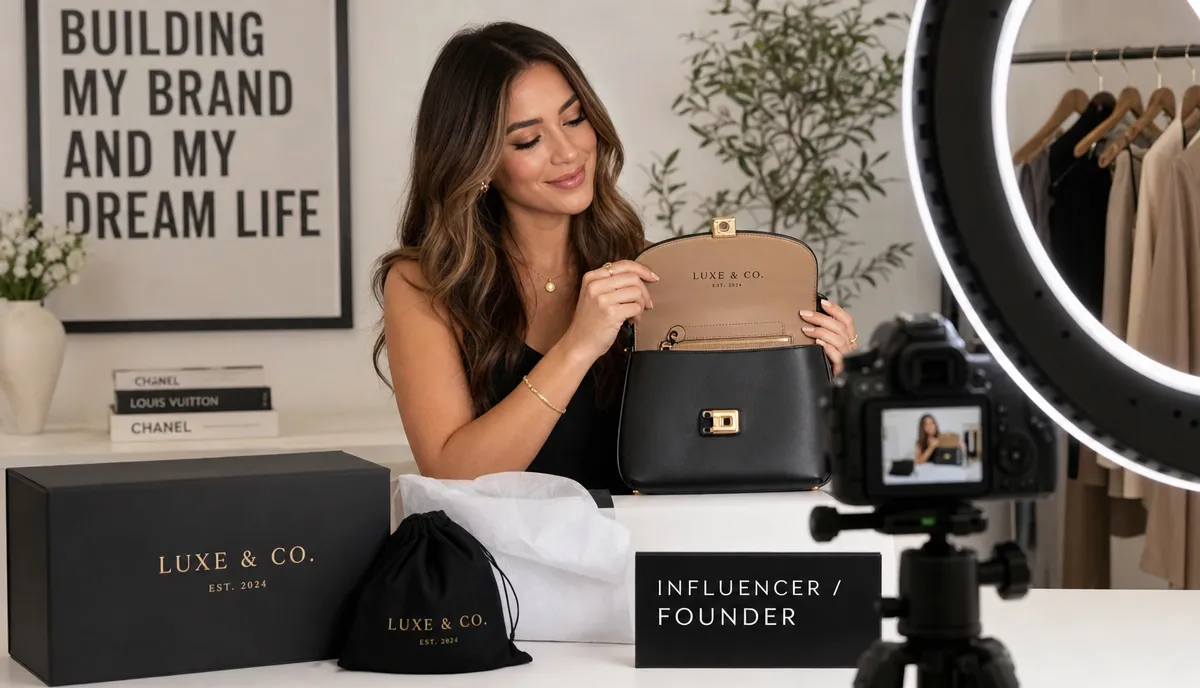
You have 50,000 followers. Or 200,000. Or 2 million. You create content about fashion, lifestyle, travel, or beauty. Your audience trusts your recommendations — they buy what you feature, they ask for links, they save your posts for reference. You have, in marketing terms, distribution. What you do not have is a product.
Every affiliate link you share earns you 5–15% of the retail price. Every sponsored post pays a flat fee that disappears after the campaign ends. Every “link in bio” sends your followers to someone else’s brand, building someone else’s equity with your audience’s attention. The math is clear: the influencer who recommends bags earns a fraction. The influencer who makes bags earns the margin.
In 2026, the influencer-to-founder pipeline has matured from a novelty into a proven business model. Hundreds of creators have launched private label handbag lines — some generating seven-figure annual revenue within 18 months of their first production run. They did not build factories. They did not learn pattern-making. They partnered with OEM/ODM manufacturers in China who produce the bags to their specifications, with their branding, at their quality standards — while the creator focuses on what she does best: creating content that sells.
This guide is the playbook for that transition. It covers why the direct-from-factory model works uniquely well for influencers, how to structure the business for maximum margin, how to time product drops around content cycles, and how to work with a manufacturer to produce bags that your audience will trust because you designed them — not just endorsed them.
Most startup brands spend 60–80% of their first-year budget on customer acquisition: paid ads, SEO, PR, and influencer partnerships. The influencer-founder spends zero on customer acquisition because she IS the acquisition channel. This single advantage changes the entire business economics.
| Dimension | Traditional Startup Brand | Influencer-Led Brand |
|---|---|---|
| Customer acquisition cost (CAC) | 60 per customer (paid ads, SEO, PR) | Near $0 — organic audience, existing trust |
| Time to first sale | 3–6 months of marketing before meaningful revenue | First sale on launch day — audience is pre-warmed |
| Brand trust at launch | Zero — must be built from scratch through reviews, press, time | Pre-built — followers already trust the creator’s taste and judgment |
| Content creation cost | 20,000+ (hiring photographers, videographers, models) | Near $0 — the creator IS the content engine |
| Product feedback loop | Slow — relies on reviews and return data over months | Instant — DMs, comments, polls, Q&A stories provide real-time feedback |
| Email / SMS list at launch | Must be built from scratch | Often 10,000–100,000+ subscribers from existing content |
| Retail buyer / press interest | Must be pitched cold | Inbound — buyers and press follow the creator’s channels |
The implication: an influencer-founder can launch a handbag brand profitably on her first production run — something traditional startups rarely achieve. The CAC advantage alone means that a bag with a 90 retail price generates 90 might spend 40 per unit on acquisition, netting 40 in margin. The influencer earns 60–100% more margin per unit sold.
Influencers entering the product space typically evaluate four manufacturing models. Understanding why the direct-from-factory (private label OEM/ODM) model outperforms the others is critical for making the right structural decision.
| Model | How It Works | Margin | Brand Control | Quality Control | Inventory Risk | Best For |
|---|---|---|---|---|---|---|
| Dropshipping | Supplier ships directly to customer; you never touch the product | Very low (10–20%) | Near zero — you sell someone else’s product with your label | Zero — you accept whatever ships | Zero — no inventory | Testing demand; not viable as a real brand |
| White-label | You buy generic products and add your logo | Low–Medium (25–40%) | Minimal — product is identical to competitors with different logos | Limited — you inspect after receiving | Moderate — you hold inventory of generic products | Quick launch; weak differentiation |
| Wholesale / resell | You buy branded products from other brands at wholesale and resell | Low (30–50% of retail, minus wholesale cost) | Zero — you are a retailer, not a brand | None — you receive finished goods | Moderate–High — you buy what’s available | Boutique retail; not brand-building |
| Private label OEM/ODM (direct-from-factory) | You specify the design, materials, branding; factory produces exclusively for you | High (60–80% gross margin at DTC) | Full — you own the design, the brand, and the customer relationship | Full — you approve samples and inspect production | Moderate — you order in bulk; managed by MOQ selection | Building a real brand with ownership and equity |
The private label OEM/ODM model is the only one that builds brand equity — the value that compounds over time and can eventually be sold, licensed, or expanded into other categories. Dropshipping and white-label build no equity; wholesale builds someone else’s equity. The influencer who wants to transition from “person who recommends products” to “person who owns a product brand” must choose OEM/ODM.
Let us compare the economics of an influencer recommending someone else’s 100 bag.
| Revenue Stream | Revenue Per $100 Bag Sold | Annual Revenue (1,000 units/year) | What You Own |
|---|---|---|---|
| Affiliate link (8% commission) | $8 | $8,000 | Nothing — the brand owns the customer, the design, and the equity |
| Sponsored post (flat fee, amortized per unit sold) | ~15 | 15,000 | Nothing — the campaign ends, the revenue stops |
| Own brand (DTC, direct-from-factory) | 75 gross margin | 75,000 | The brand, the design, the customer list, the reorder relationship, the equity |
Selling 1,000 units of your own bag at $100 DTC generates 6–10× the revenue of promoting 1,000 units of someone else’s bag through affiliate links. And the revenue is recurring — customers who love your first bag buy your second, your third, your accessories. The affiliate commission resets to zero after each campaign.
| Line Item | Amount | Notes |
|---|---|---|
| Revenue (200 units × $95 avg. retail) | $19,000 | Conservative first-launch volume |
| COGS | ||
| Landed cost per unit (FOB + shipping + duties) | 4,400) | Mid-range PU leather tote |
| Packaging per unit | 300) | Dust bag + hang tag + branded tissue |
| Gross profit | $14,300 | 75.3% gross margin |
| Operating expenses | ||
| Samples (2 rounds) | ($250) | Proto + revision |
| Tooling (debossing die) | ($60) | One-time; reusable for all future orders |
| Product photography | $0 | Creator shoots her own content |
| Marketing / ads | 500 | Organic audience; minimal paid boost |
| Shopify / platform fees | ($570) | ~3% transaction fees |
| Fulfillment / shipping to customer | 1,000) | Self-fulfilled or 3PL |
| Net profit (first launch) | 12,420 | ~63–65% net margin |
A first launch of 200 units generating $12,000+ in net profit — with zero customer acquisition cost and zero content creation cost — is why the influencer-to-founder transition has become one of the most compelling micro-business models in the fashion accessories industry.
The influencer-founder has a unique timing advantage — and a unique timing constraint. Her audience expects regular content and responds to narrative arcs: the behind-the-scenes development journey, the material selection process, the factory sample reveal, the pre-launch tease, the launch day drop. Manufacturing must sync with this content rhythm.
| Week | Manufacturing Stage | Content Opportunity | Platform |
|---|---|---|---|
| 1–2 | Brand positioning + design brief | “I’m starting my own bag brand” announcement; audience poll on features/colors | Instagram Story, TikTok, YouTube vlog |
| 3–4 | Factory selection + material sourcing | Behind-the-scenes: material swatches, “help me choose” polls | Instagram Story, TikTok |
| 5–6 | Proto sample production | Waiting content: mood boards, inspiration posts, brand identity reveal | Instagram, Pinterest |
| 7 | Proto sample arrives | THE REVEAL: unboxing the first sample, honest reaction, first impressions | YouTube, TikTok, Instagram Reel — this is high-engagement content |
| 8 | Review + send revision notes | “What I’m changing” — honest critique of sample, showing what’s not perfect yet | Instagram Story, YouTube |
| 9–10 | Revision sample production | Design process content: hardware selection, logo refinement, packaging design | Instagram, TikTok |
| 11 | Revision sample arrives; approve for bulk | Second unboxing: “Here’s the final version” — comparison to first sample | YouTube, Instagram |
| 12 | Bulk production starts | Factory footage (if available), production updates, countdown begins | Instagram Story, TikTok |
| 13–14 | Production in progress | Pre-launch content: product page prep, pricing reveal, early-access signup | Email, Instagram, Website |
| 15 | Production complete; bags shipping to you | “They’re on their way” — shipping container/tracking content | Instagram Story |
| 16 | LAUNCH DAY | Full launch: product video, styled shots, link in bio, email blast, live Q&A | All platforms simultaneously |
The development journey — from design brief to finished product — is content gold that most influencers underutilize. Every stage generates naturally engaging content: material swatches, factory samples, honest critiques, design decisions, hardware selection, packaging design, and the emotional moment of holding the first finished bag with your name inside.
This content does three things simultaneously:
Influencer brands typically launch using one of two inventory and sales models. The right choice depends on your audience size, capital, and operational capacity.
| Model | How It Works | Inventory Risk | Urgency / FOMO | Revenue Pattern | Best For |
|---|---|---|---|---|---|
| Limited drop | Produce a fixed quantity (100–300 units); announce a launch date; sell until sold out | Low — produce only what you plan to sell | Very high — “when it’s gone, it’s gone” drives fast conversion | Spike on launch day/week, then zero until next drop | Creators with 10K–100K followers; first launch; limited capital |
| Always-on | Produce ongoing inventory; products are always available for purchase | Higher — must forecast and restock | Lower — no urgency, but steady availability | Steady daily/weekly sales | Creators with 100K+ followers; established brand; more capital |
For your first product launch, the limited drop model is strongly recommended:
If your first drop sells out, your second drop can be 2–3× larger. If your second drop also sells out, consider transitioning to the always-on model with rolling reorders.
The influencer-founder’s product should be informed by her audience’s lifestyle, not just her personal aesthetic. A creator whose audience is college-aged and budget-conscious should not launch with a 35 canvas tote.
| Your Audience Profile | Best First Product | Material | Retail Price | Why This Match |
|---|---|---|---|---|
| Fashion-forward 18–28, trend-driven | Shoulder bag or crossbody in a trend color/texture | PU leather, satin, quilted nylon | 85 | Matches her budget and her desire for “the bag of the season” |
| Professional women 28–45, quality-focused | Structured work tote or laptop-compatible bag | PU leather, microfiber, canvas + leather trim | 140 | Matches her daily carry needs and her willingness to invest |
| Travel / lifestyle 25–40, experience-driven | Weekender, crossbody, or convertible travel bag | Canvas, nylon, recycled materials | 120 | Matches her lifestyle and her content context |
| Mom / family 28–40, practical-chic | Organized tote with multiple compartments | PU leather, wipe-clean nylon | 110 | Matches her daily chaos and her desire for bags that work as hard as she does |
| Luxury / aspirational 25–50, premium-oriented | Structured handbag with premium finishing | Microfiber leather, genuine leather | 250 | Matches her expectation of quality and her willingness to pay |
| Fitness / wellness 22–38, active lifestyle | Sport crossbody, yoga tote, or gym-to-street bag | Nylon, neoprene, recycled materials | 75 | Matches her activity pattern and her values |
The single most common mistake influencer-founders make is launching too many products at once. Three styles, five colors, two sizes = 30 SKUs = fragmented inventory, confused messaging, and diluted content.
Launch with one style in two to three colors. This focuses your content on a single product story, concentrates your inventory investment, and gives your audience a clear purchase decision: “Do I want this bag, and in which color?” — not “Which of these seven bags do I want, and which color, and which size?”
An influencer-founder must understand the intellectual property landscape to protect her investment.
| Element | Who Owns It | How to Protect It |
|---|---|---|
| Your brand name and logo | You — if registered | File a trademark application before launching |
| Your custom design (if OEM — you provided the tech pack) | You — if you have a design agreement with the factory | Include an IP clause in your factory agreement stating the design is your property |
| The ODM base pattern (if you customized a factory’s existing design) | Typically the factory — you own your customization, not the base pattern | Understand that other brands may use the same base pattern with different customization |
| Your product photography and content | You | Copyright is automatic upon creation; register for stronger protection |
| Your customer list and sales data | You | Keep customer data on platforms you control (Shopify, your email service) |
| The factory’s production techniques and supplier relationships | The factory | You do not own these — do not expect exclusivity on materials or methods |
| Action | Cost | Timeline | Why |
|---|---|---|---|
| Register your brand name as a trademark (USPTO) | 350 per class | 8–12 months for approval, but you can use “TM” immediately upon filing | Prevents copycats from registering your name once you become successful |
| File for Amazon Brand Registry (if selling on Amazon) | Free (requires trademark application) | 2–4 weeks after trademark filing | Protects your listings from hijackers and unlocks A+ content |
| Include an IP clause in your factory agreement | $0 (add to your purchase order terms) | Before first production order | Establishes that your custom design is your property |
| Register your domain and social handles | 50/year | Before public announcement | Secure your brand name across all platforms before someone else does |
Certain production features matter more for influencer-led brands than for traditional brands because the product will be filmed, photographed, and scrutinized in high-resolution content by both the creator and her audience.
| Feature | Why It Matters for Influencer Brands | Specification |
|---|---|---|
| Interior in a signature color | The “bag opening” is a content moment — a distinctive lining color creates a visual “reveal” that photographs beautifully | Choose a color that contrasts with the exterior and aligns with your brand identity (blush, sage, butter yellow) |
| Branded interior label | The close-up shot of “your name inside the bag” is one of the most-saved images in influencer launches | Custom woven label, centered on interior back wall, readable in a photo |
| Audible hardware | Zippers, magnetic snaps, and turn-locks that produce a satisfying sound — ASMR content, unboxing videos | Specify smooth-glide zippers and clean magnetic snap engagement |
| Dust bag with brand mark | The unboxing sequence starts with the dust bag — it is the first branded surface the customer sees | Custom printed or embroidered dust bag in a complementary color |
| Branded tissue paper and sticker seal | The “peel” moment of the sticker seal is another content beat | Custom-printed tissue paper, branded circular sticker seal |
| Weight that “feels premium” | Influencer content often includes the “hand feel” test — the bag must feel substantial without being heavy | Target 400–900 g empty depending on size; use quality hardware to add perceived heft |
These features add approximately 5 to the per-unit cost but generate the content moments that drive launch-day conversion: the unboxing video, the interior reveal, the hardware sound, the dust-bag pull. For influencer brands, these moments ARE the marketing — they replace the 20,000 that a traditional brand would spend on a launch campaign.
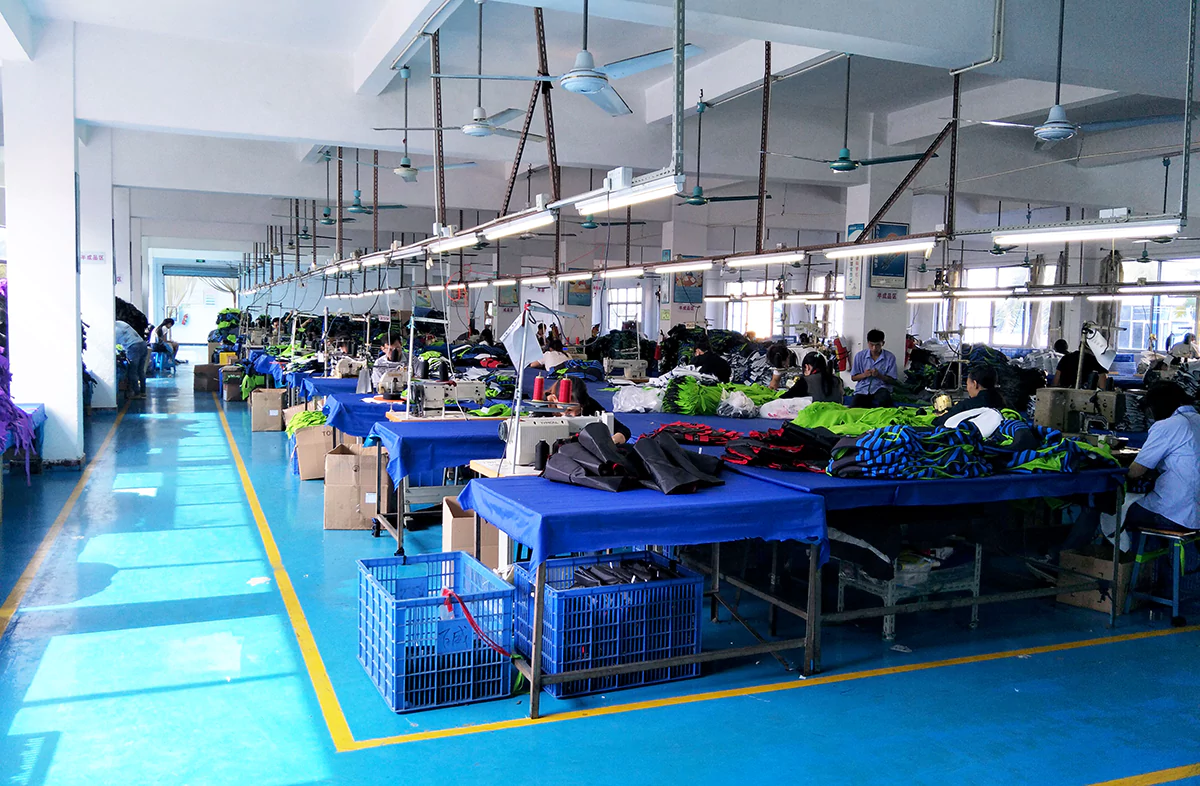
FYBagCustom is Your Trusted Custom Bag Manufacturer in China, with 15+ years of experience helping influencers, content creators, and personal brands launch private label handbag lines from concept to first sale. Our support for creator-led brands includes:
Our 50,000 m² factory in Guangzhou with 10+ production lines and 500+ professional staff has helped launch hundreds of creator-led and startup brands — from 100-unit first drops to full seasonal collections.
Most businesses spend years building an audience before they have anything to sell. You have the audience already. The manufacturing process — design, sample, produce, ship — is a learnable sequence with predictable costs, predictable timelines, and partners who have done it thousands of times before. For influencers ready to make the transition in 2026, three core takeaways:
If you are an influencer with an audience that trusts your taste and you are ready to turn that trust into a product, contact FYBagCustom. Send us your vision — a mood board, a sketch, a collection of reference images, or just a description of the bag you wish existed — and we will respond with design options, material recommendations, and a transparent quote, typically within 48 hours. Your audience is already waiting. The bag is the only missing piece.
FYBagCustom’s OEM and ODM team has helped hundreds of influencers and content creators launch their own private label bag lines — from the first sketch to the sellout drop. Send us your vision and we’ll help you build it with influencer-friendly MOQ, rapid sampling, content-ready packaging, and transparent pricing.
Start Your Custom Bag Project →