Tel/WhatsAapp:+86 13366396425
E-mail: chloe_xia@vleap.com.cn

Carry-on is one of the most return-sensitive product categories in travel. Customers don’t just “use” a carry-on bag—they stress-test it in airports, security lines, overhead bins, and hotel lobbies. If the bag fails once (zipper pops, straps hurt, dimensions don’t fit, pockets bulge), the review becomes emotional and permanent.
For B2B buyers, that means the phrase “best carry-on” is not a consumer opinion. It is the intersection of:
This deep guide is written for brand owners, sourcing managers, importers, wholesalers, corporate gift programs, and Amazon sellers looking for a private label carry-on travel bag manufacturer and/or a custom travel backpack OEM/ODM China partner. It focuses on soft-sided carry-on travel bags (travel backpacks, weekender/duffels, garment duffels) and the underseat “personal item” segment—because these are the fastest to differentiate and scale in a soft-goods OEM model.
FYBagCustom’s published OEM/ODM workflow (brief → design pack → sampling → pilot run & QC plan → mass production & packing) is a good reference structure for how carry-on programs should be executed.
Most consumer carry-on guides treat airline limits as a checklist item. B2B buyers must treat them as a product requirement document (PRD) that drives pattern-making, pocket architecture, reinforcement, and even marketing claims.
Airline rules matter for two reasons:
Also, enforcement style changes over time. For example, media reporting suggests American Airlines has been phasing out some gate bag sizers, but the rule remains—agents may visually assess compliance and size regulations still apply.
For brands, this increases “gray zone” customer expectations (some travelers think rules are looser), while your product still needs defensible specs.
B2B takeaway: the best carry-on bag is the one that survives both the airline PRD and the customer’s packed reality—and does so consistently across production batches.
There is no single global carry-on rule. That is exactly why buyers should anchor product development around a small set of highly influential benchmarks—the ones that shape search behavior, listing language, and travel patterns.
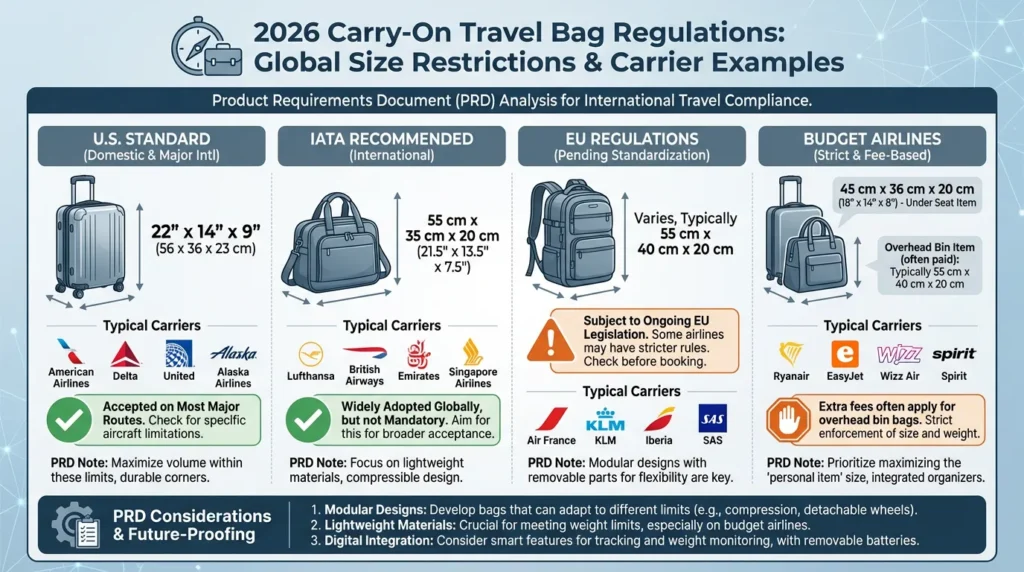
American Airlines states that carry-on bags cannot exceed 22 × 14 × 9 inches (56 × 36 × 23 cm) including handles and wheels, and personal items should not exceed 18 × 14 × 8 inches (45 × 35 × 20 cm).
Even if you aren’t designing specifically for AA, “22×14×9” is a dominant consumer query and a common expectation in the U.S. market.
IATA notes that allowances vary by airline, class, and aircraft, but provides a general guide of 22 in (56 cm) length, 18 in (45 cm) width, 10 in (25 cm) depth, explicitly stating the dimensions include wheels, handles, and side pockets.
This matters for B2B not because it is a universal rule (it is not), but because it highlights how serious standards organizations define measurement: external elements count.
Airlines for Europe (A4E) confirmed that member airlines started applying a guaranteed set of dimensions for the “personal item” placed under the seat: 40 × 30 × 15 cm.
This single change is a big strategic signal: underseat personal item products are no longer “nice extras”—they are becoming a core bag family for budget and short-haul travel.
You don’t need to design one bag to satisfy every airline. But you do need a strategy that prevents your marketing from overpromising.
A product can be “best” for DTC and still be a weak SKU for Amazon, or be perfect for wholesale but fail in corporate gifting. In B2B procurement, “best” must match channel economics.
Amazon customers buy from pictures, titles, and a few bullets. They don’t want to read a long explanation of why your trolley sleeve is better. They want to see it.
For Amazon carry-on programs, the “best” bag usually has:
FYBagCustom’s Amazon FBA solution page explicitly compares Amazon’s per-unit labeling cost and states they offer labeling services starting at an hourly rate, positioned as cost-effective operational support.
That matters because FBA readiness is not optional if you want scale.
DTC customers may pay more for:
DTC also values the ability to iterate quickly. FYBagCustom can fast sampling in 3–7 days and highlights flexible small-order production on homepage—an advantage for brands testing a new carry-on silhouette before scaling.
Retail buyers care about:
FYBagCustom highlights a strict QC system and AQL-compliant inspection processes in its customization system, reinforcing the idea of repeatable execution rather than one-off samples.
In gifting, the bag is both a product and a brand vehicle. Packaging becomes part of the value. FYBagCustom’s custom packing page positions packaging as an end-to-end ecosystem including dust bags, gift boxes, hangtags, and export cartons—exactly what corporate programs tend to require.
For private label, speed matters. The fastest path to a defensible carry-on program is usually soft-sided travel bags, because they can be differentiated through features and don’t require the same tooling complexity as hard-shell luggage.
A practical product architecture is:
FYBagCustom’s custom design page explicitly lists travel accessory categories like packing cubes, shoe bags, and organizer sets, which makes bundling a natural OEM extension rather than a separate vendor hunt.
Most sourcing mistakes happen because the buyer approves an empty sample and assumes “dimensions are solved.” Soft bags expand under load, and the expansion pattern is not random—it’s structural.
A soft carry-on can meet 22×14×9 on paper but fail at the airport because:
A Loaded Fit standard has three components:
1) A defined packing load
You need a repeatable load for sampling rounds, such as:
The point is not maximum capacity. The point is consistent measurement under a realistic usage scenario.
2) A measurement protocol
Measure external L×W×H under load and document:
Remember: airlines count wheels/handles and external protrusions in many cases.
3) Anti-bulge architecture requirements
Anti-bulge architecture is a design discipline:
If your target airline limit is 9 inches depth, a conservative engineering approach is to design for ~95% of that depth under load (e.g., 8.5–8.7 inches), especially if you sell internationally where aircraft bins can be smaller. This reduces dispute risk while still delivering usable capacity.
A travel backpack is the most common “hero SKU” in modern carry-on programs because it solves a real traveler desire: hands-free mobility with suitcase-like packing. But travel backpacks also have more failure modes than duffels. They involve straps, load transfer, laptop protection, zipper paths, and comfort ergonomics.
If you’re sourcing a travel backpack as a private label program, the supplier must behave like a product engineer—not just a sewing workshop.
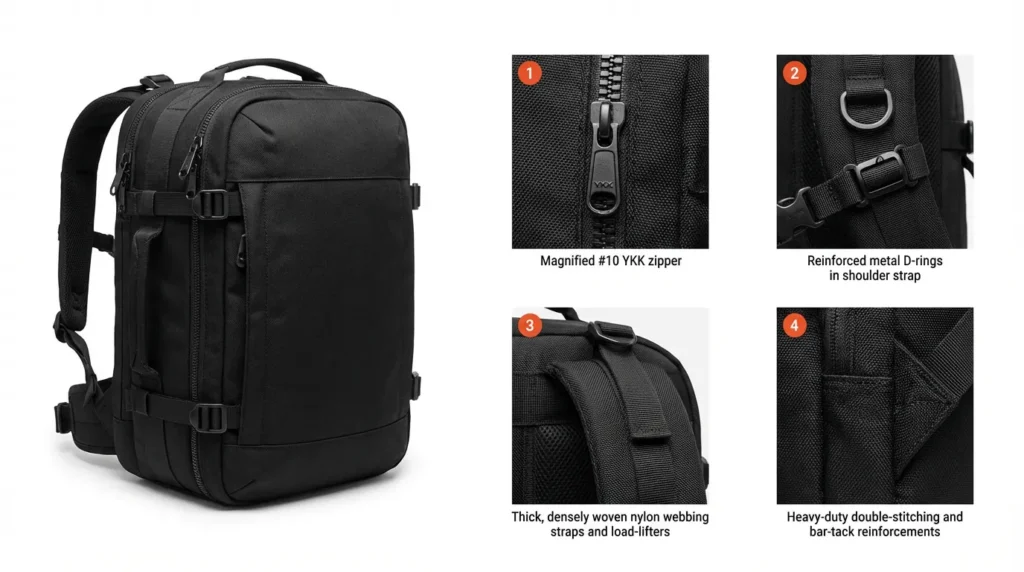
Clamshell travel backpacks open like a suitcase (180 degrees). This is not just convenience; it changes packing behavior and reduces bulging. Customers tend to distribute contents more evenly, which helps maintain depth compliance. Clamshell designs also photograph well for Amazon and clarify value quickly.
Top-load backpacks can still work if they have a wide opening and internal organization, but they are harder to pack efficiently and more likely to produce depth bulges.
B2B recommendation: If your primary market is e-commerce, clamshell is usually the safer hero architecture.
Comfort is a compound of:
A bag can have great capacity but still feel “bad” if the weight pulls backward or straps cut into shoulders. Comfort complaints often appear as 2–3 star reviews even when the bag is durable. That’s why comfort is a business metric, not a design luxury.
Laptop damage or fear of damage creates returns. A good travel backpack should include:
This matters for carry-on because travelers often place the bag underseat, where it gets compressed by foot movement.
Travelers love trolley sleeves, but bad trolley sleeves create the impression of cheapness:
A trolley sleeve must be designed with a real suitcase handle width range in mind, reinforced at stress points, and positioned to maintain balance.
Clamshell zippers experience stress at corners and ends. Buyers should demand:
FYBagCustom as a custom travel backpack OEM/ODM in China explicitly lists zipper size options (#3–#10) and mentions defining zipper cycle tests and pull/load tests in the pilot QC plan—this is aligned with how a serious travel backpack program should be controlled.
This is not “the one true size,” but a procurement-grade example:
FYBagCustom’s nylon bag page provides a useful denier mapping (210D–420D lightweight, 420D–600D balanced, 840D–1680D heavy-duty for travel) that aligns with common backpack segmentation.
Duffels are deceptively simple. Many factories can sew a duffel. Fewer can produce a duffel that:
FYBagCustom positions itself as a duffle bag OEM/ODM manufacturer in China, and its duffle category is a natural internal reference when building weekender programs.
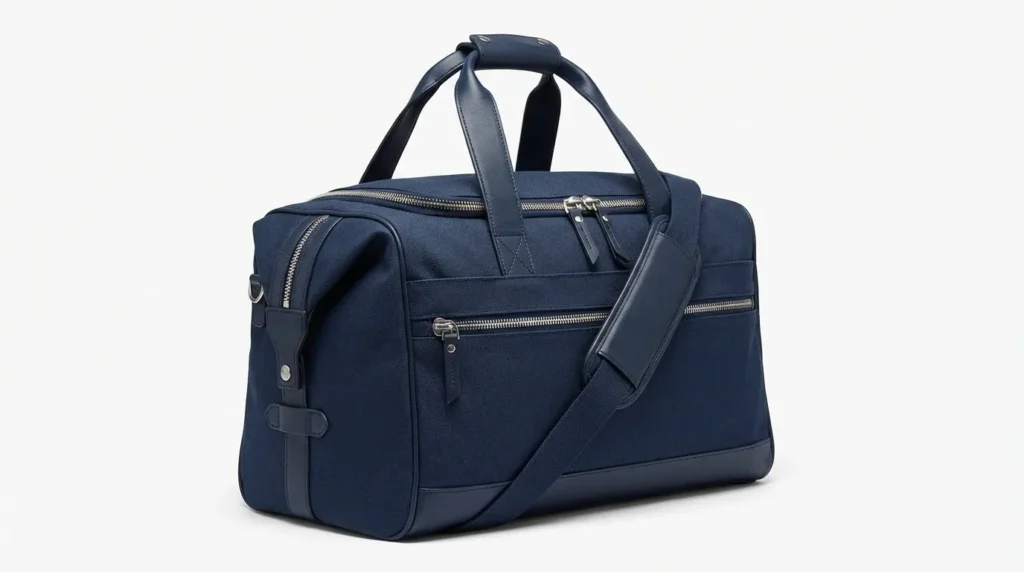
A weekender that is too floppy looks cheap and “unstructured” in photos. A weekender that is too rigid risks failing airline fit, especially in depth, because the bag can’t compress.
The solution is controlled structure:
Shoe compartments sell. Wet pockets sell. But they introduce material risks:
A sourcing-safe design uses wipe-clean lining, sealed seams where needed, and a structure that allows some airflow rather than creating a damp cavity.
Duffel straps often fail at anchor points when customers overload the bag. Buyers should demand:
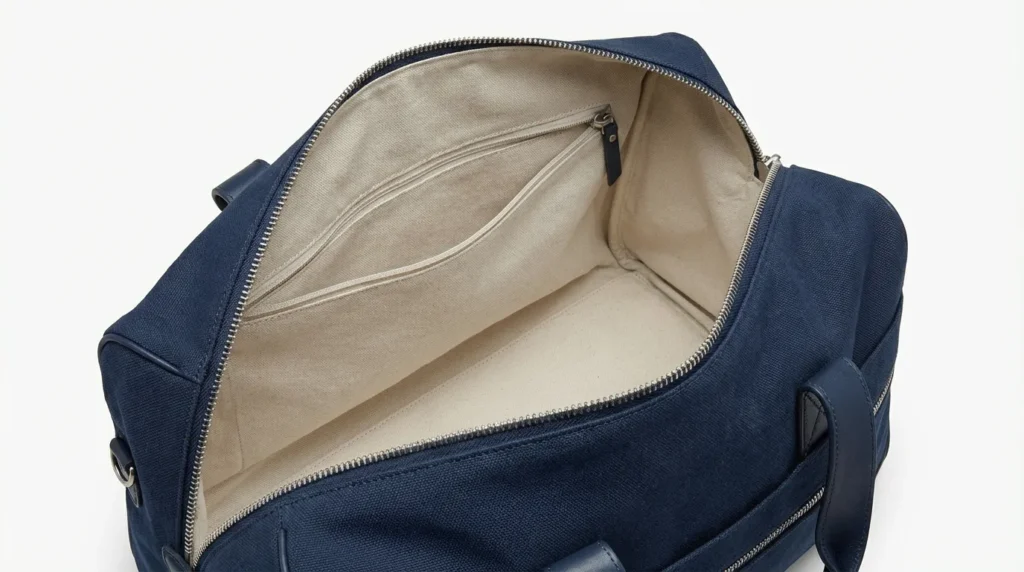
Customers expect flexibility. But every carry mode adds components and QC points. In Amazon, too many complex features can increase defect probability.
A good “best carry-on duffel” usually includes:
Garment carry is a premium niche: weddings, business travel, uniforms, and event logistics. The customer expectation is not “big capacity.” It’s wrinkle control and professional appearance.
American Airlines specifies that a soft-sided garment bag cannot exceed 51 inches / 130 cm when adding length + width + height.
This is different from the L×W×H box rule and it affects how you market and spec garment products.
Garment duffels fold a suit/dress into a duffel shape. If the fold line hits the wrong spot (shoulders, lapels), the customer blames the bag.
Successful garment duffels require:
This is a category where you must test with actual suits/dresses. If the factory can’t iterate quickly, you get stuck. FYBagCustom’s custom design workflow (brief feasibility → design pack → sample development) is the correct development structure for garment products, because geometry iteration is unavoidable.
Underseat bags are becoming strategically important because more fare types include only a “personal item.” Europe’s baseline is moving toward 40 × 30 × 15 cm as a guaranteed dimension among A4E member airlines.
At the same time, airlines like easyJet allow a free underseat bag up to 45 × 36 × 20 cm.
The challenge with 15 cm depth is usability. A bag can be compliant and still feel useless if it can’t carry:
Most designers fail by shrinking a normal backpack without redesigning the interior. The correct approach is to design for flat-stack objects and high-efficiency pocketing.
Principle 1: rectangular footprint wins
Curved silhouettes waste volume in thin-depth designs. A rectangular footprint maximizes usable capacity and reduces bulge points.
Principle 2: flat pockets over gusset pockets
Gusset pockets are the #1 cause of non-compliance under load. Flat pockets with controlled expansion deliver organization without depth creep.
Principle 3: internal “file wall”
A file wall is a structured interior layer for laptop/documents that keeps the bag’s thickness stable.
Principle 4: strap management
Loose straps add external protrusions that can cause measurement disputes. Include strap keepers or stowable straps.
Underseat bags are “always used.” Travelers flying frequently on short-haul routes often adopt an underseat bag as both travel and daily carry. That improves reorder behavior and reduces seasonality.
If you want to position a product as “fits most airlines,” underseat is often a safer promise than overhead carry-on—because underseat is the strict baseline for many basic fares.As a underseat personal item bag 40×30×15 manufacturer, FYbagcustom offers one-stop customization solutions.
Material choice is not a style preference. It’s a performance and returns decision.
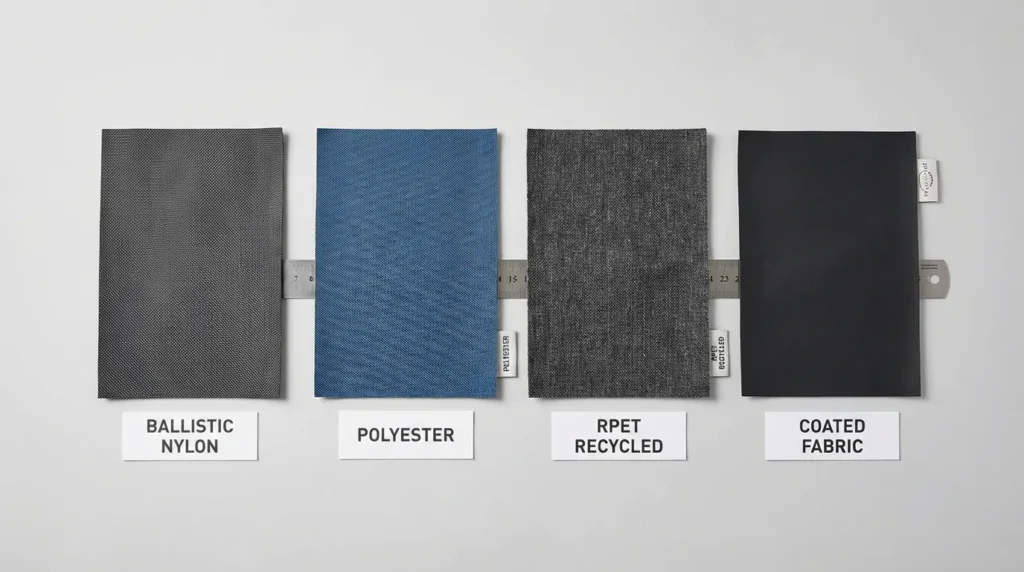
Carry-on bags experience:
A fabric that looks great but pills quickly can trigger reviews like “looks old after one trip.” That type of review kills conversion.
| Material | What it’s good at | Hidden risks | Best positioning | Notes for RFQ |
|---|---|---|---|---|
| 1680D ballistic nylon | Rugged abrasion resistance; holds shape | Heavier; quality varies by yarn | Premium “built for abuse” | Specify yarn quality + backing |
| 420D–600D nylon | Strong strength/weight balance | Needs reinforcements in stress zones | Lightweight travel | Specify reinforcement map |
| Polyester 600D/900D | Cost control; stable supply | Abrasion/pilling depends on quality | Value and wholesale | Specify pilling + coating |
| RPET fabrics | Sustainability story | Color lot & coating consistency | Eco-focused retail | Require documentation as needed |
| TPU-coated panels | Wipe-clean, water resistance | Stiffness impacts fit/packing | Base & wet pocket zones | Specify coating thickness |
| PU / vegan leather trims | Premium appearance | Heat aging/cracking if low grade | Fashion/gift programs | Test adhesion + rub |
FYBagCustom’s customization system highlights material mastery and Pantone control, and explicitly references eco-ready options like recycled fabrics and biodegradable packing.
FYBagCustom’s nylon bag page provides a useful denier segmentation for travel: heavier deniers (840D–1680D) are positioned for travel bags and equipment cases, while 420D–600D is positioned as balanced strength.
Use this to build your product ladder:
For carry-on products, components are not “details.” Components are your warranty rate.
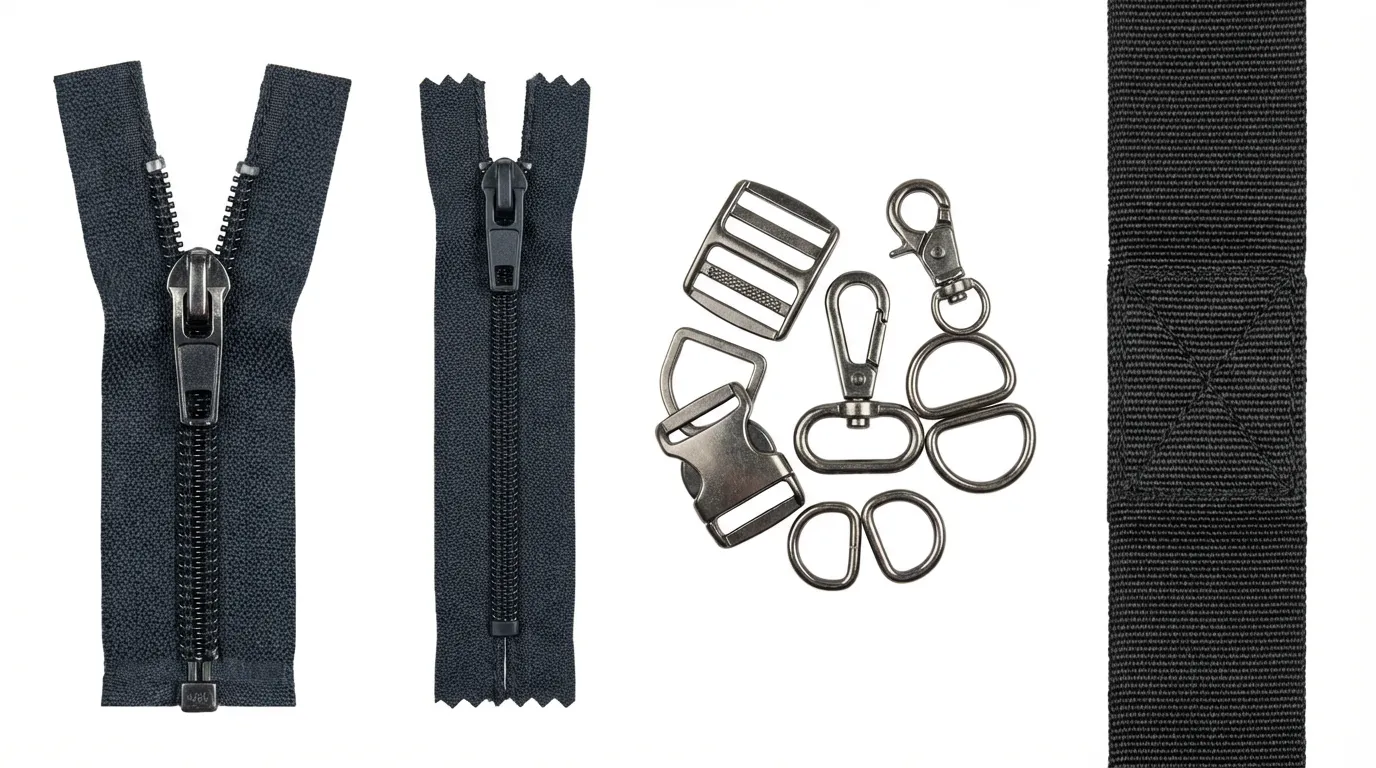
If fabric scuffs, customers complain. If a zipper fails, customers return and write “cheap.” Zippers must handle:
FYBagCustom’s customization section lists zipper sizes #3–#10, slider options like auto-lock sliders and two-way zips, and mentions zipper cycle tests as part of its QC plan.
When buyers say carry-on bag zipper specification #10 #8, they’re often describing a zoning approach:
But zipper size alone is not enough. Your RFQ should lock:
Cheap hardware can:
Webbing quality issues include inconsistent thickness, fuzzing, and weak weave density. These create strap failures or an “old” look quickly.
B2B best practice: define hardware finish, corrosion resistance expectation, and webbing spec in the tech pack—don’t leave it as “standard.”
Travel is not gentle. Carry-on bags fail in predictable zones:
A stress map is a simple engineering tool: mark the bag pattern with zones of high load and define reinforcement stack-ups for each zone.
Example stress map zones:
Each zone gets a reinforcement recipe: patch material, stitch pattern (box-x, bar-tack), seam allowance, and thread spec.
Comfort reduces returns and increases repeat buyers. Comfort is a function of:
A “best carry-on travel backpack” that hurts the shoulders will be rated poorly even if it survives. Comfort must be tested with realistic load during sampling.
Carry-on bags are not fashion-only products. They are functional goods. Your QC plan must include both visual standards and functional tests.
FYBagCustom support AQL-compliant inspection and a strict QC process in its customization system.
This matters because AQL is how you prevent “good first sample, inconsistent bulk production.”
A procurement-grade test plan often includes:
FYBagCustom’s custom design workflow explicitly lists defining AQL, colorfastness, pull tests, load tests, zipper cycle tests, and carton drop tests during pilot run and QC planning.
If a bag arrives crushed, creased, or with odor, customers return it before using it. That’s why packaging is part of product quality.
FYBagCustom’s custom packing page frames packaging as an integrated ecosystem (dust bags, gift boxes, hangtags, FBA labels, eco-friendly cartons) and positions it as brand consistency and safe delivery infrastructure.
A carry-on program fails when specs are vague. Words like “durable zipper” and “reinforced straps” are not specs—they’re marketing.
At minimum:
FYBagCustom’s design pack concept includes spec sheets covering structure, seams, stitches, hardware, and Pantone matching—this is exactly the kind of documentation carry-on projects require to be repeatable.
Travel bags often need at least 1–2 iterations because comfort and loaded behavior cannot be perfectly predicted on paper. FYBagCustom highlights fast sampling in 3–7 days, which supports faster iteration cycles for private label programs.
FYBagCustom’s support for small orders with a minimum of 100 pieces and describes small MOQ as helpful for trial orders and market testing.
For new carry-on programs, this matters because you can:
Amazon FBA success depends on more than product design. It depends on operational compliance.
If your supplier can’t reliably:
…then your inbound problems become hidden costs that destroy your margin.
FYBagCustom’s Amazon FBA solution explicitly discusses labeling services and compares Amazon’s labeling fees, positioning their service as a cost-effective solution.
For carry-on soft goods, packaging must:
FYBagCustom’s custom packing as brand experience and shipment consistency infrastructure—use it as a benchmark when writing packaging requirements into your RFQ.
Carry-on customers love organization. Bundling:
…increases perceived value and reduces the “I can’t organize this bag” complaint.
FYBagCustom’s custom design page lists travel accessories like packing cubes and organizer sets, making it natural for OEM development and bundled programs.
A supplier who can make a good sample is not always a supplier who can ship consistent bulk orders. Use a procurement scorecard so “best” becomes measurable.
| Dimension | Points | What to verify |
|---|---|---|
| Airline compliance under load | 25 | Loaded Fit measurements, bulge behavior |
| Durability economics | 20 | Zipper reliability, anchor reinforcement, abrasion zones |
| Carry comfort | 15 | Strap foam retention, balance, back panel feel |
| Organization & access | 15 | Clamshell behavior, quick pockets, liquids logic |
| Material consistency | 15 | Shade control, coating quality, odor risk |
| Packaging & channel readiness | 10 | FBA labeling, shape protection, carton stability |
Ask these early:
FYBagCustom’s emphasis on AQL inspection, functional tests, and integrated packaging/labeling gives you a reference model for what a serious supplier should be able to discuss in concrete terms.
A reliable carry-on program needs more than sewing capacity. It needs:
FYBagCustom as a custom bags manufacturer in China with:
If you’re building a carry-on line, the lowest-risk launch plan is usually: one hero travel backpack or weekender + one EU-friendly underseat personal item + 2–4 accessories. That structure gives you strong product listing content, bundling leverage, and a scalable roadmap.FYBagCustom is your trusted partner. Whether you need a bespoke design or a specific feature, we can craft the perfect luggage to meet your needs. Get in touch today to inquire about custom designs, and let us help you take your travel experience to the next level.