Tel/WhatsApp:+86 18011919834
E-mail: chloe.x@fybagcustom.com

Tel/WhatsApp:+86 18011919834
E-mail: chloe.x@fybagcustom.com

Who this guide is for: brand owners, corporate gifting leads, promotional buyers, Amazon sellers and back-to-school retail buyers who are developing a custom lunch bag or insulated cooler bag line.
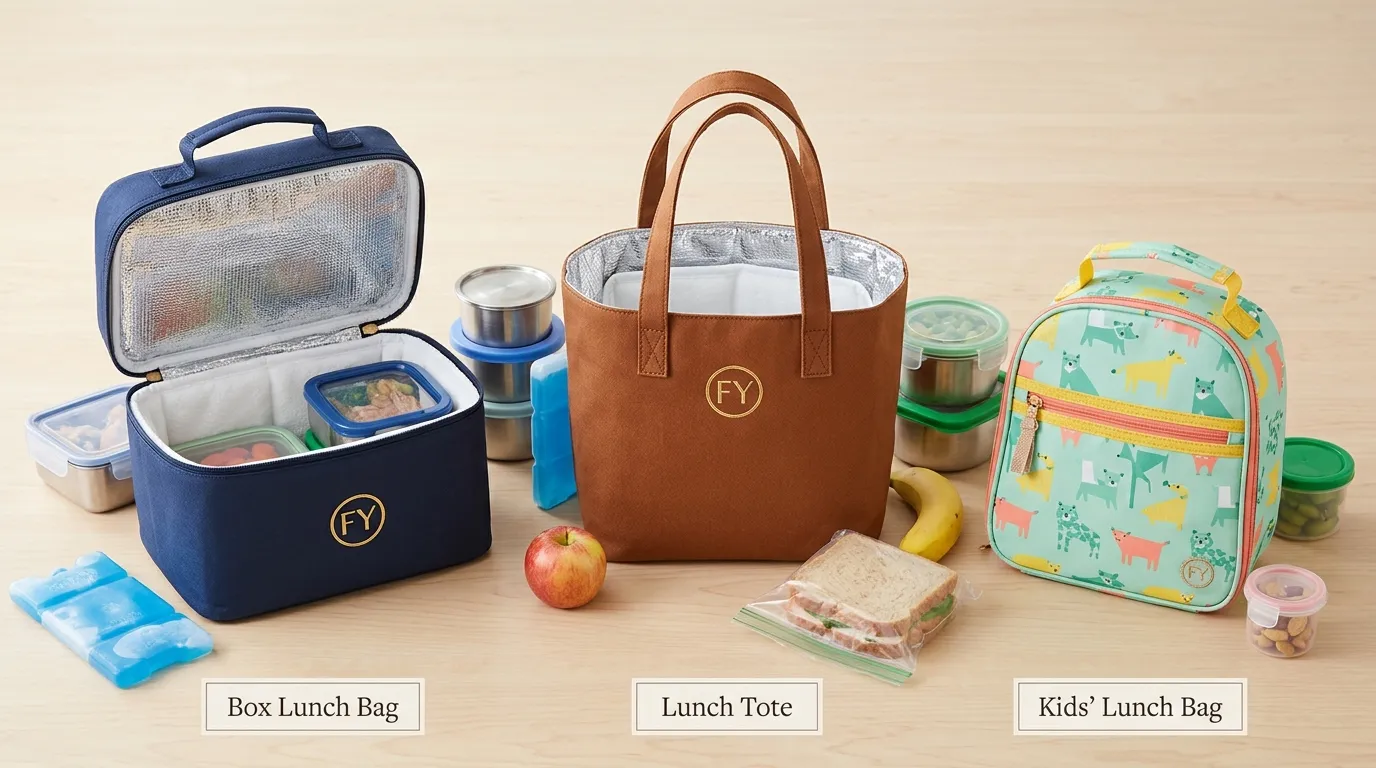
A custom lunch bag manufacturer has to solve problems that a regular bag line can ignore. The liner may touch food, the insulation has to hold temperature for hours, and the bag gets spilled on and wiped far more often than a tote. Custom lunch bags sell across back-to-school, office, meal-prep and corporate gifting programs, and each buyer group cares about the same three things: does it stay cold, is the lining safe, and does it survive daily use?
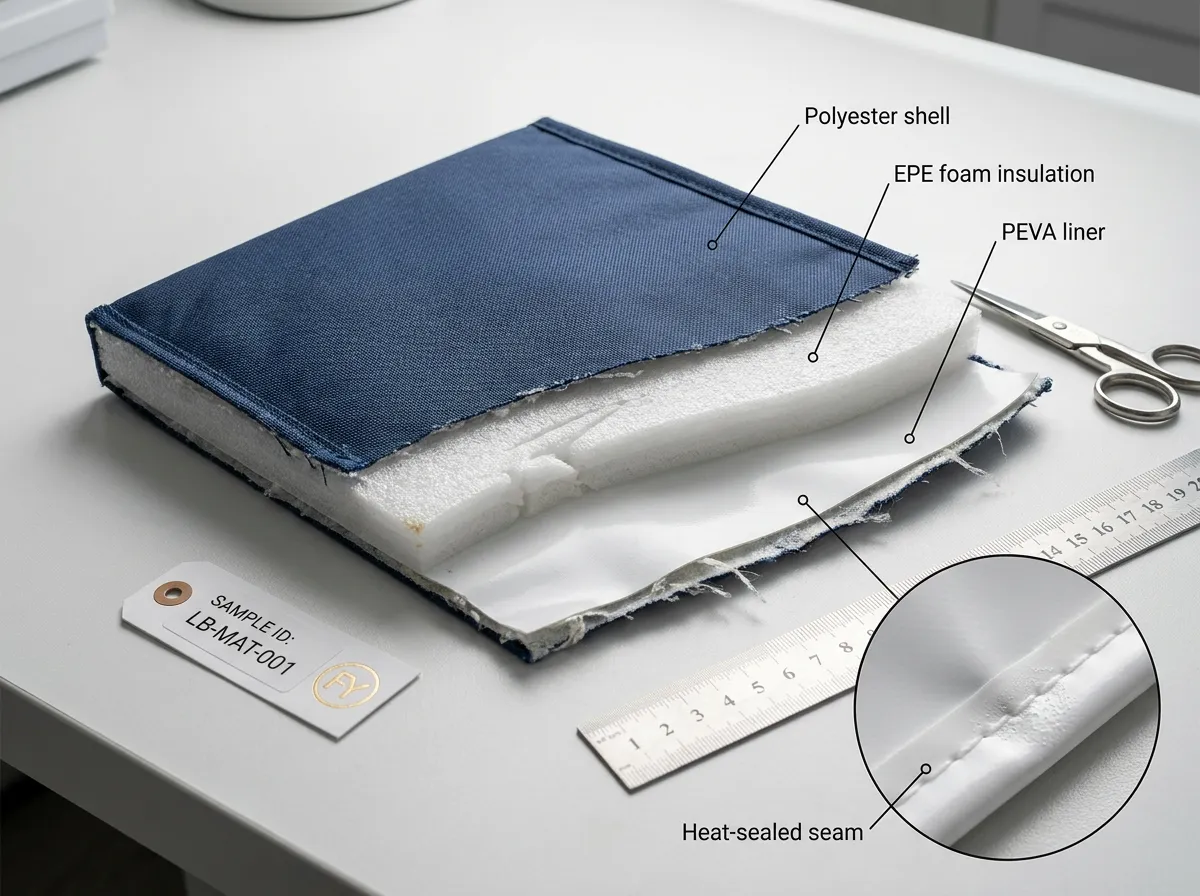
Quick answer: A good custom insulated lunch bag combines a durable shell (600D polyester, rPET, canvas or neoprene), closed-cell foam insulation such as EPE at roughly 3–10 mm, and a wipe-clean liner such as PEVA, aluminum-film laminate or TPU with heat-sealed seams. Choose a manufacturer that can source liners to your market’s food-contact rules and help you test cold-holding time.
Most insulated lunch bags have three layers, joined by binding and a zipper:
Neoprene is the exception. Its closed-cell rubber foam insulates on its own, so neoprene lunch bags often skip a separate foam layer. They stretch, fold flat and machine wash well, but hold cold for less time than a thick foam-insulated bag.
Our insulated bag page shows how these layers combine across lunch bags, cooler totes and bottle bags.
| Insulation | Structure | Thermal performance at equal thickness | Durability | Relative cost | Best for |
|---|---|---|---|---|---|
| EPE foam | Closed-cell expanded polyethylene | Good | Moderate; can crease with heavy folding | Low | Most lunch and cooler bags |
| XPE / IXPE foam | Cross-linked closed-cell polyethylene | Good | High; finer cells resist creasing | Moderate | Premium lunch bags, structured coolers |
| PU sponge foam | Open-cell polyurethane | Fair | Good; soft and padded | Low to Moderate | Soft lunch totes needing a padded feel |
| Polyester thermal batting | Lofty fiber wadding | Fair; compresses under load | Good | Low | Foldable bags, light insulation |
| Foil-laminated EPE | EPE with aluminum film face | Good, plus radiant reflection | Moderate | Low to Moderate | Bags used outdoors or in sun |
| Neoprene | Closed-cell rubber foam | Fair | High; stretchy, washable | Moderate | Bento sleeves, wine and bottle bags |
| Liner | Food-contact route | Cleaning | Seam options | Relative cost | Notes |
|---|---|---|---|---|---|
| PEVA | Can be sourced to FDA and EU food-contact rules | Wipe clean | Stitched or heat-sealed | Low | Chlorine-free alternative to PVC; the most common liner |
| Aluminum film laminate | Depends on the plastic layer facing food | Wipe clean | Mostly stitched | Low | Reflects radiant heat; can crinkle and crack with heavy folding |
| TPU film | Food-contact grades available | Wipe clean; durable | Heat-welded | Moderate to High | Best for leak-proof, welded liners |
| PE or EVA film | Food-contact grades available | Wipe clean | Heat-sealed | Low to Moderate | Common in disposable and promotional coolers |
| PVC | Generally avoided | Wipe clean | Stitched or welded | Low | Phthalate concerns; many retailers ban it in food bags |
| PU- or PVC-coated polyester | Not a food-contact material | Wipe clean | Stitched | Low | Acceptable only where food stays in containers |
A liner counts as food-safe only when documentation shows it meets a specific market’s rules. Treat the liner as a food-contact surface if food might touch it directly, such as a sandwich packed without a box. Many retailers apply that standard regardless.
The main frameworks:
Some claims need care. “BPA-free” is technically true for PEVA and polyethylene, because neither uses BPA as a building block, so the claim tells buyers little. Antimicrobial liner claims fall under EPA pesticide rules in the United States. A treated-article exemption covers protecting the product itself, not claims about protecting food or health. Keep claims narrow and documented.
On aluminum film liners, ask which layer faces food and whether the food-contact documentation covers that layer.
Heat enters an insulated bag mainly by conduction through the walls and by warm air leaking through the opening. That points to five design levers:
| Design choice | Effect on cold-holding time | Relative cost impact |
|---|---|---|
| Thicker closed-cell foam | Largest single gain | Low to Moderate |
| Full-wrap zipper with a padded lid | Cuts air leakage at the opening | Low |
| Heat-sealed liner, fewer stitch lines through foam | Reduces cold leaks at seams | Moderate |
| More ice pack mass and a fuller bag | Longer hold; less warm air inside | None for the bag; guide customers on use |
| Foil-faced liner or insulation | Helps against radiant heat in sun; small gain in shade | Low |
| Light-colored shell | Lower heat gain in direct sun | None |
Thickness matters most. Closed-cell foams keep their thickness under pressure, while batting compresses and loses insulating value when the bag is packed tight. Magnetic flaps and drawstring tops leak more air than a well-fitted zipper.
Foil liners look technical, and they do reflect radiant heat when a bag sits in sunlight. In a closed bag in a shaded office, thicker foam makes a larger difference. If cost allows only one upgrade, put it into insulation thickness.
There is no single mandatory standard for lunch bag cold-holding claims, so you and your manufacturer need to agree on a method and keep the conditions fixed. A practical protocol:
U.S. food-safety guidance treats 40–140°F (about 4–60°C) as the danger zone for perishable food, and USDA advice for packed lunches calls for an insulated bag with at least two cold sources. Your test result should state the conditions behind any number you print. In the United States, the FTC expects objective claims such as “keeps food cold for 8 hours” to be backed by competent and reliable evidence, so publish the ambient temperature and ice pack load alongside the claim.
Add a leak test for the liner. Fill it with water, hang the bag for several hours or overnight, and check seams and the outer shell for damp patches. Heat-sealed and welded liners usually pass this test; stitched liners leak at needle holes unless taped.
| Format | Typical capacity | Target buyer | Key features |
|---|---|---|---|
| Box-style lunch bag | Roughly 5–8 L | Office workers, students | Wide zipper opening, front pocket, carry handle |
| Lunch tote | Roughly 6–10 L | Office and commuter market | Open or zip top, tote handles, bottle sleeve |
| Kids’ lunch bag | Roughly 4–6 L | Back-to-school | Printed designs, name window, easy-pull zipper |
| Lunch backpack | Insulated base compartment | Commuters, outdoor users | Separate insulated section, laptop or gear area |
| Bento sleeve | Fits one or two containers | Meal-prep and wellness brands | Slim profile, neoprene or foam |
| Cooler tote | Roughly 15–30 L | Picnic, beach, corporate gifts | Can capacity, shoulder strap, thick foam |
| Collapsible lunch bag | Varies | Travel and gifting | Folds flat when empty |
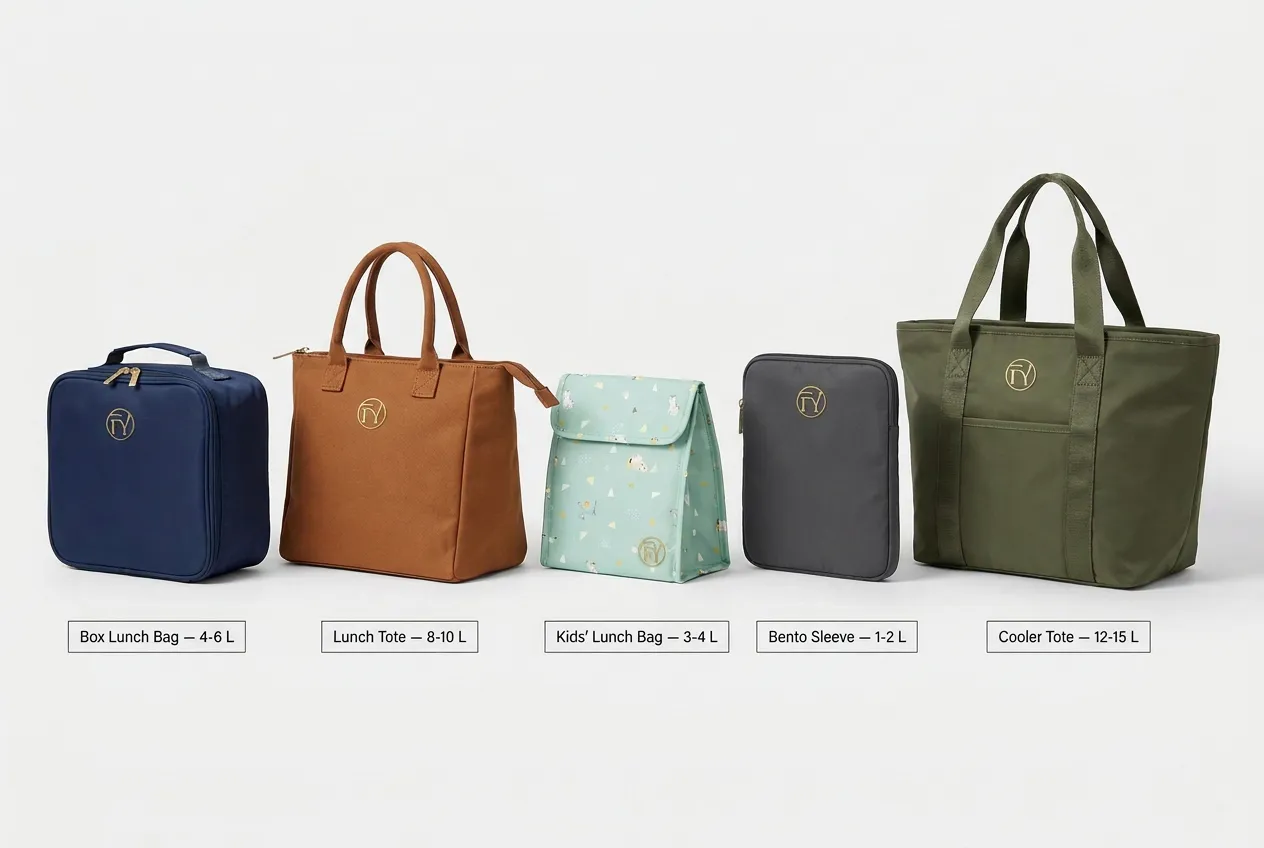
Popular features include removable liners, mesh pockets that hold an ice pack against the food, utensil and napkin pockets, adjustable shoulder straps, luggage trolley sleeves and reflective tape on kids’ styles.
For office programs, align the design with how people commute. A lunch bag that slips into a work tote or clips to a backpack strap fits daily commuting and work better than a bulky cooler. For drinks, can coolers and slim bottle bags, our guide to custom koozies and insulated bags covers the smaller formats.
Decorate the shell panels of an insulated bag before assembly. Screen printing and heat processes on a finished bag press against the foam, which compresses under squeegee pressure and can deform or melt under a heat press. Printing flat panels first gives cleaner results and full-bleed options.
Common methods:
A complete brief prevents most sampling rounds:
FYBagCustom is Your Trusted Custom Lunch Bag Manufacturer in China, developing insulated lunch bags, lunch totes, kids’ lunch bags and cooler bags for brands, wholesalers, Amazon sellers and gifting programs through OEM, ODM and private label projects.
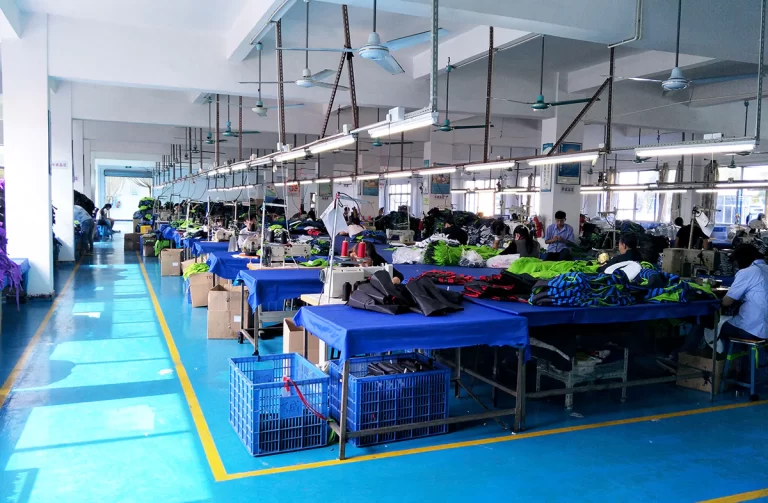
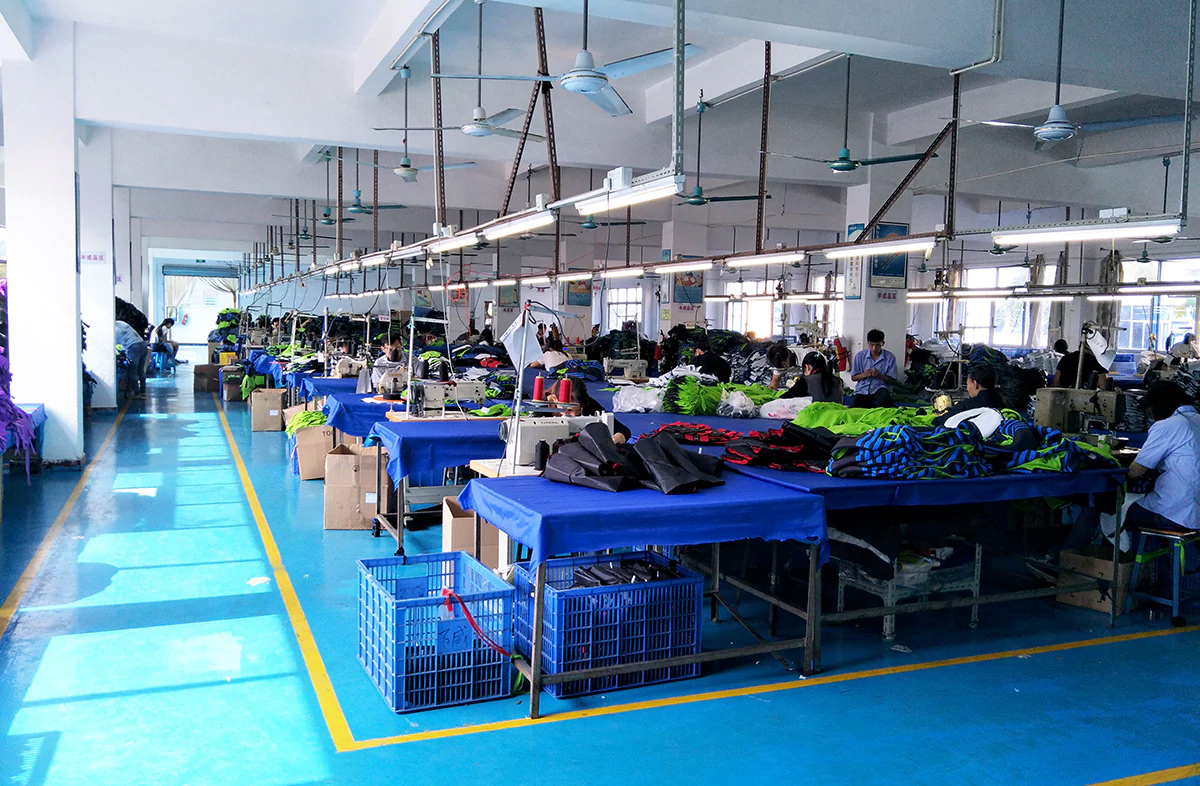
FYBagCustom, a custom bag factory in Huadu District, Guangzhou, combines 15+ years of production, a 5,000 m² facility, 500+ staff and 10+ production lines with a network of 200+ verified suppliers for shell fabrics, foams and liners. For a lunch bag program, that gives you:
Tell us which food-contact documents your markets require at the quotation stage, so we can source liner materials to match. To start a lunch bag project, share your format, capacity and target markets with our team.
Closed-cell foam gives the best balance for most lunch bags. EPE foam at roughly 3–10 mm keeps cost low and insulates well, while cross-linked XPE foam resists creasing and suits premium bags. Polyester batting is softer and folds easily, but compresses and insulates less. Thickness matters more than material type, so prioritize foam thickness and a well-sealed zipper.
PEVA is a chlorine-free plastic widely used for lunch bag liners, and suppliers can source grades that meet FDA and EU food-contact rules. Safety depends on documentation for the specific material grade. Ask for compliance documents covering your markets, such as a Declaration of Compliance under EU Regulation 10/2011 or FDA-referenced test reports.
It depends on insulation thickness, closure, ice pack mass and ambient temperature. U.S. food-safety guidance treats temperatures above 40°F (4°C) as the start of the danger zone and recommends at least two cold sources in a packed lunch. Test your sample under fixed conditions and state those conditions alongside any hours you claim.
Not for most uses. Foil liners reflect radiant heat, which helps when a bag sits in direct sun, but in a closed bag indoors, foam thickness has a bigger effect. Foil can crinkle and crack with heavy folding. PEVA is softer, more durable in daily use and easier to heat-seal into a leak-resistant liner.
Most foam-insulated lunch bags are wipe-clean only, because washing can crease foam and stress liner seams. Neoprene lunch bags and designs with removable liners handle washing better. If machine washing matters to your customers, specify it in the tech pack so the manufacturer can choose washable materials and test the sample through several wash cycles.
FYBagCustom’s OEM/ODM team helps brand owners, Amazon sellers and corporate gifting buyers develop lunch bags and cooler bags with the right shell, foam and liner. Get 5–7 day sampling for real thermal tests, flexible MOQ blended across prints, and sublimation, screen print or embroidery branding.
Start Your Custom Bag Project →