Tel/WhatsAapp:+86 18011919834
E-mail: chloe.x@fybagcustom.com

Tel/WhatsAapp:+86 18011919834
E-mail: chloe.x@fybagcustom.com

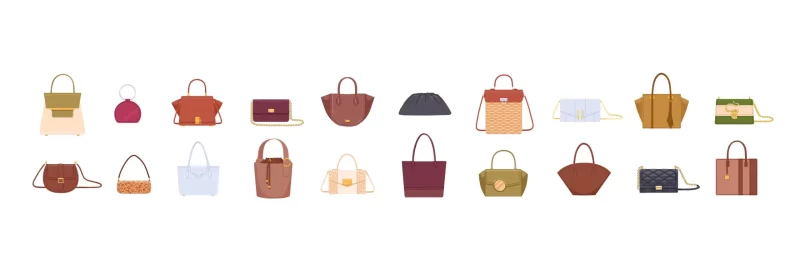
Who this guide is for: first-time handbag brand founders, DTC and Shopify store owners, designers moving from samples to production, influencers launching a private label line and small boutique buyers placing their first factory order.
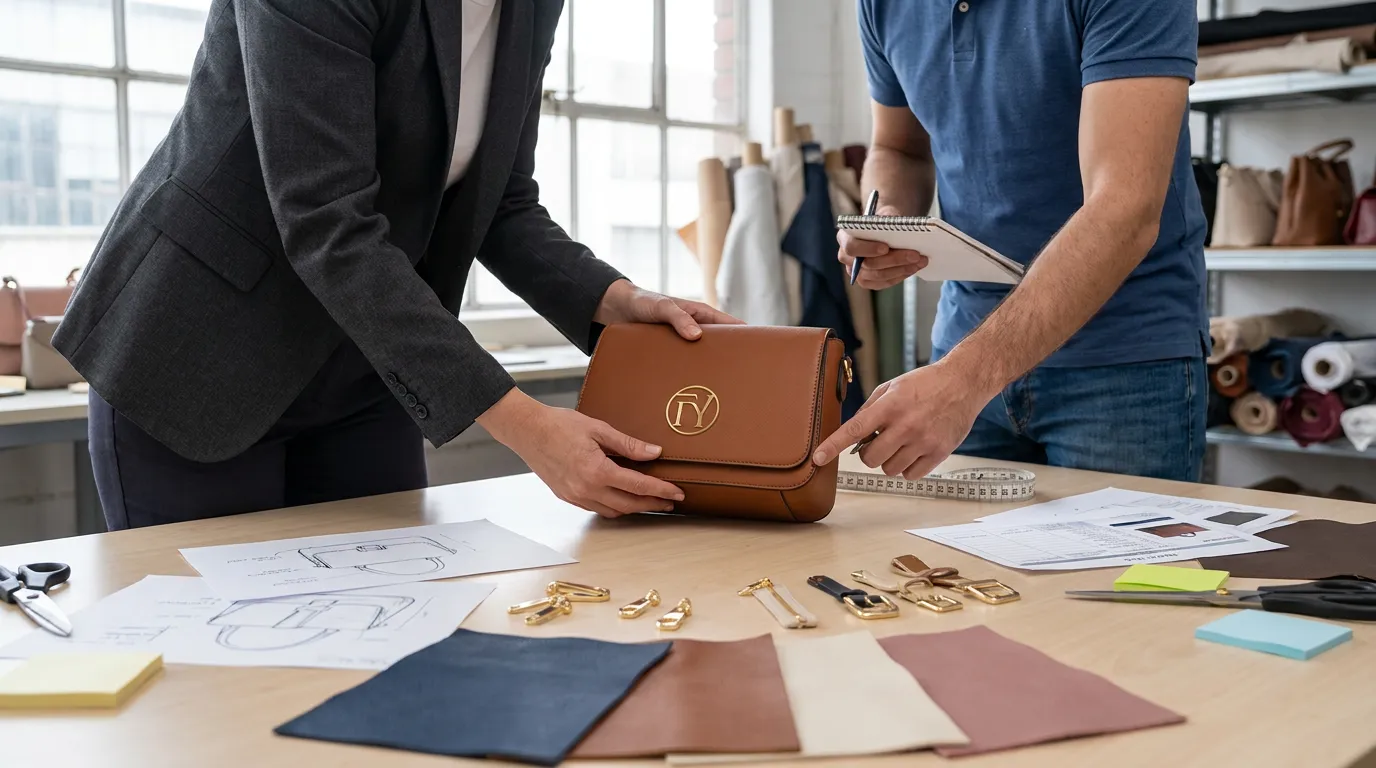
A startup brand needs something different from a factory than an established label does. You need help turning sketches into a bag that works, patience through revision rounds, minimums your cash flow can carry and a partner who explains what each decision costs. Choosing a handbag manufacturer for startups means testing for those qualities before you sign, then running the first three months of development and production of your custom handbags to a written plan.
Quick answer: The best handbag manufacturer for a startup offers development support, sampling within one to two weeks, flexible or blended MOQ across colors, transparent cost breakdowns and written revision control. Plan two to three sample rounds, launch with one or two styles in a few colors using stock materials, and allow roughly 90 days from brief to shipment for a simple design.
Large factories built around volume programs can make excellent bags, but they often schedule startup orders behind repeat customers. A small workshop may accept tiny quantities but lack the material sourcing and inspection systems that keep quality consistent. Most startups do best with a mid-size OEM/ODM factory that runs both development and production.
| Supplier type | MOQ flexibility | Development support | Relative unit cost | Communication | Best stage |
|---|---|---|---|---|---|
| Startup-friendly OEM/ODM factory | Flexible; often blends minimums across colors and sizes | Pattern making, material sourcing, construction advice | Moderate | Dedicated project contact | First collection through growth |
| Volume-focused factory | Low; minimums set for large programs | Strong, but prioritized for large accounts | Lowest at scale | Slower for small accounts | After demand is proven |
| Trading company | Varies by factory used | Limited; depends on the factory behind it | Moderate to high | Good English, less technical depth | Mixed-category sourcing |
| Local workshop or sample studio | Highest flexibility | Hands-on, often design-led | Highest | Direct, same time zone | Prototypes and micro-batches |
In interviews, ask questions that reveal how each candidate treats small brands:
A factory that answers these with specifics, and asks about your customer and price point in return, is treating you as a future account.
A clear brief shortens every stage that follows. Factories quote faster and sample more accurately when they know what you are trying to build and for whom. Prepare these items before your first message:
If you have not yet tested demand, do that first. Our guide to validating your handbag concept before ordering samples covers research, MVP drops and pre-orders.
Sampling turns a startup’s design into a manufacturable product. Each sample round answers a different question.
| Sample type | Purpose | When | What to check |
|---|---|---|---|
| First sample (prototype) | Translate the sketch into a physical bag | After the brief and quote | Proportions, shape, strap drop, pocket layout, overall feel |
| Revision sample | Correct issues from the first round | One or two rounds after feedback | Every item in your revision brief, plus new issues |
| Photo or salesman sample | Product photography, pre-orders, wholesale meetings | Once the design is close to final | Color accuracy, finish, how the bag photographs |
| Pre-production sample (PPS) | Final approval with bulk materials and hardware | Before the deposit and bulk material order | Exact match to approved specs; becomes the inspection standard |
Most startup handbags need two to three rounds before PPS. Extra rounds usually trace back to gaps in the brief. A sample costs much more per piece than a bulk bag, because a pattern maker and sample sewer build it by hand, often with one-off cuts of material. Some factories credit part of the sample fee against the first bulk order, so ask about the policy before you start.
Speed matters for founders who are paying for marketing, photography and their own time while they wait. A factory that turns samples in about a week lets you finish two or three rounds within a month. FYBagCustom produces standard samples in 5–7 days and complex handbag development in 7–12 days, and you can start a project through our sample request page.
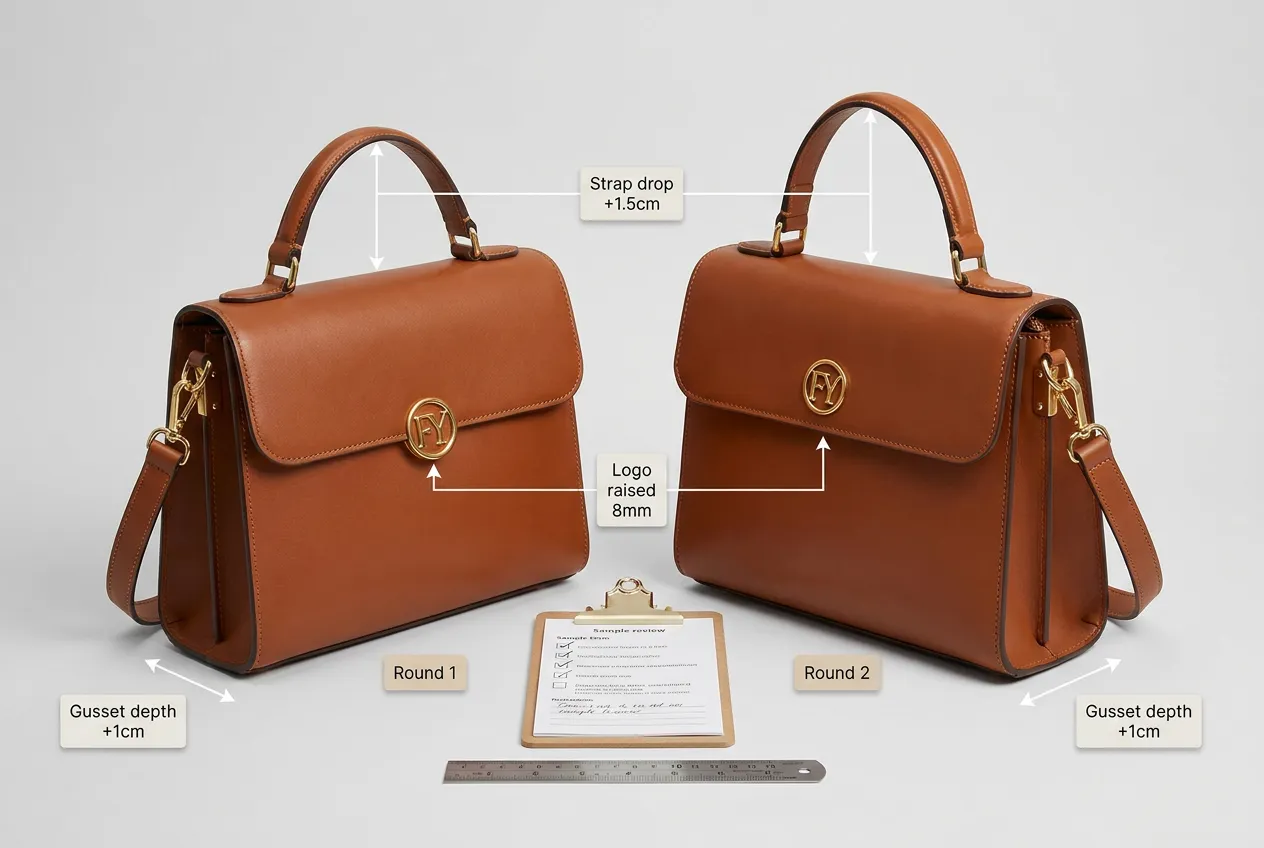
Give feedback in writing, with photos and measurements. “Make the strap longer” leads to another round. “Increase strap drop from 22 cm to 26 cm, keep width at 2.5 cm” gets you the right sample.
Minimum order quantities exist for real reasons. Mills set minimum runs per color for PU and dyed leather. Hardware molds, cutting dies and emboss plates cost the same whatever the order size. Production lines run efficiently only after operators repeat a construction a number of times. Understanding those reasons helps you negotiate the variables that move the minimum.
| Lever | How it lowers the minimum | Trade-off |
|---|---|---|
| Blended MOQ across colors | One minimum shared by several colors of the same style | Each color has a smaller run, so per-unit cost may rise slightly |
| Stock materials | Avoids mill minimums for custom colors or grains | Limits you to the supplier’s palette |
| Stock hardware | Avoids mold costs and hardware minimums | Less distinctive; a custom plating color can help |
| Shared lining and trims | One lining order covers several styles | Interior is less individual per style |
| Debossed logo instead of custom hardware | A low-cost plate replaces a custom mold | Quieter branding |
| Fewer SKUs at launch | Concentrates volume on what you can sell | Narrower first collection |
| Phased colorways | Launch two colors, add more once data comes in | Later colors arrive in a second production run |
The combination that works for most startups: one or two silhouettes, two or three colors, stock PU or leather from the factory’s regular suppliers, stock hardware in a custom finish and a debossed logo. That mix keeps minimums manageable without making the bag look generic. Our article on how niche brands use low MOQs to avoid inventory crises explains how to plan reorders around smaller first runs.
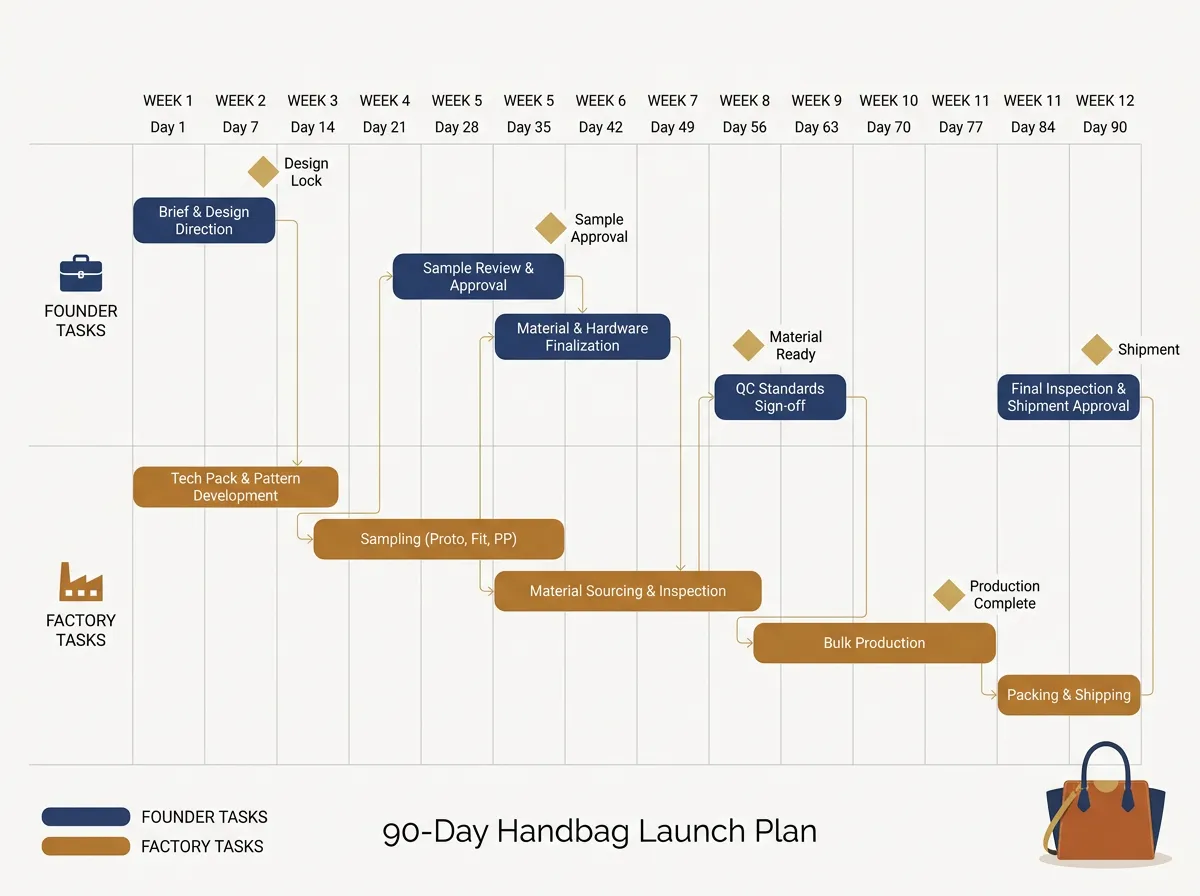
Ninety days from brief to shipment is achievable for a simple handbag using stock materials, with no more than two revision rounds. Complex structures, custom-dyed materials or custom hardware add weeks. Sea freight comes on top of this plan.
| Days | Founder tasks | Factory tasks | Milestone |
|---|---|---|---|
| 1–14 | Finalize brief | Review the brief, suggest materials, quote | Briefing Details Communication Complete |
| 15–30 | Review first samples, write a revision brief with photos and measurements | Pattern making and first sample | First sample reviewed |
| 31–45 | Review second samples, confirm colors and hardware, lock the bill of materials | Revision sample, final costing, material swatches and color standards | Design and price agreed |
| 46–55 | Approve PPS, place purchase order, pay deposit, book inspection | PPS with bulk materials, order materials and hardware | PPS sealed, materials ordered |
| 56–85 | Shoot product photos with photo samples, prepare listings and launch content | Material inspection, cutting, sewing, inline checks | Bulk production complete |
| 86–90 | Review inspection report, pay balance, arrange freight and customs | Final AQL inspection, packing, carton labels | Goods ready to ship |
Use the production weeks well. Many founders treat days 56 to 85 as waiting time, but that window is when you should photograph samples, build product pages, line up pre-orders and plan the reorder. A reorder decision made before the first shipment lands can save you a stockout later.
Without quoting figures, you can still plan how your budget divides. The production order takes the largest share, but founders often underestimate the lines around it.
| Budget line | Relative size | Notes |
|---|---|---|
| First production order | Largest | Usually paid as a deposit before materials are ordered and a balance before shipment |
| Photography and launch marketing | Moderate to large | Often rivals the production order for DTC brands |
| Freight, duty and customs | Moderate | Varies by shipping mode, carton volume and tariff classification |
| Samples and development | Small to moderate | Sample fees, courier costs, revision rounds |
| Packaging | Small to moderate | Dust bags, boxes, hang tags; rigid boxes add freight volume |
| Testing | Small | Required by some marketplaces and retailers for materials |
| One-time tooling | Small | Emboss plates, cutting dies, any custom hardware molds |
| Reserve for reorder | Moderate | Keeps a bestseller in stock while you wait for cash from sales |
The payment schedule shapes your cash flow. With a deposit at order and a balance before shipment, you pay for the full run roughly six to ten weeks before the first sale, longer with sea freight. Plan for that gap from the start, or use pre-orders to bring some revenue forward. Our step-by-step guide to launching a handbag brand from scratch covers the wider launch budget, including branding and channels.
The same errors show up again and again in first collections:
FYBagCustom is Your Trusted Custom Handbag Manufacturer in China, offering OEM, ODM and private label development for founders launching their first collection and brands scaling beyond it.
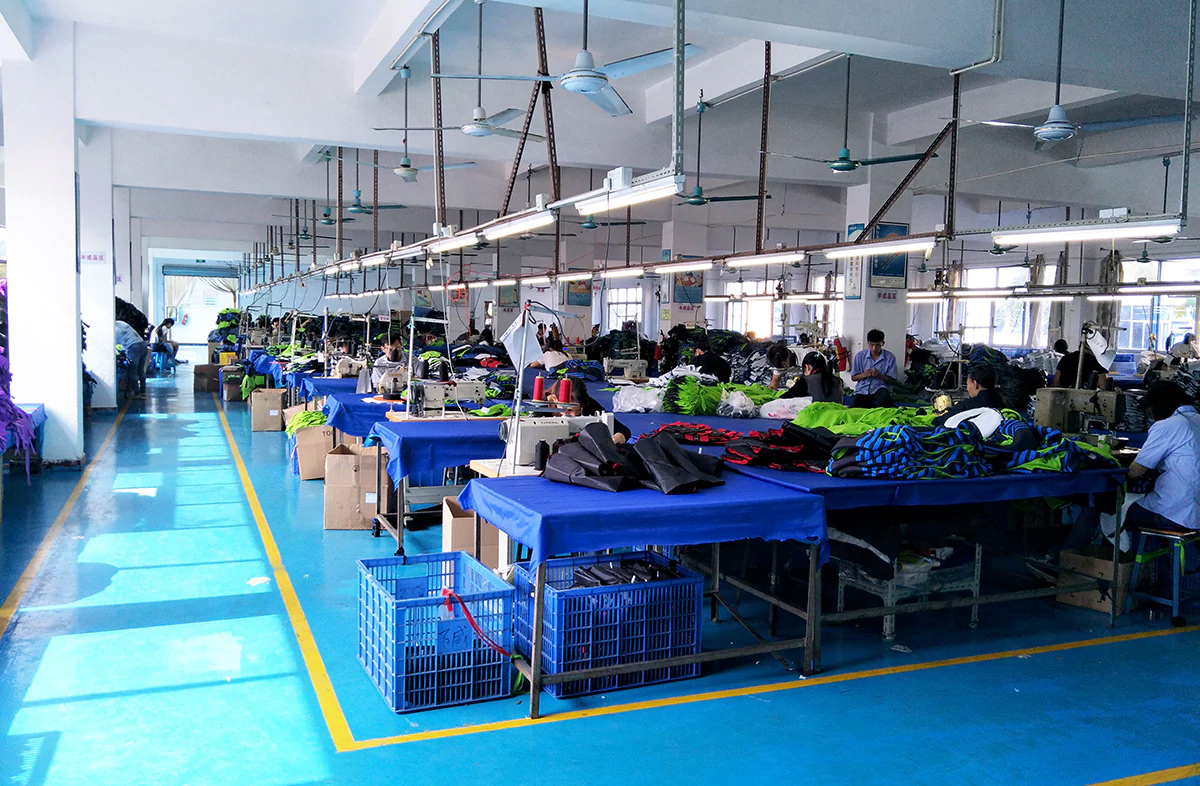
FYBagCustom, a custom bag factory in Huadu District, Guangzhou, has 15+ years of handbag and bag manufacturing, a 5,000 m² facility, 500+ staff and 10+ production lines. For startups, the parts that matter most are:
Send your sketches, reference bags and target retail price through our contact page, and our team will suggest materials, construction and an MOQ plan that fits your launch.
It depends on the material, construction and how much you customize. Factories set minimums around material runs, tooling and line efficiency, so stock materials and stock hardware keep minimums lower than custom colors and custom molds. Ask whether the factory can blend one minimum across several colors or styles. That approach lets a startup offer choice without overcommitting to any single SKU.
Most new handbags need two to three rounds before the pre-production sample: a first prototype, one or two revisions, then the PPS made with bulk materials. Complex structured bags or bags with custom hardware may need more. A detailed brief with measurements, plus written revision notes with photos after each round, is the best way to keep the count low.
A sample costs several times more than the same bag in bulk, because a pattern maker and sample sewer build it individually and the factory buys small cuts of material. Revision rounds add further fees and courier costs. Some factories credit part of the sample cost against the first bulk order, so confirm the sample fee policy before development begins.
For a simple handbag using stock materials, roughly 90 days from brief to goods ready to ship is achievable: about a month for briefing and the first sample, two to three more weeks for revisions and PPS, then four to five weeks of production and inspection. Sea freight adds several weeks. Custom materials or hardware extend the timeline.
Going direct gives you closer control over quality, cost and communication, and it removes a margin layer. A sourcing agent can help if you lack time to vet factories or need several product categories at once. If you go direct, verify the factory’s business license, run a video audit and judge communication through the sampling process.
FYBagCustom’s OEM/ODM team works with startup founders, DTC store owners and designers launching their first handbag collection. Share your sketches and target price: we respond with development support, 5–7 day sampling and low MOQ blended across colors and sizes.
Start Your Custom Bag Project →