Tel/WhatsAapp:+86 18011919834
E-mail: chloe.x@fybagcustom.com

Tel/WhatsAapp:+86 18011919834
E-mail: chloe.x@fybagcustom.com
Send Your Inquiry Today


Who this guide is for: racquet-sports brands and lifestyle labels producing tennis, padel, and squash bags — a spec family that shares a core engineering DNA (thermal-lined racquet compartments, sport-specific length and shape tolerances, ventilated shoe storage, court-to-street aesthetics) while differing in the details that decide whether a bag reads as purpose-built or generic. The category is being reshaped by one force above all: padel, widely described as the world’s fastest-growing sport, has exploded from a Spanish and Latin American niche into a global phenomenon with tens of millions of players and tens of thousands of clubs across Europe, the Gulf, and now the US — pulling the entire racquet-bag category upmarket and making the thermal racquet compartment, once a pro-only feature, a baseline expectation. This guide covers racquet-bag construction across the three sports, the thermal protection that now defines a credible bag, the racquet-length and shape tolerances that separate a real racquet bag from a repurposed duffel, and the court-to-street design and padel crossover that are the category’s biggest growth opportunities. It is the racquet-sports companion to our pickleball manufacturing guide — a related but distinct spec.
For decades the tennis bag was a solved, static product: a long padded sleeve that held a few frames, a couple of pockets, and a shoulder strap. The racquet-sports bag category has come alive again for one reason, and its name is padel. In less than a decade padel has gone from a niche pastime played on private courts in Spain and Argentina to a global sporting phenomenon with over 25 million players across 90+ countries, and by 2026 there were over 30,000 padel clubs operating globally. That growth — concentrated first in Spain and Latin America, then across the Gulf and the rest of Europe, and now accelerating in the US — has dragged the whole racquet-bag category upmarket, importing features and expectations that the sleepy tennis-bag market never demanded.
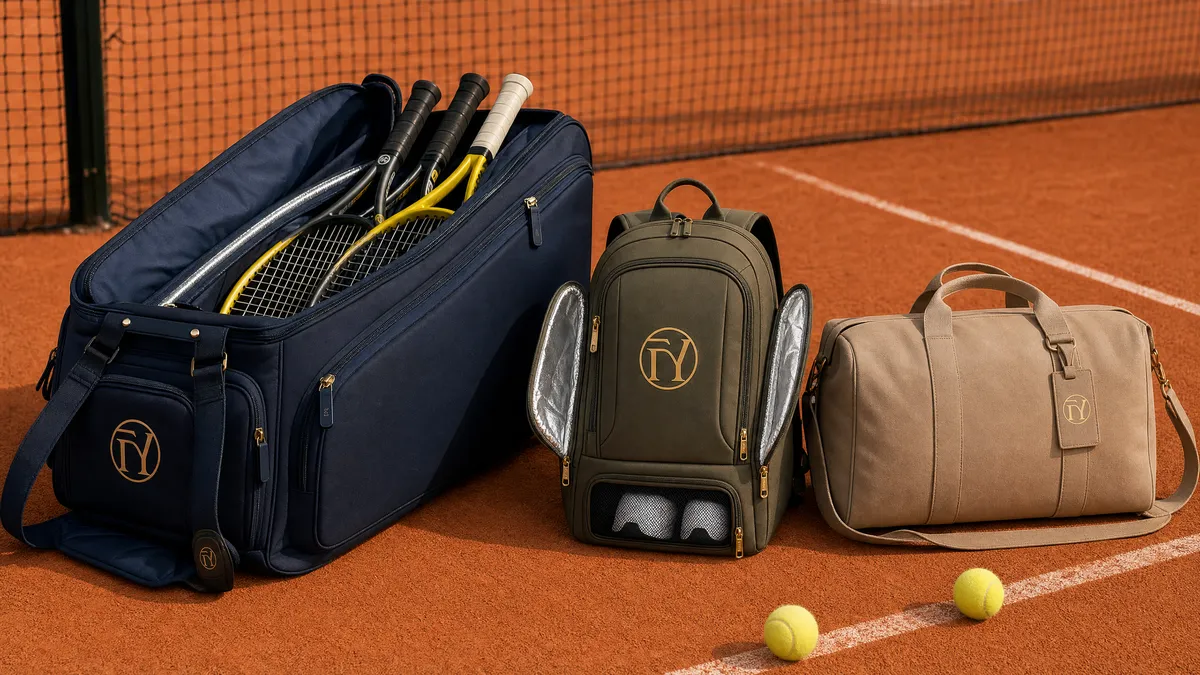
The clearest sign is the thermal racquet compartment. What was once a professional-tier luxury is now, in the padel world, effectively mandatory — the leading brands build climate-controlled and thermally insulated racquet compartments into bags across their ranges, and the buying public has learned to expect it. That expectation has flowed back into tennis and outward into squash, and the result is a racquet-sports category with a shared, upgraded spec: thermal protection, sport-correct racquet geometry, ventilated shoe isolation, and increasingly, a court-to-street aesthetic that lets the bag work as a piece of lifestyle luggage. The buyer who once accepted a padded sleeve now compares thermal compartments, shoe-pocket ventilation, and strap padding across brands before purchasing — the category has become genuinely spec-driven, and a bag that misses a feature loses the sale to one that does not. This guide is the manufacturing map of that shared spec, sport by sport.
Tennis, padel, and squash bags are close cousins — the same core problems solved with sport-specific dimensions. Understanding what they share and where they diverge is the foundation of a coherent multi-sport program.
| Dimension | Tennis | Padel | Squash |
|---|---|---|---|
| Racquet shape | Long (~27 in / 68.6 cm), oval head, strung | Short (~45.5 cm max), thick, teardrop/diamond, solid stringless-face carbon frame | Long, small teardrop head, strung |
| Compartment length | The longest — sized to full tennis frames | Shorter and deeper — padel frames are stubby but thick | Similar length to tennis, narrower head |
| Heat sensitivity | Strings and frame affected by heat | High — the carbon-fiber frame’s foam core degrades in heat; thermal protection is “non-negotiable” for quality frames | Frame and strings heat-sensitive |
| Typical club load | 2–3 racquets | 2–3 racquets (one to play, one or two backups) | 1–2 racquets |
| Typical tour load | 6–9 racquets | 3–6 racquets | 3+ racquets |
| Shoe expectation | Often worn between courts (tennis bags historically skip a dedicated shoe pocket) | Dedicated court shoes mandatory (indoor turf/sand courts) — sealed ventilated shoe pocket essential | Indoor court shoes — shoe pocket valued |
| The bag culture | Established, heritage-driven | Fast-growing, feature-hungry, willing to pay | Smaller, function-focused |
The strategic read for a manufacturer: a well-designed racquet-bag platform can serve all three sports by varying the racquet-compartment geometry and capacity on a shared construction and feature architecture — the thermal system, the shoe compartment, the pocket layout, and the carry system are largely common; the racquet sleeve’s length, depth, and dividers are what get tuned per sport. Padel is the growth engine, tennis is the stable base, and squash is the specialist add-on. A brand deciding how to sequence a multi-sport range can brief our development team to map the shared platform against its target sports.
Heat is the racquet’s enemy, and the modern frame — especially the carbon-fiber padel racquet with its foam core — is genuinely vulnerable to it. High temperatures degrade the foam core inside a padel racket over time, reducing its performance and lifespan, which is why a thermally insulated racquet compartment that protects frames whether under the sun or left in a hot car is treated as non-negotiable for a quality frame. A racquet left in a Sun Belt or Gulf car trunk cooks; the thermal compartment is the bag’s answer, and its presence is the first thing a serious buyer checks.
| Element | Specification | Why |
|---|---|---|
| The thermal compartment | A dedicated racquet compartment lined with reflective foil-faced insulation (isothermal/CCT-style construction), sealing the frames from external heat; the industry term is “thermal,” “isothermal,” or “climate-controlled” | The core protection — reflects radiant heat and slows heat transfer into the compartment, protecting frames and strings from the car-trunk oven |
| Dual-compartment thermal (tour) | Higher-tier bags run dual thermal side compartments so racquets are split and protected on both sides | The pro-range configuration; balances the load and doubles protected capacity |
| The insulation build | Foil/reflective film laminated with closed-cell foam, continuous across the compartment including the zip line | The thermal envelope only works if it is continuous — an insulated compartment with an uninsulated zip leaks like a cooler with a hole |
| Frame-safe lining | Soft brushed tricot or microfiber inside the thermal compartment, with dividers separating frames | Strung frames and carbon faces must not grind against each other; the lining protects the surface the thermal layer protects from heat |
| The honesty standard | Real measurable insulation, not a foil-look liner that only appears thermal | The category’s informed buyers can tell; a fake thermal compartment is a returned bag and a damaged reputation |
The single thing that separates a real racquet bag from a duffel with a logo is that its racquet compartment is dimensioned to the sport’s actual frames — length, head width, and depth held to real tolerances.
| Sport | Compartment Requirement |
|---|---|
| Tennis | Length to accommodate a full ~68.6 cm frame with margin; head width for the oval; capacity from 3-racquet club bags to 6–9-racquet tour bags, with the frames laid head-to-handle-alternating so the heads nest |
| Padel | Shorter but deeper and wider — padel frames are stubby and thick, so the compartment trades length for depth; tour padel bags carry up to six frames in the climate-controlled compartment |
| Squash | Similar length to tennis, narrower head channel; typically lower capacity |
| The divider system | Internal dividers and compression keep frames from shifting and knocking; on tour bags the dividers organize 6+ frames so they don’t become a tangled bundle |
| The multi-sport compromise | A “racquet bag” sold across sports must either be tuned per sport or sized to the longest frame (tennis) with padel frames sitting shorter inside — an honest multi-sport bag states which frames it fits rather than implying universality |
The manufacturing point: the racquet compartment is a patterned, dimensioned component with a thermal build, dividers, and a frame-safe lining — not an open pocket. Getting its geometry right per sport is the core competence the category rewards, and the reason a generic bag maker produces bags that “technically hold” a racquet but lose the buyer who plays more than once a week. Brands that want the compartment dimensioned to their target sport’s actual frames can send the frame specs to our team for a fit-verified sample.
Tennis bags historically skipped a dedicated shoe compartment on the assumption that players wear their court shoes to and from the court. Padel broke that assumption and reset the category’s expectation.
| Element | Specification | Why |
|---|---|---|
| The dedicated ventilated pocket | A separate, ventilated, wipe-clean shoe compartment isolated from the racquet and clothing zones | Padel courts are usually indoor turf or sand-filled artificial grass, so dedicated court shoes are non-negotiable, and a sealed shoe pocket prevents spare grips and apparel from smelling like an old gym sock |
| Isolation | The shoe compartment sealed off from the thermal racquet compartment and the apparel/valuables pockets | Odor, moisture, and court sand must not migrate to frames or clean kit |
| Ventilation and cleanability | Mesh venting sized for real airflow plus a wipe-clean, moisture-tolerant liner | The compartment handles wet, sandy, sweaty shoes and stays serviceable |
| The wet pocket | Many bags add a separate ventilated “wet” compartment for damp towels and apparel | Keeps sweat-soaked kit away from the frames and the dry valuables |
| Feature | Specification |
|---|---|
| Soft-lined valuables pocket | A tricot-lined top or front pocket for phone, watch, keys, sunglasses — protected from scratches |
| Accessory organization | Divided pockets for balls, grips, overgrips, dampeners, wristbands, and tape — the small-kit organization tour players expect |
| Insulated bottle pocket | Exterior bottle pocket(s), ideally insulated, for constant hydration |
| Carry system | Backpack straps (padded, the padel and modern-tennis standard), a shoulder strap, and grab handles — tour bags optimize strap padding for “long airport days,” a real use case as the sports globalize |
| Water-repellent protection | A water-repellent finish and a reinforced water-resistant base — the bag lives on courts, in car trunks, and in transit |
| Capacity by tier | Club 25–40L, tour 50–70L — the tour range gives room for multiple frames, shoes, and a full match-day kit |
| Structure and durability | Reinforced anchors and base, quality moisture-tolerant zippers, and shape-holding structure under a loaded, heavy kit |
| Tier | Silhouette | Capacity | Racquets | The Player |
|---|---|---|---|---|
| The backpack | Compact, dual-strap | 25–35L | 2–3 | The club and regular player — the category’s volume silhouette |
| The racquet duffel / tour bag | The long thermal tour bag | 50–70L | 6–9 (tennis) / 3–6 (padel) | Tournament players and coaches |
| The crossbody / court-to-street | Compact shoulder or sling | Smaller | 1–2 | The lifestyle and social player; the court-to-street tier |
The racquet sports — padel especially — are as much social scenes as athletic pursuits, and a growing share of buyers want a bag that does not look like sports equipment when they leave the court. This is the category’s fashion-tier opportunity, and it parallels the split we cover in the pickleball guide.
| Element | Specification |
|---|---|
| The aesthetic shift | Clean silhouettes, refined color palettes (stone, navy, off-white, the “clean aesthetic” the premium padel brands now lead with), minimal sports branding — a bag that reads as premium luggage or a weekend bag |
| The material shift | Refined technical fabrics, coated canvas, and premium nylon finished to read lifestyle rather than performance, while keeping water-repellency |
| Hidden function | The thermal racquet sleeve and ventilated shoe pocket built into a silhouette that reads as a tote, holdall, or weekender — function concealed inside the fashion |
| Dual-use design | A bag that works for the commute, the office, and the court doubles its use occasions — the reason the court-to-street tier commands a premium and reaches beyond dedicated players |
| Print and brand transfer | For a lifestyle label, the brand’s digital-printed motifs, tonal embroidery, and signature colorways transfer onto the racquet silhouette — entering a fast-growing category by extending an existing identity |
| The finishing vocabulary | Textured surfaces, waterproof constructions, and premium tonal hardware — the handbag finishing language applied to a court bag |
| Material | Tier | Application |
|---|---|---|
| Technical / ballistic nylon | Performance & tour | The abrasion-resistant, shape-holding standard |
| Ripstop nylon | Performance | Lightweight tour bodies |
| Polyester (incl. recycled) | All tiers | Linings, mesh, and the sustainability-positioned option |
| Coated canvas and premium nylon | Court-to-street | The lifestyle-finish carrier |
| Foil/reflective insulation | All performance tiers | The thermal racquet compartment envelope |
| Mesh | Performance | Shoe and wet-compartment ventilation |
| Brushed tricot / microfiber | All tiers | Frame-safe racquet lining and valuables pockets |
Construction non-negotiables: the continuous thermal envelope, reinforced strap and handle anchors (the loaded tour bag is heavy and travels), a reinforced water-resistant base, moisture-tolerant zippers, and shape-holding structure. A sustainability-positioned line builds much of this in recycled-content nylon and polyester per our recycled-materials capabilities — resonant with the category’s younger, globalizing audience.
| SKU | Sport / Tier | Spec Summary |
|---|---|---|
| Tennis tour bag | Tennis / tour | 6–9 racquet thermal compartment, full-length sleeve, shoe + accessory organization, 50–70L |
| Padel tour bag | Padel / tour | Dual thermal side compartments, 3–6 frames, ventilated shoe pocket, 50–70L |
| Racquet backpack | Multi-sport / club | 2–3 racquet thermal compartment, ventilated shoe pocket, 25–35L — the volume SKU |
| Squash / compact racquet bag | Squash / club | Narrower thermal sleeve, 1–3 frames, compact |
| Court-to-street shoulder bag | Lifestyle | Hidden thermal sleeve, refined silhouette, dual-use |
| Court-to-street tote / handbag crossover | Lifestyle | The brand’s print/colorway on a lifestyle silhouette with a real racquet sleeve |
The application fit: racquet bags sit in the fitness and active-life program, the travel segment (tournament and destination play, the “long airport days” use case), and — for the court-to-street and club-branded tiers — the gift and promotional vertical, where club, academy, and event bags are a fast-growing bulk order as the sports expand.
| Test | Method | Standard |
|---|---|---|
| Thermal performance | Temperature differential measured across the insulated racquet compartment | Genuine measurable insulation, continuous across the zip |
| Racquet fit verification | Actual frames of the target sport loaded to rated capacity | Frames fit with margin; dividers hold them without knocking |
| Shoe compartment isolation | Ventilation airflow and odor/moisture isolation from racquet and clothing zones verified | No cross-contamination |
| Strap and anchor load | Loaded pull and cycle testing on all carry points, at tour weight | Survives heavy loaded, traveled use |
| Zipper and water resistance | Zipper cycling plus water-resistance check on base and coated zips | Smooth cycling; base and zips shed a splash |
| Loaded structure | The bag loaded to capacity and checked for shape retention | No slump; tour bags hold form |
| Abrasion | Body materials abrasion-tested per tier; court-to-street finishes checked for wear | Per material and tier |
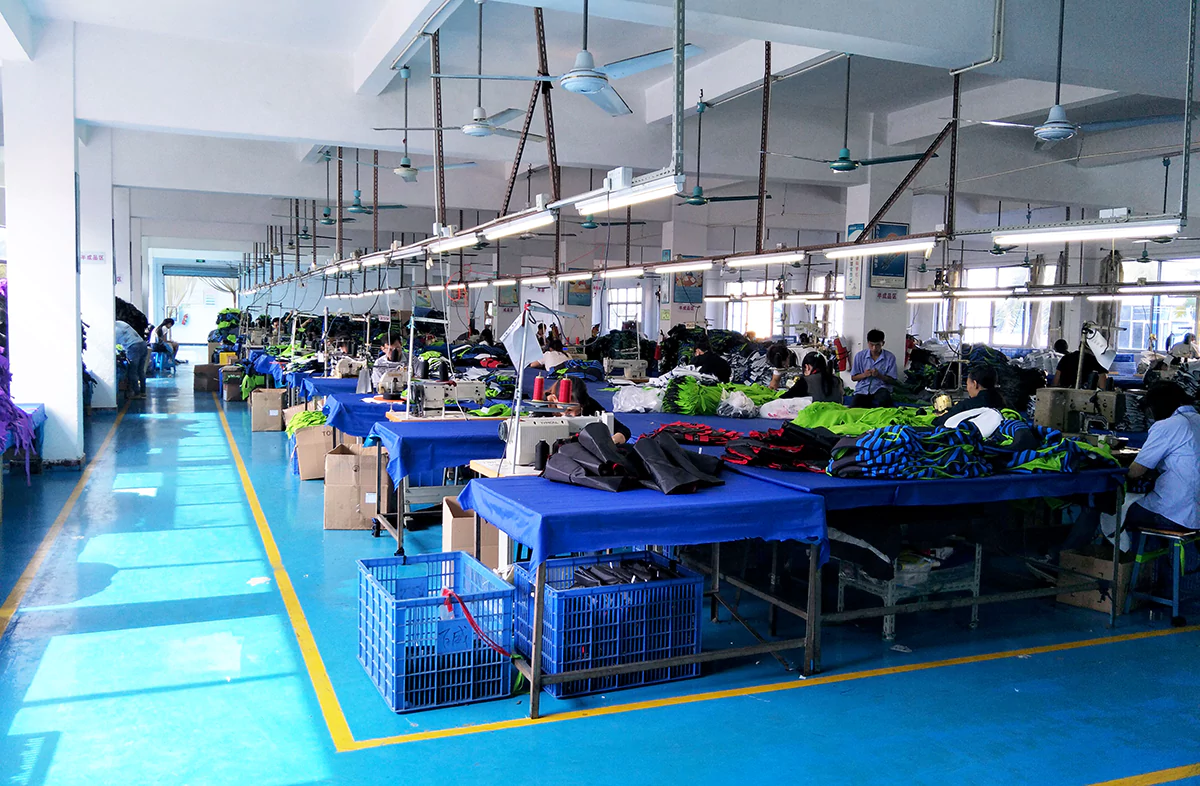
FYBagCustom is Your Trusted Custom Bag Manufacturer in China, with 15+ years of manufacturing experience across technical sports bags and lifestyle bags — the exact competencies the racquet-sports category rewards. For brands building tennis, padel, and squash programs, our capabilities include:
The racquet-sports bag category has come alive on the back of padel’s growth, and it rewards brands that understand tennis, padel, and squash as one spec family tuned per sport. For B2B buyers entering it, three core takeaways:
If you are building a tennis, padel, or squash program — performance, court-to-street, or a full range — contact FYBagCustom to brief your line, and receive a thermal-compartment sample with a frame loaded to verify fit in 7–10 days.
FYBagCustom builds the full racquet-sports spec family — genuine thermal racquet compartments, sport-tuned frame geometry, ventilated shoe pockets, and court-to-street lifestyle silhouettes — for tennis, padel, and squash. Thermal-compartment samples, frame-fit verified, in 7–10 days.
Start Your Custom Bag Project →